VI
VI


Nestled on the banks of the Huangpu River, Shanghai has long been a symbol of the interplay between past and present. China's most populous city is not only famous for its towering skyscrapers and dazzling neon lights, but also for preserving historical landmarks, blending the rhythm of modern urban life with ancient charm.

Despite being a vibrant city in China, Shanghai still retains its ancient charm, rich in cultural and historical significance.
During his trip to China, Nguyen Tran Hieu had the opportunity to experience Shanghai in his own way: strolling through centuries-old neighborhoods while admiring the constant dynamism of the modern city.


Dianzi Street - Shanghai's French-style old town.
Tianzifang is a prominent old neighborhood in Shanghai, preserving the architecture of the former French Concession with its old houses, exposed brick walls, iron railings, and small windows. The winding alleys are lined with cafes, bars, craft shops, and art galleries, creating an atmosphere that is both ancient and vibrant.


Dianzi Fang - an old French colonial district in the heart of modern Shanghai.
Modernity permeates every corner with new-style lanes, some contemporary buildings and brightly lit signs, and especially the arrival of tourists from all over the world.
The Bund in Shanghai – a meeting point of past and present.
The Bund is where Hieu most clearly sees the captivating contrast between history and modernity. Ancient architectural structures along the West Bank, with their ornate domes and brick walls, stand alongside towering skyscrapers in the East, creating a vibrant cityscape. The 468-meter-tall Oriental Pearl TV Tower, once one of the tallest buildings in China, still rises majestically against the sky, a symbol of the city's rapid development.


The Bund in Shanghai is highlighted by the prominent Oriental Pearl TV Tower.
Du Vien Street sparkles at night.
YuYuan Street offers a completely different experience. Built during the Ming Dynasty and restored in 1961, this street retains its ancient and magnificent charm. At night, when the lights from the rooftops blaze, the street transforms into a miniature palace. Hieu enjoyed hot noodles and xiaolongbao, mingling with the bustling crowds, feeling the lively atmosphere while still retaining its strong traditional cultural identity.

The bustling scene of Yu Yuan Street during the day.
The Nanxiang Steamed Bun restaurant is always packed with customers, creating a distinctive atmosphere for the neighborhood. Surrounding it are shops selling vintage cosmetics, from hand creams, powders, and lipsticks to perfumes, giving a feeling that is both nostalgic and unique. The Yu Garden area is not only a place for shopping and dining, but also where Hieu deeply experienced Shanghai's culture and nightlife.

Yu Garden Street was still bustling with people in the evening.
Nanjing pedestrian street and the 1933 Old Millfun building.
Nanjing Pedestrian Street, stretching 5.5 km, is a famous shopping boulevard with numerous restaurants and shopping malls housed in European-style buildings. It's bustling and vibrant, evoking the lively atmosphere of Shanghai in the 1930s. While lacking many striking architectural landmarks, the crowded, modern, and fast-paced commercial environment allowed Hieu to truly feel the city's vitality.

Nanjing pedestrian street becomes crowded at night.
Another experience that Hieu particularly enjoyed was 1933 Old Millfun. Once the largest slaughterhouse in Shanghai, Old Millfun is built of concrete with a labyrinthine design, featuring interwoven staircases and corridors. The rustic space and abundant natural light make it an ideal place to find unique photo spots or enjoy coffee amidst an artistic atmosphere.

A café space inside the 1933 Old Millfun building.
Unique cultural experiences
Wandering through Shanghai's winding alleys, visitors can stop at craft shops or small galleries where traditional products and artworks are displayed, creating a feeling that is both ancient and vibrant.
Calligraphy shops attract customers with paintings depicting natural landscapes and proverbs, all hand-painted by skilled artists. The flowing brushstrokes on white paper, combined with subtle colors, reflect both the neat Kai script and the graceful Xing script, helping viewers better understand traditional Chinese culture and art.

Calligraphy art in the old quarter of Shanghai.
The aroma of tea permeates the tea houses, inviting visitors to sample both dried and fresh teas. With over 4,000 years of history, tea is not just a beverage but also an integral part of cultural life. The famous Longjing tea, once favored by Emperor Qianlong, offers a refined flavor and showcases the meticulousness of traditional tea-making art.

The shop sells a wide variety of teas, including premium Longjing tea.
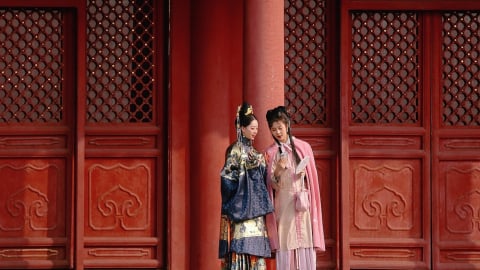
Visitors can also admire shops selling and renting Hanfu with its vibrant robes and exquisite embroidery, or explore vintage cosmetics shops dating back to 1931, selling hand creams, powders, lipsticks, and perfumes. The bustling yet historically rich atmosphere of the old town allows each step to unfold a unique story about the culture, art, and daily life of old Shanghai.

Traditional Chinese cosmetics

Dien Tu Phuong has many Hanfu shops catering to tourists.
Under the dazzling lights, Shanghai appears both dynamic and steeped in history, where modern life blends seamlessly with the imprint of the past. Every street, every teahouse, and every restaurant tells its own story, offering unique experiences that captivate visitors. The harmonious blend of nostalgic Eastern culture and modern flair creates a vibrant, opulent yet profound picture, leaving an unforgettable impression on anyone who sets foot in this city.