VI
VI


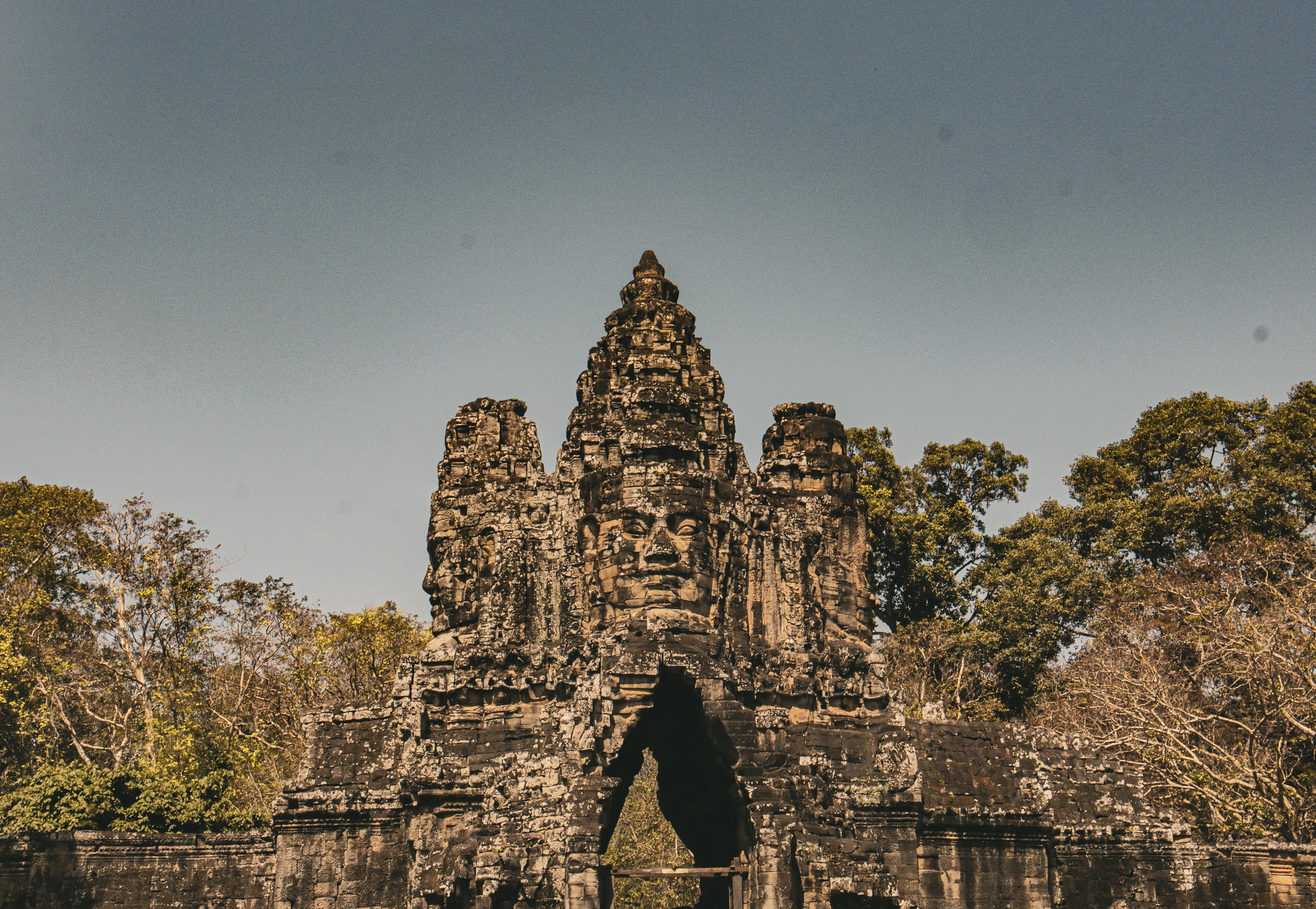

When visiting the Angkor temple complex, tourists often visit Angkor Wat, the largest, most magnificent temple, and a symbol of Angkor's glorious era. However, not far from there lies Angkor Thom. In Khmer, Angkor Thom means 'Angkor city'. Angkor Thom was the last and longest-lasting capital city of the Khmer Empire.
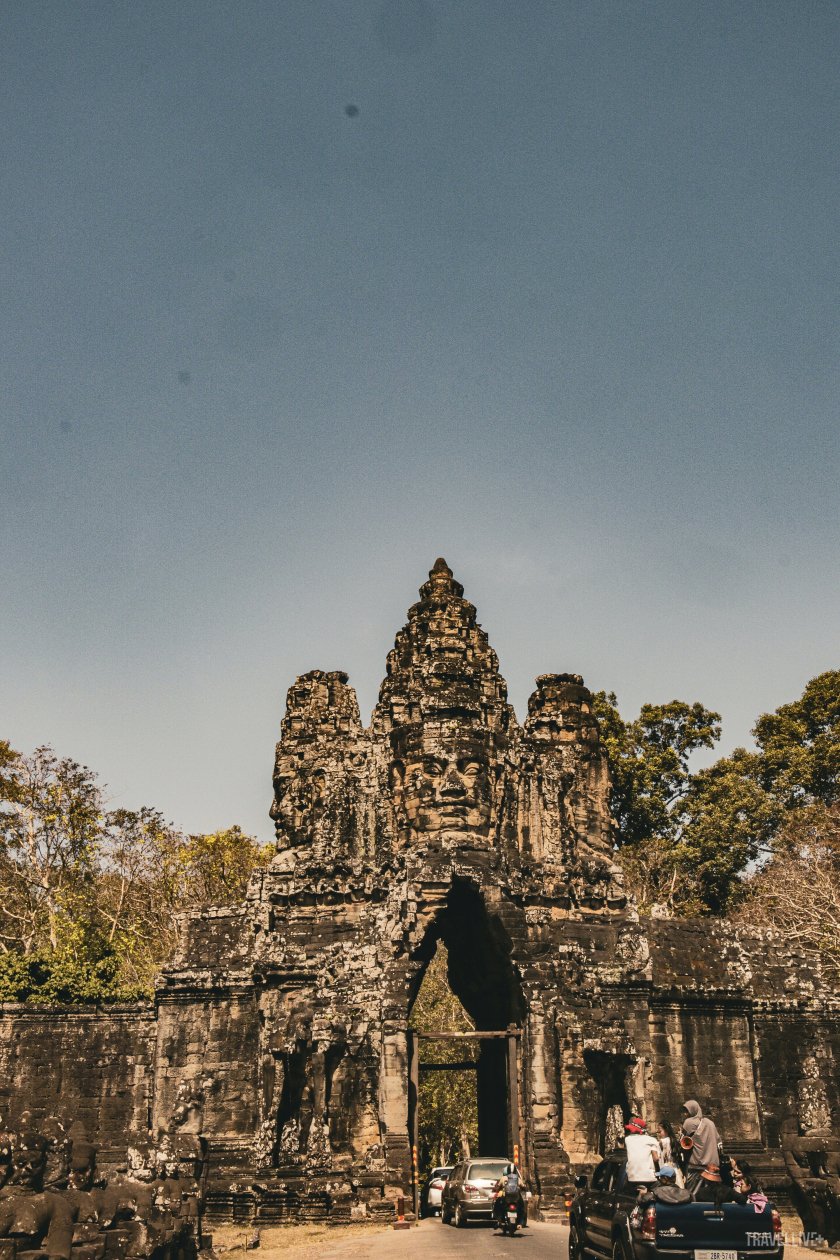
The gate of Angkor Thom city.
The city is situated on the shores of Lake Tonle Sap, about a quarter mile from the lake. The South Gate of Angkor Thom is located 7.2 km north of Siem Reap and 1.7 km north of the entrance to Angkor Wat. The city walls (8 m high, 3 km long, with a moat surrounding them) enclose an area of 9 km². The walls are built of laterite stone with ramparts on top. There is a city gate on each of the east, west, south, and north sides.
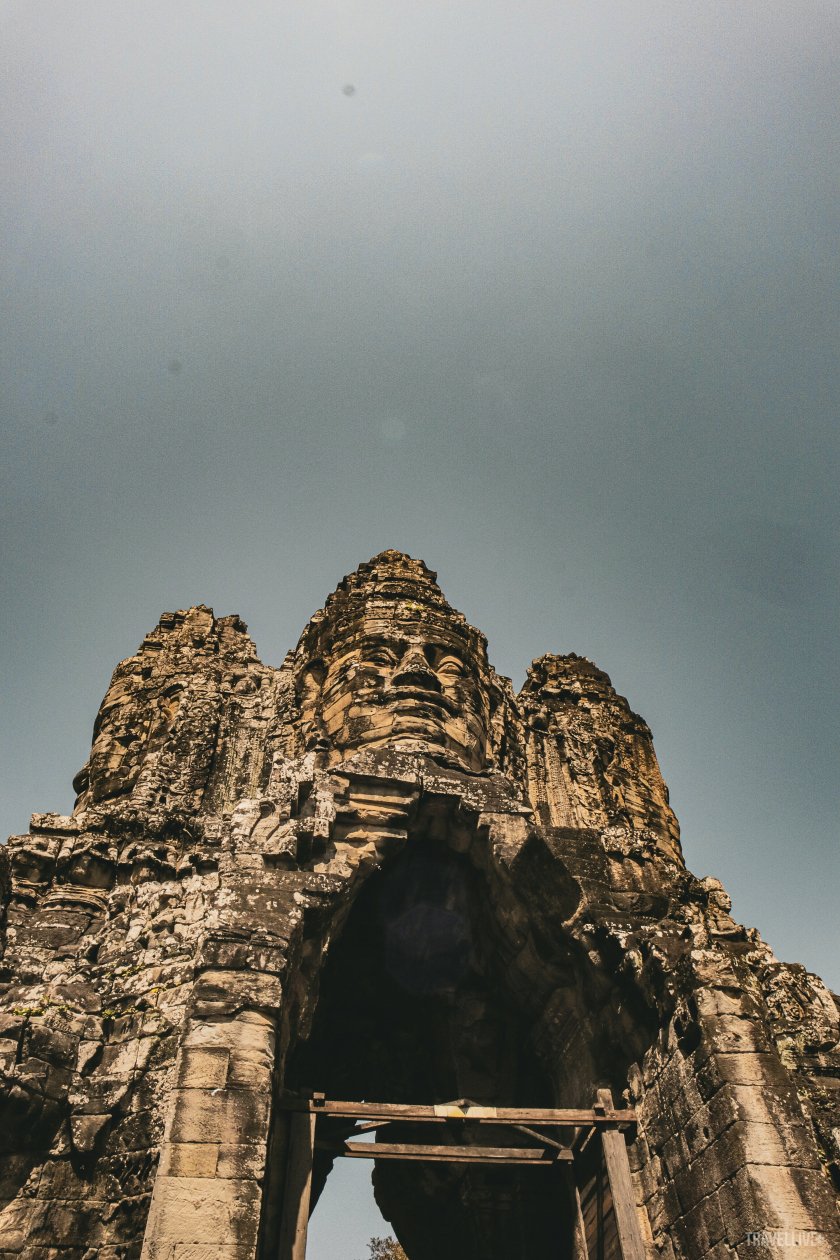
Its grandeur remains intact after all this time.
The faces on the 23-meter-high towers at the city gates (later added to the main structure) resemble those at the Bayon temple and raise the same question of how to interpret their meaning. These faces could represent the king himself, Avalokitesvara, the guardian deities of the kingdom's directions, or some combination of these.
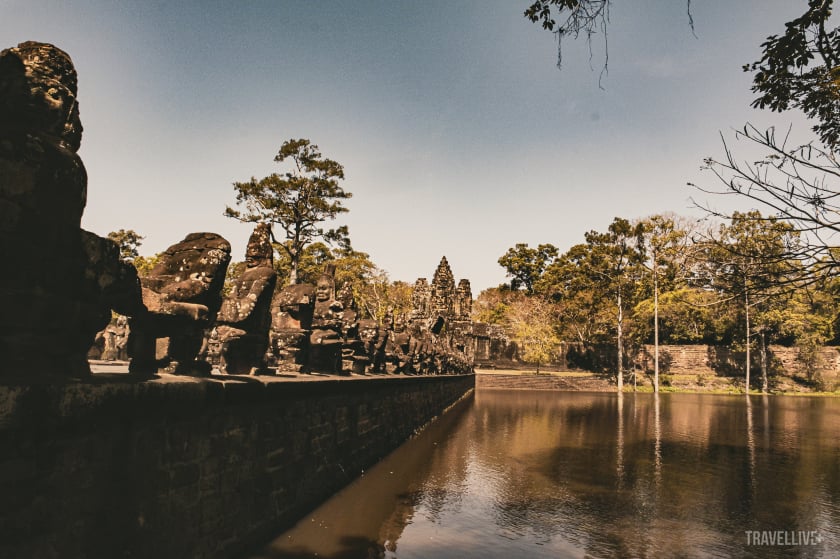
The citadel was surrounded by a deep moat. The Angkorians were renowned for their remarkable understanding of water management and utilization.
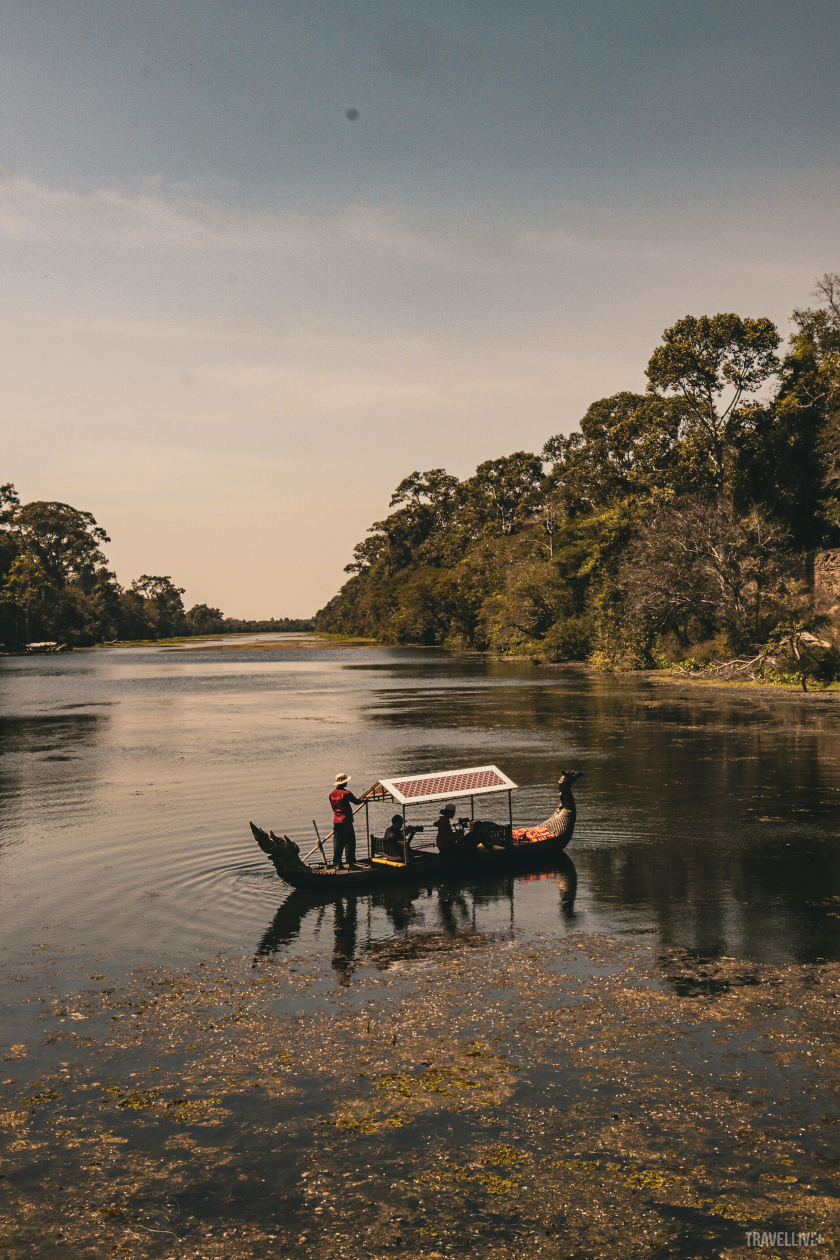
The moat surrounding Angkor Thom is now a popular attraction for both tourists and locals due to its pristine, tranquil, and dreamlike scenery.
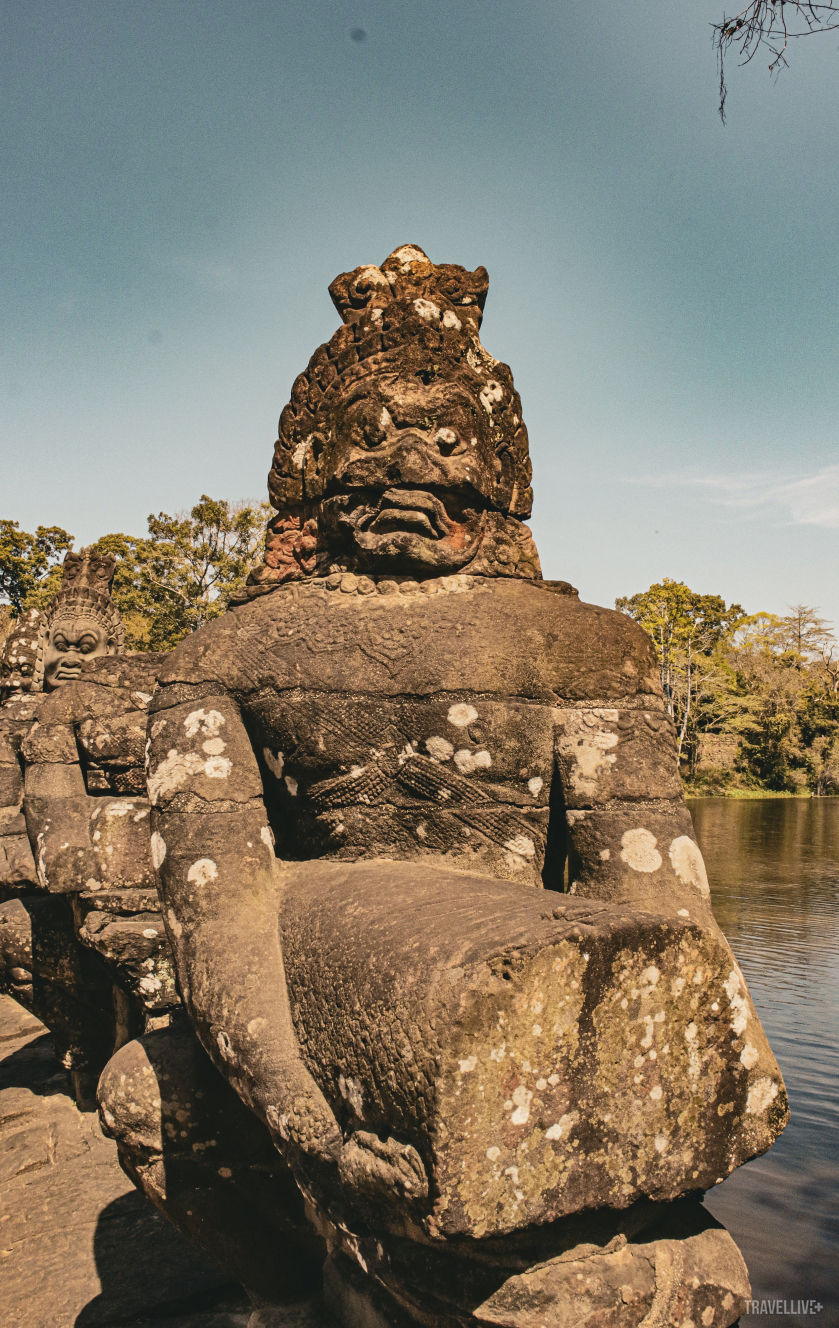
In front of each city gate was a raised platform across the moat, and along each side of the platform was a row of devas, each row lifting a naga in a tug-of-war position.
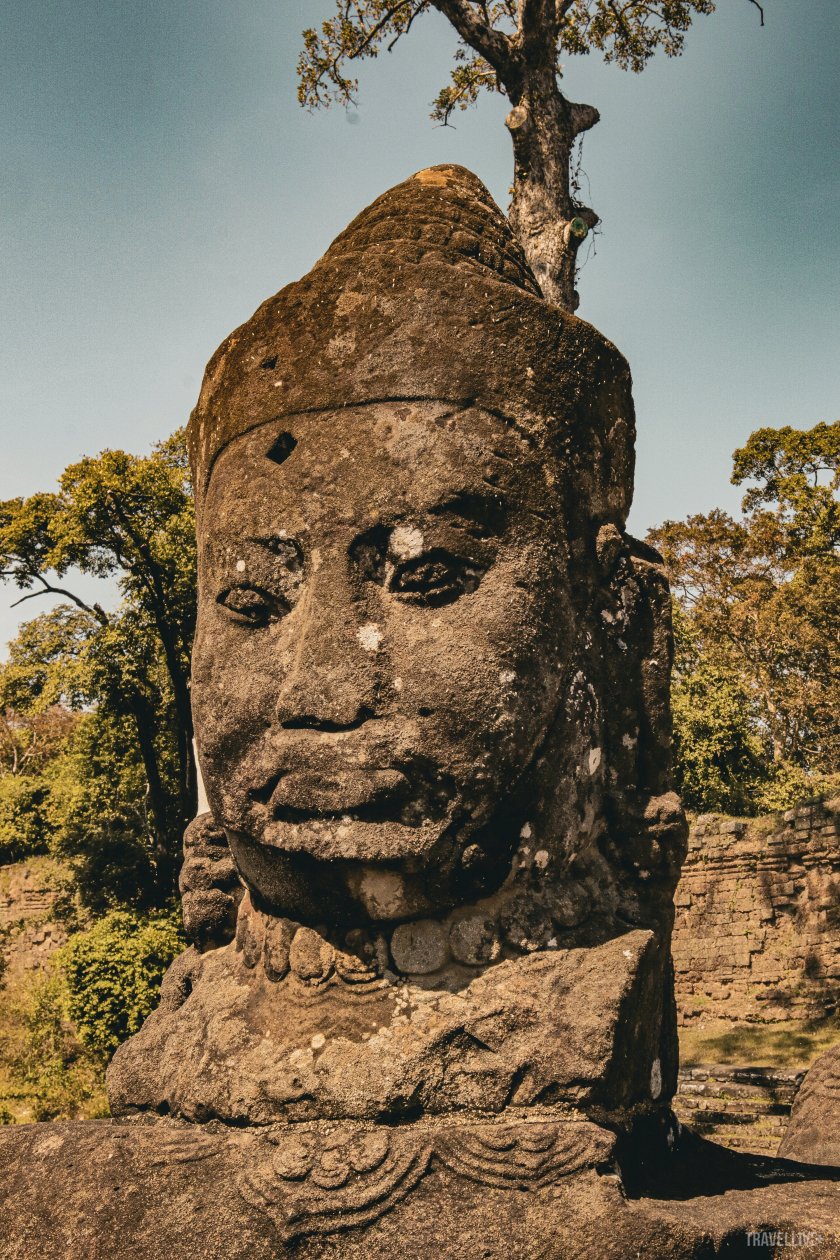
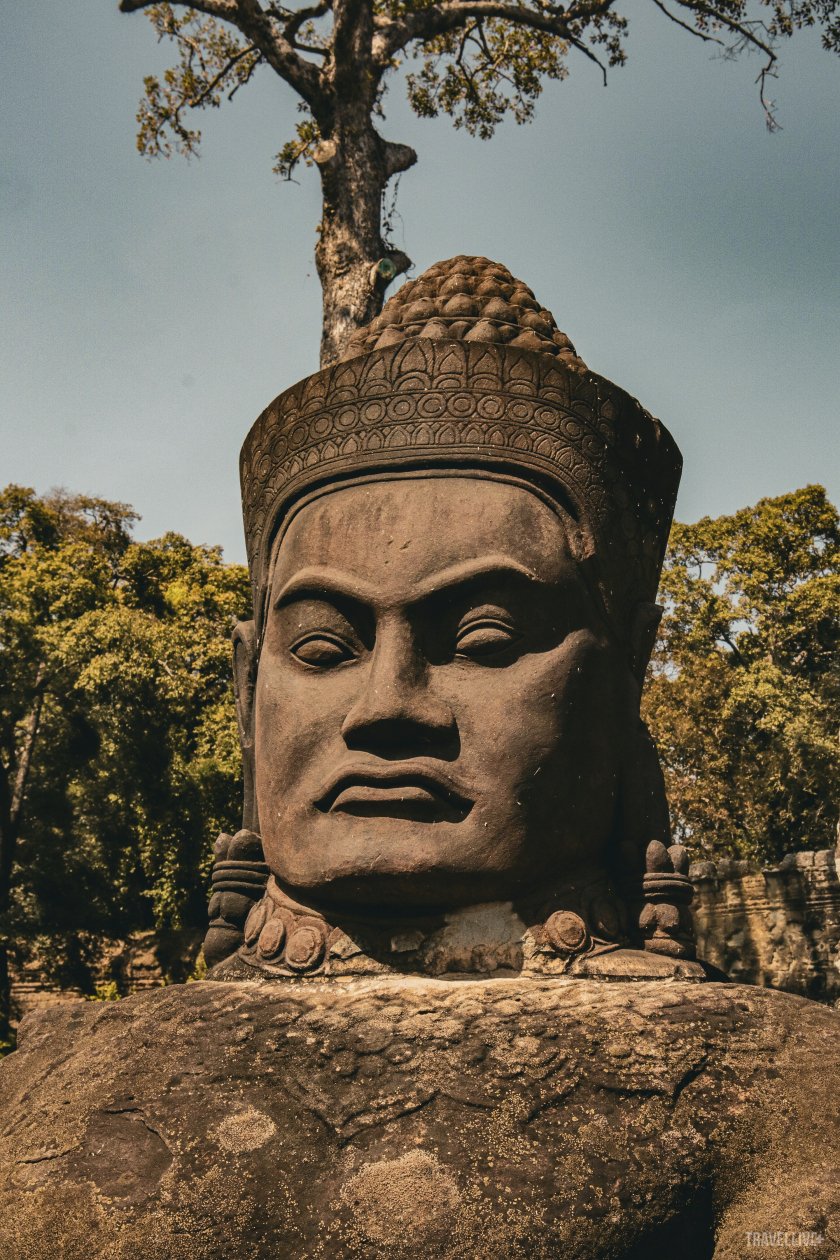
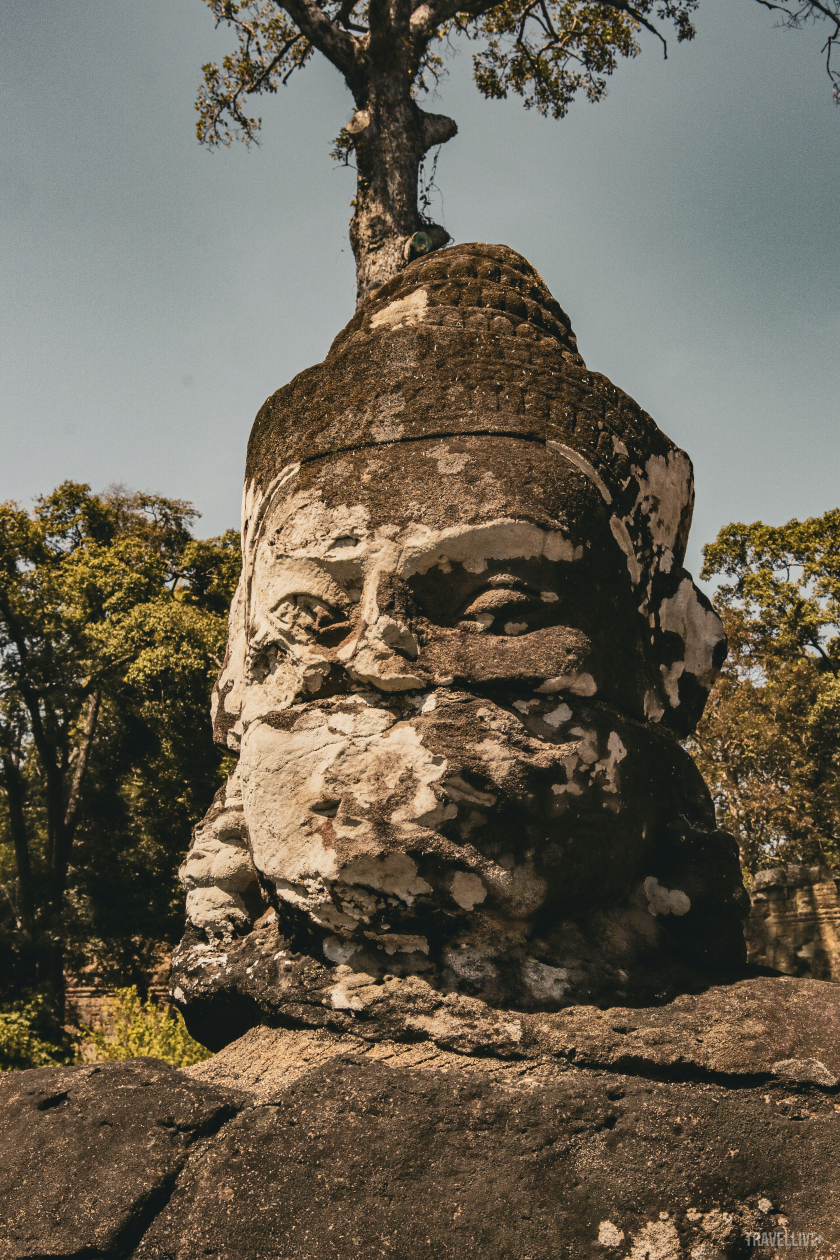
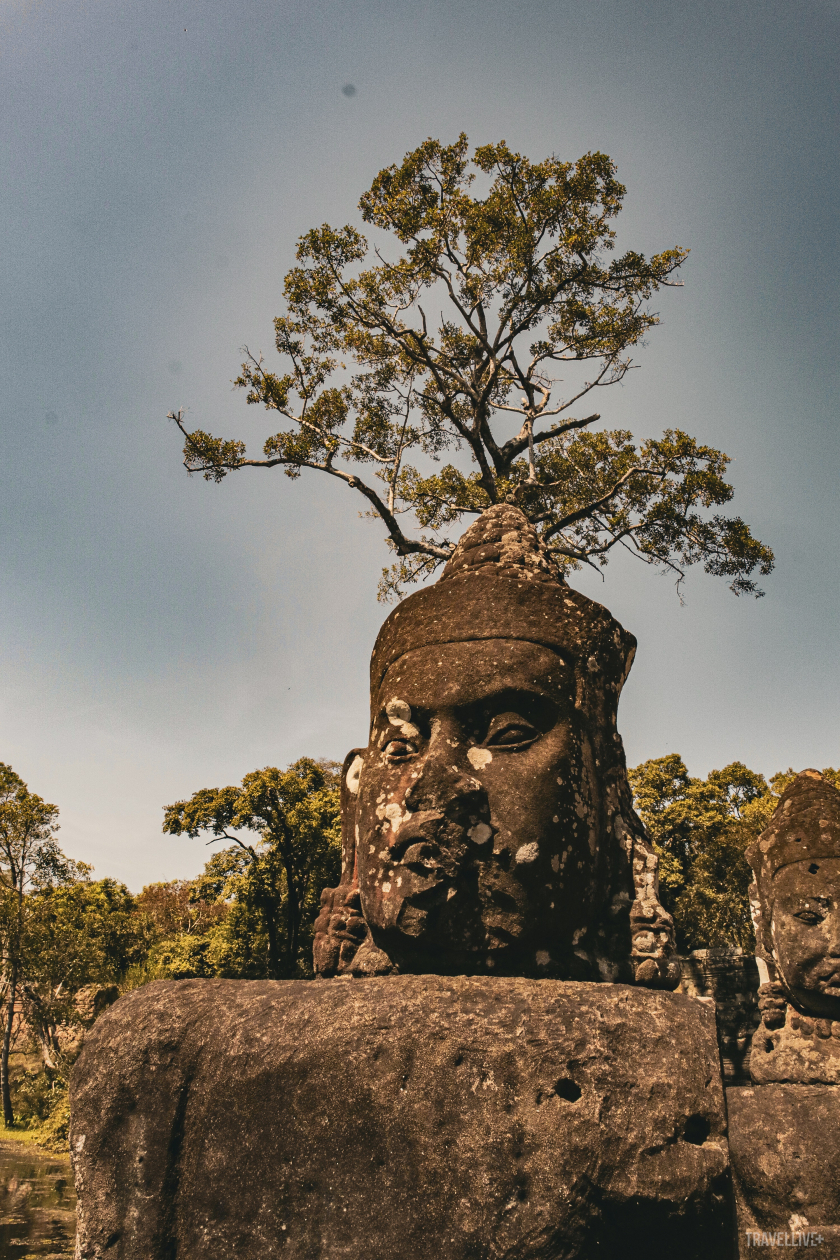
Due to differences in religious beliefs and political ideologies, many of the deva statues, or other Buddhist statues in the Angkor complex, have been severely damaged.
Inside the ancient city of Angkor Thom are numerous temples of varying sizes and other royal structures. One of the places I visited was Ta Prohm temple, which was chosen as the setting for the blockbuster Tomb Raider (2001) starring the legendary Angelina Jolie. The film's resounding success attracted countless Western tourists to experience the mysterious, ruined beauty of Ta Prohm.

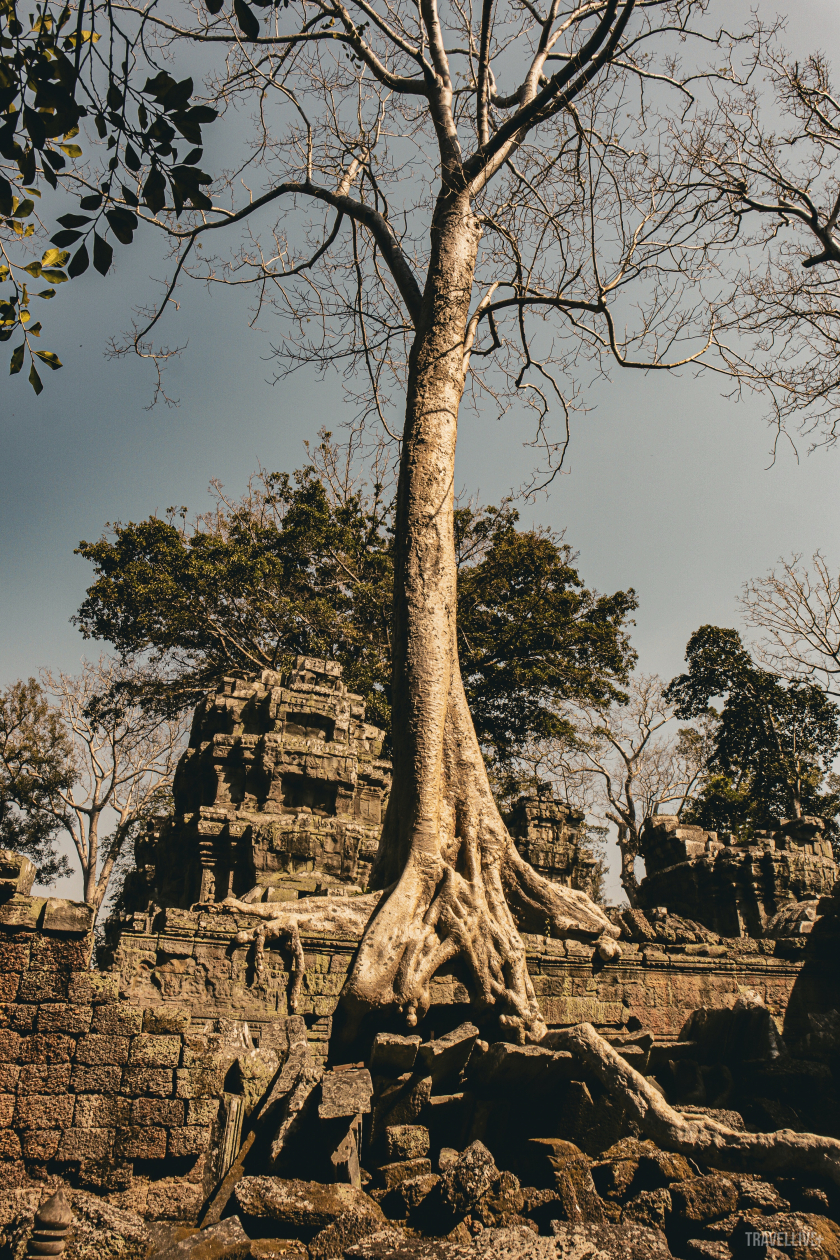
A typical image at Ta Prohm. Giant kapok tree roots have grown and 'embraced' the temples.
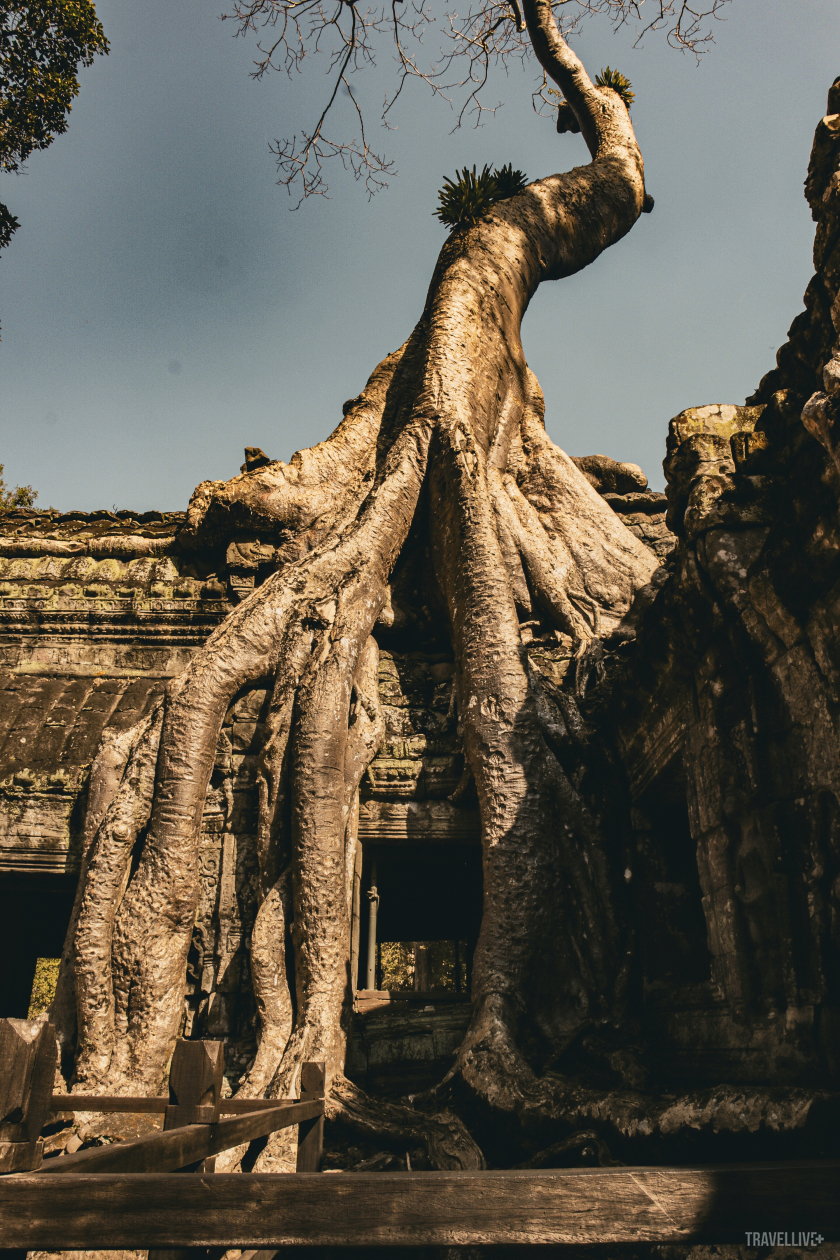
A typical image at Ta Prohm. Giant kapok tree roots have grown and 'embraced' the temples.
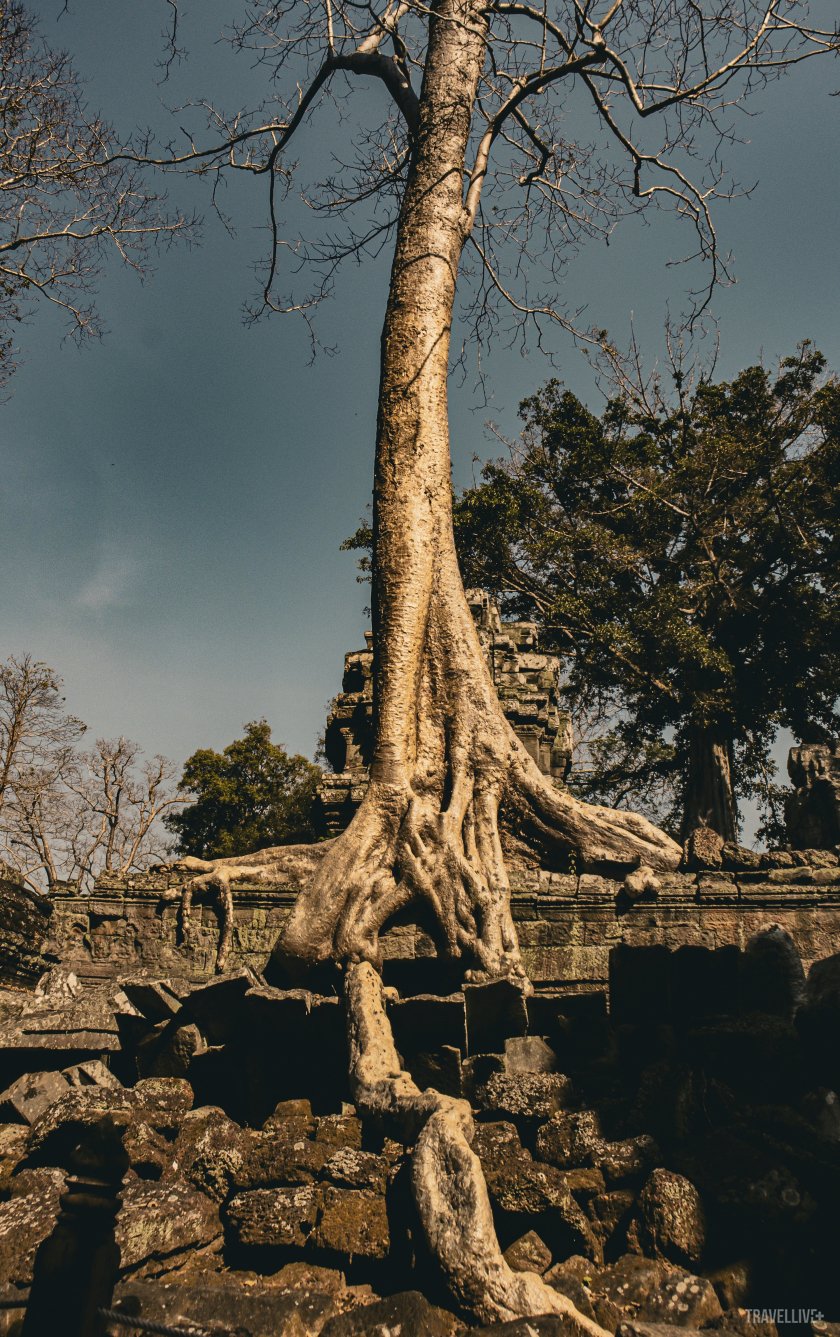
The captivating and mesmerizing nature of Ta Prohm.
Visiting Ta Prohm, you will be amazed by the moss-covered and dilapidated state of the site. The roots of ancient, thousand-year-old kapok trees snake across the ground like giant pythons. These roots wrap around the temples, seemingly protecting them while also suffocating the ruins. Bricks and tiles lie scattered, covered in moss.
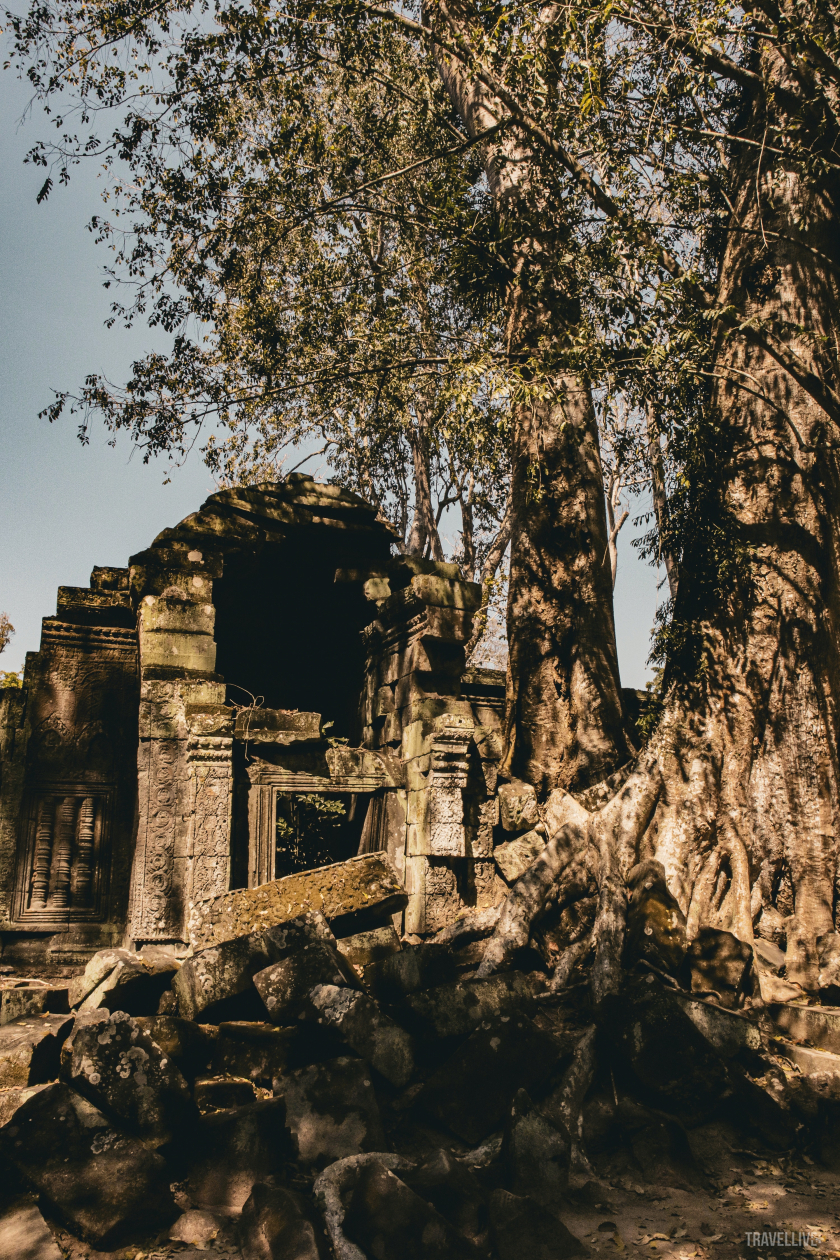
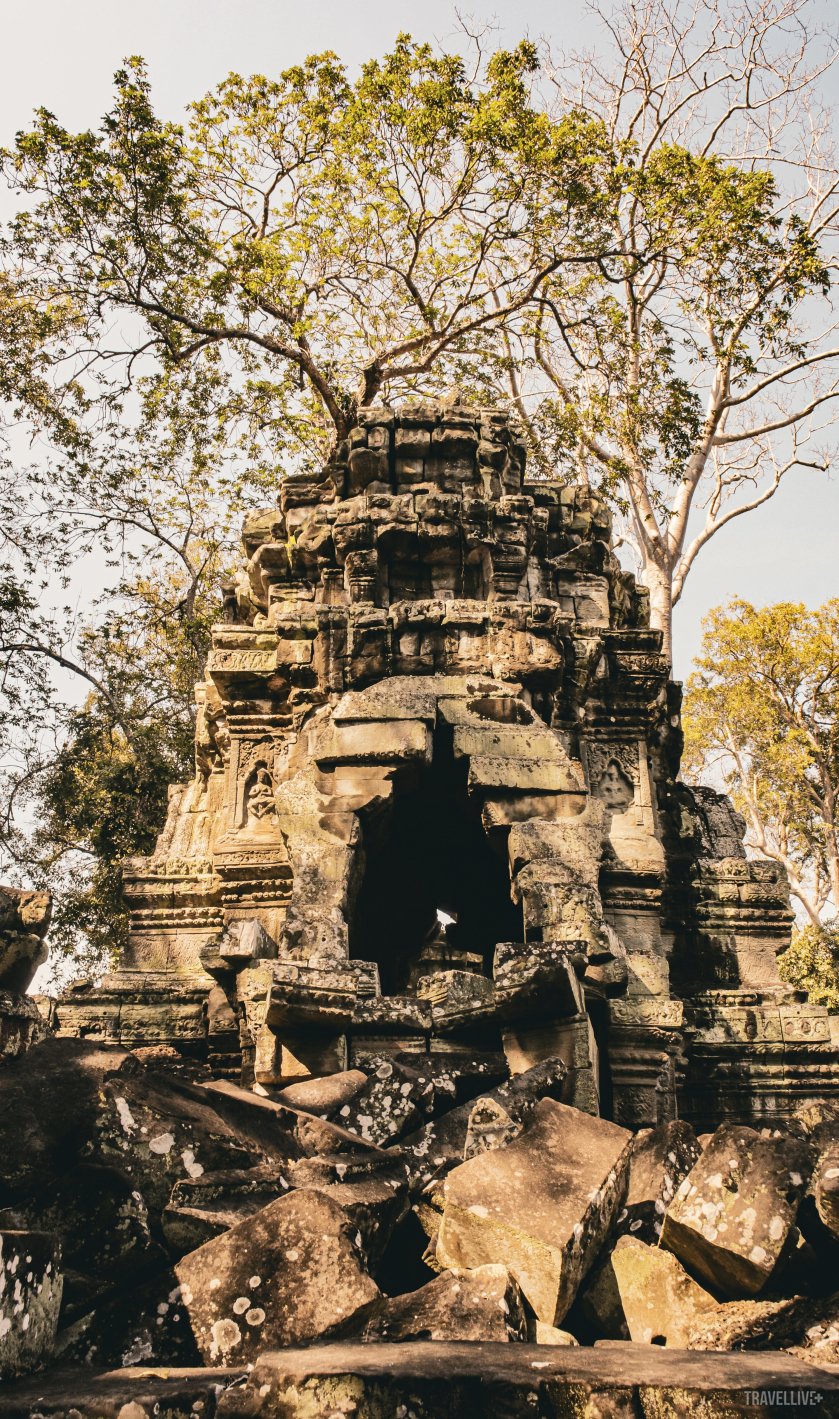
Ta Prohm is truly a treasure of Angkor.
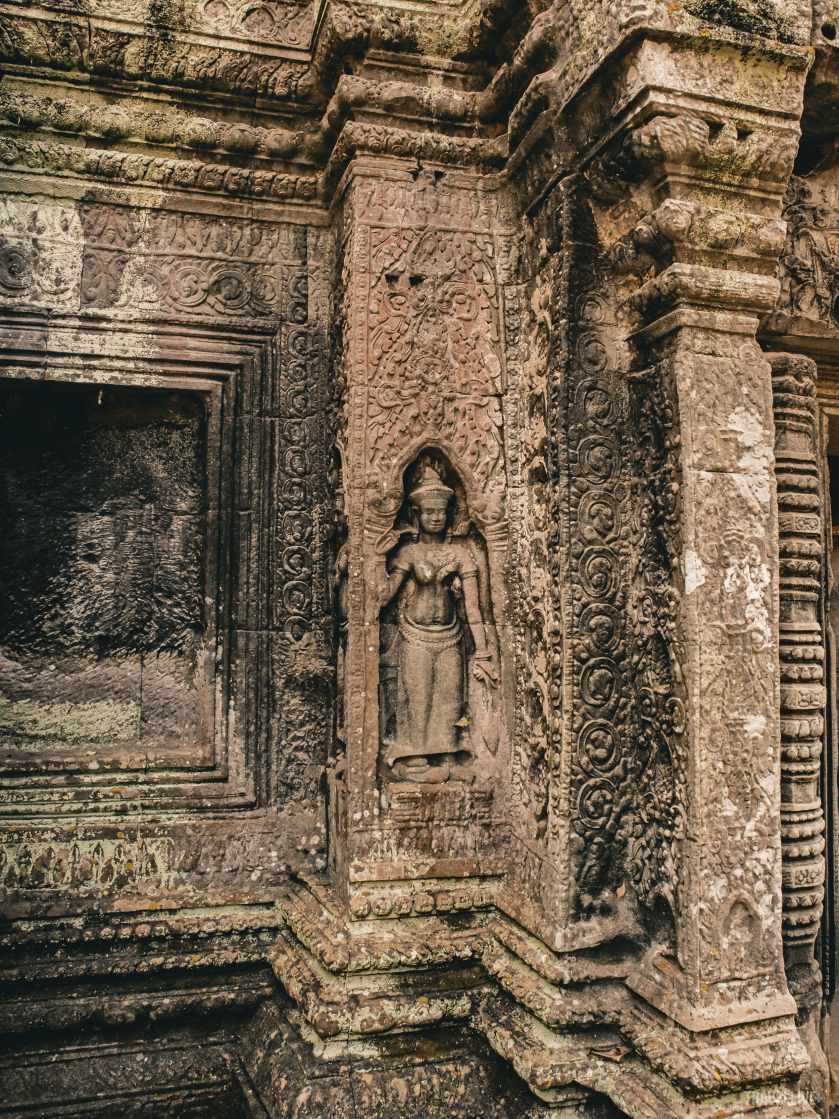
The sculptures of Apsara dancers are incredibly detailed on the walls of Ta Prohm.
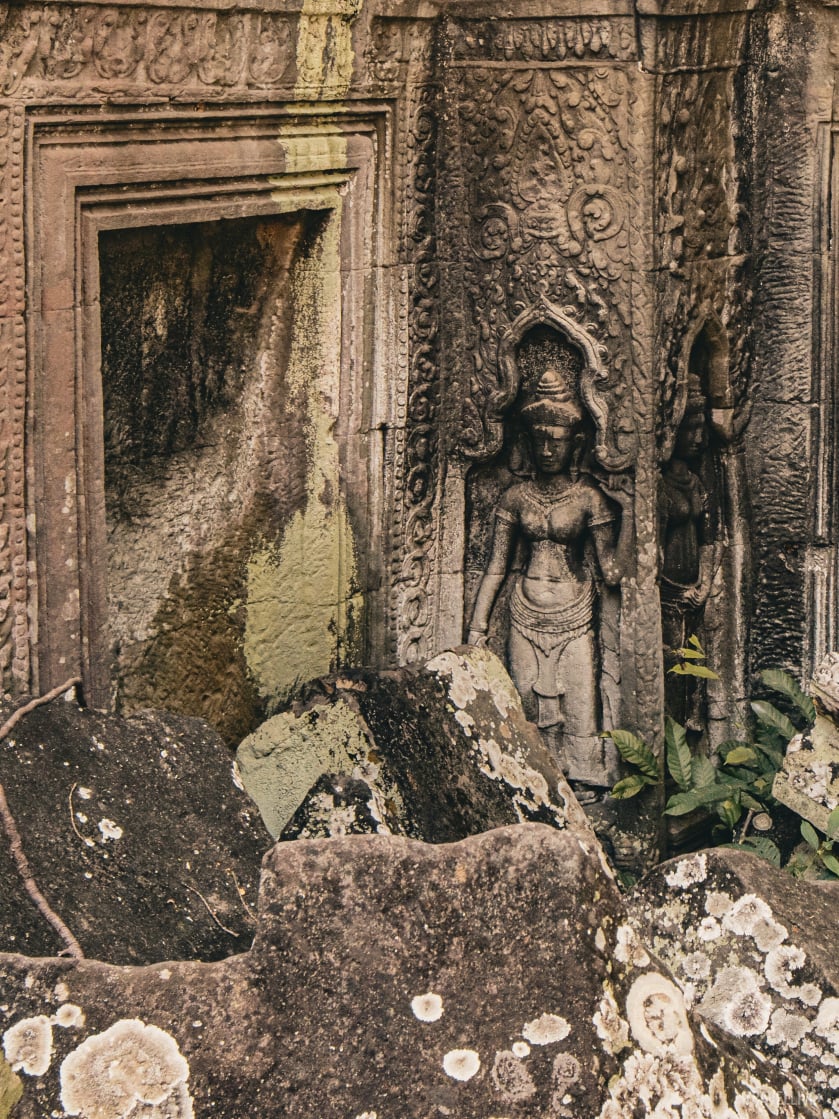
The sculptures of Apsara dancers are incredibly detailed on the walls of Ta Prohm.
Unlike many other large temples such as Angkor Wat and Bayon, which were religious centers and residences of the gods, Ta Prohm was once a monastery and Buddhist school of the ancient Khmer royal family. During its heyday, Ta Prohm was home to thousands of monks.
Many people will wonder why Ta Prohm is in such a state. Perhaps there wasn't enough funding to restore it. According to the book *Ancient Angkor*, that's not entirely true. The structure was intentionally preserved in its ancient state, as it was in the 19th century when Ta Prohm was discovered in the jungle. Visit Ta Prohm sometime soon!
Regarding tourism in Angkor:Traveling to Cambodia from Ho Chi Minh City is quite convenient and easy. You'll take a bus from Ho Chi Minh City, through the Moc Bai border gate (Tay Ninh province), to Phnom Penh. From Phnom Penh, you'll take a sleeper bus to Siem Reap. Siem Reap is the capital of the Angkor complex, with thousands of temples of all sizes, recognized by UNESCO as a World Heritage Site.
About the author:Thinh, a writer specializing in cultural geography, currently lives and works in Ho Chi Minh City. Thinh is a storyteller, sharing his experiences through articles, photo series, and documentaries. His stories are personal reflections and experiences from his travels across the country.