VI
VI


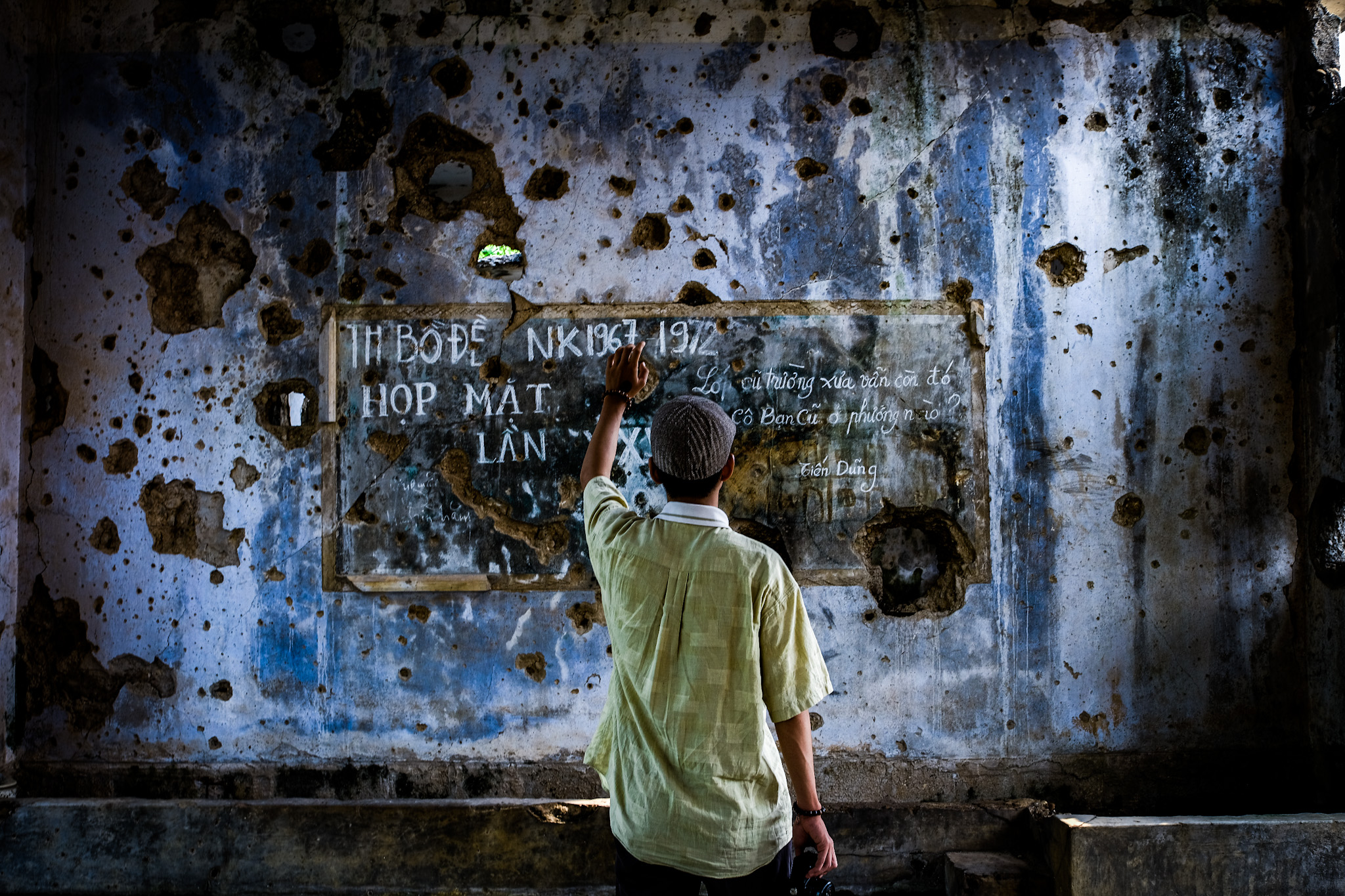
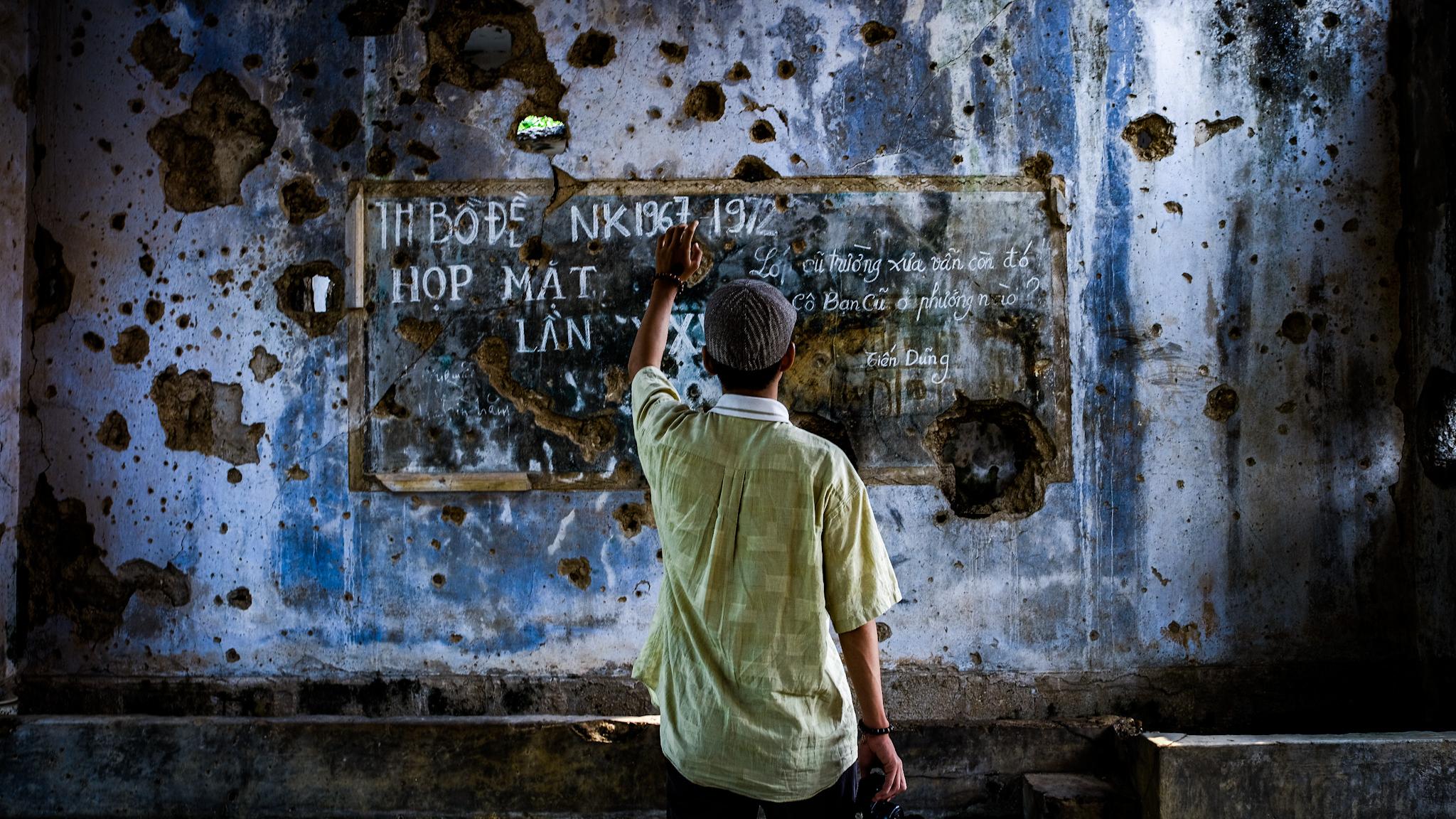
This summer, my friends and I had the opportunity to visit Quang Tri province. Having grown up in Saigon, I've always heard many stories about the bombings and battles of those times. This fueled my desire to travel to the front lines, to the blood-soaked land of Quang Tri, both to find traces of those painful years and to learn lessons from history, and more importantly, to better understand the sacrifices of the previous generation.
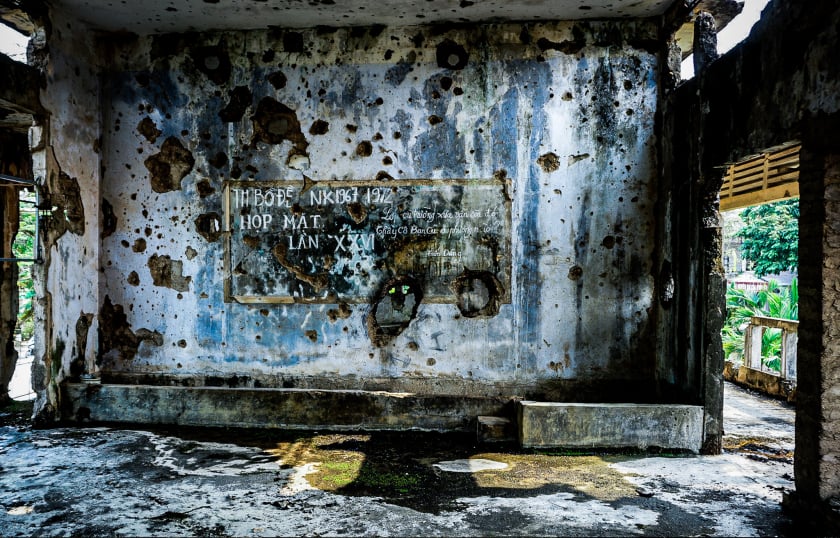
Bodhi School Year 1967-1972 Reunion, 29th Edition.
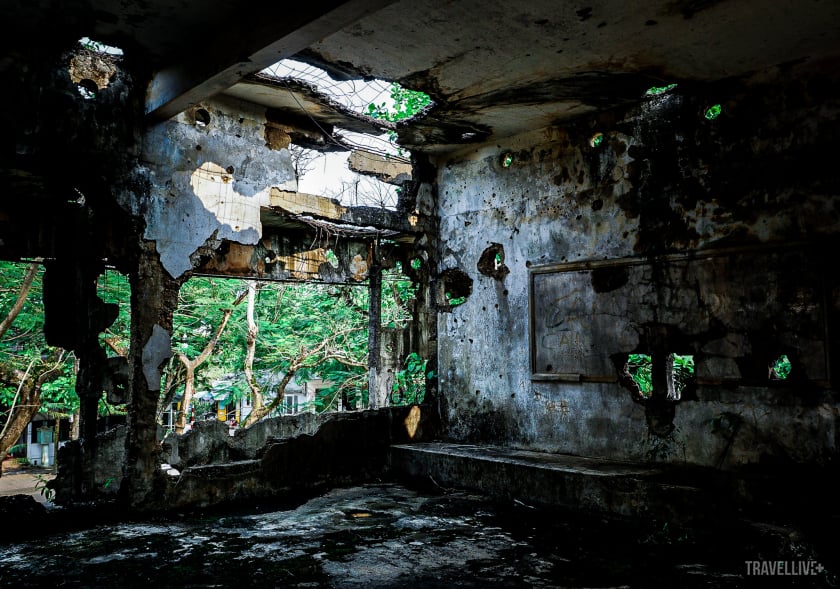
The brutality of enemy bombs and bullets is clearly visible in every section of the walls here.
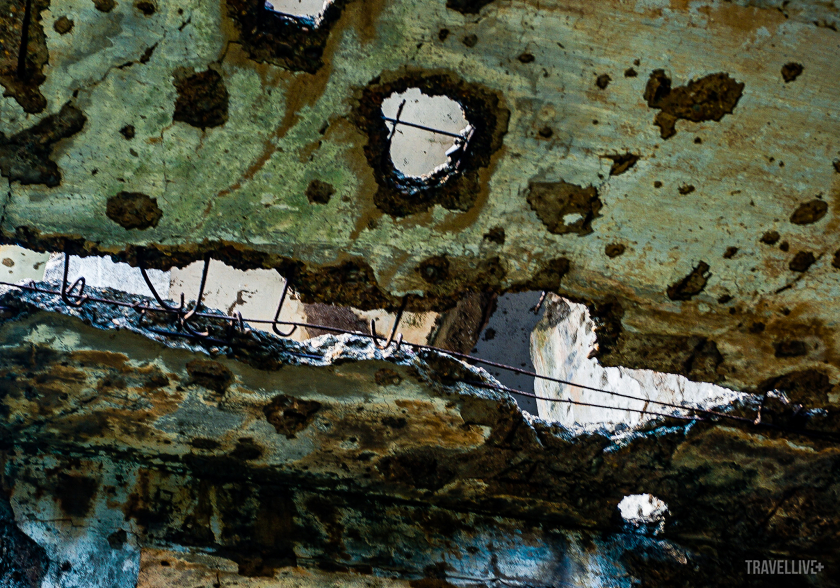
Not only the walls, but also the roof of the building was heavily damaged by bombs and shelling.
In 1972, the US launched numerous attacks to retake Quang Tri. The entire province of Quang Tri endured 81 days and nights of bombing, with many areas leveled and devastated, and the ancient citadel of Quang Tri completely razed to the ground. Remarkably, throughout the bombing raids, one structure remained standing, defiant against the enemy's bombs and bullets: Bodhi High School, located right in the center of Quang Tri town.

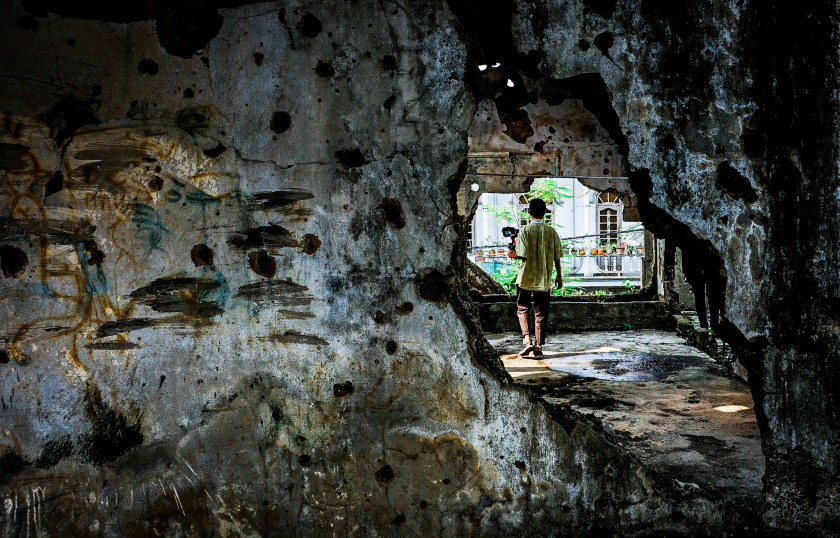
The numerous bomb craters on the walls evoke the pain and suffering of war.
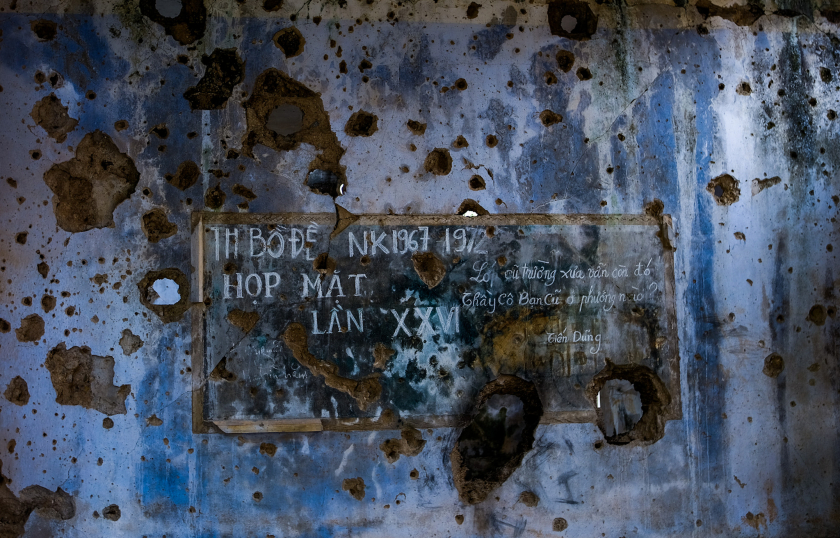
The old classroom and school are still there, but where are the old teachers and friends? It's a difficult question, and few can answer it.
After the reunification of the country, Bodhi School was preserved in its dilapidated state as a historical relic of the resistance war against the US. Bodhi School is one of the cultural and historical tourism destinations in Quang Tri.
The school is a historical and cultural relic, classified as a national historical monument in 1986. In 2013, along with Quang Tri Citadel and other sites, the school became part of a special national monument complex commemorating the 81-day and 81-night battle of 1972.
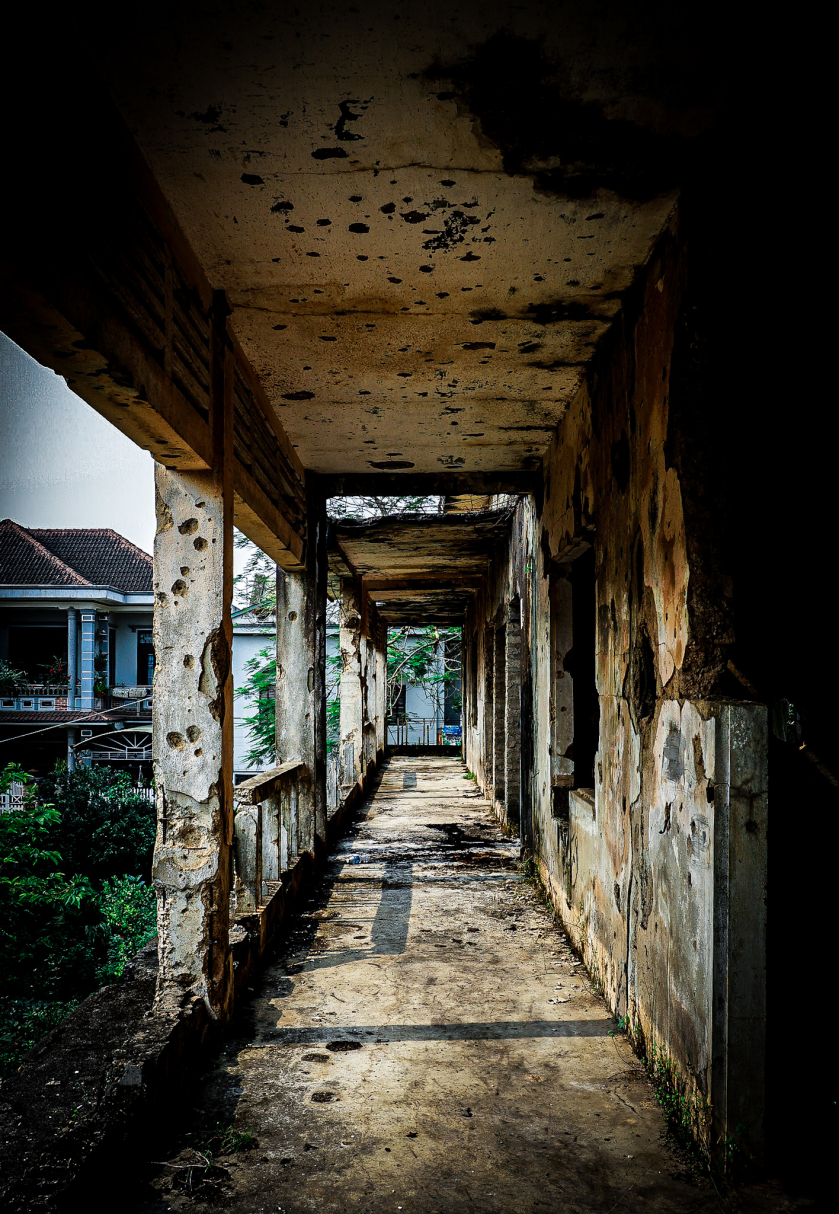
The hallway, which should have been filled with joyful laughter, was now deserted, with no one passing through anymore.
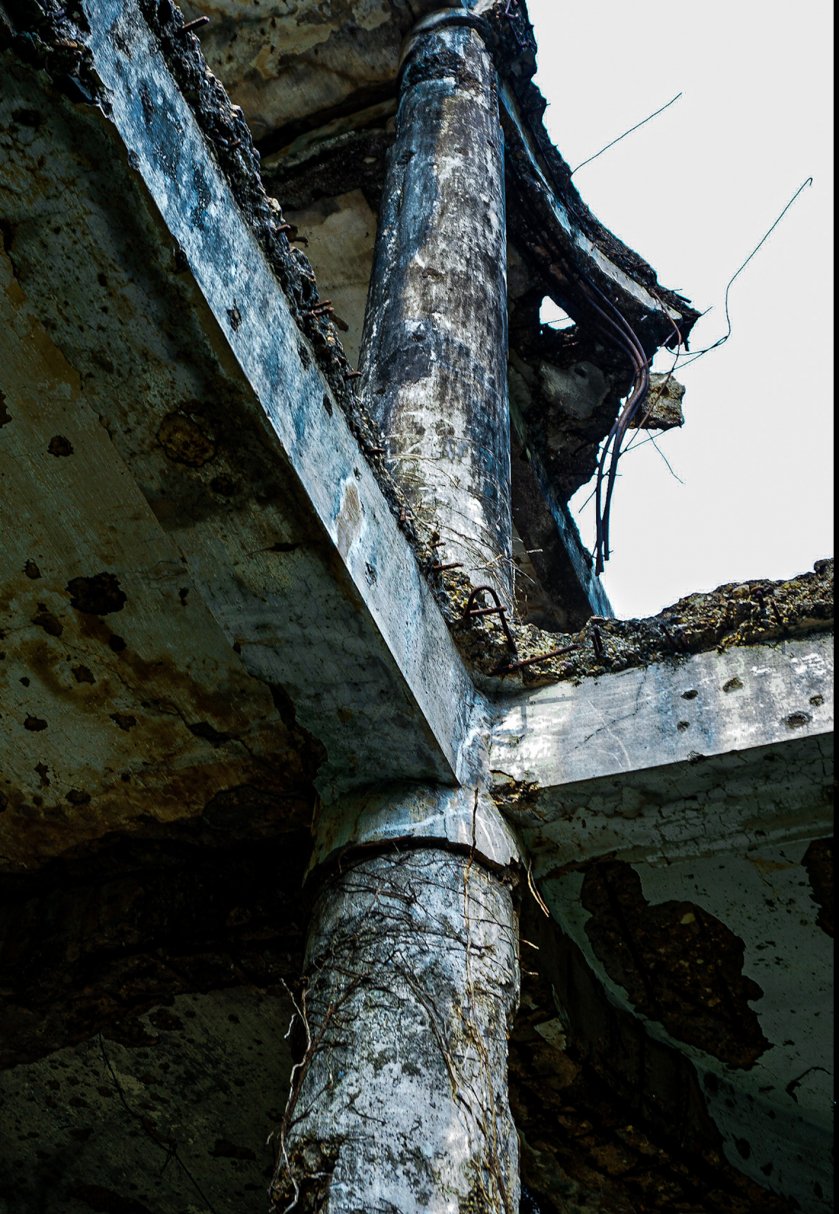
Many people still don't understand how the Bodhi School could have survived in such a miraculous way.
The barren land has now blossomed, and peace has returned to this rocky land of Lower Laos. For a young person like myself, visiting Quang Tri, even to the very front lines, is an indescribable feeling. It makes me feel like everything happened just yesterday. The immense sacrifices of our ancestors and compatriots come alive again through the overwhelming images of the brutality of war. All the experiences and emotions on this journey will stay with me throughout my future travels.
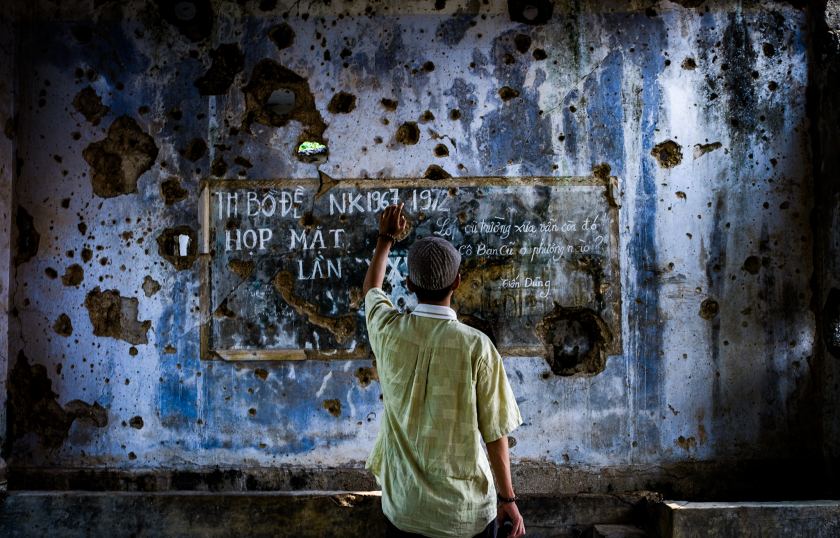
We cannot go back and touch the past, but we can certainly learn from it.
Additional information:
Regarding transportation: Quang Tri does not have an airport. From Saigon or Hanoi, you must fly to Phu Bai Airport (Hue) or Dong Hoi Airport (Quang Binh), then travel to Quang Tri. If you enjoy exploring, you can rent a motorbike to get around Quang Tri.
About the author: Thinh is a curious person with a burning passion for exploring culture and geography. Thinh has stories to tell through films, photo collections, or short essays. "A Story by Thinh" is a personal sharing of the emotions experienced during the magical journeys of youth.