VI
VI


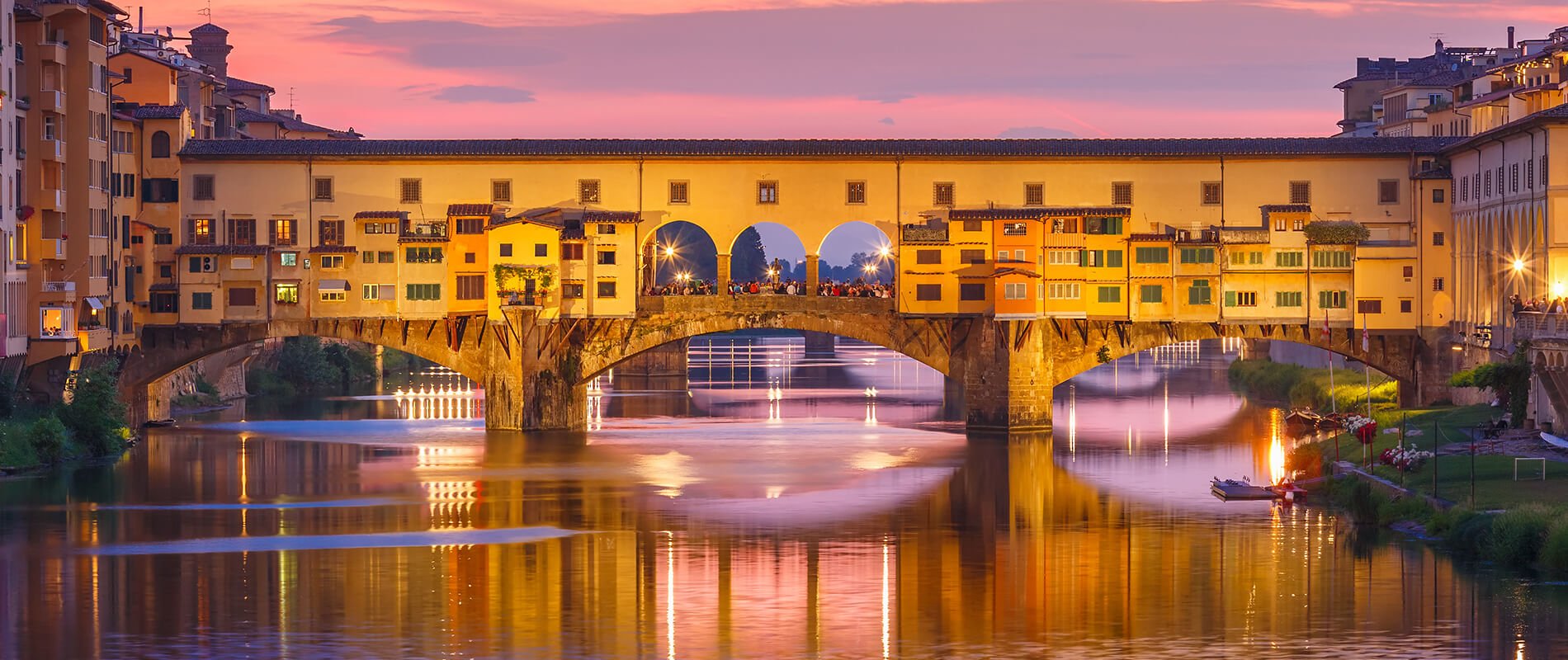
Ponte Vecchio is the world's most uniquely designed bridge. From a panoramic view, visitors are amazed, as it resembles a miniature city on a river, a fact that would make one doubt its existence as a bridge. This is because Ponte Vecchio has no railings or vehicles.
The Ponte Vecchio bridge was built of stone and wood during the Roman era. However, it suffered significant damage from two floods in 1117 and 1333. Later, the Ponte Vecchio was rebuilt and reshaped to its original form, and it stands today. The bridge served multiple purposes, including trade, commerce, and pedestrian movement.
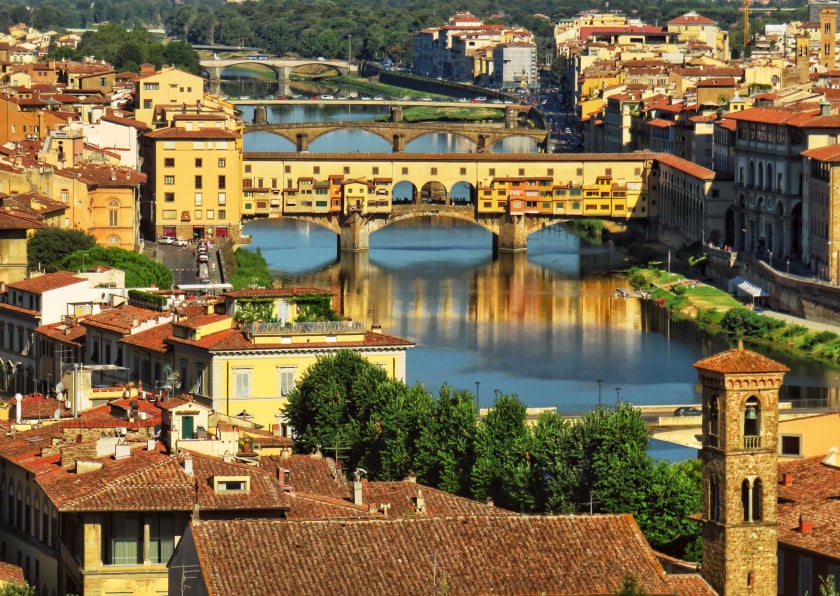
Panoramic view of the Ponte Vecchio bridge, Florence, Italy
From a distance, you'll only see two rows of old houses on either side of the bridge, suspended over the Arno River. There's no traffic on the Ponte Vecchio, and it's very quiet. The bridge resembles a closed, horizontal rectangular box.
This was the first bridge to cross the Arno River at its narrowest point and the only bridge in the Renaissance Tuscan city to survive the 1944 German bombing during World War II; it is the only one that remains today. The Ponte Vecchio is even more special because it is known worldwide as a living witness to history, while other bridges across the Arno River were destroyed. Therefore, the Ponte Vecchio holds immense historical value for Italy.
In the 1400s, the bridge was bustling with merchants selling meat, fish, and vegetables to the local population. They were allowed to build small shops on the bridge for convenience and to avoid disturbing residential areas. Later, Ponte Vecchio quickly became a thriving trading hub in Italy.

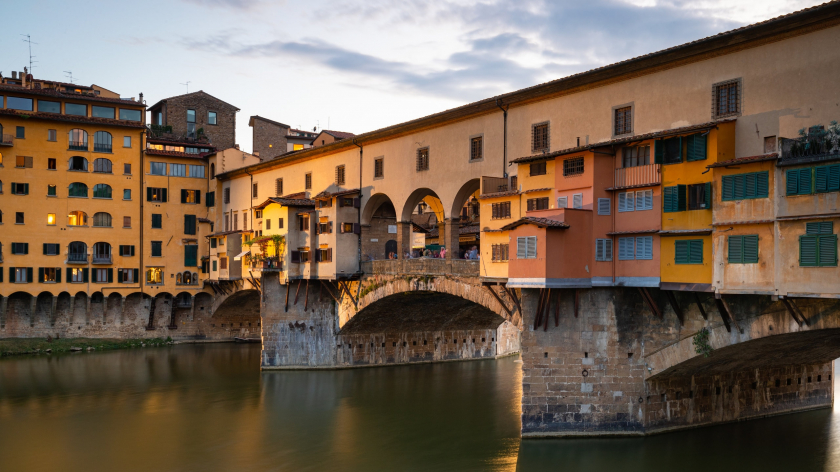
The Ponte Vecchio bridge holds immense historical value for Italy.
The greatest architectural achievement of the Ponte Vecchio is the Vasari Corridor. In 1565, Duke Cosimo I de Medici commissioned architect Giorgio Vasari to build a road across the bridge to connect the Pitti Palace to the Uffizi Garden.
At the very center of the Ponte Vecchio bridge, a series of large windows were designed to offer panoramic views of the Arno River. This approximately 1-kilometer-long road was built in five months to allow the Medici family free movement between their residence and the palace.
Therefore, the food shops on the Ponte Vecchio bridge were moved to avoid the foul smell affecting the Duke's family. Later, jewelers and silversmiths came to replace them and began trading in jewelry.
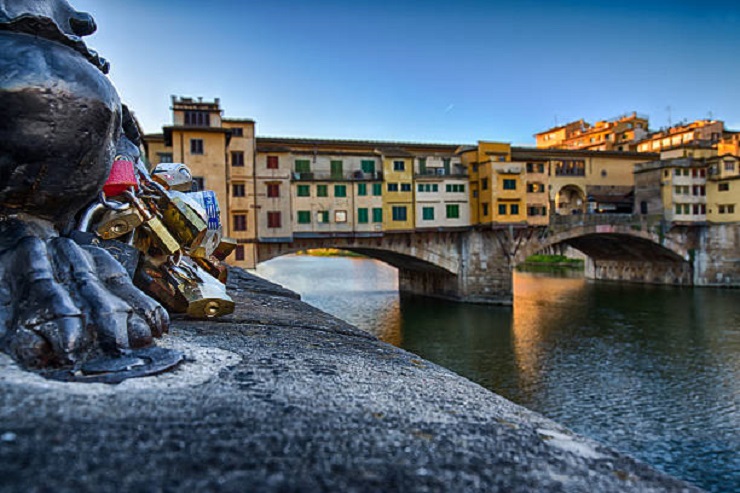
Beyond its historical significance in Italy's struggle for independence, the Ponte Vecchio bridge also stands as a testament to the love of many couples.
To this day, jewelry remains a major commodity traded around the Ponte Vecchio. Visitors can purchase rings, bracelets, necklaces, and many other valuable pieces of jewelry at the shops located there.
The Arno River has six other bridges for pedestrians and vehicles to cross, except for Ponte Vecchio, which is closed to traffic. This is because the ancient bridge is always crowded with shoppers at the shops. Stepping onto the bridge is like entering a bustling miniature city center, full of various goods.
Beyond its historical significance in Italy, the Ponte Vecchio bridge is also a testament to the love of many couples. It's a tradition for couples visiting the bridge to buy a padlock, engrave their names on it, attach it to the bridge, and throw the key into the river. This custom originates from a story told by the padlock shop owners at either end of the bridge. According to the story, if you write your name and your loved one's name on a padlock, attach it to any spot on the bridge, and throw the key into the river, the couple will live happily ever after.
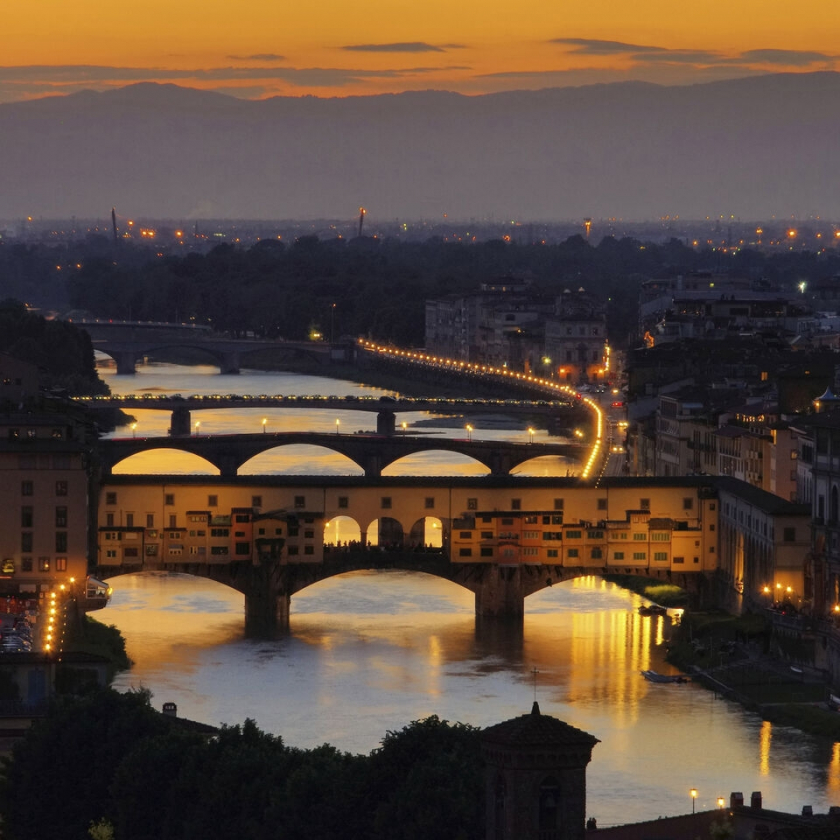
Today, the Arno River has six other bridges for pedestrians and vehicles to cross, except for Ponte Vecchio, which does not allow vehicles to pass.
However, this custom has also caused considerable damage to the architecture of Ponte Vecchio. Tourists, especially couples, flock here and attach padlocks indiscriminately all over the bridge. The city authorities have removed hundreds of thousands of padlocks on numerous occasions.
Even a sign was placed at the top of the bridge warning that anyone caught attaching padlocks to the bridge would be fined 50 euros (approximately 1.4 million VND). That still doesn't seem to deter the sight of padlocks intertwined around the Ponte Vecchio bridge.
The Ponte Vecchio is a remarkable bridge, not only in terms of its architecture but also in its immense historical and cultural significance. Centuries have passed, yet the Ponte Vecchio remains a historical witness and a landmark commemorating countless love stories around the world.