VI
VI


WHAT ARE THE NORTH LIGHTS?
The aurora borealis is formed when atoms of the Sun interact with the Earth's atmosphere. Countries located at high latitudes can witness this phenomenon. The aurora displays a spectrum of colors ranging from white, green, blue, to pink and purple, with intensities varying from low to high. The most common colors are green and blue.
- Timing: September to April, with the ideal time being from November to February.
- Locations: Alaska, Northern Canada, Northern Sweden, Northern Norway, Iceland, Greenland, and Finland.
- Conditions for viewing the Northern Lights: the aurora borealis is visible between 8 PM and 2 AM in winter, with clear, cloudless skies, a non-full moon, extremely cold temperatures, and no light pollution.
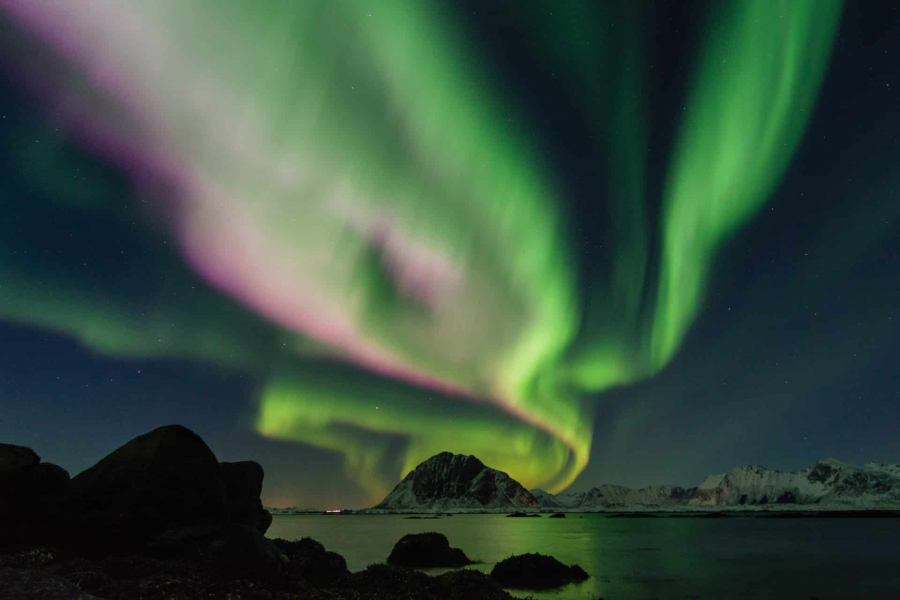
The aurora borealis is a fascinating natural phenomenon, often described as a dance of light in the sky.
Iceland is the ideal place to see the aurora. It has the lowest winter temperatures, making it perfect for viewing the aurora. This is because the Gulf Stream, which flows through the country, causes winter temperatures in the capital Reykjavik to reach a maximum of -15°C on the coldest days.
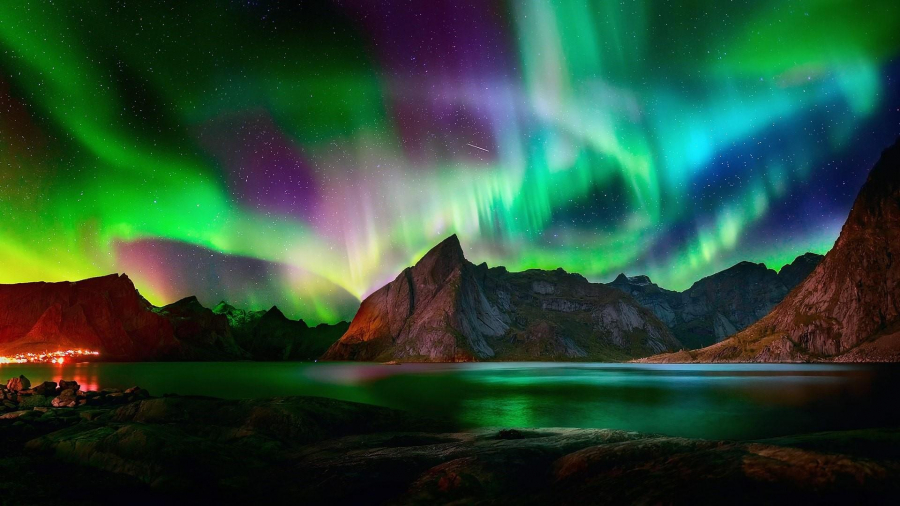
The scenery in Iceland seems surreal.
Iceland is also a frequent sighting location for the Northern Lights, boasting a high KP (Kilometer Mark of Light). The conditions for viewing the aurora borealis in Iceland are ideal due to its sparse population and low light pollution, allowing for visibility even within cities if the intensity is high. The country also experiences some of the world's strongest winds and constantly changing cloud cover, making clear skies easier than in other countries.
WHAT TO PREPARE WHEN GOING HUNTING FOR THE "BLUE FAIRY"?
1. Prediction applicationbreastclight
Basic weather app tips: check the weather beforehand because if it's raining, snowing, or very cloudy, it won't be ideal for aurora viewing. If the forecast predicts fog or snow, you should pack your bags and go to bed instead of wasting your time.
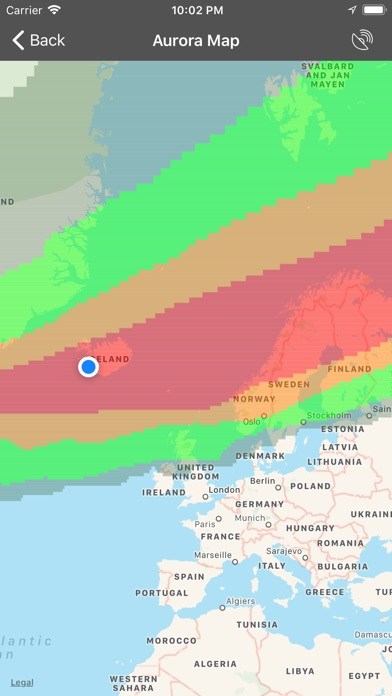
Two useful apps recommended by Ly Thanh Co for Northern Lights hunting.
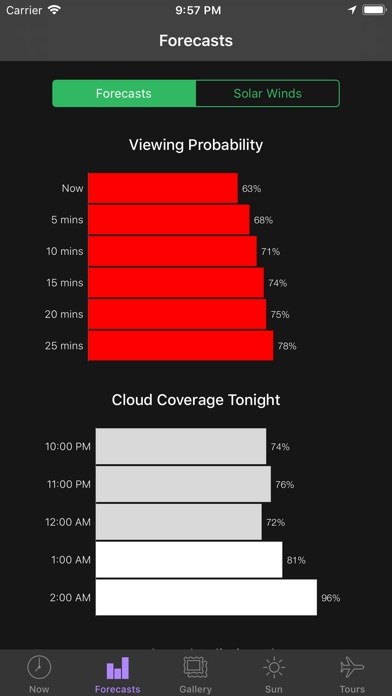
The support of mobile phone applications will make the process of hunting for the Northern Lights much easier.
The Aurora app checks the intensity of the aurora borealis: this is a basic app used to check the intensity of the aurora borealis. If the KP index reaches 3, you can track the aurora borealis. The app also includes a map to track where the aurora band is moving across the Earth.
2. Wear warm clothing.
The three-layer rule: a layer close to the body, a wool layer, and a windproof layer. If the clothes aren't warm enough, add a few more layers.
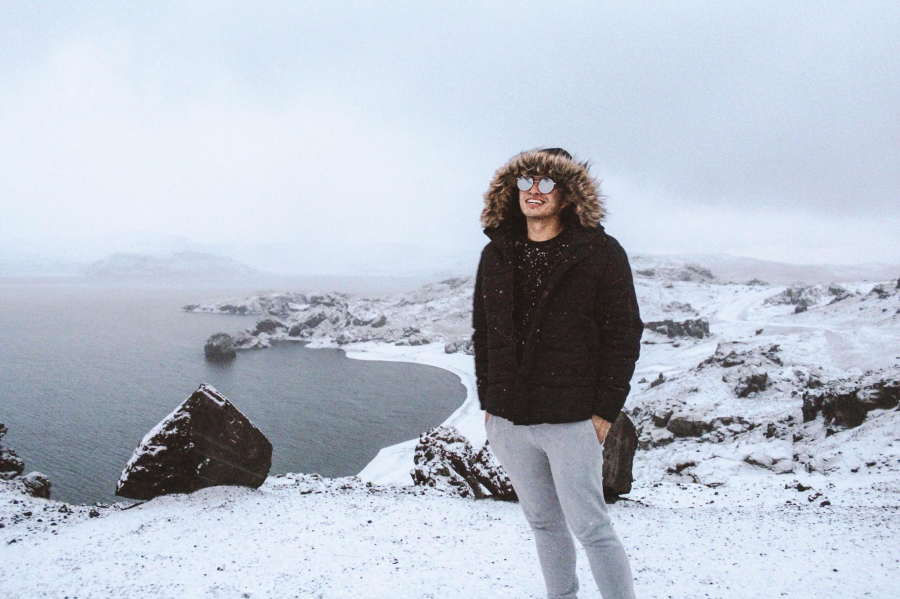
Photo: Ly Thanh Co
Warm gloves are a must because the cold outdoor conditions will make you shiver and unprepared for the photoshoot. A wool hat is also necessary to keep your head and ears warm, as these areas are prone to heat loss.

Bringing along a thermos of hot coffee or tea will never be superfluous, as it helps regulate and maintain body temperature.
3. Camera equipment
A DSLR camera or smartphone can take photos in low light (you can certainly use your smartphone for long exposures, but the photos won't be as sharp or beautiful). You'll also need a tripod, a flashlight or your phone's flashlight, and a power bank for both your camera and phone if you're staying for a long time.
How to take photos with the Northern Lights
Photographing the Northern Lights alone is quite simple; you just need to use long exposure and focus on the edges of the light. But photographing people alongside the aurora requires more careful preparation. Below is a guide from travel blogger Ly Thanh Co on how to capture unforgettable aurora photos.
1. Set up the camera.
With the Northern Lights in motion: expose for 3-10 seconds and ISO 1600-3200, f1.4-2.8.
For aurora borealis with minimal movement: exposure time 10-30 seconds, ISO 600-800, f1.4-4.0.
2. Pose and hold the pose.
This step requires a lot of patience from the model because even a slight movement will blur their face considerably, and the conditions are also dark.
3. Press the shutter button!
The photographer presses the shutter button, and immediately raises the flashlight or phone's flash in front of the subject for 1-2 seconds, just enough to illuminate the subject's face, then quickly covers the flash, and the photo is complete.
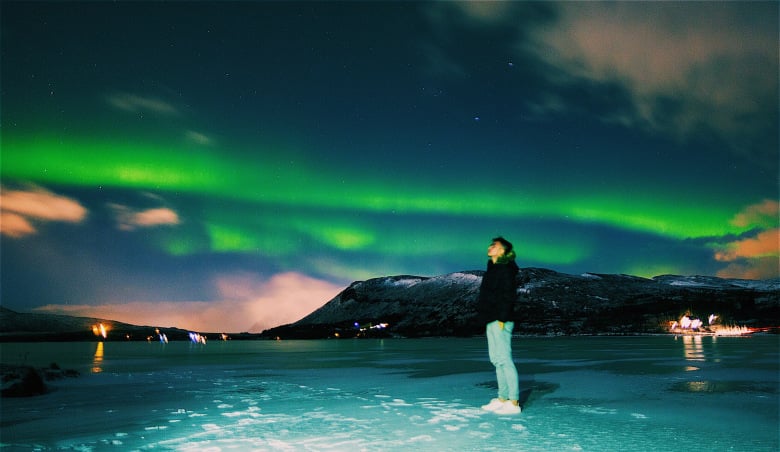
One of the "achievement" photos of Ly Thanh Co - Photo: Ly Thanh Co Travel Blog
Travel blogger Ly Thanh Co also noted that both the photographer and the subject need to be very patient due to the harsh weather conditions. However, Iceland also has the most pleasant temperatures; other places will be even colder, and this is a once-in-a-lifetime experience, so try to be patient together.
Ly Thanh Co's unforgettable aurora hunting trip.
In Reykjavik, there are aurora hunting tours starting at 8 PM and ending at 10 PM. These tours guarantee you'll see the lights before payment is collected. If you book a tour, they will notify you if the weather is unfavorable and reschedule it for another day. If you are unable to attend the tour the following day, the tour operator will send you a valid voucher so you can take the tour whenever you return to Iceland.
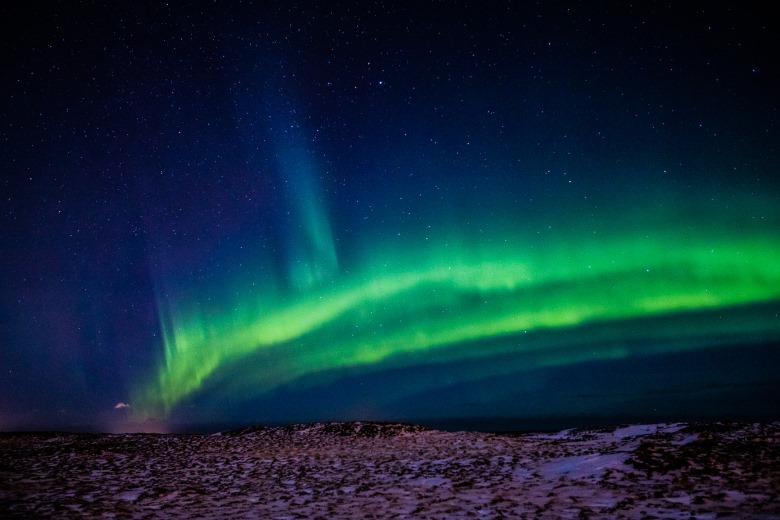
The aurora borealis is a natural phenomenon that arrives unexpectedly, so aurora hunters are always prepared to wait for it - Photo: Ly Thanh Co Travel Blog
As for his trip, travel blogger Ly Thanh Co shared that for the first four nights, the conditions for seeing the aurora borealis were almost hopeless, with clouds, rain, and snow obscuring the view, and the KP (potential for aurora viewing) index wasn't very favorable either.
On the penultimate night, just as we were boarding the vehicle for the aurora hunting trip, one of the men in the group spotted the aurora borealis to the right of Keflavik airport, and the whole group immediately ran in that direction.
"It felt magical to have a sky full of stars, with the Northern Lights swirling above, their alluring curves captivating. All I could say at that moment was:What kind of fairytale land am I in?"Of course I know, I'm in Iceland, a real place on Earth."
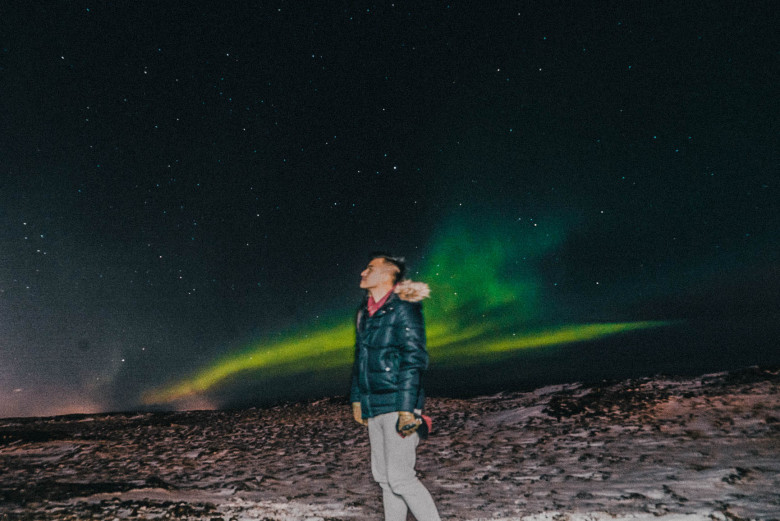
To capture a once-in-a-lifetime photograph of this fascinating natural phenomenon, not only is careful preparation of filming and lighting equipment necessary, but the "model" also needs to patiently stand in the freezing weather.
The following day, Li Chengji's group was incredibly lucky to drive to a frozen lake, with a snow-capped mountain in the distance as a backdrop. The beauty of nature unfolded before their eyes like a miracle, as the aurora borealis was even clearer and more beautiful than the day before, constantly swirling, and despite the -9°C temperature, the adrenaline surged through him, making him forget the cold...