VI
VI


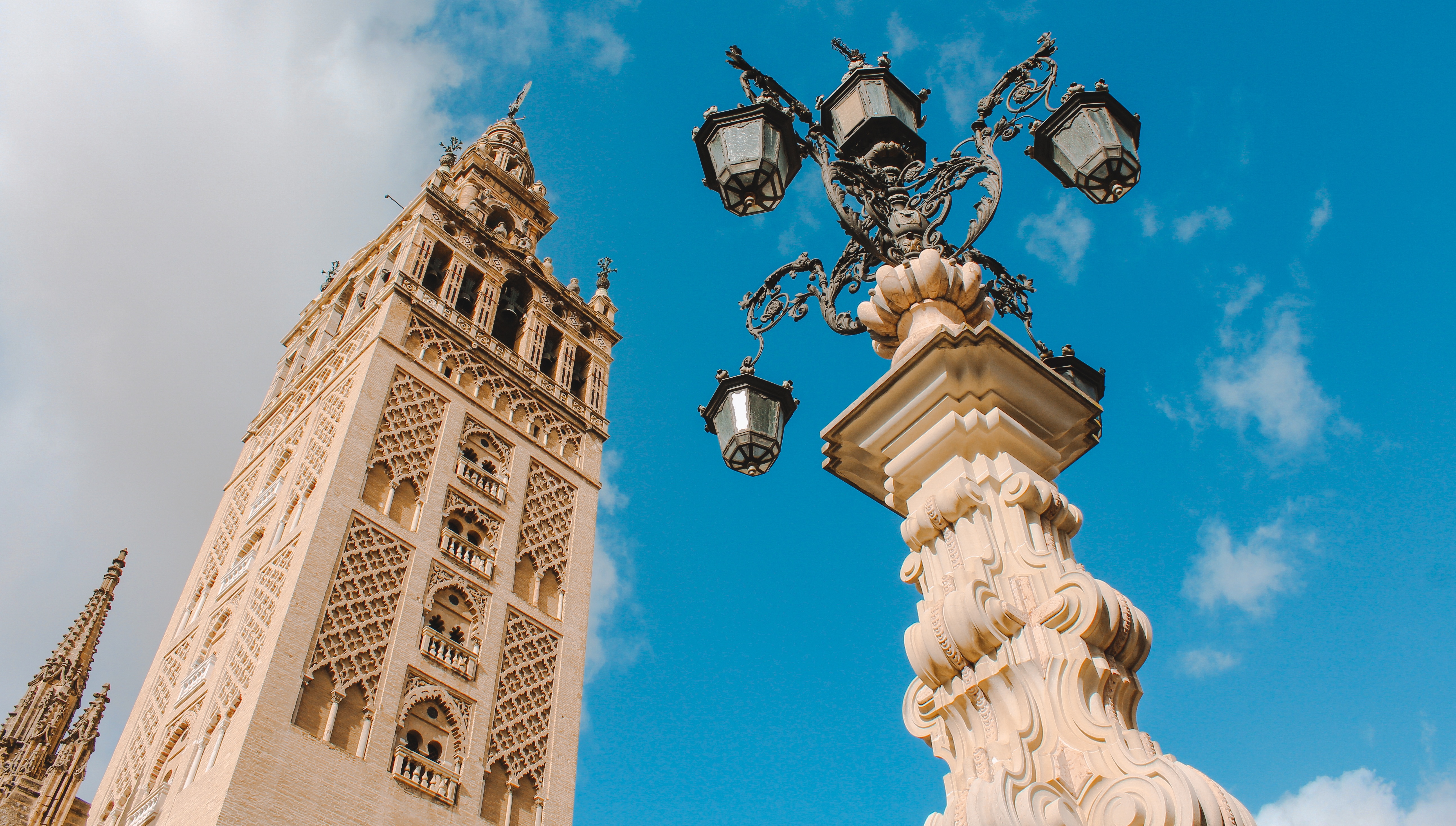
A city where history and modernity intertwine.
Seville, the capital of Andalucia nestled in the fertile southern plains, where the picturesque Guadalquivir River flows, can be described as a city with a long history. Seville has been inhabited and functioned as a major city since Roman times. Traces of time remain in countless religious buildings, public structures, and cobblestone streets. Ancient architecture surrounds the center of Seville, interspersed with modern structures, creating a harmonious landscape. All of this made me stay longer than usual, as I wanted to slowly savor the flavors of southern Spain.
The best feeling about being in Seville is that I can live at a leisurely pace, walking until my feet are numb. There's no shortage of public transport in Seville, but because the city isn't too big or too small, exploring every corner on foot is an indescribable feeling. The city has enough space for a slow-paced traveler like me to let my mind wander gently along its cobblestone streets.
Seville is like a giant open-air museum; every street corner tells a centuries-old story that's impossible to recount completely. The oldest and largest architectural landmark in Seville is the Catedral de Santa María de la Sede, also the third largest cathedral in the world and the largest Gothic cathedral in the world. Covering the entire central area of Seville, its construction lasted over a century, from 1401 to 1506. It is said that when the architectural plans were drawn up, the elders of the cathedral declared: "Let us build a cathedral so beautiful and magnificent that anyone who sees it finished will think we are crazy." And indeed, true to their word, the Seville cathedral was completed and surpassed Hagia Sophia in Istanbul at the time to become the largest cathedral in the world. It wasn't until after 1626, when St. Peter's Basilica in the Vatican surpassed Seville Cathedral, and by the end of the 20th century, with the completion of the Shrine of Our Lady of Aparecida in Brazil, that the latter fell to third place.
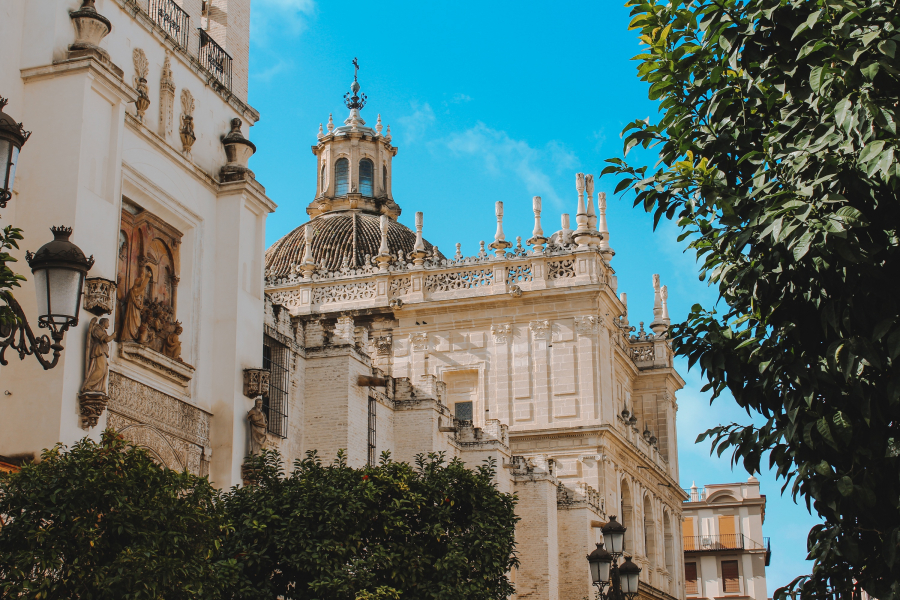
The cathedral's nave is longer than any other cathedral in Spain, with a dome reaching 42 meters in height. Most notable is the lavishly decorated main altar and the Gothic sculpture depicting scenes from the life of Christ. This altar is the lifelong work of a single artist, Pierre Dancart. When I arrived, I saw long lines of tourists waiting to visit. Since photography is not allowed inside the cathedral, all I have are memories and the breathtaking beauty of the place.
But the building closest to the cathedral was what attracted me the most, as it was the filming location for my favorite TV series, Game of Thrones: Reales Alcázares de Sevilla (The Royal Alcázar Palace). This place had already captivated architecture and travel enthusiasts before, but Game of Thrones made Alcázar even more beloved.
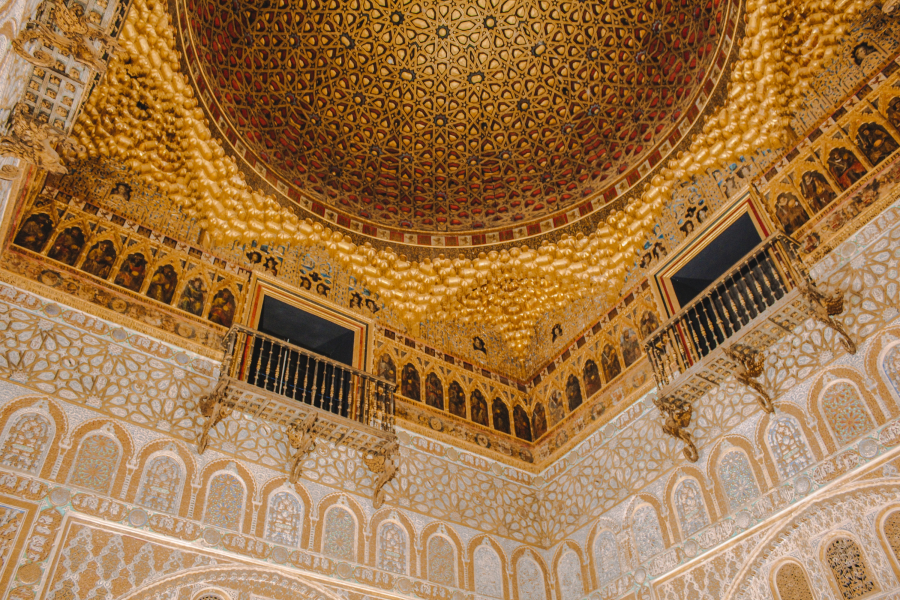
The shimmering gold patterns adorn the domes inside the Alcázar Royal Palace.
Combining architectural beauty and garden artistry, the Alcázar Royal Palace is a classic example of Mudéjar architecture on the Iberian Peninsula. Mudéjar architecture is a meeting point of Moorish and European cultures, characterized by the use of brick as the primary building material, especially for the bell towers, accompanied by decorative details of ancient Arabic calligraphy, Kufic and Naskhi in repeating rhythmic patterns. These intricately carved patterns are combined with shimmering gold motifs on the interior domes of the Alcázar Royal Palace.
The royal gardens within the palace grounds also strongly attracted my attention, especially the lush green orange trees that covered the garden. I arrived during orange season, so the gardens were even more vibrant and colorful—truly admirable!

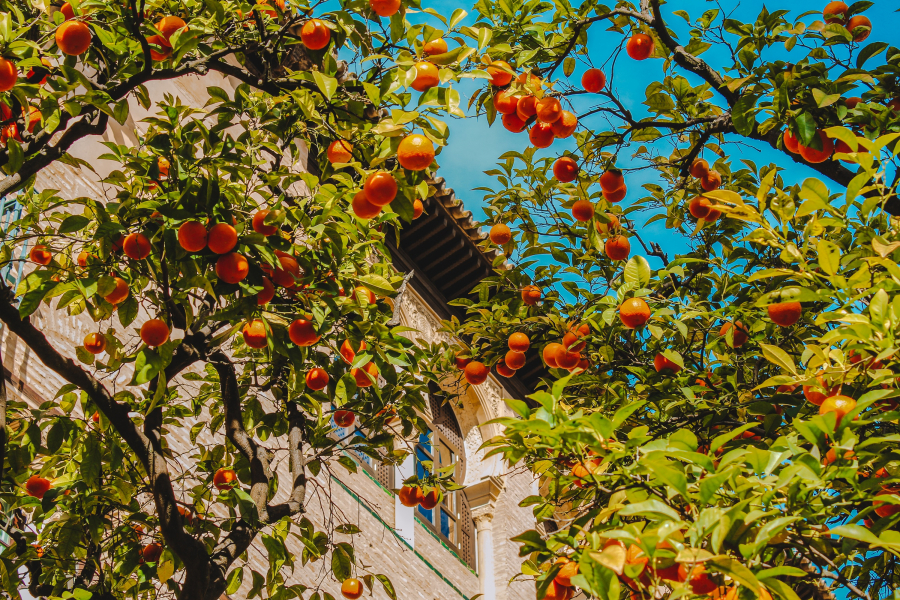
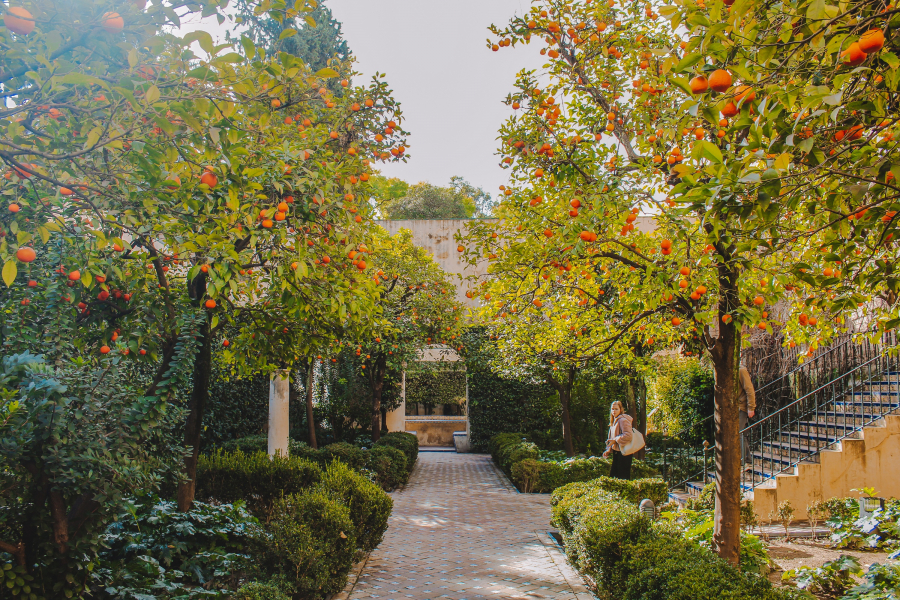
A light drizzle made me consider leaving Alcázar to return to the hostel, but the sudden sunshine kept me on the road. I strolled through the shopping district near the hostel, observing the passersby, much like Murakami does at Shinjuku Station to watch the bustling crowds entering and leaving the train station. Reading Murakami's books, I suddenly realized I enjoy observing busy scenes, while the slow pace lingers in my soul. The leisurely pace of exploring Seville fascinates me. This is something I never thought I'd do when visiting Europe.
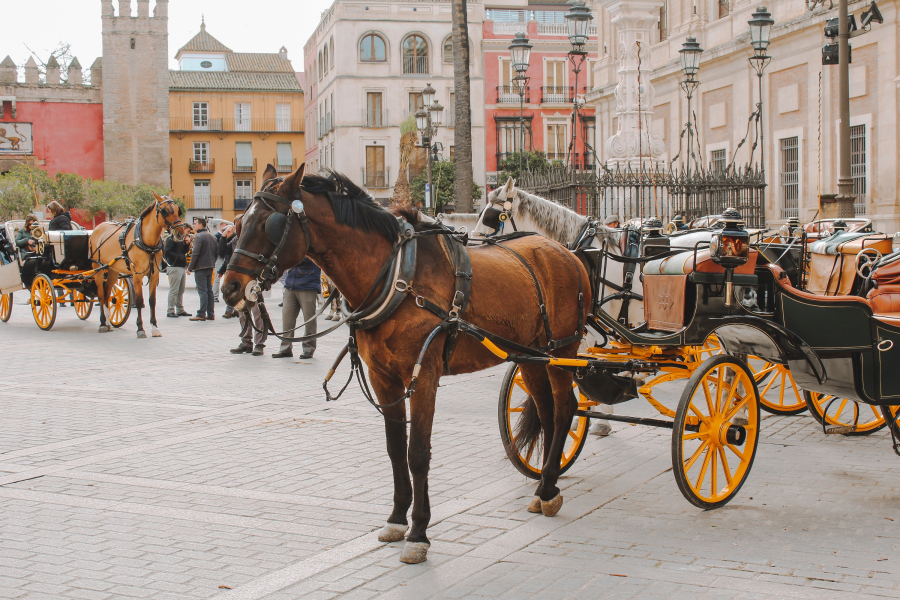
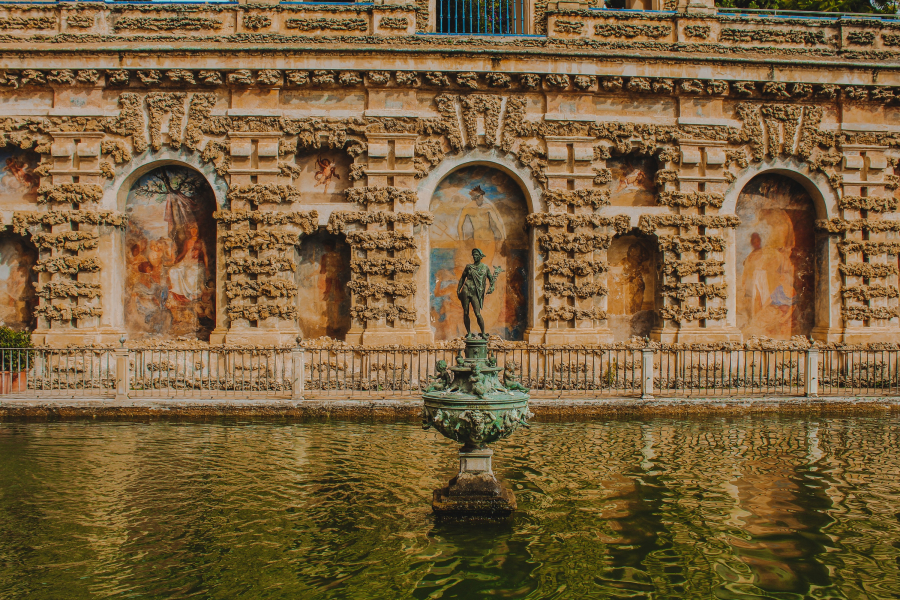
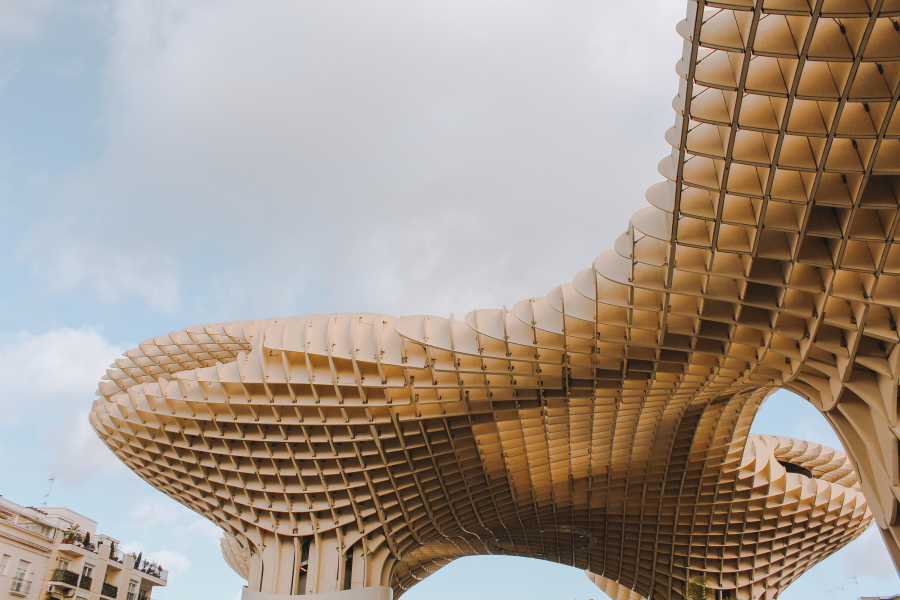
The next morning I spent my time at Las Setas – a peculiar structure almost completely isolated from all the ancient landmarks of Seville – which I had spotted on an advertisement poster, just a 10-minute walk from the hostel where I was staying.
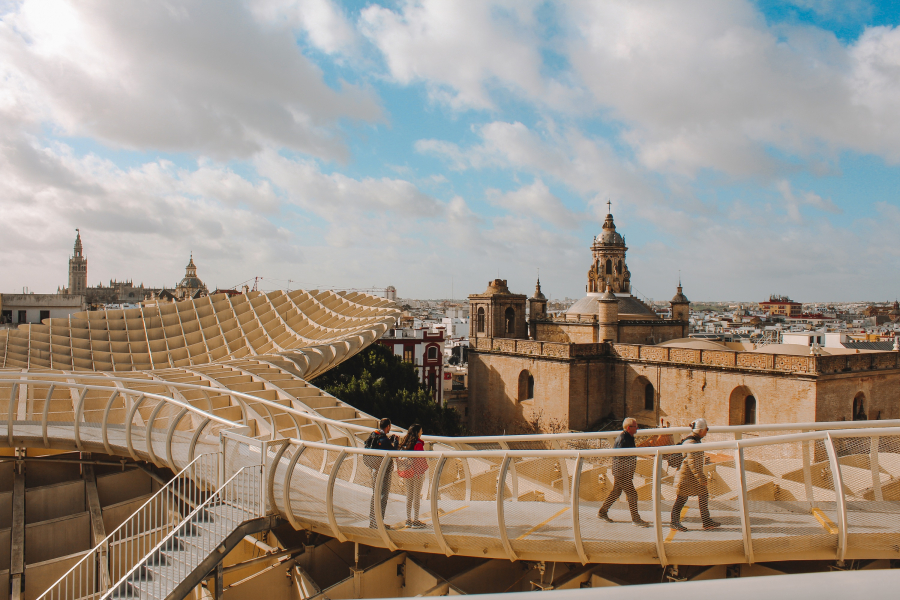
Completed in April 2011, Las Setas (locally known as "the mushroom-shaped structures") was designed by German architect Jurgen Mayer. The structure is made of wood and connected by sturdy metal joints, forming sun-shading domes that, from a distance, resemble the cones of straw mushrooms. There are a total of six such mushroom-shaped structures. To access Las Setas, I had to go down to the basement to buy a ticket for 3 EUR per person, then take an elevator to the top of the mushroom-shaped structures.
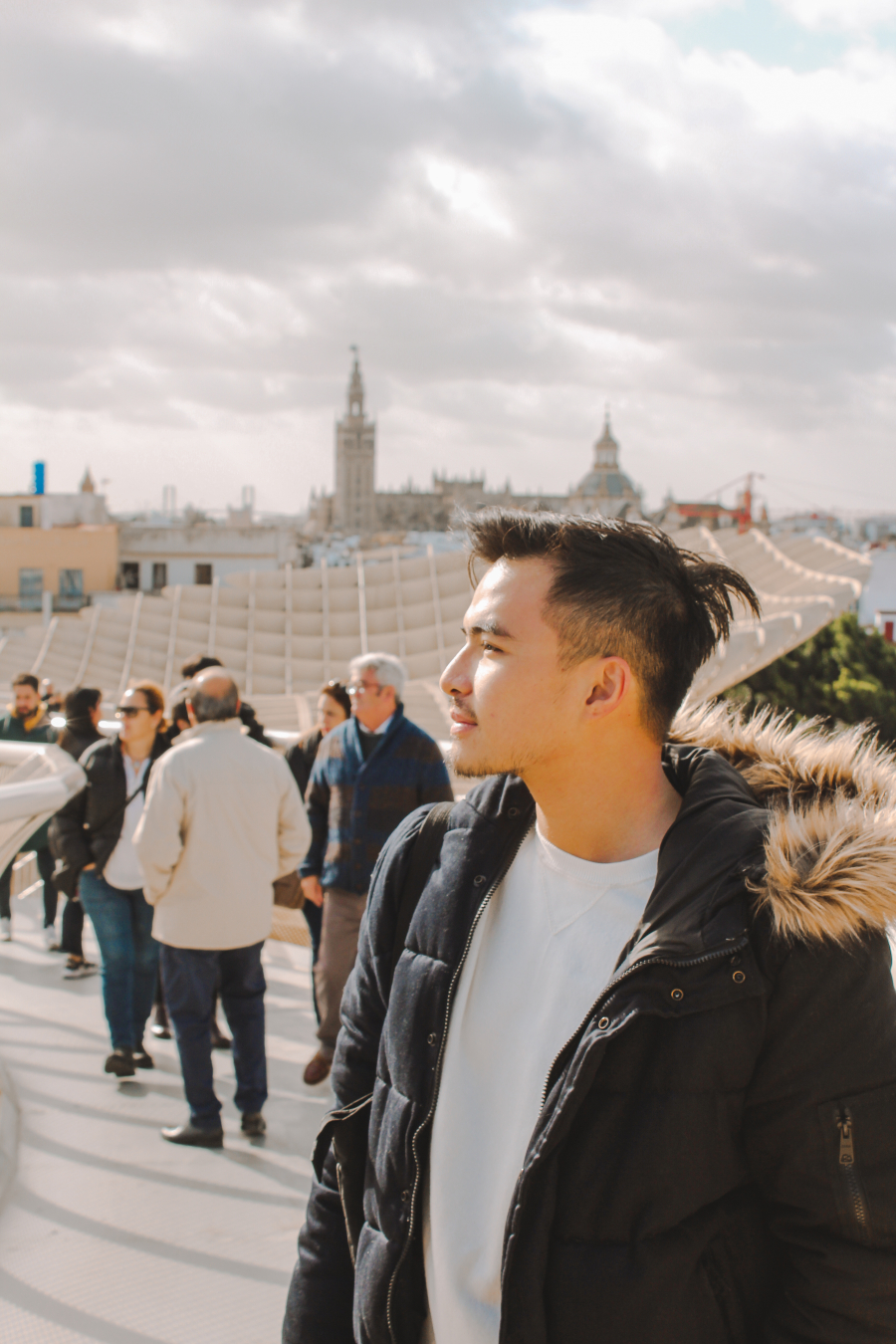
This is where you can enjoy a panoramic view of Seville. The golden hues of the wood in the architecture blend seamlessly with the ancient yellow walls of Seville. From the top of Las Setas, you can stroll across cleverly constructed bridges that encircle six mushroom-shaped structures, offering a 360-degree view right in the heart of the city.
Having had my fill of exploring the architecture, I still have a few more days to spend in Seville. It's time to let my taste buds sample the delicious food of this southern city!
The capital of delicious eateries.
Seville is known by locals and tourists alike as the tapas capital (tapas meaning "small portions" in Spanish). If you ever visit Spain, try ordering tapas, as this portion size is very suitable for Vietnamese people.
When it comes to tapas, people usually think of sandwiches topped with a variety of toppings like salmon, salami, and iberico. But that's only part of the story. Beyond hundreds of tapas bars and fusion restaurants, Seville is where I can satisfy my curious palate with some of the best restaurants I've ever visited.
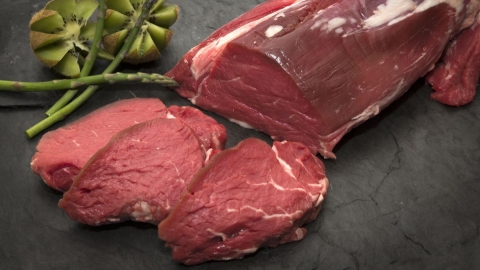
I have to use the word "excellent" for La Brunilda because it's a restaurant I've visited twice to try five of their dishes. Here, I had the opportunity to enjoy tapas-style dishes including duck confit with pureed carrots, foie gras with poached pears, salad with goat cheese, fish with truffle cream sauce, and beef tenderloin with baked potatoes. All the dishes ranged from delicious to superb. Don't forget to order a glass of sweet sherry to complete the meal.
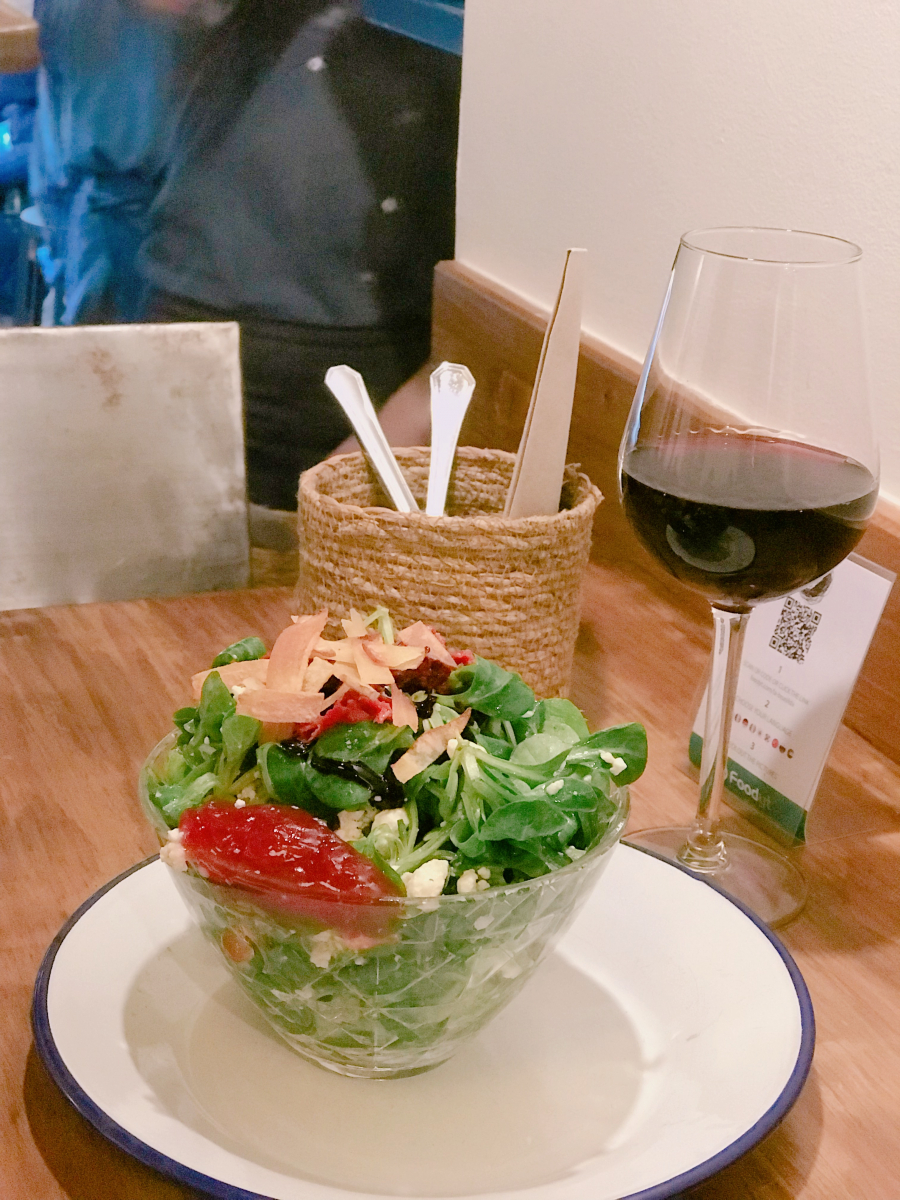
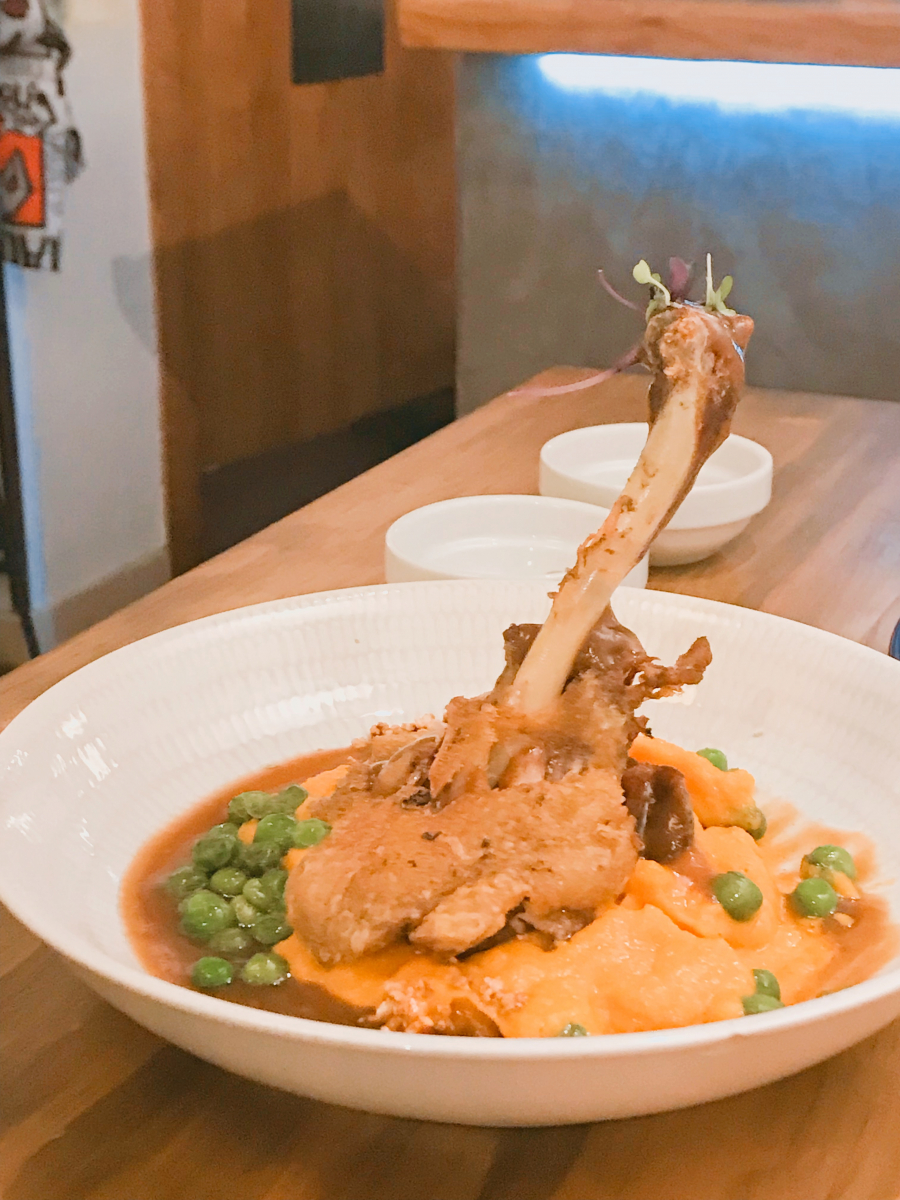
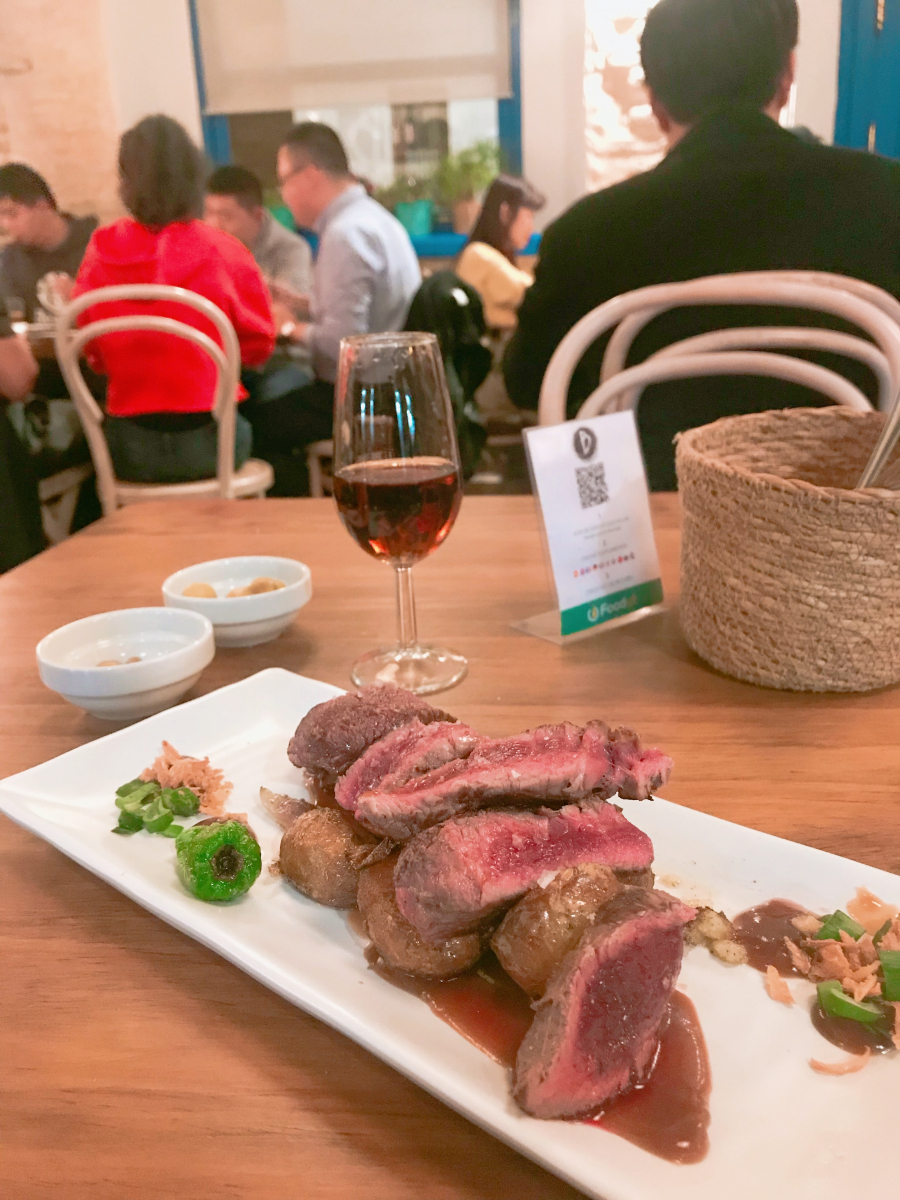
The biggest drawback is that the restaurant is very crowded and has limited opening hours. You should arrive 15 minutes before opening time to minimize waiting time. But trust me, this restaurant is well worth the money and your wait.
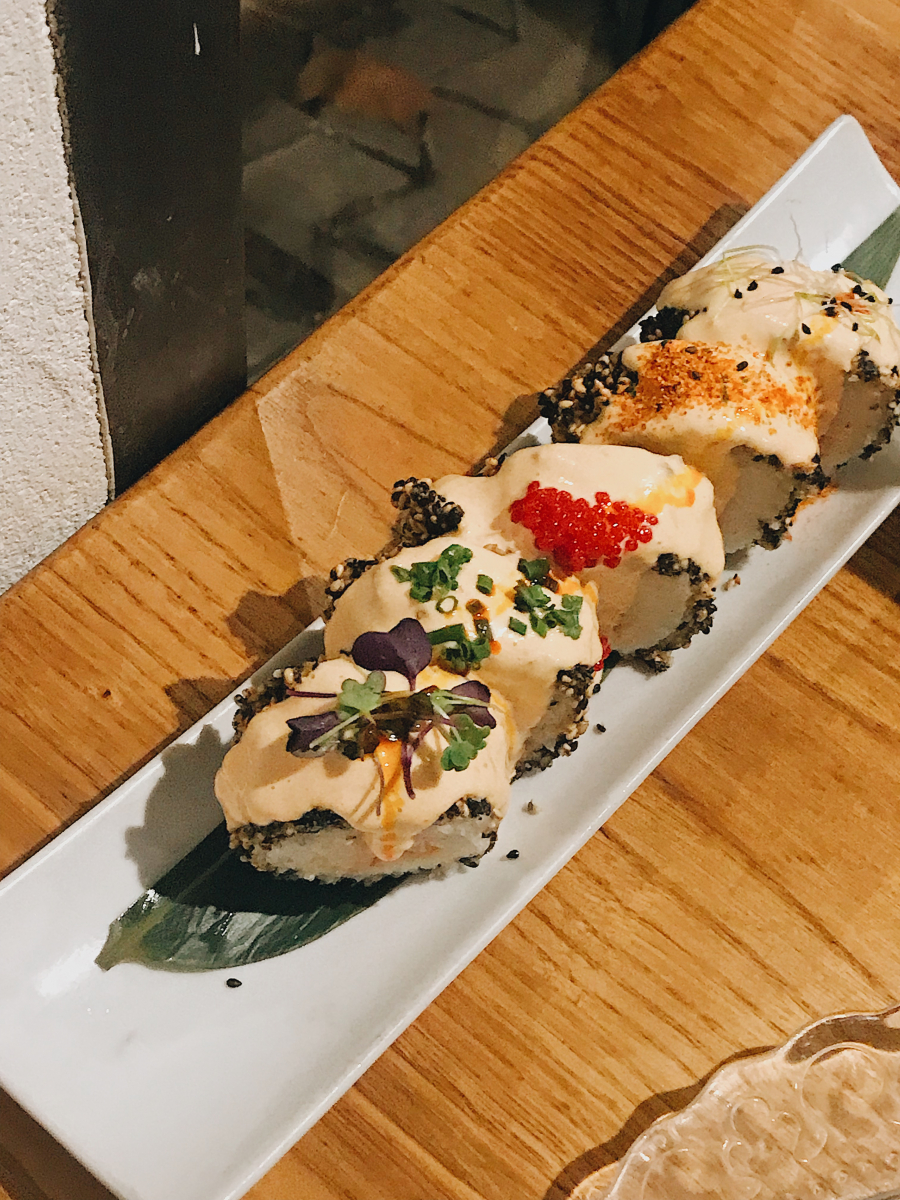
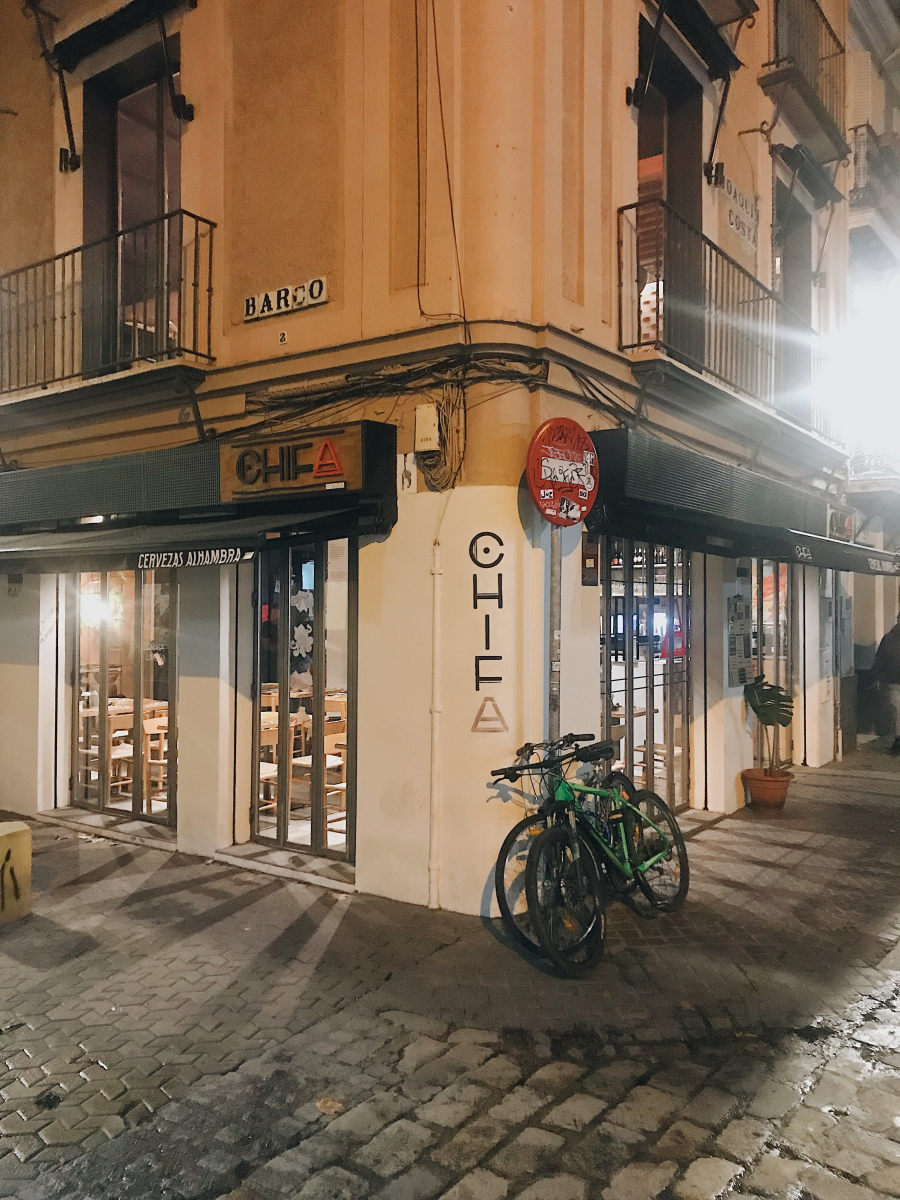
Chifa was the next restaurant that impressed me. Located in a quiet area of the city, Chifa offers a very interesting culinary style, incorporating Spanish ingredients like Iberico pork into Japanese dishes. I highly appreciate the Nguiris (similar to sushi rolls) which use Spanish ingredients and sauces. The website suggests trying the ceviche, but after trying it, I found the flavor not very suitable for Vietnamese palates.
A famous Spanish beer is Cruzcampo; however, you can try the homemade beer at Maquila for a change. The restaurant is praised online for its good food, but I only tried their homemade beer at 3 EUR per small glass, which is quite expensive considering the small size. Unfortunately, the restaurant only offers two types of homemade beer, and both are quite average (compared to the craft beer market in Vietnam).
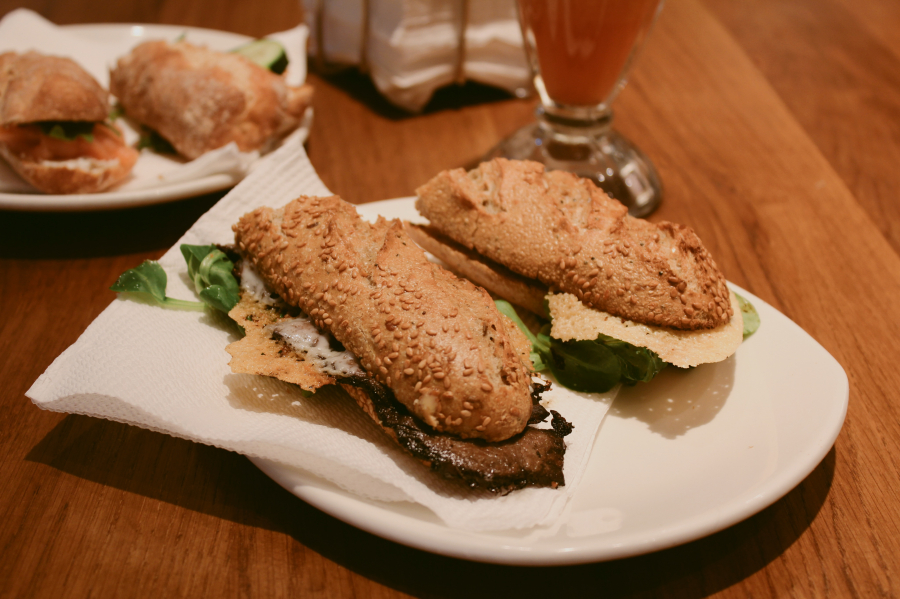
Cafetería Pastelería La Canasta is a place I stumbled upon by chance, but their flute (or baguette) is absolutely delicious. You should order the best kind, the 10-seed bread, which costs only 2.50 EUR per baguette and has fillings like salmon or Iberico pork.
ADDITIONAL INFORMATION
WHERE TO GO IN SEVILLE?
- Ayuntamiento: A town hall built in the 15th century in the Plateresque style by Diego de Riaño.
- The Museo de Bellas Artes (Museum of Fine Arts) is a 17th-century building. It is considered to have the most valuable collection in Spain, after the Prado in Madrid.
- Barrio Santa Cruz: Seville's most charming neighborhood, formerly the Judería (Jewish quarter) during the Middle Ages under Moorish rule.
- Parque de María Luisa, with Plaza de España at its center, covers an area of 50,000 m2.
SOME RESTAURANTS IN SEVILLE
- La Brunilda - Modern Tapas
- Flavor: 4/5, the best dishes were the duck confit and foie gras with poached pears.
- Price: 4/5, the most expensive dish is the beef, only 6.90 EUR and it's quite filling.
- Space: 4/5, the place is a bit small and it's full within just 10 minutes of opening.
- Service: 5/5, fast and attentive.
- Address: Calle Galera, 5
- Opening hours: 2:00 PM - 4:00 PM on weekdays and 8:30 PM - 10:30 PM, except Sundays.
- Chifa - Japanese-Spanish Fusion Cuisine
- Taste: 4/5, the ceviche wasn't very good, but the rice rolls got extra points.
- Price: 3/5, a bit expensive, from 7 EUR/serving of sushi rolls.
- Space: 5/5, with two floors so the space is very comfortable.
- Service: 5/5, staff do not speak English.
- Address: Calle Barco, 2
- Opening hours: 13:30 - 16:30 and 20:30 - 24:00 daily
- Maquila - Craft Beer Pub
- Taste: 3/5
- Price: 3/5
- Space: 5/5, rustic decor.
- Service: 5/5
- Address: Calle Delgado, 4
- Opening hours: 13:00 - 16:30 and 20:00 - 24:00 daily
- Cafetería Pastelería La Canasta - Sandwich Shop
- Taste: 5/5, very delicious, crispy bread and quality meat inside.
- Price: 4/5, good value for the quality of the pastries, but I deducted one star because sitting at a table costs 50 cents more, while sitting at the bar is cheaper.
- Atmosphere: 5/5, the cafe is pretty and spacious, with a view overlooking a lush green park.
- Service: 3/5, a huge minus point because ordering and paying took a very long time.
- Address: Av. de la Constitución, 16
- Opening hours: 8:00 AM - 11:00 PM, Friday and Saturday open until 11:30 PM.