VI
VI


Korean cuisine has long held a special appeal, not only for its delicious flavors but also for its visually appealing and unusually stimulating preparation and serving methods. In particular, whenever a popular Korean drama is released, the dishes enjoyed by the characters always create culinary trends. Recently, the drama "When Life Gives You Tangerines," starring "nation's little sister" IU and star Park Bo Gum, caused a social media sensation, ranking among the most-watched dramas in many countries, including Vietnam.


Set on Jeju Island in the 1950s, "When Life Gives You Tangerines" not only portrays the touching story of the difficult lives of the couple Ae Sun (IU) and Gwan Sik (Park Bo Gum), but also realistically portrays the local culinary culture. Among the dishes featured in the drama, roasted tangerines quickly became a highlight for viewers.

The drama "When Life Gives You Tangerines" stars IU and Park Bo Gum.
Traditional grilled tangerine dish from Jeju Island.
In Jeju, tangerines are not only a local specialty fruit but are also transformed into many interesting dishes. Grilled tangerines are a long-standing snack, especially popular in winter when the cold weather makes people crave something warm and comforting.
Researcher Kim Sung Wook from the Jeju Tangerine Museum shared that about 20-30 years ago, during the harvest season from November to February, Jeju residents often roasted tangerines over a wood fire along with sweet potatoes as a snack. Not only famous for its sea and abundant seafood, Jeju is also a leading tangerine-growing region in South Korea. With an average temperature of around 15 degrees Celsius, the climate here is very suitable for tangerine trees to grow, giving the fruit a natural aroma and rich sweetness. According to the 137-volume chronicle "Goryeosa" of the Goryeo dynasty, from around 1052, Jeju people chose tangerines as offerings to the emperor, a testament to the precious value of this fruit in the island's history.
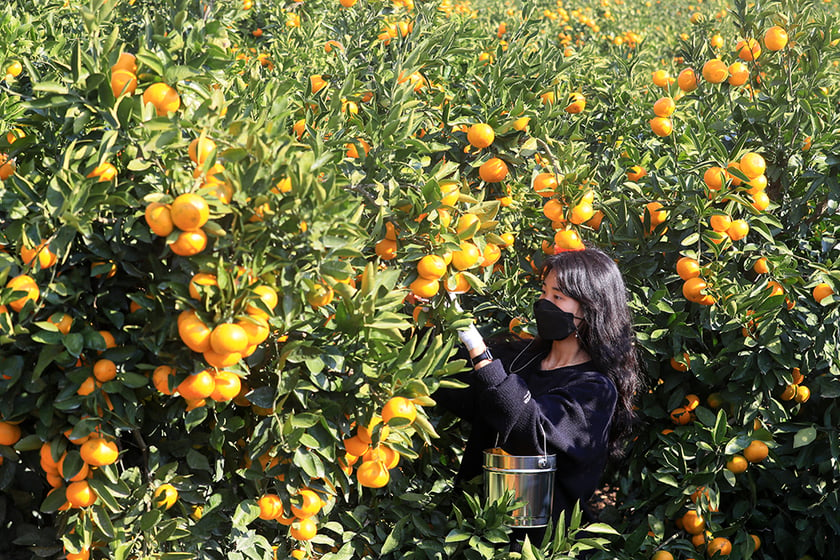
Jeju is South Korea's leading tangerine-growing region.
How to make roasted tangerines at home
Scenes from the film showing tangerines grilled over hot coals, their skins charred but the inside soft and sweet, piqued the curiosity of many viewers, making them want to try this simple yet incredibly delicious dish themselves. If you've seen the film and been captivated by grilled tangerines, here are some incredibly simple recipes for making this dish at home:

1. Bake directly or wrap in foil.
The most common way to grill tangerines is to place them directly on a charcoal or wood-fired grill over low heat. You can also wrap the tangerines in aluminum foil before grilling; this way, they won't burn while retaining their moisture and bringing out their natural sweetness. This method is suitable for those who prefer a mild flavor while preserving their juiciness, but for those living in urban areas, cooking with charcoal or wood can sometimes be inconvenient.
2. Grilling in a pan
Pan-frying tangerines is a more suitable method given today's living conditions. First, cut the tangerine in half horizontally, then place the halved side down in the pan and grill over low heat. When the tangerine flesh begins to brown and caramelize, the sweetness will be concentrated, creating a very special flavor. This method helps the tangerine retain its softness while still bringing out its natural sweetness.
3. Baking using an air fryer
If you want to make grilled tangerines in a more modern way, an air fryer is an ideal option. Wash and dry the tangerines, then place them in the air fryer and bake at 200°C for 10 minutes. Next, flip the tangerines and bake for another 5-10 minutes until the outer skin is slightly charred, and the flesh inside is soft, sweet, and easy to eat. This method is perfect for those who want to enjoy grilled tangerines without using a charcoal grill or pan.
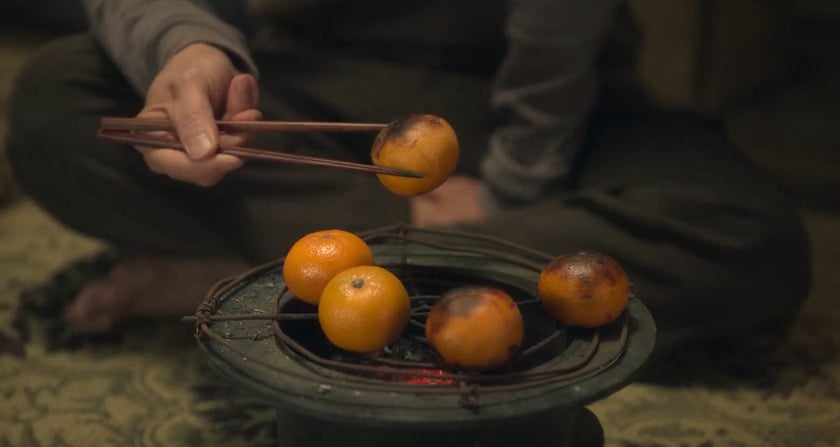
The image of roasting tangerines in the movie.
Not only delicious but also good for your health.
However prepared, grilled tangerines offer a delightful culinary experience. When grilled, the essential oils in the peel release, creating a warm, gentle aroma compared to peeling a fresh tangerine. Holding a warm tangerine in your hand, you'll feel the slightly rough outer peel with light charring spots, but it's not overly crispy.
Take a bite, and you'll immediately notice the difference. The acidity is significantly reduced, replaced by a more concentrated and profound sweetness. The hot tangerine juice melts in your mouth, providing a pleasant warmth, especially on cold winter days. The charred outer peel also has a unique flavor. The high temperature allows the essences from the peel to infuse into the tangerine segments inside, sometimes creating a slight bitterness but adding to the enjoyment of the dish.
To achieve the best flavor, you should adjust the heat so that the peel is only lightly charred, not completely burnt. If grilled correctly, the flesh inside will be sweet and tender without any bitterness from the burnt peel. Also, once the tangerines are cooked, let them cool slightly before peeling to make them easier to separate.
More than just a unique snack, grilled tangerines are also considered a folk remedy to help prevent colds. People in Jeju have long made it a habit to eat grilled tangerines when they have a cold because this fruit is rich in vitamin C, flavonoids, and carotenoids, which help boost immunity and support blood circulation. Especially for those who don't like the sour taste of fresh tangerines or are prone to heartburn when eating them, grilled tangerines are a perfect choice.
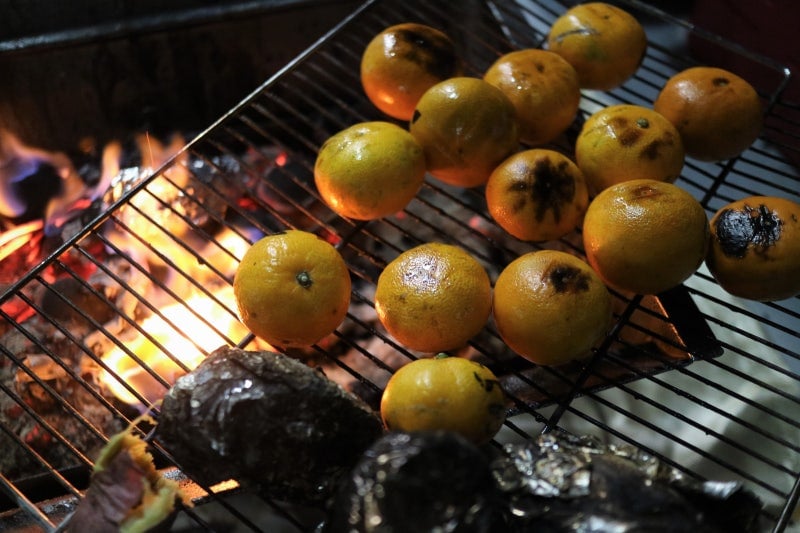
Not only is it a unique snack, but roasted tangerines are also considered a folk remedy to help prevent colds.
Thanks to the popularity of "When Life Gives You Tangerines," Jeju Island's humble grilled tangerine dish has become widely known and loved. If you haven't tried it yet, give it a try. You might just be captivated by the sweet, warm, and unique flavor of this familiar fruit.