VI
VI


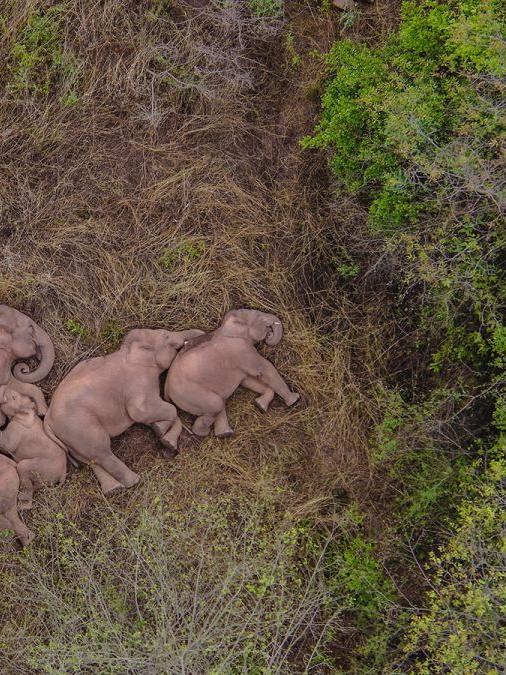
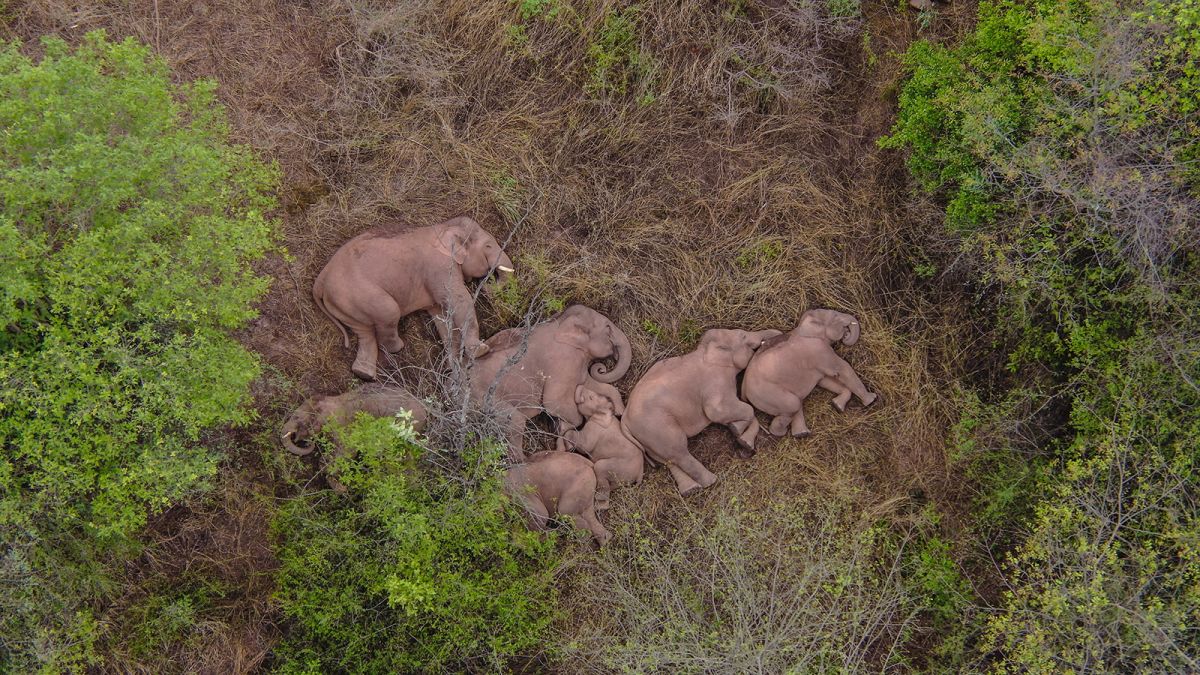
During that unforgettable journey, the elephants even broke into villagers' homes and gave birth along the way; they created and immersed themselves in this thrilling adventure, unaware that their journey would attract so much attention and coverage from the government and international press.
This is the story of the "journey of going away and returning" of stray elephants.
LEAVING HOME
Located in the southernmost part of Yunnan Province (China) is the vast Xishuangbanna National Nature Reserve, right next to the Myanmar-Laos border. This tropical rainforest, spanning 241,000 hectares—almost one and a half times the size of London—is home to most of the endangered Asian elephant species in Yunnan.
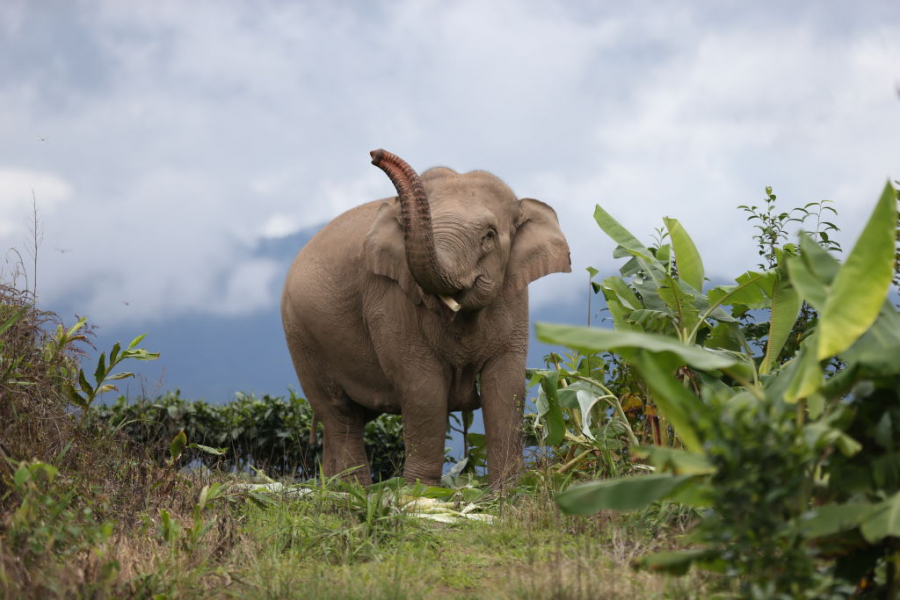
An Asian elephant in the Xishuangbanna Nature Reserve - Photo: Getty Images
Sometime in March 2020, a herd of about 14 elephants decided to leave their familiar habitat, heading north and continuing onward.
At the time, no one found it strange or surprising. Wild elephants roamed freely, frequently traveling throughout Yunnan province, so much so that the city of Pu'er even had an "elephant canteen" to cater to these enormous visitors. Most of them didn't go too far and always returned after a while. But then, as the elephants left home for months at a time, local officials began to realize this wasn't an ordinary trip.
The situation gradually became clearer earlier this year when elephants began entering people's homes to feast on crops and drink water to their heart's content.
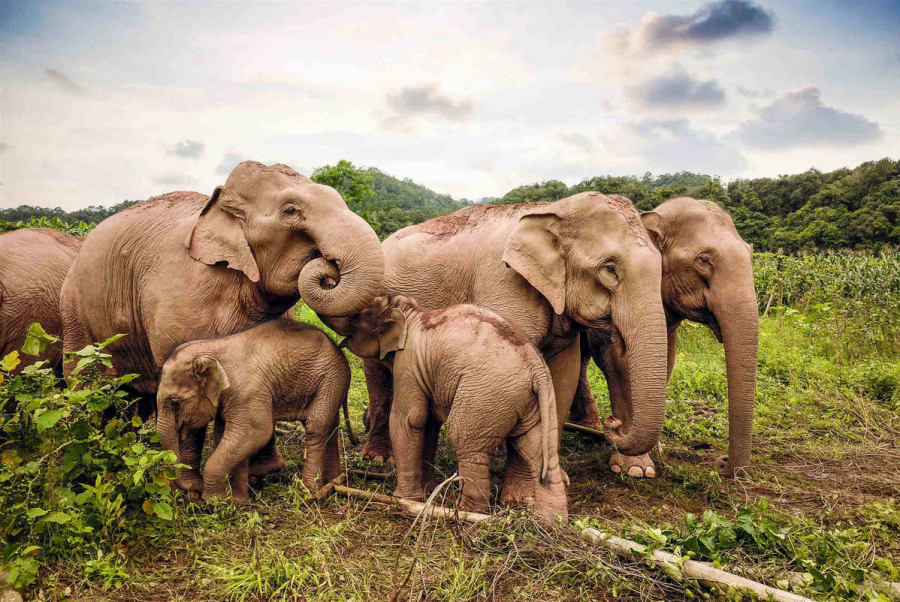
Elephants freely nibble on crops - Photo: Internet
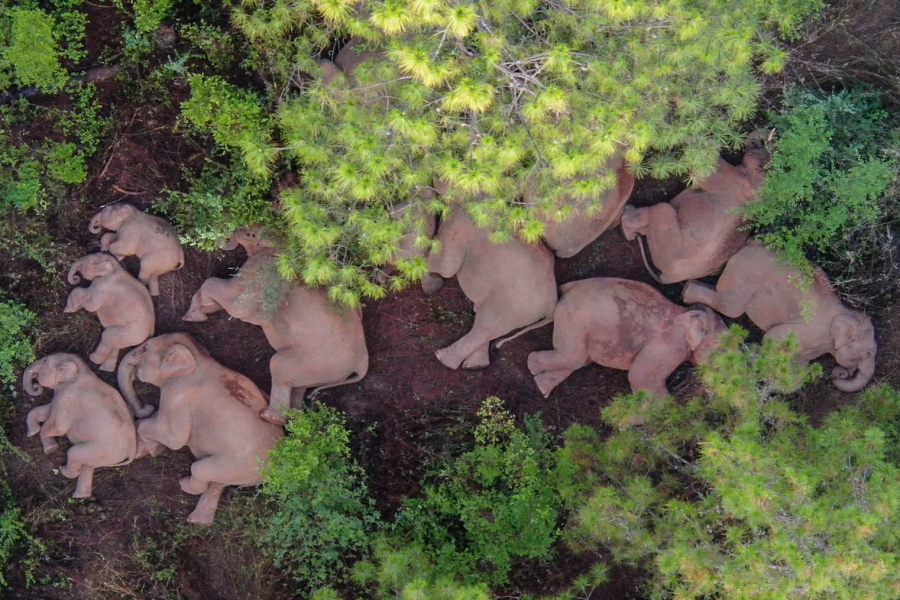
China Central Television (CCTC) captured footage of these elephants wandering the streets, and the footage went viral, turning the herd into a nationally renowned phenomenon. To this day, experts remain baffled by this unusual behavior. However, in an upcoming paper in the journal Conservation Letters, a team of Chinese experts led by Professor Ahimsa Campos-Arceiz hypothesizes that the elephants decide to leave their homes to forage for food due to several reasons, one of which is the increasing elephant population leading to intense competition for food. Thanks to conservation efforts, the elephant population in Yunnan province has nearly doubled, adding approximately 300 in just three decades.
"Now we are facing the 'consequences' of this success, and it's a real challenge, because gradually there will be no more room for the elephants to move around without crashing into people, crops, or houses," Professor Ahimsa Campos-Arceiz told the BBC.
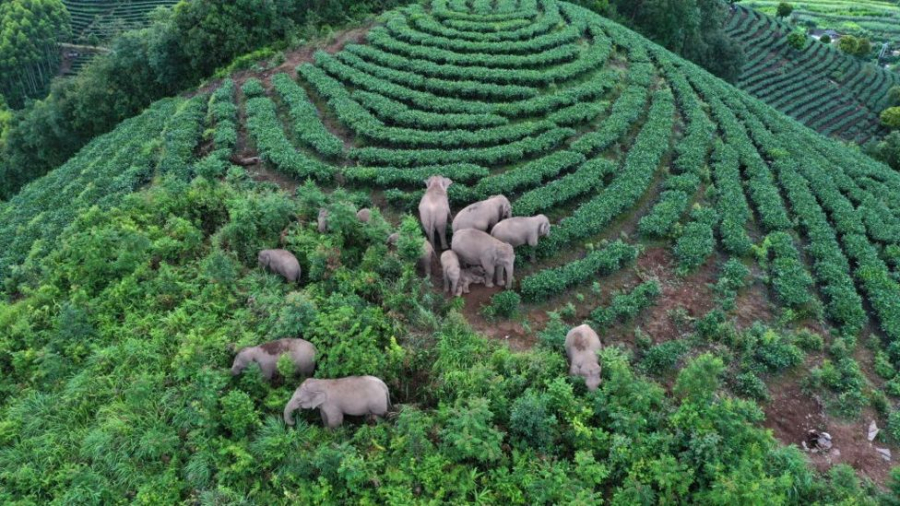
A herd of elephants roams and gathers on a hill in Yunnan province - Photo: Getty Images
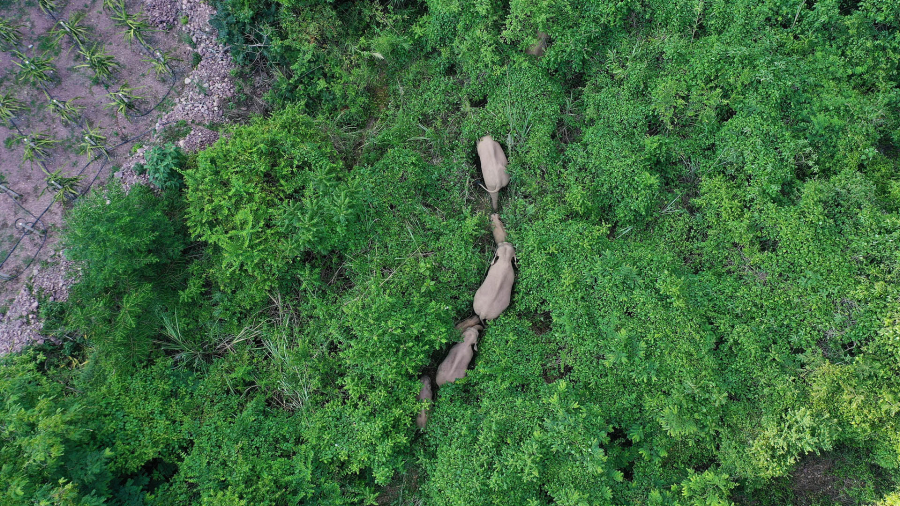
Furthermore, a severe drought lasting a year before the elephants left their homes also contributed to the food scarcity. Many also pointed out that, over the past few decades, deforestation and encroachment on agricultural land have narrowed the elephants' natural habitat outside the reserve.
According to Professor Campos-Arceiz, local authorities have intensified measures to protect the forests. Ironically, this has also reduced the amount of food available in nature reserves, as denser forest can block sunlight, resulting in less growth of grasses that elephants can eat in areas close to the ground.

A MEMORABLE JOURNEY
As the elephants advanced north through the verdant hills and dense forests of Yunnan province, Chinese officials sprang into action. An emergency task force was formed, and thousands of people were deployed to guide the elephants away from villages and urban areas.
The data runs parallel to the journey.
150,000 Peoplemust evacuate from their homes.
The estimated damage is1 million USD(equivalent to 22 billion 832 million VND)
973 timesusing drones
25,000 officialsmobilized
Source: Yunnan Provincial Authorities, China Global Television Network (CGTN). Data updated August 8.
Elephants are known for their voracious appetites, and so far this herd has consumed a total of 180 tons of food, including corn, bananas, pineapples, and more. Even an unfortunate rearview mirror was broken off by a curious elephant while exploring the vehicle.
A group of drones tasked with monitoring the elephant herd has captured some amusing moments of these playful giants, such as a muddy bath...
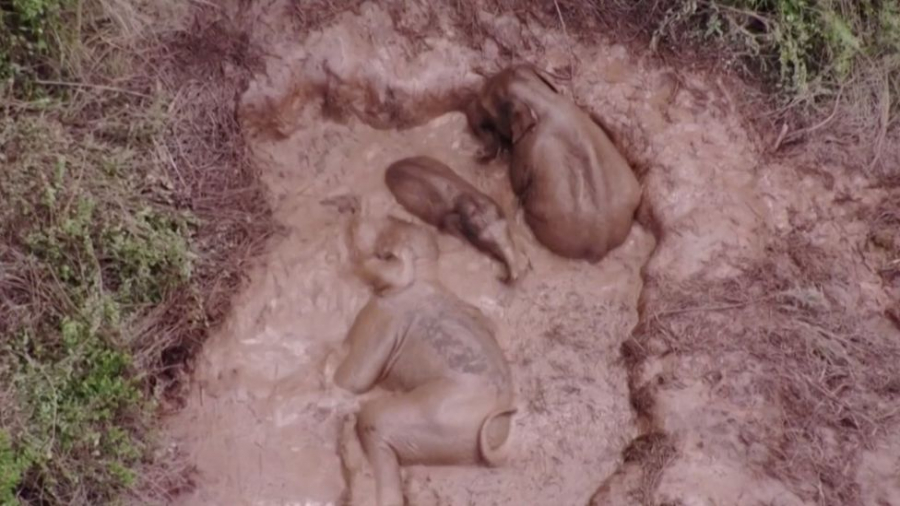
Photo: CCTV
... a "tense" brawl
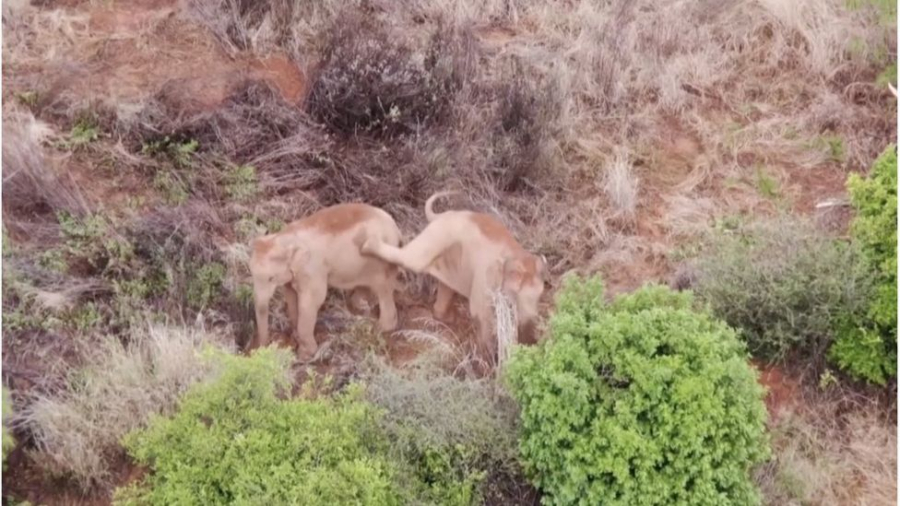
Photo: CCTV
...or perhaps a trip to the baby elephants' "slide" on the hillside.
In April, two elephants separated from the herd and returned home. Another one strayed from the herd in June and was calmed down and brought back by authorities who feared it wouldn't survive alone. All three are male elephants and often have a habit of "traveling alone."
According to Professor Campos-Arceiz, during this long adventure, the elephant herd welcomed new members: at least two female elephants gave birth.
After being featured on national television, the stray elephants in Yunnan quickly became famous and eagerly sought after. People lined the streets hoping to catch a glimpse of an elephant, their movements were closely monitored by the authorities and elephant scientists, and some "fanatics" even filmed themselves eating leftover pineapples left by the herd to broadcast live.
And once they become famous, even elephants are not immune to rumors: it was rumored that a herd of elephants once got completely drunk after secretly drinking tons of corn liquor. Fortunately, this false rumor was quickly debunked by experts.
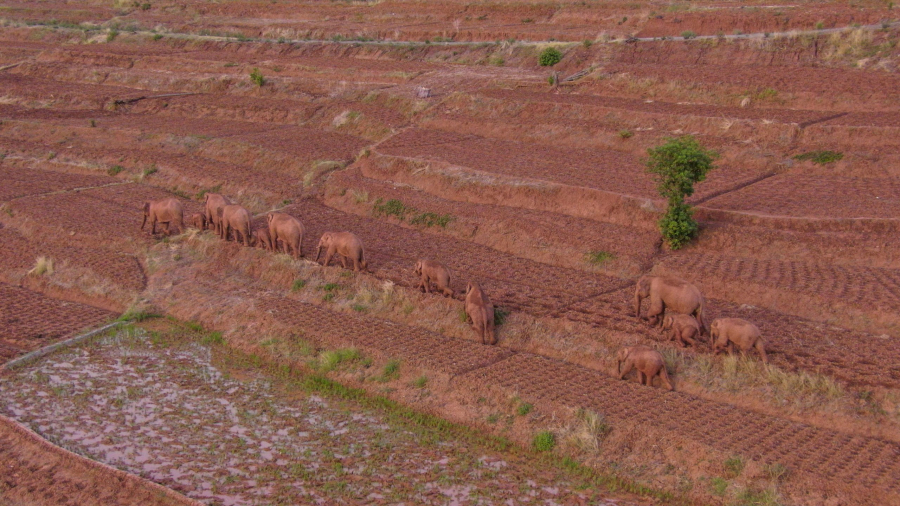
The way home
By early June, the elephant herd had reached Kunming, the provincial capital – more than 500 km from home and the furthest any wild elephant in Yunnan province had ever traveled. Many began to worry about the herd's safety as they moved toward cooler climates and interacted too much with humans. Experts shared that while people saw the elephants wandering in herds and napping in the streets, thinking it was cute and amusing, it was actually a sign of stress and exhaustion.
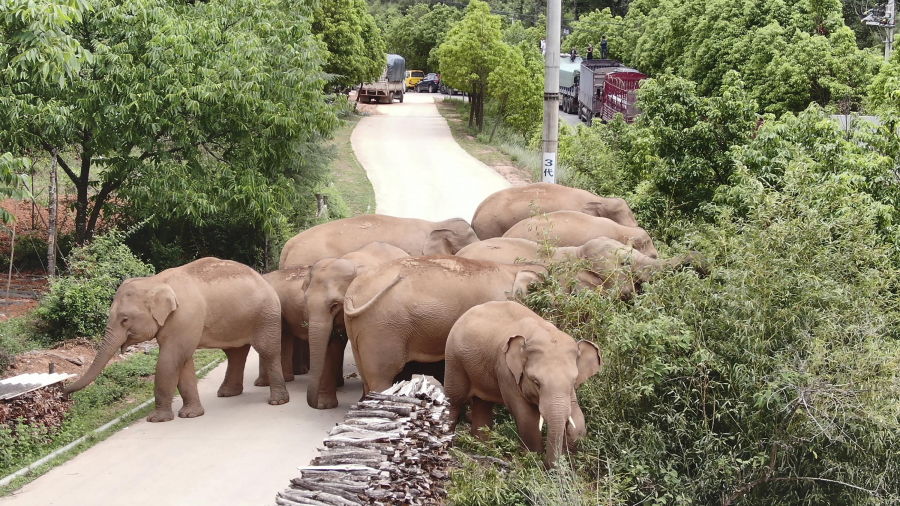
Elephants roam freely and have been exposed to human civilization for a long time - Photo: Internet
Thanks to the intervention of authorities, just a few weeks later, the stray elephants began finding their way back south and quickly made their way into the Yuanjiang River area (Hunan Province). Authorities said that within the nearest radius, there was only one bridge suitable for the herd to cross. A task force deployed thousands of soldiers and personnel to lure the elephants with food, erect electric fences, create pathways, and even water the route to ensure these large "tourists" remained cool.
But the elephants... didn't care. The return journey, which was supposed to be only 30 km long, turned into a 143 km trek because they kept deviating from the planned route.
Finally, on August 8th, the elephant herd crossed the bridge over the Yuanjiang River. Although the entire herd was still 200 kilometers from the Xishuangbanna Nature Reserve, Chinese media reported that this thrilling journey was coming to an end. There was no guarantee that these elephants would return home, and even if they did, how long they would stay there.
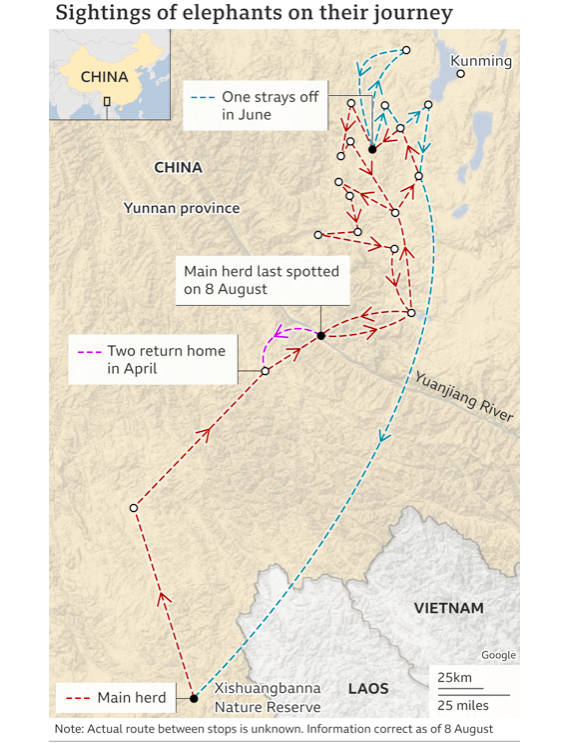
The elephant herd's migration route. Note: The exact route between the stopping points is not precisely known; data is updated as of August 8th. - Photo: Xinhua
Shen Qingzhong, a senior engineer at the reserve, told reporters that "it's almost certain that the elephant herd will eventually move north again."
After spending millions of yuan to bring the elephants back, authorities pledged to establish a "management and protection system" to boost the protection and restoration of the elephants' habitat. Many plans to create national parks for Asian elephants are also being accelerated.
Although the road back is still ahead, the elephants have turned the impossible into the possible, writing their own memorable adventure while simultaneously sounding the alarm about the precarious situation of their species.