VI
VI


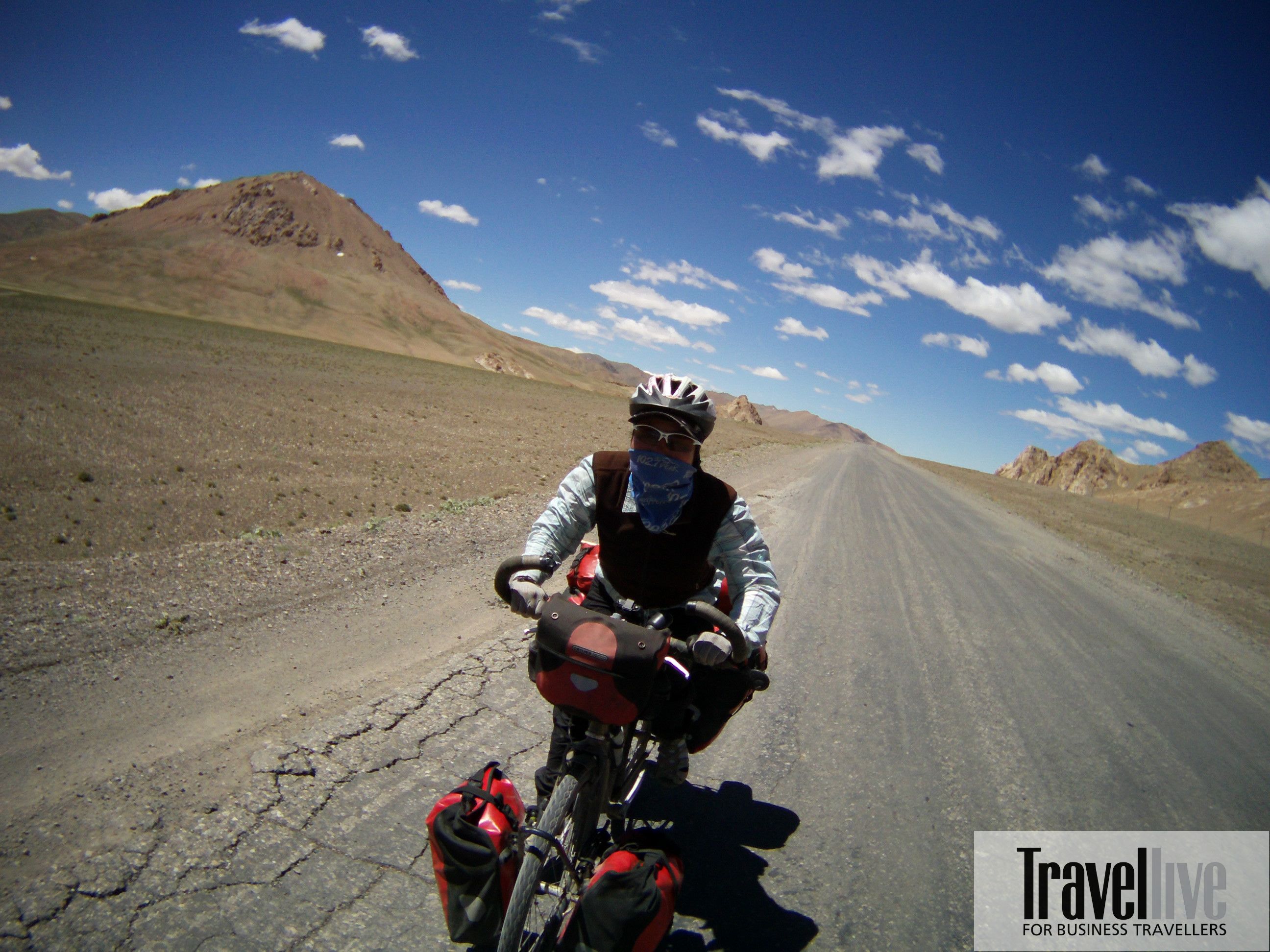
"Forbidden Land" full of dreams
Upon arriving in Dushanbe, the capital of Tajikistan, our first priority was to rush to the OVIR (Visa Administration Office) to apply for a permit. We were quite nervous, as just a week earlier we had learned that the Pamir Plateau was closed to tourists due to landslides. Finally, everything went smoothly; the next day we had our "magical" permit in hand and could set off.
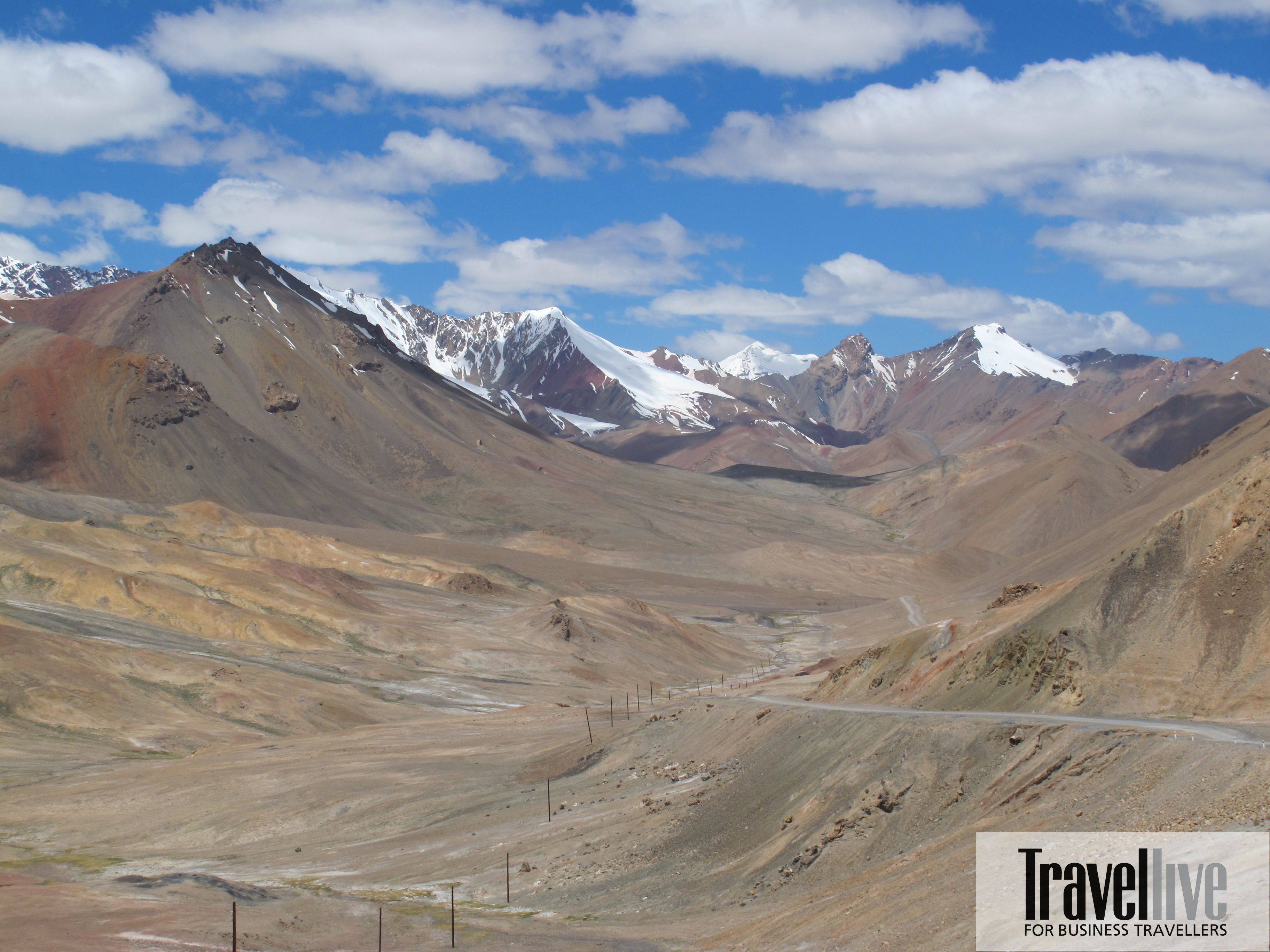
Tajikistan challenged us right from the start with its steep and long slopes.
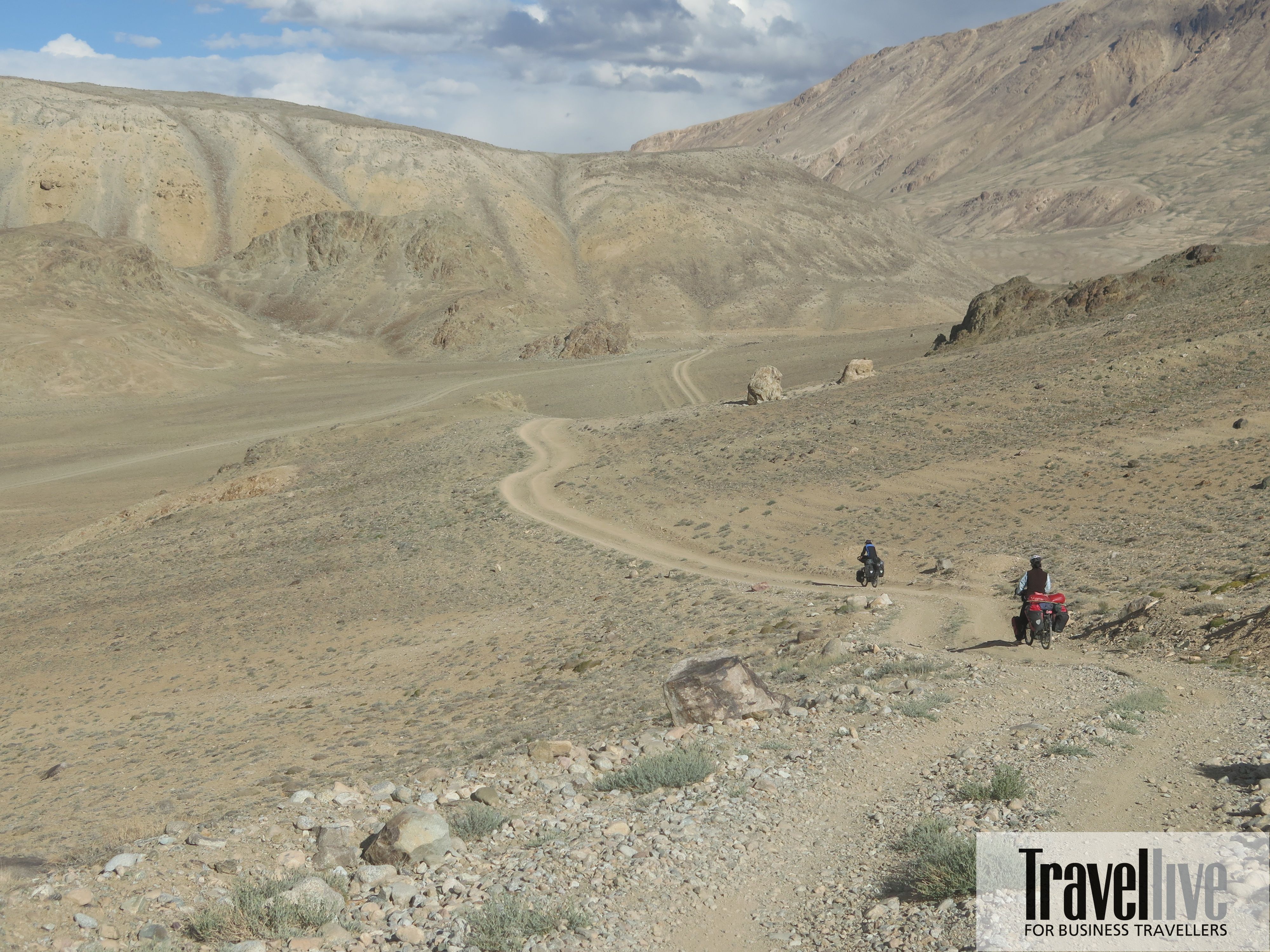
While the roads in Uzbekistan were mostly smooth and easy to navigate, Tajikistan challenged us from the very beginning with steep and long inclines. During these same days, we reached the 10,000 km mark, a symbolic number that brought back nostalgic memories of our departure from Paris nine months ago. From those initial hesitant journeys, we have now become seasoned warriors!
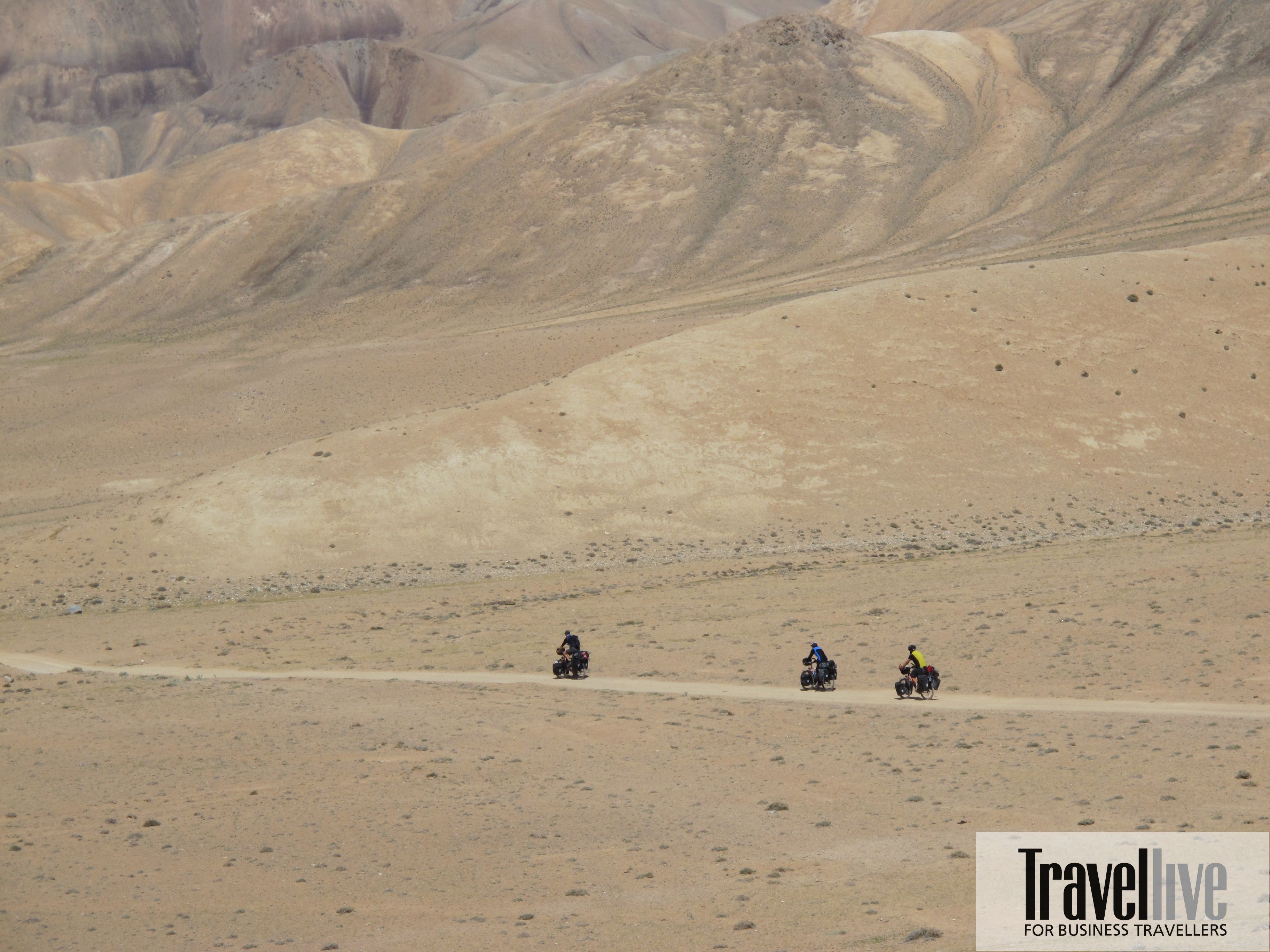
Exploring the Pamir Plateau at an altitude of over 4,000 meters – the second highest road in the world – is a challenging undertaking.
Every day we would wake up at dawn, when the air was still cool and there were only a few cars on the road. Everyone would wave and greet us cheerfully. Once, a rickety truck full of melons stopped, the driver jumped out, gave us a large one, and then happily continued on his way.
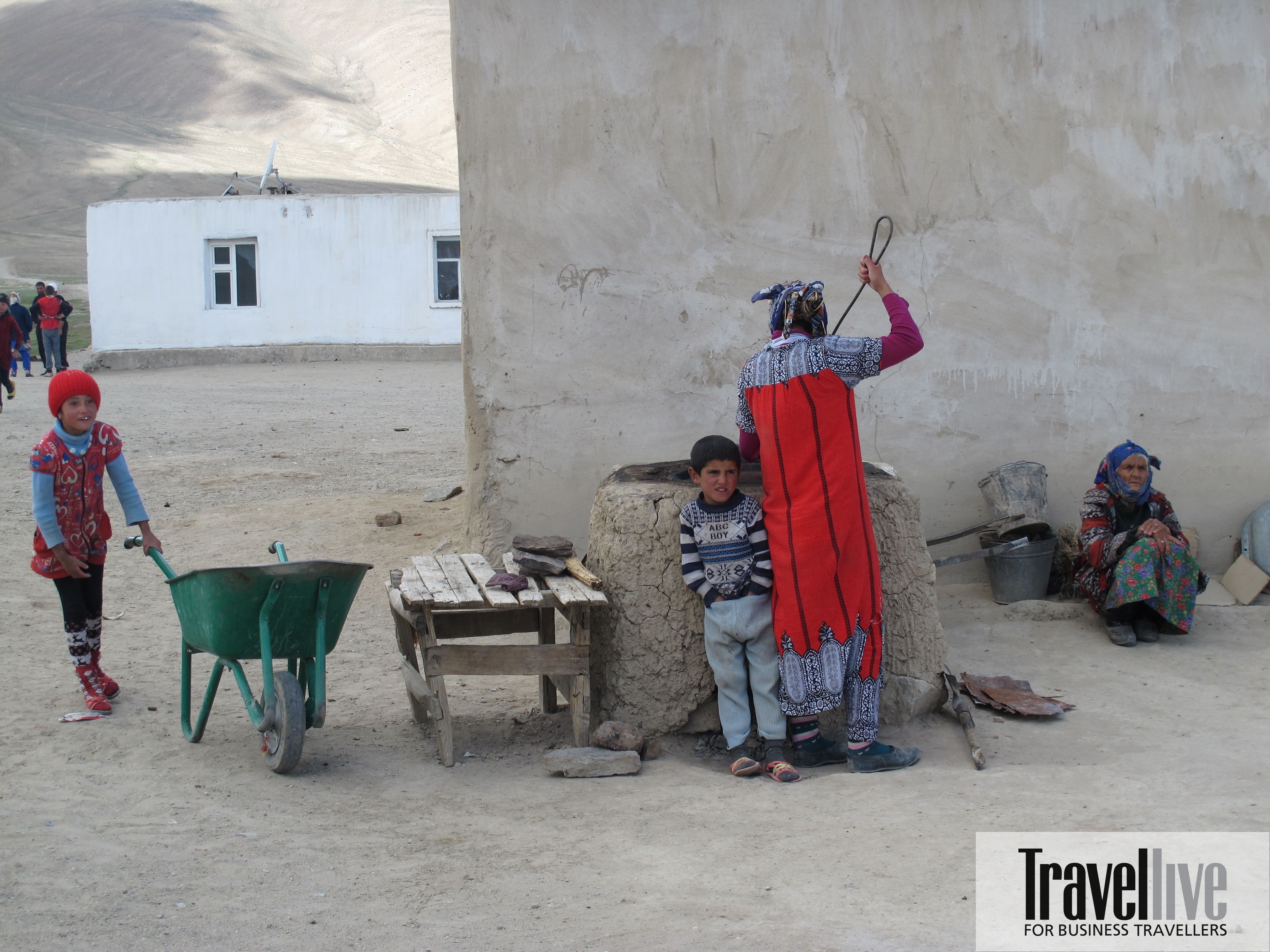
The children in the village of Bulunkul
In the early days, we cycled along the Panj River, the natural border with Afghanistan. For a long time, we had dreamed of visiting this land where the beauty and hospitality of its people have become legendary. Now, just across the river from this "forbidden land of dreams," we felt an indescribable excitement.
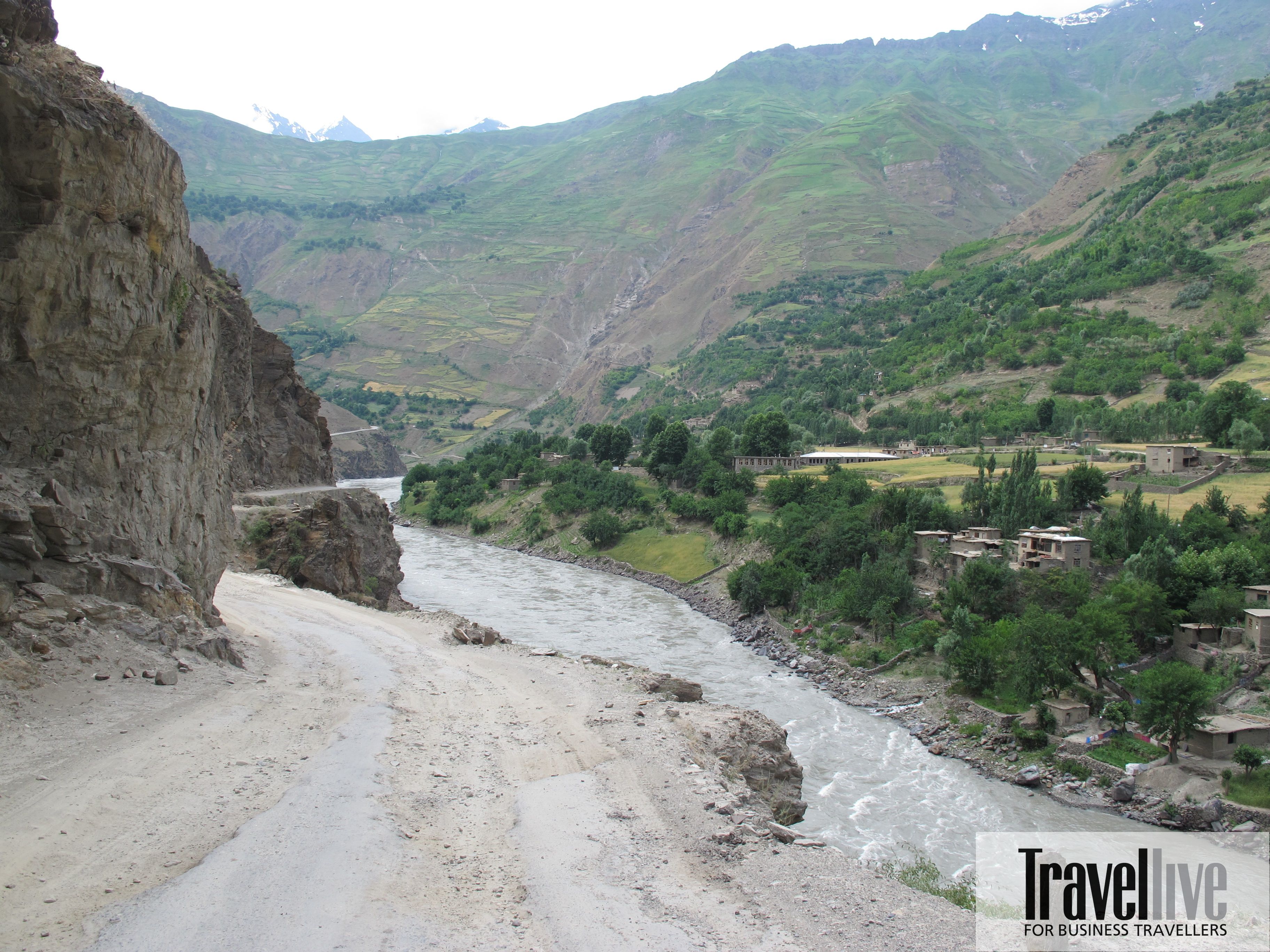
Across the river lies Afghanistan, a forbidden land full of dreams.
One day, we set up camp in a place as beautiful as a national park. Towering mountains surrounded us, offering shelter. The heat caused the ground to crack and dry up, but below, a stream flowed joyfully. It was a bit of a struggle, but we managed to climb down and immerse ourselves in the cool water, washing away the fatigue of a day's journey.
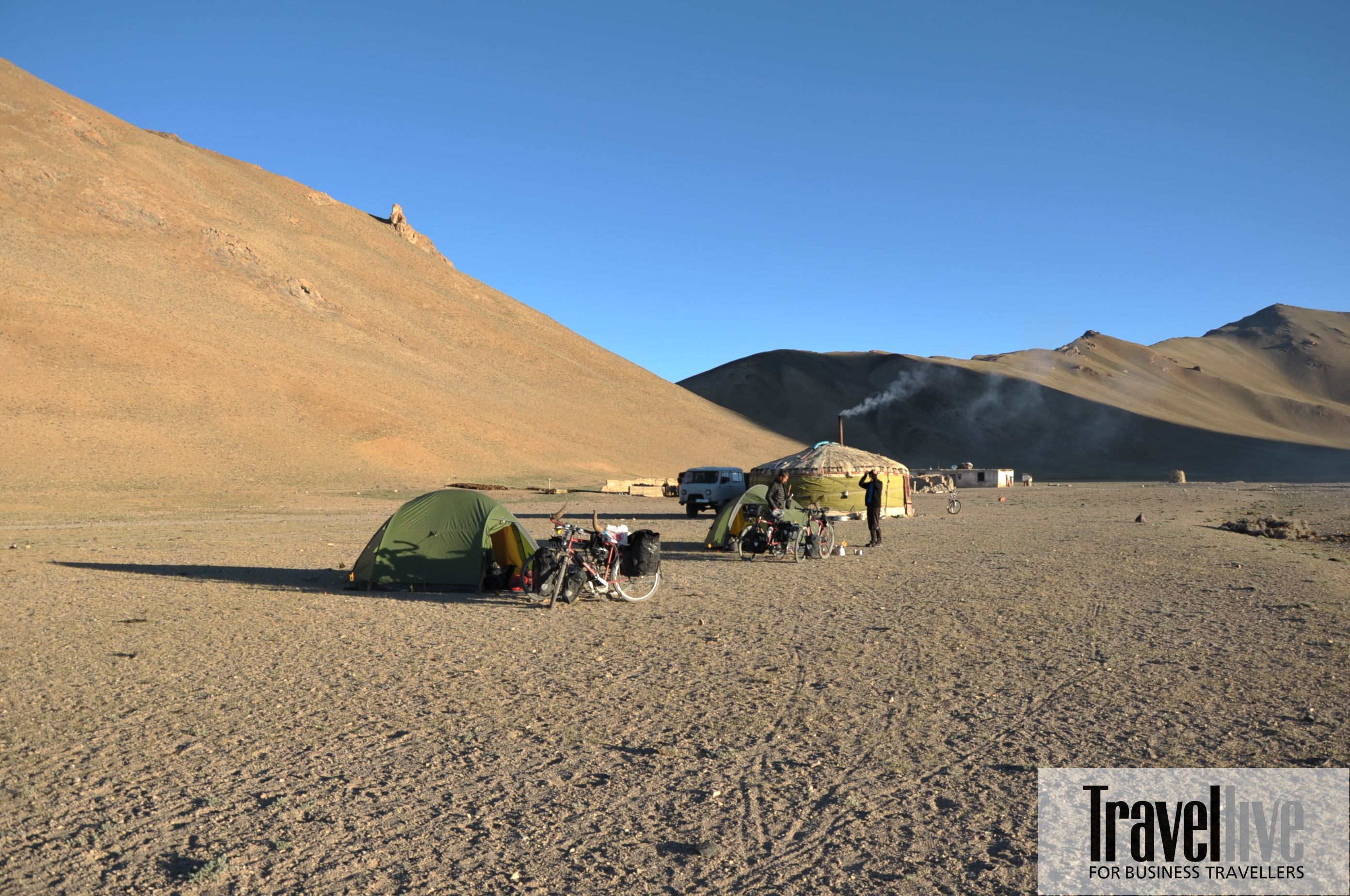
Set up tents with nomads in a stunning landscape.
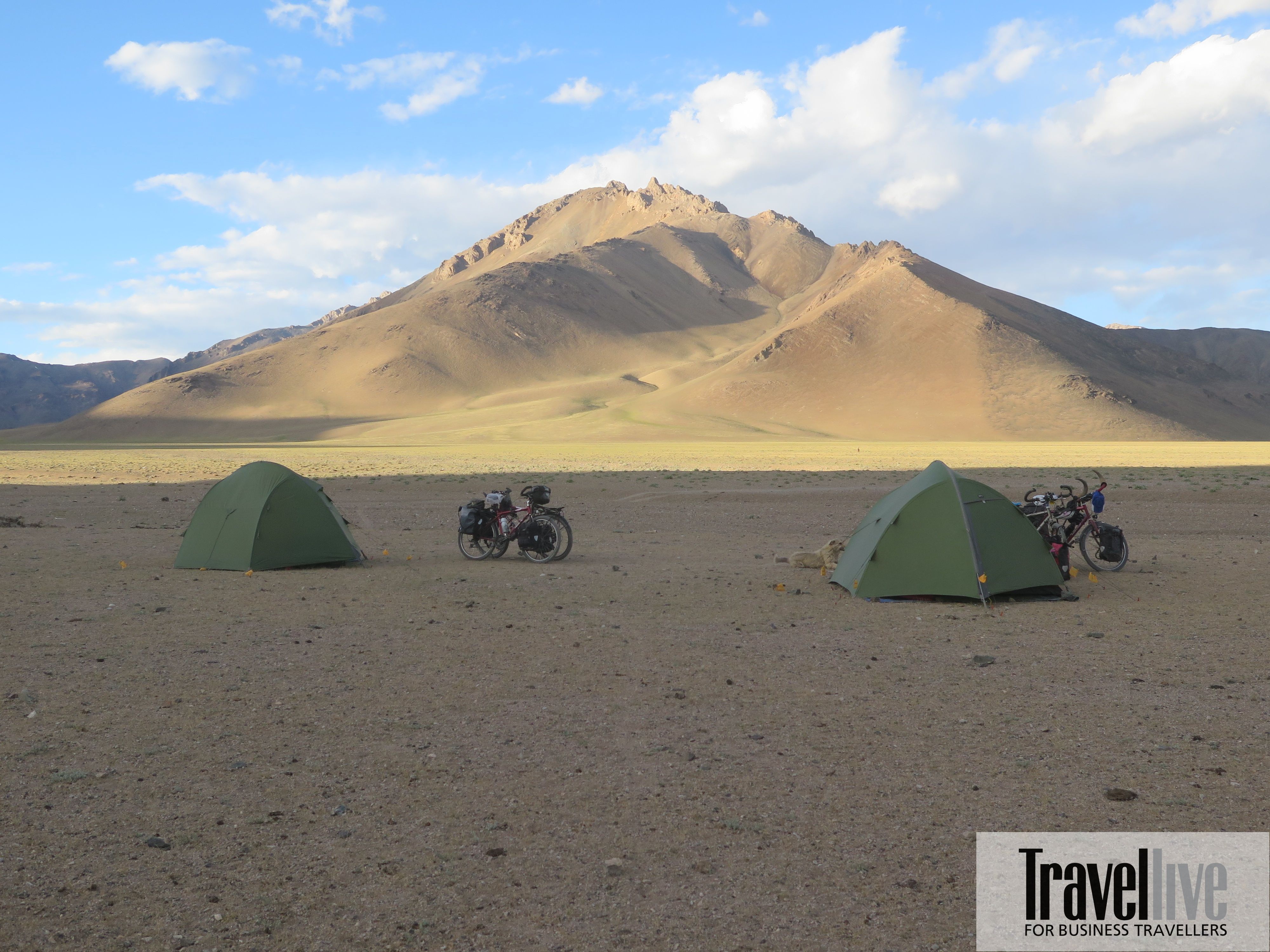
One day, we pitched our tents right by the Panj River. On the other side, groups of Afghan women, dressed in their finest clothes, were laughing and chatting as they washed their clothes in the river. Somewhere, shepherds were herding their animals home, kicking up clouds of dust. Occasionally, a few young men with turbans and jackets billowing in the wind would speed along on their Cross motorcycles, waving at us. Life here was so peaceful; no one could have imagined that it was one of the most dangerous countries in the world.
The eccentric travelers on iron horses
As we rode from the riverbank through the small villages, the filthy children, barefoot and bareheaded, their faces sunburnt but their eyes bright, always cheered and lined up to clap our hands – we peculiar travelers, always sweating profusely on our iron horses laden with goods.
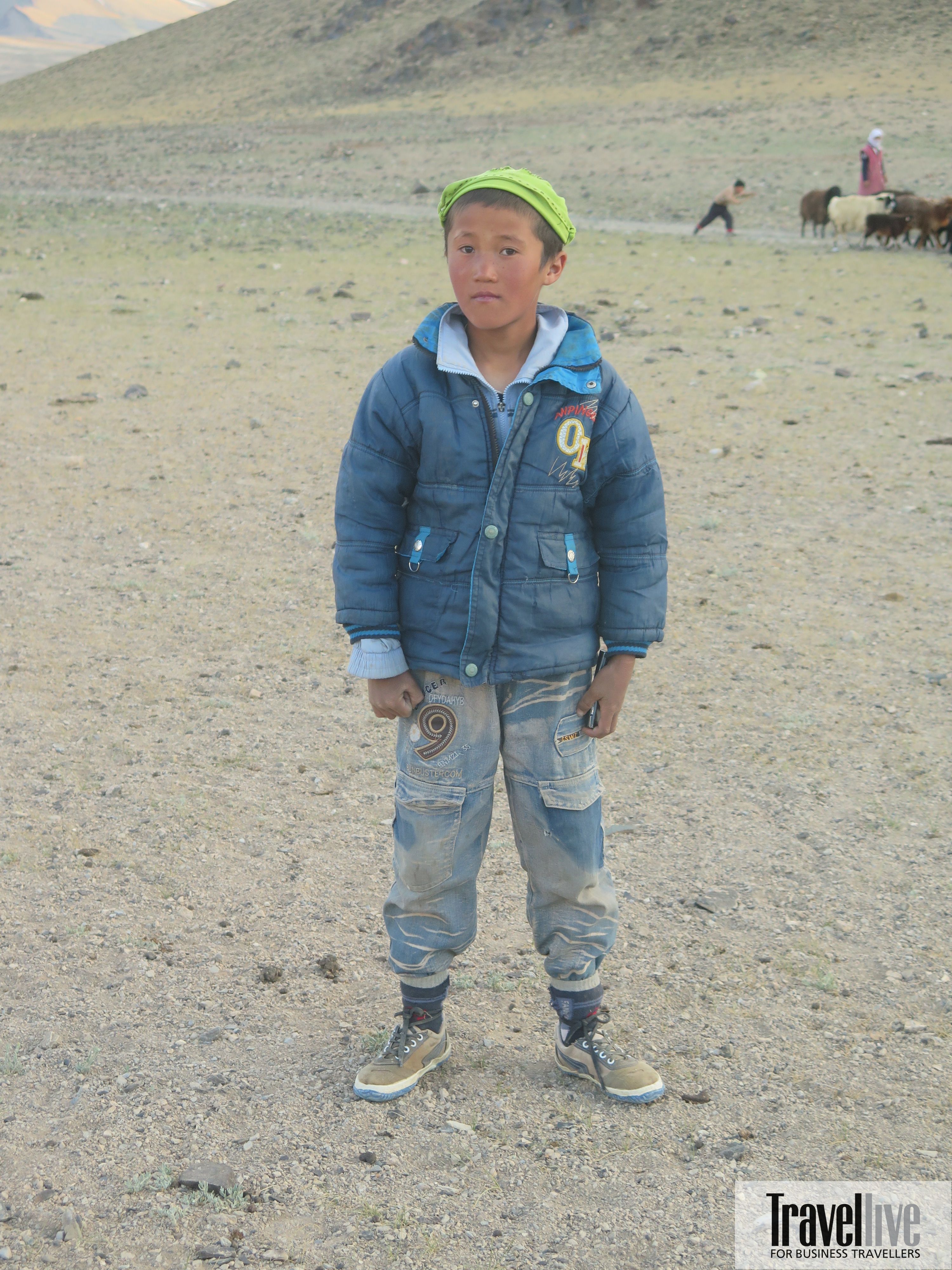
Cute children in a remote area

Tajikistan's smile
Perhaps it was a great joy of the day for the children in those remote areas. They reminded me of the children in the writer Thach Lam's stories, eagerly awaiting the train's arrival each evening, bringing with it a light that could make life a little less monotonous.

The kids gathered in front of the school gate.
Every day, we would buy one or two buckets of apricots from them. Those golden, ripe, sweet apricots helped us cope with the harsh heat and food shortages. Even now, those sweet apricots still make our mouths water. It wasn't just the children; we had many interesting encounters every day.

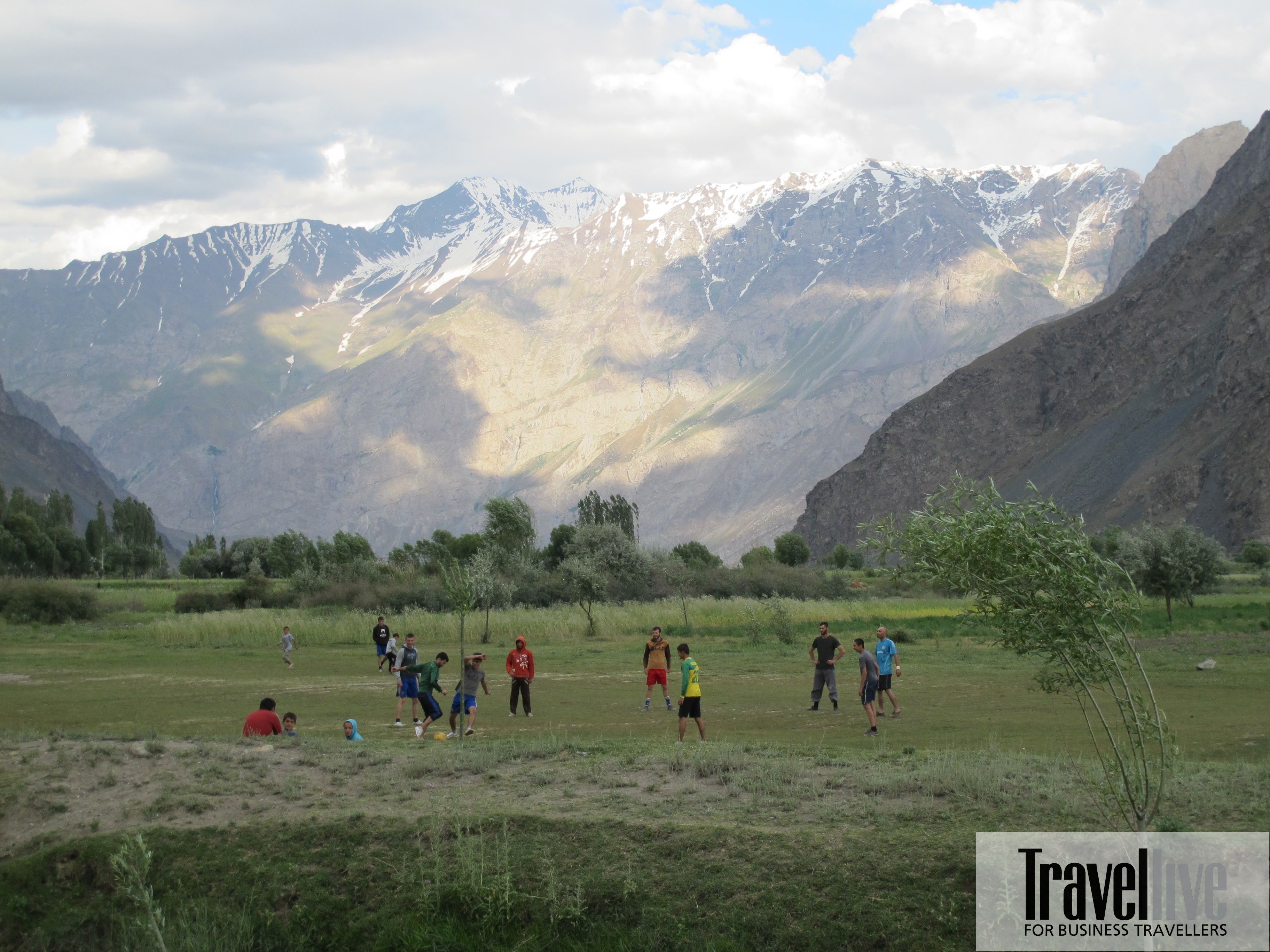
Playing ball with the young men in the village.
Just a brief stop and the young people gathered around a ball in the lush green field would enthusiastically invite us to play with them. If we pitched our tents near a residential area, people would flock to visit, invite us to their homes, and offer us food. The selfless hospitality of the local people always surprised and moved us on our long journey.
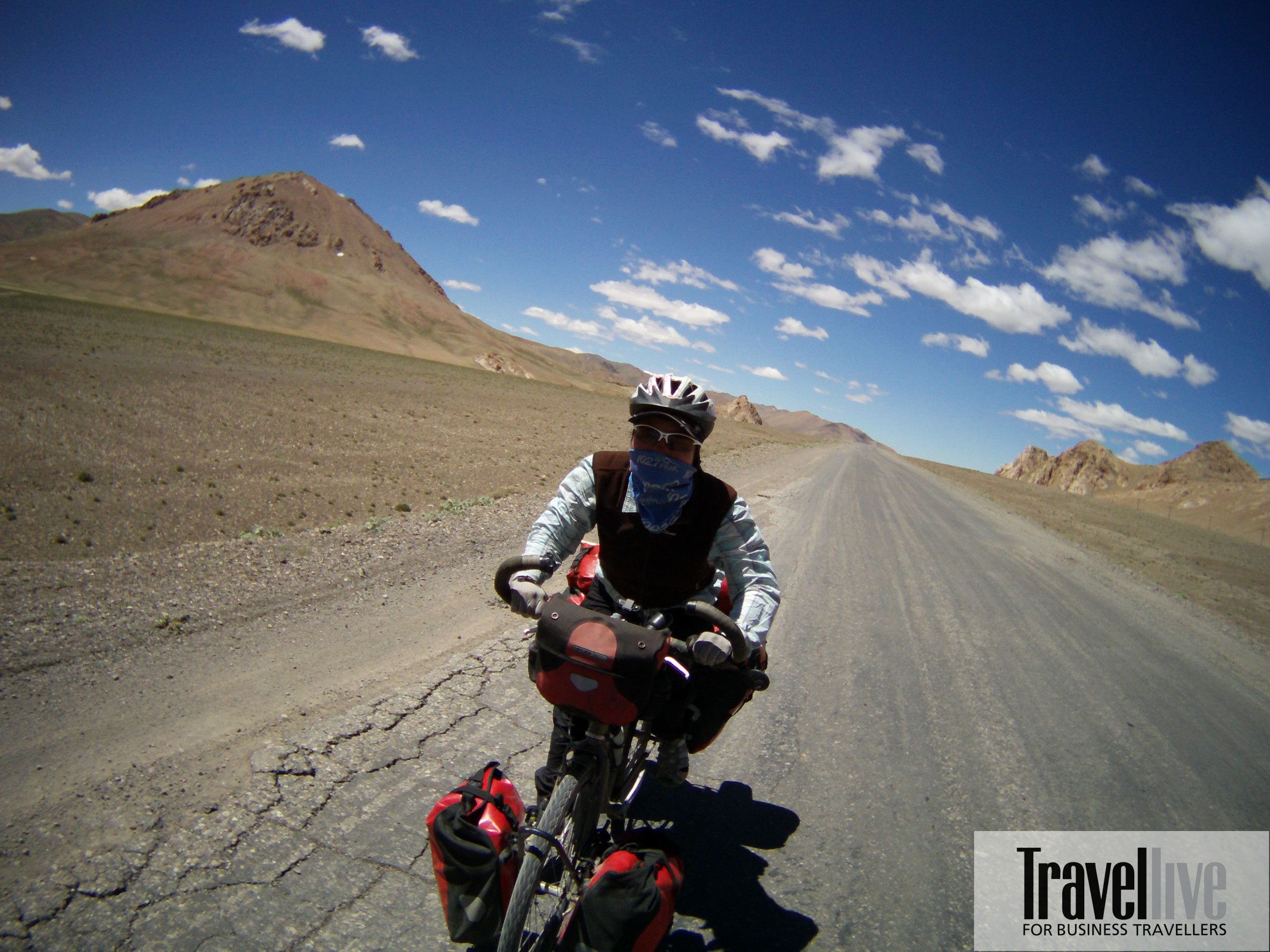
We—the eccentric travelers—were always drenched in sweat on our overloaded motorcycles.
The M41 highway, the route we were traveling on, is a major trade artery in Central Asia. This made us somewhat apprehensive. But it turned out that only the name "highway" was accurate; the road was quite narrow and in poor condition, full of potholes, and traffic was sparse, mostly consisting of trucks carrying goods in long convoys.
From an altitude of 3,000 meters, the nights began to cool and then chilly; we no longer had to endure the scorching heat of the ground where we pitched our tents, even until the next morning. The journey from here also became increasingly difficult, especially when we climbed above 4,000 meters, where the thin air required us to expend twice or three times as much energy as usual.
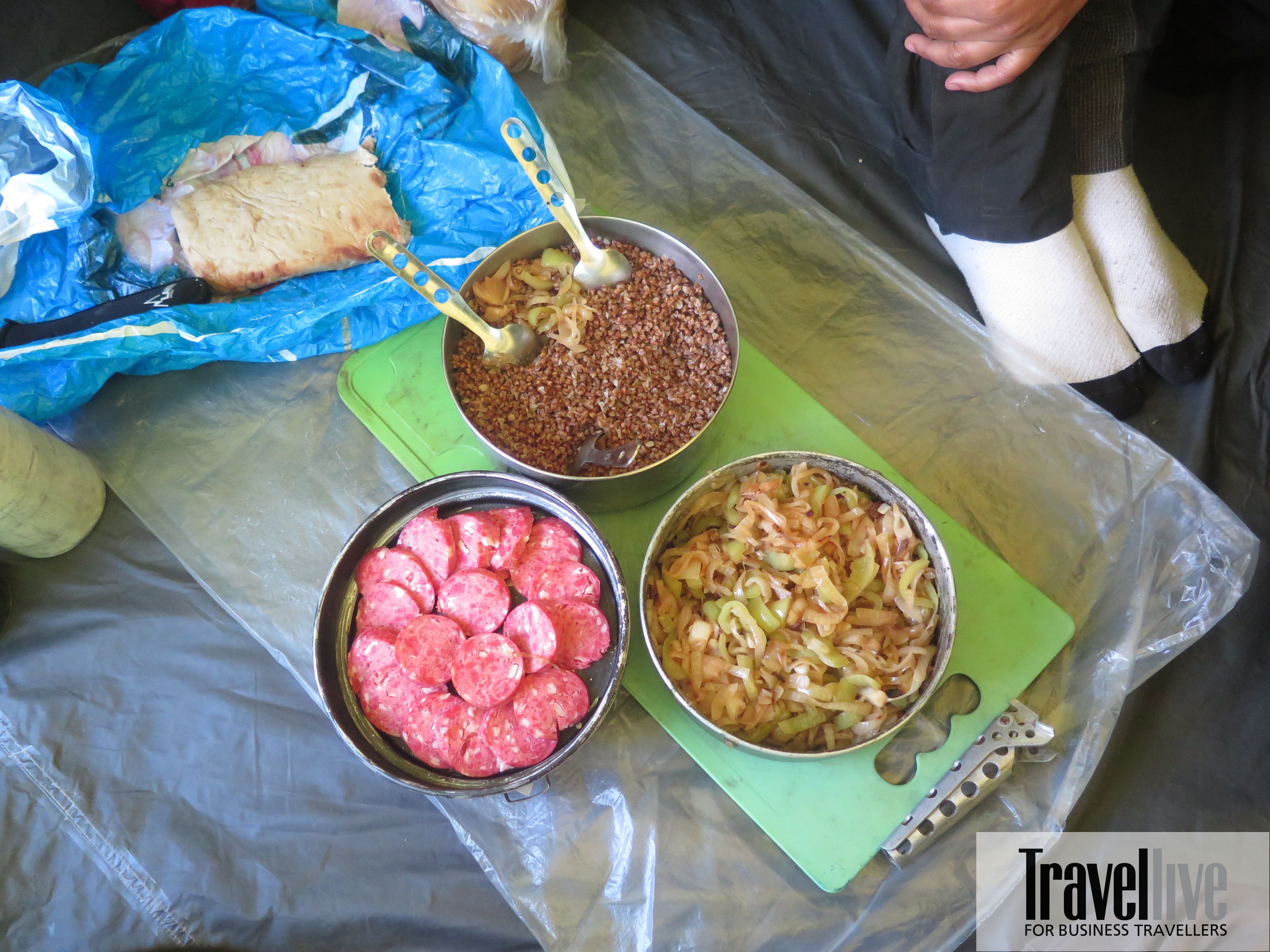
Dinner on the plateau.Food was becoming increasingly scarce; fruit was gone, and even rice took forever to cook properly.
While the steep slopes remained steep and the bad roads continued to deteriorate! At this point, even seasoned cyclists could only pedal relentlessly, lacking the energy for conversation or laughter. Food became increasingly scarce; there was no more fruit, and rice took forever to cook. We subsisted on bread dipped in condensed milk for breakfast, and cereal and canned goods for lunch and dinner.
To compensate, we cycled daily through a breathtakingly beautiful and majestic natural landscape. Each afternoon, we stopped at a spot even more beautiful than the day before, with tranquil green rivers and mountains of vibrant colors and fascinating formations.
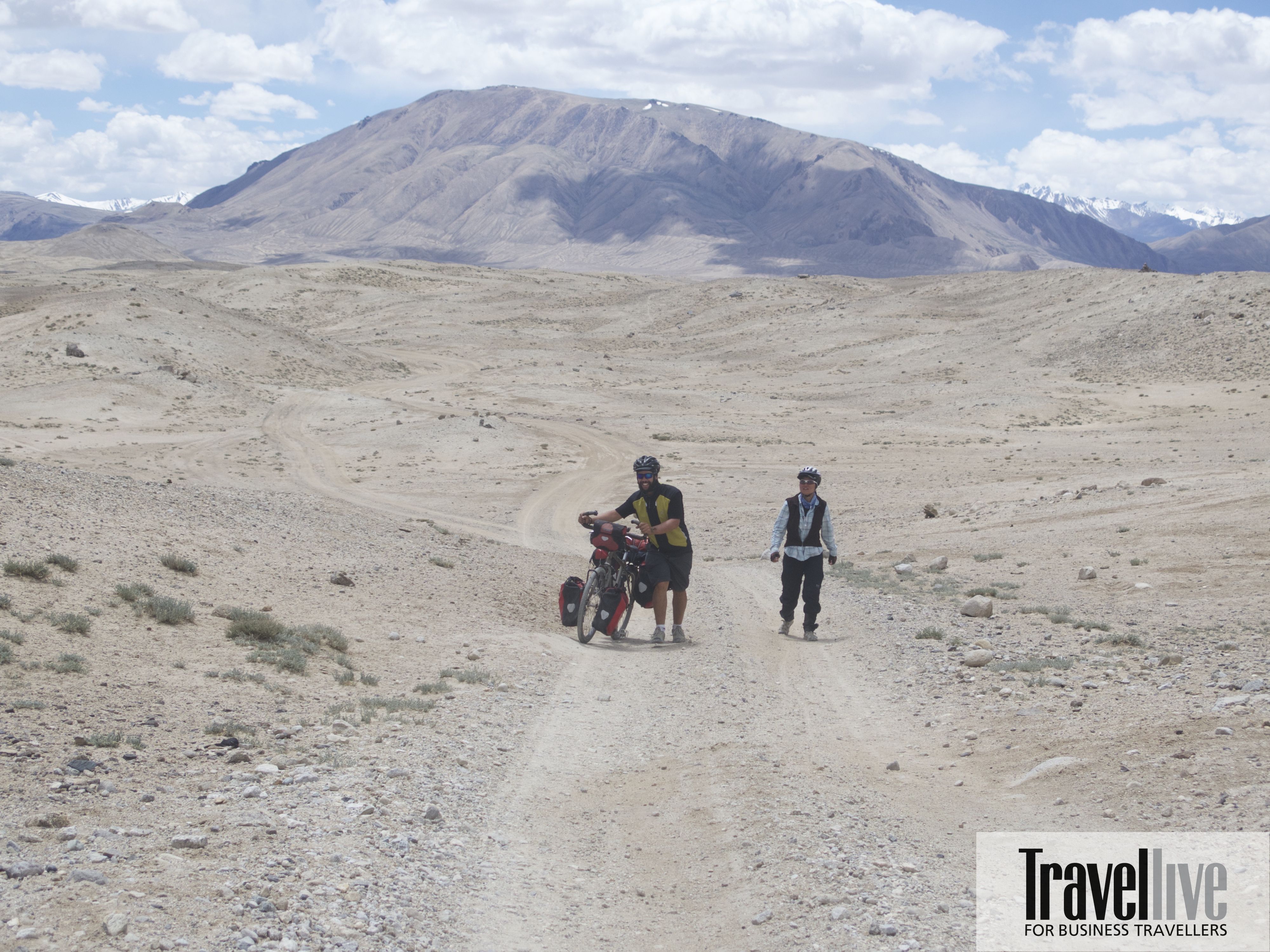
There are days when you walk and walk and don't meet a single person.
Every morning, we wake up to a magical scene, our hearts filled with gratitude for life. The feeling of being one with nature, of complete freedom and contentment, is indescribable. On days like these, we don't encounter a single person, only the bicycle tracks imprinted on the grass.
Camping in the village on the roof of the world.
We decided to take a detour to visit Bulunkul, a rare village in the Pamir Plateau. The blue sky, red mountains, and golden sands constantly surprised us. However, the village was a disappointment, as almost everyone we met was drunk, even the children looked listless.
Ignoring the homestay owner's persuasion, we decided to continue our journey to camp in nature, even if it meant sweating a few more liters and burning a few thousand more calories before finding a suitable spot; it was still more fitting for us.
Arriving in Murgab, exhausted but full of pride, we knocked on the door of the Pamir Hotel – a cyclist's stopover, where comfortable beds, warm mattresses, hot showers, and a real kitchen awaited us. Here, we had two days of leisurely rest, chatting over cold beers, preparing for the final, equally challenging leg of the journey: the Akbaital Pass, the highest point of the Pamir Plateau at 4,655 meters, still more than a day's journey away.
After reaching the summit, we had to descend, and the descent was no less difficult, even more dangerous, because the road was so bad, full of gravel, and many sections were wavy like corrugated iron roofs, causing both the vehicles and the people to shake violently. By the end of the day, we were all walking with our feet pointing outwards, our bodies aching and sore, but we felt even more sorry for our trusty motorbikes.
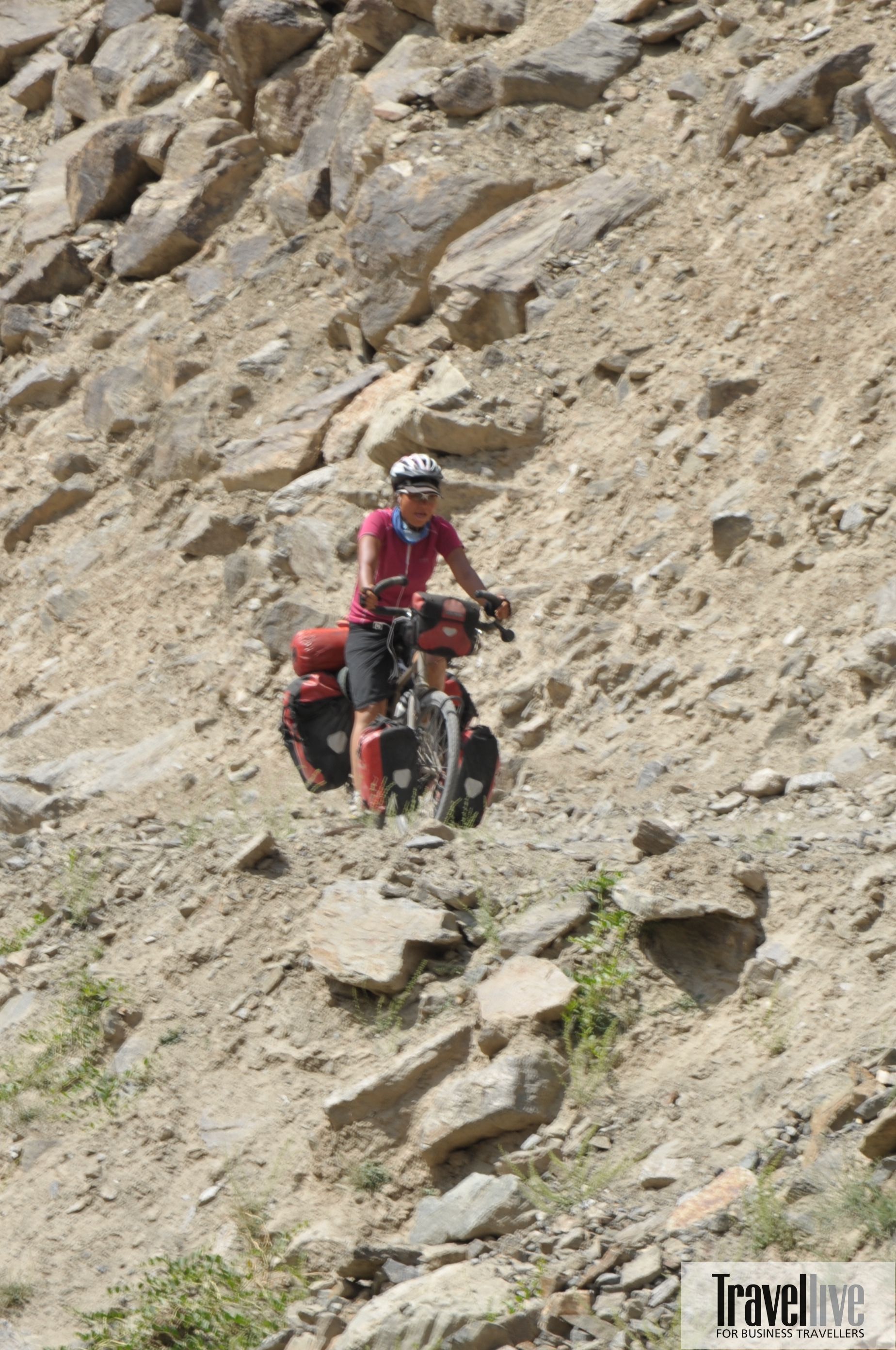
The road was terrible, full of gravel, and many sections were wavy like corrugated iron roofs, causing both the vehicle and the people on board to constantly shake.
Upon arriving at the famous Lake Karakul, a breathtaking natural landscape unfolded before our eyes: crystal-clear water, azure sky, and snow-capped mountains in the background, with fluffy white clouds drifting by. We had lunch at a house in the village and were then invited to rest – something we naturally didn't refuse.
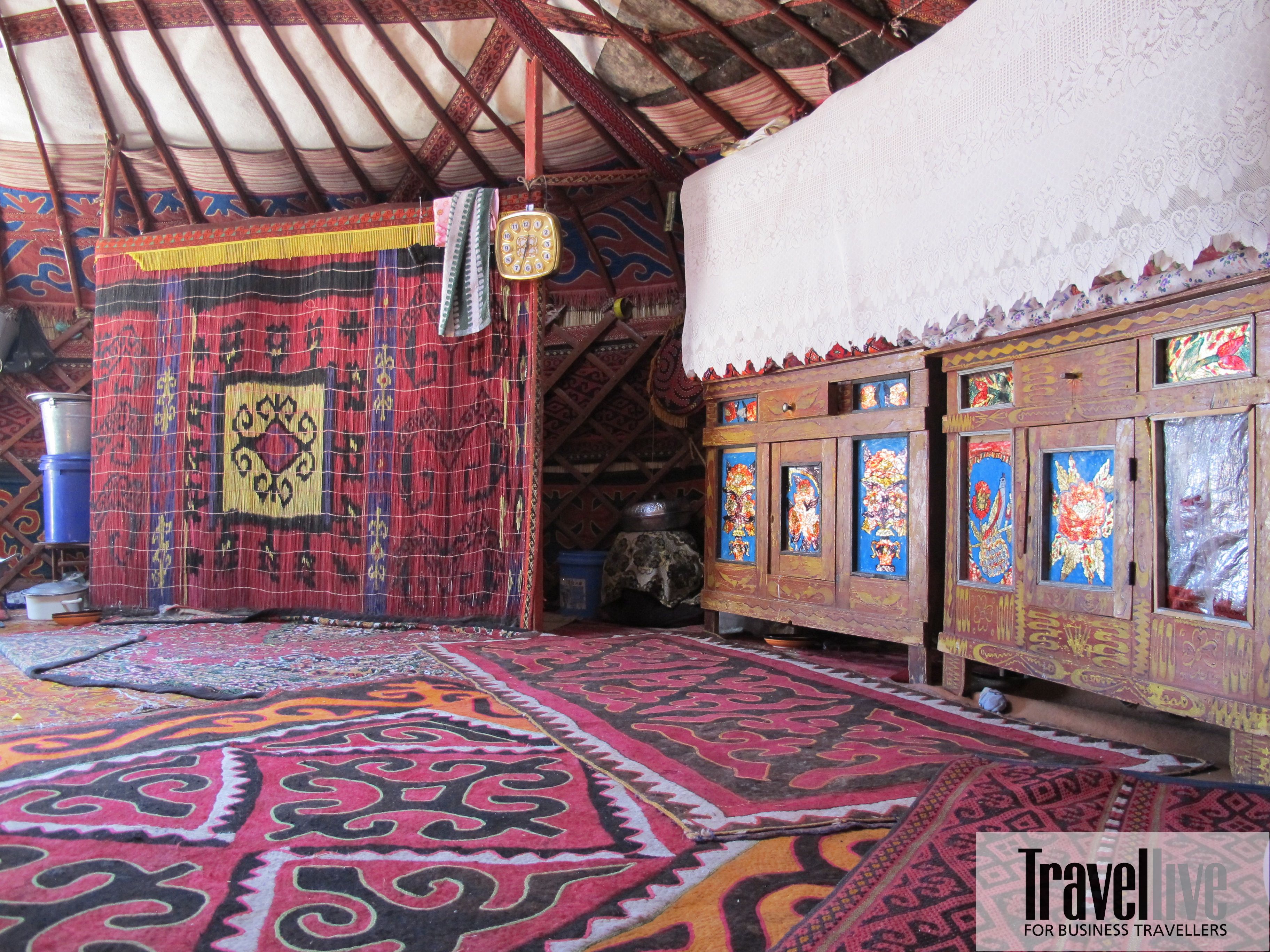
When the nomads opened their tents to welcome us.
A typical Central Asian house always has a large room, filled with vibrant red carpets and cushions scattered around. My heart sank when I found decorations from the former Soviet Union, which were very popular in Vietnam more than 30 years ago, when I was a little child.
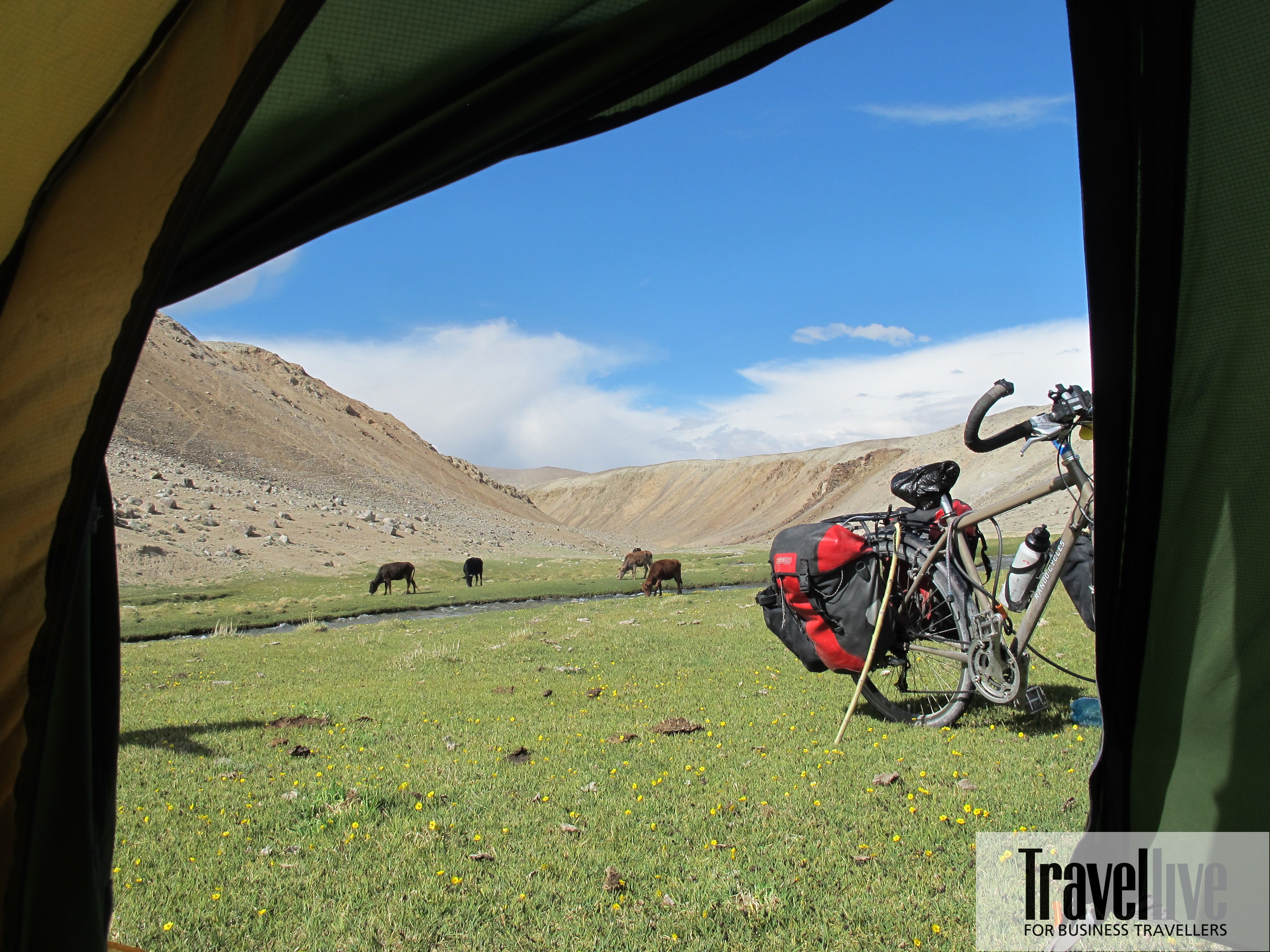
Every morning we wake up to a magical scene, our hearts filled with gratitude for life.
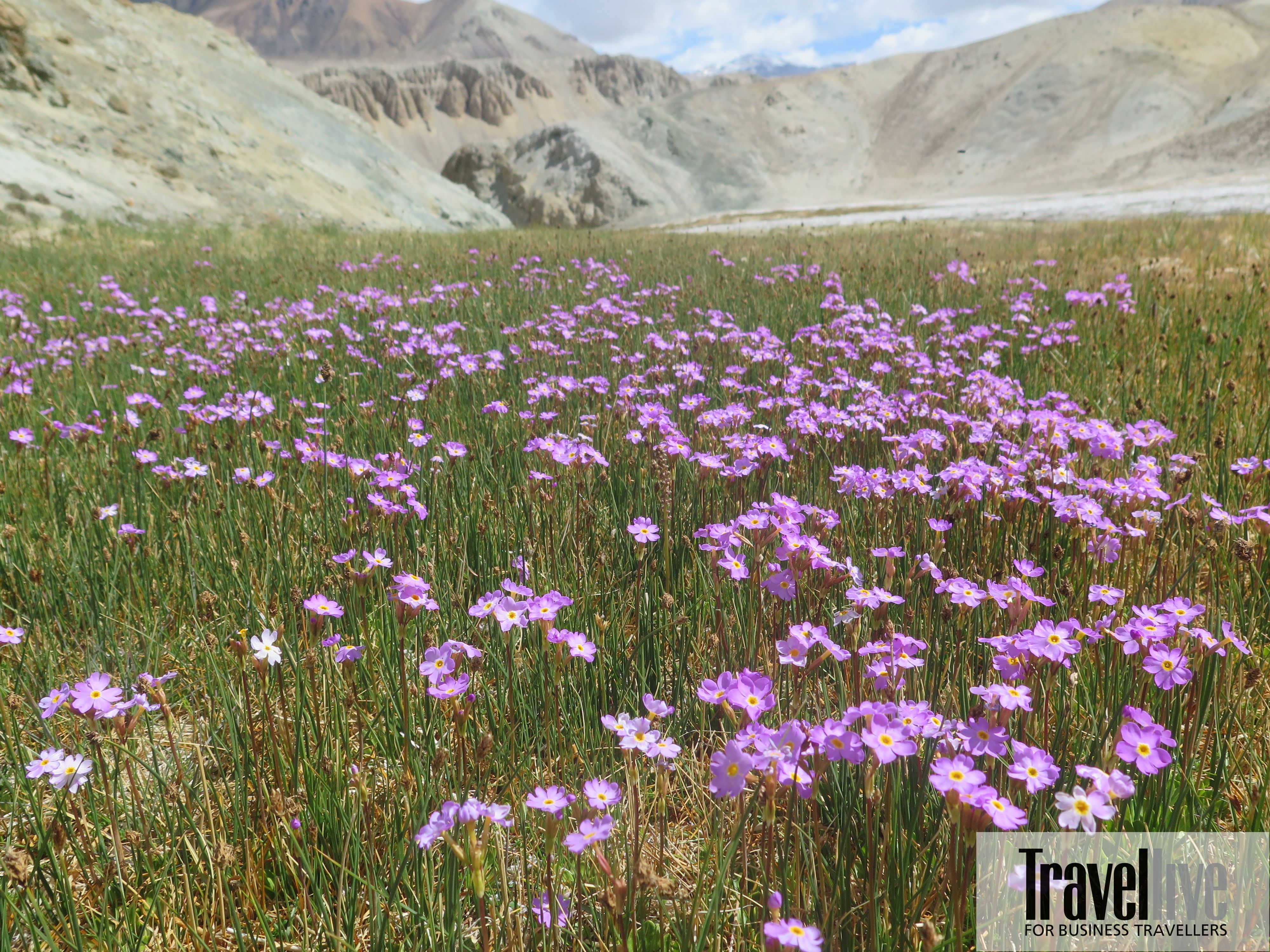
Tajikistan and the Pamir Plateau, true to its reputation as the "roof of the world," tested us until the very last moment. The final kilometers and the last steep incline before reaching the Kyrgyzstan border were perhaps the most difficult and arduous hours. Silently cursing the headwinds and the treacherous slopes, we gritted our teeth, hunched our backs, and pedaled relentlessly, even pushing our bikes, fighting for every meter of the road.
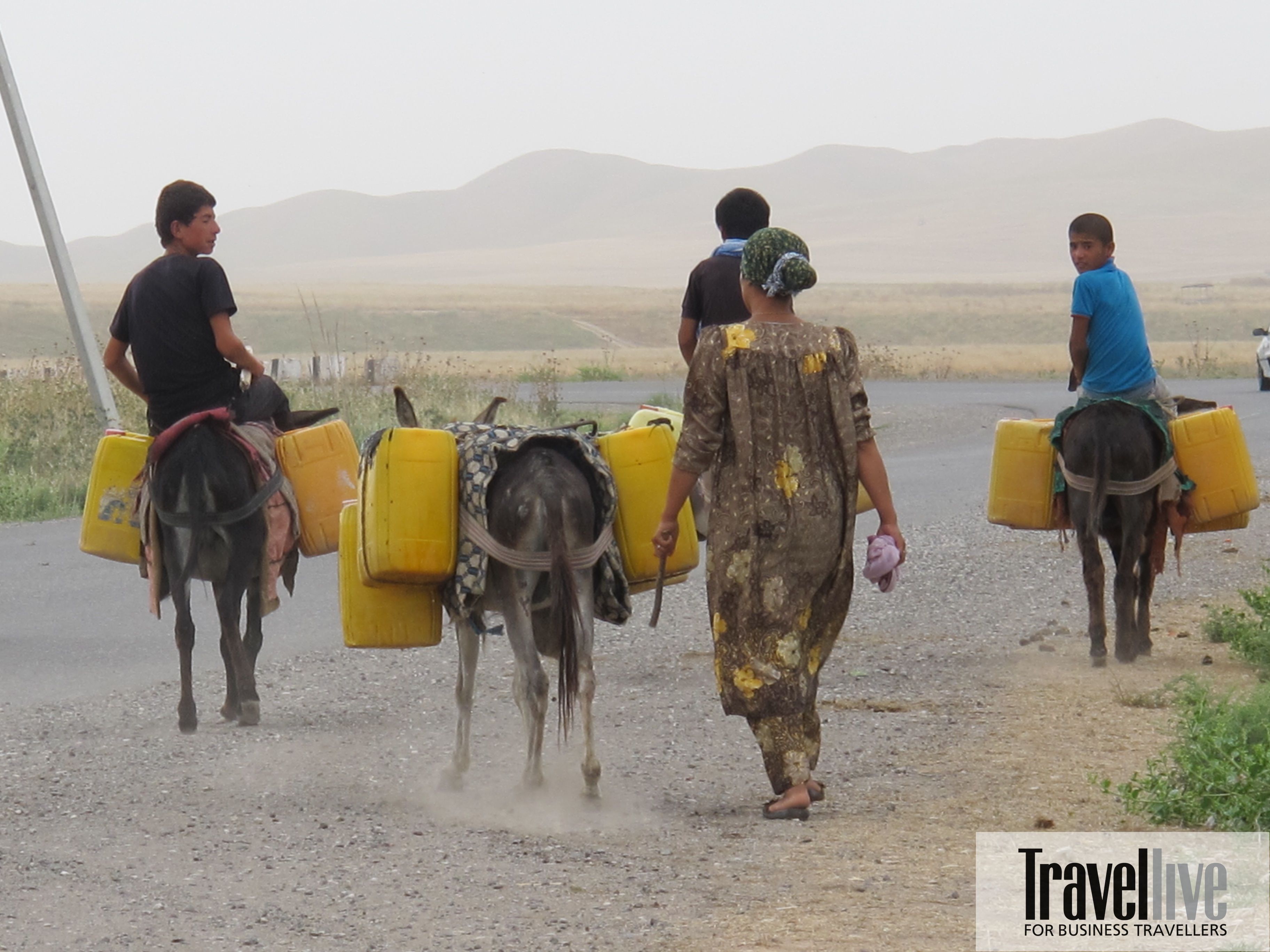
People go to fetch water.

Nomads on the steppe
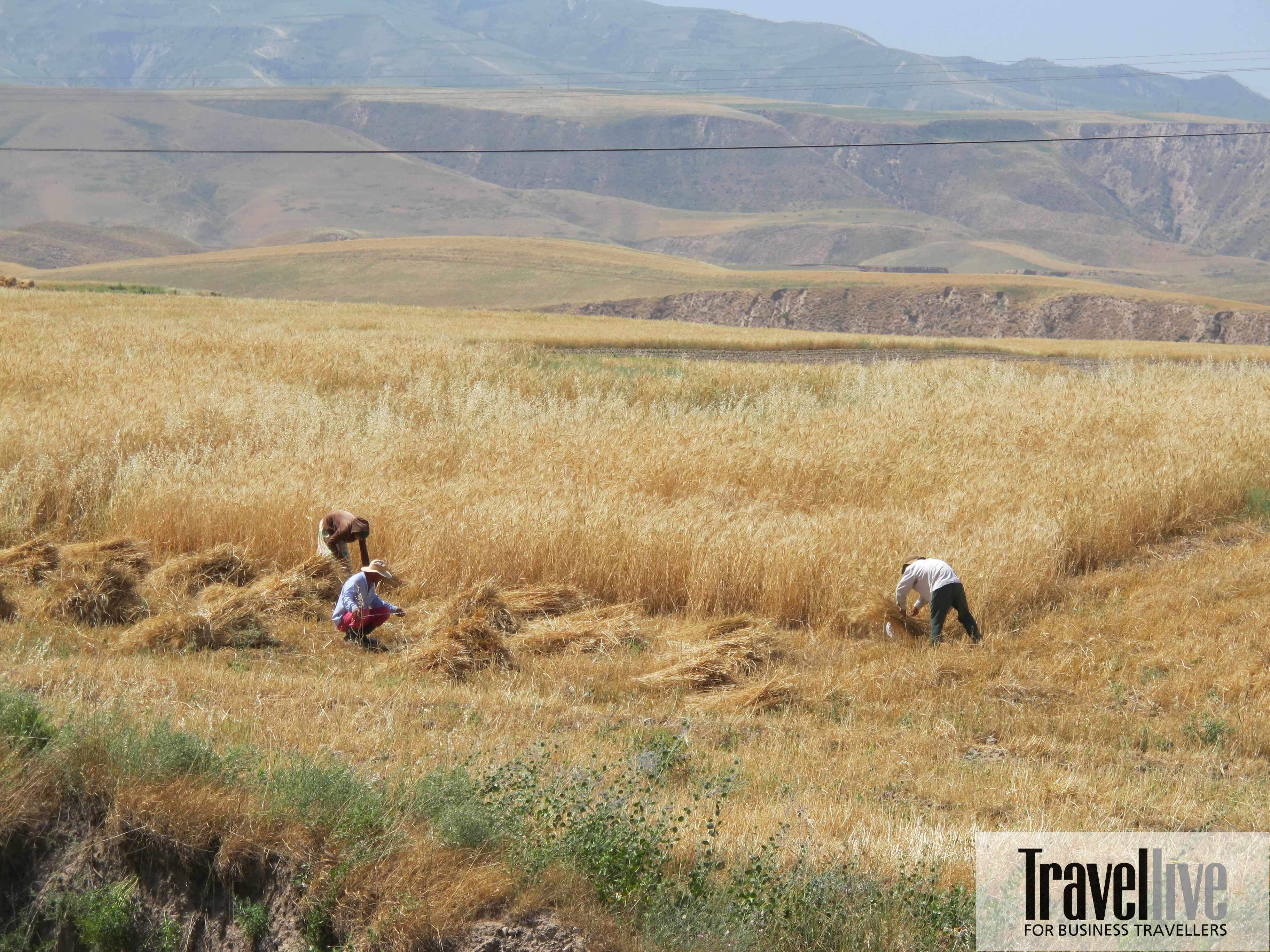
Many sections of the landscape are reminiscent of Vietnam.
But where there's a will, there's a way; after more than three weeks of wandering, we had to say goodbye to Tajikistan. Before embarking on new adventures in Kyrgyzstan, we tried to take one last look, to capture in our minds the final images of this place where nature and people had left indelible memories in my heart.
ADDITIONAL INFORMATION
+ Visa
- Tajikistan does not require Vietnamese citizens to apply for a visa before flying. Visas will be issued at Dushanbe International Airport. Visitors can apply for an e-visa and enter through all border crossings.
- Duration of stay: 45 days. Passport must be valid for at least 6 months from the date of entry into Tajikistan. Ensure that the passport has at least 2 blank pages and no visa stamps.
If your trip to Tajikistan involves a layover in another country, check if you need a transit visa.
+ Journey
To get to Dushanbe from Vietnam, you can take a Turkish Airlines flight with a layover in Istanbul, which is also a great opportunity to explore the Turkish capital.
+ Means of transportation
- If you don't want to contact a local travel agency to arrange a Jeep tour, you can explore the Pamir Plateau on your own motorbike.
- If you're an experienced traveler, you can try taking a local bus or hitchhiking along the way. Be warned, traffic here is quite light, so you might have to wait a while before finding a ride.
- Brake failure and flat tires are always common problems. If you're lucky enough to encounter someone, people are willing to stop their cars to help each other.
+ Accommodation
With no hotels or guesthouses on the outskirts of major towns like Murghab and Khorog, travelers on the Pamir Trail through Tajikistan have the option of staying in homestays with locals or camping along the roadside, like we did.
+ Cuisine
Central Asian cuisine isn't particularly diverse. You should definitely try Plov – rice mixed with vegetables and lamb, kurutov – bread with onions and tomatoes, and samsa – a type of lamb-filled pastry.
+ Currency
The somoni is the currency of Tajikistan; one somoni is worth approximately 2,600 VND.
+ Unmissable experiences
- In Khorog, you can find transportation to Eschekershim, with its famous market held every Saturday. This is the only place where you can enter Afghanistan with a Tajikistan visa.
- In Khorog, in July, there is the Bam-i Dunya festival, a celebration of the traditional arts of the Pamir Highlands.
- In each city you visit, take some time to explore the markets; you'll get a deeper sense of Tajikistan's "soul" through these vibrant markets filled with colors, smells, and sounds.
- Bulunkul Lake and Kara Kul are among the most scenic spots on this route.
- The shops set up on broken-down buses in Yamg village are always a popular stop for tourists.
AUTHOR:
Binh Nguyen and Rasom Alessio
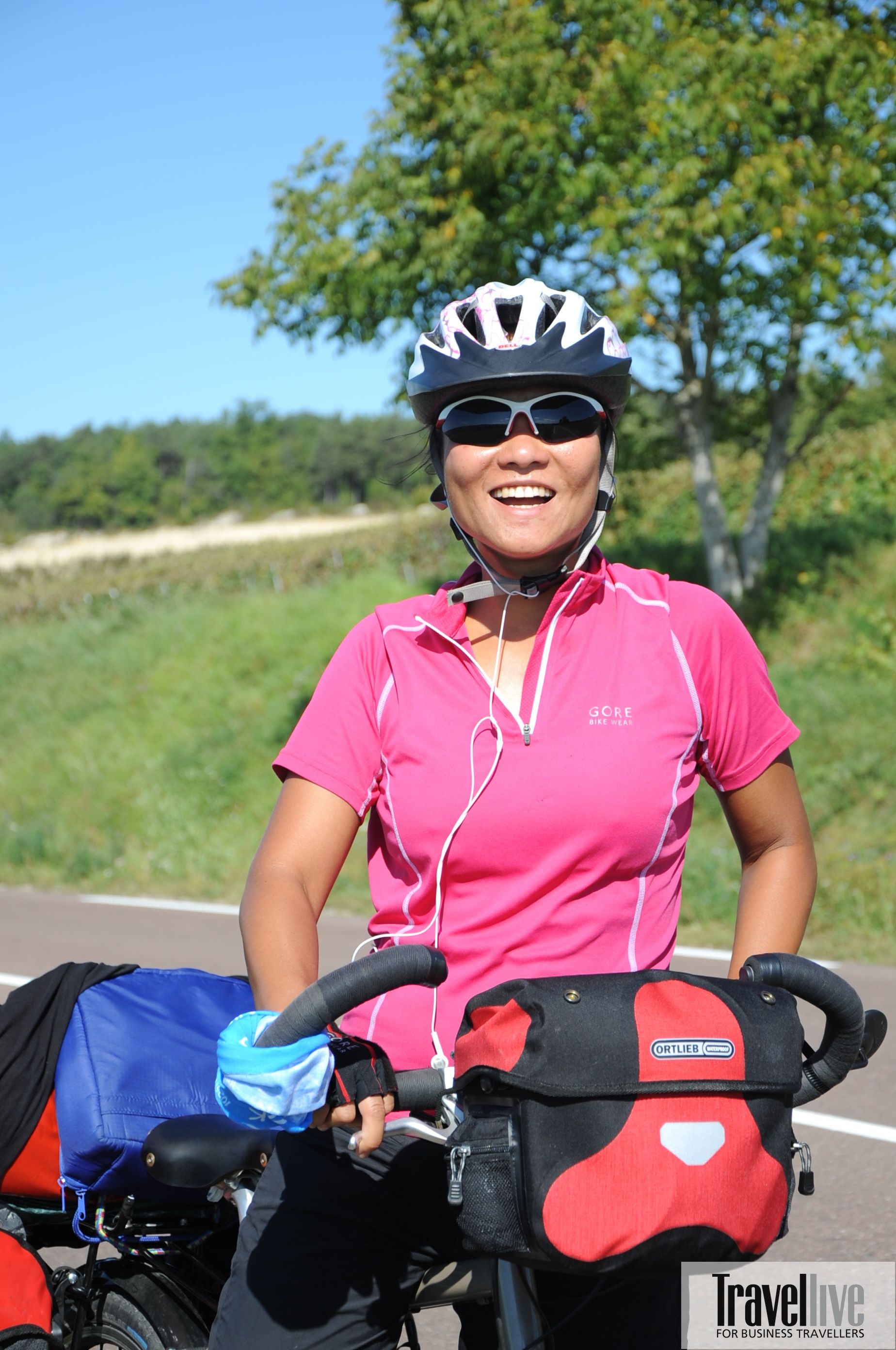
Binh Nguyen & Alessio
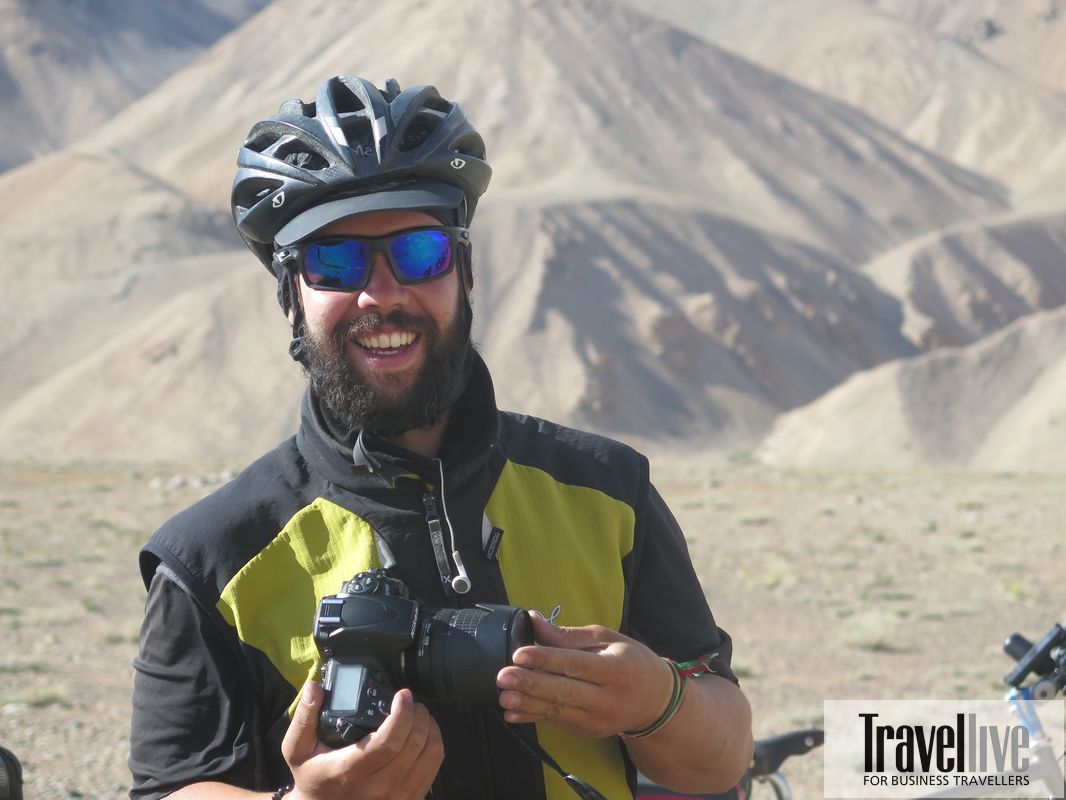
Leaving behind their stable jobs and lives in France, Binh Nguyen and his wife Rasom Alessio (an Italian national) embarked on a cycling journey from Paris to Hanoi. Calling themselves "rollingpotatoes," Binh Nguyen and Rasom Alessio began their long adventure in Paris, traversing 18 countries. These two "rolling potatoes" decided their journey was about experiencing challenging routes rather than easy ones. Their journey can be followed on www.rollingpotatoes.com.