VI
VI


The Nile, the world's longest river, flows from southern to northern Egypt and empties into the Mediterranean Sea. Along its course, the ancient Egyptians left behind many wonders for humanity. The Abu Simbel archaeological site is one of these wonders, playing a significant role not only for Egypt but for the world. This remarkable archaeological site contains magnificent monuments such as the temple of King Ramesses II at Abu Simbel and the Temple of Isis at Philae.
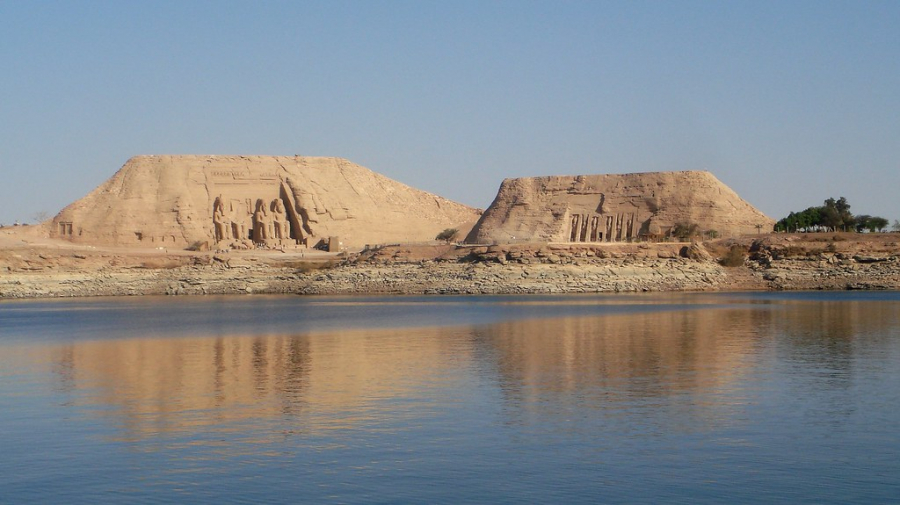
Ramesses II was one of the most powerful pharaohs of Egypt. He reigned the longest (from 1279 to 1213 BC) and also had the most impressive tomb constructions and sculptures of all the ancient Egyptian dynasties. Pharaoh Ramesses II built structures along the Nile River to commemorate his victories, including the famous Abu Simbel, which is not only an architectural marvel but also an astronomical wonder of ancient Egyptian civilization.
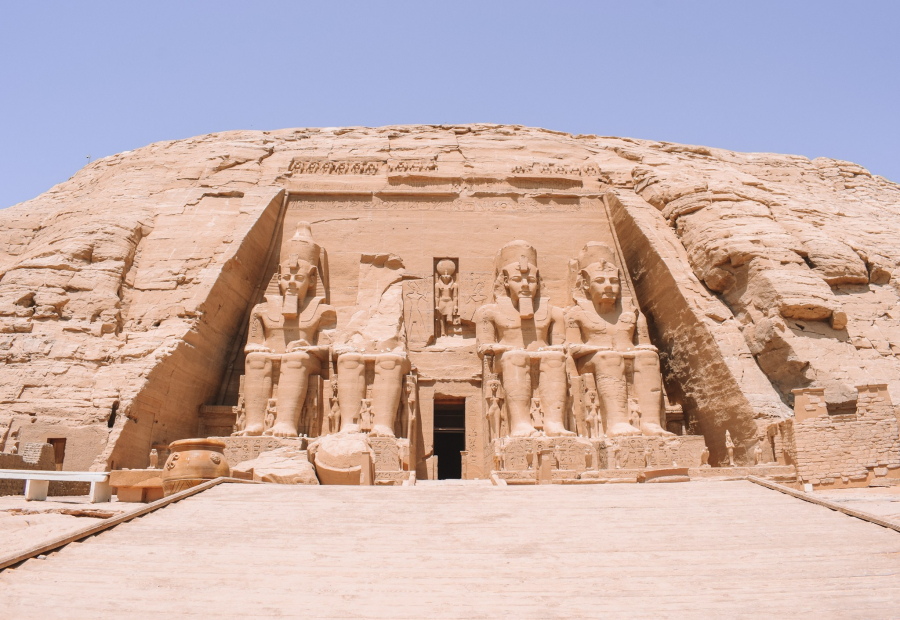
The Abu Simbel temple complex, begun at the start of the reign of King Ramesses II and completed in approximately 24 years, is one of six rock temples erected in Nubia during the reign of Pharaoh Ramesses II. The complex comprises two large temples carved into the side of a mountain, located on the western shore of the artificial Lake Nasser, about 230 km southwest of Aswan. It is considered one of the earliest sites of ancient African civilization.
The temple complex was built to worship three ancient Egyptian gods: the creator god Ptah (god of gods), Amun-Re (the sun god), and Re-Harakti (the patron god of the Pharaoh), as well as Ramesses II himself during his lifetime and reign. It also commemorates Pharaoh Ramesses II's victory at the Battle of Kadesh, a battle between the Egyptian Empire and the Hittite Empire (which existed in Anatolia in the North Middle East from approximately 1600-1178 BC, now part of Turkey); considered one of the largest chariot battles of its time, involving 5,000-6,000 chariots.
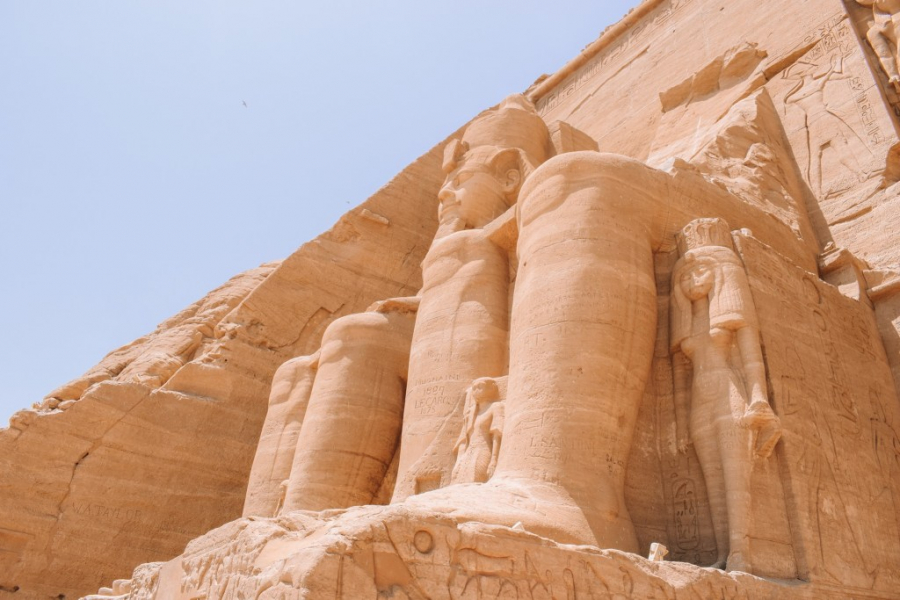
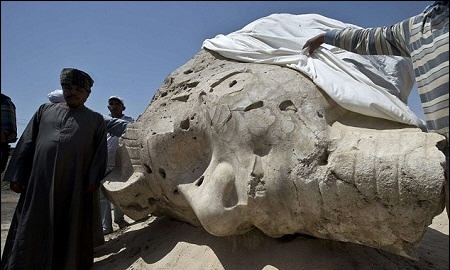
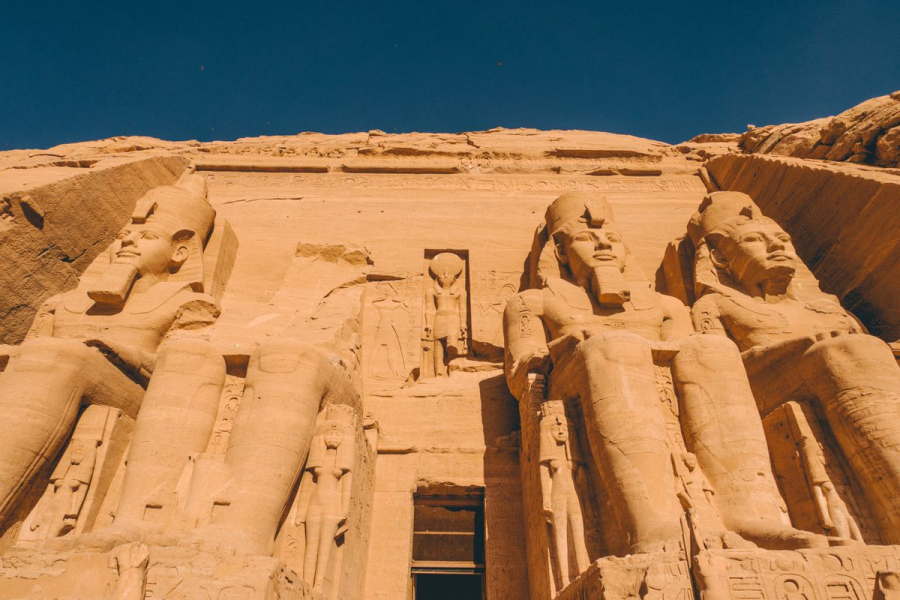
The temples were carved directly into the sandstone, initially in a rough form before being completed according to the construction standards of pyramids and tombs in the Valley of the Kings. The main temple is about 30 meters high and 36 meters long. On the front of the temple are four colossal statues, about 22 meters tall, carved from the original image of Pharaoh Ramses II in a seated position with a resolute gaze looking forward, wearing the double Atef crown symbolizing the Pharaoh of all Egypt at that time. Each statue wears a different crown symbolizing Upper and Lower Egypt at that time. However, after an earthquake, the head of the second statue on the left collapsed and fell at the foot of the temple, so today when visiting, tourists will only see three intact statues.
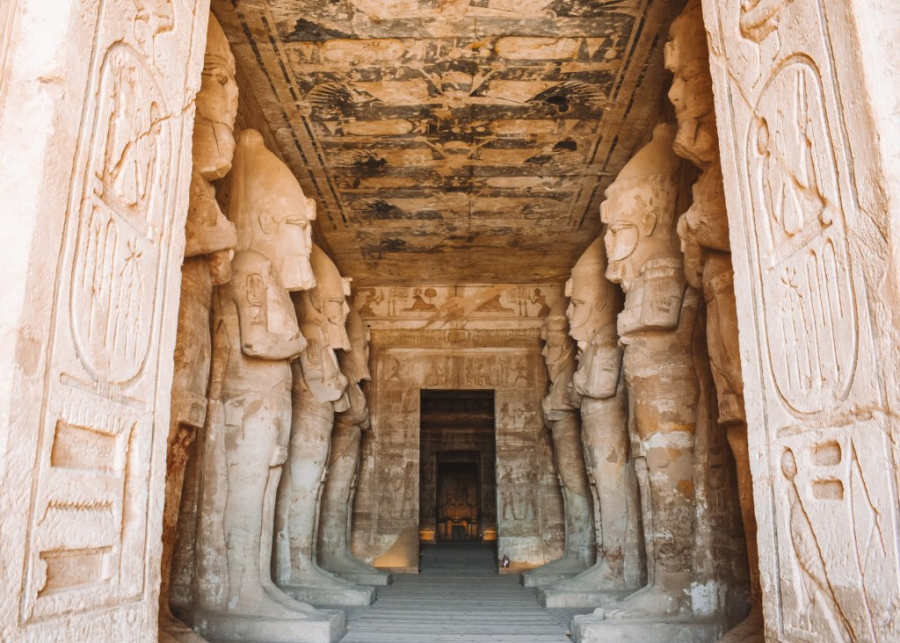
The main entrance of the temple leads visitors into a deep cave about 70 meters deep into the cliff, with a structure similar to ancient temples where the passage narrows as you go further inside. On either side of the corridor are carved eight colossal statues of Osiris – the god of the underworld and symbolizing death. The two walls behind the statues are also decorated with numerous bas-reliefs vividly depicting the glorious victories of King Ramesses II, such as battles in Syria, Libya, and Nubia… Besides these, some depict the king's daily life in the harem, others show the king's interactions with the Egyptian gods, or images that deify Pharaoh Ramesses II. Despite the passage of thousands of years, these exquisite carvings remain remarkably well-preserved, demonstrating the skillful craftsmanship of the ancients.

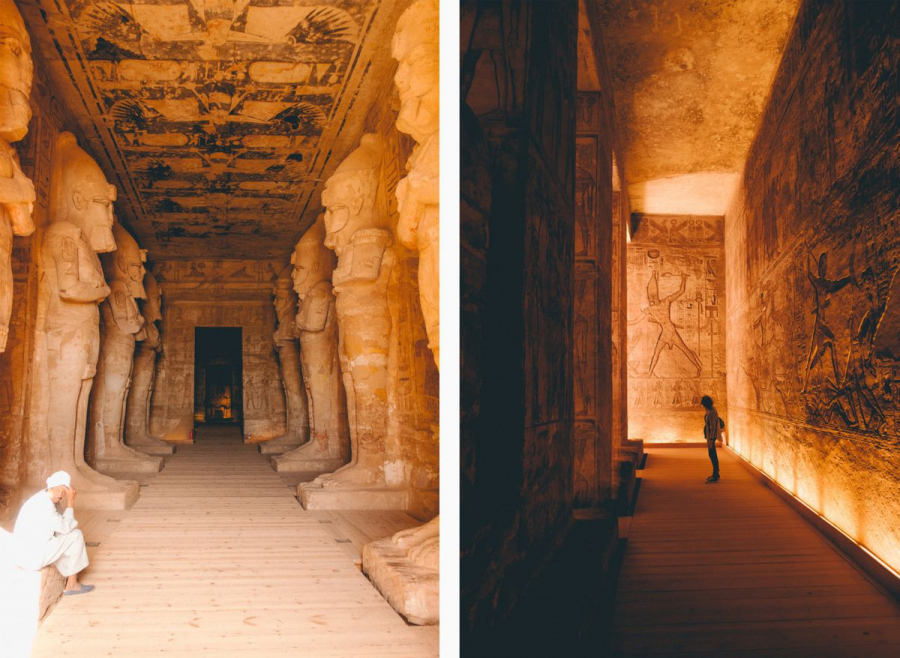
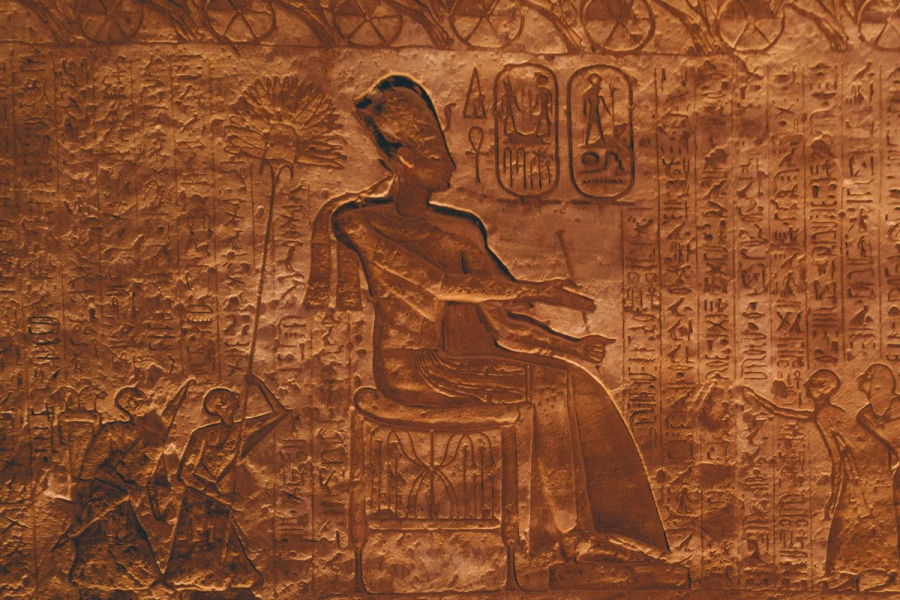
Walking through the corridor, visitors will see a main shrine with four statues of the gods Ptah, Amun-Re, Re-Harakti, and Ramesses II placed on pedestals. The arrangement of the statues in the Abu Simbel temple is also a very clever calculation of the ancient Egyptians. On the 20th of February and October each year, the sunrise would shine directly on the statue of Amun-Re, then gradually illuminate the statues next to it, Ramesses II and Re-Harakti, but never on Ptah because the Egyptians believed Ptah was the god who forever resided in darkness.
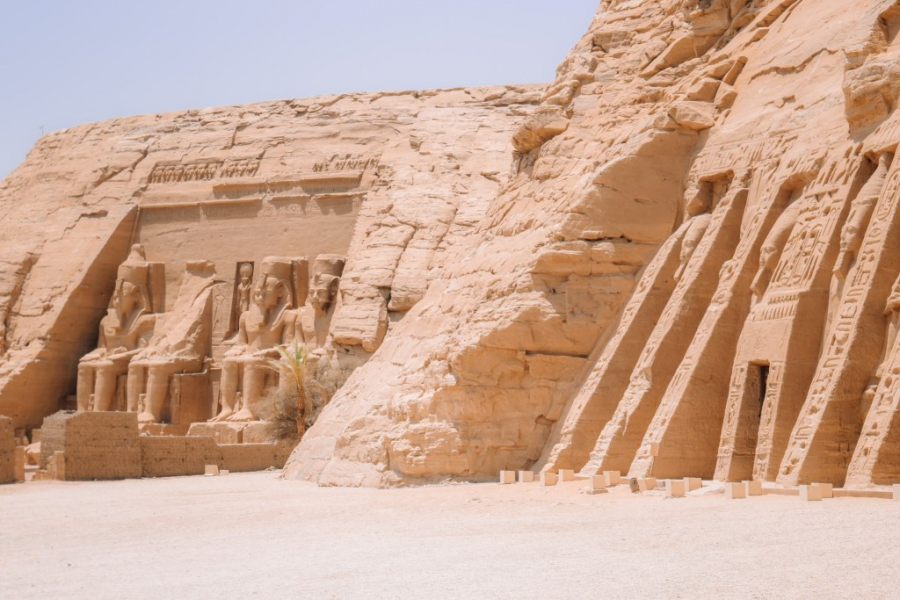
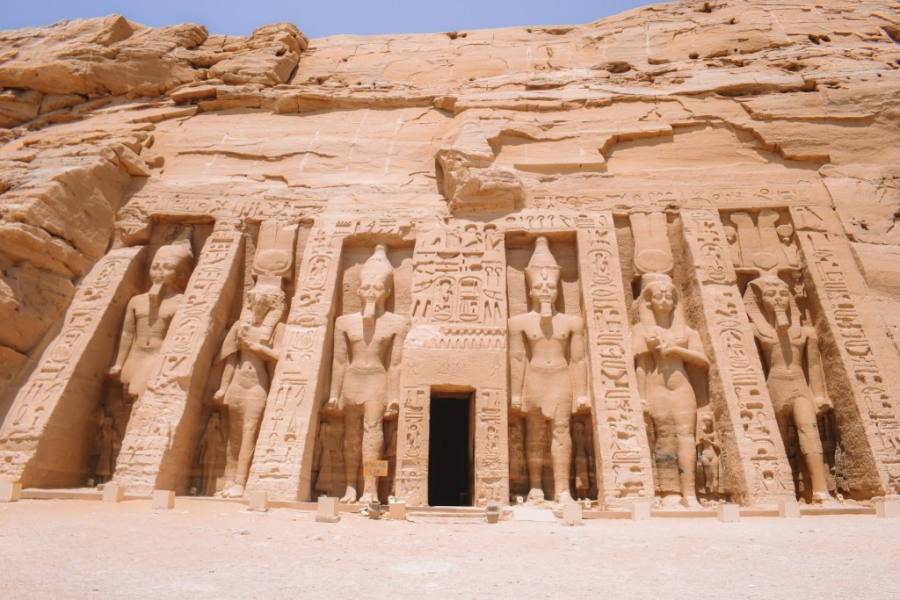
Additionally, there is a smaller structure resembling the temple of the goddess Hathor and Queen Nefertati of King Ramesses II. Nefertati's small temple is only about 12 meters high and 30 meters long, located about 100 meters northeast of the larger temple. The main facade of the temple is carved with six colossal statues: four of Pharaoh Ramesses II and two of Queen Nefertati. The interior of the temple is also decorated with bas-reliefs depicting the Pharaoh and Queen offering sacrifices to the Egyptian gods.
Over time, the temple was forgotten and covered in the sands of time. By 600 BC, sand had covered the statues in the main temple up to their knees. In 1813, the Swiss explorer Johann Ludwig Burckhardt was led to the site by a local boy named Abu Simbel and discovered the relief on the roof of the main temple.
Burckhardt recounted his discovery to the Italian explorer Giovanni Belzoni, who had come to the site hoping to awaken the two temples of Pharaoh Ramesses II and Queen Nefertari after more than 3,000 years of slumber beneath the sand, but could not find an entrance. Four years later, Belzoni returned in 1817, this time succeeding in his attempt to enter the temple complex. Despite enduring the harsh climate for a long time, perhaps it was thanks to the sandstorms that buried the Abu Simbel ruins in the desert that they have fortunately survived to this day.
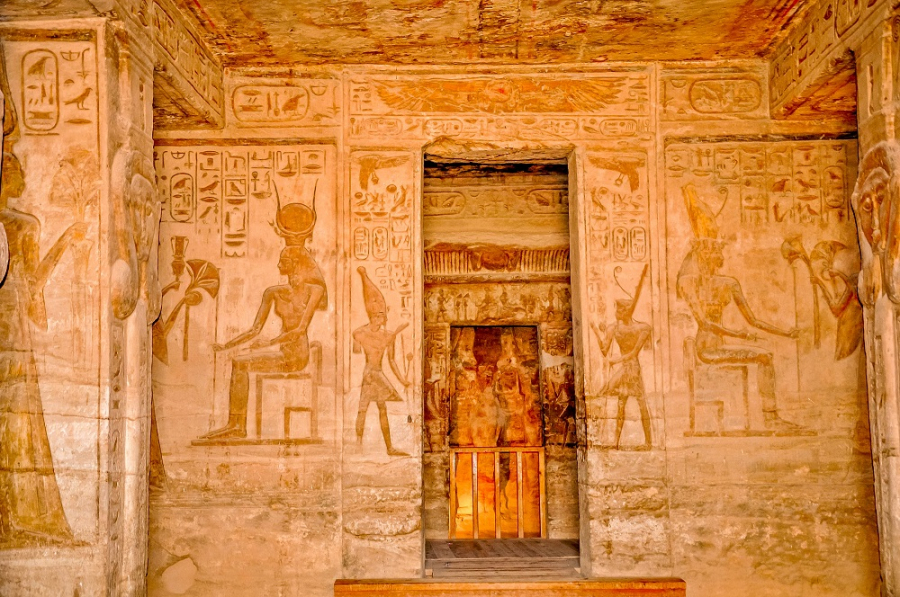
Numerous surveys, excavations, and studies have been conducted at this site, but to date, no authentic documents related to the temple's construction have been found. Scientists have had to examine and piece together various sources of information to find an explanation for the meaning and methods used by the ancient Egyptians to create magnificent structures like Abu Simbel.
Accordingly, the stone carvers had to carve the giant statues in a rough form according to the size sketched by the artist. The team working on the rough part only needed to carve the statue into the rock face. Then, skilled craftsmen shaped the statue, and artisans continued with the final stage of sculpting the face and form of the statue. All the carved reliefs inside and outside were also created following the same process.
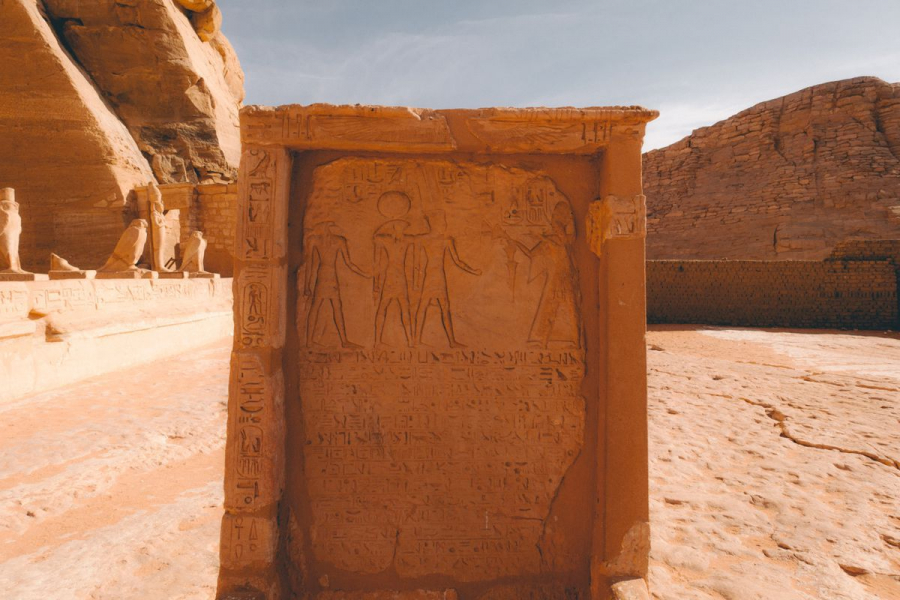
It could be said that, among the countless temples of Egypt, Abu Simbel is the one that has suffered the most. In 1902 and 1971, two colossal irrigation projects, the Aswan Dam and the High Dam, were built in the city of Aswan, in southern Egypt. At the foot of these dams, the world's largest artificial lake, Lake Nasser, was formed, covering an area of 5,250 square kilometers, 510 kilometers long, and 5-35 kilometers wide. These projects brought many benefits to the Egyptian people at the time, increasing arable land by 30% and doubling the country's electricity production. However, the Abu Simbel site is in danger of being submerged by the Nile River.
Egyptian authorities were forced to find a way to relocate the temples to preserve the heritage. This was an extremely difficult and costly task. Finally, with the help of UNESCO, Egypt rescued the Abu Simbel site by cutting the temple into more than 13,000 small pieces, lifting them to a height of over 65 meters above the Nile River, and then reassembling them over more than eight years, allowing future generations to admire this unique ancient monument.
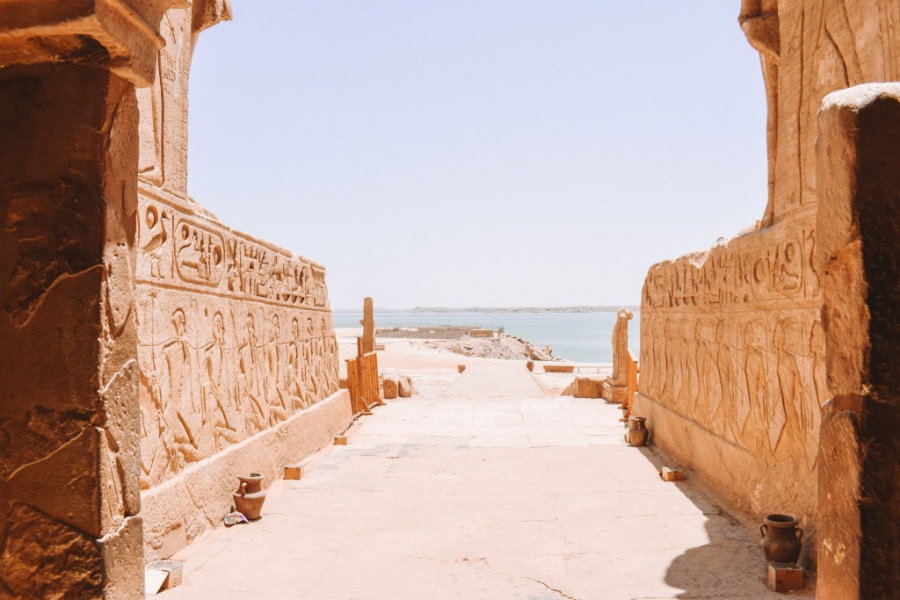
In 1979, the United Nations Educational, Scientific and Cultural Organization (UNESCO) recognized the Nubian ruins from Abu Simbel to Philae in Egypt as a World Heritage Site. This is a wonder, second only to the Great Pyramids, leaving us baffled as to how the ancient Egyptians, over 3,300 years ago, possessed such a civilization and remarkable astronomical knowledge.






_result.jpg.jpg)
.jpg.jpg)