VI
VI


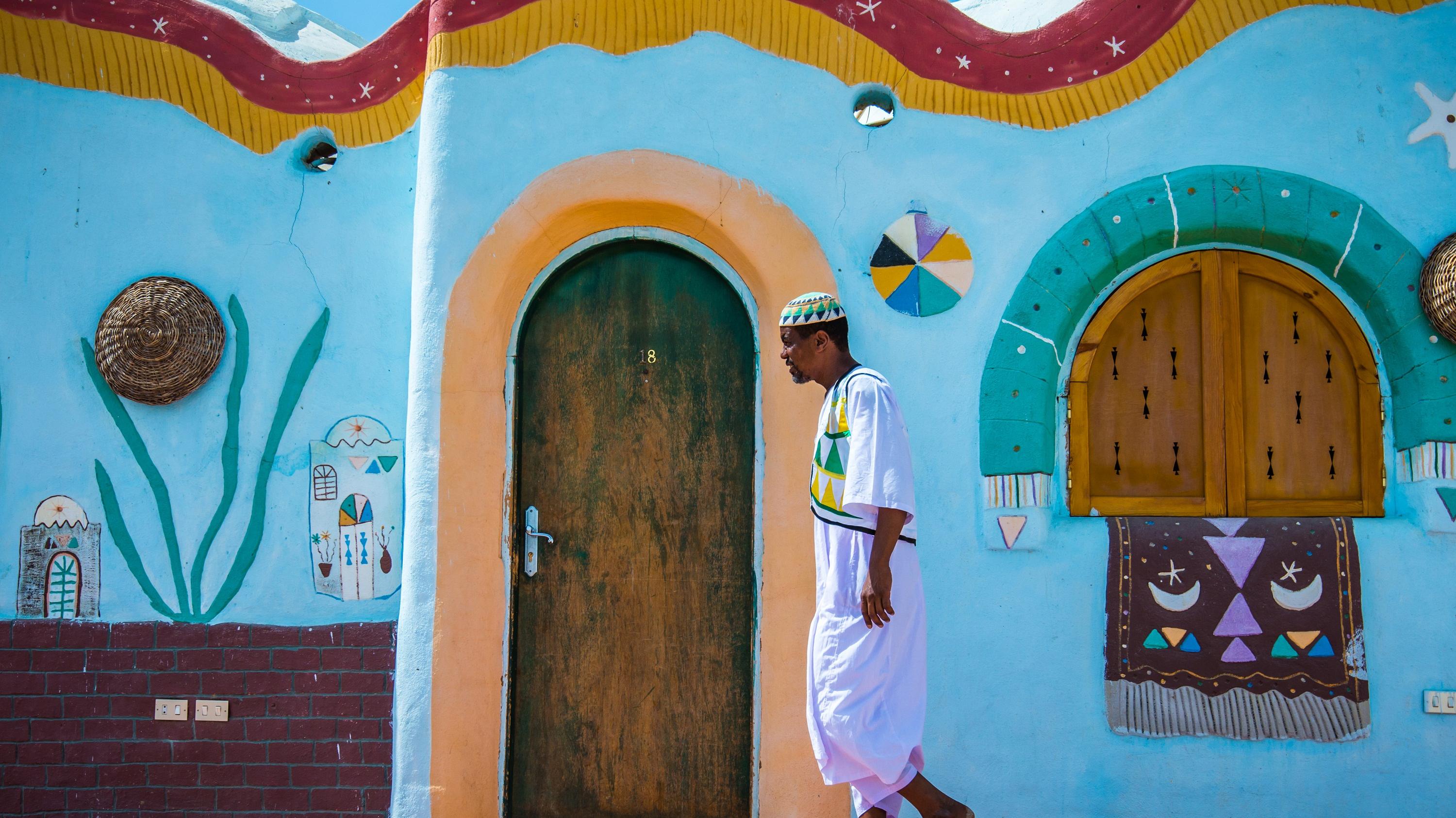
Located in southern Egypt, near the west bank of the Nile River, lies the city of Aswan, home to the colorful Nubian village, often referred to as the "rainbow village." The Nubian village is inhabited by the Nubian people, a group of ethnic groups from southern Egypt and northern Sudan. With its distinctive and vibrant architecture, the houses in this ancient village have transformed the sun-drenched desert landscape into a colorful oasis, attracting thousands of tourists.
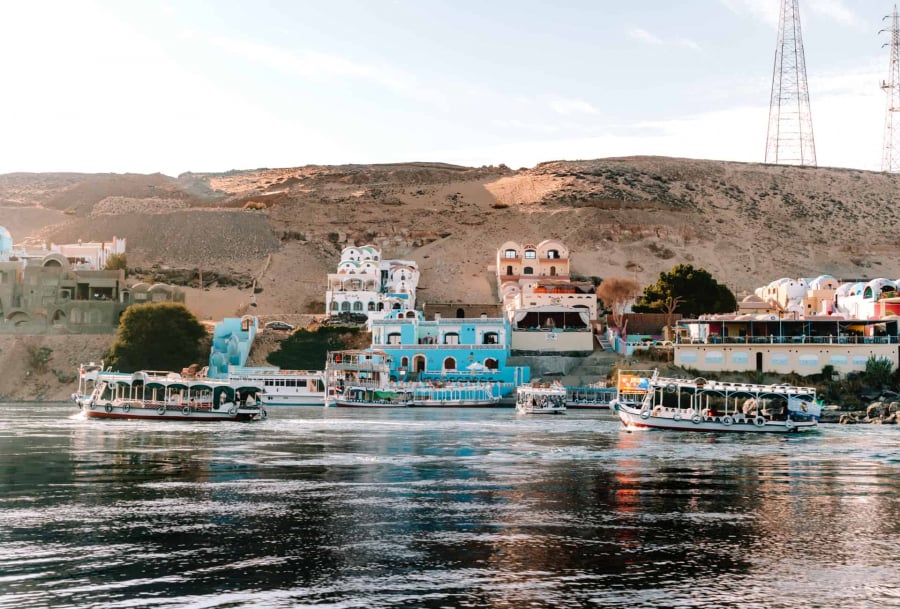
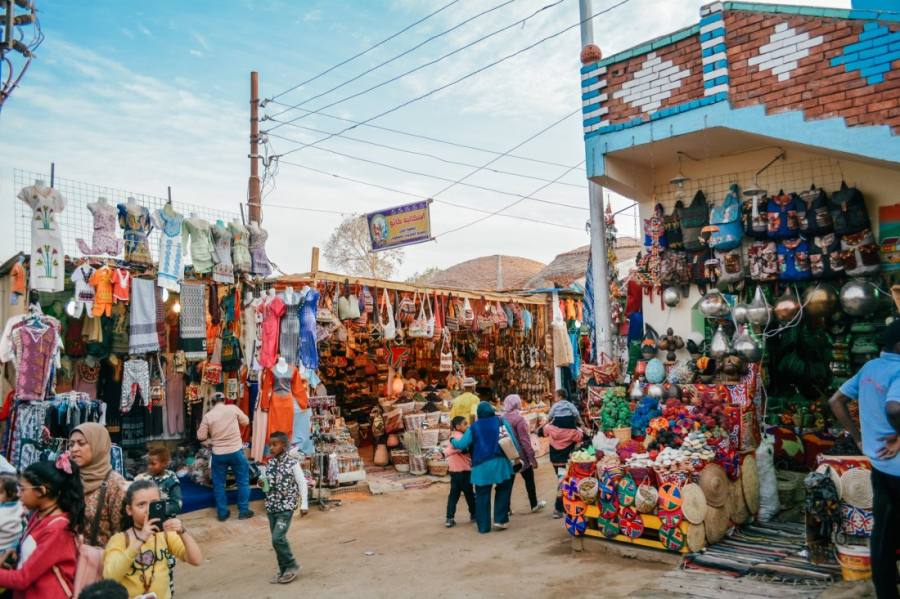
The Nubian village comprises two smaller villages, Siou and Koti, both built through the center of Elephant Island. The two villages are connected by a walkway, which serves as the Nubian market.
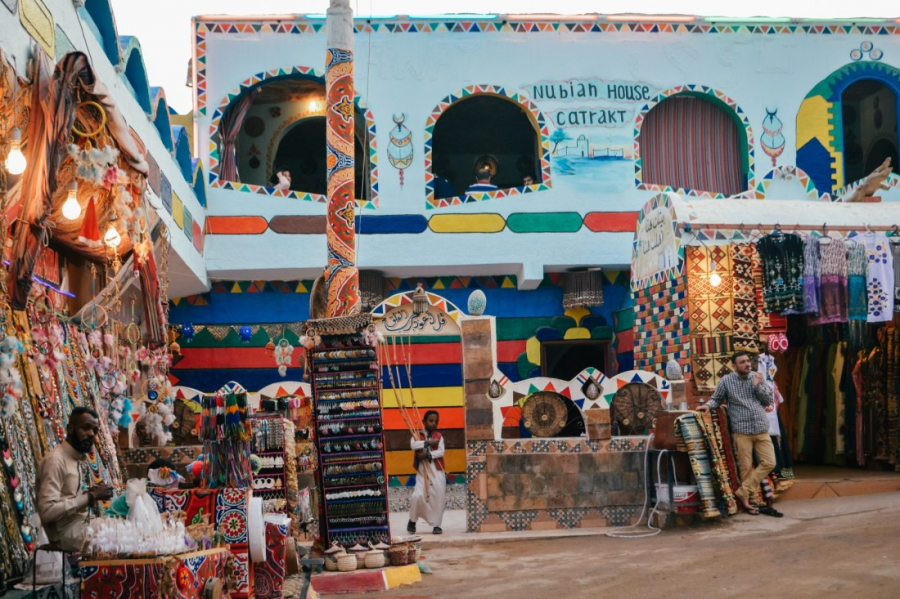
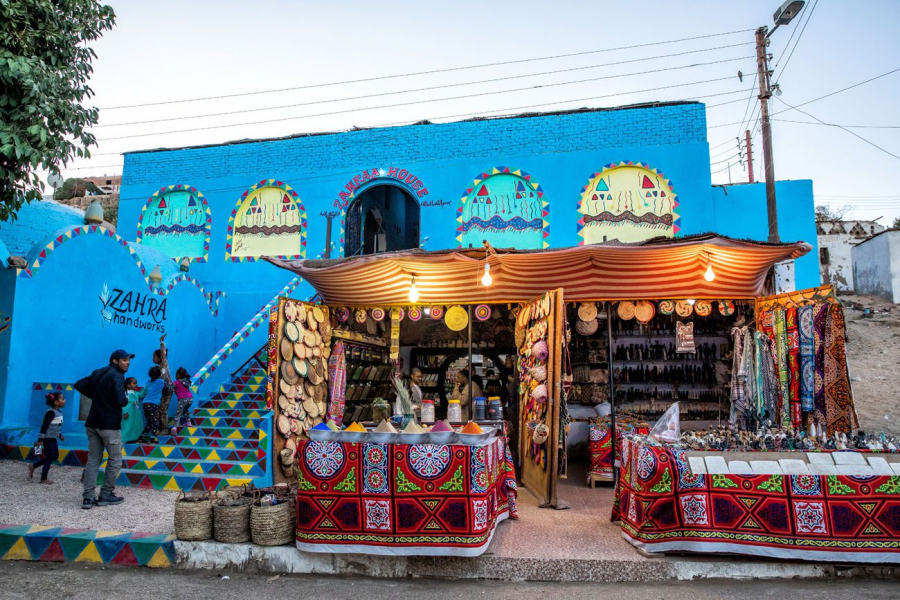
The houses here are decorated with impressive, colorful patterns, resembling true works of art in the desert. Because the Nubians believe that vibrant colors bring peace, happiness, and bountiful harvests, they favor bright colors such as red, yellow, orange, and green. They harmoniously combine these colors to decorate the exterior and interior of their homes, mostly depicting familiar images from Nubian life.

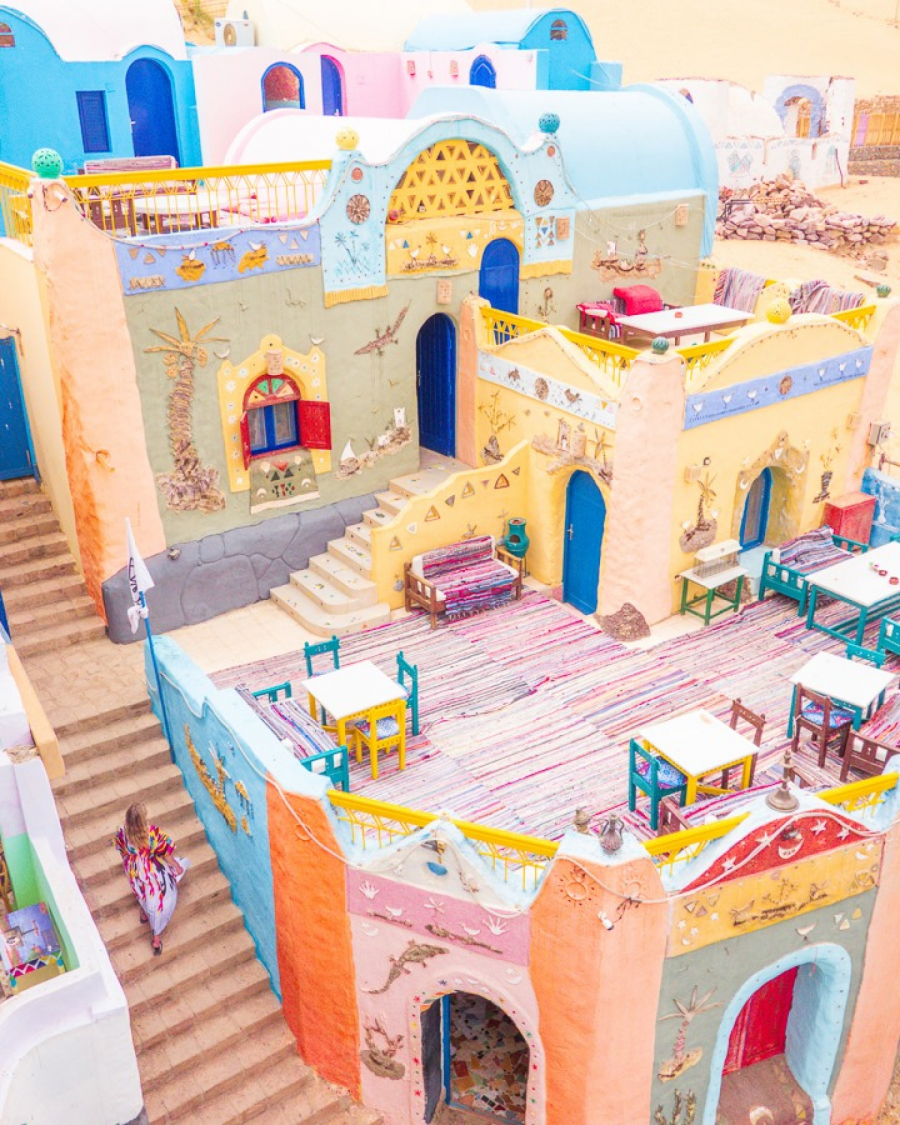
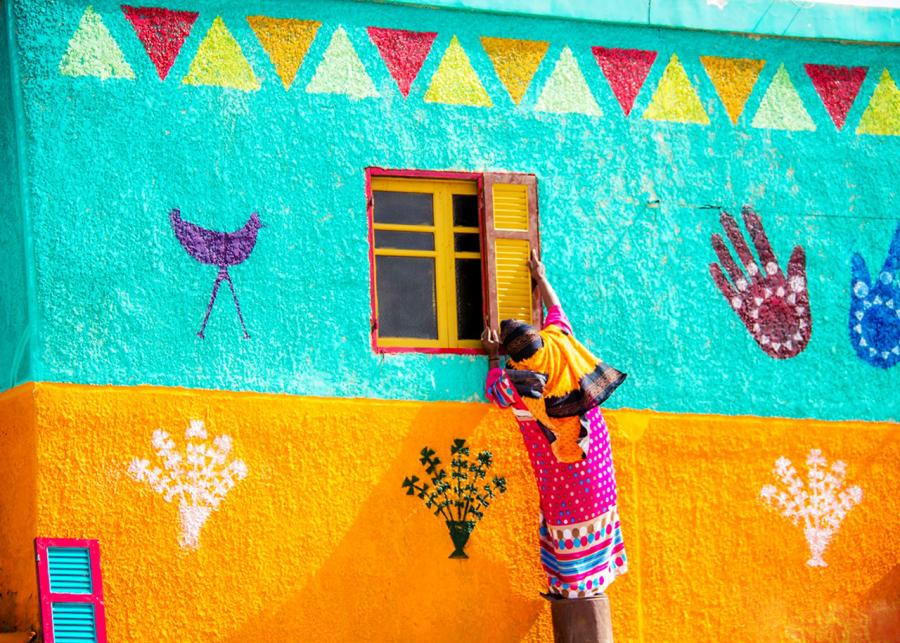
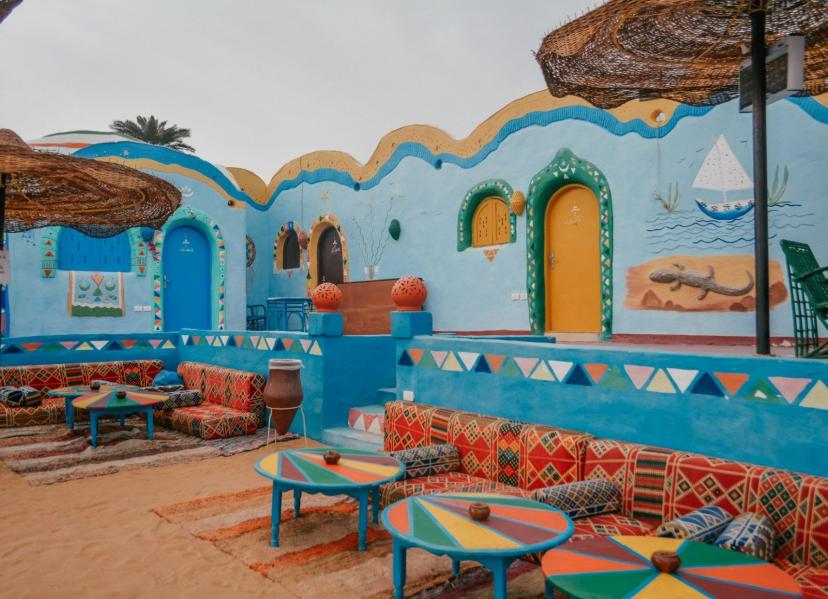
These unusual "structures" are decorated with hieroglyphic writing as well as vivid images of animals and plants. A distinctive feature of the houses here is that they all have flat roofs, not tiled roofs.
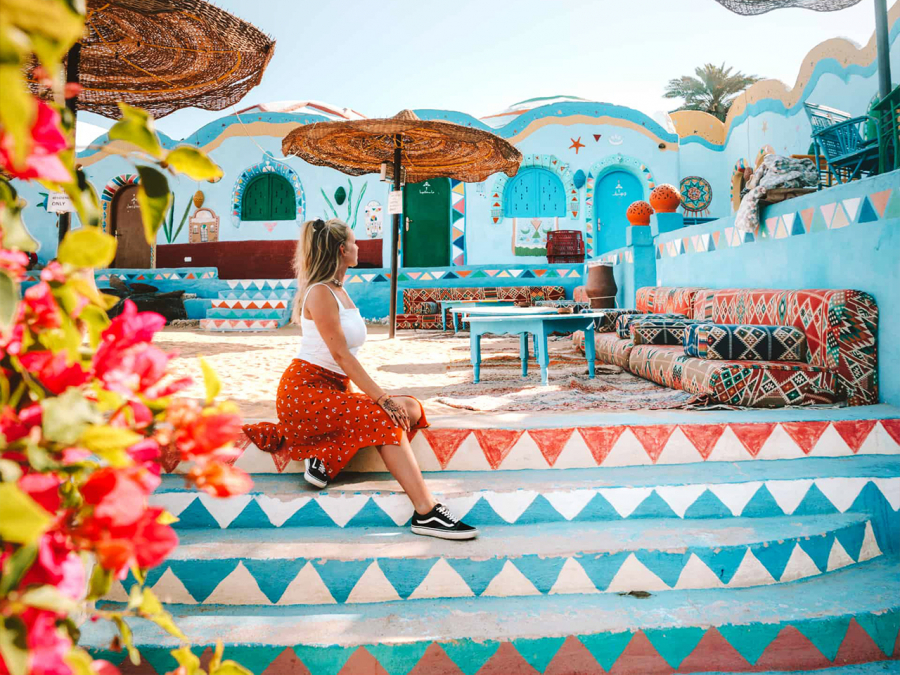
The Nubians believe that vibrant colors bring peace, happiness, and a bountiful harvest.
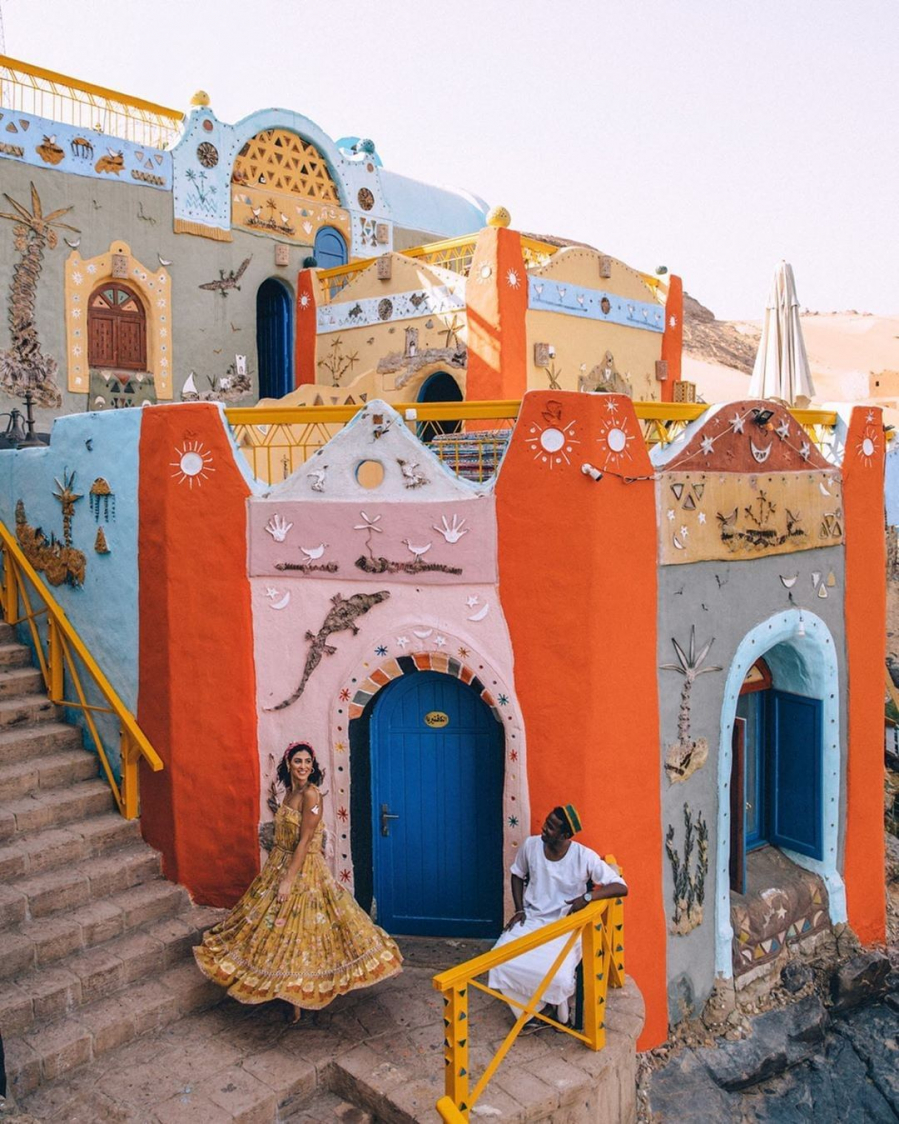
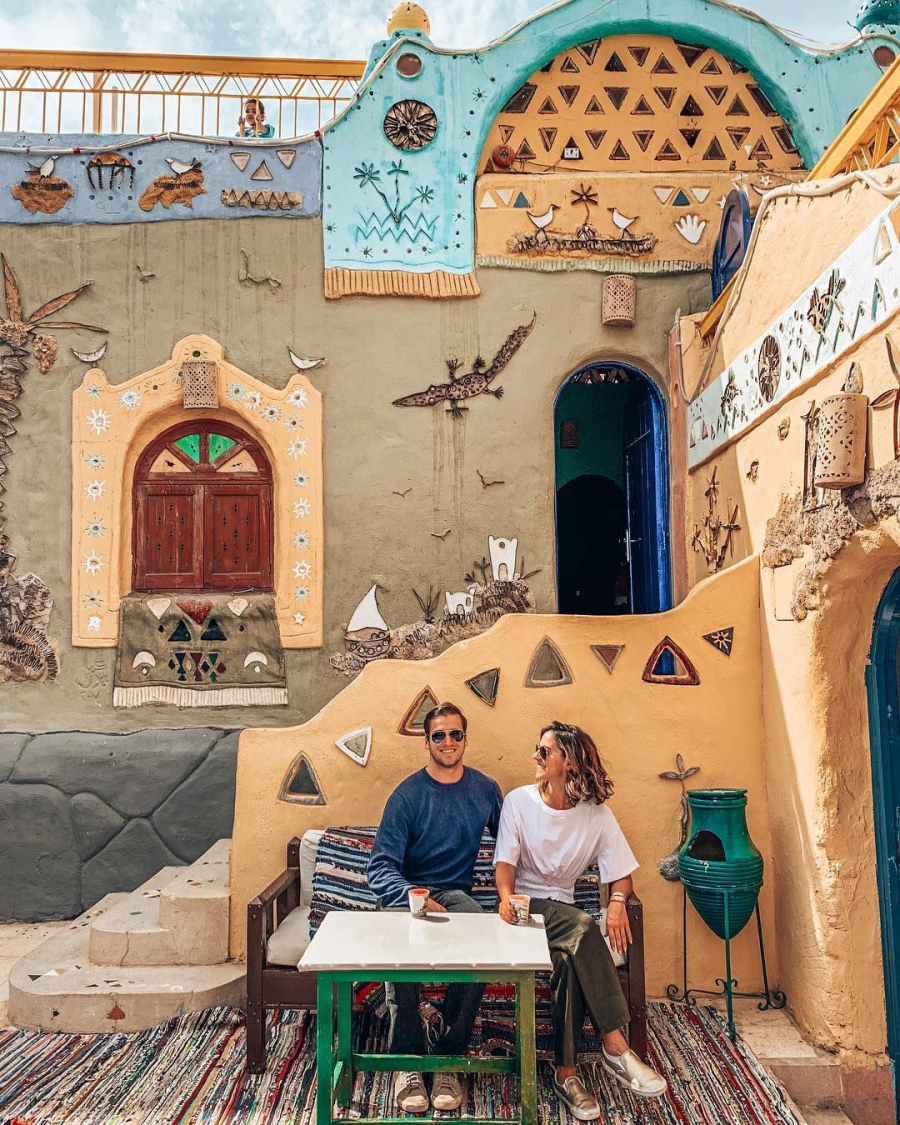
Today, alongside the old houses of the locals, there are also hotels designed in the style of homestays. These hotels also have equally vibrant and impressive architecture.
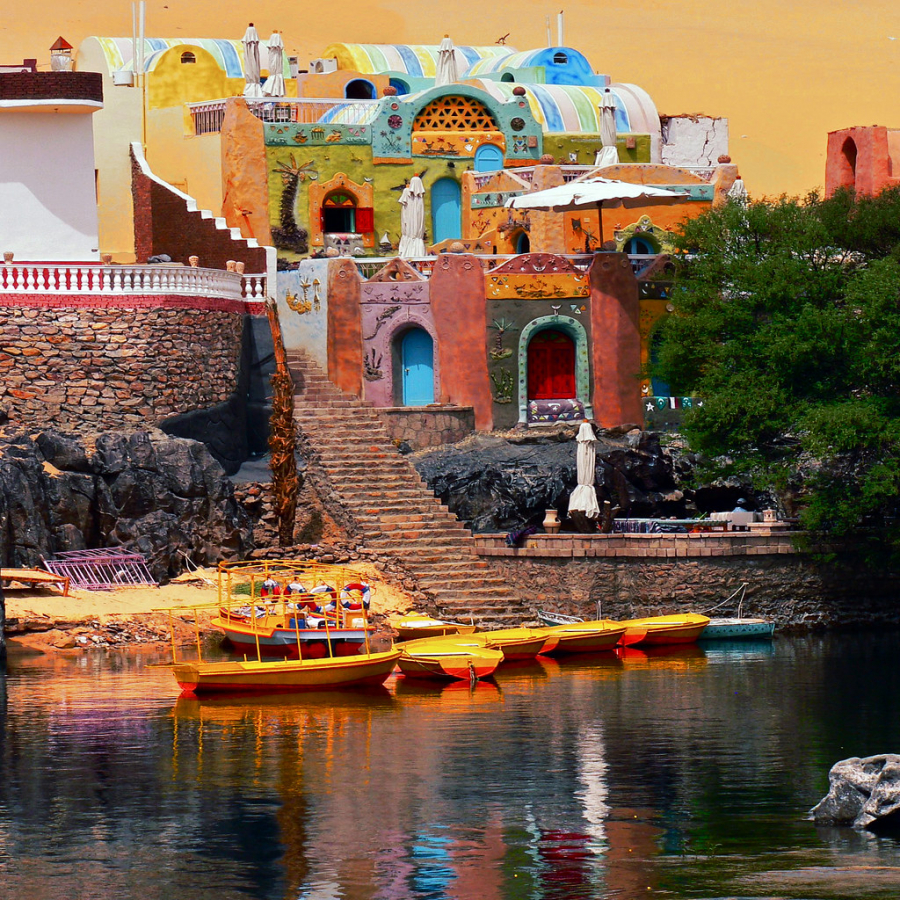
Besides its picturesque outdoor spaces, the riverside town of Aswan offers a serene and romantic atmosphere. Visitors can witness the legendary Nile River at sunrise or sunset to fully appreciate the magic of Egyptian nature.
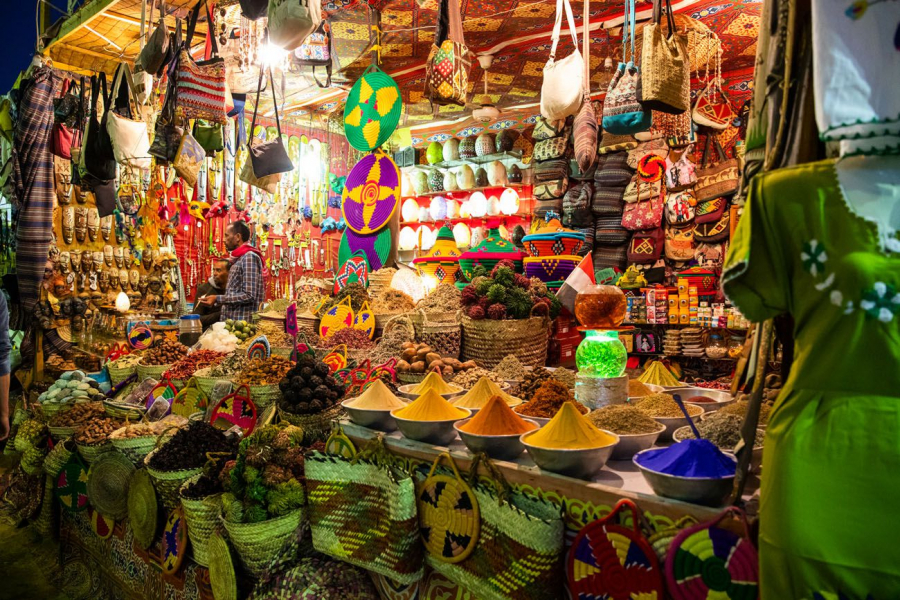
While strolling through the village market, you'll come across a wide variety of local products, from traditional spices used in Egyptian cuisine.
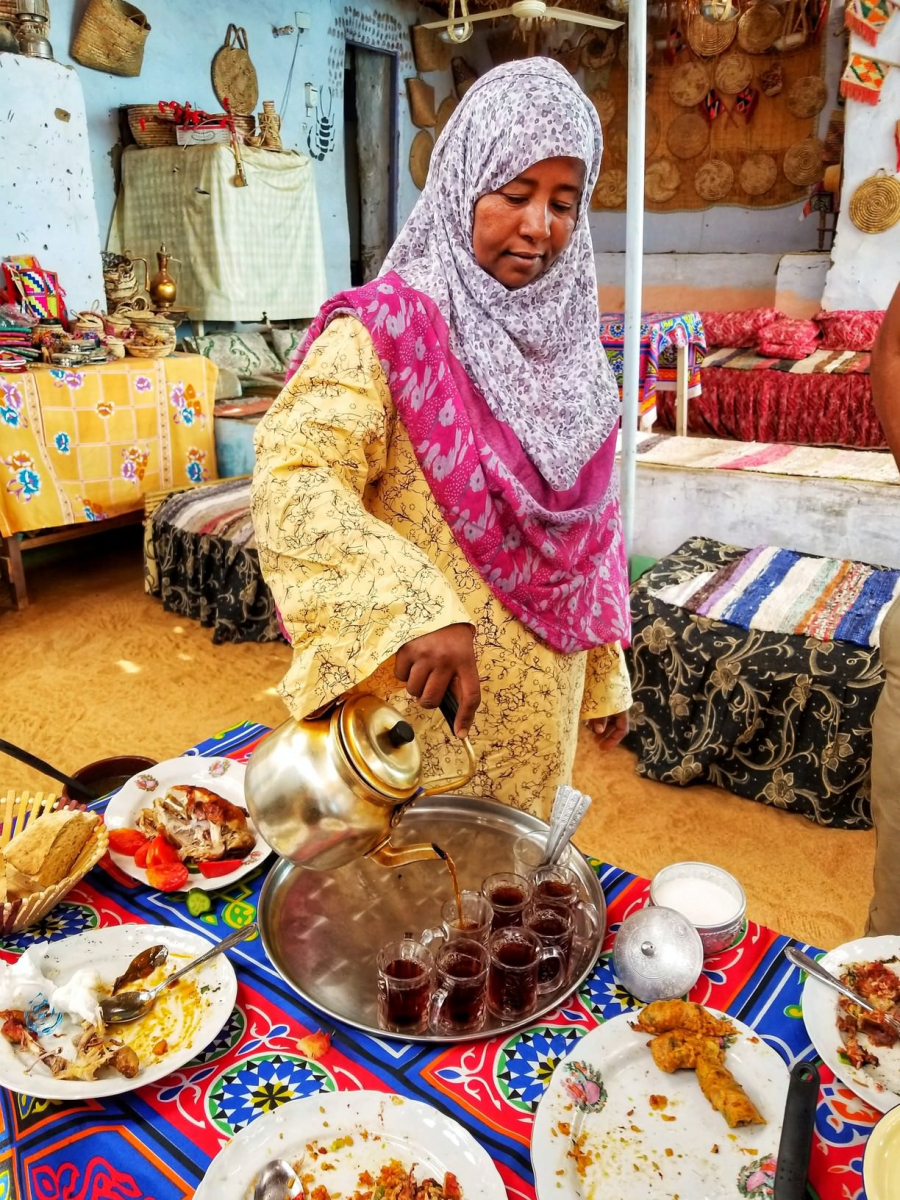
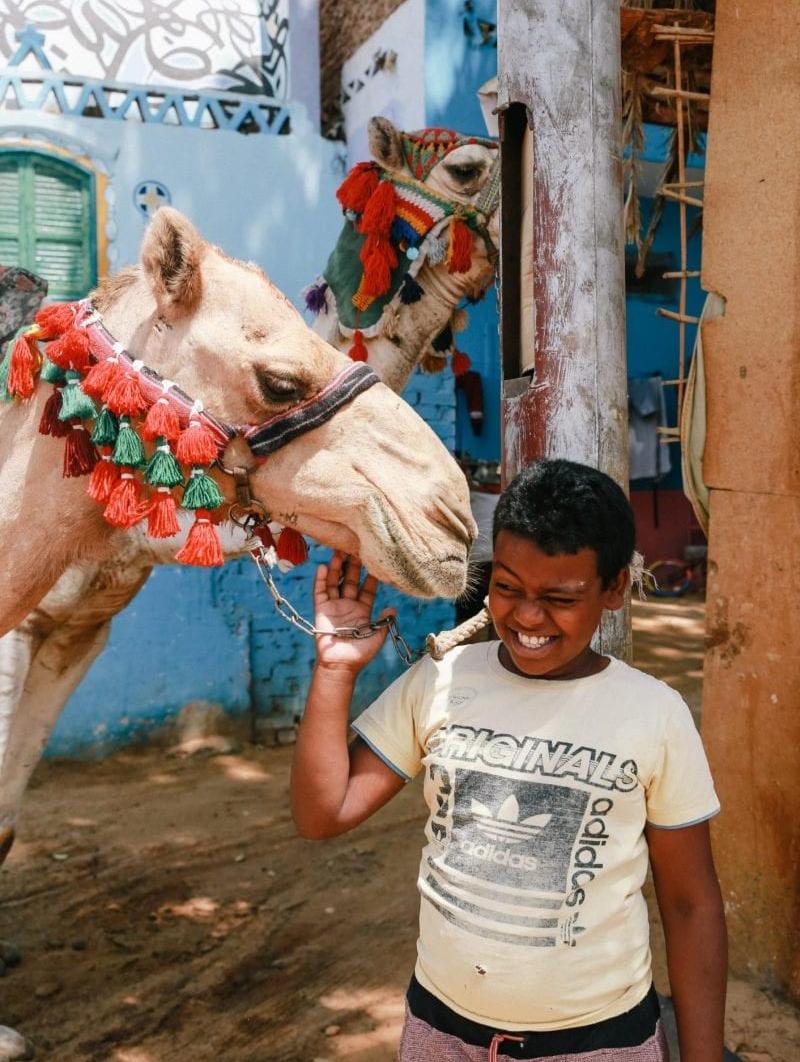
While strolling through the village market, you'll encounter a wide variety of local products, from traditional Egyptian spices to souvenir shops selling embroidered bags, jewelry, and charming dolls—all uniquely crafted with the essence of ancient Egyptian culture. The locals are also very friendly and approachable, so you can chat with them, ask for directions, or bargain when shopping.






_result.jpg.jpg)
.jpg.jpg)
.jpg.jpg)