VI
VI


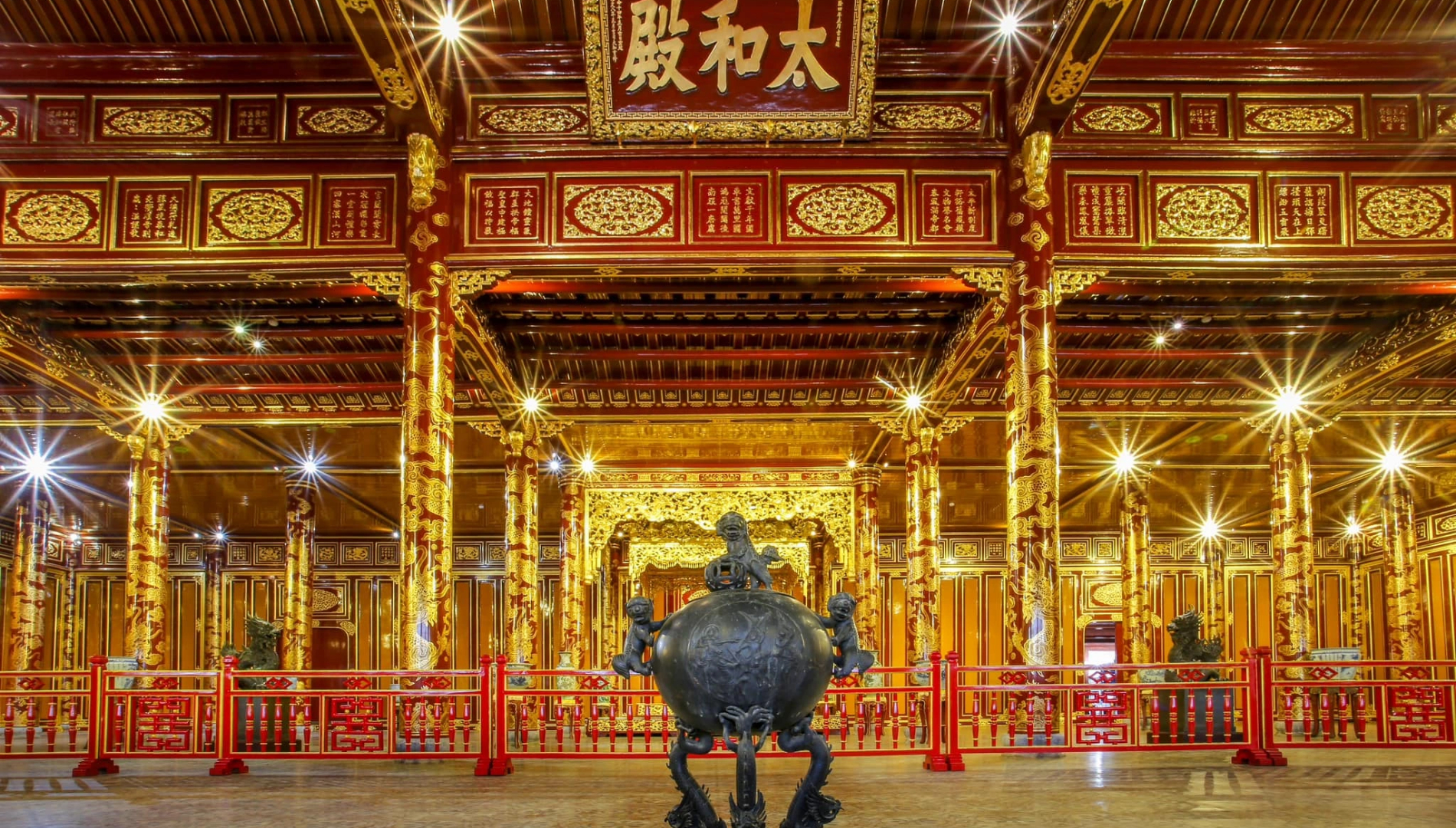
The Thai Hoa Palace, believed to be where the Nguyen Dynasty emperors sat on their thrones to govern the country, has recently completed its restoration after a long period of serious deterioration. According to historical records, construction of the palace began on the 22nd day of the first lunar month of the 4th year of Gia Long's reign (February 1805) and was completed in October of the same year.
Over its more than 200-year history, the Thai Hoa Palace has suffered serious deterioration due to the effects of time and harsh weather conditions. In November 2021, it underwent emergency restoration. This was one of the largest restoration projects ever undertaken on this palace, which is over 200 years old.
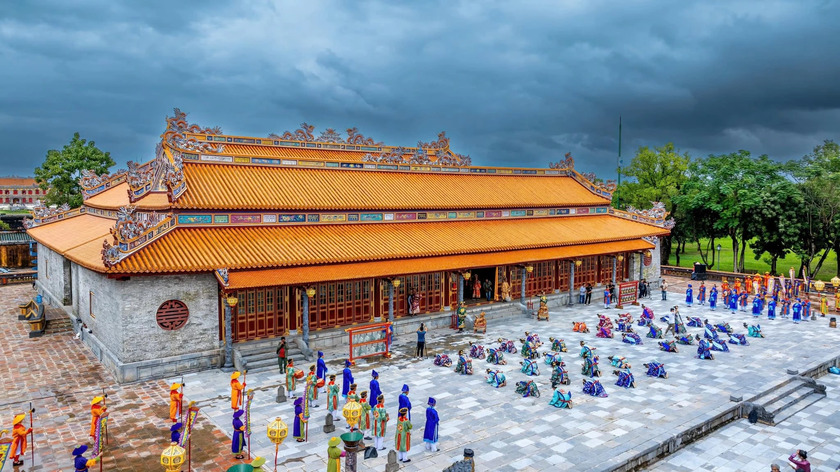
After exactly three years of comprehensive restoration, the Thai Hoa Palace in the Hue Imperial Citadel has been completed, restoring its magnificent golden appearance.
The Hue Relic Restoration Joint Stock Company, the unit responsible for the restoration of Thai Hoa Palace, shared that the company has made every effort to complete the restoration as soon as possible to restore the magnificent appearance of Thai Hoa Palace to serve tourists. Accordingly, the company has mobilized more than 150 craftsmen, engineers, and staff who have been working overtime continuously from 7 am to 9 pm, seven days a week, to restore this important structure.
Hundreds of light bulbs illuminate the interior of the palace after restoration. The palace was built in the style of a multi-tiered structure, supported by 80 gilded and lacquered ironwood columns, decorated with dragons playing in the clouds. The front and back buildings are connected by a system of vaulted ceilings under the connecting gutters of the two roofs.

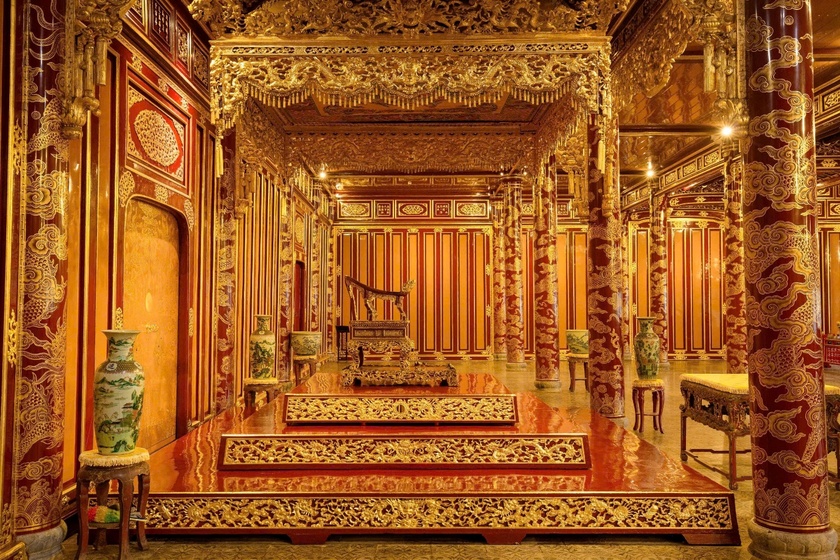
Previously, Thai Hoa Palace had seriously deteriorated, and its maintenance and preservation were piecemeal, failing to ensure safety for the structure and visiting tourists.
The Thái Hòa Main Hall, where the king's throne is located. The throne is a unique artifact with significant historical and cultural value. The throne is 101 cm high, 72 cm wide, and 87 cm long. The base is 118 cm long, 90 cm wide, and 20 cm high. Above the throne is a magnificent gilded canopy. All parts are made of wood painted red and gilded. In January 2016, the throne was recognized as a national treasure. During the restoration period, the throne was preserved in the Ngũ Phụng Pavilion by the Hue Ancient Citadel Relics Conservation Center.
In addition to restoring the structural components and repainting the wooden details, approximately 300 taels of pure gold were used to gild the interior motifs of the Thai Hoa Palace. The restoration is now complete, allowing the palace to reopen to visitors a year earlier than planned.
This place, begun by King Gia Long in 1805, is one of the monumental and symbolic structures of the Nguyen dynasty, where important court ceremonies took place, such as coronation ceremonies, the king's birthday, receiving foreign envoys, and the two grand court sessions on the 1st and 15th of each lunar month.
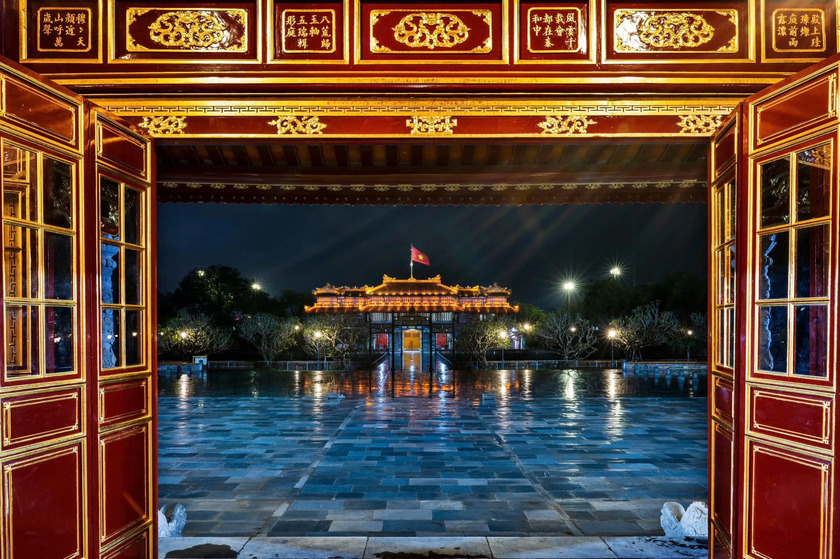
To restore the magnificent golden beauty of the Thai Hoa Palace, for the past three years, many craftsmen have worked diligently with high responsibility and meticulous attention to detail.
Locals call the Thai Hoa Palace the "heart" of the Hue Imperial Palace, a quintessential symbol and source of pride for Hue's heritage in particular, and for Vietnam in general. Before dismantling the Thai Hoa Palace, the Hue Ancient Citadel Relics Conservation Center organized a workshop and consulted with cultural researchers. The structure was also digitized in 3D.
Hue is gradually being recognized by individuals and organizations both domestically and internationally, especially UNESCO, as a leading locality in preserving and promoting heritage values. It has the potential to become a model center for technology transfer in conservation in the Asia-Pacific region, ensuring that heritage endures and continues to spread, serving the socio-economic development of the locality.