VI
VI


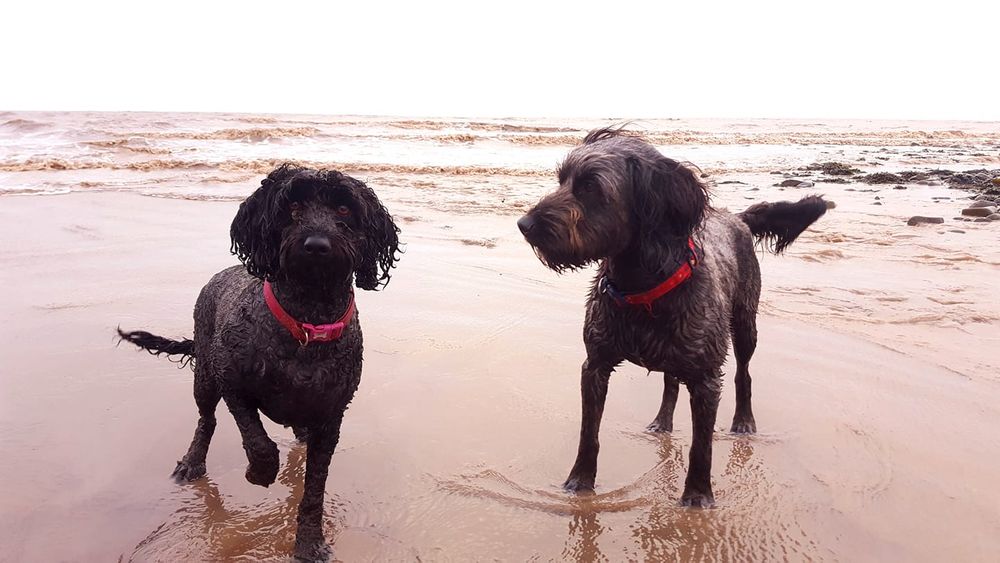
Jon Gopsill, 54, an amateur archaeologist, was walking along the Stolford beach in Somerset with his two pet dogs, Poppy and Sam, when he stumbled upon something unusual. The two mischievous dogs had found a long bone and carried it back near their owner. The skeleton was clearly visible on the surface, exposed by recent storms.

Jon Gopsill and his two dogs.
After thoroughly searching the surrounding area, Jon unexpectedly discovered a complete fossilized skeleton, 5.5 meters long, belonging to a strange creature. Jon believes this is the prehistoric fossil of a dolphin-like creature, known as an ichthyosaur, that lived during the Jurassic period. After the skeleton was transferred to the British Natural History Museum, professors there also came to the same initial conclusion as Jon.
Mike Day, who heads the Earth Sciences department at the Natural History Museum, confirmed that the skeleton likely belonged to an Ichthyosaur.

Ichthyosaurs were not dinosaurs, but belonged to a group of marine reptiles that lived during the Jurassic period and disappeared during the Cretaceous period (145-166 million years ago). Ichthyosaurs ranged in length from 1.5 to 3 meters and had an appearance similar to modern-day dolphins. Ichthyosaurs flourished for much of the Mesozoic era. Based on fossil evidence, they first appeared around 250 million years ago, and at least one species survived until about 90 million years ago at the end of the Cretaceous period.
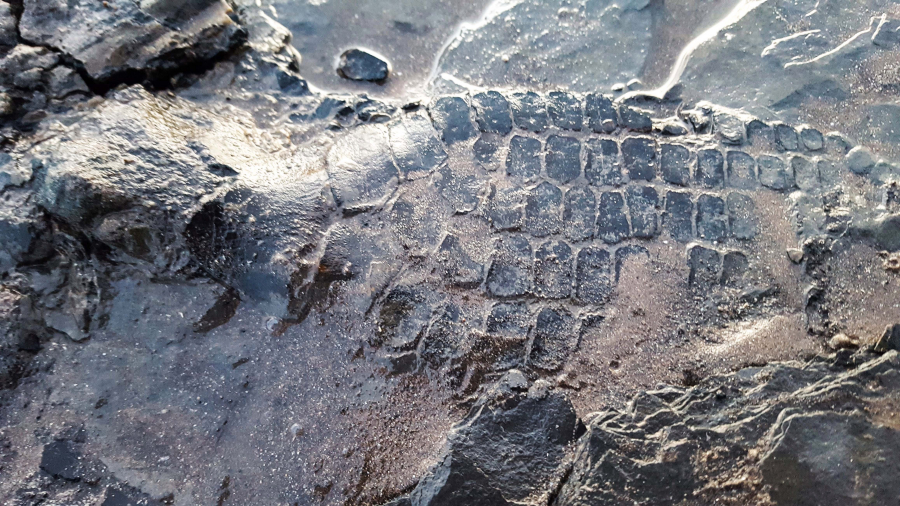
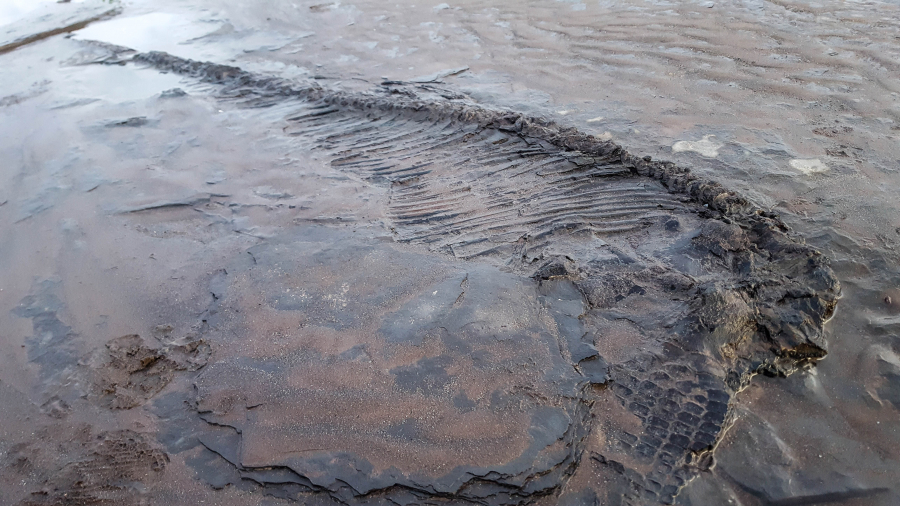
A close-up of the Ichthyosaur fossil found by Jon Gopsill.
Ichthyosaurs were particularly abundant during the Triassic and Jurassic periods, until they were later replaced by a group of marine reptiles with even more formidable hunting skills, the Plesiosauriasau. By the end of the Cretaceous period, Ichthyosaurs had become extinct for unknown reasons.
Currently, the British Natural History Museum has not been able to pinpoint exactly which species of Ichthyosaur the newly discovered fossil belongs to. These prehistoric creatures are divided into several genera, with approximately eight representative species. If they lived in modern times, they would all be considered fearsome sea monsters.
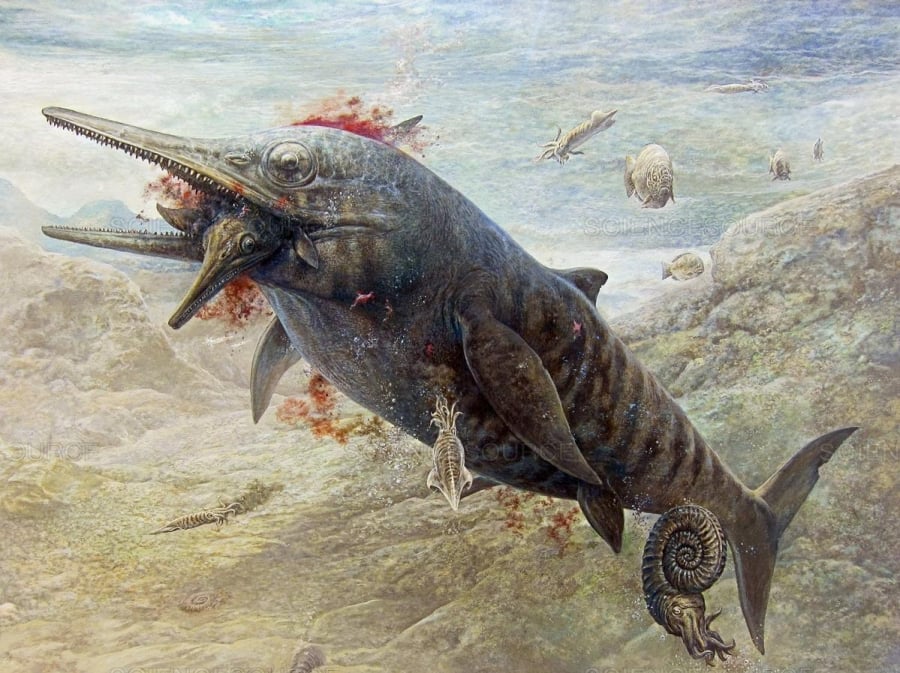
Illustration of an Ichthyosaur
Jon Gopsill felt that his discovery involved a great deal of luck. First, the storms a few days earlier had washed away layers of mud from the beach, exposing the bones and rocks on the surface. Furthermore, if the fossils had been discovered by someone without archaeological knowledge, they would most likely have been discarded in a garbage dump when sanitation workers cleaned the beach.
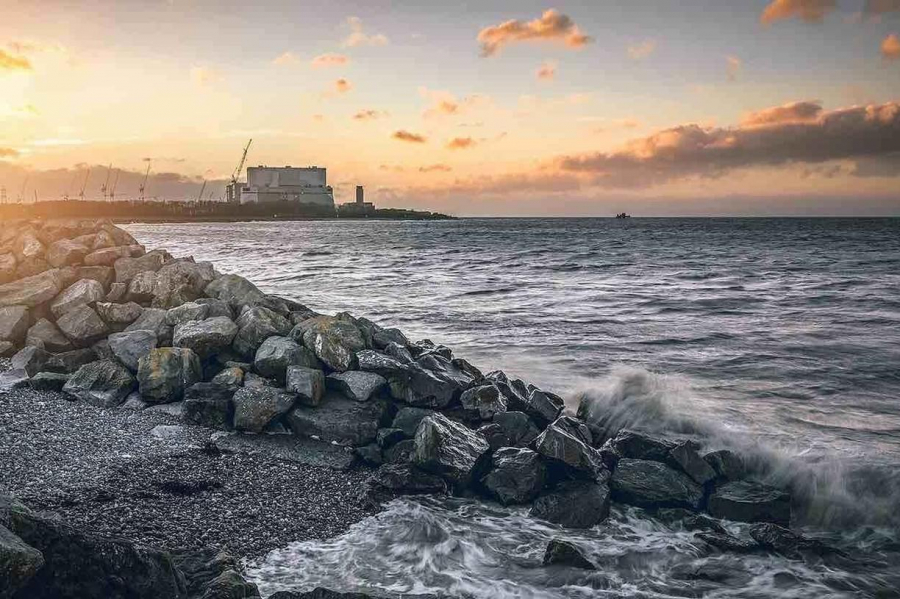
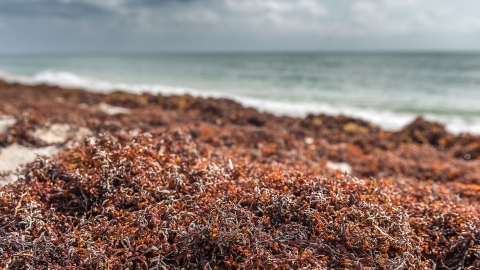
Stolford Beach, where the fossil was found.
The bays north of West Somerset are famous for their Jurassic and Triassic rock formations, where fossils may be found. Last year, a portion of the lower jawbone of an Ichthyosaur, measuring up to 26 meters in length, was discovered in the village of Lilstock in Somerset. This rock lizard is believed to be between 235 and 200 million years old.