VI
VI


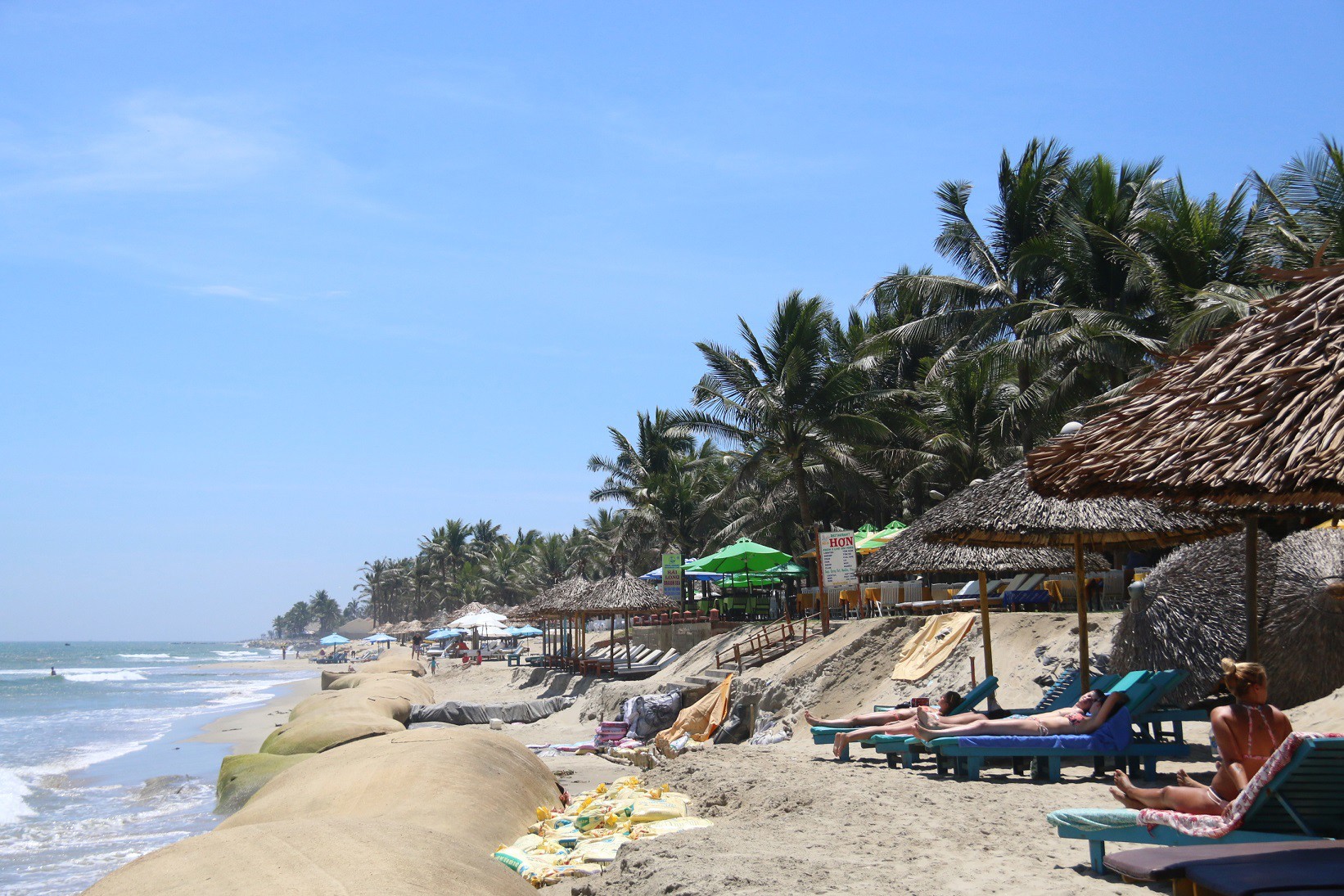
On October 9th, the General Department of Disaster Prevention and Control (Ministry of Agriculture and Rural Development) reported that the sandbar in Cua Dai beach (Hoi An) is extending further to the north; the south is experiencing severe erosion; while the west and east sides show little change.
Previously, on July 13th, the longest point of the sand dune was recorded at 1,046 m, with a width of 193 m at its widest point. By early October, the longest point had decreased to 994 m, and the widest point to 177 m (a reduction of 52 m and 16 m respectively).
The sand dune is shortening because erosion on the south side is faster than deposition on the north side. "Surveys from May to early October recorded 50 meters of deposition on the northern side of the sand dune; from July to October, the southern side was eroded by about 80 meters," a representative from the General Department of Disaster Prevention and Control said.

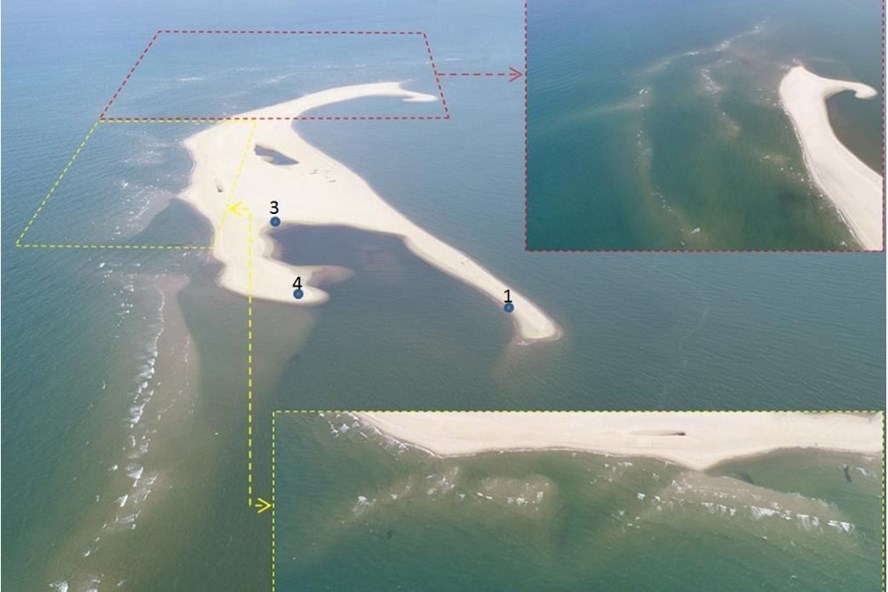
A photograph of sand dunes rising above the sea at Cua Dai. (Image: Internet)
Many types of plants are currently growing and developing rapidly on the sand dunes. Among them, some willow trees are nearly 1 meter tall, and sea morning glory grows throughout the dunes, with the most abundant areas covering more than 100 square meters.2.
Mr. Nguyen Van Ba, a resident of Cua Dai ward (Hoi An) who often fishes near the sand dunes, said that the sand dunes are constantly changing. Iron stakes driven by authorities on the south side for surveying have been washed away by the waves, while the sand dunes on the north side have been replenished and are higher than before.
The sandbar in Cua Dai, located outside the Thu Bon River estuary, appeared in 2017 and subsequently rose above the water's surface, gradually growing larger. In early April 2019, the General Department of Disaster Prevention and Control organized a survey team to examine the area, but the cause of its formation has not yet been determined. Quang Nam province has posted signs prohibiting people from going onto the sandbar.
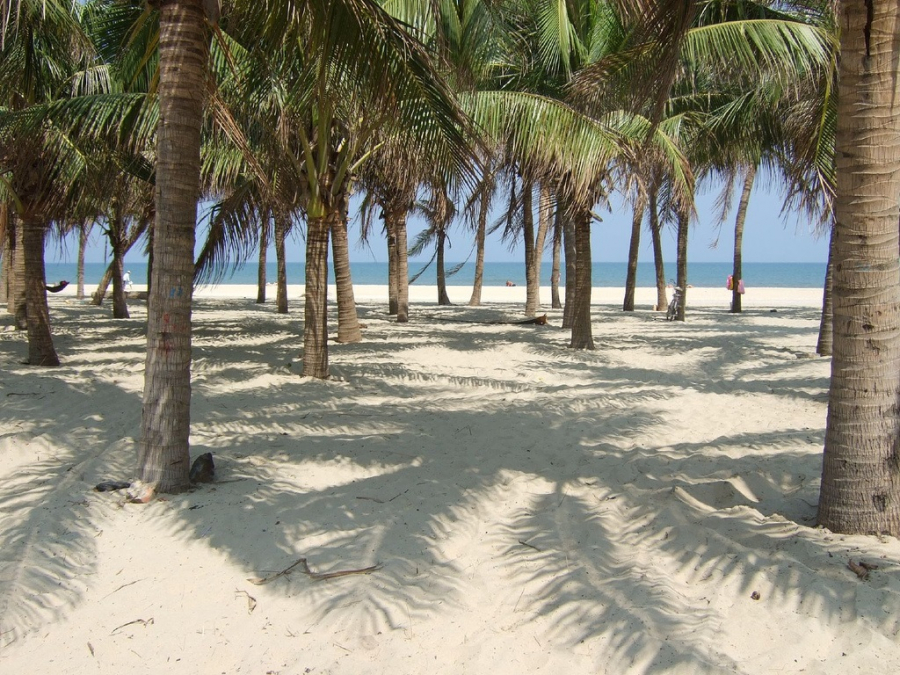
Cua Dai Beach stretches endlessly with white sand.
The General Department of Disaster Prevention and Control conducted multiple surveys and noted that the sand dune was constantly changing shape; however, the total area of the sand dune remained relatively unchanged at over 13 hectares.