VI
VI


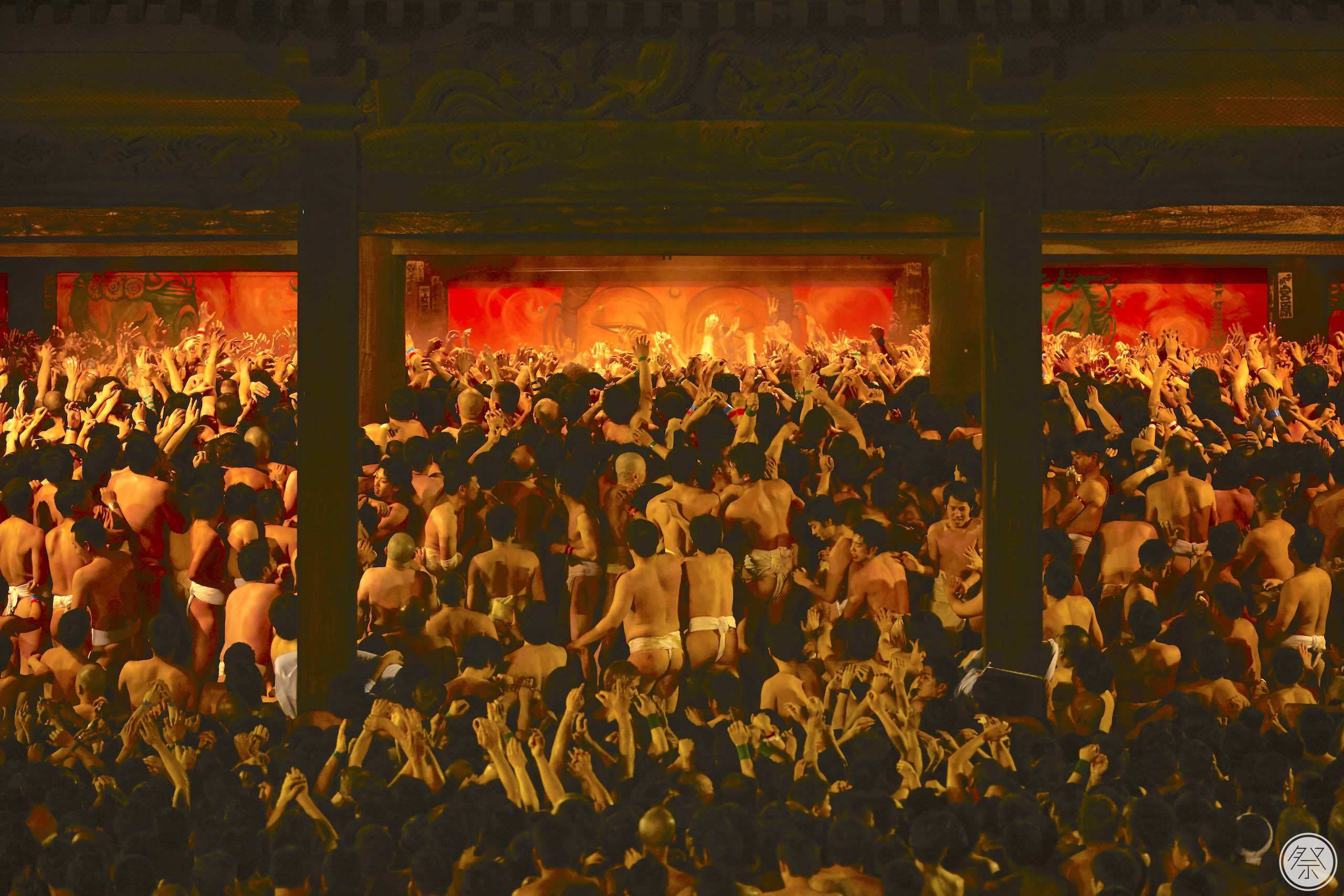
The "Naked Festival," officially called Hadaka Matsuri, is held annually on the third Saturday of February at Saidaiji Kannonin Temple, about a 30-minute train ride from Okayama City. Despite its name, the participating men actually wear a type of white Japanese loincloth called a "fundoshi" and white socks called "tabi."
This festival is held to pray for good fortune, a bountiful harvest, prosperity, and fertility. During the festival, men spend an hour or two running around the temple grounds to prepare and purify themselves with cold water before gathering in the temple courtyard.
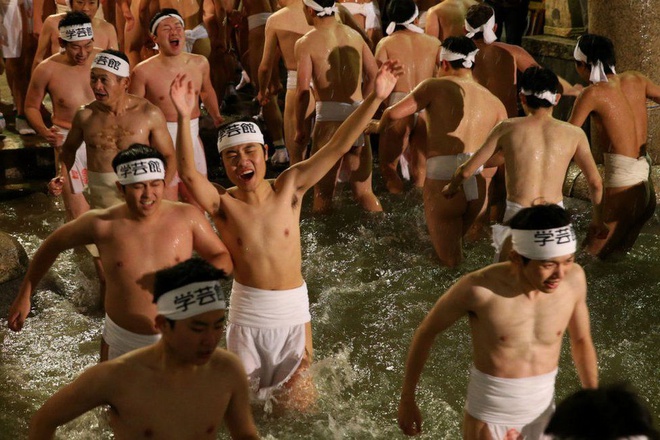
The men had to pass through a pool of cold water to purify themselves before entering to scramble for the offerings.
The contest began at 10 p.m. when the monk dropped 100 bundles of branches and two 20-cm-long sacred wooden tags, believed to bring good luck, down to the crowd from a window 4 meters high.

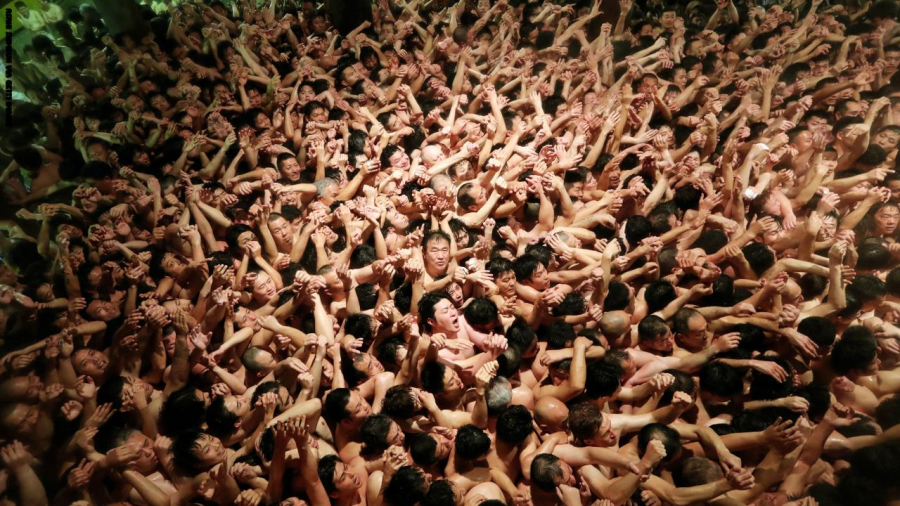
The men jostled for them for about 30 minutes, and whoever caught the sacred wooden token and put it in the rice container was considered the luckiest.
"We hope to be able to preserve this tradition in the future," said Mieko Itano, spokesperson for the Okayama Tourism Bureau.
The Hadaka Matsuri festival dates back 500 years to the Muromachi period (1338-1573) when villagers vied for paper amulets distributed by a priest at Saidaiji Kannonin Shrine. The festival was also recognized as an Important Intangible Cultural Heritage in 2016.
This year, organizers implemented preventative measures against the coronavirus (Covid-19) outbreak, although participants vying for lucky charms did not wear masks, and hand sanitizer was placed at the entrance and around the shrine. To date, Japan has 408 confirmed cases of Covid-19, the second highest number in the world after China.