VI
VI


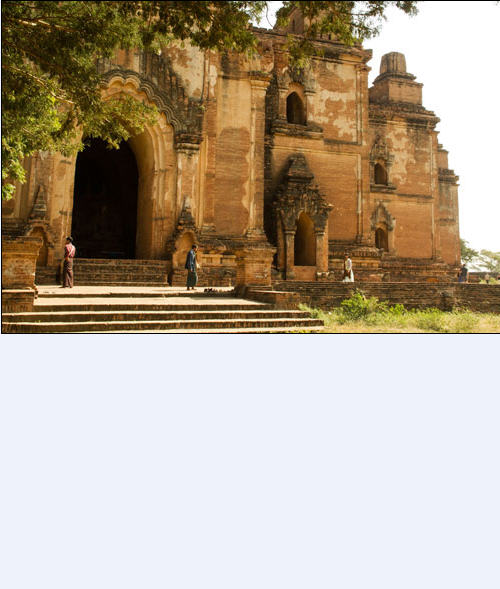
Today, the Myanmar Ministry of Archaeology has listed over 2,000 temple ruins within a 42-square-kilometer conservation area. These are not only valuable sites for international tourists but also places for studying the historical development of the culture, society, and politics related to Buddhism, the country's religion. One of these is the largest temple in Bagan, although construction on it was abandoned after three years – Dhammayangyi.
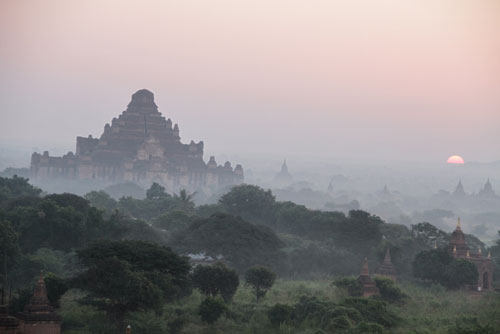
The Dhammayangyi Temple is large and unfinished.
The people of Myanmar say that when visiting Bagan, if you want to see grace, go to Ananda Temple; if you want to see grandeur, go to Thatbyinniu Temple; and if you want to see magnificence, visit Dhammayangyi Temple.
The Dhammayangyi Temple, a brick structure nestled within the ancient Bagan complex, is famous for its massive, imposing pyramid-like shape that overshadows all other structures. This pyramid design is also distinctly different from traditional Buddhist temples in Myanmar, which are typically stupas with spires reaching towards the sky. To this day, the people of Myanmar have yet to explain why King Narathu chose this particular architectural style.
Built by King Narathu in 1170, the Dhammayangyi Temple has a six-tiered pyramidal shape. However, Dhammayangyi still retains the common tetrahedral architecture found in Myanmar temples, with four entrances facing the four cardinal directions. Inside, the temple features a double corridor system running parallel to the central pillar of the shrine. Numerous small brick windows allow natural light from all four sides to illuminate the corridors surrounding the temple.
The way the bricks were laid to create the vaulted roof above the corridors surrounding the temple demonstrates the high level of skill of the ancient people. Each main entrance of the temple features large Buddha statues in various styles, gilded or painted. Along the walls of the corridors surrounding the temple, there are also many niches and pedestals holding smaller Buddha statues.

The temple grounds are 78 meters wide, while the central core of the temple, measuring 25 meters, is connected by a system of wide corridors with arched ceilings and false doorways.
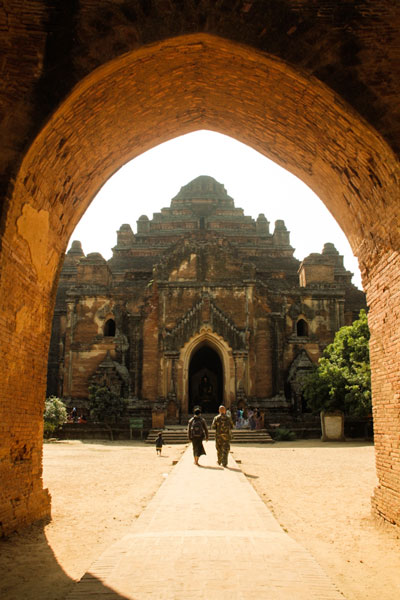
The gate of Dhammayangyi Temple.
According to some sources in Bagan, although never completed, the Dhammayangyi Temple used an estimated more than 6 million fired bricks, not including the stone foundations for this massive structure.
Perhaps King Narathu could never have imagined that this magnificent project, promising many surprises, would never be completed. Three years after his coronation, he was assassinated. Construction was halted and the project has been abandoned ever since. Nevertheless, it remains a unique representative of the ancient Bagan complex and the history of temple development in the region.
Legend says that King Narathu killed his father and brother to seize the throne. But upon ascending the throne, perhaps fearing he would create bad karma, he ordered the construction of a temple dedicated to Buddha. One of the temple's entrances features two Buddha statues, which he created as embodiments of his father and brother. However, some texts explain these as two Buddhas: Shakyamuni Buddha and Maitreya Buddha. People in Myanmar still recount that King Narathu was very strict, ready to chop off the hands of any worker if the temple construction wasn't perfect; the bricks had to fit together so tightly that not even a pin could pierce through them.
When excavating the temple, archaeologists discovered that the bricks piled up in the corridors were identical to the bricks used in the temple's construction. Therefore, it is believed that the workers threw bricks and mortar into the temple out of resentment towards King Narathu's harsh laws. Many others believe they wanted to imprison his ghost forever inside the temple as revenge for the suffering he had caused.

One section of the temple was built with 6 million fired clay bricks.
If you ever walk barefoot on the cool, silent corridors surrounding the temple, you'll easily understand why the grandeur and mystique of Dhammayangyi have attracted people for centuries, even as an unfinished structure.