VI
VI


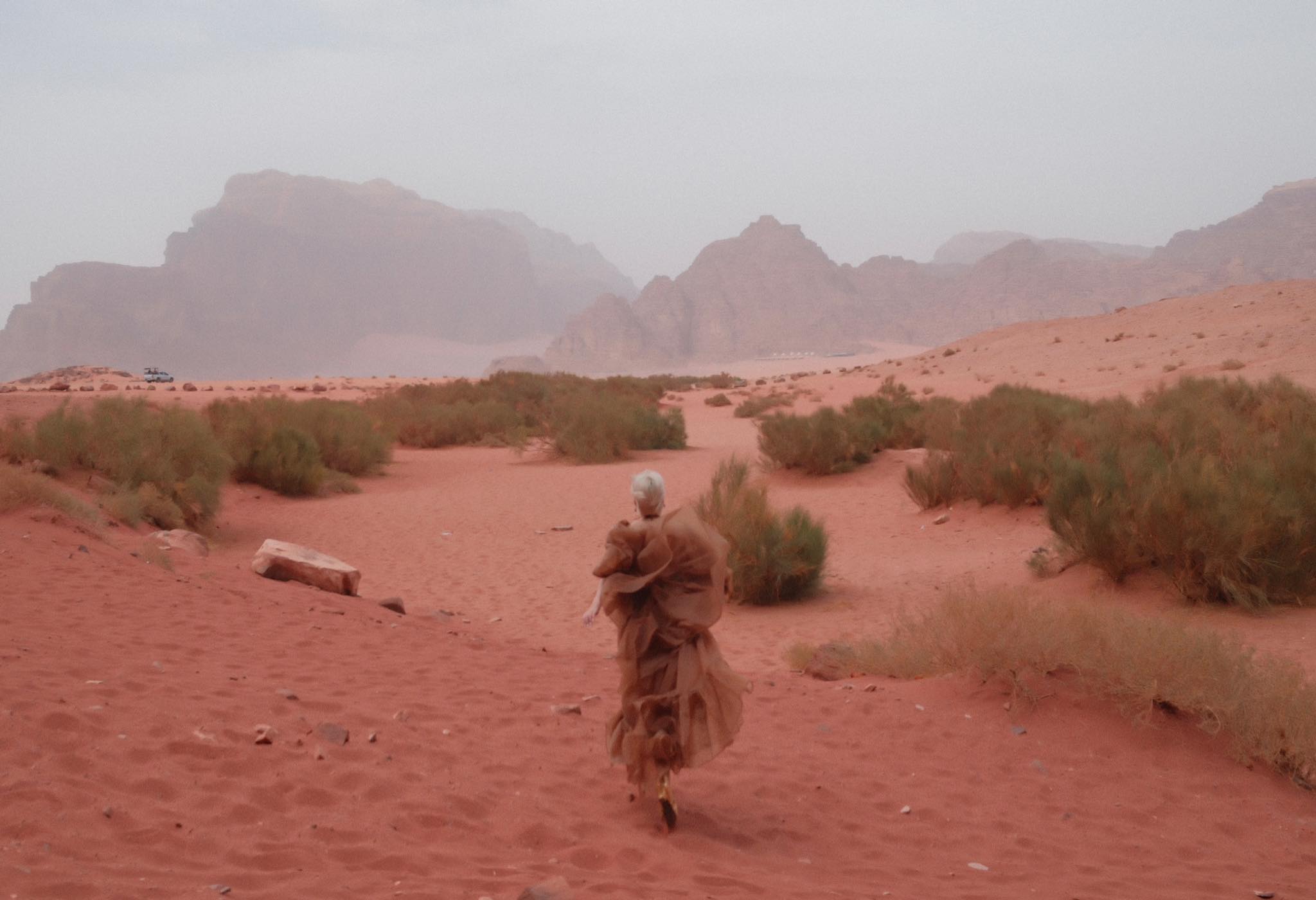
Amidst the hustle and bustle of Ho Chi Minh City, Ly Thanh Y, a businesswoman, found her own space to explore unfamiliar lands. Not calling herself a travel blogger, Ly Thanh Y travels to fulfill a promise to herself: to fully experience, at least once a year, a place where she doesn't share a language and where she isn't pampered by familiarity.
For her, travel is not an escape, but a gateway to history, culture, beliefs, and even the unnamed aspects within each person. And that journey of contemplation led her to Jordan – a tranquil kingdom nestled in the heart of the Middle East.
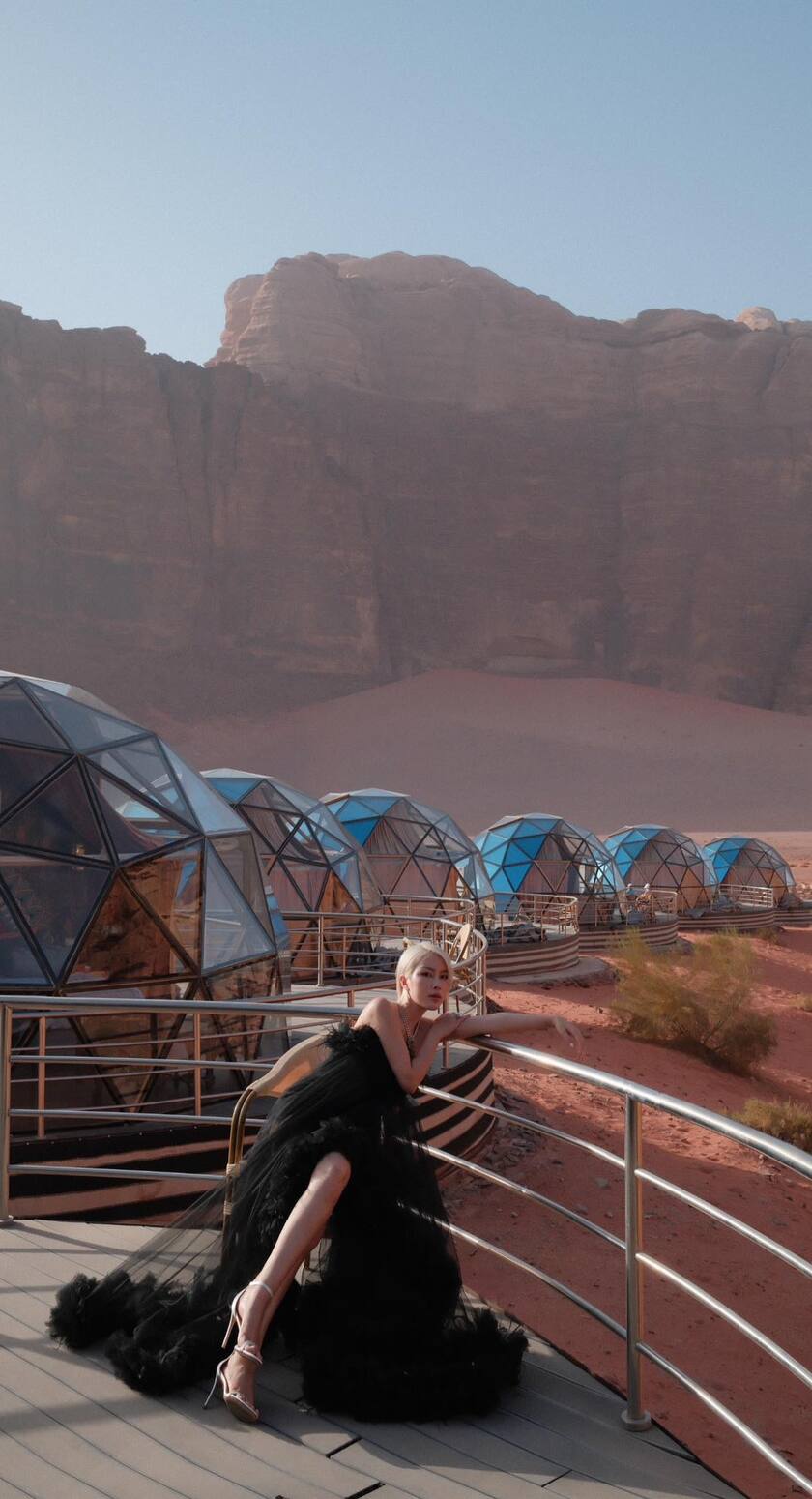
A solitary journey through the desert, yet I never felt lonely.
Jordan – A Forgotten Chapter in History
Not a name commonly found on Vietnamese travel lists, Jordan is like a forgotten chapter in history, little read, but those who have read it find it hard to put down. Nestled between the turmoil of Syria, Iraq, Palestine, Israel, and Saudi Arabia, Jordan is a crossroads of religion, civilization, war, and peace.
“I was once obsessed with the name 'Hashemite Kingdom of Jordan' from the Middle Eastern history books I read during my school years. There’s something ancient, vast, and nostalgic about each name, like Petra, Wadi Rum, the Dead Sea… Jordan isn’t as boisterous as Morocco, nor as glamorous as Dubai. It chooses to exist quietly. And it was that unwavering tranquility that called me to embark on this journey,” Ly Thanh Y shared.
Jordan opens up like a mysterious gateway to time.
Jordan unfolds before you like a gateway through time. In Amman, the capital city spread across seven hills, visitors can stand atop Jabal al-Qala'a, home to the thousand-year-old Citadel, and gaze down upon the Roman Theater nestled among the white buildings. A modern city interwoven with Roman ruins, yet retaining its nostalgic charm. Just standing there, you can see that Jordan is a place where layers of time do not overlap, but coexist.
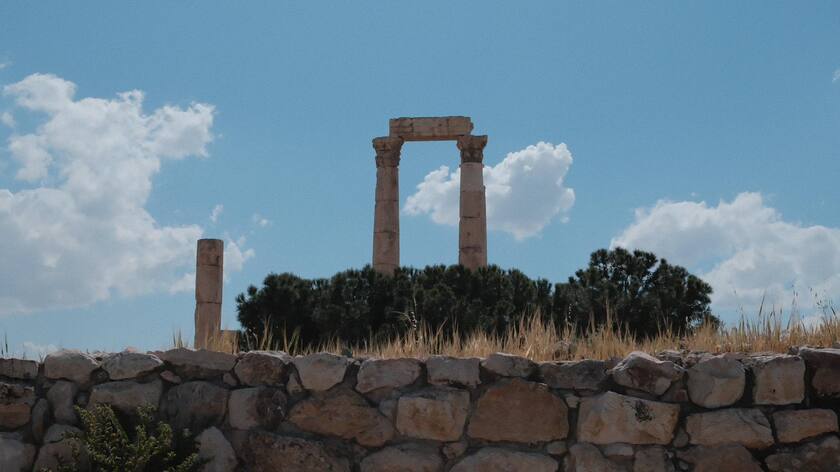
A peaceful view amidst a harsh landscape.
The Sound of Silence
Ly Thanh Y's first impression of Jordan wasn't the scenery, but the sound – a sound that wasn't loud and boisterous, but rather lingered like a thread woven through the ages.
“It’s the sound of the wind whistling through the Siq Gorge in Petra, the chanting from the minaret in the heart of the Karak Valley, or simply the crackling of a fire in a Bedouin tent in Wadi Rum. Jordan doesn’t care for you with words, but with its timely presence. When I nearly suffered sunstroke in the desert, the Bedouin driver didn’t ask many questions, he just poured water, lit a fire, and brewed a pot of hot sage tea fragrant with the scent of wild herbs. In Jordan, people don’t talk about history, they live with it,” she said.

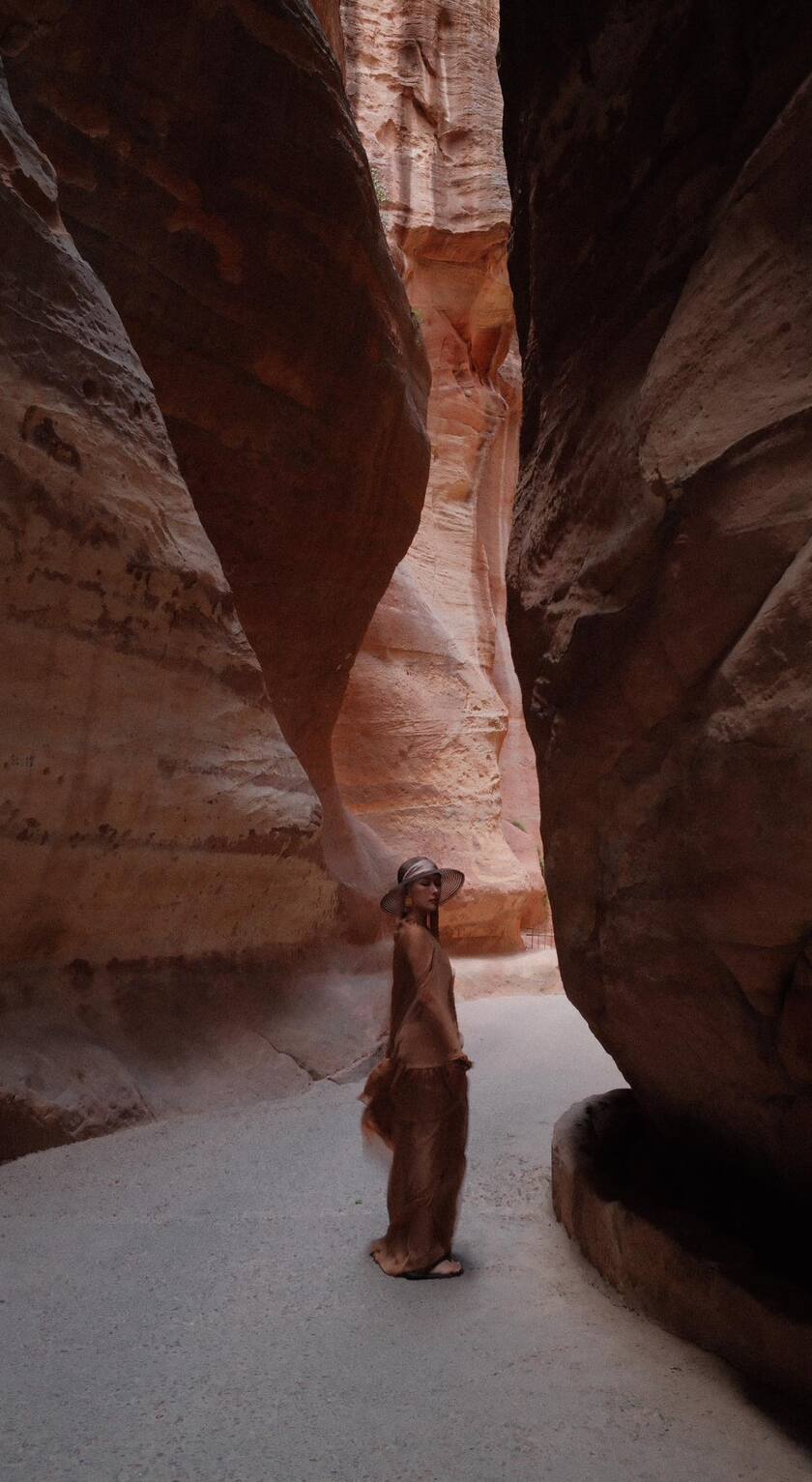
A place where all sounds seem to fade away, leaving only the sound of footsteps and breathing.
In a small house, she once saw a portrait of King Abdullah II hanging next to the Quran and a map of the Battle of Yarmouk – three eras, three faiths, all present under one roof amidst the barking of dogs and the smell of half-baked Taboon bread.
Along the vein of history
Thanh Ý's journey stretches along the classic North-South axis: Amman – Jerash – Petra – Wadi Rum – Dead Sea. Each place is a slice of time, a different version of Jordan. If Jerash is a symphony of Roman arches, then Petra is a treasure trove of redstone, once a transit point for gold and frankincense on the Spice Route.
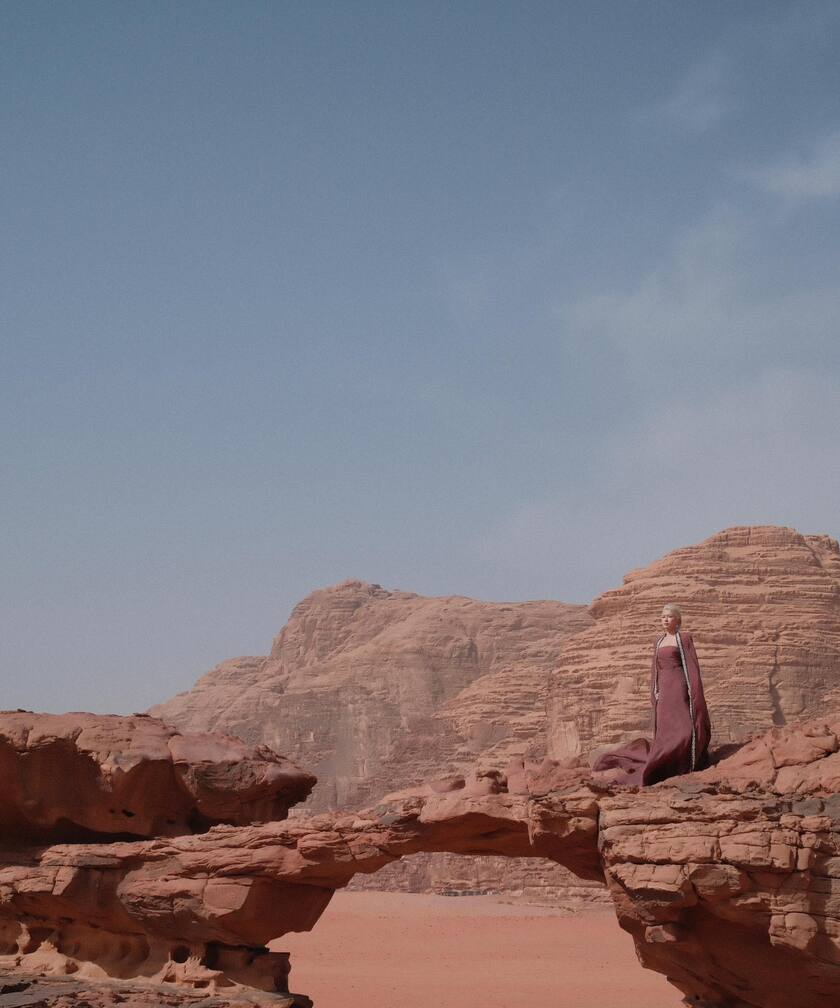
Wadi Rum, dubbed the "Valley of the Moon," is where Lawrence of Arabia once stopped to redefine solitude in the desert. And the Dead Sea – where she immersed herself in its salt mirror-like surface, floating amidst a strange sense of weightlessness, like a silent paradox.
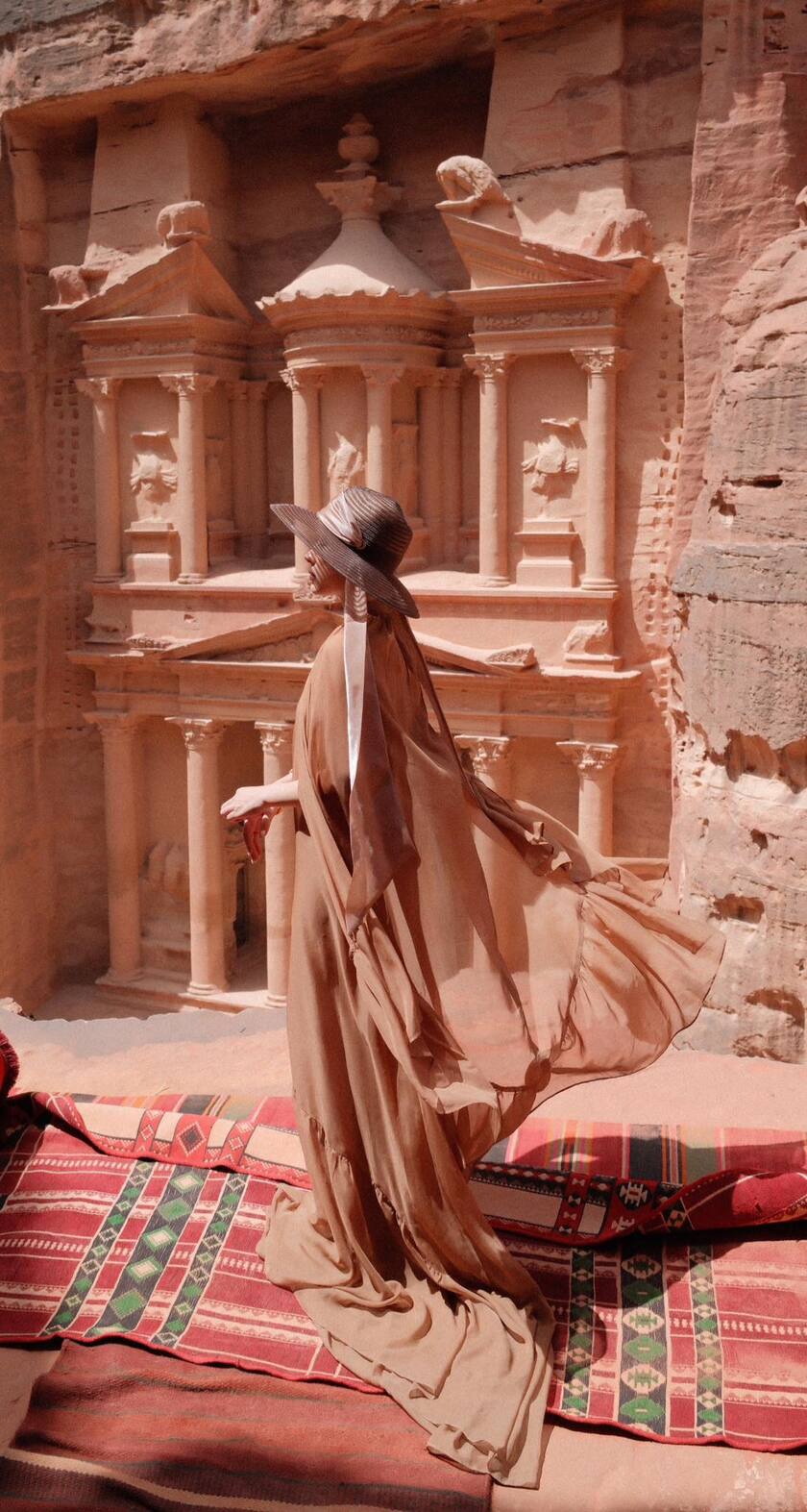
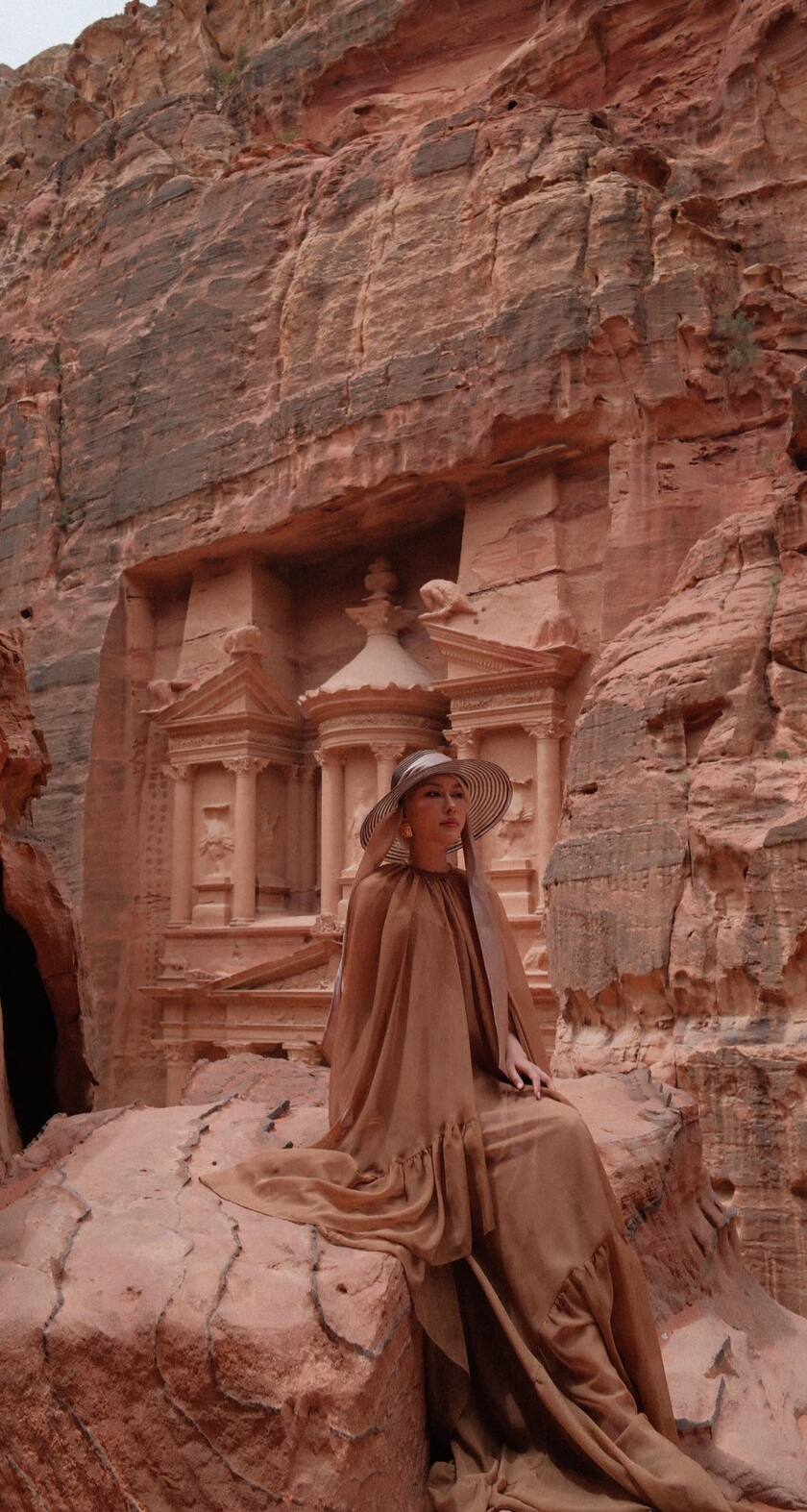
Petra in the late afternoon light – the ancient city echoing the whispers of time.
If I had to choose one place to anchor myself most deeply, it would be Petra. "I walked through the Siq Gorge, which is over a kilometer long, with two sheer cliffs like the gaps of a time portal. When the sun shone at the right angle, the shadows receded to reveal Al-Khazneh – a treasure trove of pink sandstone silently nestled within the rock. I almost held my breath, not because of its immense size, but because I felt I had been there before, in another lifetime," Ly Thanh Y shared her indescribable feelings about Petra.
"Jordan doesn't give you a choice. Either you contemplate it, or you understand nothing at all."
There's no Disneyland. There's no bustling Western-style street. Jordan forces you to live with rocks, with wind, with scorching sun. And with yourself.
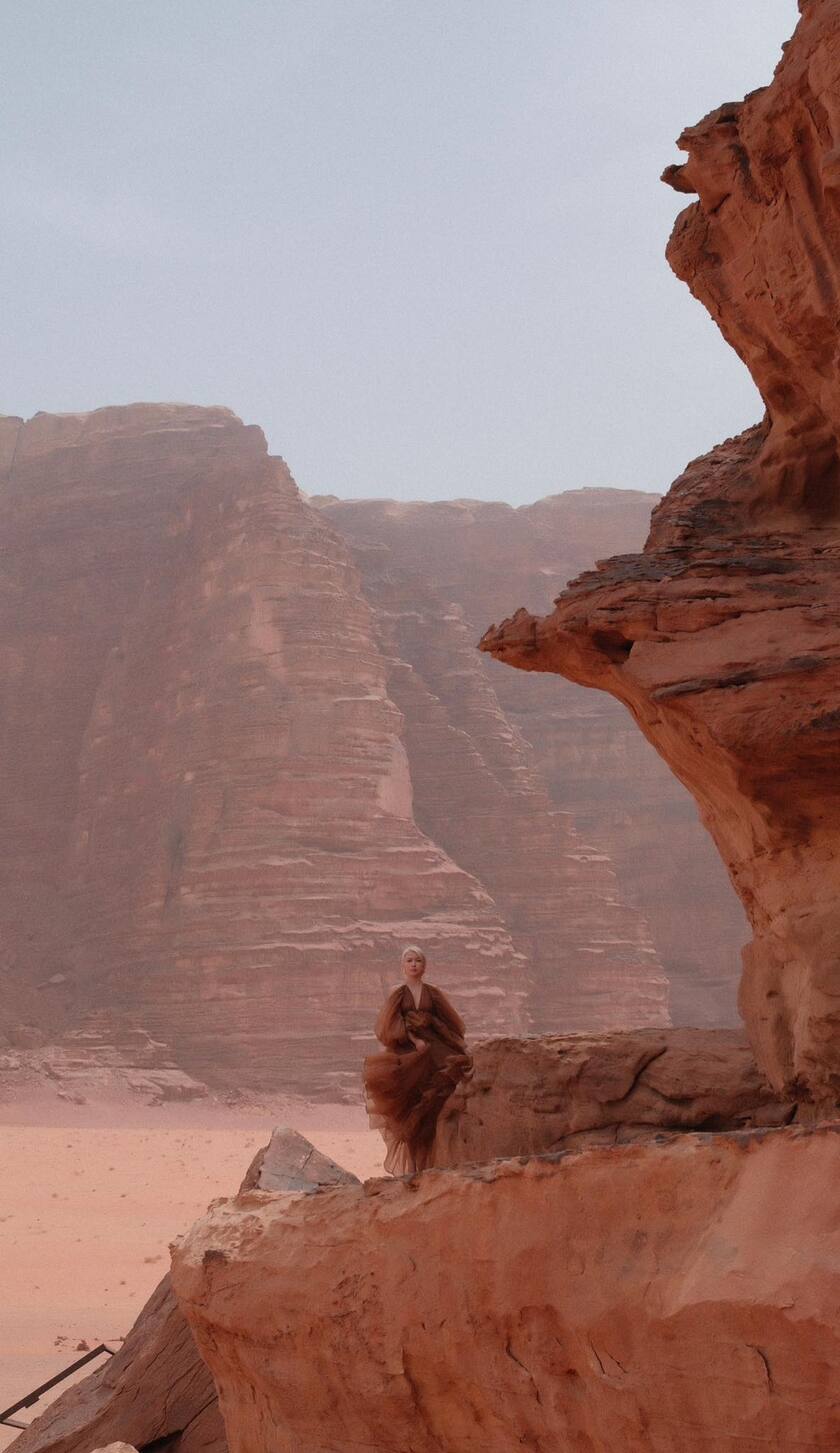
In a place where visitors must learn to accept imperfection.
It's where you learn to accept imperfection: Wi-Fi signals disappearing, buses delayed for hours, unpredictable weather. A female traveler recounted: “I used to be annoyed, but then I realized: control, after all, is just an illusion honed by habit. In a place where the wind has blown along the same slope for thousands of years, what does my schedule matter?”
And when she stood in the middle of the desert, seeing a camel standing motionless for three hours, or an old man sitting and playing a flute while gazing out at the Karak Valley, she wondered: "Have I been living too fast, missing out on things that only become apparent when one sits still and observes?"
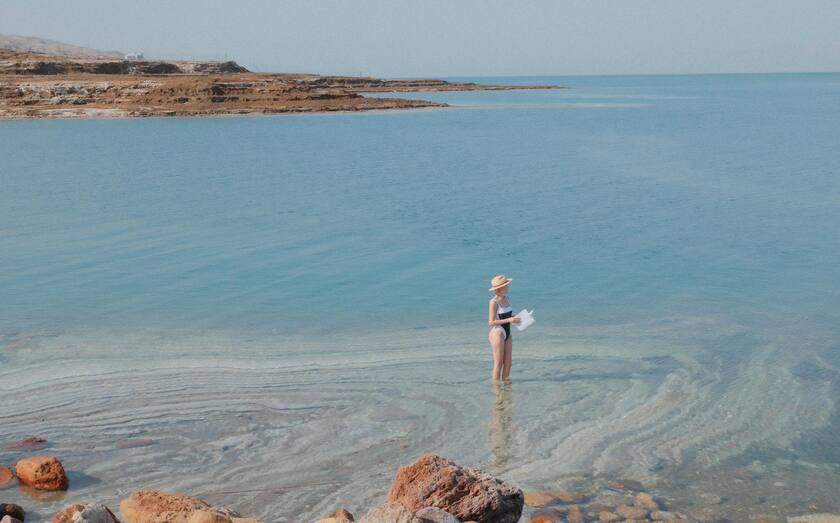
The Dead Sea possesses a surreal beauty, often described as a precious gem in the heart of the desert.
Where faith coexists
Ly Thanh Y was particularly impressed by how Jordan lived with so many faiths intact. Although Sunni Islam was the dominant religion, visitors would still encounter Greek Orthodox churches, Byzantine ruins, and even ancient Aramaic inscriptions. "I once walked past a quiet Orthodox church in a small neighborhood. A few slopes further, a mosque appeared where the chanting echoed every afternoon like a fixed rhythm of the city's breath. No one asked me what I believed in. No one scrutinized me, nor did they avoid me, even though I didn't belong to their religion," she recounted.
Jordan allows all beliefs to remain intact, just as they leave old maps, dead languages, and broken stone pillars untouched. They neither try to repaint nor dismantle them. They believe that whatever existed deserves to be left in its rightful place.
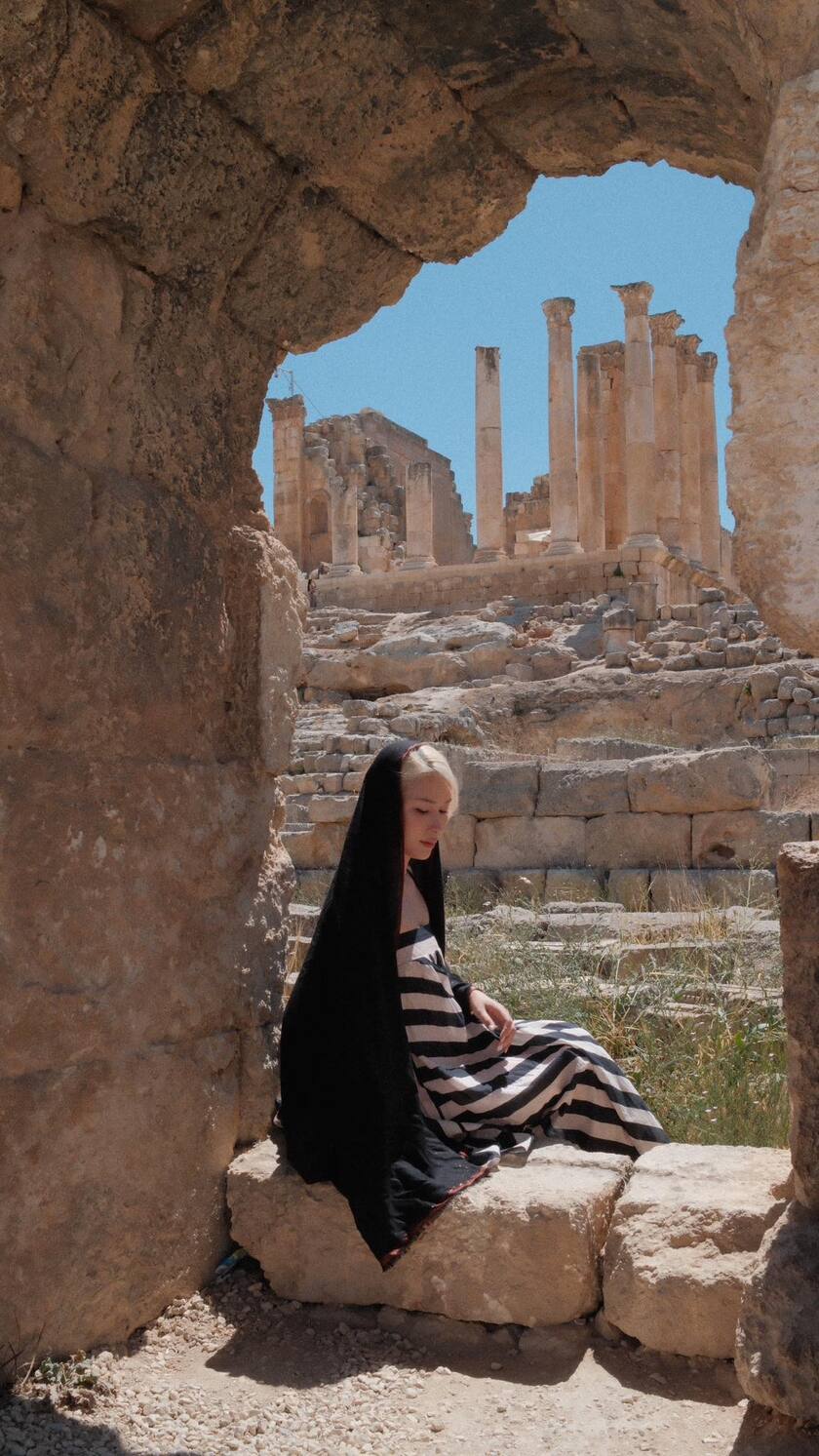
A land where many faiths coexist.
Jordan - A Whisper in the Stone
For Ly Thanh Y, Jordan was not an easy journey. It was a trip full of unexpected twists and turns and constant changes to plans. One day, Google Maps suddenly stopped working midway from Petra to Wadi Rum. Another night, in the middle of the vast desert, Wi-Fi was a distant concept. But the biggest challenge wasn't the terrain or the weather, but letting go of the habit of being in control.
Jordan is not for those who travel to "conquer" a foreign destination or add another red dot to their map. It doesn't beckon with glamour, nor does it require conquest. It quietly opens itself to those who arrive with humility and a willingness to listen.
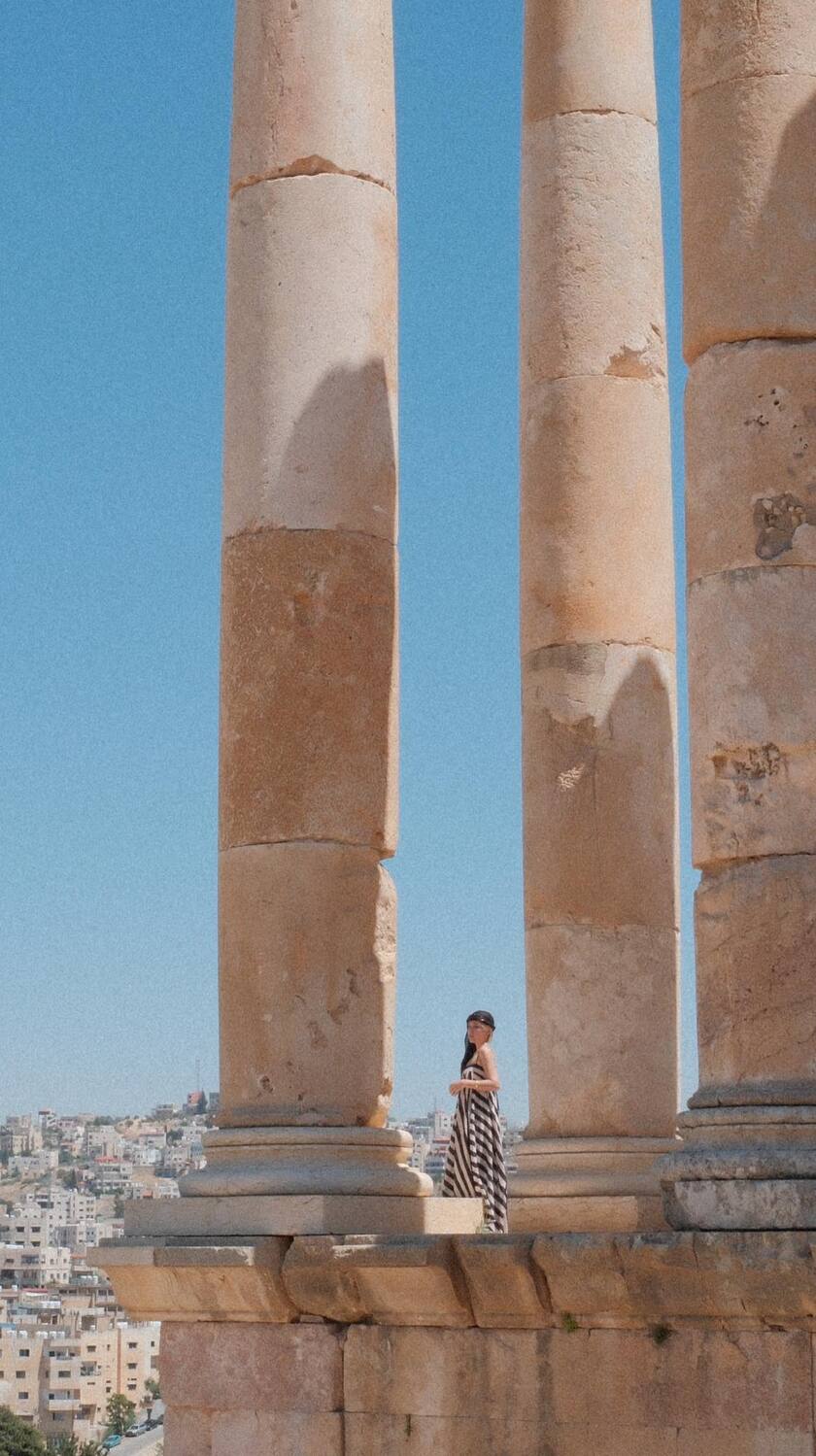
The living space here carries both memory and history, breathing in the same air as the rocks, the sand, and the tireless chanting that has lasted for a thousand years.
In a living space where memory and history breathe through layers of rock, stretches of sand, and echoing chants in the desert, Jordan preserves for itself a rare tranquility – a tranquility that tells stories, that touches the deepest layers within each person.