VI
VI


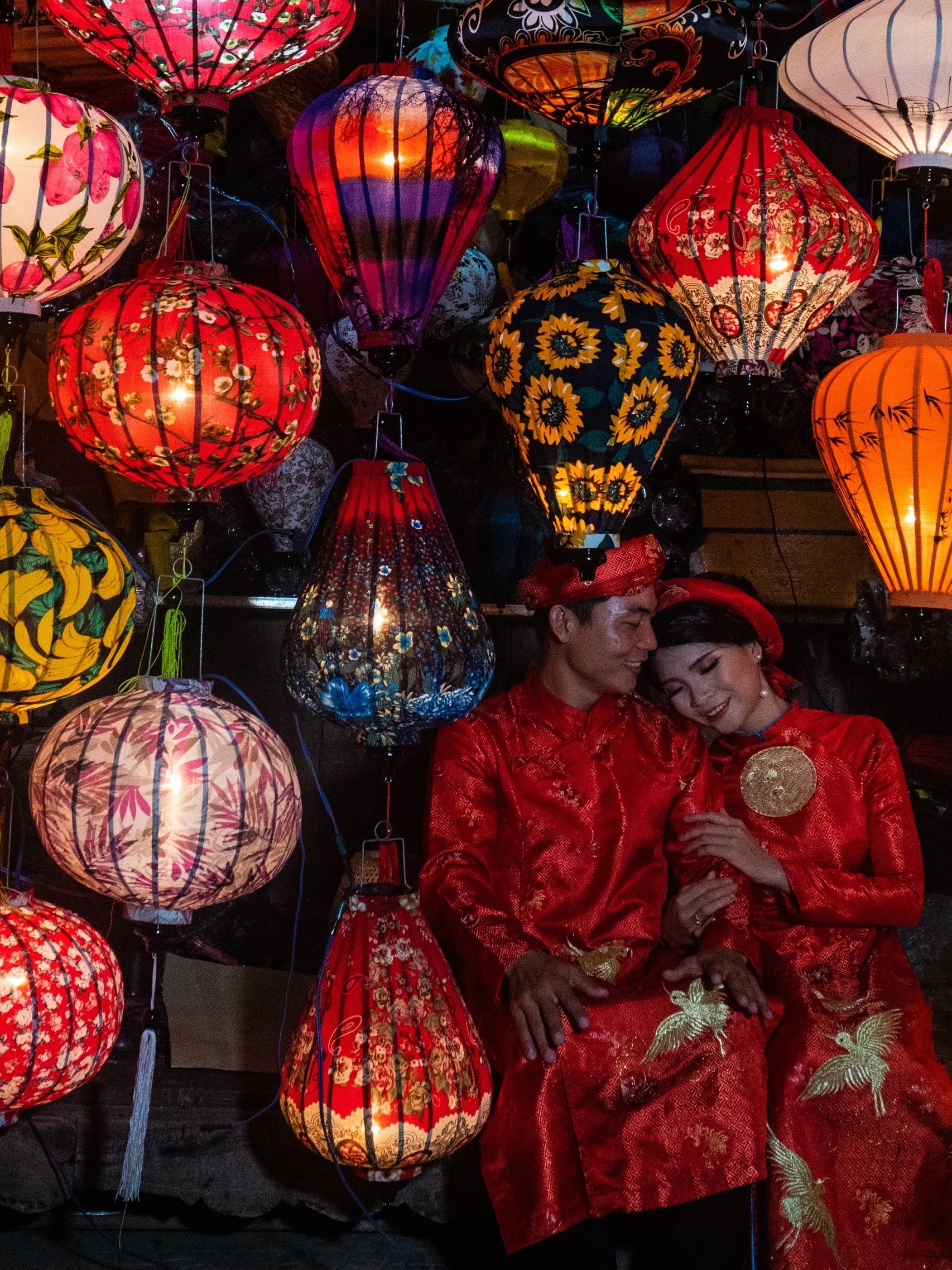
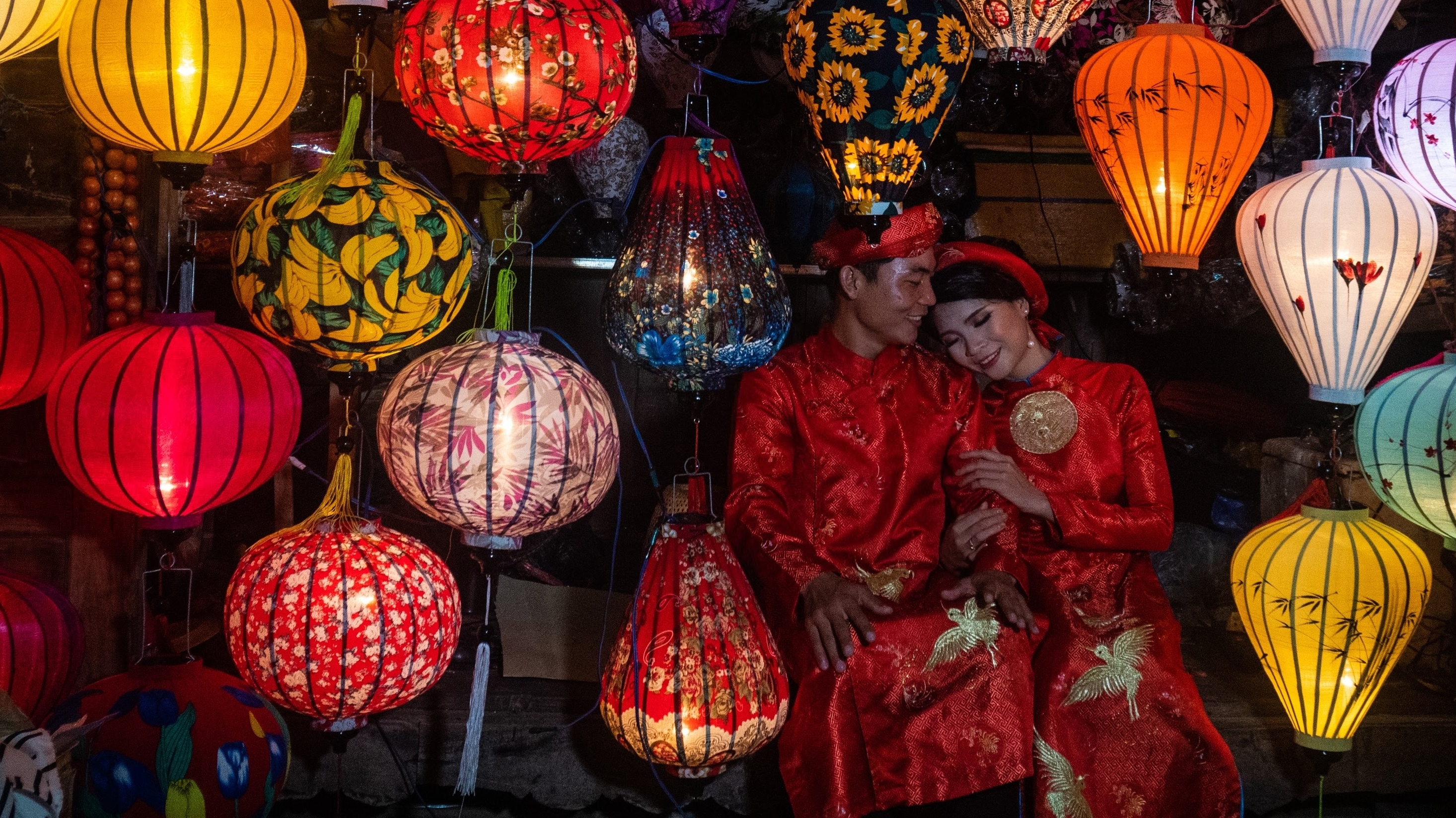
400 years of preserving the tradition of lantern making.
Lanterns are one of the symbols ofHoi AnHoi An, Quang Nam, Vietnam. In the late 16th century, Chinese and Japanese people settled and traded in Hoi An, bringing with them lanterns. These brightly colored lanterns became widely used everywhere, from homes to shops and assembly halls of the Chinese, Japanese, and Vietnamese. To this day, the people of Hoi An have preserved, maintained, and developed the traditional lantern-making craft for over 400 years.
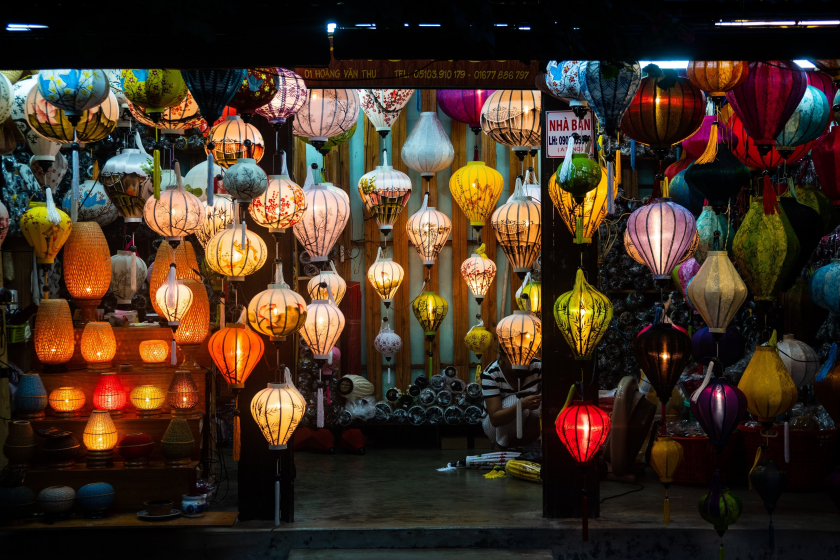
According to statistics, Hoi An currently has more than 32 establishments that make and sell lanterns. Hoi An lanterns are exported to many places around the world, in Asia, Europe, and America. Traditional Hoi An lanterns have been recognized as a world cultural heritage.
Traditional lantern-making process
Traditional lanterns are made through two main stages: making a bamboo frame and covering it with fabric.
Making the bamboo frame: First, the bamboo needs to be soaked thoroughly in salt water for 10 days to prevent insect infestation. Then, it is dried, split, and whittled into thin strips according to the size of each lamp. The strips are then attached to two wooden rings at each end, and connected with nylon cords. Finally, the craftsman will manually adjust the frame to create a symmetrical lamp.

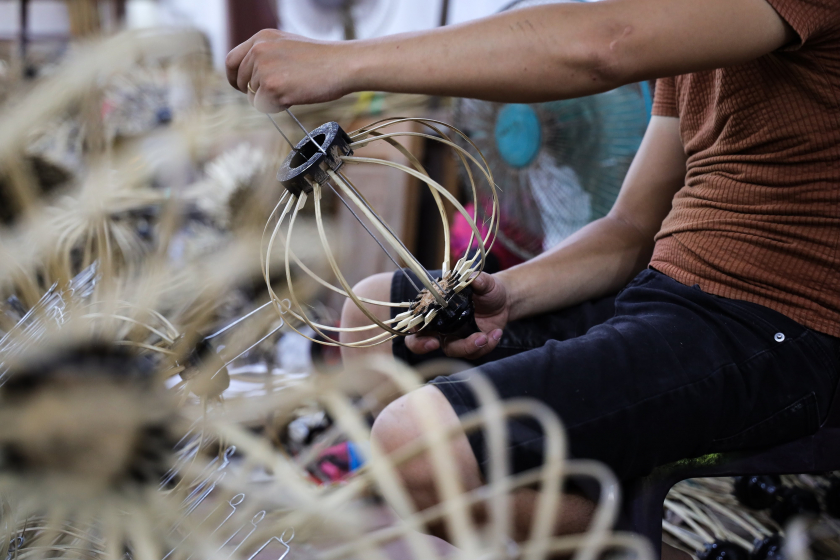
Fabric covering: The fabric used to cover the lantern is usually a durable, colorful silk or satin fabric that won't tear when stretched. First, the fabric is cut into several pieces that are proportionate to the size of the lantern. Next, the craftsman applies glue and sticks them onto the lantern frame. The process of stretching the fabric requires extreme skill to ensure the corners are taut at the curves. After attaching the fabric, the craftsman trims it with scissors and then attaches the handle to the lantern frame.
The lamp base is made of artificial silk thread attached to a wooden ball. It takes four days to complete one lantern, from shaping the bamboo strips to finishing two lanterns, plus three stages of painting and decorating.
Lantern Festival
Every month on the 15th day of the lunar calendar, Hoi An ancient town holds the Full Moon Night Festival. From 6 PM onwards, vehicles are prohibited from circulating on the roads along the Hoai River in the ancient town. The quiet atmosphere, free from engine noise and electric lights, gives way to the illuminated lanterns.
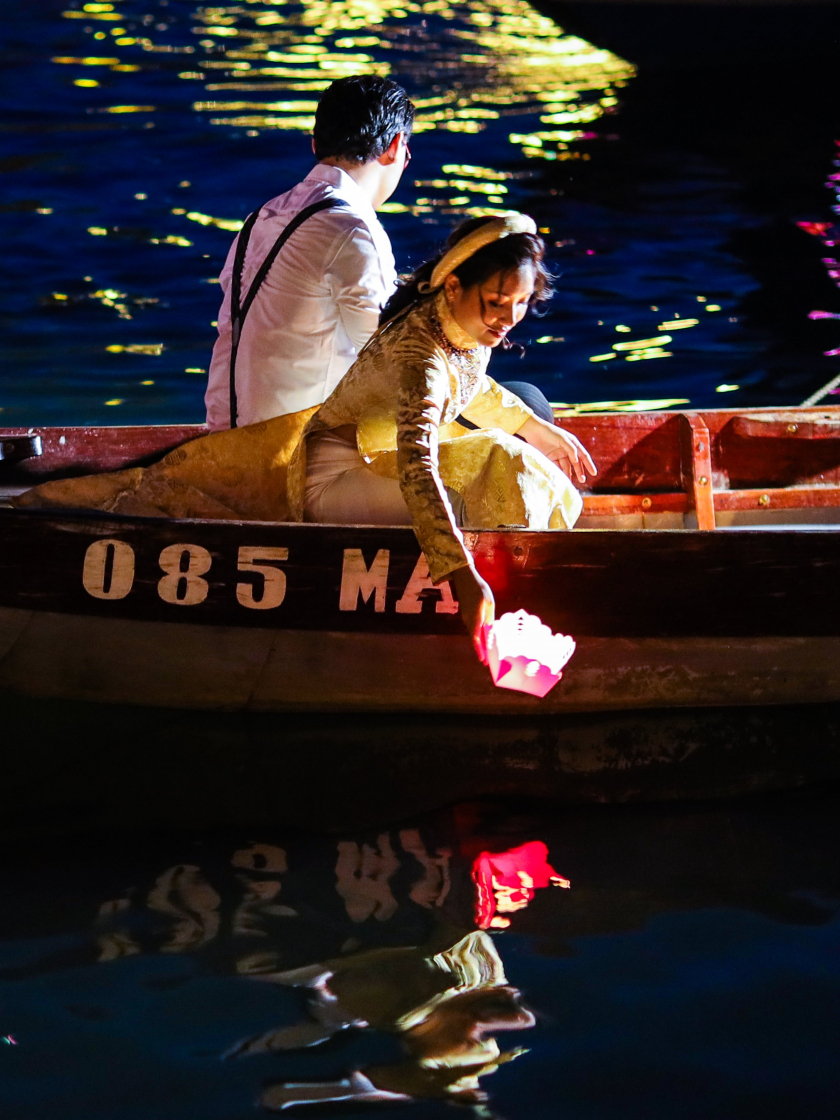
Visiting Hoi An during the Mid-Autumn Festival is like being immersed in a bygone era. On this day, locals light incense at ancestral altars to pray for good fortune. Tourists can release floating lanterns to pray for peace, immerse themselves in the enchanting atmosphere, and enjoy traditional art performances.
Floating lanterns consist of a small candle inside a flower-shaped paper frame, lit to honor the spiritual, religious, and cultural values of the Vietnamese people. Each lantern released onto the river carries a prayer from each individual.
On the Hoai River flowing through Hoi An, at night, thousands of lanterns are released, illuminating a long stretch of the river and becoming a symbol of this small ancient town.