VI
VI


Similar to Vietnam, the Mongolian New Year, called Tsagaan Sar or White Moon, is calculated according to the lunar calendar. In the culture of the people of the steppe region, this is the most important occasion of the year and marks the end of winter.
The days leading up to Tet
Weeks before the New Year, Mongolian families begin preparing. The first things they usually prepare are new clothes and horses.
Because the New Year celebration is very elaborate, the women in the family will prepare large quantities of traditional food and keep it refrigerated. In particular, they prepare hundreds of buuz, a traditional lamb-filled dumpling that is indispensable during the Mongolian New Year.
Like many countries that celebrate the Lunar New Year, Mongolians celebrate Tsagaan Sar, a very grand festival.
In the past, Tsagaan was called Bituun by the Mongols, meaning "repentance." On the day of repentance, people would clean their houses, barns, and cellars to welcome the new year clean.
In addition, they place three pieces of ice outside the door so that the horse of the goddess of good fortune can drink from it as it passes by. The Mongols believe that the goddess will visit each family on this day.
Their New Year's Eve celebration is very elaborate. During the ceremony, they light candles symbolizing enlightenment about reincarnation and sentient beings. In the evening, families, often neighbors, gather together to bid farewell to the old year. On the dinner table, dishes made with butter, milk, and buuz (a type of Vietnamese pastry) are indispensable.

Besides eating and drinking, they might play cards together. The winner will have good luck in the new year. Specifically, they will resolve all their problems and debts on the last day of the year.
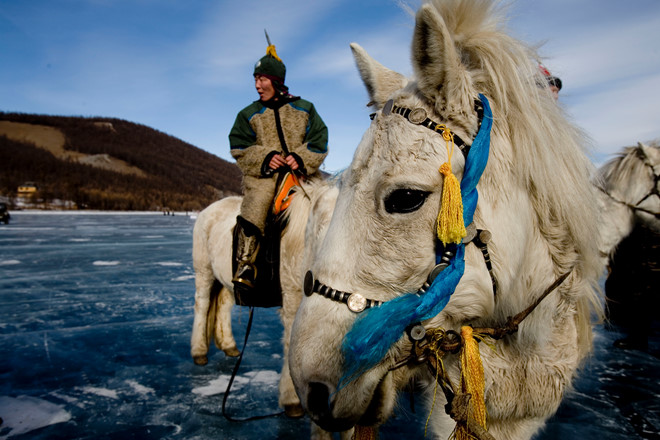
Tsagaan Sar is the most important occasion of the year for Mongolians.
Mongolians and the first three days of the new year.
During the Lunar New Year celebrations, families light candles on their altars. These candles symbolize enlightenment in Buddhism. When meeting, people greet each other with traditional questions. Besides visiting friends and family, they also exchange gifts.
Typically, Mongolians gather at the residence of the oldest person in the family. When greeting elders, they perform the zolgokh greeting.
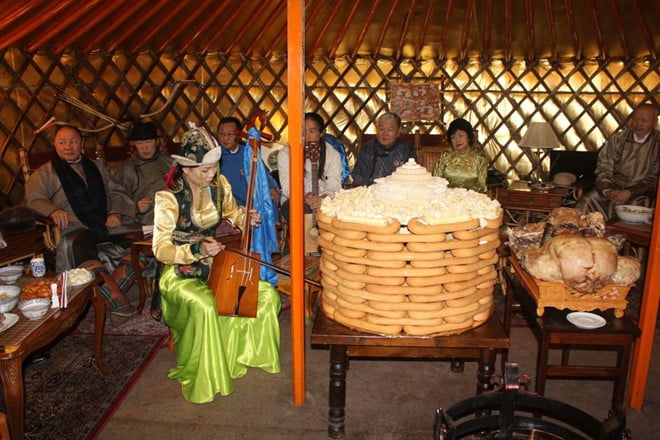
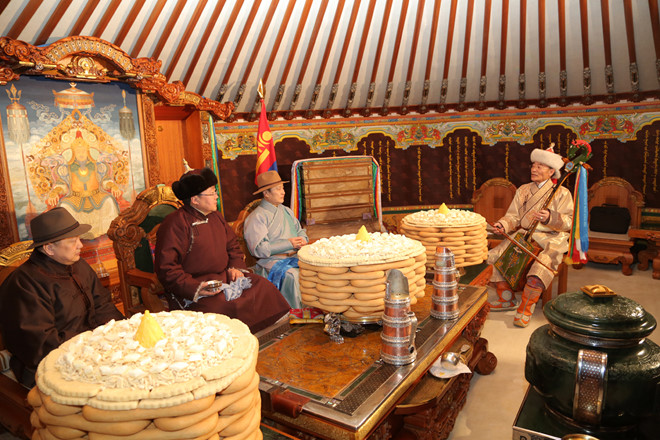
Buuz towers are an indispensable part of the Mongolian New Year's feast.
Accordingly, Mongolians will use their elbows to hug the elderly tightly as a sign of support. The elderly will receive greetings from everyone except their spouse.
During the ceremony, family members hold long strips of silk, usually blue, called khadag. After the ceremony, the extended family enjoys a New Year's meal together with traditional dishes made from butter, milk, and lamb. An indispensable item on the table is the "pyramid" of buuz dumplings, symbolizing Mount Sumeru.
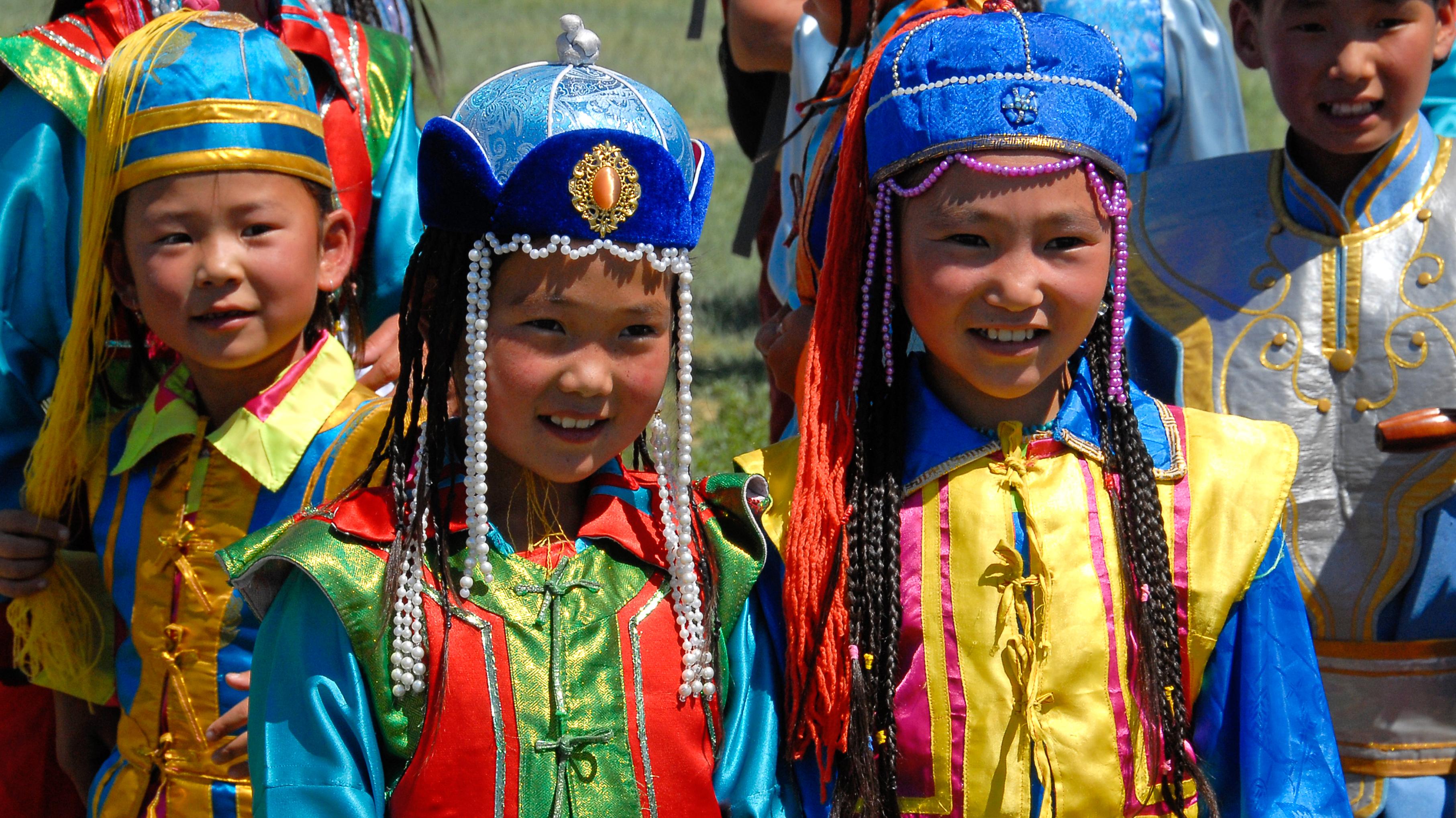
Regarding clothing, on ordinary days, Mongolians, especially in large cities, usually wear Western clothes. However, during the Lunar New Year, they prefer to wear traditional ethnic costumes.
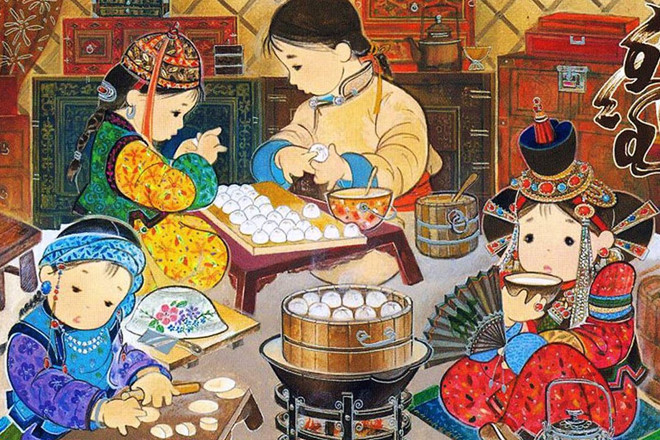
Mongolians often wear traditional clothing during holidays and festivals.
Mongolian New Year's traditional clothing is diverse and colorful. Although stylized to suit modern life, the attire remains quite complex, including deel robes, belts, boots, and ornaments. The style of clothing depends on the wearer's age and marital status, as well as their clan.
For example, young girls often wrap their headscarves, rolling them slightly to the right and letting the edges hang down. Meanwhile, married women tie theirs in the same way but without leaving the edges loose.
Furthermore, the wealth of each family was often displayed through jewelry. Typically, Mongolian girls adorned themselves by braiding many strands of hair around their foreheads with red ribbons. The threads in each braid were studded with precious stones (turquoise), coral, or metal (silver).
Previously, the government attempted to suppress Tsagaan Sar and replace it with another holiday called "Collective Shepherd's Day." However, after the Mongolian democratic revolution in 1990, Tsagaan Sar was celebrated again.