VI
VI


O An Quan (a traditional Vietnamese board game)
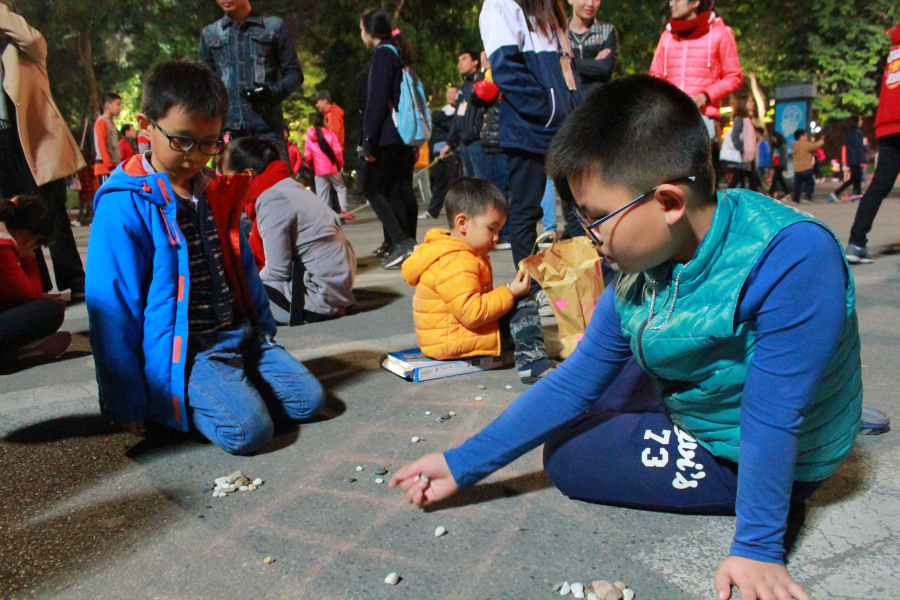
Among traditional folk games, this is perhaps the most intellectually stimulating. Vietnamese children, especially in large cities like Hanoi and Ho Chi Minh City during the 1970s and 1980s, almost all played this game at least once. All it takes is a piece of chalk, a brick, or some pebbles and a small yard for young people to engage in a battle of wits. The game board is a rectangle divided into 10 squares called "citizen squares," with 5 squares on each side. The two ends are drawn as semicircles called "official squares."
To win, players must find a way to capture more pieces than their opponent.
Dragon and snake ascending to the clouds
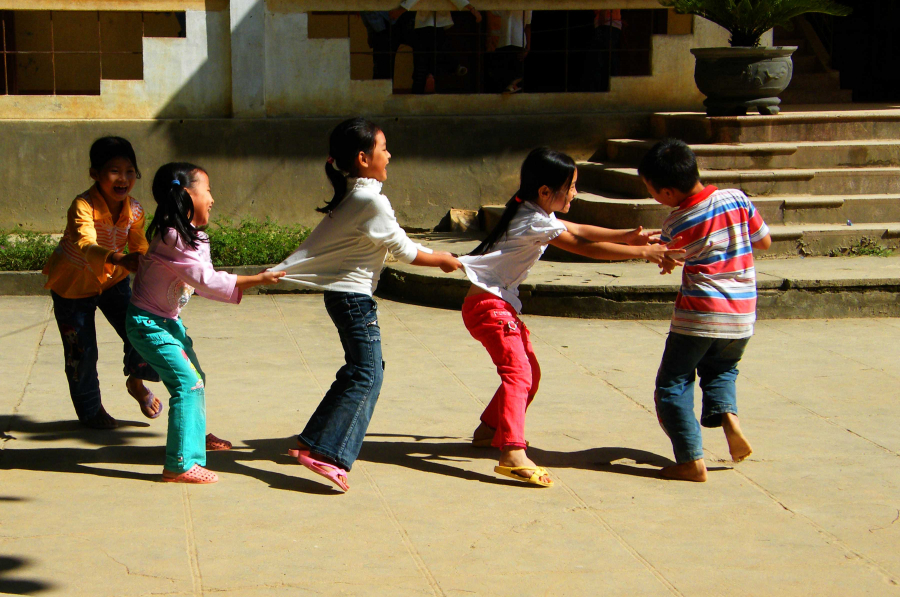
This is a group game that requires both strength and skill from the players. The rules are relatively simple: one person is the leader, the doctor (or sometimes called the homeowner). A group of people line up in a long row, with the person behind holding onto the hem or waist of the person in front. The game begins with all the players singing loudly, "Dragon and snake climbing to the clouds, there's a swaying tree..." While singing, they walk around in circles, then stop in front of the doctor's house and ask which part the doctor chooses. After the doctor chooses a part they like, they must find a way to catch the person in that chosen part.
The person at the head of the line has the duty to extend their arms to protect and steer the way so that the doctor can capture the chosen person.
Blind man's bluff
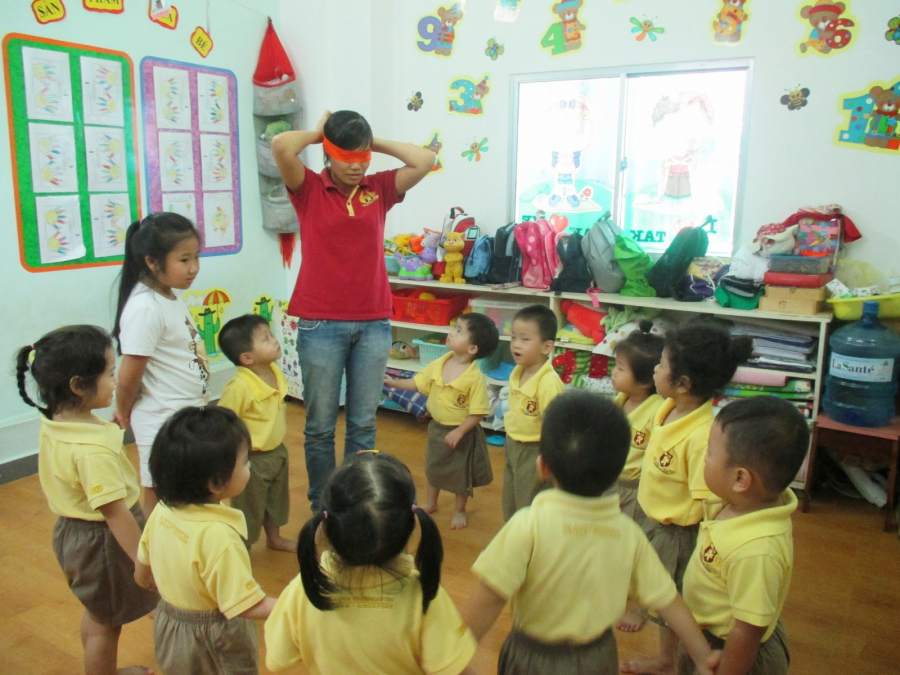
Among folk games, this is perhaps the most popular, not only in cities and rural areas but seemingly appearing throughout the country. The game is quite simple to play: after a game of rock-paper-scissors, one person loses and must be blindfolded to find the others. The remaining players hold hands in a circle, and the blindfolded person in the middle walks around looking for anyone.
When someone is found, the blindfolded person must guess who it is. If they guess correctly, the person caught will replace the blindfolded person; otherwise, the blindfolded person must continue to "catch the goat."
Hop
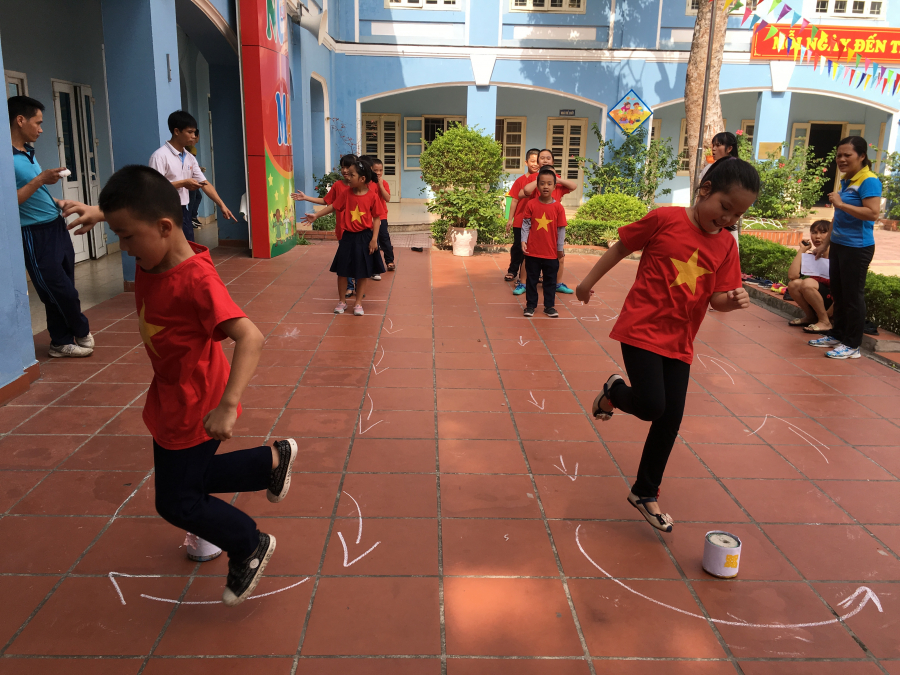
This is a game commonly seen in schoolyards many years ago. Players would choose a spacious area, draw a rectangle, then divide it into 7-10 squares depending on individual or group preference, and number them 1, 2, 3... Each player would choose a slipper or a square brick of a suitable size, then play rock-paper-scissors or compete to see who goes first.

Next, each person will go to their chosen position. The rules of the game are that each person will take turns throwing bricks or slippers into each square and hopping into the other squares. The person who goes through all the squares and builds a house first wins.
Seesaw
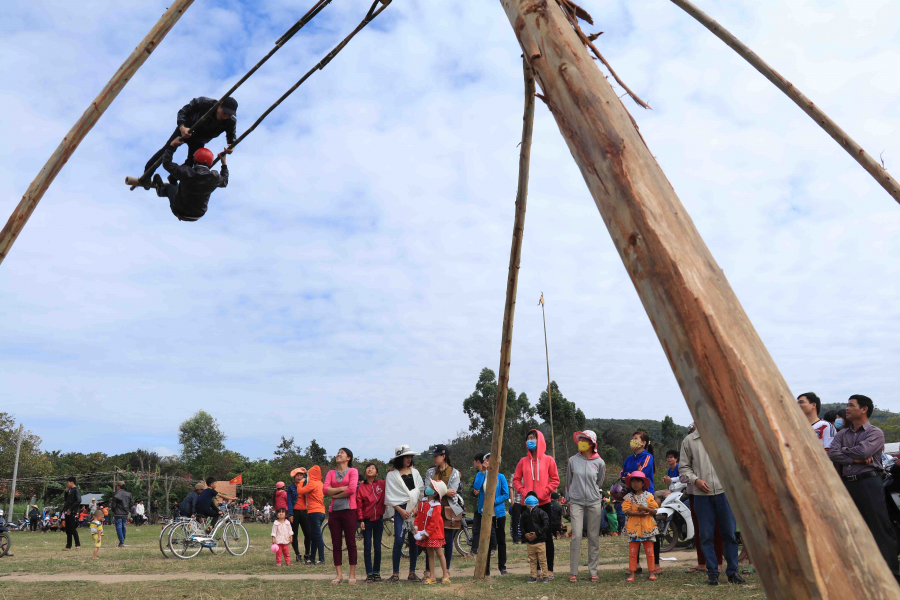
During the Tet holiday, next to the communal house or in a spacious, dry field, people prepare the swing poles. They choose large, long bamboo poles to make the swing. A single swing can be made from 4-6 large bamboo poles. The swing frame is also made of long but slender bamboo poles, usually male bamboo, so that when the swinger grasps it, it is secure and prevents slipping or losing their grip when swinging quickly and forcefully.
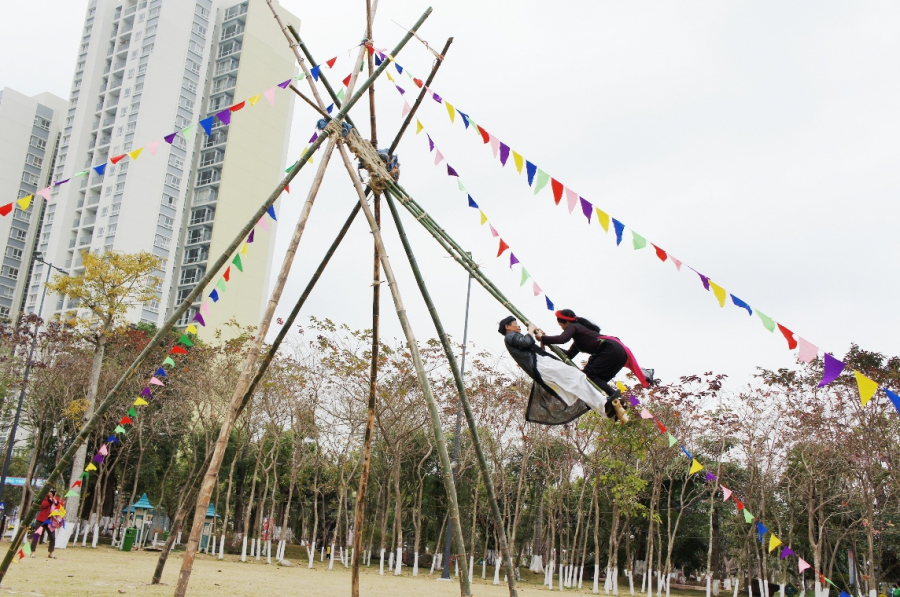
Depending on preference, people swing alone or in pairs. When one person gets on the swing, they can ask the other to push them to gain momentum. After that, the person swinging can bounce as they please. The most beautiful swings are those for couples, where young men and women choose each other to swing, one bouncing and the other pushing.
The talents and courage of the young men and women are displayed here as an opportunity for self-expression.
Wrestling
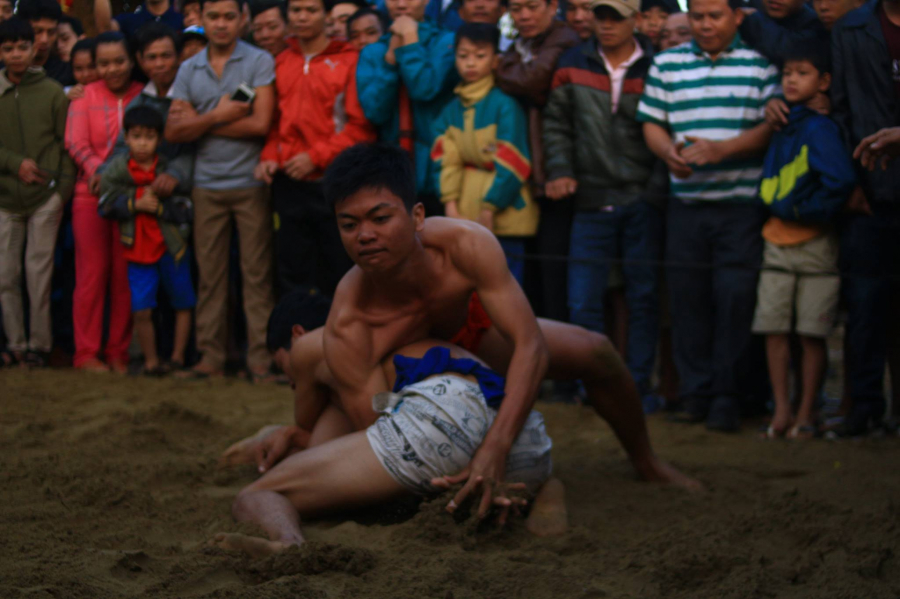
Wrestling is a martial art and a very popular sport during Tet (Vietnamese New Year) and other festivals. In Vietnam, besides the Tet wrestling festival, there are many other wrestling festivals in villages like Sinh, Lieu Doi, Ha Nam, and Mai Dong. In the past, in the Bac Ninh and Phu Tho regions, there were wrestling schools and wrestlers famous throughout the area. To encourage talent and training among young men, many villages offered very high wrestling prizes during the three days of Tet. Traditionally, prizes were awarded in the form of money, copper trays, copper pots, or other items. The general rule of the match was that the winner had to wrestle their opponent to the ground (belly flat) or lift their opponent off the ground.
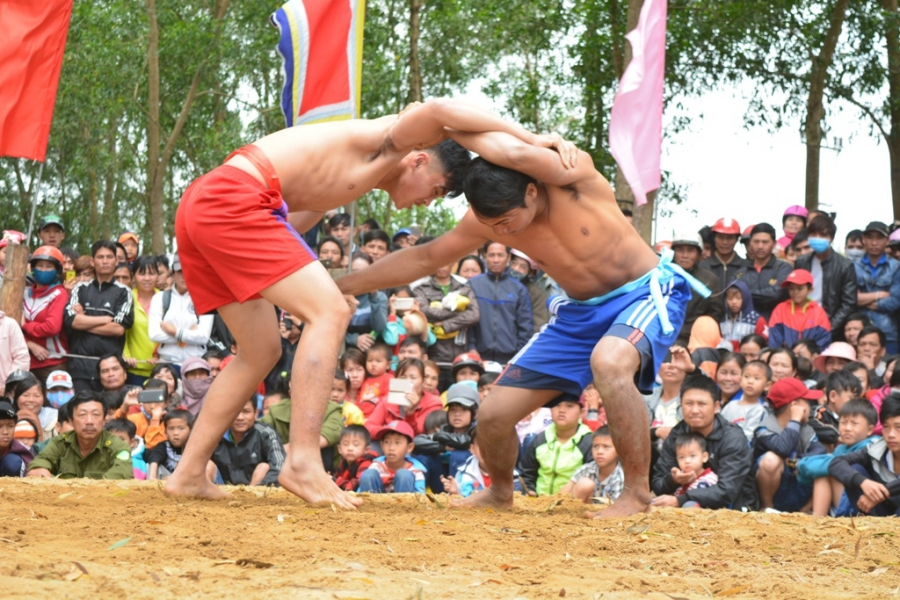
Wrestling not only requires physical strength but also significant intelligence and agility. Technically, it has its own unique techniques such as cushioning, lifting, and grappling, which wrestlers must utilize effectively depending on the circumstances and conditions to throw or lift their opponent.
Cockfighting
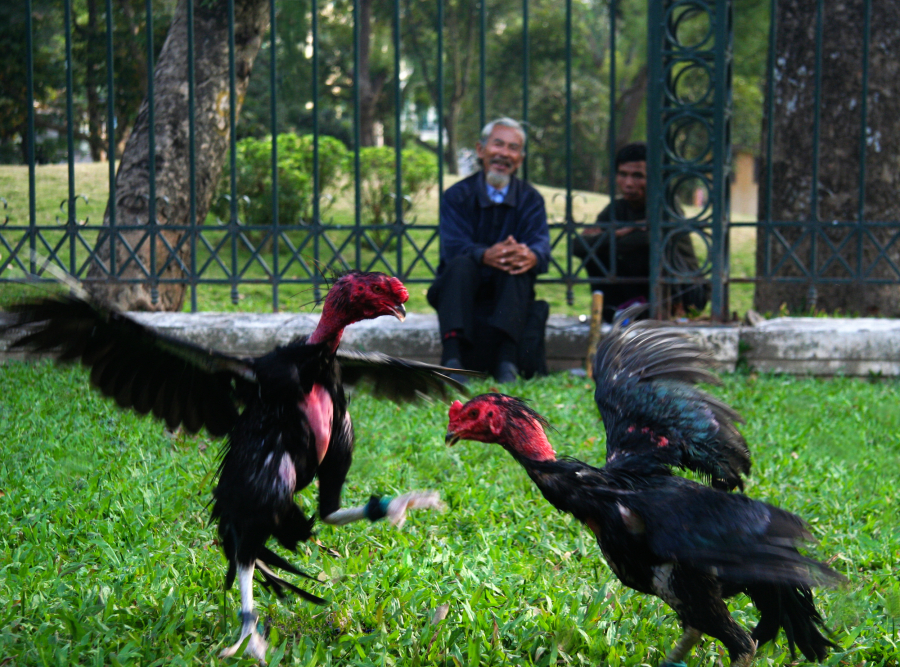
Cockfighting is a popular pastime during most Tet (Lunar New Year) and other festivals. Many villages are famous for cockfighting, such as Dinh Bang (Bac Ninh), Tho Ha, Yen Phu (Yen Phong), and several other places in all three regions of Vietnam: Central, South, and North. These fighting roosters are meticulously raised and trained against other roosters to become accustomed to battles. Cockfighting arenas during the Lunar New Year usually attract large crowds of spectators.
Tug of war
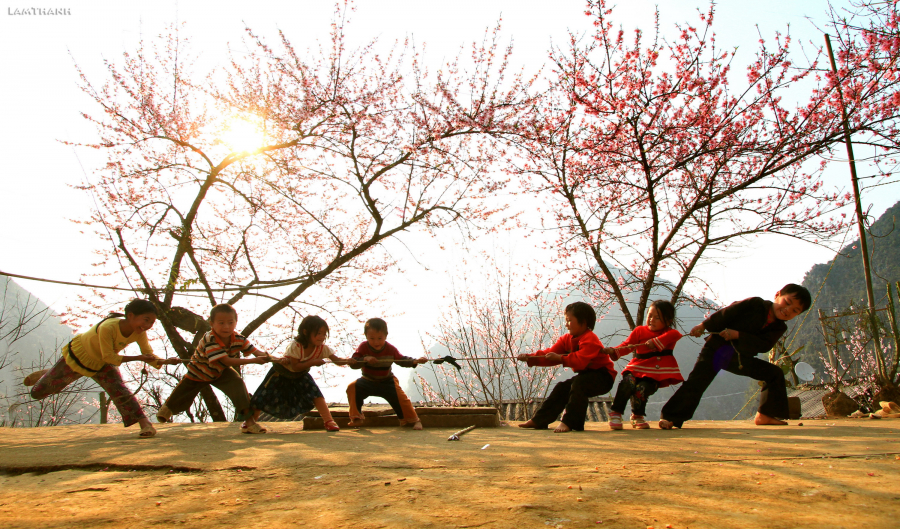
As a game that attracts many participants, it's both a way to improve health and a fun, relaxing activity. It has become a popular group game in many parts of Vietnam. The rules are simple: any number of players can participate, divided into two equal teams. A chalk line is marked, and the team that pulls their opponents across the line wins.
Playing Chinese chess - human chess
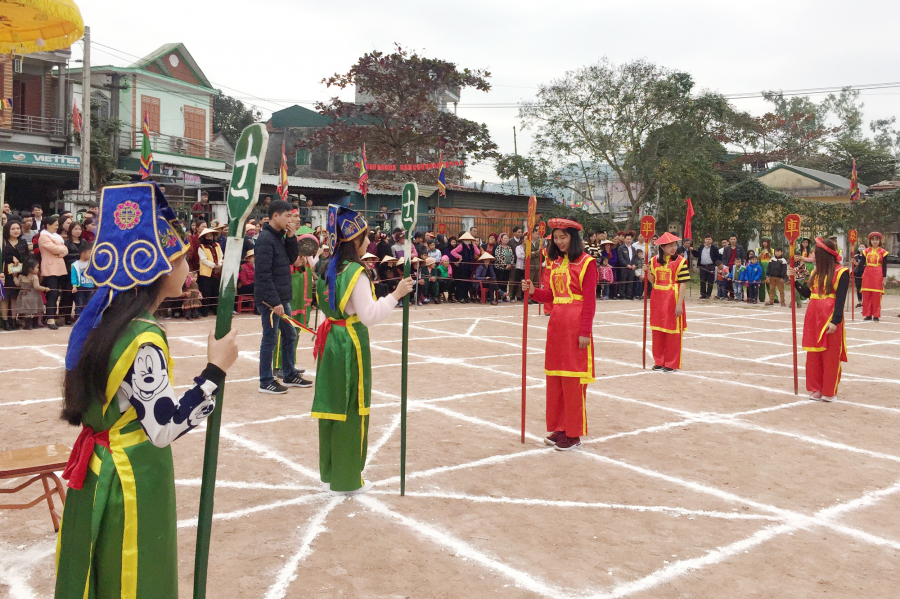
This is an elegant and intellectual pastime enjoyed during leisurely tea and drinks. Elderly people often gather over tea and set up a chessboard for entertainment. Thirty-two chess pieces are divided into two sides (16 red and 16 black), and once arranged, the battle of wits begins. Human chess is also a form of chess, but the pieces are real people. It's played on a field, with sixteen men in red shirts and sixteen women in black shirts wearing name tags (representing the chess pieces) on their chests, standing in their designated positions.
Two generals (the male and female generals), elegantly dressed (like in chess), have two pennant flags planted diagonally behind their backs and are sheltered by parasols. On sunny days, each chess piece is held under an umbrella by a person standing beside it and following it as it moves. The two opponents sit behind them. There is a flag runner, responsible for moving the pieces according to the players' intentions.
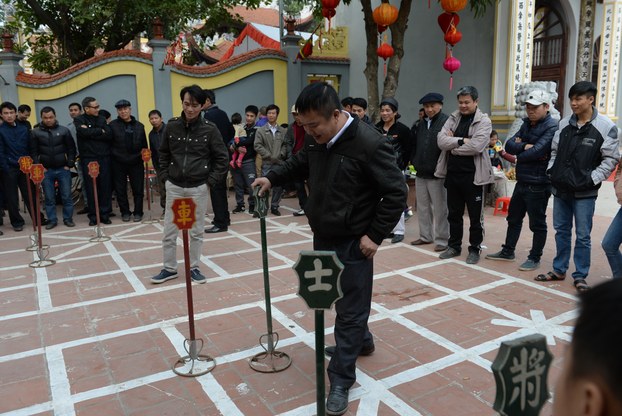
Each time a move is made, the player (accompanied by a drum beat) strikes the drum once. The flag bearer then receives the command and moves the piece on the board. The rules of movement are: knight on the square, bishop in the square, rook in a straight line, cannon in a space.
When playing, one must remain calm, cautious, and proactive, avoiding distractions from spectator tips. Before making a move, anticipate the next two or three moves to avoid being caught off guard by your opponent.
Chinese chess and human chess are commonly seen during festivals, Tet (Lunar New Year), and celebrations of the new year.