VI
VI


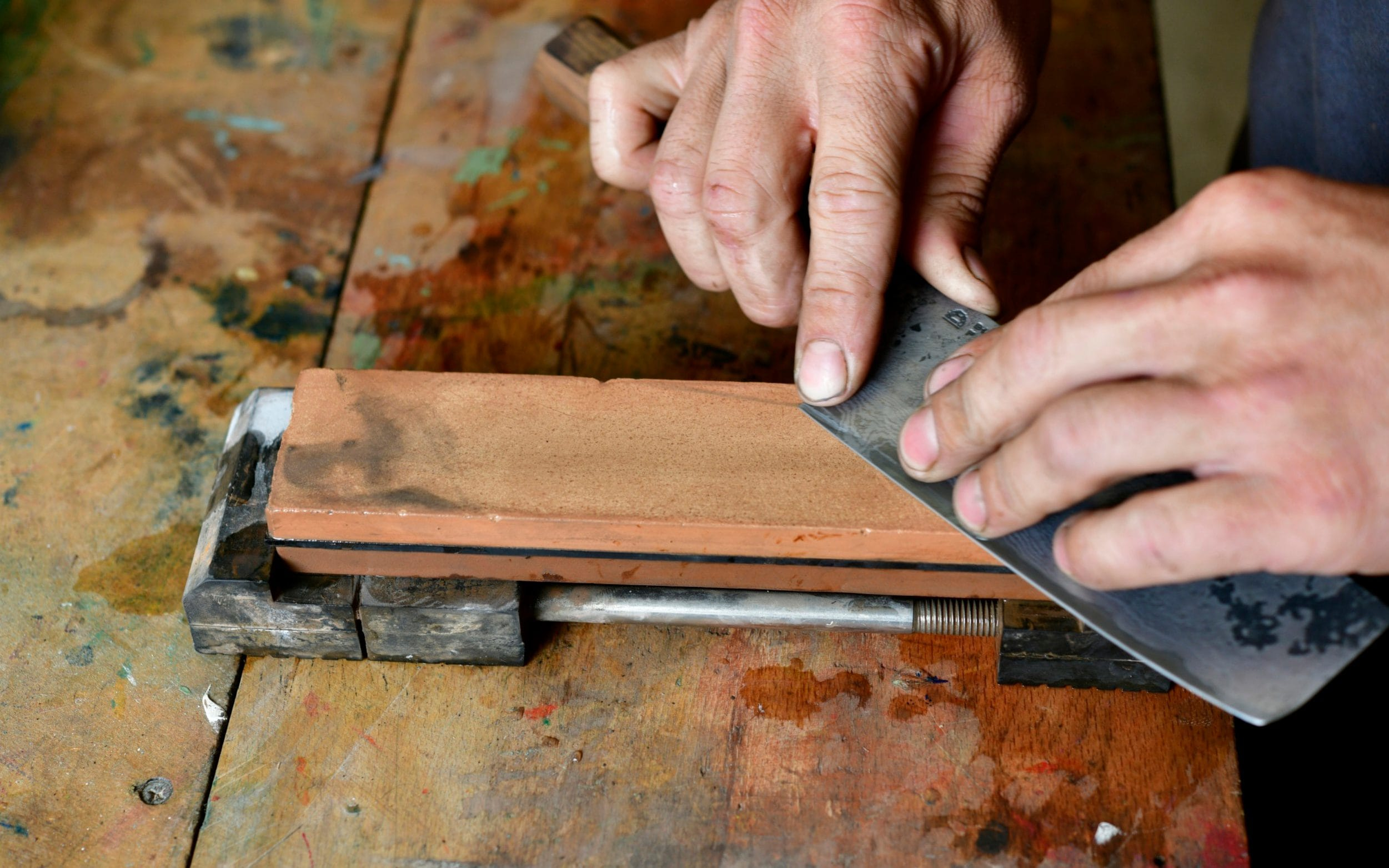
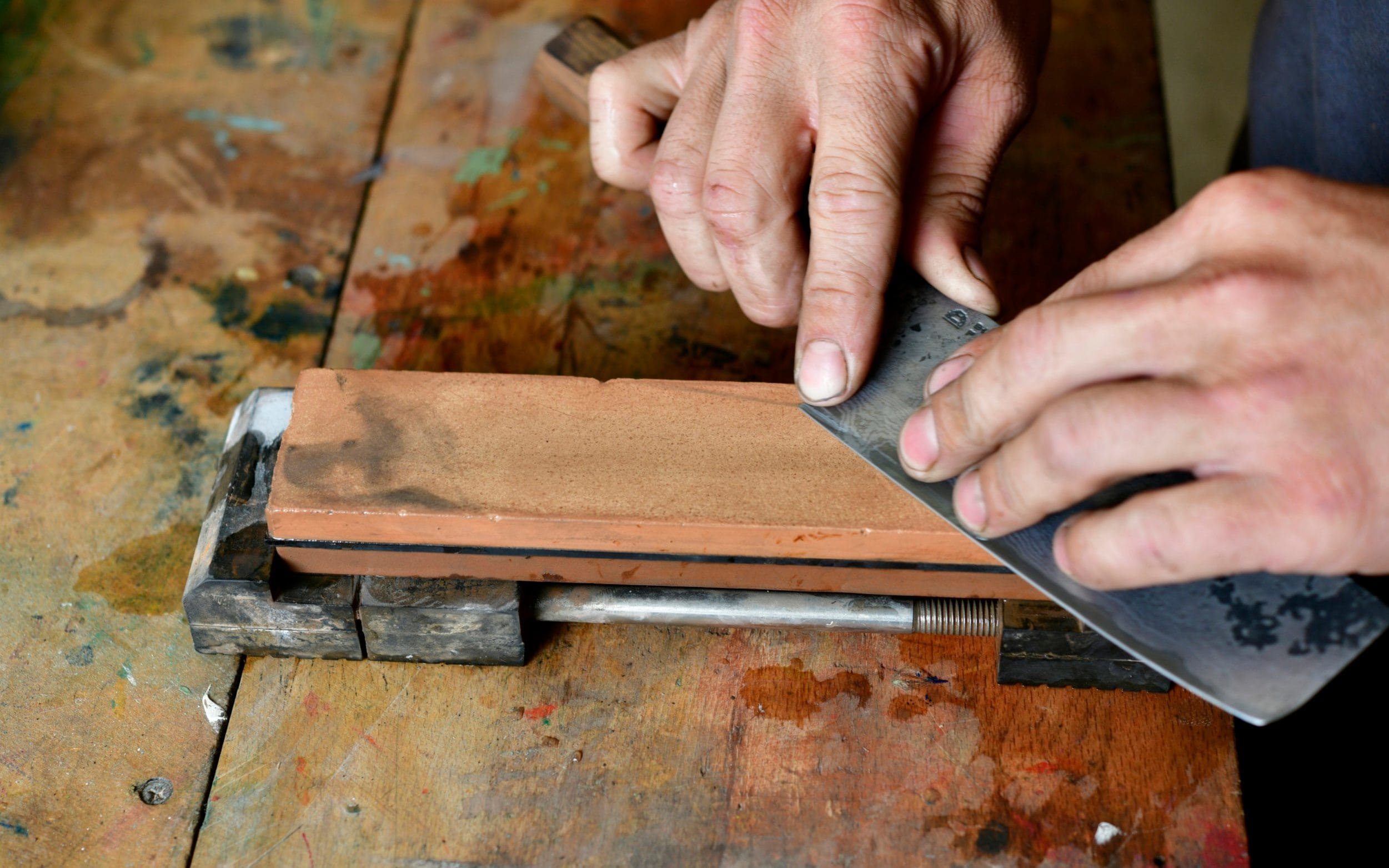
Many Vietnamese people still have a quick and convenient habit: when their knife is dull, they flip the bottom of their rice bowl and quickly sharpen it. The blade will become sharper, although it might bend or warp easily. But what does it matter? It's a beautiful, simple aspect of Vietnamese culture, even if it's a bit careless. But if you love cooking and want to learn more about knives, you should also check out some knife sharpening techniques, shouldn't you?

Vietnamese people have a habit of using the bottoms of bowls and plates to sharpen knives.
Let's revisit the habit of using the bottom of a rice bowl to sharpen knives. This is considered the quickest and easiest way to sharpen a dull kitchen knife. However, because the bottom of a rice bowl doesn't have the standard roughness and the surface area around the rim is too small, applying pressure to the blade while sharpening on such a small, less rough surface can cause the blade to bend or even become duller. To truly master the technique of sharpening a knife using the bottom of a bowl, you need a great deal of experience and a thorough understanding of your knife blade.
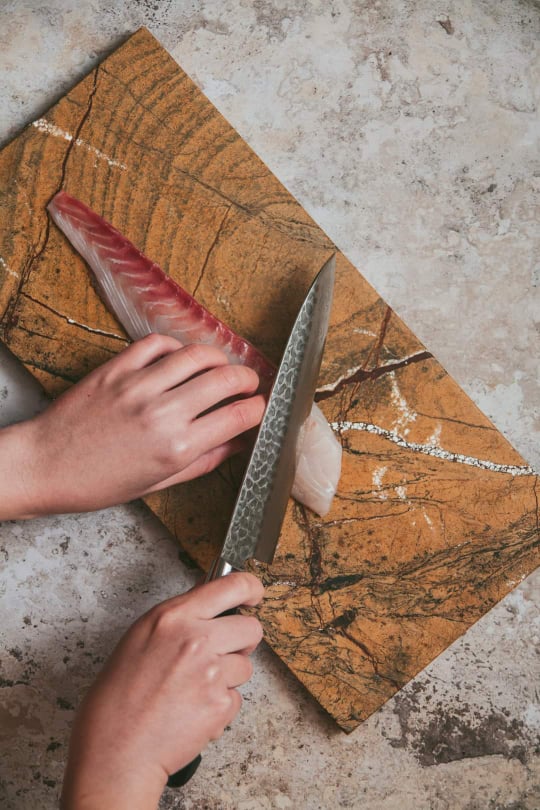
A familiar knife found in every kitchen, big or small. Image source: bakeitglamorous.
Sharpening a knife skillfully
Let's talk a little about knives. There are countless knives on the market, and leading knife manufacturers are constantly upgrading the quality of their knives every day, such as KAI, Gobal, Wusthof, Zwilling, etc.
Kitchen knives are often neglected in most households, but if you want your knives to last, especially if you've invested in an expensive one, a little care is worthwhile. Instead of buying an ineffective stainless steel sharpener or using a rice bowl for convenience, try other, more elaborate and meticulous methods that offer surprisingly good results. To sharpen knives effectively, preventing warping, chipping, and dulling, you need the right sharpening tool. Sharpening stones are almost always the best option. There are two common types: oil stones and water stones.
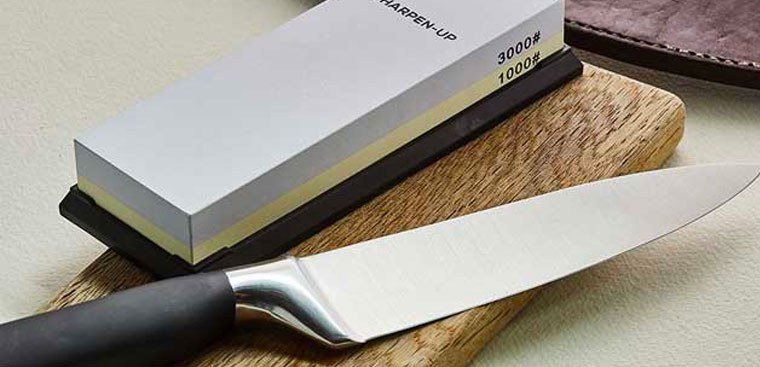
Sharpening stones come in many types and with various specifications.
Oil stone for large knives
This type of sharpening stone only requires a thin layer of oil to sharpen, making it suitable for heavy knives, chopping knives, and knives used for cleaving, filleting, and mincing. Large, Chinese-style knives or European-style knives are quite suitable for this type of stone. Besides being durable, this type of stone is also convenient and requires little maintenance.
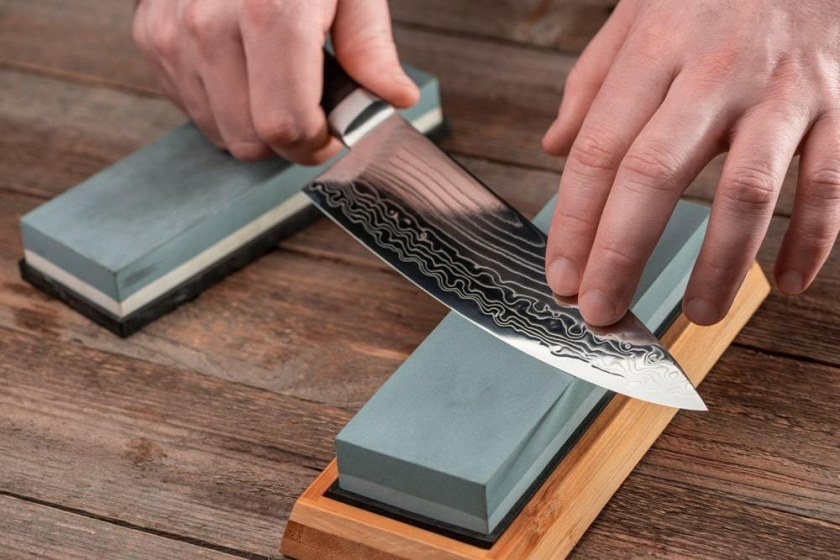
Grinding stones are divided into two types: water stones and oil stones.
Ice cubes for smaller knives
Unlike oil sharpening stones, water sharpening stones are much more finicky. To use them effectively, you have to dedicate time to maintaining them regularly. You soak them in water for about 15 minutes before sharpening. Small, lightweight knives with paper-thin blades really need water sharpening stones to regain their sharpness. The fragility of these knives doesn't suit the sturdy oil sharpening stones, and they certainly can't be sharpened with a cold, sharp stainless steel sharpener. Most Japanese chefs use water sharpening stones because of their versatility, and Japan is also a country that uses mostly lightweight knives.
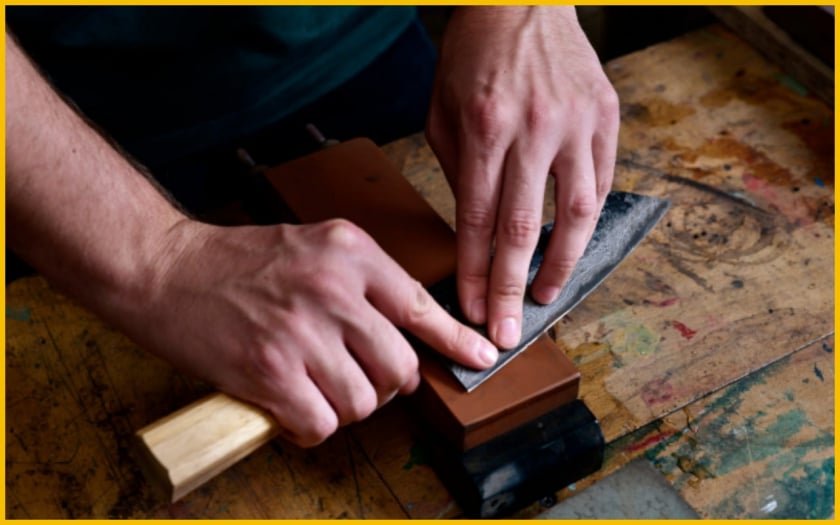
The Japanese highly value water sharpening stones. And in their country, those who are skilled at sharpening knives are called "artisans."
Choose the correct grinding angle.
One of the essential techniques in knife sharpening is choosing the right angle. For larger, coarser knives, you can sharpen them at a wide angle range, while knives used for trimming or filleting are only sharp when sharpened at a narrower angle range. Here are a few angle ranges for your reference.

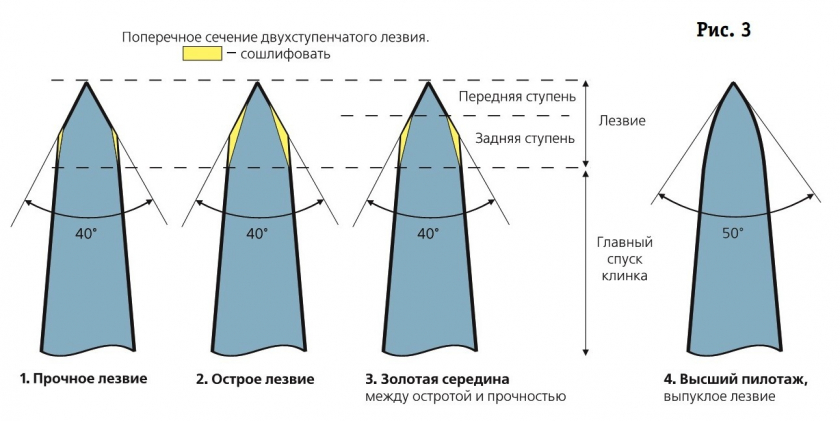
Grinding stones come in various angles depending on the type.
Restaurant knives typically have a sharpness rating of up to 60 degrees. Next are knives used in home kitchens, which are typically around 35-40 degrees. Professional kitchen knives are even sharper, down to 20-25 degrees. Especially for high-end filleting or trimming knives, an incredibly sharpness rating is required: less than 15 degrees.
Grit (grinding stone roughness)
The higher the grit, the sharper the knife surface. But it's not simply a matter of grabbing a stone with an extremely high grit rating. The more expensive the knife, the more delicate it is; you need to handle it gently.
For a knife that has never been sharpened with a stone, you should start with a grit rating from 200 to 1000. At this level, even a dull knife will be… less dull.
Next is the grit size of 1000-1200, for knives that aren't too dull but need to be sharpened quickly.
3000 grit: even sharper.
6000 - 8000 grit: Stop here if you're just using a regular, everyday knife. This grit rating is for professionals who want to explore the world of knives. Regular, unsharpened knives might fail if you reach this grit level.
You see, a high score isn't always good. Choose a score that suits you.
But how do you sharpen a stone after you've bought it?
First, you need to read and follow the instructions for each type of sharpening stone. Avoid sharpening without reading the instructions or sharpening directly on the dry stone surface. Regarding knife sharpening technique, don't expect to sharpen like Japanese artisans; sharpening to a usable level is more than enough.
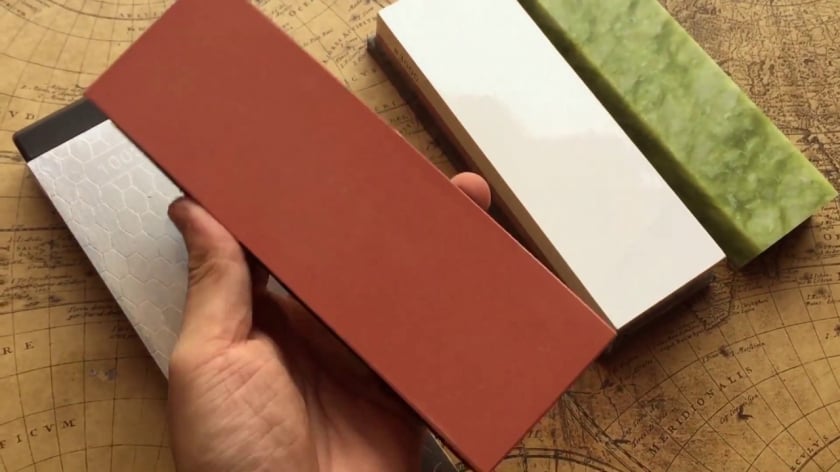
Many types of sharpening stones with a wide variety of colors and materials are available for you to choose from.
You can find videos online on how to sharpen knives, but don't stress too much; it's not as difficult as you think. Sharpen evenly and remember not to press down on the blade.
Whether you're a typical homemaker or someone who hates cooking, if you use a knife, you should sharpen it. Who knows, this seemingly tedious task might improve your knife skills or make you love cooking even more.
We hope Travellive readers always enjoy visiting our little kitchens!