VI
VI


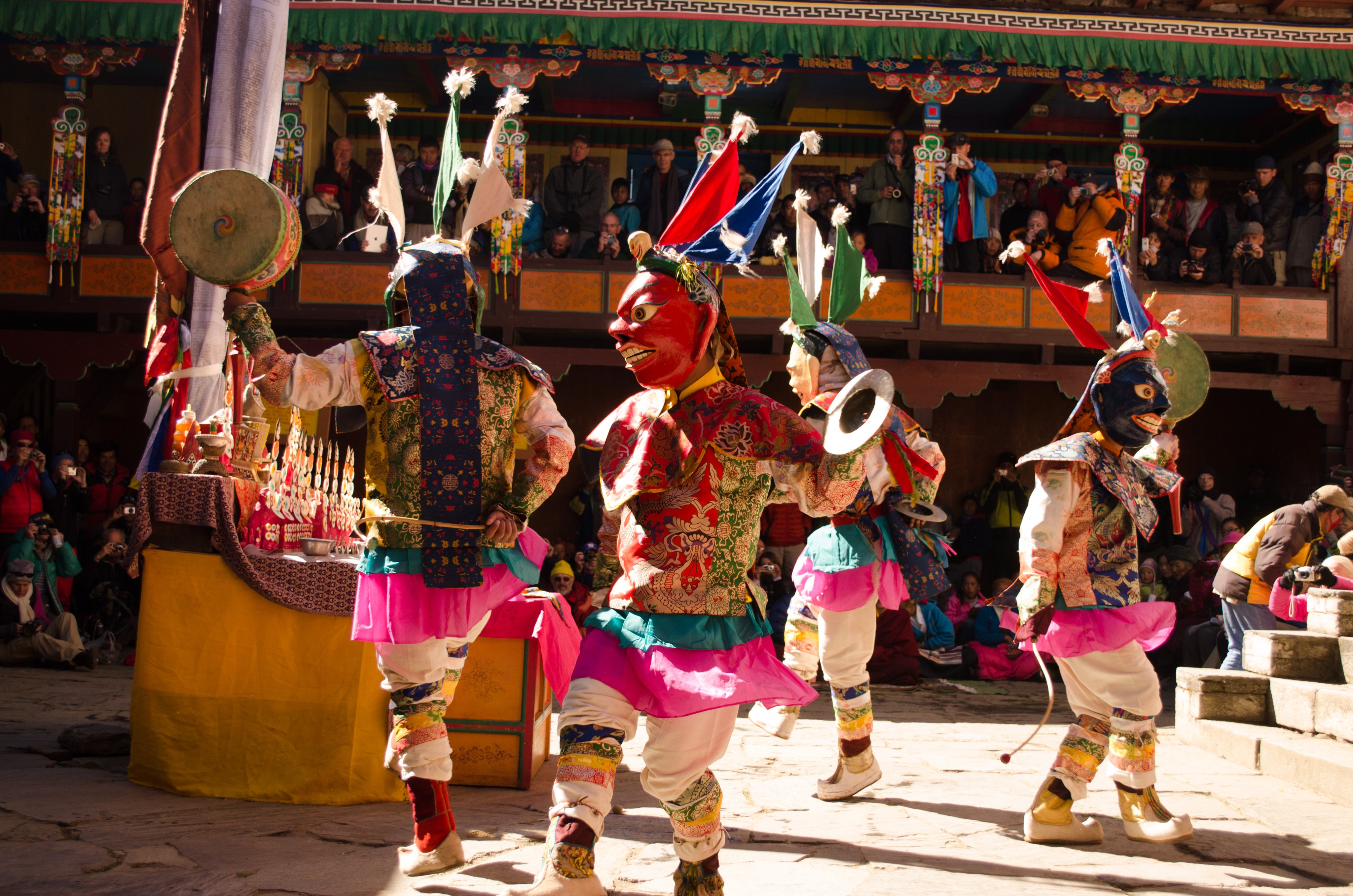
The famous Mani Rimdu festival is held in the ninth month of the Tibetan calendar, which corresponds to late autumn, around October or November. This Sherpa event honors Guru Rinpoche Padmasambhava, a great Indian master who spread Buddhism to Tibet. Mani Rimdu was first held in 1907 at Rongbuk Monastery (Shigatse, Tibet). In 1940, the festival moved to Solukhumbu (eastern Nepal). Currently, Mani Rimdu is held at Tengboche Monastery in the Himalayas.
The origin of Mani Rimdu
The name Mani Rimdu is a combination of two Tibetan words. "Mani" is taken from the Avalokiteshvara Sutra, and "Rimdu" refers to small, red pills that are blessed and distributed to those attending the festival. Throughout the 19 days of the festival, the monks at the temple continuously chant sutras and perform special rituals.
On the first day, the monks will draw sacred mantras or symbols on the temple grounds using colored sand. Beforehand, the monks had to climb to the highest point of the Himalayas to obtain the sand, and then spent four days decorating the entire grounds. For the next ten days, festival participants will use this sand for rituals and meditation.
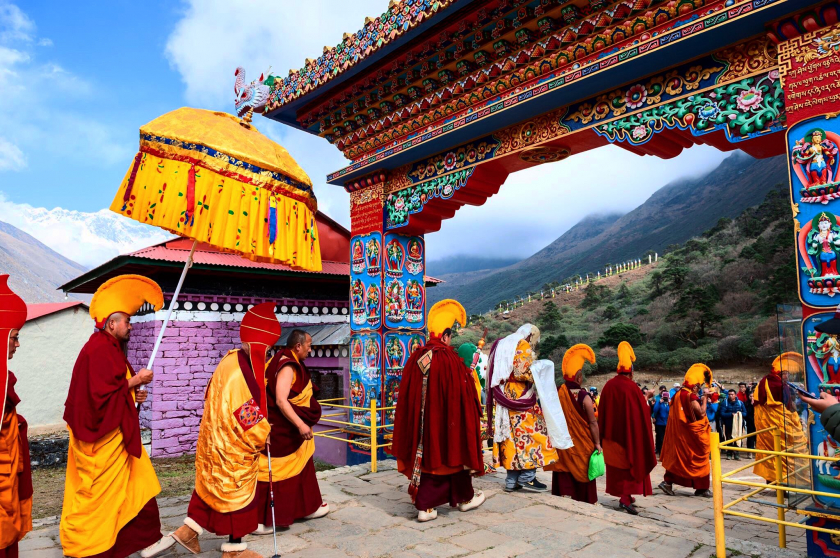
The monks are preparing for the ceremony.
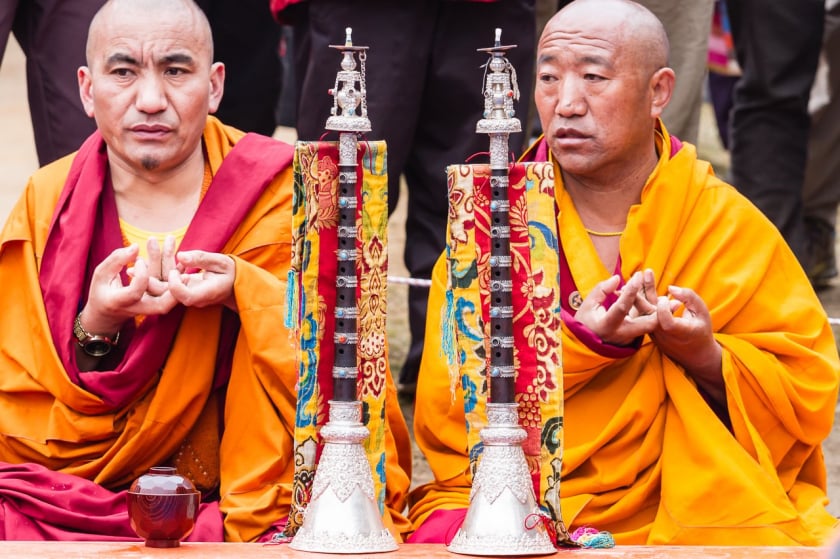
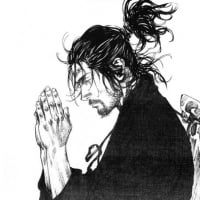
Make the mudra (hand gesture) for prayer during the ceremony.
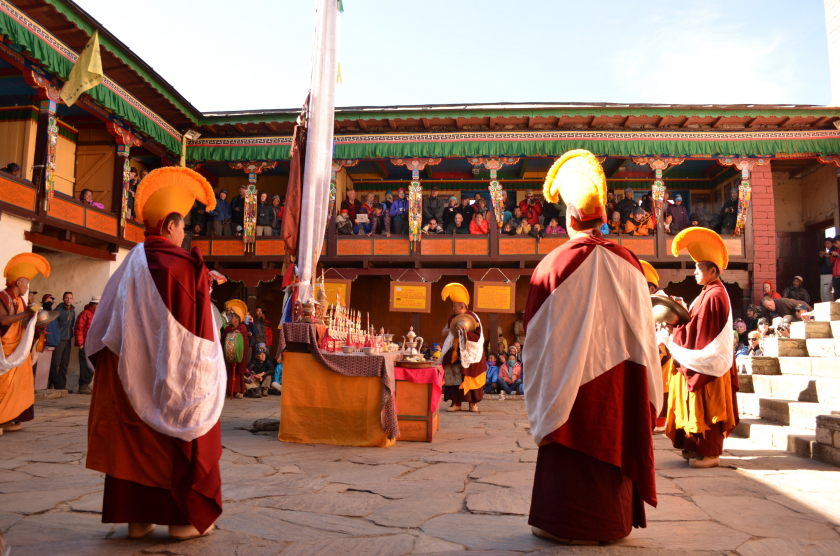
The Mani Rimdu ceremony begins within the monastery grounds.
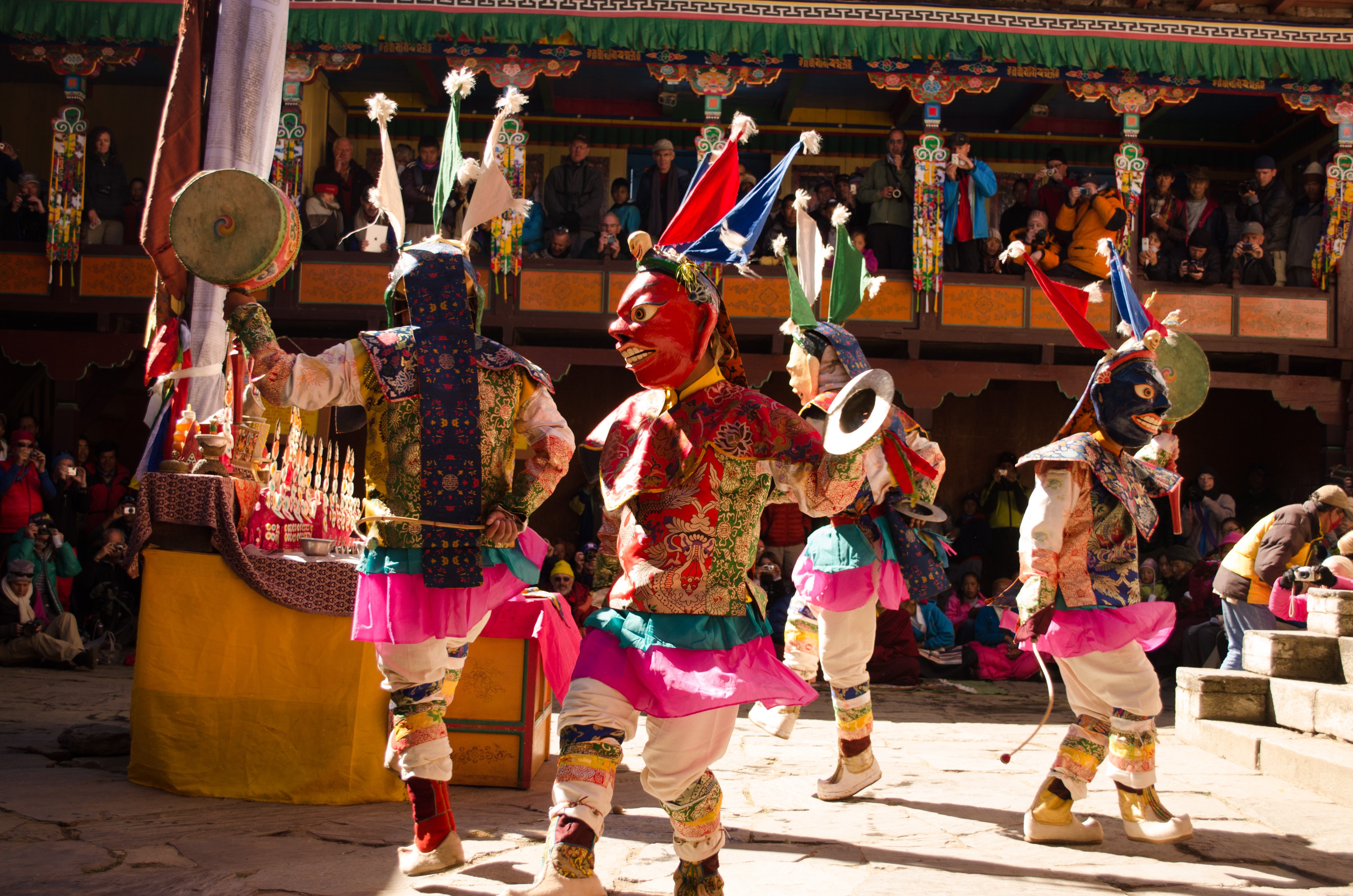
On the 16th day, a special event takes place in Mani Rimdu. The monks of the monastery shed their usual robes and don colorful attire. Wearing fearsome masks, they perform various dances called "Cham" in the monastery's backyard. A total of 16 dances are performed throughout the ceremony. They tell stories about the origins of Tibetan Buddhism as taught by Guru Rinpoche. These dances also convey Buddhist teachings in a symbolic way. Furthermore, the dances encourage Buddhists to overcome ignorance, greed, hatred, and delusion, and to fight against inner demons through meditation and wisdom.

After the daytime ceremony concludes, Sherpas gather at Tengboche every night to eat, drink, and sing ancient folk songs to each other. On the final day, a fire altar is erected to purify all negative energies. Afterwards, the monks will erase the drawings on the ground while praying for merit and compassion, hoping that the blessings received will alleviate the suffering of all beings.
The dances in Mani Rimdu
Each dance on the 16th day is related to a Puja performed during the early days of the Mani Rimdu festival. Rol-cham is the opening performance, featuring monks in yellow hats and playing traditional musical instruments. The first dance is Serkyem, performed by dancers in black hats. This dance prays for health, wisdom, and physical well-being. The black hats symbolize the Vajrayana monks.
Next, Khing-cham is performed by four Dorje Trollo, wrathful embodiments of Guru Rinpoche. The dance group consists of two men and two women wearing demon masks and colorful costumes, carrying traditional drums. Nga-cham is a dance reenacting the story of Guru Rinpoche building and praying at Sayme, the first monastery in Tibet. Six dancers dressed in gold, with long peacock feathers on their heads, perform the dance together. Local officials in Nepal often take on this role.
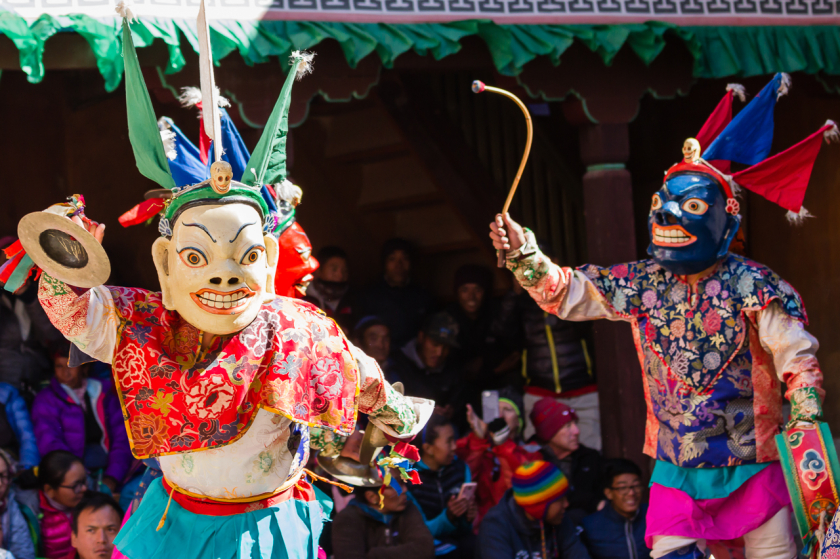
The dancers wore terrifying masks.
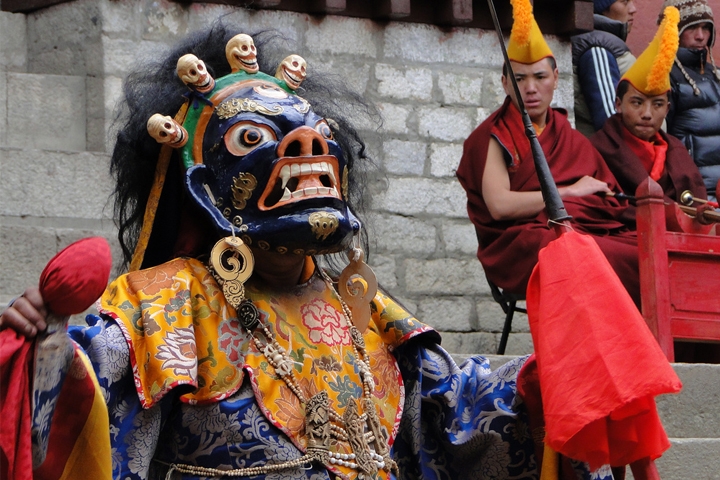
The black mask symbolizes the devil.
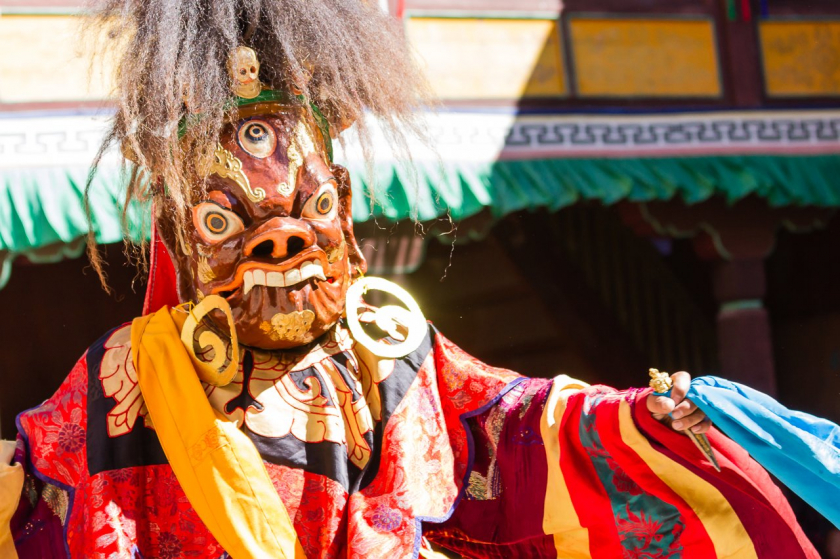
These dances symbolize the path to enlightenment.
Rutang-cham is a complex dance featuring two skeletons and two dancers in black hats. The skeletons carry a mass of powder symbolizing evil, which the dancers destroy during the dance, symbolizing good triumphing over evil. The performance then continues with a cosmic dance divided into two parts. The first part features dancers taking turns embodying Tibetan deities such as Mahakala (protective god), Tseringma (goddess of Mount Everest), Mahadeva (primordial god), Zurra-rakye (guardian of the valley), and Khadro (five goddesses of wisdom). In the second part, a dancer plays Thog den, a famous Tibetan teacher who appears to preach and perform comedic acts. Following this, the Lhagma dance, performed by two dancers (one male, one female), is performed to distribute Rimdu (the offerings).
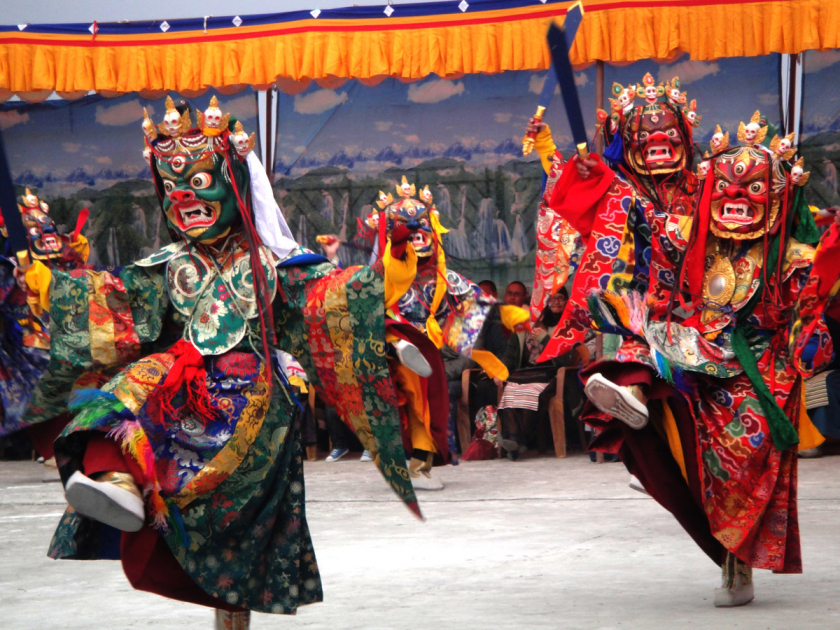
Tengboche was the first place in Nepal to hold this festival.
In the final part of the performance, four masked dancers wielding swords perform T-Cham. Then, two people in black hats carry torma (small butter cakes) and throw them into the air. This is the Zor-cham dance, performed to ward off evil spirits. Then-cham, with the majority of dancers in black hats participating, is a dance aimed at seeking blessings and driving away evil spirits. Finally, the Log-cham dance concludes the performance with the participation of all the remaining dancers.
Around October-November this year, visitors to the Tengboche Tantric Monastery on Mount Everest can participate in the Mani Rimdu festival with the local people. Located in eastern Nepal, near the Everest trekking route, this Tantric Buddhist monastery is a popular destination for visitors seeking prayers before embarking on their Everest Base Camp trek.