
 VI
VI


The latest music video by singer Soobin Hoang Son is not simply a meticulously produced entertainment product, but also a statement-making artistic endeavor to honor the National Intangible Cultural Heritage - Xam singing art.
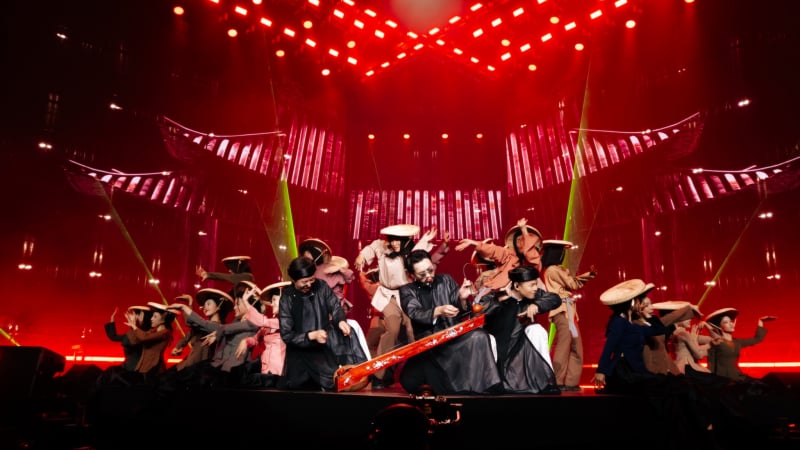
With its skillful and seamless blend of rich folk melodies and modern musical influences, "Mục Hạ Vô Nhân" is considered by experts to be an important cultural bridge, capable of bringing the essence of traditional Vietnamese art closer to and captivating younger generations of audiences.
Xẩm (a traditional Vietnamese folk music genre) is "reborn" after the breakthrough of "Trống Cơm" (Rice Drum).
Following the resounding success of the cultural fusion project "Trong Com" (Rice Drum), singer Soobin Hoang Son and his team have officially released the music video "Muc Ha Vo Nhan" (No One at the Bottom of the River) - a bold and decisive step, marking the next breakthrough in his unwavering journey to bring Vietnamese culture into popular music.

Following the music video for "Trống cơm" with the zither, the MV "Mục hạ vô nhân" is Soobin's next step with traditional music, incorporating elements of xẩm (a type of Vietnamese folk singing) into modern music.
The music video skillfully and ingeniously blends Xam singing, a distinctive folk art form from the Northern Delta and midland regions of Vietnam, considered a "traditional oral narrative" reflecting all aspects of ancient social life, seamlessly with modern music. This creates a dramatic arrangement that perfectly preserves the rich national identity while spectacularly capturing the spirit of the times.
Soobin's choice of Xam, a folk street art form, demonstrates his insightful vision in exploring authentic cultural values, transforming the most rustic and genuine aspects of heritage into trendy musical material.

The cultural landscape of Northern Vietnam is skillfully recreated in this work.
"Mục Hạ Vô Nhân" is not just a song, but a meticulously crafted, multi-layered cultural tapestry. The Antiantiart team, with director Phương Vũ, has painstakingly recreated the cultural space of Northern Vietnam with utmost respect and understanding.

In particular, the choice of a village market setting is not accidental, but a profound act of gratitude to the most original "stage" of Xẩm: the market corner, the market gate. This reflects a deep understanding that the soul of Xẩm lies in its communal nature, in the most authentic aspects of life, where art is intimately connected with the people.

The music video features a satirical artistic style, recreating scenes and life in a Northern Vietnamese village.
Furthermore, the striking matchcut at the beginning of the MV, titled "MỤC HÀ VÔ NHÂN" (meaning "no one is above the law"), subtly showcases three cultural symbols of Xẩm (Vietnamese folk singing): the rush mat (representing the minimalist and mobile stage), the earthenware/ceramic bowl – symbolizing "livelihood" and civilized recognition for the artist, and the sidewalk tea stall – the "ecosystem" where "word-of-mouth news" is disseminated.

A truly authentic and valuable folk culture festival.
The music video also pays homage to another classic heritage, Dong Ho paintings, by choosing the "Blindfolded Goat Catching" picture as a powerful metaphor, summarizing the entire storyline. This folk game is staged as a dramatic scene, where the arrogant "pretending to be blind" turns out to be the most "blind," completely unaware of the trap they are falling into—a clever, dramatic, and deeply educational twist.
A tribute to cultural heritage.
The music video's content is built on a humorous and witty motif, telling the story of two young men who pretend to be fortune tellers to tease village girls, but are ultimately taught a lesson by the entire community through a game of "Blindfolded Goat Catching" with hidden meanings. Although highly entertaining, the story cleverly conveys a profound message about the folk philosophy of Northern Vietnam: "Everyone should live a virtuous life."

The painting "Blindfolded Catch the Goat" symbolizes blindness and a lack of awareness: the player focuses solely on the goal without noticing the reality around them.
In particular, Soobin has breathed new life into the phrase "Mục Hạ Vô Nhân" (目下無人), giving it a completely contemporary meaning, transforming it into a "topical issue" for the younger generation: promiscuity, betrayal, and infidelity in love. This is not only a continuation but also a development of the social reflection spirit of Xẩm (a traditional Vietnamese folk singing style), placing a moral and social issue within the context and language of modern youth. The story is both accessible and metaphorical, reflecting a humanistic philosophy of life, allowing viewers to both entertain and contemplate traditional values in the most natural way.

Through the music video, the male singer has created a subtle bridge between tradition and modernity.


The music in "Mục Hạ Vô Nhân" goes beyond mere harmony; it's a powerful declaration of the richness and stature of Vietnamese folk music. The production team meticulously invited 12 artisans with 12 characteristic Vietnamese folk instruments, representing the percussion, string, and wind instruments – an investment rarely seen in pop music videos. Vietnam also boasts traditional orchestras (such as the eight-instrument orchestra, the five-instrument orchestra, and the Xẩm orchestra) with a unique identity and richness that rivals any other culture.

He both preserved the core values of folk music and made xẩm (a type of Vietnamese folk singing) more accessible and familiar to young listeners.

The production also features a star-studded lineup of guest appearances, including People's Artist Huynh Tu (Soobin's father), People's Artist Tu Long, Trung Ruoi, Do Duy Nam, Lan Thy... along with the appearance of folk instrument artisans. The participation of these veteran names not only elevates the artistic value and performance quality but also creates a musical tapestry that is both rustic and authentic, yet sophisticated and vibrant, affirming the collective effort to restore traditional culture to its rightful place.

The work also features contributions from many well-known guest artists.

"Mục Hạ Vô Nhân" is not only a milestone in Soobin's artistic career, but also part of a long-term, sustainable strategy to connect traditional values with the general public. This music video serves as a solid foundation for meaningful community projects that the male singer is developing, especially "Xẩm Đến Trường" (Xẩm Comes to School). This is a passionate project where Soobin directly participates in workshops, interacts with others, and performs, bringing Xẩm – a folk art form rich in history and culture – closer to students across the country.
With 100% handcrafted production, without the use of CGI or AI, Soobin Hoang Son's "Muc Ha Vo Nhan" is not only a high-quality music video but also a powerful testament to absolute respect for the original, humanistic spirit of cultural heritage. The music video successfully created a unique artistic product where traditional values are reborn and shine proudly on the contemporary music stage.












