VI
VI


Spring in paradise
I've been in Moc Chau for 40 days now, out of a total of 45 days. It's not because I'm addicted to it, but because it's too cold to keep moving. I've stayed in Moc Chau for quite a while, spring is coming and Tet (Lunar New Year) is approaching, so I'll stay a little longer.
On the 40th day, I woke up beside a Thai stilt house, wearing a red dress and a traditional Hmong headscarf—not from this region, but one I bought in Ha Giang—and then, on my old motorbike, I wandered through the villages of Moc Chau.
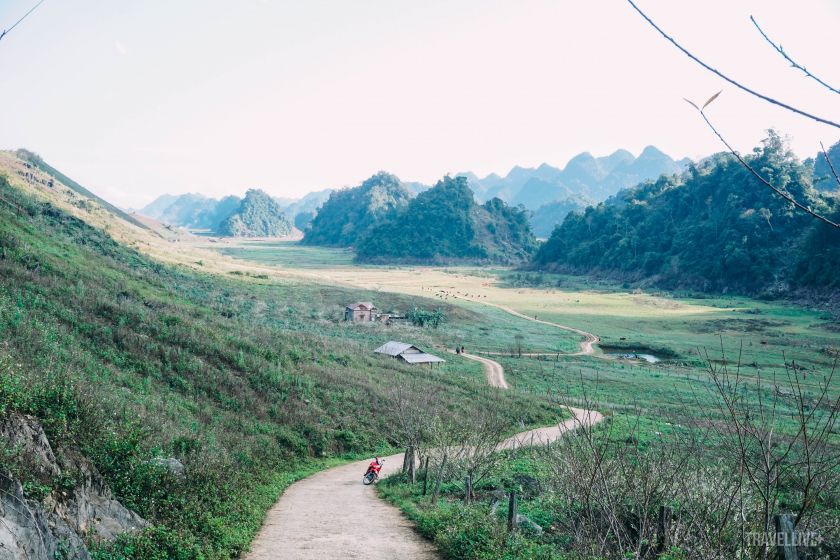
Long, winding roads stretching to the horizon await the traveler.
They say the most beautiful road is the one you get lost on. And I'm like a traveler with no destination in mind. Not knowing where I'll go tomorrow, I just step out onto the road, following my instincts and randomly choosing a path.
One day, I got lost in Phieng Canh village. Outside the stadium, a large crowd of Hmong people had gathered. They were wearing bright red traditional dresses and shiny necklaces, playing their folk games such as Tu Lu, Pao throwing, tug-of-war, and occasionally engaging in cultural performances.
The Hmong girls danced very gracefully. They swayed and bounced to the music, turning to the right, then to the left. I don't know the name of the song, but the rhythm was really beautiful.

The Hmong boys stepped forward to showcase their flute playing skills. The gentle sound of the flute echoed across the Moc Chau plateau, traversing the fields and passing through the wooden houses of the Hmong people, seeking mates.
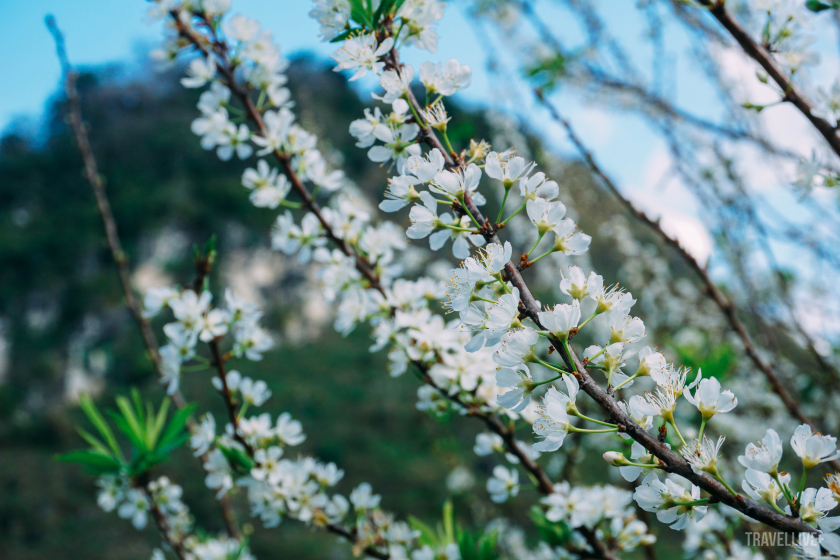
In spring, plum blossoms bloom in a dazzling white in Chiềng Canh village.
Plum blossoms are pure white in Phiêng Cành village.
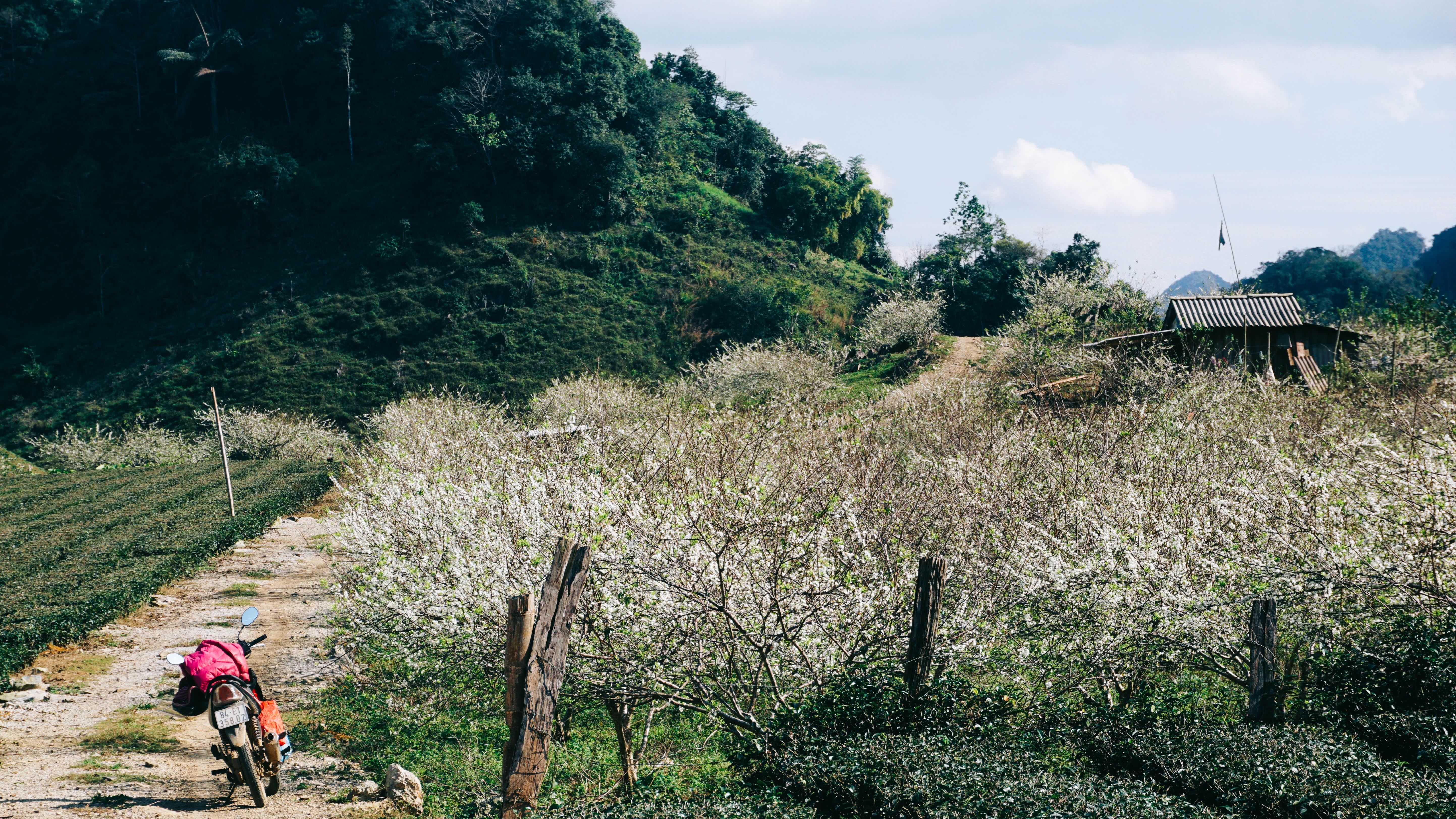
Phiêng Cành is probably an unfamiliar place to many. Because when visiting Mộc Châu, tourists usually only wander around Pá Phách, Dải Yếm Waterfall, and Nà Ka Plum Valley before heading back to avoid missing the night bus. But if you have more time, please visit Phiêng Cành, because as winter gives way to spring, the plum blossoms here bloom, covering the landscape in white.
Along the roads leading into Phieng Canh village, plum trees spread their branches wide. The plum blossoms are delicate, pure white, and usually grow in clusters, with many flowers clustered together. The plum trees are often quite tall, some reaching 4 meters, while others grow to 15 meters.
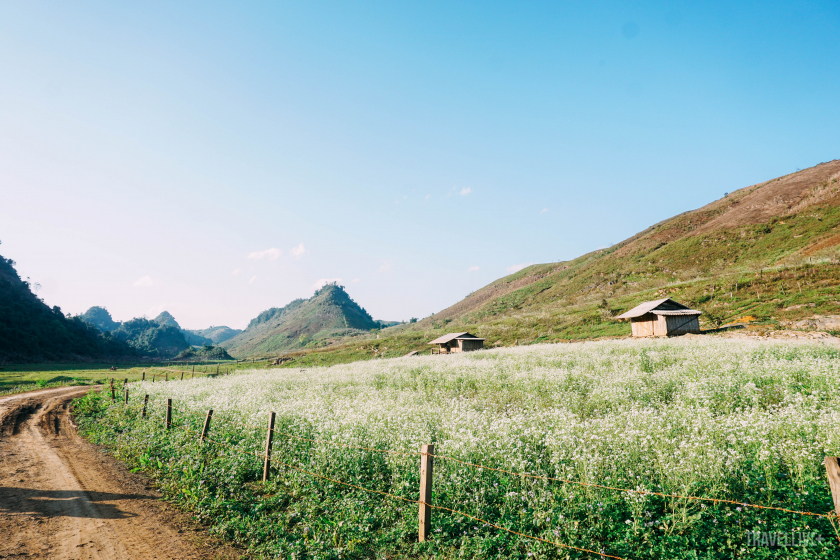
Plum blossoms grow in clusters, blooming in the mind of the dreamer.

Plum blossoms grow in clusters, blooming in the mind of the dreamer.
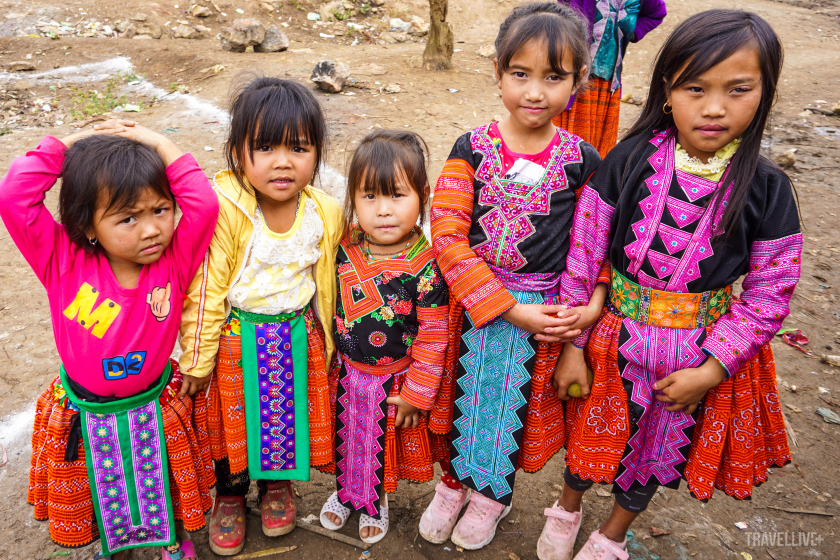
Passing through the villages of Phiêng Cành, I often see Hmong children with incredibly cute gestures. They climb plum branches, tilt their heads, and make a V-sign with their hands to pose for my photos. They pose for photos because they enjoy it, not for any other reason.
Plum blossoms covered the roads and the houses of the Hmong people in white. Tired, I staggered into a nearby house. The women were sitting and embroidering dresses for their children. They held needles, piercing the linen fabric that had been carefully decorated with beeswax, then embroidered delicate patterns. An elderly Hmong woman told me: "In spring, we have free time to embroider. Normally, we're too busy working in the fields to find the time."
With my old, rickety motorbike, I wandered aimlessly somewhere in Phiêng Cành—I don't remember exactly where. I only remember a lush green tea hill there. Plum trees grew interspersed among the tea plants. Sunlight streamed through the tea garden and the plum branches. The plum blossoms suddenly changed color, from pure white to a shimmering pink. I sat there, silently on the tea hill, listening to the rustling wind and the chirping birds.
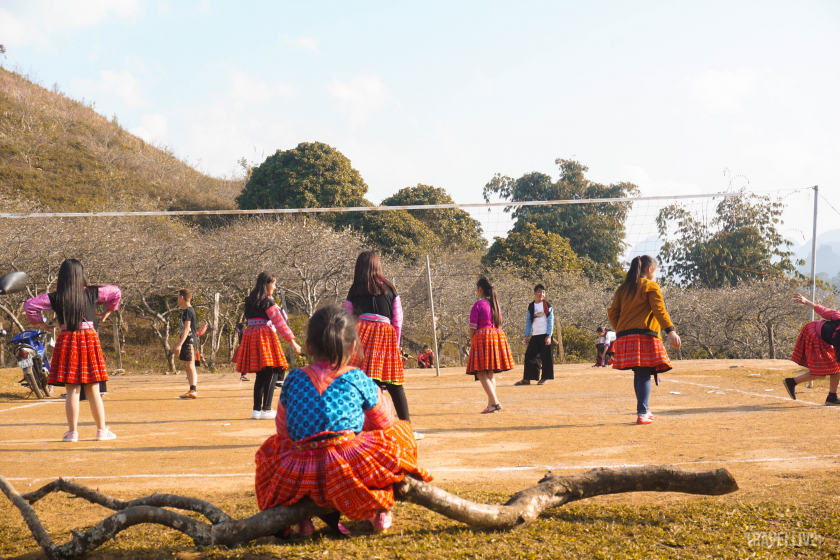
The last days of the year are a bustling time for the locals.
The last days of the year are a bustling time for the locals.
Someone once explained to me the meaning of plum blossoms: They represent warmth, togetherness, and reunion. They also symbolize the integrity of relationships—love, family, and friendship. In spring, plum blossoms bloom pure white in Phiêng Cành village. Young men and women go searching for partners, while mothers and grandmothers sit embroidering clothes for their families by their wooden houses. Perhaps, that meaning is indeed very true.
ADDITIONAL INFORMATION
Way:From Moc Chau town, you can travel by motorbike to Phieng Canh village. The road is initially paved, but further inland it's just dirt and rocks. Some sections are a bit difficult to navigate, but the scenery becomes more breathtaking as you go further in.
Eatery:Currently, Phiêng Cành only has houses and virtually no restaurants. Therefore, if you decide to stay for lunch, be sure to bring your own food and drinks.
Arts and Culture:During the Lunar New Year holidays, people often gather at the village stadium for cultural and artistic activities. If you want to take photos, go between 8 and 12 AM. After this time, most people stay home, drink alcohol, or visit friends.
Clothes:It's usually very cold in Moc Chau around Tet (Lunar New Year). It's advisable to bring warm clothing. In Phieng Canh village, you might only see a hazy mist because the temperature drops so quickly.
Time:Plum blossoms bloom depending on the cold weather each year. Typically, this occurs from the end of January to the beginning of February.