VI
VI


Recently, at the ticket check area and baggage conveyor belt of Vietnam Airlines' national airline in Terminal 3, Tan Son Nhat Airport, passengers were shocked and surprised to witness torrential rainwater pouring down from cracks in the roof.
Reportedly, rainwater continuously flowed through the check-in counter area, causing confusion and dismay among both staff and passengers. Footage clearly shows long streaks of water spreading across the ceiling from the joints, creating an unsightly scene and raising serious concerns about the building's quality.
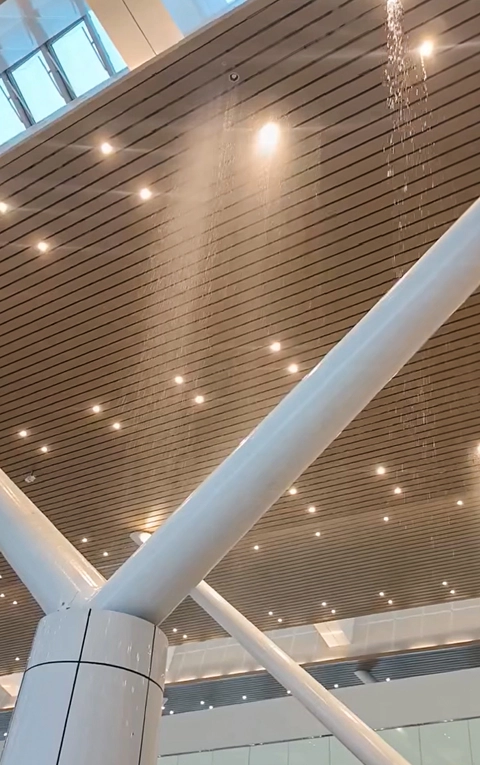
The roof of Terminal 3 at Tan Son Nhat International Airport continues to leak during the midday rain.
Notably, this incident occurred just days after Terminal 3 was inaugurated on April 19th. Even more seriously, this is the second time Terminal 3 at Tan Son Nhat International Airport has experienced rainwater leaks since its completion, raising concerns about the technical standards and durability of this key project.
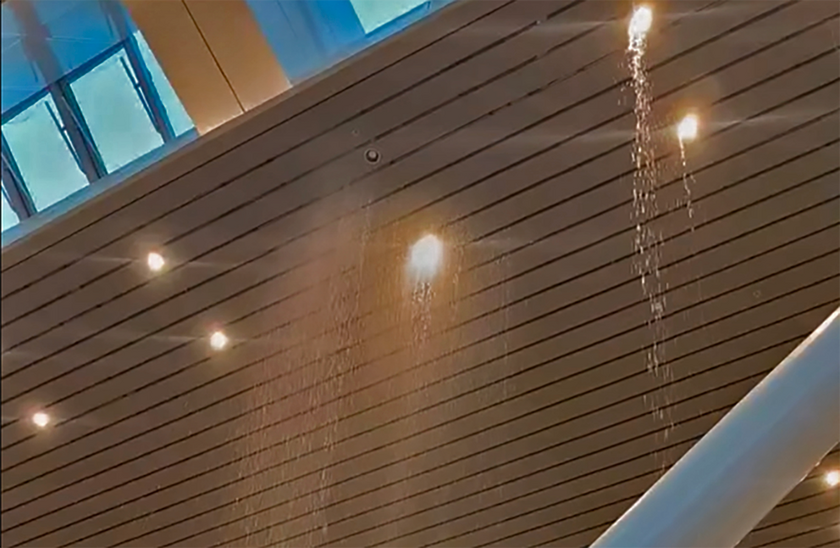
This is not the first time this has happened. Previously, on May 7th, Terminal 3 also experienced a similar situation during the first heavy rain of the season.
Previously, on May 7th, following a heavy rain, passengers also reported roof leaks in the departure lounge area. A representative from Hanoi Construction Corporation (Hancorp), the company responsible for the roof construction of Terminal 3, officially confirmed to the press that water was leaking from the ceiling into the lobby, specifically in the Vietnam Airlines area. However, the representative asserted that this was not a similar leak to the one caused by the previous rain.
According to Hancorp's explanation, water from the station roof is collected through a system of gutters and drainage pipes leading down to the underground manhole. The cause of this incident was determined to be a leak in the gasket of a drainage pipe joint, allowing water to escape. Due to the vertical nature of the pipe, the water pressure was very high, splashing outwards and overflowing onto the station floor.


Representatives from the construction project management board stated that the cause was thermal shrinkage in the main roof and skylight areas.
Hancorp stated that immediately after the incident occurred, they promptly dispatched engineers and workers to the roof to inspect the entire drainage system. The water leak has now been resolved. Hancorp committed to replacing the gaskets and thoroughly repairing the joints by the same evening to ensure it does not recur. The representative also emphasized that the incident was short-lived and did not affect the station's operations.
Previously, following the incident on May 7th, Hancorp acknowledged that the rainwater leakage was an "unfortunate incident," stemming from the joints between the roofing materials and the skylight panels. The cause was determined not to be in the materials or the aluminum roof structure, but rather due to the waterproofing sealant at the joints peeling or coming loose during the finishing process.
The project management team has requested the relevant contractors to promptly rectify the problem by replacing the old sealant layer with a new one to prevent the incident from recurring.
Although Hancorp implemented remedial measures after the initial incident, the heavy rain on May 24th once again revealed that the leakage problem had not been completely resolved, raising questions about the effectiveness of the measures taken.
Terminal T3 is a key national project invested by the Airports Corporation of Vietnam (ACV), with a total investment of over 11,000 billion VND. Construction began in late 2022, was officially inaugurated on April 19th, and is expected to be fully operational from April 30th, 2025, coinciding with the 50th anniversary of the Liberation of Southern Vietnam and the reunification of the country.
The recurring rainwater leaks are raising public concerns about the quality of construction and supervision of this project.
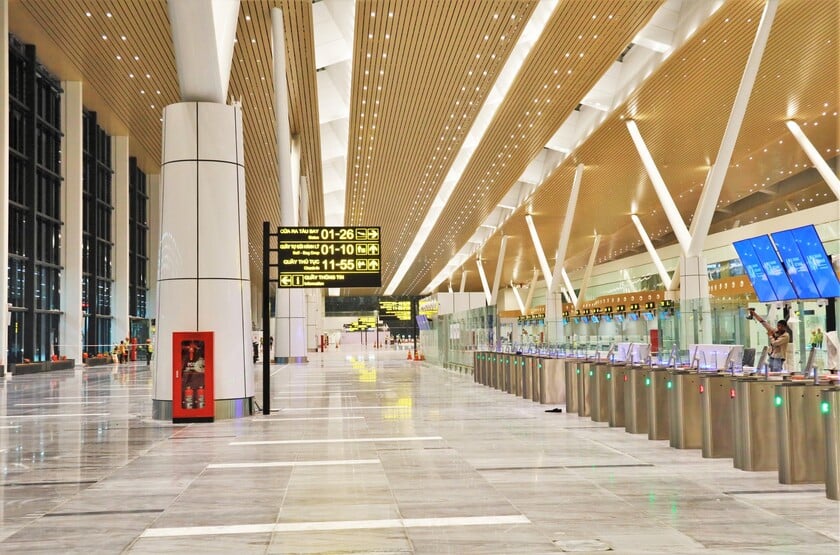
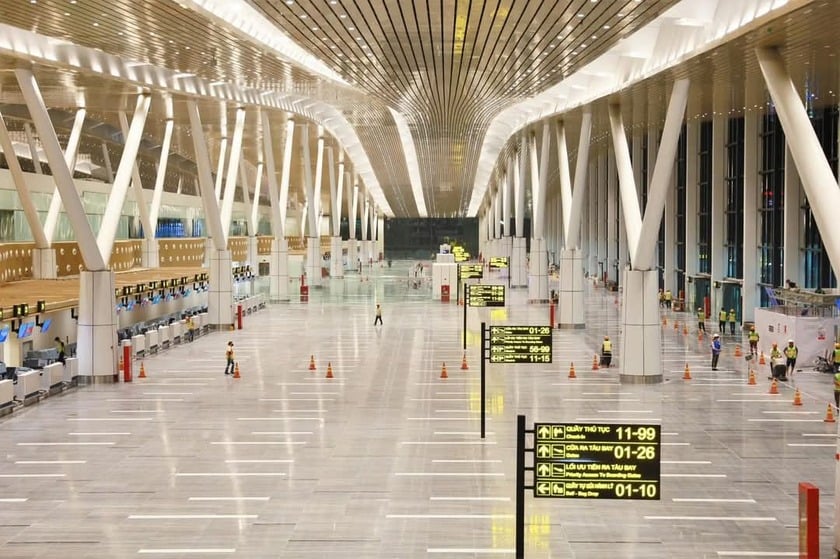
With an impressive floor area of over 112,500 m², including one basement level and four above-ground levels, Terminal 3 is designed with separate arrival and departure areas to optimize operational processes. The terminal is equipped with 90 check-in counters, 20 bagdrop counters, 42 check-in desks, and 27 boarding gates, promising a convenient experience for passengers. In addition, the parking facility, combined with non-aviation services, is also large-scale, spanning 130,000 m² across two basement levels and four above-ground levels.
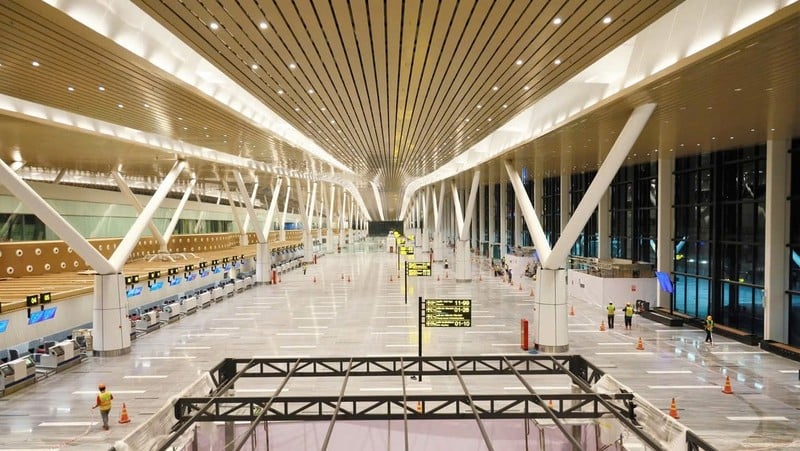
The T3 passenger terminal project at Tan Son Nhat International Airport is a key project aimed at relieving pressure on the overloaded T1 terminal for many years.
Upon becoming operational, Terminal 3 is expected to serve 20 million domestic passengers annually, significantly contributing to reducing the overcrowding pressure on the existing Terminal 1 and increasing the total operating capacity of Tan Son Nhat Airport to 50 million passengers per year. Currently, all domestic flights of Vietnam Airlines have been transferred to operate at Terminal 3.
With an expected daily passenger volume of tens of thousands, the demands for quality, safety, and continuous operation of Terminal 3 are uncompromising. The repeated leaks, despite timely repairs, serve as a necessary reminder of the need for meticulous attention to detail in every stage of the project, especially as the facility is in the transitional phase and nearing stable operation.