VI
VI


Discover
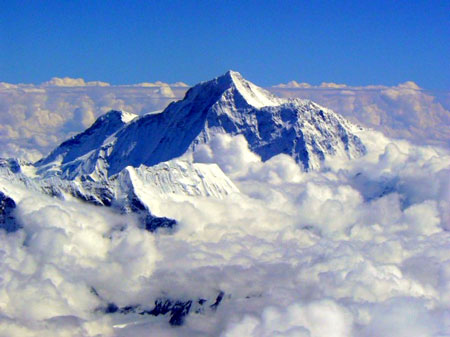
Many renowned scientists and ethnographers such as James Frazer, R. Muller, William Halse Ricers, Ions Veronica, Mbiti John, Wentz W. E., Osborne Harold... and especially a woman, a writer named Alexandra David Neel, single-handedly climbed mountains and crossed snowy plains to reach the land of "heaven's peak," Tibet, with the sole purpose of firsthand understanding of the supernatural and mystical realm. Thanks to them, the Western world learned about the extraordinary lives of Tibetan lamas, particularly the mysterious psychic abilities of the monks living in caves, where "Heaven" and "Earth" almost merge into one entity.
A particularly noteworthy aspect is that the monks here possess a high level of awareness; they can understand each other through spatial means rather than through words or actions. Thanks to this ability to read other people's thoughts, many Tibetan lamas can foresee what others are planning in their minds.
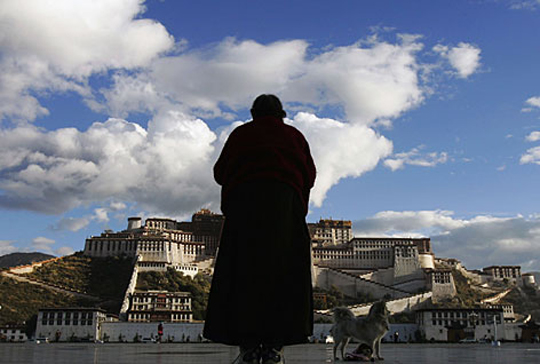
Furthermore, these individuals possess the ability to analyze the aura emanating from anyone's head, thereby discerning whether that person harbors good or bad intentions. This is the source of the third eye's power, often referred to in various texts as "Divine Eye" or "Wisdom Eye."
Returning to the issue of the ability to understand other people's ideas, as well as to clearly see and distinguish the auras that Tibetan Lamas possess, this is actually a seemingly normal occurrence for the Tibetan people.
The reason is simple: from a young age, they were told fairy tales by their parents about the ancient Tibetans. According to these tales, in ancient times, every Tibetan possessed a special "eye," not from their ordinary human eyes, but from a third eye that the ancients called the Divine Eye, or, in the scriptures, the Eye of Wisdom.
Later, as people gradually become drawn into materialism, selfishness, greed, hatred, and delusion, their minds lose their purity and clarity. Ultimately, like a mirror obscured by dust, the third eye becomes dark and unusable.

Researchers studying the third eye have encountered the most accurate and undeniable evidence of this phenomenon in the animal kingdom. However, the question of its existence and practical function remains largely unclear. Particularly strange is that even in lower vertebrates, a structure similar to that of a normal eye is found, meaning it also possesses nerves, a lens, and a retina... Even fish, amphibians, reptiles, birds, mammals, and humans all show traces of a third eye.
When khWhile examining the skeletons of prehistoric dinosaurs, paleontologists noticed a depression in the skull of these giant reptiles and speculated that this was the location of a visual organ, or, as the topic suggests, a "third eye." The function of this eye was likely to help these ancient animals not only see but also sense or anticipate surrounding conditions such as rain and wind, especially objects hidden above their heads.
Opening the "Eye of Wisdom"
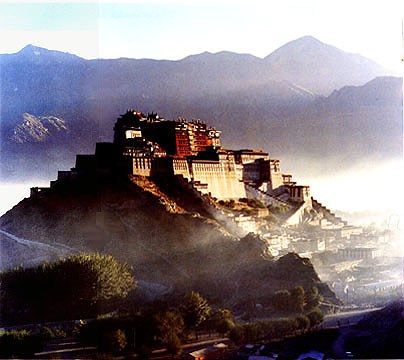
Recent discoveries (in 1996) by several scientists have revealed that the human brain contains a very small gland, about the size of a green pea, but with a miraculous function: it only secretes a special neurotransmitter in very small amounts when a person is focused on prayer with all sincerity, or during critical, life-threatening situations.
That remarkable gland is the pineal gland. When its enzymes enter the bloodstream, the body experiences unexpected and miraculous reactions that wouldn't normally occur. Biologists have also discovered that the pineal gland is connected to what Tibetans call the third eye.
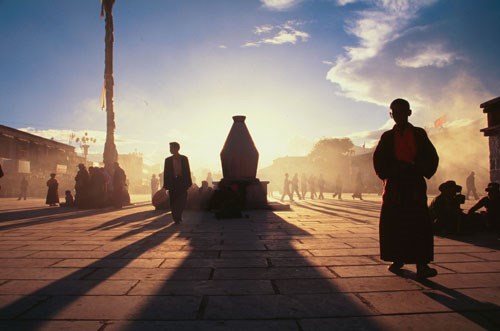
Only those who are willing to cast aside greed, attachment, hatred, and delusion, and who are determined to maintain purity of heart and practice diligently, can attain the Eye of Wisdom. Most Tibetan masters, those who live in seclusion in the high, snow-covered mountains or in solemn monasteries, possess this "superior" energy. However, according to these masters, not all true Tibetan practitioners possess the Divine Eye or Eye of Wisdom as we might imagine, because to attain the Divine Eye, in addition to fulfilling the essential qualities mentioned above, one must also possess special divine power combined with advanced cultivation methods.
The purpose of this advanced practice is to open the Eye of Wisdom. Once one has attained this Eye of Wisdom, whether sitting in meditation in a monastery, on a high mountain, or deep in a forest, one can see what is happening at great distances, or transmit thoughts to someone in a particular place.
In Tibet, many monasteries often hold practice sessions on the transference of thoughts between disciples during the training of supernatural powers. The practice is very scientific; initially, two disciples sit next to each other to transfer thoughts. Once they have grasped each other's thoughts, the distance between them is gradually increased.
In this way, over the long term, they may achieve the ability to transmit ideas to each other over very long distances: either from one monastery to another, from one cave to another. According to Alexandra David Neel, the snow-covered Himalayas are silent and desolate, yet they are places where the ideas of hermits are spread far and wide...