VI
VI


The Hue International Food Festival 2025 is directed by the Hue City People's Committee and organized by the Hue City Department of Tourism in coordination with the Ministry of Culture, Sports and Tourism. This is a large-scale cultural and tourism event that aims to honor the value of Vietnamese cuisine, especially Hue cuisine, while also concretizing the orientation of Hue's tourism development in depth, with culture as the foundation and experience as the center.
Taking place from December 18th to 21st, 2025, the festival brings together more than 50 food stalls from many localities in Vietnam and internationally. The festival space is open and easily accessible, allowing visitors to stroll around and enjoy food in a lively atmosphere. This arrangement partly reflects the spirit of Hue: slow-paced, refined, and profound.


The artistic performances contribute to creating a festive atmosphere and recreating the distinctive cultural life of Hue.

The Hue food stall attracted many tourists with its traditional dishes.


The highlight of the festival is its abundance of food. Here, visitors can find familiar dishes associated with the life of Hue people, such as banh beo, banh nam, banh loc, banh it, clam rice, Hue sweet soup, etc., all prepared on the spot. Interspersed among the Hue stalls are specialties from all three regions of Vietnam and some international dishes, creating a diverse culinary landscape while still maintaining the "main focus" of the flavors of the ancient capital.
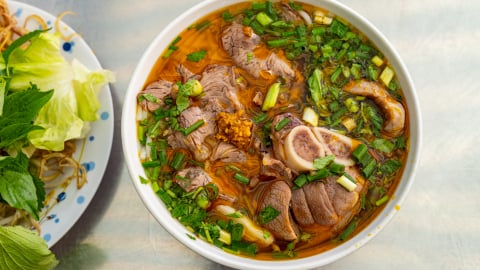
One of the significant milestones of this year's festival is the official inclusion of "Hue beef noodle soup" in the National List of Intangible Cultural Heritage. This event is considered a symbolic highlight, recognizing the cultural, historical, and culinary value of a dish that has been associated with Hue for generations. Within the festival space, Hue beef noodle soup becomes a "culinary ambassador," telling the story of the land, people, and urban memories of Hue.


Bun bo Hue (Hue-style beef noodle soup) was introduced as a "culinary ambassador" at the Hue Food Festival 2025.
Besides enjoying the food, visitors have the opportunity to participate in and observe culinary demonstrations. Artisans and chefs showcase the selection of ingredients, cooking methods, and the culinary philosophy behind each dish. Through this, viewers can clearly feel that Hue cuisine is created from flavor, meticulous technique, standardized processes, and a spirit of respect for traditional values.

Chefs demonstrated their cooking skills right at the festival, showcasing the techniques and spirit of Hue cuisine.


Another area that attracts attention is the exhibition and presentation of OCOP products, high-quality local specialties. Here, visitors can find many products bearing the distinctive mark of the region, from processed foods to traditional products. Many people choose to buy these items as gifts, as a way to take home the flavors of Hue after their trip.


The Hue Food Festival 2025 integrates cuisine with its cultural context. Several areas within the festival incorporate artistic activities and folk cultural performances, creating a multi-layered experience for visitors. As a result, enjoying food is no longer a standalone act but becomes part of a journey exploring the culture of the ancient capital.
From a tourism perspective, the festival contributes to making Hue more attractive at the end of the year, a period not traditionally considered peak season. As an activity within the framework of the National Tourism Year - Hue 2025, the event helps enrich tourism products, extend the length of stay, and enhance the experience for tourists. Through this, Hue is gradually shaping its image as a destination that harmoniously combines architectural heritage and distinctive culinary life.

What many tourists remember about the festival is the delicious food and the feeling of "living in the atmosphere of Hue." For many, the Hue Food Festival 2025 is a memorable milestone in their travel journey, helping them better understand why Hue cuisine is considered an important part of Vietnam's cultural heritage. Each dish is associated with a recipe and ingredients, while also embodying the memories, traditions, and lifestyle of the people of the ancient capital.
In the context of Hue gradually asserting its role as the "culinary capital," the 2025 festival is seen as a clear step, showing how Hue tells its story through food in a gentle, profound spirit, yet with enough power to spread its influence. For those who love Vietnamese cuisine and culture, this is a memorable experience not to be missed when visiting Hue.