VI
VI


The ancient capital of Hue boasts many unique and delicious dishes, primarily made with rice noodles, offering visitors a wide variety to enjoy while exploring the area. Among them, the following five rustic rice noodle specialties stand out – simple dishes that contribute to solidifying Hue's reputation as the "Culinary Capital."
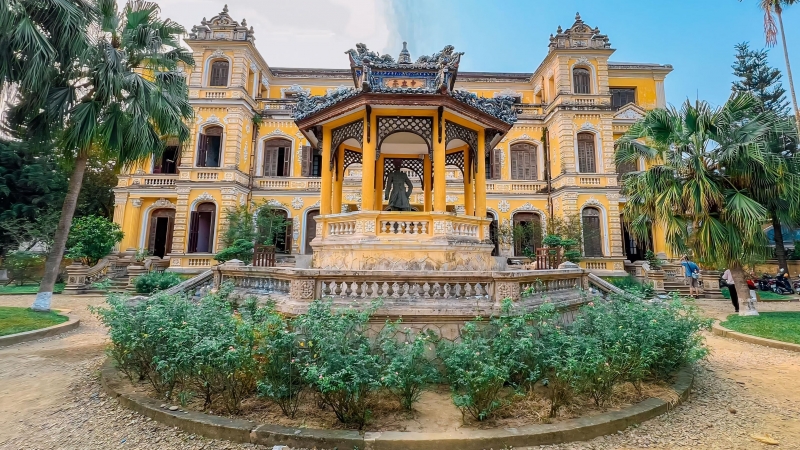
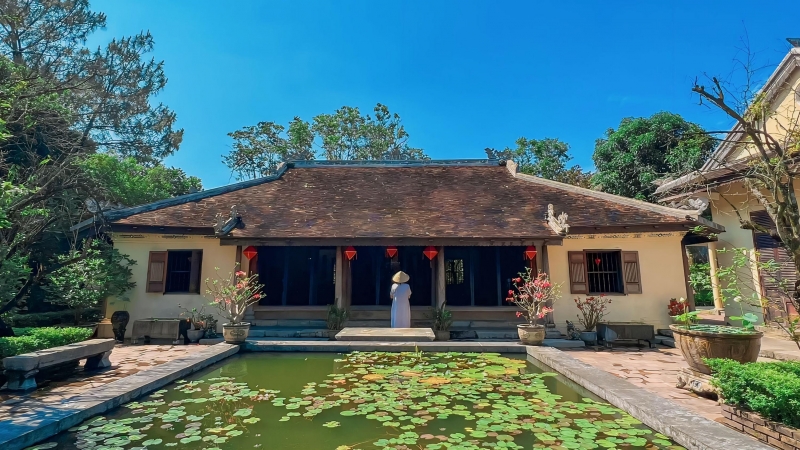
Hue Beef Noodle Soup - A Famous Specialty That Everyone Must Try at Least Once
Traditional Hue-style beef noodle soup originated during the time of Lord Nguyen Hoang (around the 16th century). Legend has it that there was a beautiful and skillful noodle maker named Bun. In Van Cu village (now part of Huong Tra town, Thua Thien Hue province), Bun invented a new way of preparing the dish: using beef to make the broth for the noodle soup. From then on, beef noodle soup was born, preserved and developed through many generations. Today, Hue-style beef noodle soup has been modified with the addition of many other ingredients such as pork trotters, pig's blood, crab cakes, etc.
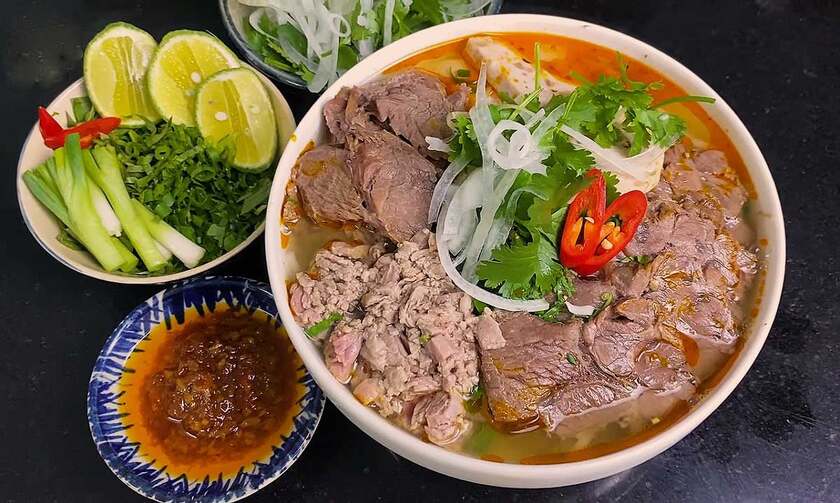
The beef noodle soup dish was created, preserved, and developed through many generations.
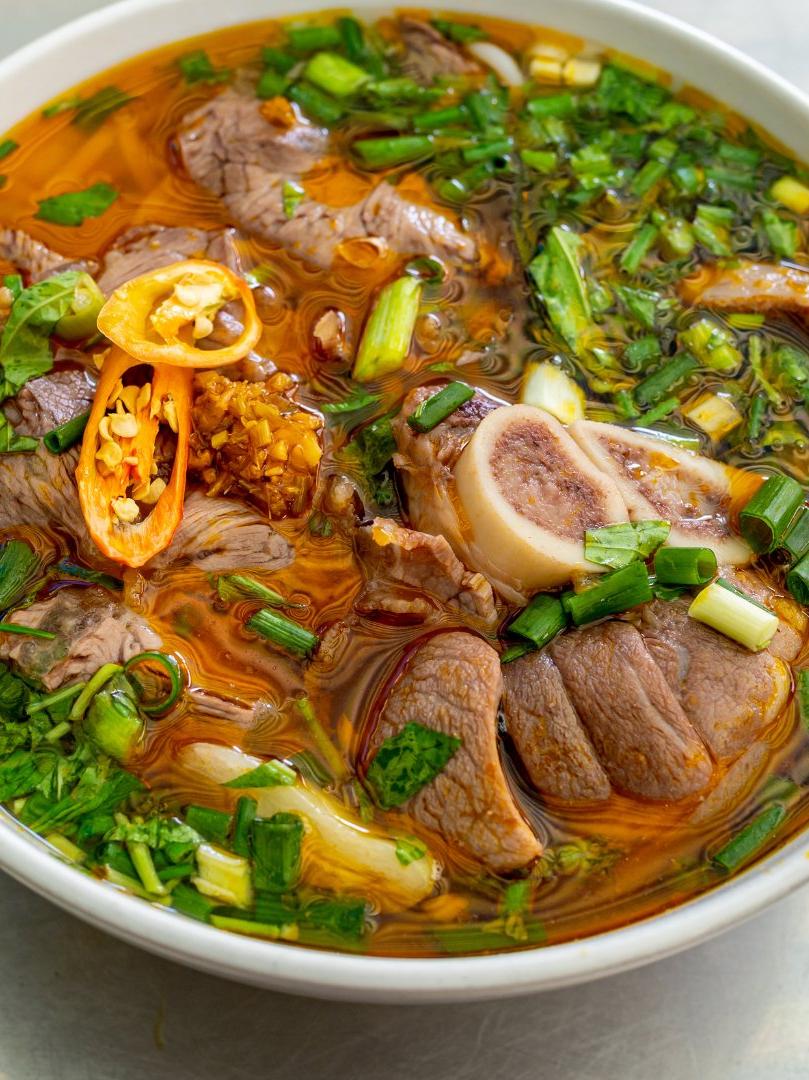
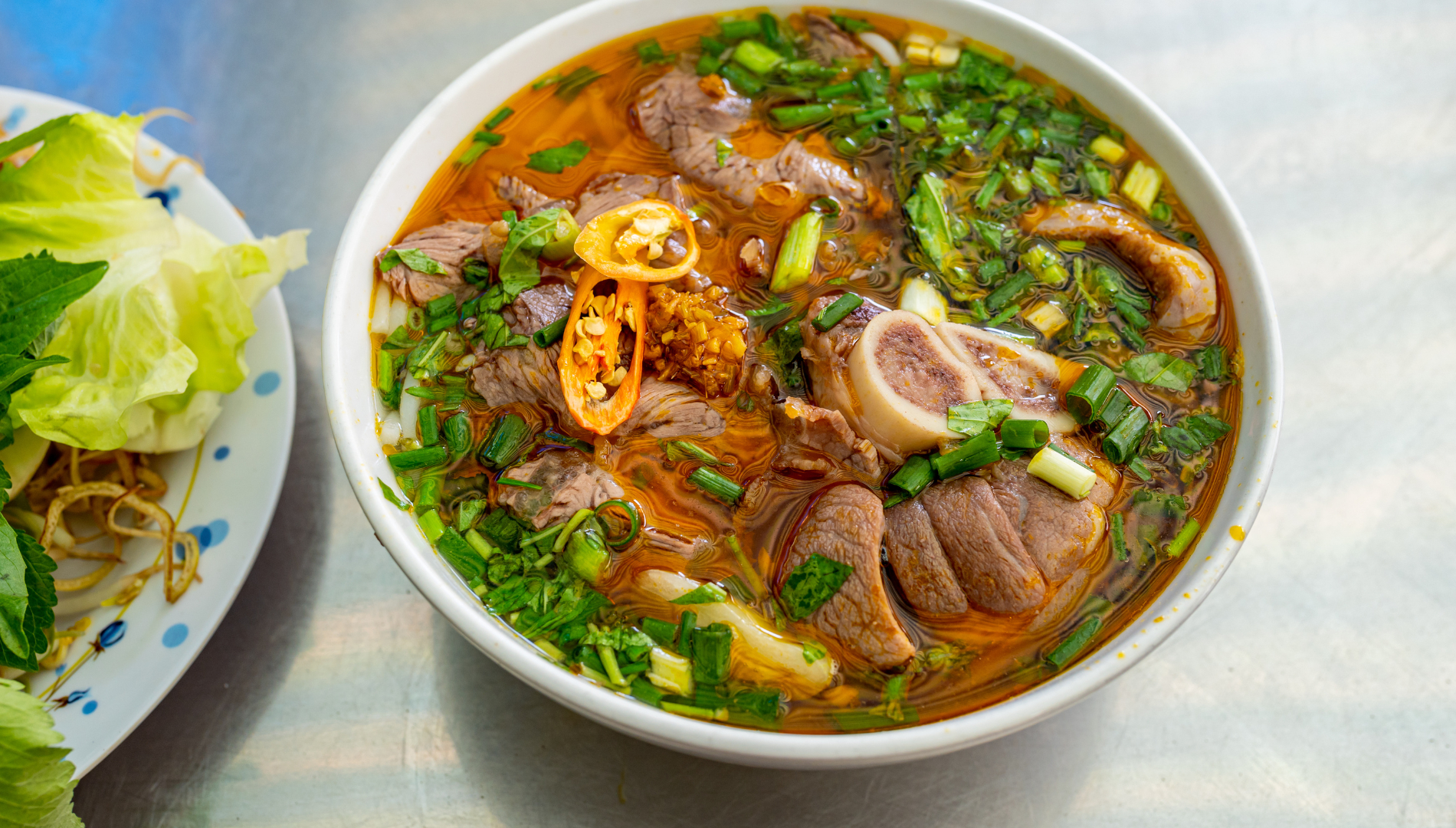
Hue's quintessential dish, Bun Bo Hue, boasts a rich, spicy broth, chewy rice noodles, tender beef, flavorful crab cakes, and refreshing fresh vegetables. Bun Bo Hue is not only a delicious meal but also a source of pride for the people of Hue.
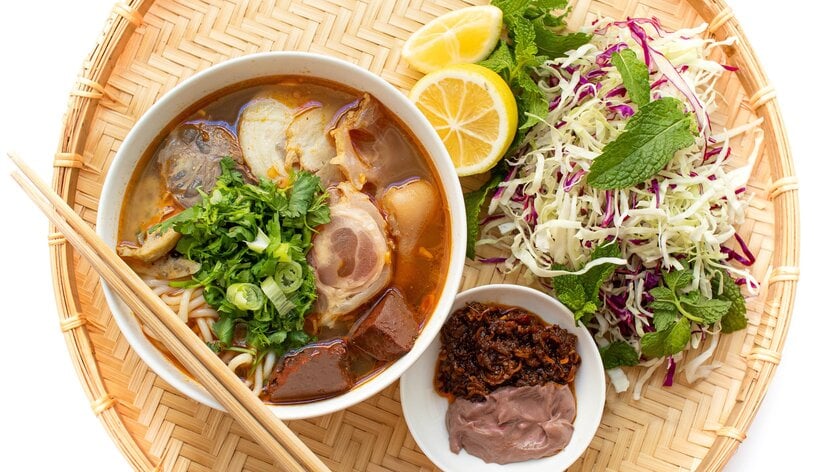
Bun bo Hue, a famous specialty of the dreamy land of Hue.
Bun bo Hue captivates diners not only with its skillful preparation but also with its "soul"—the broth. The broth, simmered from beef bones, boasts a rich, sweet flavor. Additionally, a touch of shrimp paste and lemongrass are added to enhance the aromatic and appealing taste. All these elements combine to create a wonderful culinary symphony that leaves a lasting impression on visitors.
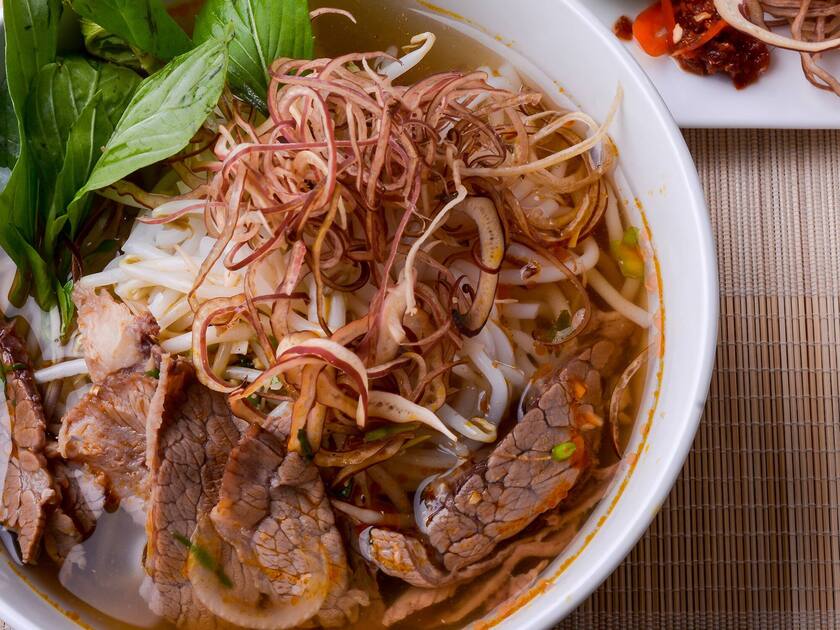
The distinctive flavor is spicy, and the broth has a fragrant lemongrass aroma.
A delicious, authentic bowl of Hue-style beef noodle soup must have an enticing aroma. The bowl of noodles has the orange color of annatto oil, the brown of beef and pork blood, and the green of scallions and cilantro, with a touch of refreshing bean sprouts. This noodle dish, with its perfect balance of spicy, sweet, and savory flavors, truly captivates diners.
TURMERIC NOODLES - A FAMOUS SPECIALTY OF THE CAPITAL CITY
Hue-style turmeric noodles are a simple yet incredibly special dish, deeply rooted in the flavors of the imperial city. Made with simple ingredients, this dish creates a unique and captivating taste.
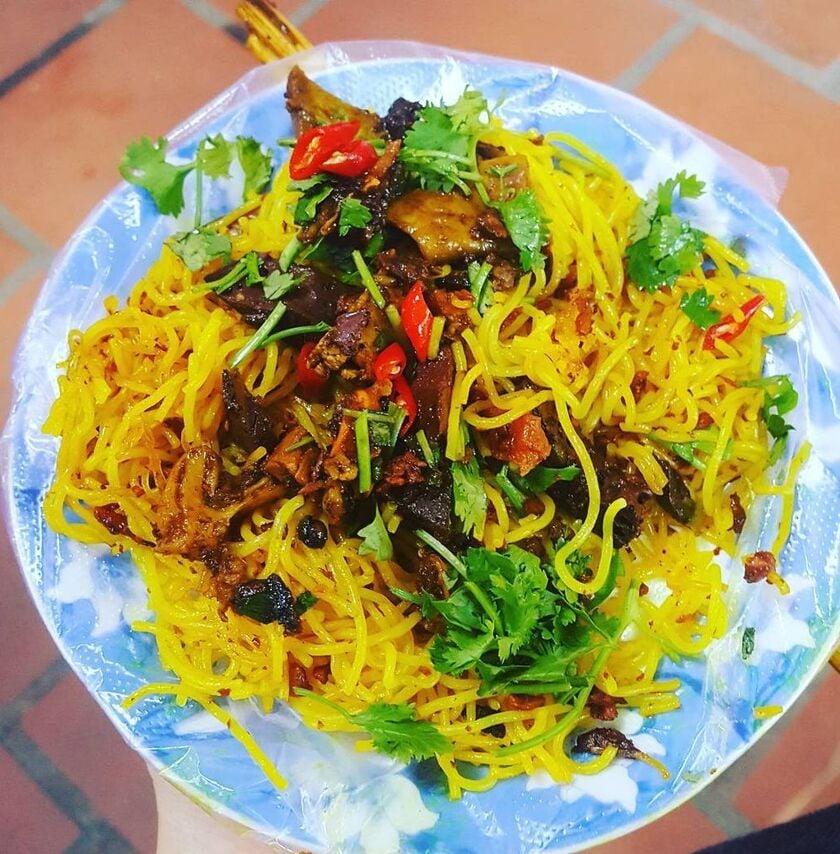
The famous Hue-style rice noodle dish with stir-fried pork offal and turmeric.
This dish is made from the main ingredients of rice noodles, offal, and turmeric. Although it only consists of familiar ingredients, what makes stir-fried rice noodles with offal and turmeric so delicious is the elaborate preparation method.
Locals tell each other that to make a delicious and authentic bowl of stir-fried pork offal with turmeric, they usually go to the market early in the morning to select fresh offal, then clean it thoroughly to remove any unpleasant odor. Besides offal, they also use other pig organs such as liver, intestines, and boiled blood.

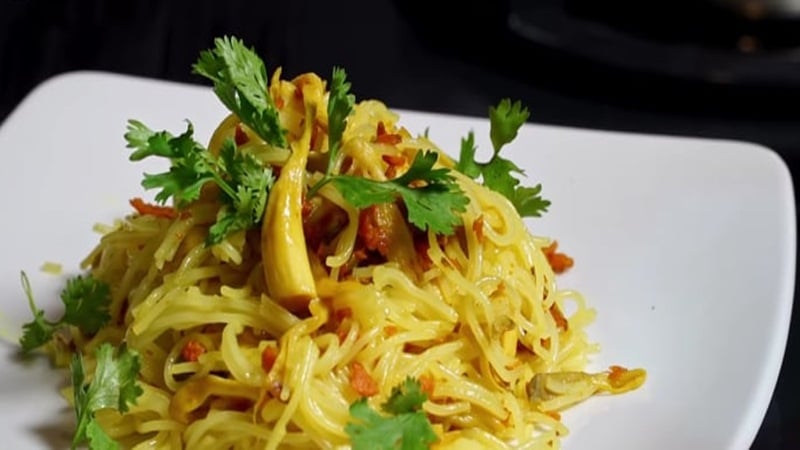
Turmeric roots should be of the right maturity so that they release their characteristic aroma when processed.
All ingredients are cleaned, cut into bite-sized pieces, and marinated with fish sauce, salt, pepper, onion, and turmeric water. Once the ingredients have absorbed the seasoning, they are quickly stir-fried.
When a customer orders turmeric noodles, the owner will take a portion of noodles, add some stir-fried offal, a spoonful of turmeric, and some chopped coriander. The bowl of noodles is then brought out for the customer to mix themselves, adding seasonings such as chili paste, chili peppers, and soy sauce to their liking.
A delicious bowl of turmeric noodles will have an eye-catching yellow color, chewy noodles, well-seasoned broth, harmonious flavors, a not-too-strong turmeric aroma, and a touch of coriander for added appeal. In Hue, you can easily enjoy turmeric noodles at many casual eateries, at reasonable prices and with a unique and delicious taste.
CLAM NOODLE SOUP - A SIMPLE DISH THAT CAPTIVATES MANY TRAVELERS
Clam noodle soup is a famous specialty dish of Hue, loved by tourists for its delicate, rich flavor and affordable price. This dish is made from simple ingredients such as clams, noodles, fresh vegetables, shrimp paste, fish sauce, chili peppers, etc., but it offers a truly unique culinary experience.
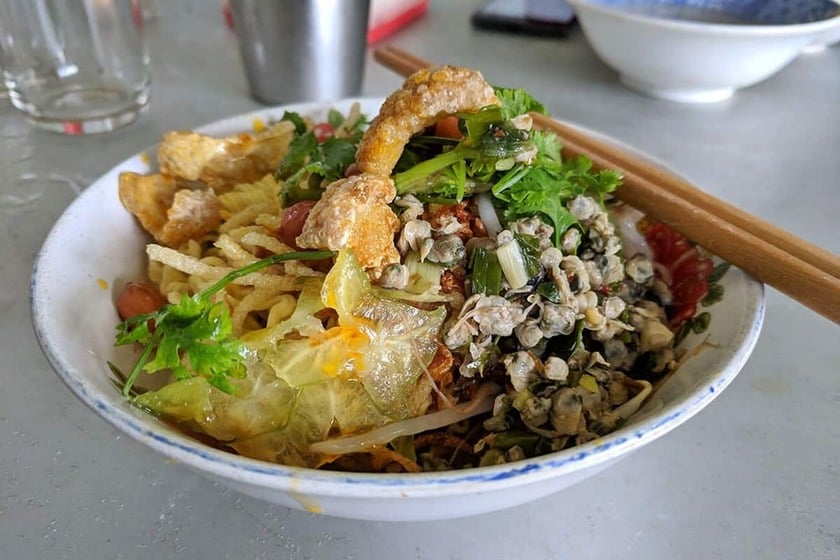
Diners will find the meal even more enjoyable when they savor each spoonful of hot clam soup while eating their rice noodles.
As the "cradle" of dishes made from clams, it's no surprise that every visitor falls in love with this simple noodle dish. A bowl of clam noodle soup is seasoned just right and cooked to perfection, resulting in a fragrant broth, the sweet flavor of the clams, and a touch of spicy green chili, making the dish even more appealing.
A standard bowl of Hue-style clam noodle soup includes rice noodles, stir-fried clams, peanuts, crispy fried pork skin, coriander, onions, chili peppers, and more, all mixed together, along with a bowl of broth made from boiled clams. This simple bowl of Hue-style clam noodle soup, seasoned perfectly, leaves diners longing for more after just one bite.
RICE NOODLES WITH VINEGAR SAUCE - A REFRESHING SUMMER DISH ONLY FOUND IN HUE
Nuốc is the local name for a species of legless mollusk that is abundant in the brackish lagoons of Hue during the summer. Nuốc belongs to the same family as jellyfish but is smaller, about half the size of a lemon. Every summer, fishermen collect nuốc, soak them in water, and sell them to wholesale markets.
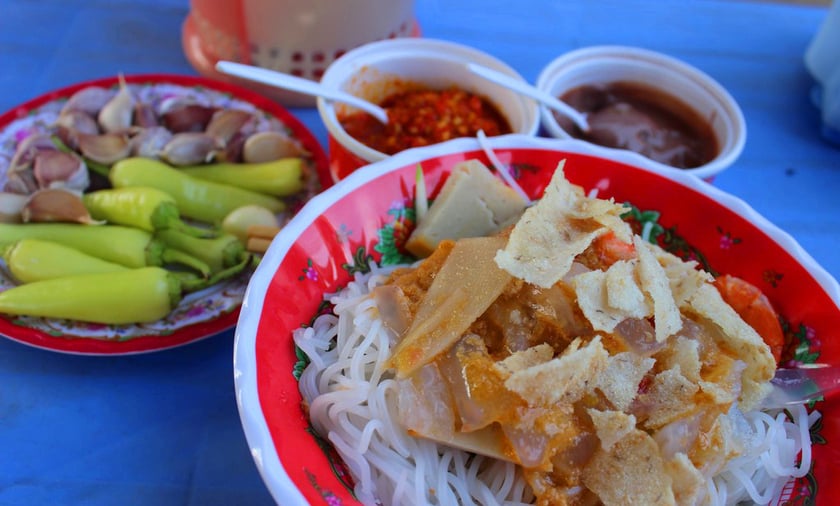
The fish is cleaned thoroughly and soaked with crushed guava leaves to maintain its crispness.
Sea cucumbers are often used in salads with raw vegetables or in noodle dishes. Sea cucumber noodle soup with vinegar is a dish listed in the culinary recommendations of the Thua Thien Hue Provincial People's Committee for tourists.
The broth is the secret to the delicious flavor of bun giam nuoc (rice noodles with shrimp and vinegar sauce). The rich flavor comes from fresh shrimp, peeled and deheaded, leaving the beautiful bodies intact. Then, the shrimp are seasoned thoroughly and marinated to absorb the flavors. The pork belly is diced into bite-sized pieces and marinated.
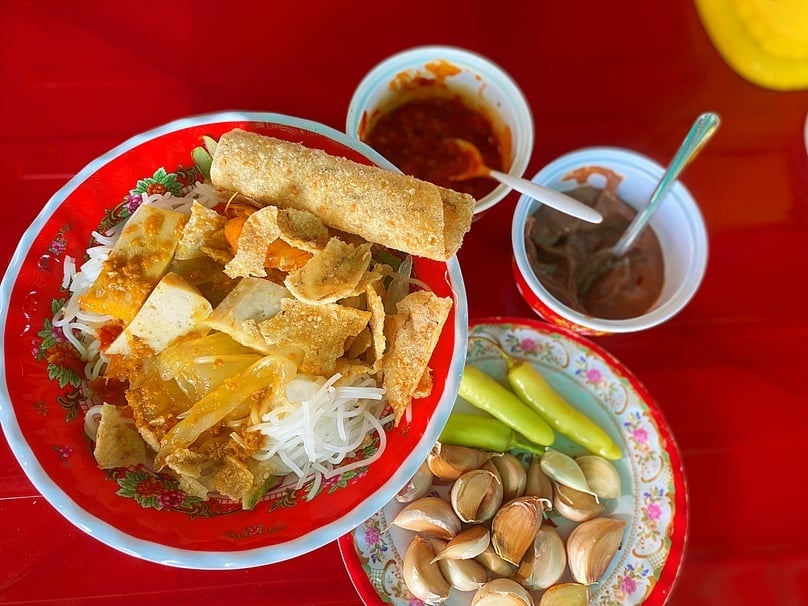
When eating, diners can add shrimp paste and ground fresh chili peppers to enhance the flavor of the dish.
The fresh vegetables served with bun giam nuoc (rice noodles with vinegar sauce) must include finely shredded white banana blossom, which is what makes the dish special. In addition, you'll need crushed roasted peanuts, rice paper (preferably from the Mekong Delta), a sweet and sour shrimp paste sauce, and a few green chilies for the authentic Hue flavor.
The vermicelli with shrimp paste is best enjoyed warm, not too hot but not too cold either. The subtle aroma of herbs, the rich, sweet sauce of fresh shrimp, and the chewy texture of the shrimp paste, combined with the crispy rice crackers, stimulate the taste buds and offer a truly novel culinary experience.
GRILLED PORK NOODLES - A DISH RICH IN FLAVOR
Hue-style grilled pork vermicelli has long been a dish highly praised by tourists. Once you've tasted it, you'll find it hard to forget. With just simple ingredients like rice vermicelli, pork, pickled vegetables, peanuts, and fish sauce, this dish has captivated countless visitors, both domestic and international.
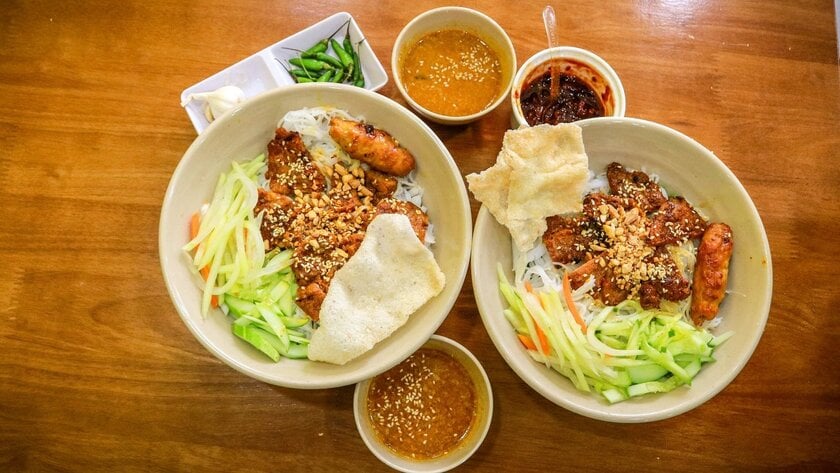
The soul of this dish lies in the noodle sauce, made from liver, flour, and crushed sesame seeds.
Perhaps it is the rustic, simple yet incredibly rich flavor of this Hue specialty that captivates diners. The dish is loved by tourists for its rich, spicy taste and the delicate blend of ingredients.
The soul of this dish lies in the noodle sauce, made from liver, flour, crushed sesame seeds, ground peanuts, minced pork, and seasoned with fish sauce, pepper, and MSG to taste. The grilled pork is made from pork belly or lean pork with some fat, ensuring it's tender and not dry when grilled. All the ingredients are stirred together to create a thick, light brown mixture.