VI
VI


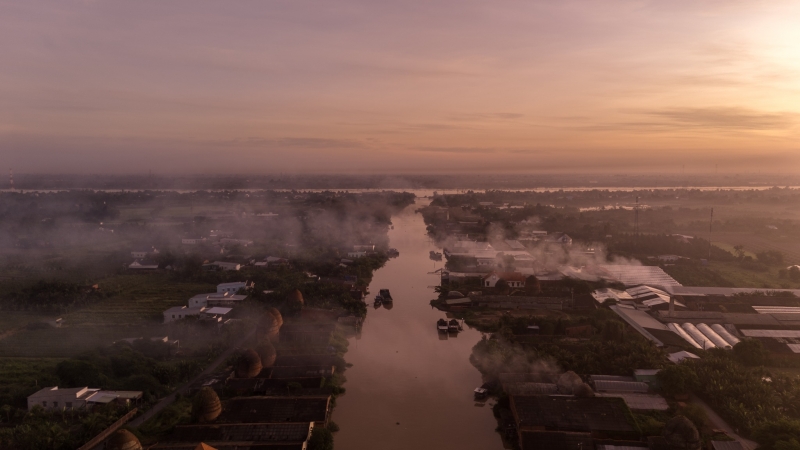
The tangerine grows between two rivers.
Lai Vung tangerines are a specialty tangerine variety associated with Lai Vung district, Dong Thap province – a fertile alluvial land situated between the Tien and Hau rivers. The unique soil conditions and long-standing cultivation experience have resulted in tangerines with beautiful shapes, thin skins, bright orange color, juicy segments, a sweet and refreshing taste, and a delicate aroma.


The tangerine season usually begins in early October of the lunar calendar and lasts until the end of December, peaking around Tet (Lunar New Year). This is also when Lai Vung tangerines are most abundant in the market, serving the demand for Tet decorations, gifts, and consumption during the holidays. Their few or no seeds and ease of preservation make them even more popular.

Lai Vung is a key tangerine-growing region with a large area and high production. Many tangerine orchards have been dedicated to this crop for decades, maintaining traditional farming methods combined with organic farming trends to ensure consistent fruit quality. As a result, Lai Vung tangerines not only retain their distinctive flavor but are also gradually building their own brand, contributing to increasing the value of local agricultural products.


Lai Vung tangerines are one of the famous agricultural products of the Mekong Delta, especially during the Lunar New Year.
Walking through a tangerine orchard during the ripening season.
Located at 269A/1 Thoi My 1 Hamlet, Vinh Thoi, Lai Vung (now Hoa Long Commune), the tangerine orchard of Ms. Do Kim Thanh and Mr. Nguyen Van Tho is one of the most beautiful and well-known tangerine orchards in the area, attracting many tourists recently. The orchard has been open to visitors for four years; all the tangerine trees were purchased as small seedlings and planted, and they begin bearing fruit after about 1.5 to 2 years.


Tourists check in at Van Tanh tangerine garden, Hoa Long commune.
The orchard currently grows two main varieties: pink tangerines and sugar tangerines. Pink tangerines have a flattened shape, a distinctive pinkish-orange peel, and segments that are sweet with a slight sourness. Meanwhile, sugar tangerines are rounder, have a yellowish-green peel, juicy segments, and a sweeter taste.


Pink tangerines have an eye-catching color, while sweet tangerines are sweeter.
The tangerine orchard, spanning approximately 3 hectares, is surrounded by insect-proof netting. Inside, clusters of golden-orange tangerines hang densely on the branches, many bending over and requiring ropes for support to prevent breakage. In the sunlight, the glossy peel stands out against the dark green leaves. The flattened shape of the tangerines evokes the image of small lanterns hanging on peach or apricot branches during the Lunar New Year.

Van Tanh tangerine orchard viewed from above.

In the garden, the tangerines are planted in neat rows, their orange fruits hanging from the branches.
The orchard is planted in neat rows, about 6-7 rows, each separated by a small ditch with a wooden bridge crossing it. The front rows are reserved for visitors to admire and take photos, while the inner rows are an area for experiencing tangerine picking.


The wooden bridges spanning the canals are not only pathways but also ideal photo spots for tourists.
During the tangerine season, many orchards in Lai Vung open their doors to visitors, creating experiential agricultural tourism destinations. At Ms. Thanh and Mr. Tho's orchard, the entrance fee for visiting and taking photos is 50,000 VND per person, which includes enjoying fresh tangerines, tangerine jam, iced tea, and dried bananas.
If desired, visitors can pick tangerines themselves in the orchard for 70,000 VND/kg or buy tangerines already harvested by the orchard owner for 60,000 VND/kg. The tangerine season lasts about two months before Tet (Lunar New Year), however, as Tet approaches, the orchard owners will gradually harvest to deliver to customers who have placed orders in advance. Therefore, the ideal time to visit is when the tangerines are ripe and still abundant on the branches.


About 2-3 weeks before Tet (Lunar New Year), the tangerines on the trees turn a deep red. Walking through the orchard at this time feels like stepping into a space filled with red lanterns hanging on green branches – a very characteristic scene of the Southern Vietnamese countryside during the New Year.
Although Lai Vung tangerines are famous among locals, tourism promotion remains limited because many orchard owners lack formal training in marketing. Nevertheless, Ms. Thanh and Mr. Tho's tangerine orchard still welcomes visitors from many regions, including families, couples, groups of friends, and even foreigners. "Foreign visitors speak a few English phrases and use a phone to translate, but everyone is happy, praising the beautiful orchard, the delicious tangerines, and the peaceful countryside atmosphere," Ms. Thanh shared.


When fully ripe, the tangerine peels turn a deep red, hanging on the branches like decorative lanterns for Tet (Vietnamese New Year).
To enhance the experience, in addition to sightseeing and tangerine picking, the orchard also offers a restaurant serving traditional Vietnamese cuisine, workshops on painting conical hats and other artwork, rental of traditional Vietnamese clothing (áo bà ba), and boat rides. Because the orchard is located about 3 km from the main road, and vehicles with more than 16 seats cannot access it, Ms. Thanh proactively arranges a shuttle service and subsidizes part of the cost to ensure convenient transportation for visitors.
During peak days leading up to Tet (Lunar New Year), especially on weekends, the orchards can welcome 200-300 visitors per day. Alongside tourism activities, orchard owners are encouraged to participate in on-site tour guide training courses and apply safe production processes according to GAP standards. In 2023, the Van Tanh pink tangerine orchard owned by Ms. Thanh and Mr. Tho won third prize at the "Model Pink Tangerine Orchard" competition in Lai Vung district and third prize at the first Pink Tangerine Festival in the same year.
Alongside the efforts of local farmers, Dong Thap province is also implementing a project to preserve Lai Vung mandarin oranges, aiming to maintain genetic resources, support cultivation techniques, plan growing areas, and build a brand. These steps not only help restore the area under Lai Vung mandarin orange cultivation but also open up a sustainable development direction, where the fruit is not just an agricultural product, but also a part of the experience and memories of Tet in the alluvial plain.