VI
VI


"Time" - When Folk Sculpture Heritage Meets Contemporary Painting
The fusion of painting and sculpture in "Time" is a dialogue between folk architectural heritage and contemporary creativity. With 80 abstract works, artist Tran Nhat Thang depicts his free and unrestrained inner world, where he "looks into his heart to paint." He embraces loss and emotion in the face of time's passage with a serene gaze. Time is not merely an abstract concept, but also a haven of tolerance, non-judgmental acceptance, always open to all dreams, big or small.
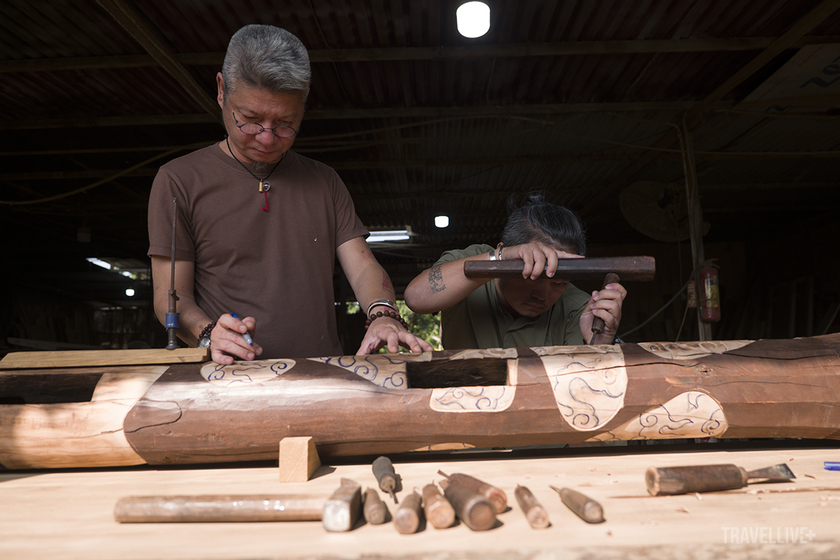
The journey from woodworking shop to art.
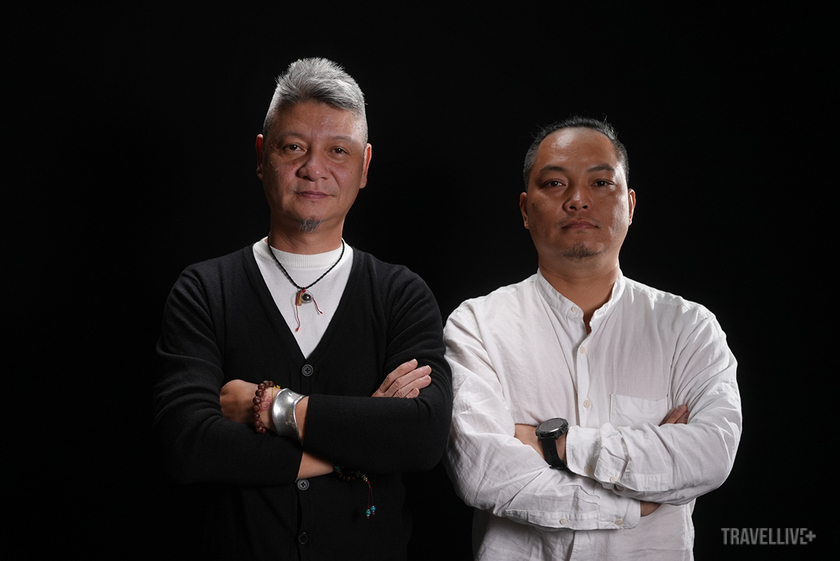
The collaboration at "Time" between artist Tran Nhat Thang and architect Tung Le offers a completely new and different artistic experience.
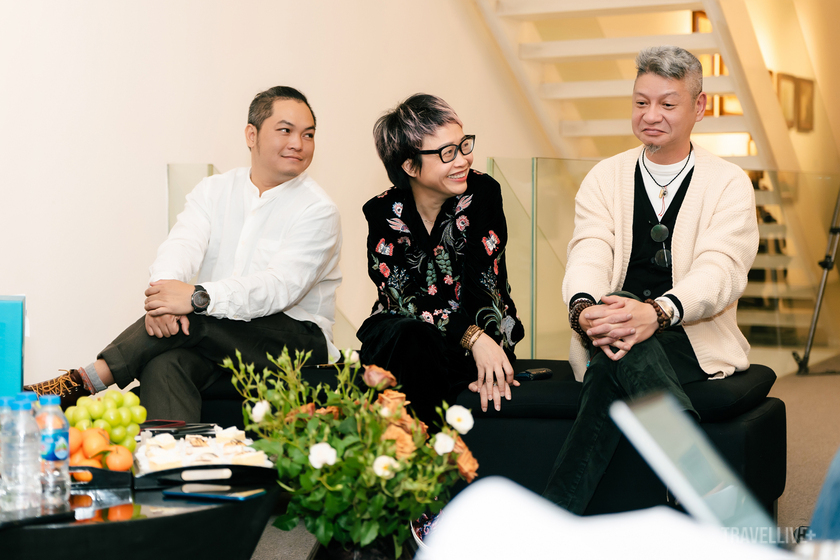
From left to right: Architect Tung Le, curator Nguyen Quynh Huong, artist Tran Nhat Thang
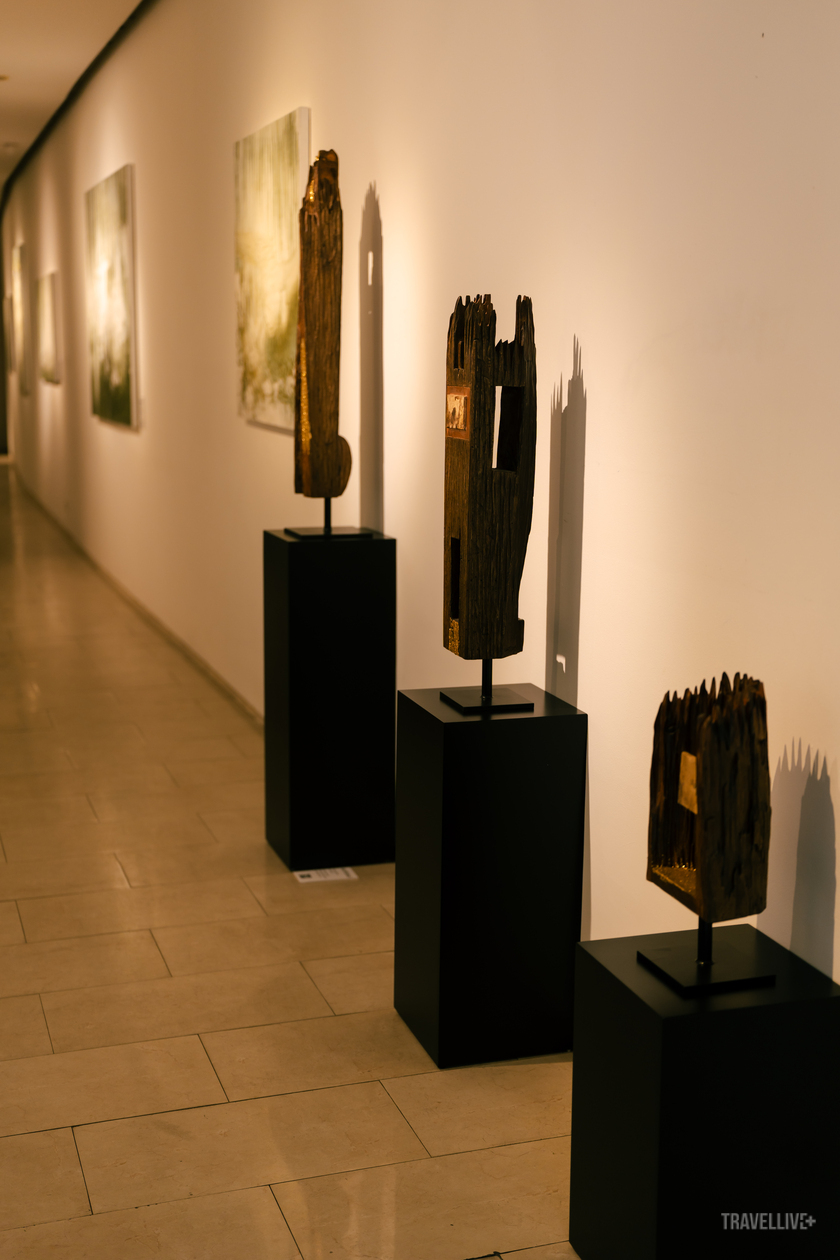
Alongside the inner world of artist Tran Nhat Thang are the platforms designed by architect Tung Le, drawing from a collection of ancient architectural heritage and wood materials collected during trips to villages and regions across Vietnam.
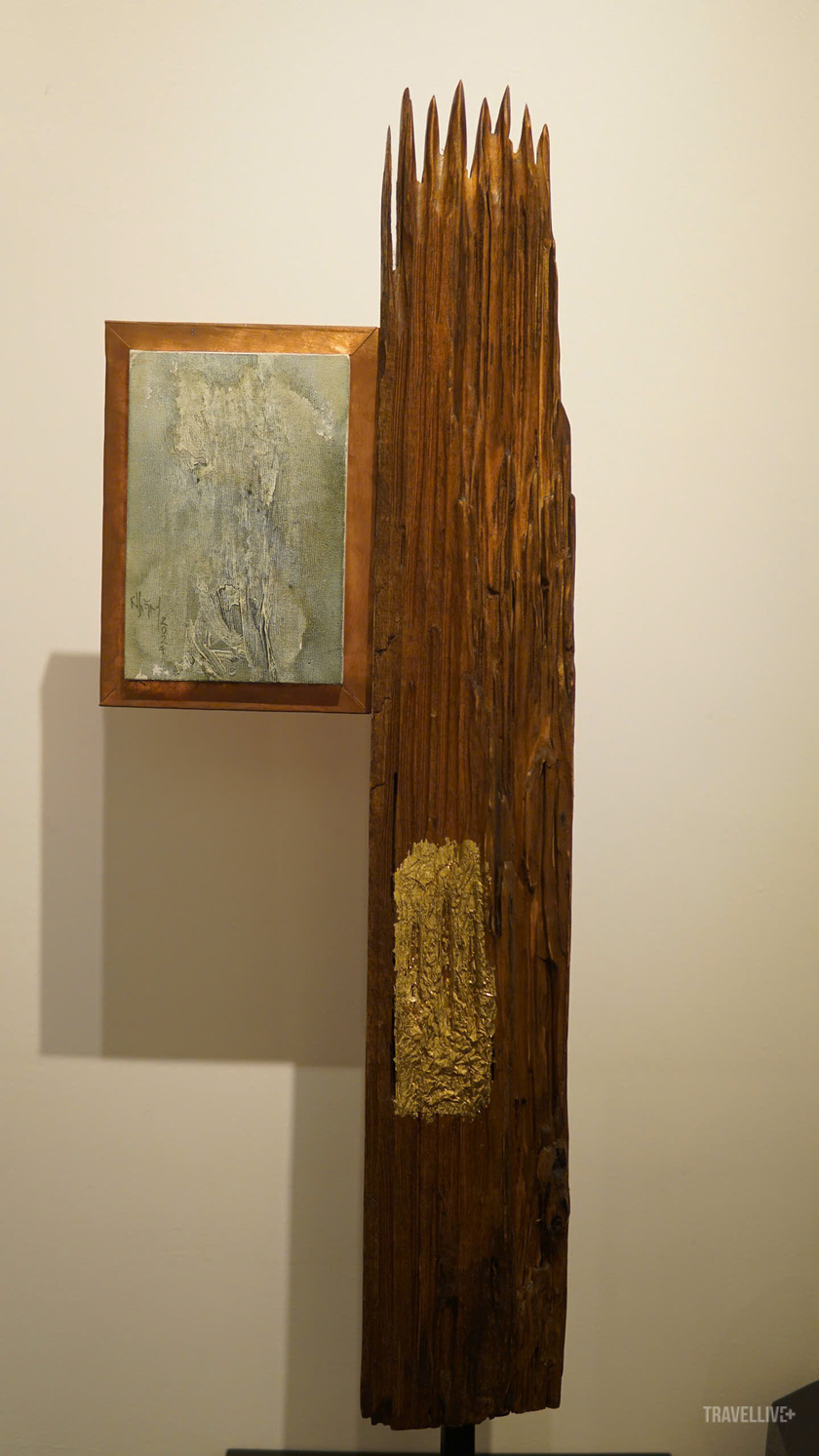
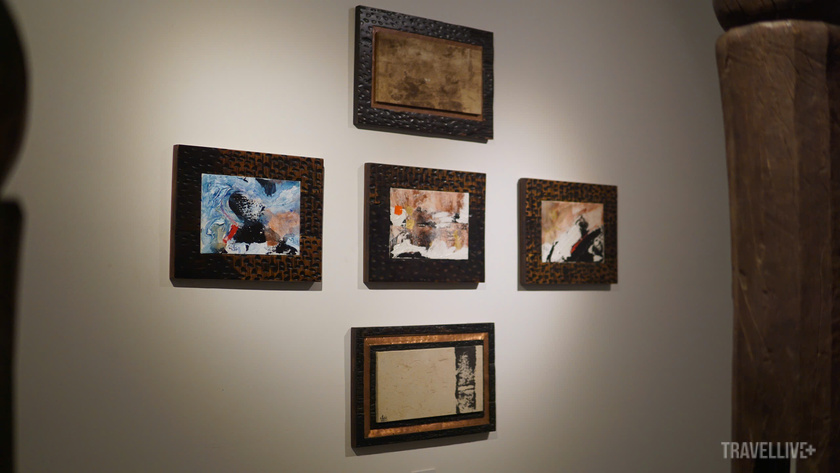
In an impressive art space featuring large-scale paintings and ancient columns, Tran Nhat Thang uses bamboo paper, coffee powder, epoxy… on a base of antique wood and bronze, combined with handcrafted carving, sculpting, and burning effects from Tung Le, to create a completely new and different artistic experience.
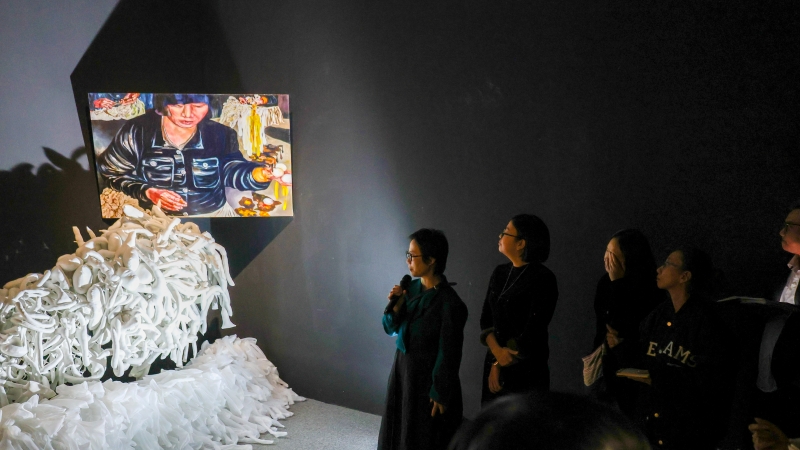
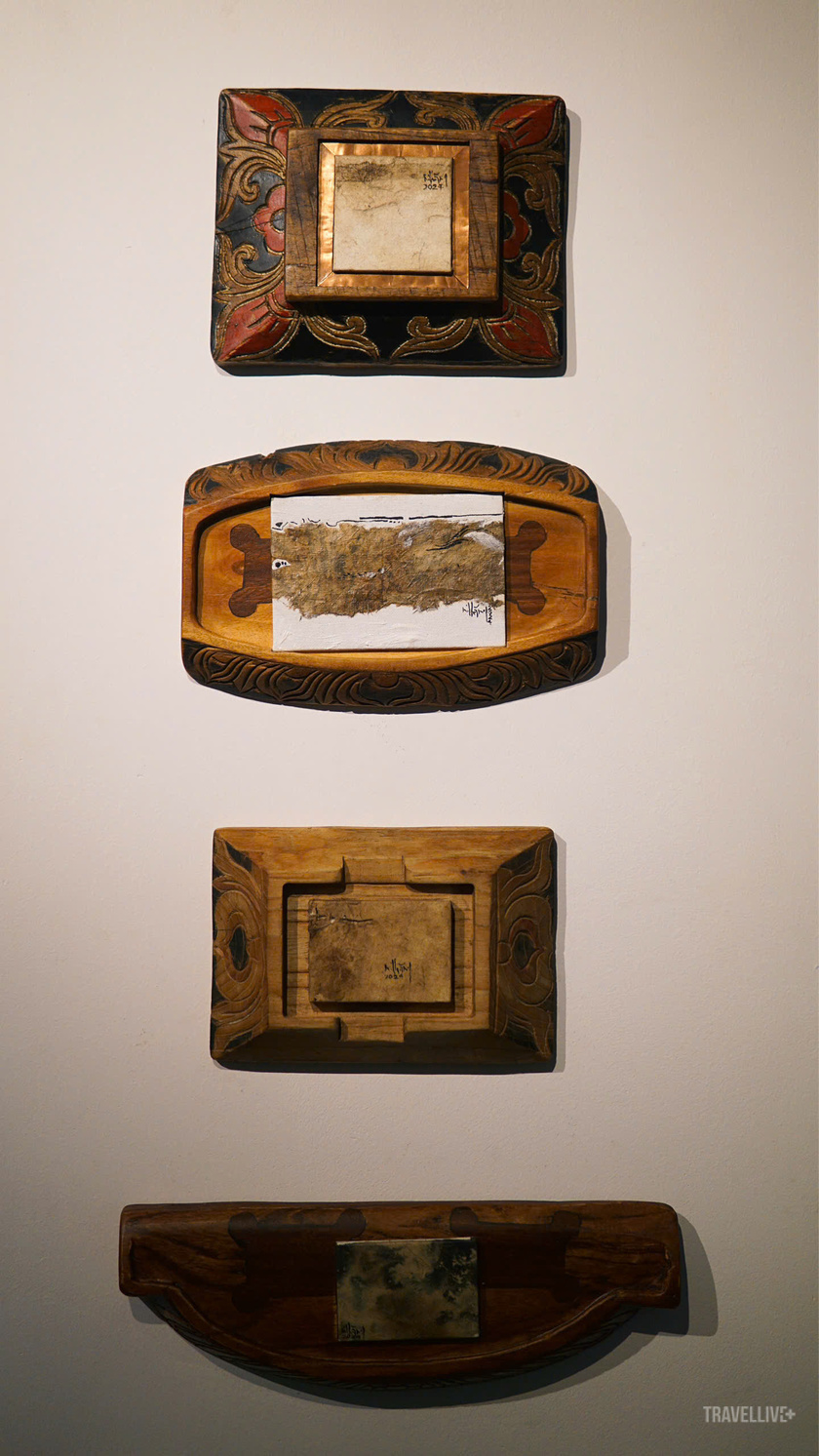
Tung Le "reborn" centuries-old house pillars and pieces of wood into pedestal bases, combining them with copper and intricately carved cloud patterns. In these ancient cloud motifs, our ancestors conveyed their faith, aspirations, eternal reverence, and harmony between humanity and nature. These timeless pedestals, both tranquil and enduring, honor the free-spirited essence of Tran Nhat Thang's work.
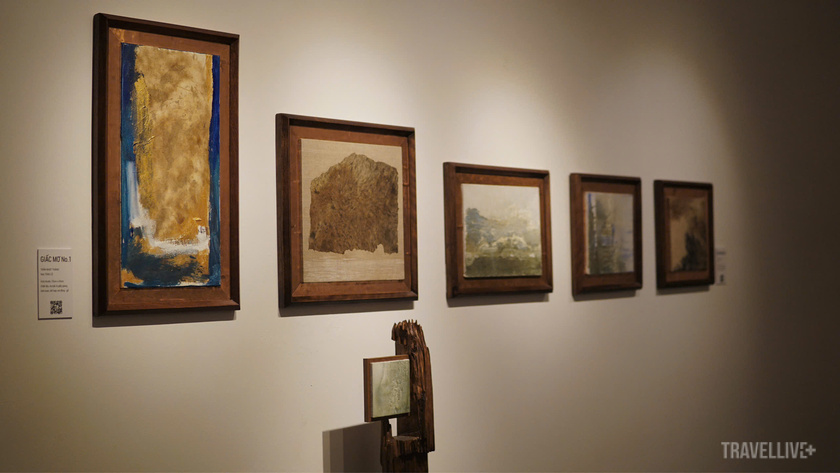
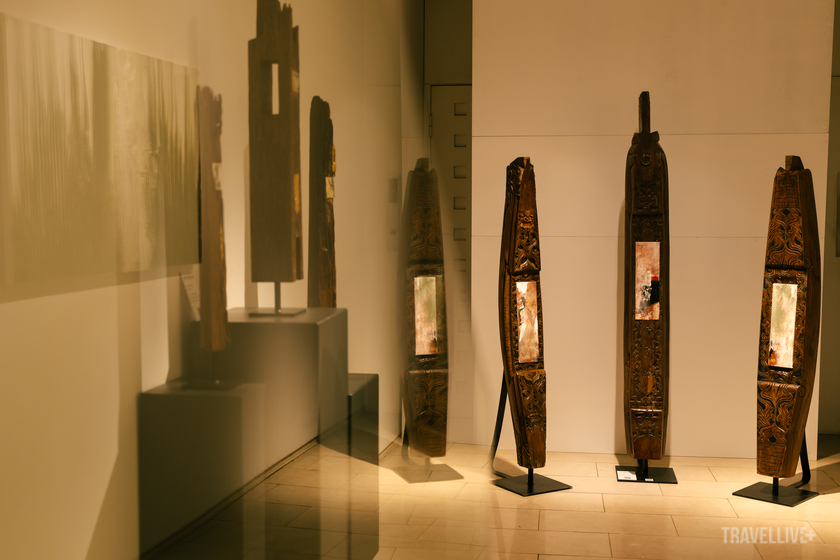
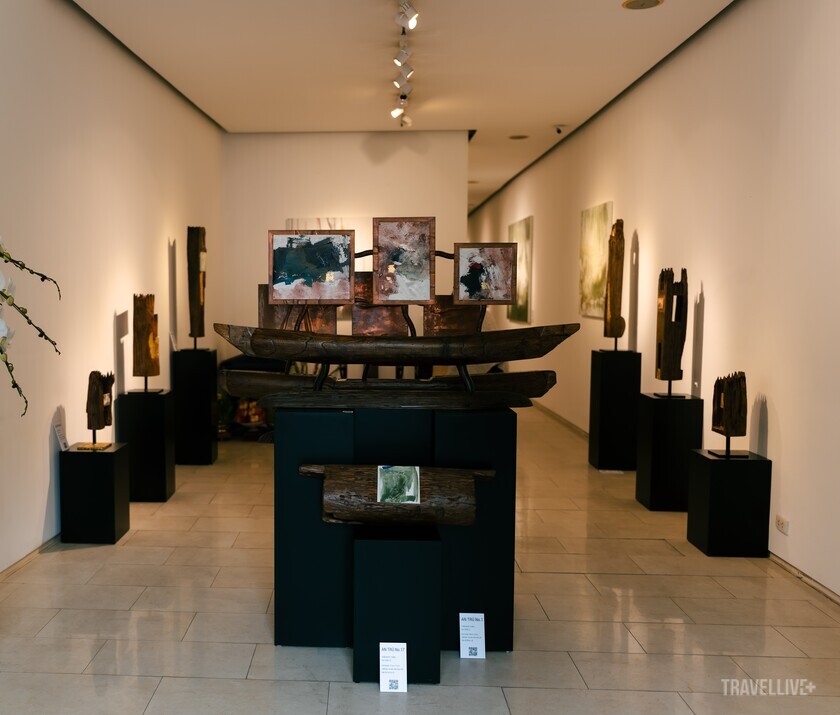
Alongside the inner world of artist Tran Nhat Thang are the platforms designed by architect Tung Le from a collection of historical architectural heritage.
Art connects the past, present, and future.
Architect Tung Le shared: "The wooden pillars displayed at the exhibition are all from different houses in Ha Giang. Some houses have been inhabited for 5 or 6 generations, equivalent to about 200 years, experiencing countless joys and sorrows there. When those families demolished the houses, I asked for those pillars back; they carry a part of the cultural and historical imprint and are a heritage of folk architecture."

I want to preserve and conserve heritage in my own way because Vietnamese culture is beautiful, and old objects always contain a cultural spirit. All of these things are treasures from my wandering youth that I found interesting and acquired. Reviving them as a foundation, combined with the works of artist Tran Nhat Thang, is like a playful use of materials, a cultural highlight, where tradition meets creativity to create novel works. Using tradition to provide a solid and stable support for the soaring creativity in Mr. Thang's works."
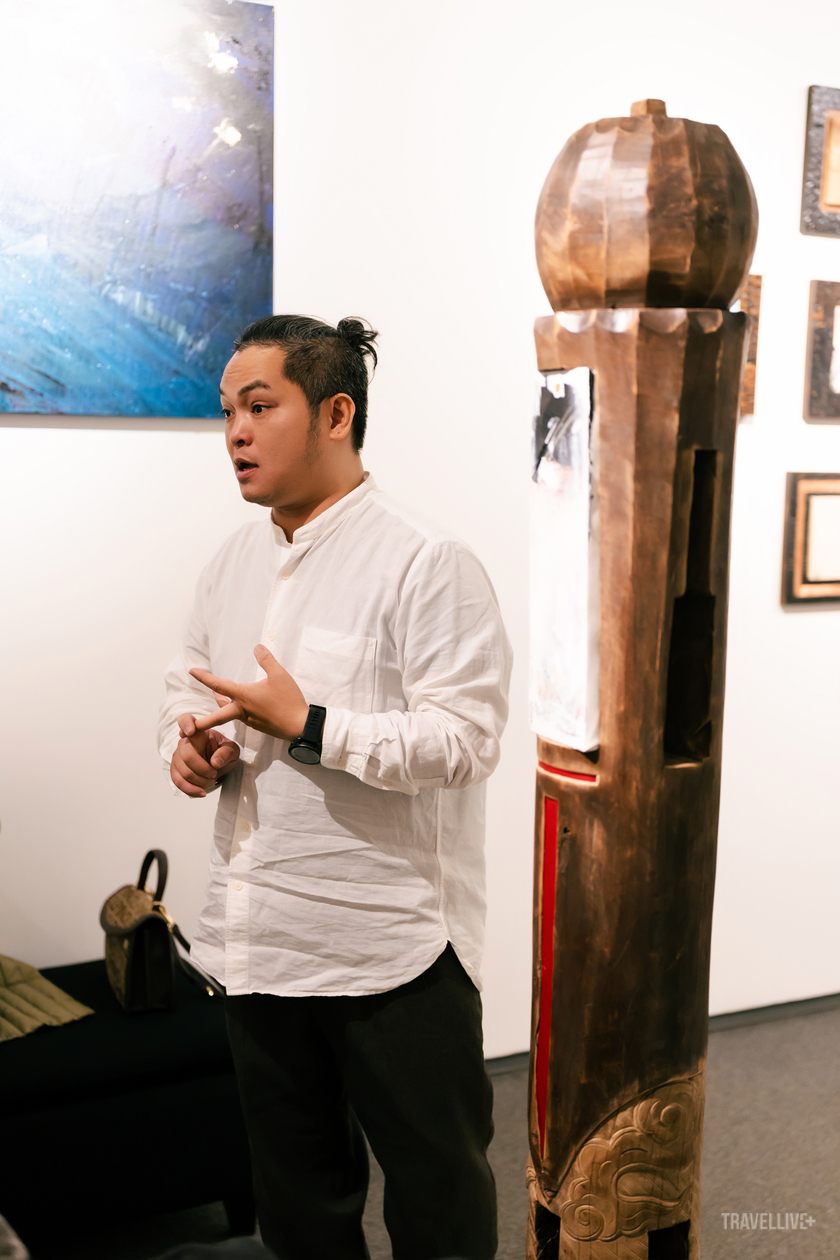
Architect Tung Le recounts the story of each pillar from Ha Giang.
Tung Le is a passionate architect who has contributed to creating heritage-themed buildings throughout Vietnam. With over 20 years of backpacking and camping trips across the country, the essence of his homeland—from its rich natural landscapes to the warmth of its people—has left a lasting impression on him. This has become a source of inspiration, helping Tung Le develop a unique design philosophy that connects tradition and modernity, transforming each piece of wood and local material into emotionally resonant interior design pieces.
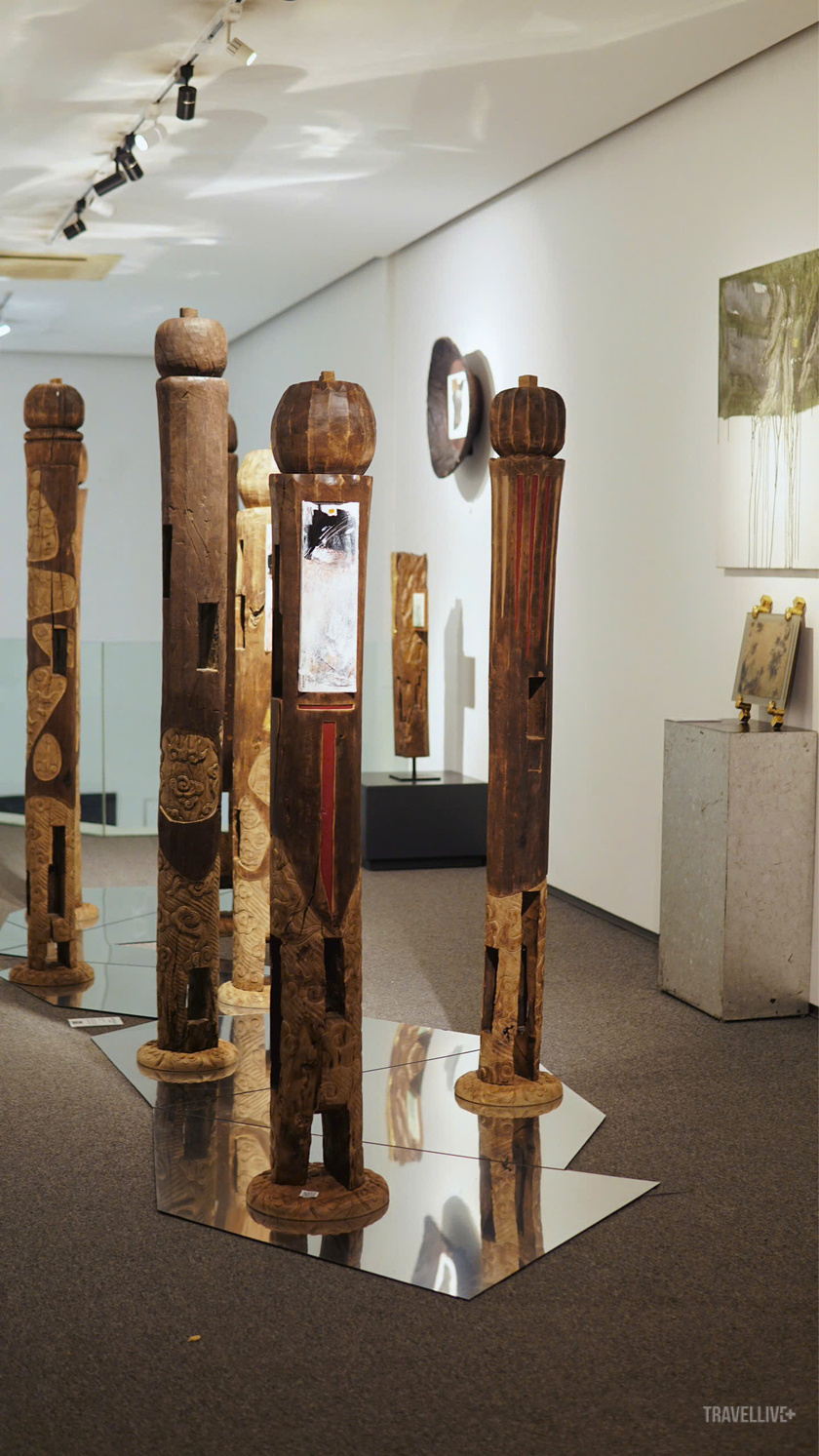
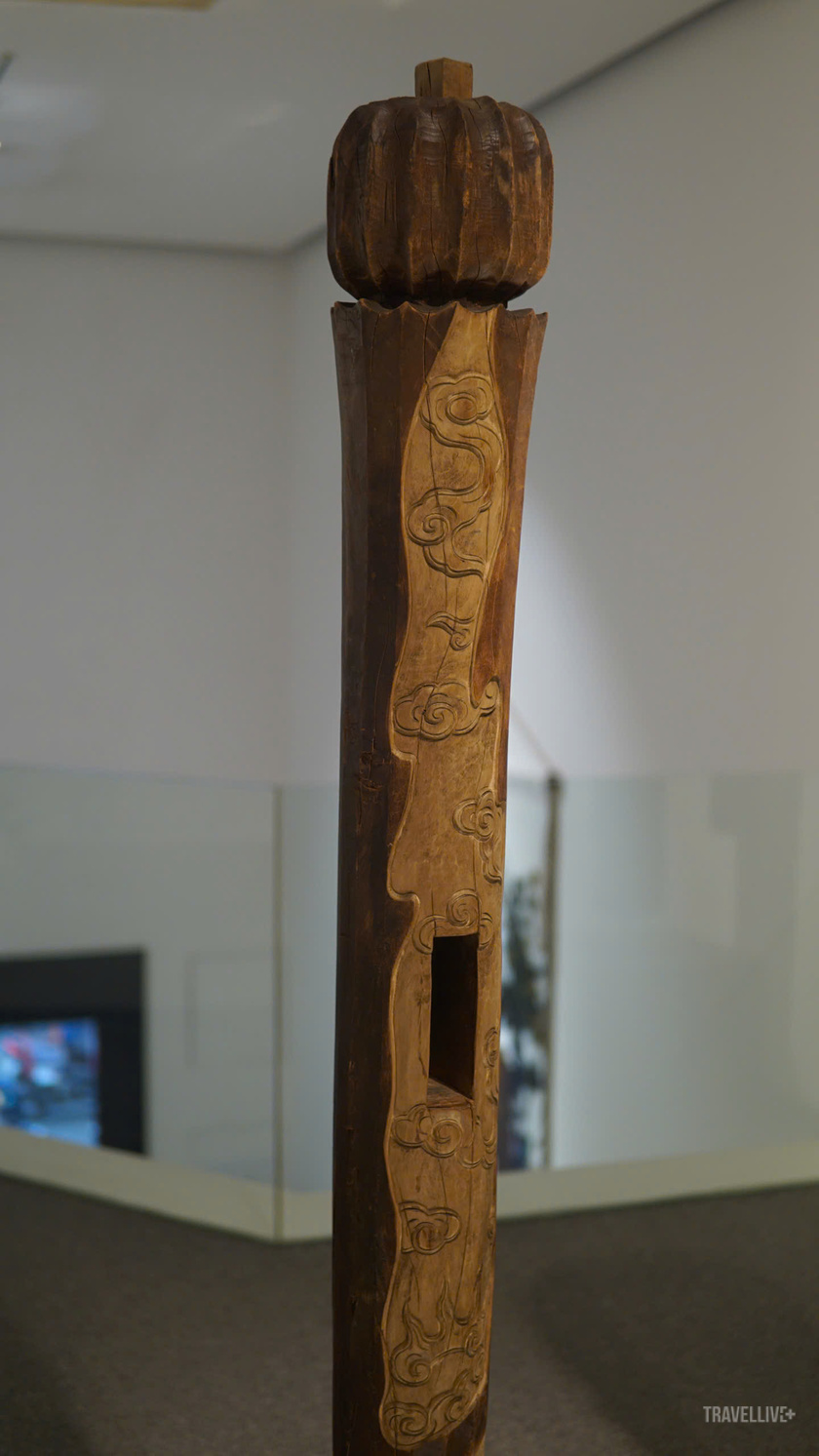
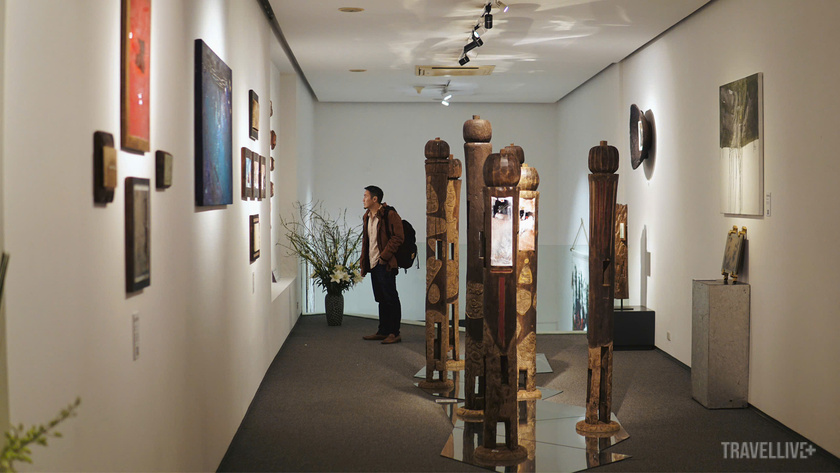
The clouds inspired the ancient cloud patterns on each column through the skillful hands of Tung Le.
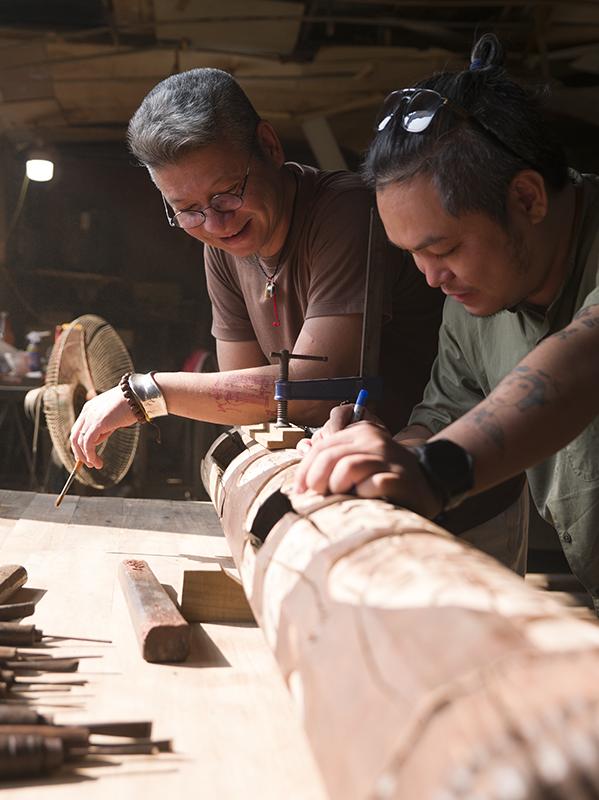
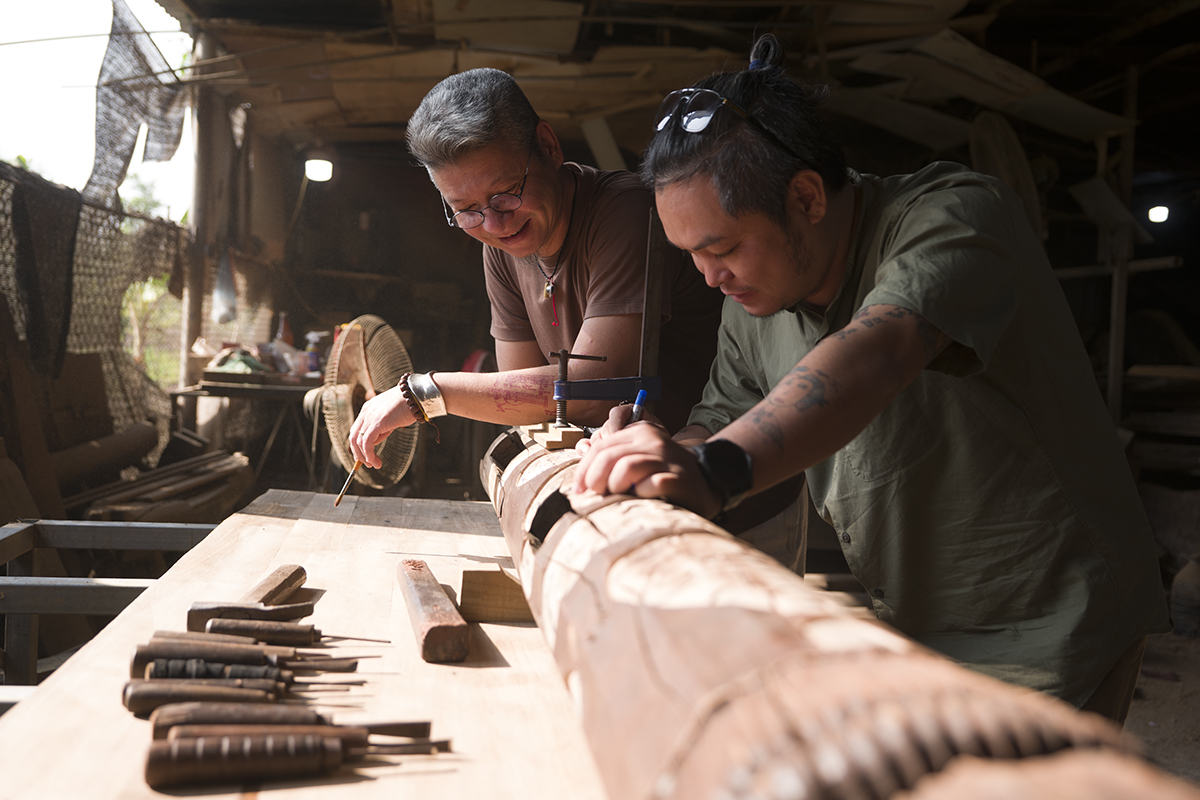
If Tran Nhat Thang is someone who understands worldly affairs, Tung Le is like a dreamer telling a dream story. His dialogue with time takes place almost entirely in silence. He tells his story by carving and sculpting time-worn wood, "reviving" it alongside the modern works of his dear companion, while simultaneously learning, practicing his craft, and continuing to write the precious "language of heritage" that he is fortunate enough to have inherited.
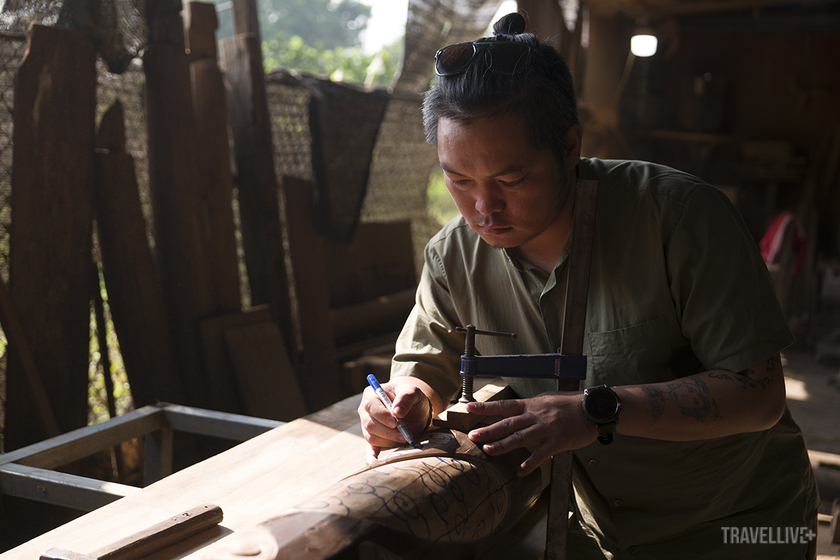
Tung Le tells his story by carving and sculpting on pieces of wood stained with the passage of time.
Artist Tran Nhat Thang has pursued abstract painting for 30 years. He is known as one of the pioneering artists of post-reform painting in Vietnam. Distinguished by his style that combines traditional Eastern calligraphy with minimalist abstract painting, the male artist has impressed with 17 solo exhibitions and over 100 group exhibitions both domestically and internationally.
Speaking to Travellive about his 80 abstract works, artist Tran Nhat Thang said: “My creative inspiration is always continuous and specific in my stream of thought. I am very strict with each of my exhibitions because each exhibition is a different language and a different creative phase. Time, of course, cannot be recovered, but the imprint and the story remain, and we can revisit them.”
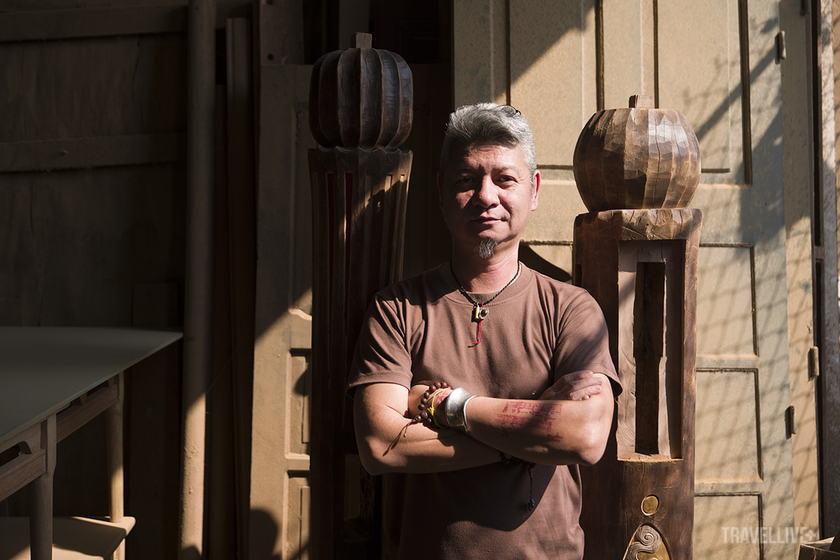
Artist Tran Nhat Thang is known as one of the pioneering artists of post-reform painting in Vietnam.
His works are owned by numerous private collections and art organizations in Europe, Asia, and America. A person's life "only has a few ten-year periods," yet for 30 years in his profession, Tran Nhat Thang has remained faithful to the concepts of abstraction and metaphor, telling his personal story through his own ideas and experiences.
“We are all enveloped and nurtured by time.” For the male artist, time is also a dream, a refuge, temporarily condensed into a “journey of self-cultivation”—that is how he perceives painting, loves painting, and lives within painting. Tran Nhat Thang explores and dialogues with time by painting without form or shape, through the stillness of his mind.
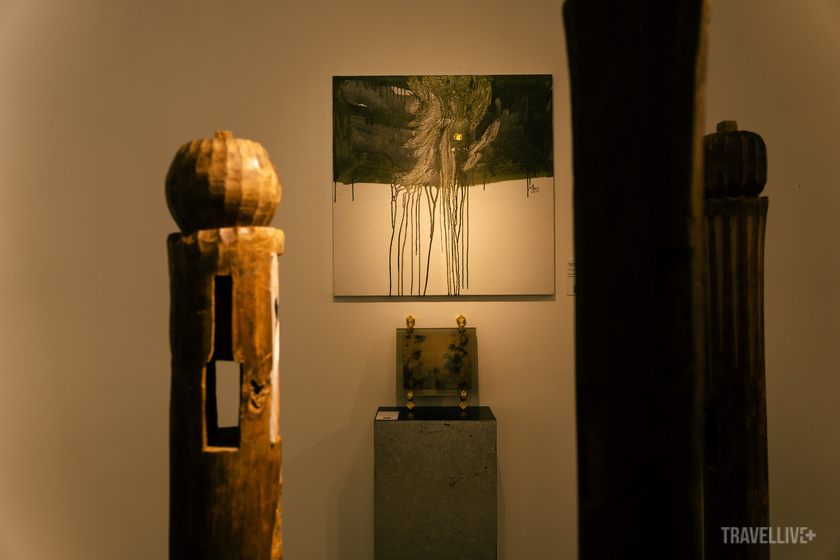
Tran Nhat Thang's abstract paintings, with their free and unrestrained brushstrokes, reflect his inner world.
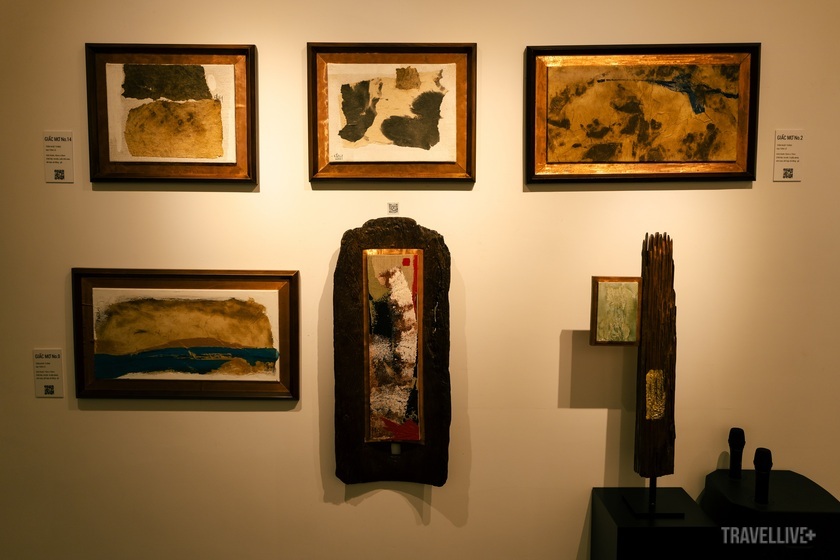
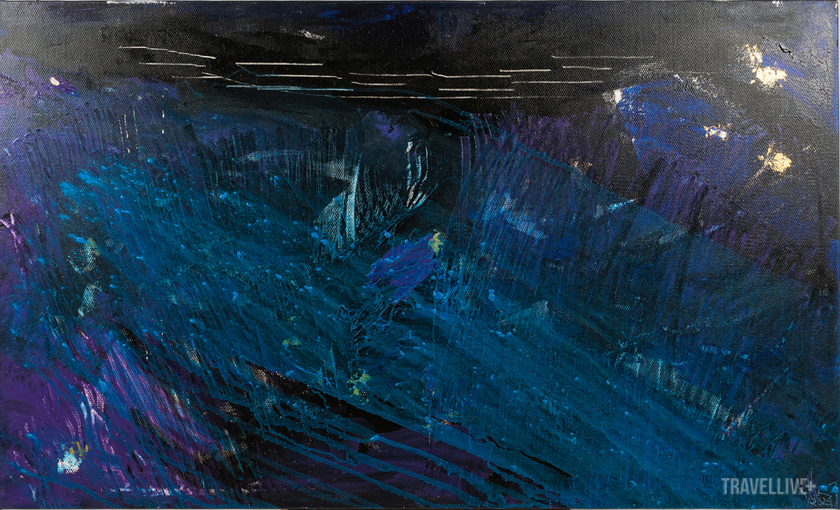
The world of Tran Nhat Thang
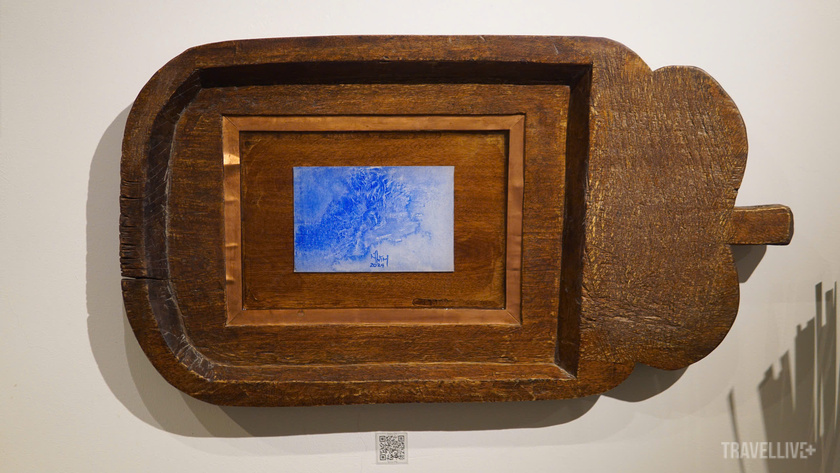
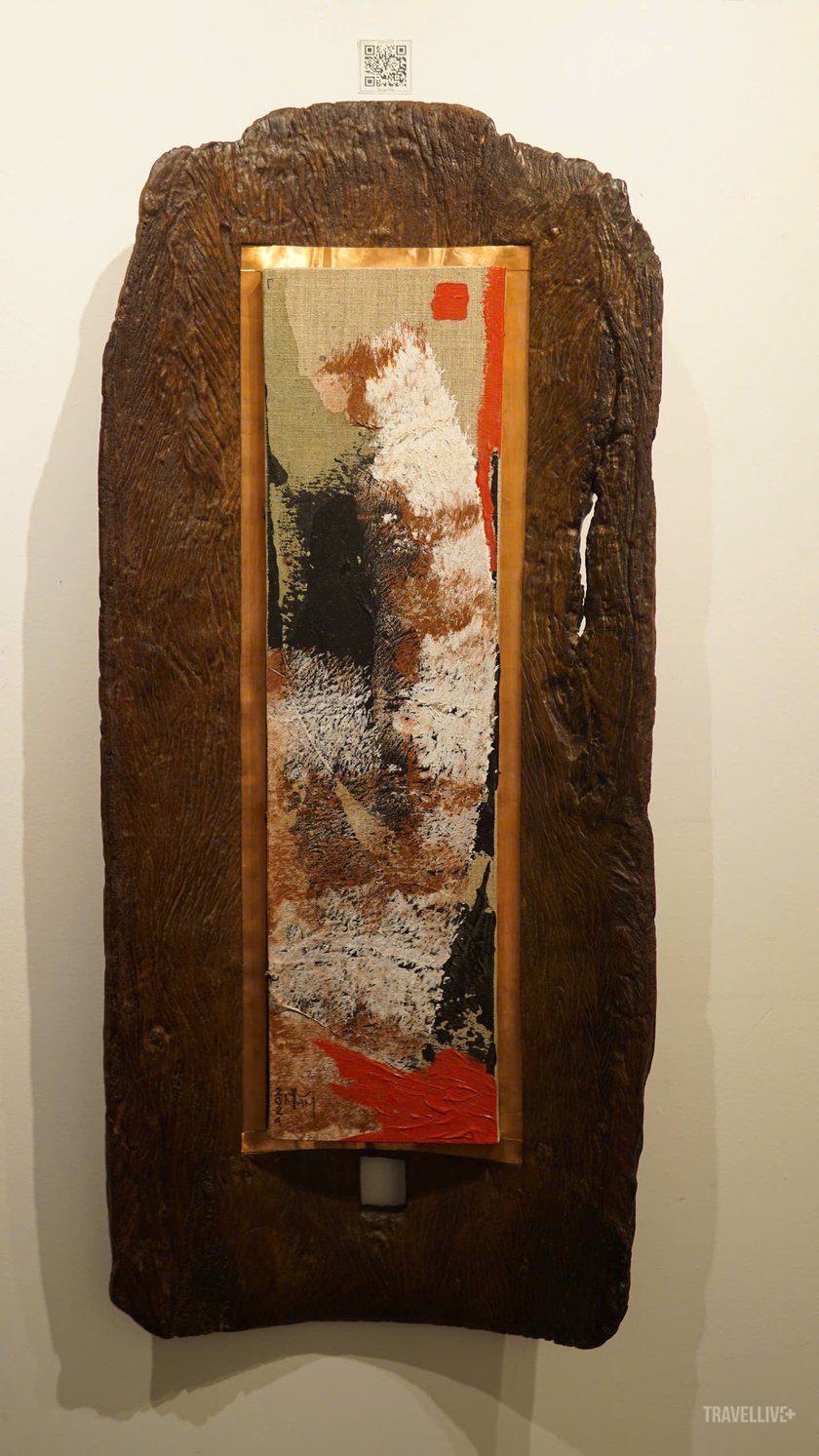
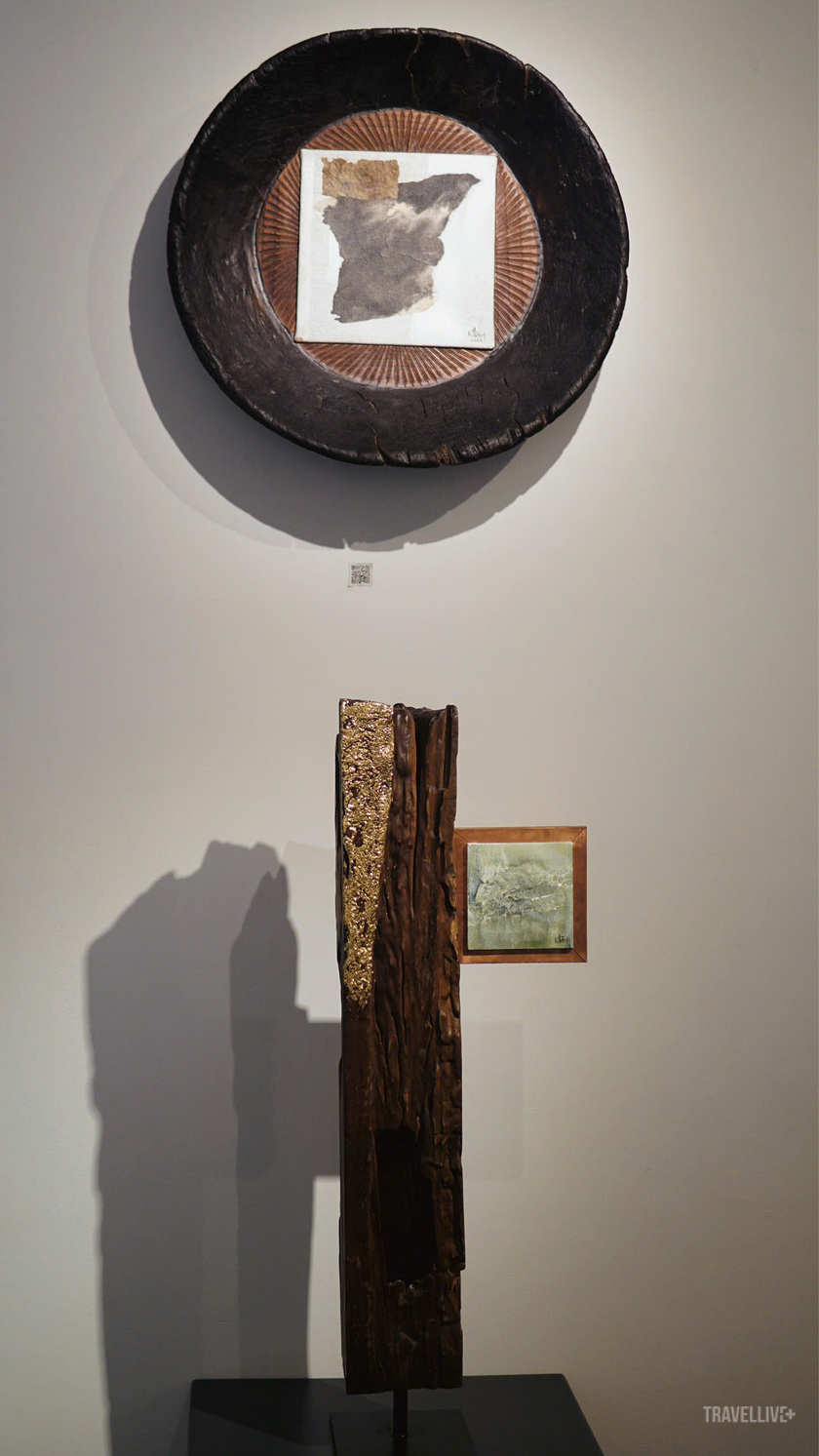
"Residence No. 3" - a work of art made from old wooden trays and epoxy resin.
Tran Nhat Thang's abstract paintings, with their free and unrestrained brushstrokes, reflect his inner world during this period – a state of balance and relaxation. These emotions are placed on a unique wooden pedestal designed by Tung Le from ancient wood heritage, recreating images of time within the stillness and enduring nature of traditional Vietnamese culture.
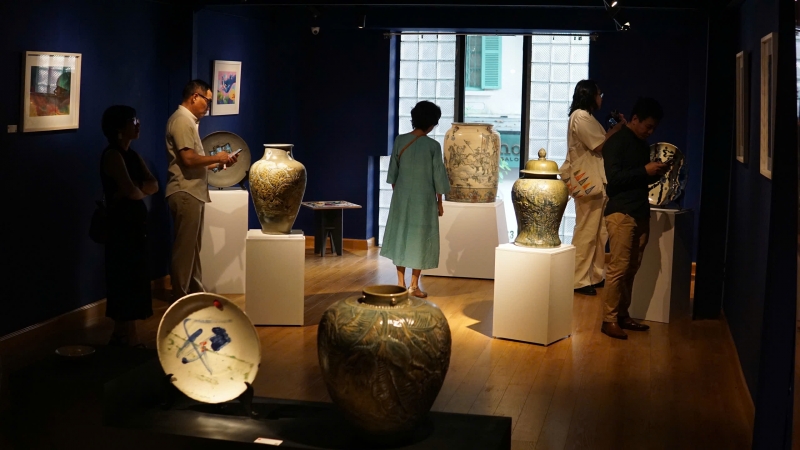
The exhibition "Time" by artist Tran Nhat Thang and architect Tung Le will take place from December 20th to December 27th, 2024, at Green Palm Gallery, 39 Hang Gai Street, Hanoi.
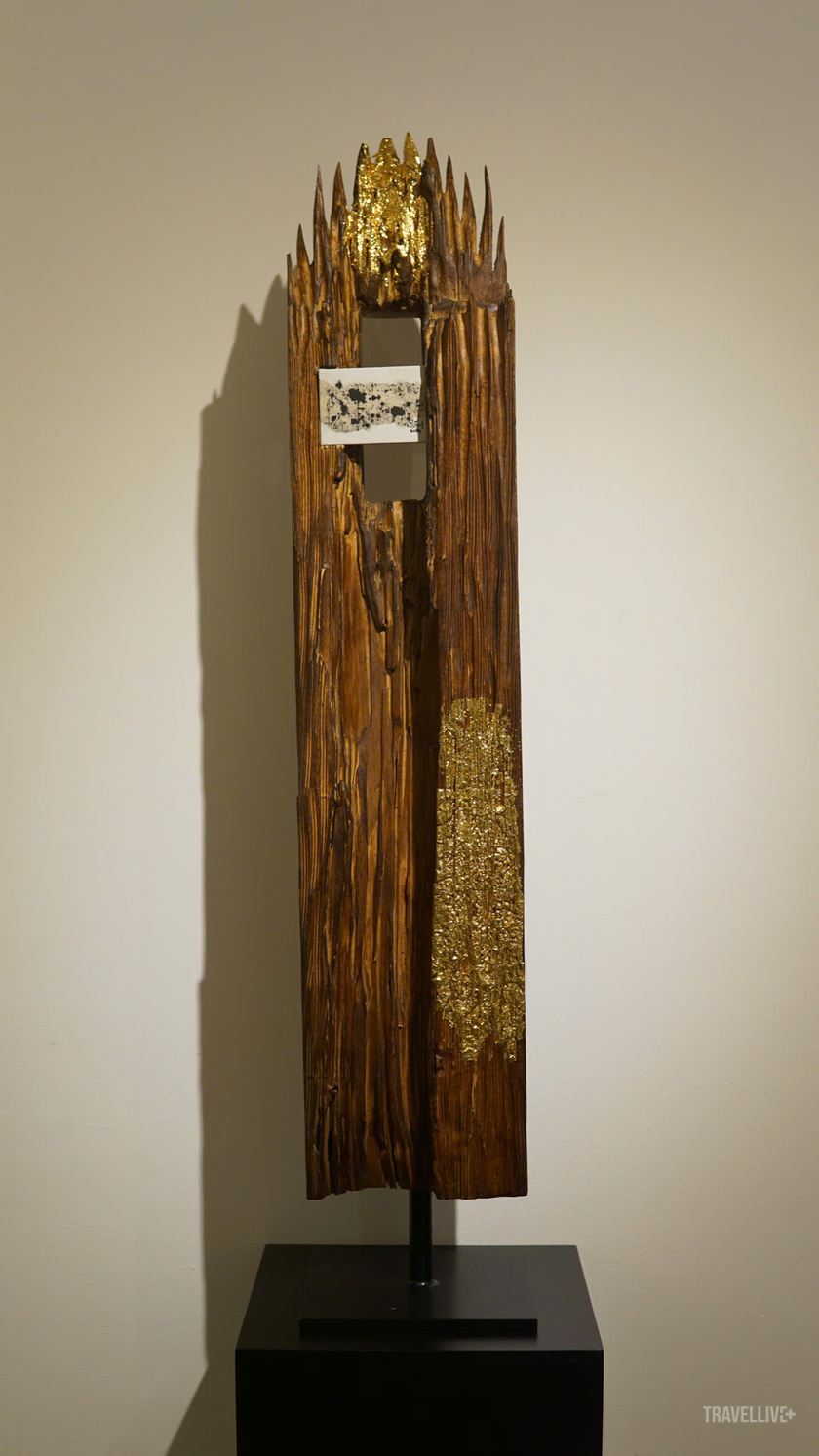
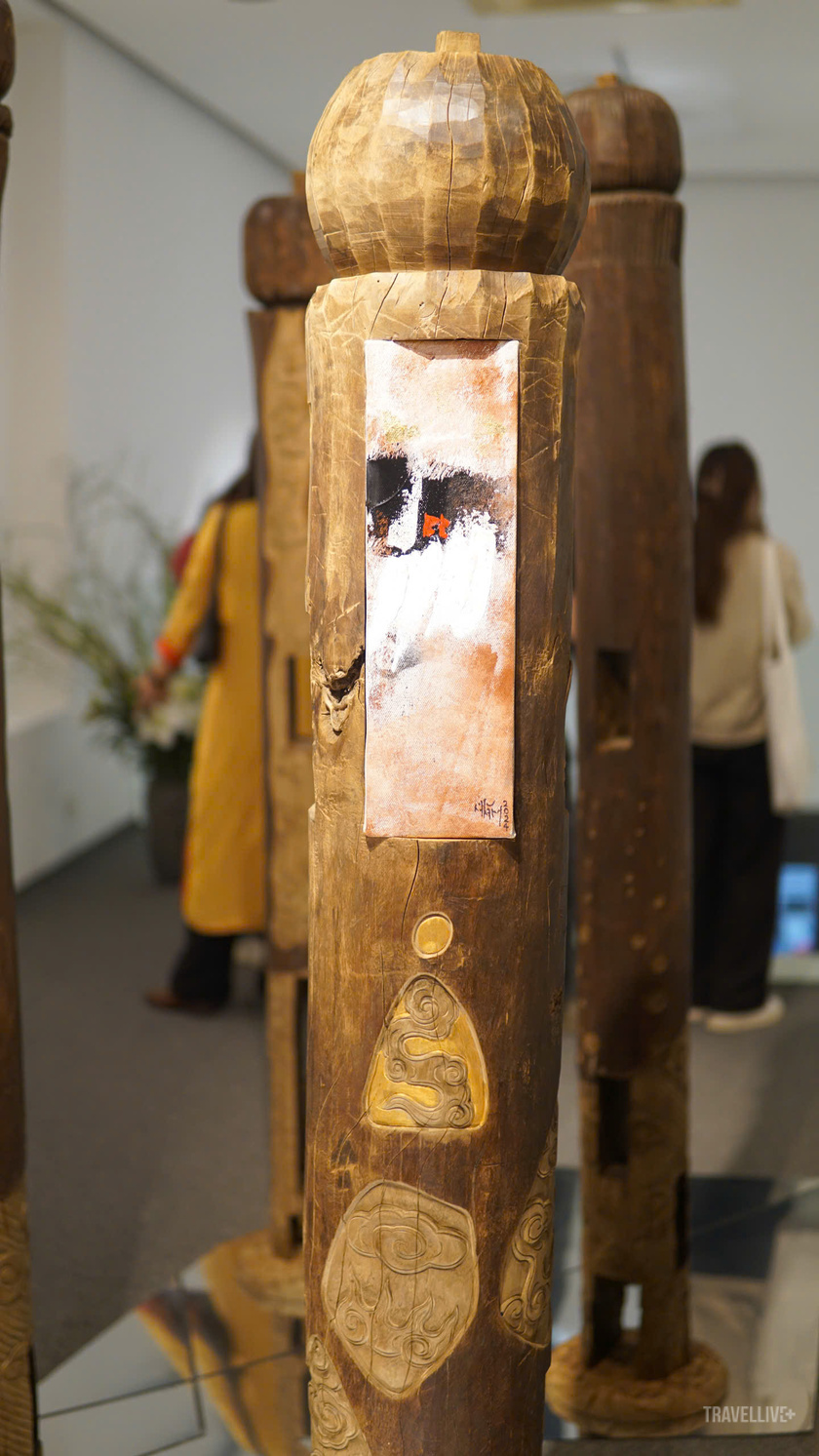
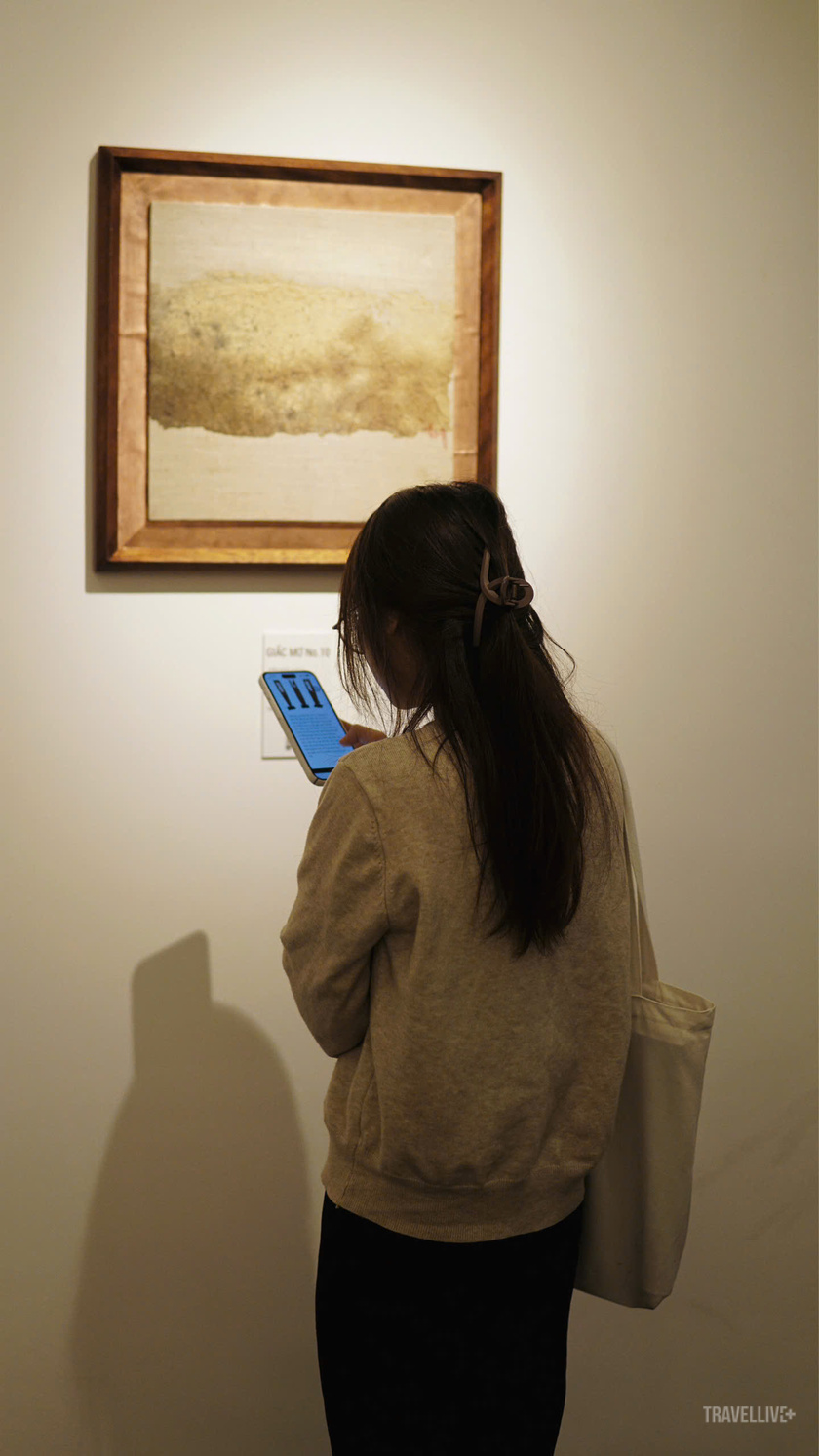
The "Time" exhibition offers art lovers a journey of discovery through time, viewed through a multi-dimensional and diverse lens of creativity and materials.