VI
VI EN
EN


In an effort to turn things around and regain its position on the regional tourism map, the Cambodian government has officially announced a temporary visa exemption for Chinese tourists. This decision is part of an ambitious "Green Season Action Plan" strategy aimed at restoring slowing growth and enhancing competitiveness against neighboring rivals.

According to information confirmed by the Cambodian Ministry of Tourism, this pilot program has received the highest approval from Prime Minister Hun Manet. Specifically, from June 15 to October 15, 2026, citizens holding passports from China, Hong Kong, and Macau will be allowed to enter and stay in Cambodia for up to 14 days without needing a visa or paying any fees. This is the first time in the history of tourism diplomacy that Cambodia has adopted such an open mechanism for the billion-person market, demonstrating the absolute priority of the Phnom Penh government in re-establishing a key international tourist flow.

With the recently announced temporary visa waiver policy, Cambodia expects to re-establish and surpass the pre-pandemic record of 2.3 million visitors from this market.
A notable aspect of this policy is the maximum streamlining of the process. While tourists are still required to complete the "Cambodia e-Arrival" electronic entry card as per current regulations, the complete elimination of the pre-trip visa application process is a significant improvement in user experience. In particular, the policy does not discriminate based on point of origin, allowing multiple entries during the four-month trial period, facilitating multi-country tours or for Chinese businesspeople seeking investment opportunities in the region.

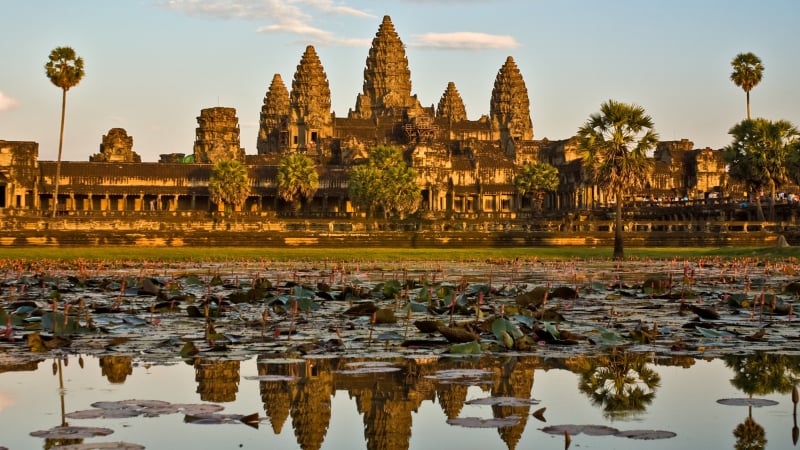
This shift is taking place against the backdrop of significant challenges facing Cambodia's tourism industry. Statistics show that in the first 11 months of 2025, the number of international visitors to the country reached 5.17 million, but recorded a 13% decrease compared to the same period of the previous year. Psychological barriers stemming from cybersecurity issues, online scams, and minor border disputes have somewhat tarnished the image of world heritage sites such as Angkor Wat and Bayon Temple. Therefore, Minister of Tourism Huot Hak's declaration that "visa exemption is an important first step" is seen as a positive signal to dispel concerns and affirm Cambodia as a safe and hospitable destination.
China is currently Cambodia's third-largest international tourist market, after Thailand and Vietnam. While Cambodia is expected to welcome around one million Chinese tourists in the first 10 months of 2025, this figure is still a considerable distance from the peak of 2.3 million in 2019. Attracting this customer segment again is not only about quantity but also about the quality of spending, as tourism is one of the four key economic pillars of the country, alongside agriculture and textiles.
According to Global Times and online booking site Tongcheng.com, searches for flights to Cambodia have surged. In particular, the Shanghai-Siem Reap route has seen a record fivefold increase. This appeal is further boosted by cost, with airfares from major economic hubs like Guangzhou and Shenzhen to the newly opened Techo International Airport generally very competitive, mostly under 1,000 yuan.

The visa exemption policy for Chinese tourists is seen as a crucial lever for Cambodia's competitiveness and sustainable development.
Ms. Chhay Sivlin, President of the Cambodia Association of Travel Agents (CATA), expressed strong support for the government's decision. She emphasized that this intervention is a significant additional resource, giving travel businesses more impetus to develop unique and competitive tour packages. Adjusting the 2026 development roadmap, coupled with promotional campaigns in target markets, will help enhance Cambodia's image internationally, moving beyond purely historical values towards a modern and dynamic image.