VI
VI


Lake from another world
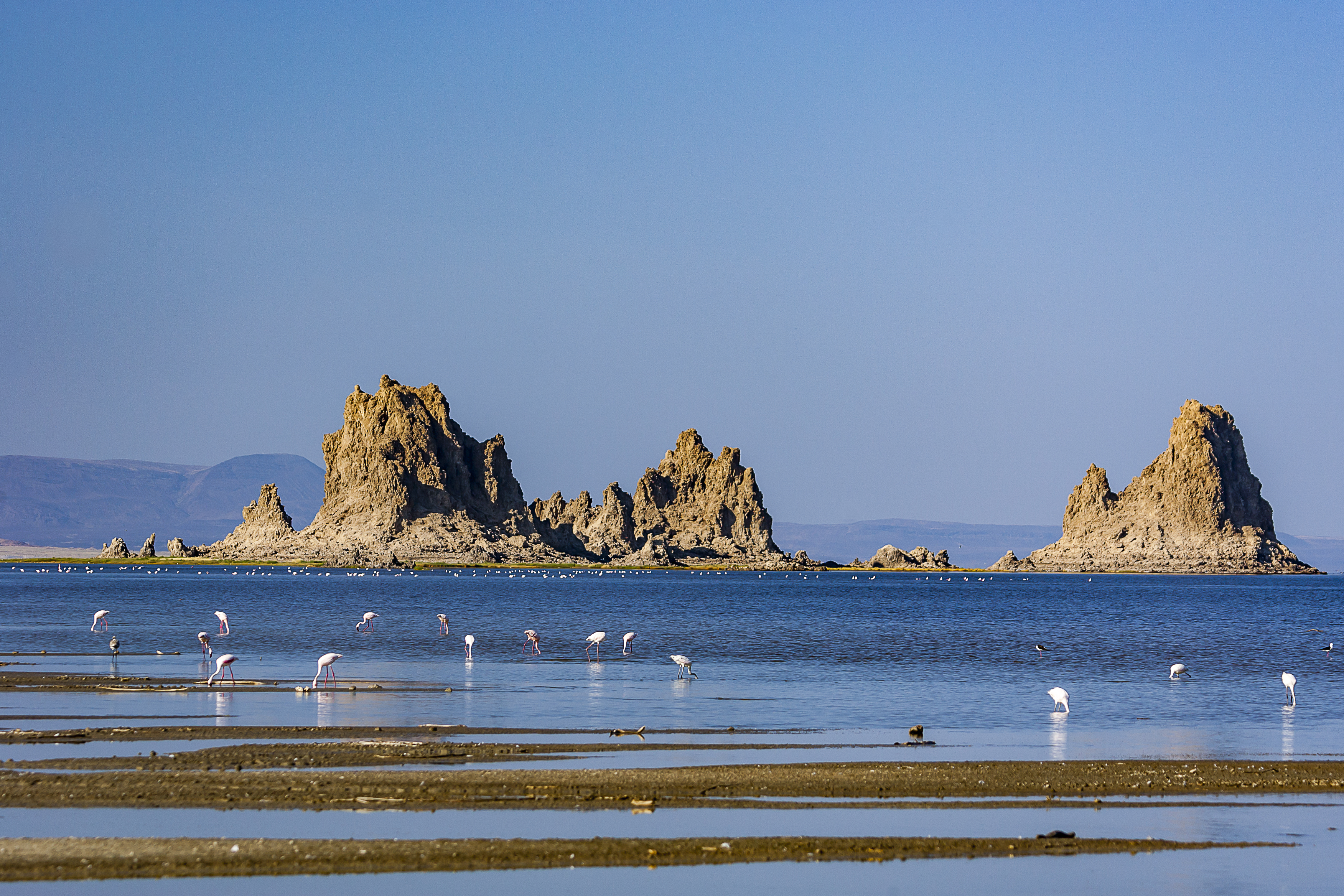
Located on the border between Ethiopia and Djibouti, surrounded by a barren desert that resembles a scene from a ruined world, Lake Abbe is one of the world's most spectacular and extremely difficult-to-access lakes.
With a width of 19 km, a length of approximately 17 km, and so much salt that the lake water is toxic if drunk, this giant alkaline salt lake is like an oasis in the desert, but its unusual geological features make it look like something out of the Moon.
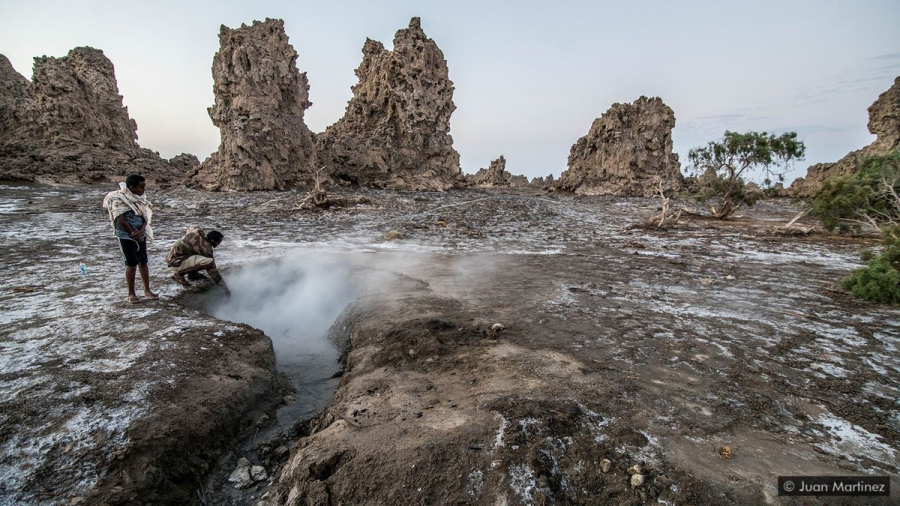
Hundreds of limestone mounds, resembling giant chimneys, rise on the horizon, towering above the flat, greenish-blue salt flats, sometimes reaching heights of up to 50 meters. These chimneys often release clouds of sulfurous smoke into the air, creating an otherworldly scene in one of Africa's harshest regions.
The creative power of nature
Lake Abbe lies at the intersection of three tectonic plates: Somali, Arabian, and Nubian. Also known as the Afar Depression, it is home to some of the earliest human fossils. Some paleontologists believe it to be the cradle of civilization.
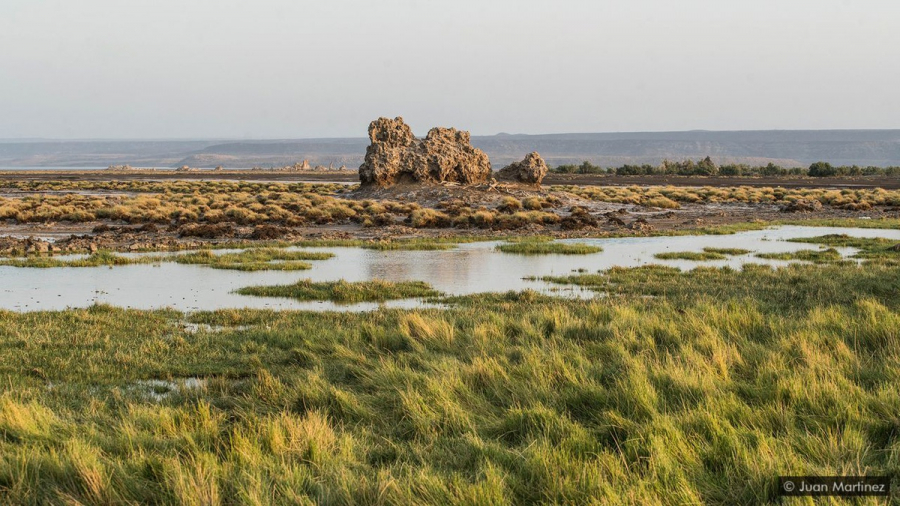
The lake's unique topography is the result of the gradual shifting of tectonic plates, causing the Earth's crust beneath Lake Abbe to continuously thin. Because these tectonic plates are slowly moving away from each other, underground hot springs allow magma to escape through narrow, deep fissures at the bottom of the lake.
When this phenomenon occurs, travertine deposits (a type of calcium-rich limestone heated by volcanoes) form giant chimney-like columns in the desert over thousands of years, and they began to be seen when the lake's water level dropped by about two-thirds in the 1950s, when the lake's water was diverted for irrigation purposes.
Next ocean?
Today, the tectonic plates beneath the Afar Depression continue to separate at a rate of 2 cm per year, and geophysicists believe that in about 10 million years, the Afar Depression – and this giant alkaline salt lake – will be the birthplace of a new ocean.
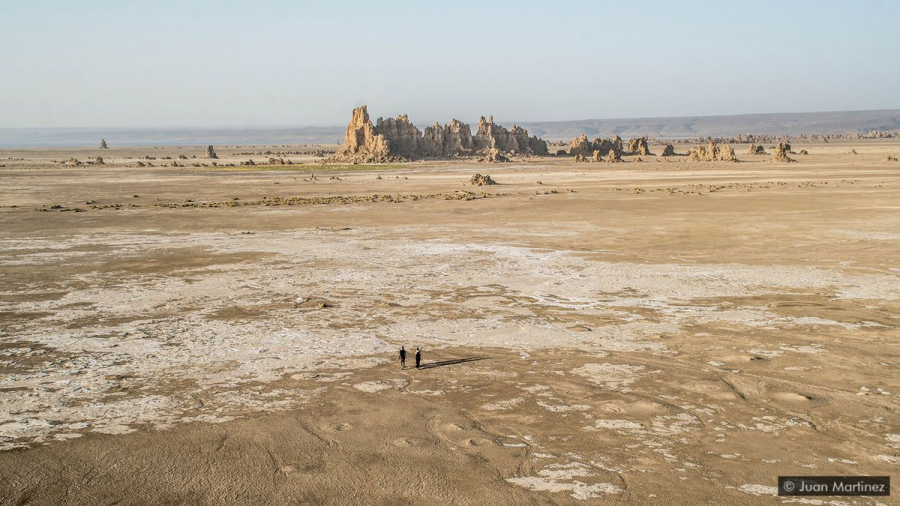
As tectonic plates continue to move apart, scientists believe the Red Sea will submerge the coastal plateau of Djibouti and the Afar Depression will be completely submerged. According to scientists from NASA's Earth Observatory, the Red Sea, the East African Rift Valley, and the Gulf of Aden will transform into a vast ocean the size of the Atlantic, while the Horn of Africa will become an island.
Life in the desert
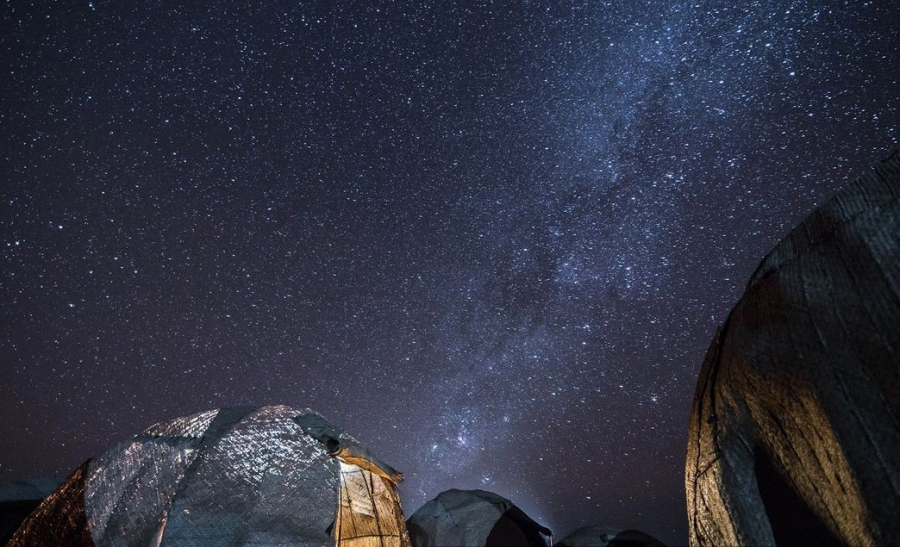
Although the Afar Depression is one of the harshest and most isolated regions in Africa, it is still inhabited. Along the approximately 150 km stretch from Djibouti, the capital of Djibouti, to Lake Abbe, scattered houses and bare ari tents (shell-shaped tents made from palm leaves) can be seen somewhere amidst the sun-drenched landscape.
Water is so scarce here that farming is impossible. "Ari tents are very popular with the Afar people [the inhabitants of this area]," explained local guide Mohammed Omar Ali. "They can be easily moved from one place to another."

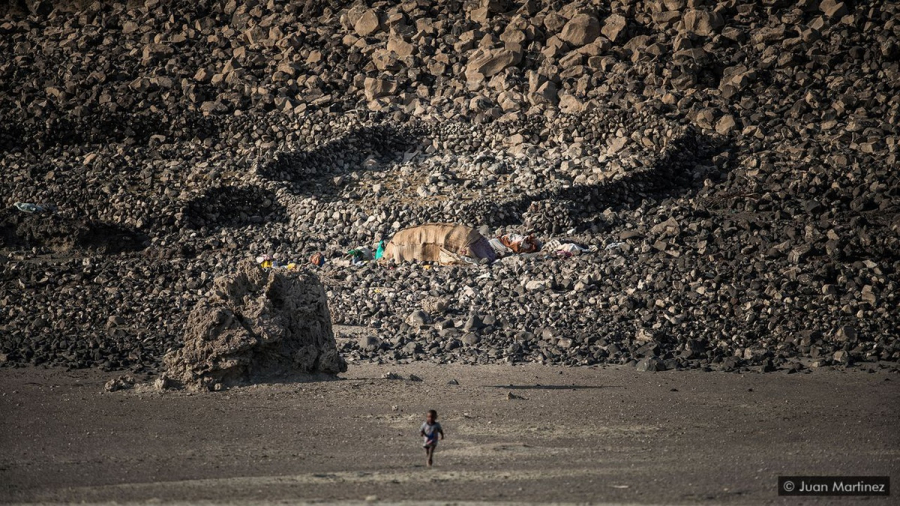
Many Afar people live in the region in a semi-nomadic manner. They move around the low-lying salt plains with their families, searching for salt to sell, water, and food to survive before continuing their journey.
Most of these small, makeshift Afar villages lack access to electricity or running water.
According to Omar Ali, many settlements around Lake Abbe were only formed recently because these areas were too difficult to access.
Afar nomads
With temperatures ranging from 30oC in winter up to 45oDuring the summer months, Lake Abbe is one of the hottest places in the world year-round. Many young Afar shepherds, farmers, and traders work under the scorching sun in harsh conditions.
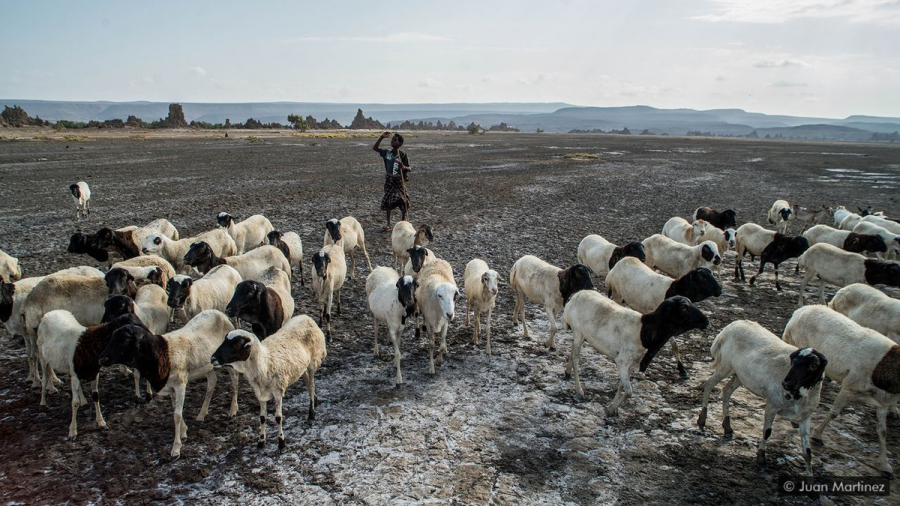
In recent years, the impact of climate change has caused temperatures in the region to rise even higher and exacerbated droughts. But according to Omar Ali, the Afar people are hesitant to leave the area, preferring to stay, build temporary communities, and continue their traditional way of life.
A breathtaking wonder at sunrise.
The scene here is particularly dramatic at dawn, when temperatures are at their coolest and steam rises from the underground hot springs through vents in the chimneys. Then, as the sun rises, stunning orange and pink hues blanket the sky, illuminating the hot springs and salt deposits in a dazzling light show.
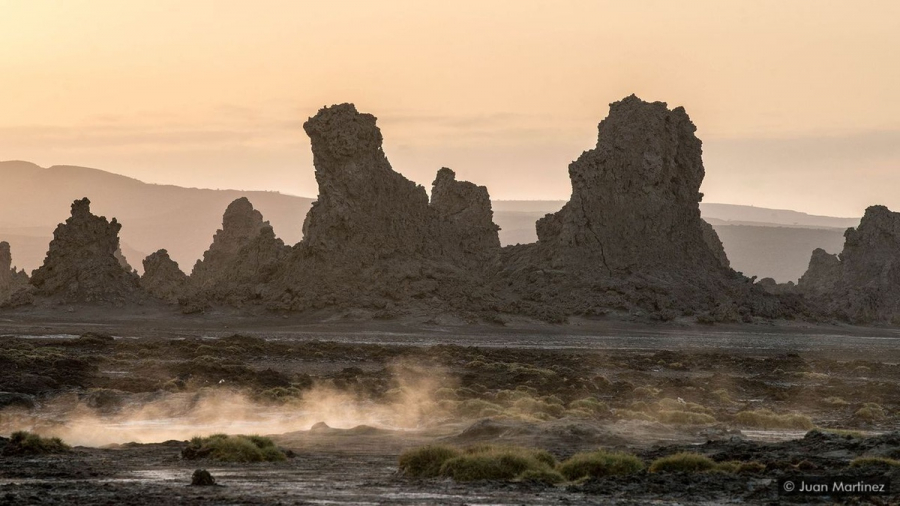
Nowhere else on Earth looks quite like it. In fact, scientists believe the closest thing to this chimney-like structure is at the bottom of the Pacific Ocean, where large tectonic plates are also slowly breaking apart and creating similar structures.
Life around the lake
Although most visitors come to Lake Abbe on day trips from Djibouti city, the best way to explore the diverse landscape of Lake Abbe and to see the famous flamingos on the lake is to camp overnight.
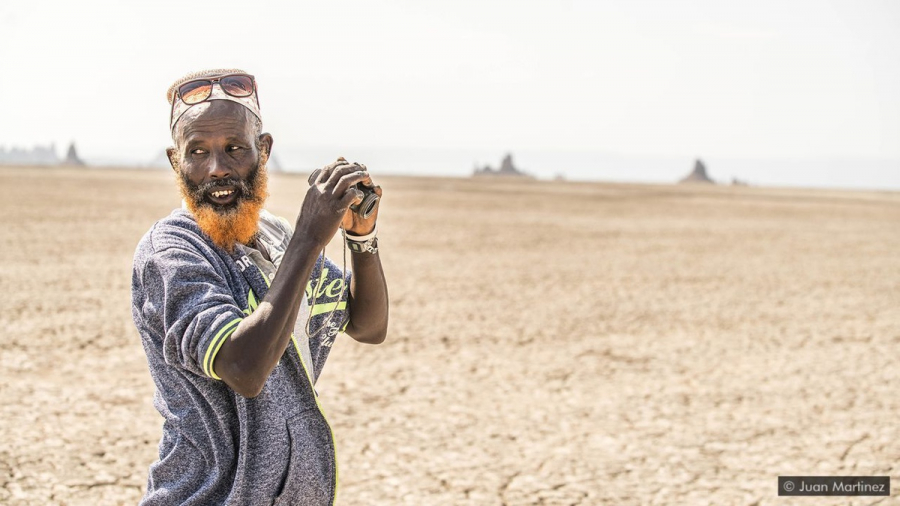
Only a handful of guides, such as Kamil Hassan, the head of Camp Asboley, are able to take tourists to the lake. Hassan has lived on Lake Abbe for many years and witnessed the land gradually dry up and become barren over the years. With his knowledge of the terrain and culture of the region, he is trying to promote tourism as an alternative means of survival for the Afar people.
Natural barriers keep intruders away.
"Tourists rarely manage to spot flamingos," Hassan said. "It's extremely difficult."
Reaching the extremely saline waters of Lake Abbe and witnessing the increasingly rare migration of the giant flamingo flock is quite a journey.
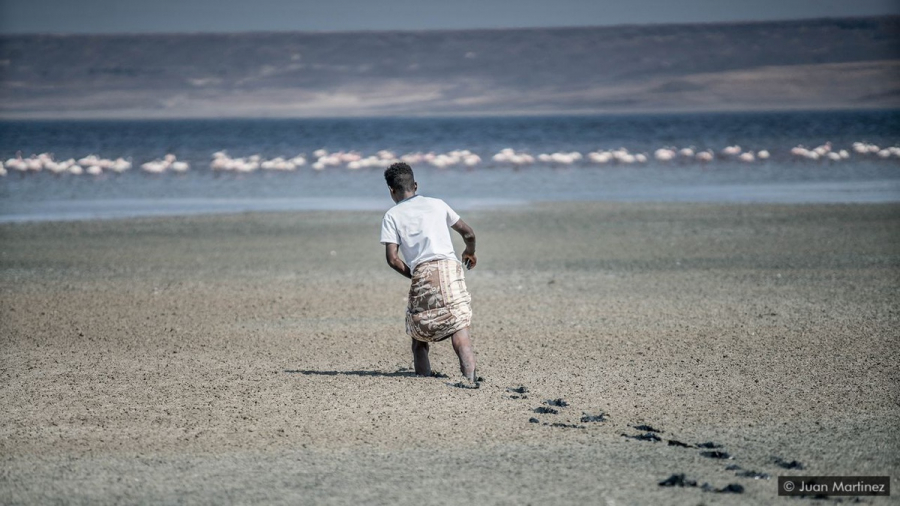
From Camp Asboley, birdwatchers drive until the salt flats begin to soften, turning into a viscous mud and sinking under the weight of their cars. From there, visitors must hike for hours across meadows, hot springs, and vast salt flats with no shade to protect them from the intense sun.
About 300 meters from the shore, the thick, sticky mud and loose sand submerge anyone or anything by about half a meter with each step, forming a natural barrier protecting the flamingo flock from predators.
Like in a science fiction movie.
As the sun sets, Lake Abbe transforms into a scene straight out of a ruined world. The twisted silhouettes of the chimneys look bizarre as the temperature drops. Stars fill the night sky, and life slows down at Lake Abbe.
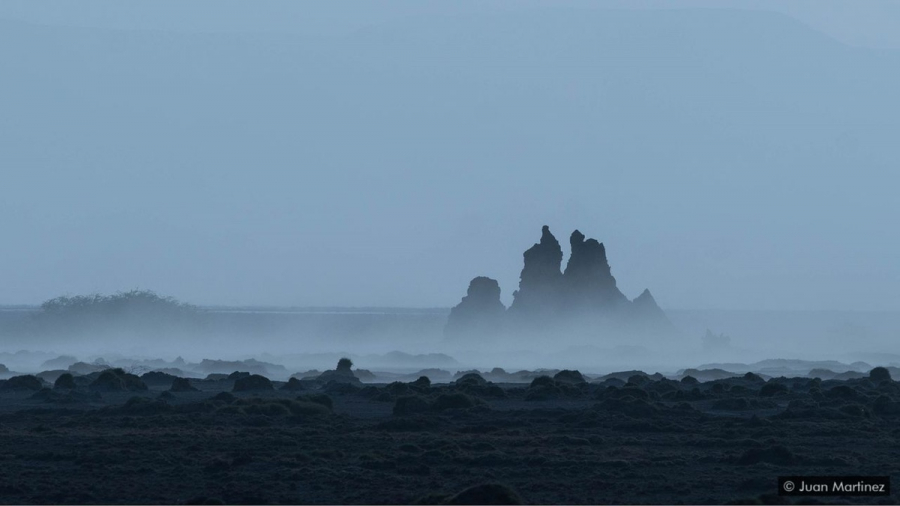
Most Afar people spend their time with their nomadic community, the only human figures visible in the distance being herders driving their donkeys back to their stalls before nocturnal predators like jackals or hyenas become active.
Far away from the world
Without roads, electricity, or basic infrastructure, the remoteness of the Lake Abbe region creates a rare sense of solitude that few places on Earth can match.
Although tourists visiting Lake Abbe may consider this remote place another world, for the Afar people, it is their home.