VI
VI


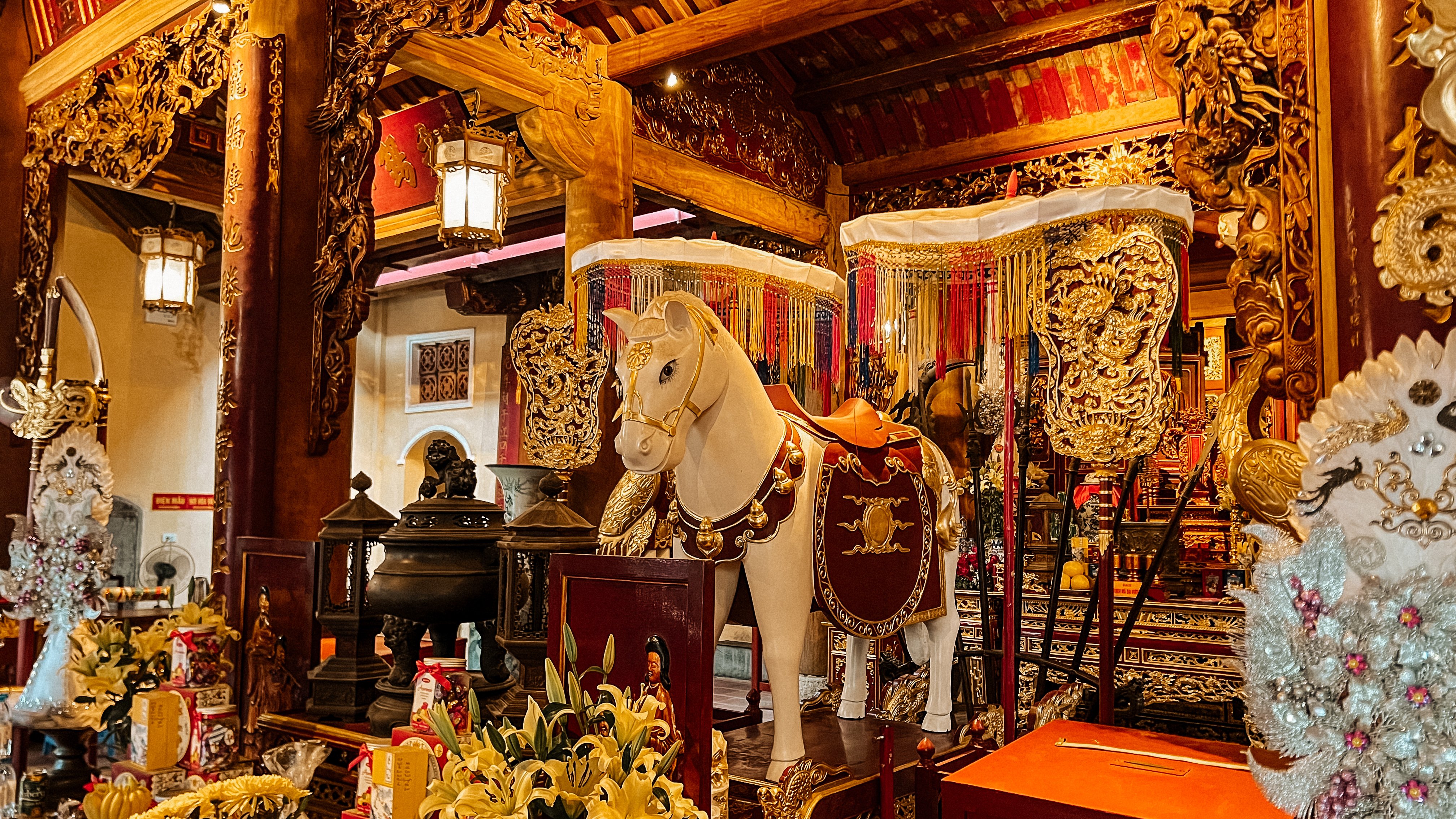
The Bạch Mã Temple (Eastern Guardian Temple), along with the Voi Phục Temple (Western Guardian Temple), Kim Liên Temple (Southern Guardian Temple), and Quán Thánh Temple (Northern Guardian Temple), are known as the "Four Guardian Temples of Thăng Long," symbolizing the spiritual and cultural life of the ancient capital. As the temple guarding the eastern side of the ancient Thăng Long citadel, the Bạch Mã Temple was built in Thọ Xương district, Hoài Đức prefecture, now located at 76 Hàng Buồm Street (Hoàn Kiếm District, Hanoi). It is considered one of the most sacred places in Hanoi because it is dedicated to the deity Long Đỗ - Bạch Mã Đại Vương, a guardian deity of Thăng Long.
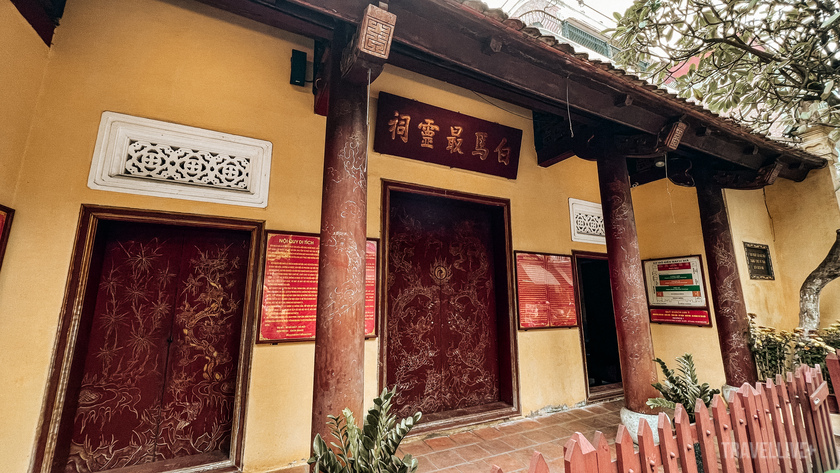
The Bach Ma Temple is located at 76 Hang Buom Street (Hoan Kiem District, Hanoi).
Timeless beauty in the heart of the old town.
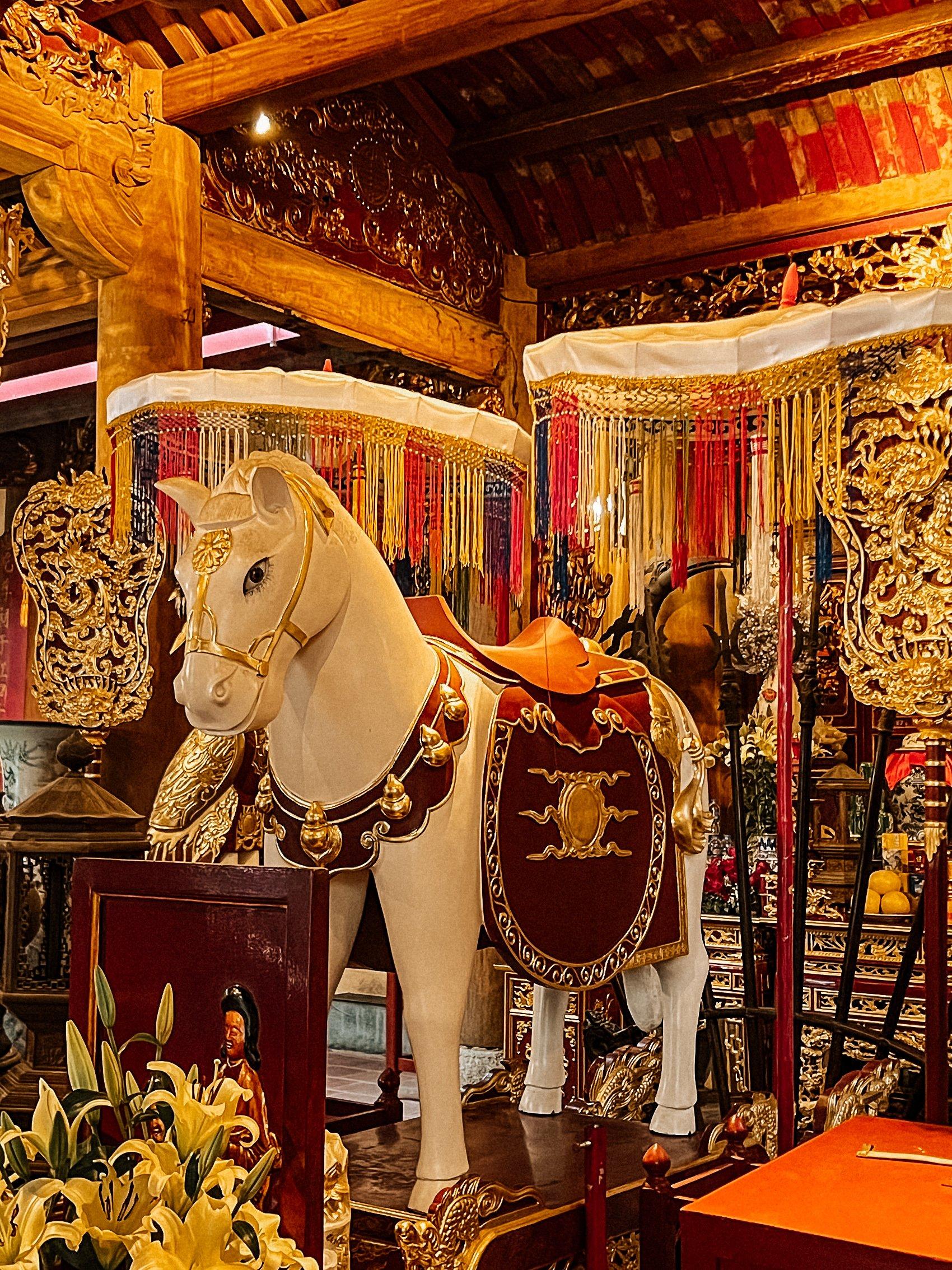
Built in the 9th century, the Bach Ma Temple boasts an ancient and magnificent beauty with its golden walls and red wooden doors carved with golden dragons. The complex includes the Nghi Mon Gate, Phuong Dinh (front courtyard), Dai Bai (outer pavilion), Thien Huong, the Forbidden Palace (where the statue of the White Horse deity is worshipped), and the Council House.
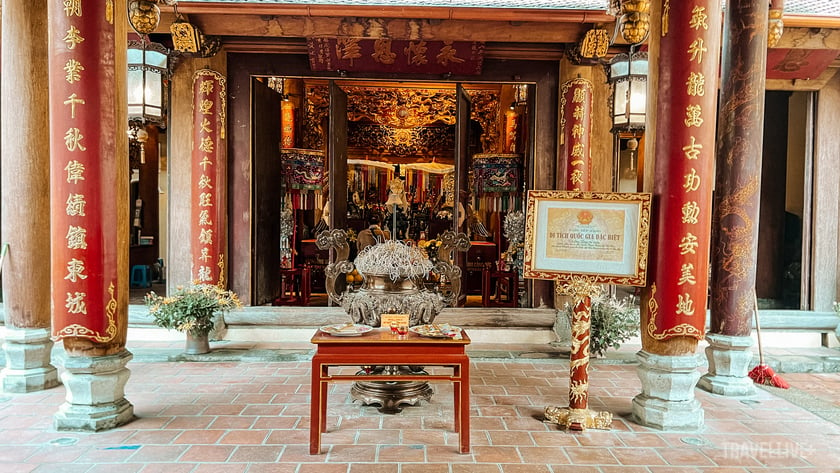
Built in the 9th century, Bach Ma Temple possesses an ancient and magnificent beauty.
One of the highlights of the temple's interior architecture is the entire wooden frame with a system of large ironwood columns and meticulously carved roof supports, following the traditional "stacked beam and rafter" and "three-sided" structure. Therefore, the temple retains its solemn beauty, transcending time, in the heart of Hanoi.
The main hall of the Bach Ma Temple houses an exquisitely crafted altar with intricately carved dragons and phoenixes, painted in red and gilded. In particular, the details of the dragon heads, horizontal plaques, and couplets are not only brilliantly gilded but also incredibly refined.
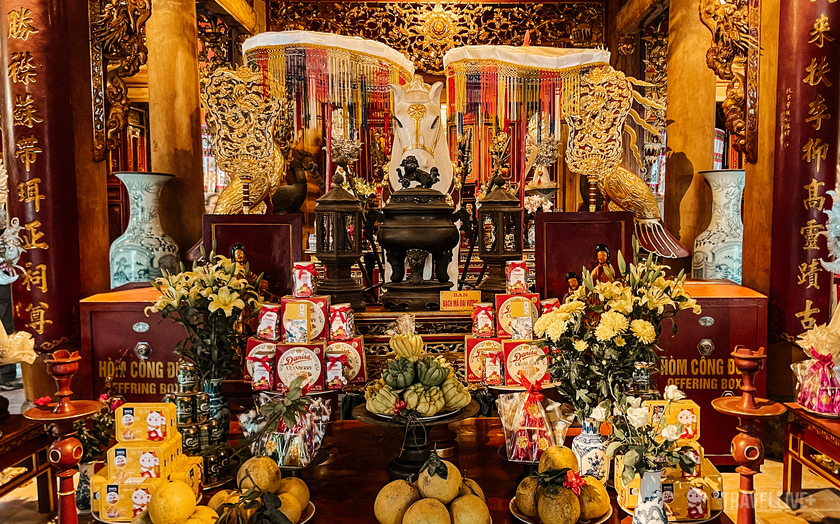
The Bach Ma Temple is dedicated to the god Long Do - Bach Ma Dai Vuong, a guardian deity of Thang Long.
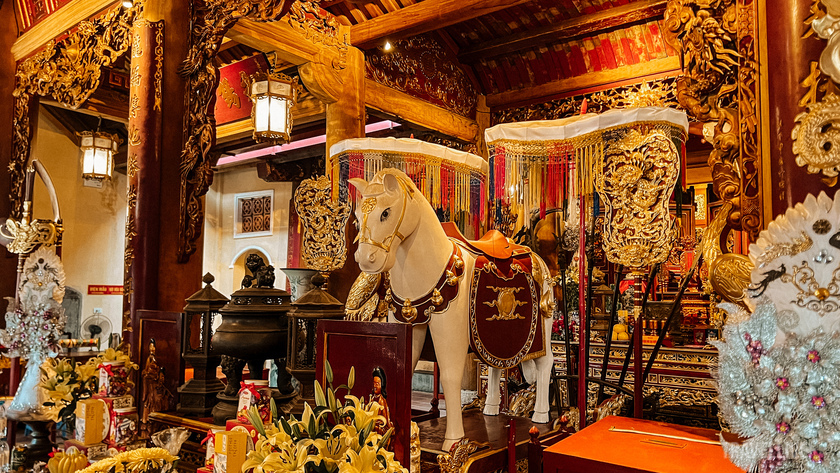
The Bach Ma Temple still retains its timeless, majestic beauty in the heart of Hanoi.
Currently, Bach Ma Temple still preserves many valuable ancient artifacts such as stone steles, royal decrees, palanquins, crane statues, statues, incense altars, vases, bronze bells, etc. When visiting, tourists will have the opportunity to admire 15 stone steles inscribed with stories, myths about the temple's construction and rituals, and renovations over the past 1000 years.

Furthermore, the temple also houses rare religious artifacts and royal decrees from the Le, Tay Son, and Nguyen dynasties. The temple also preserves 13 horizontal plaques and steles related to the deities Long Do and Bach Ma. In addition, many other valuable artifacts at Bach Ma Temple include the Dragon Throne with the inscription of the deity "Long Do Than Quan Quang Loi Bach Ma Dai Vuong" and the horizontal plaque "Dong Tran Linh Tu".
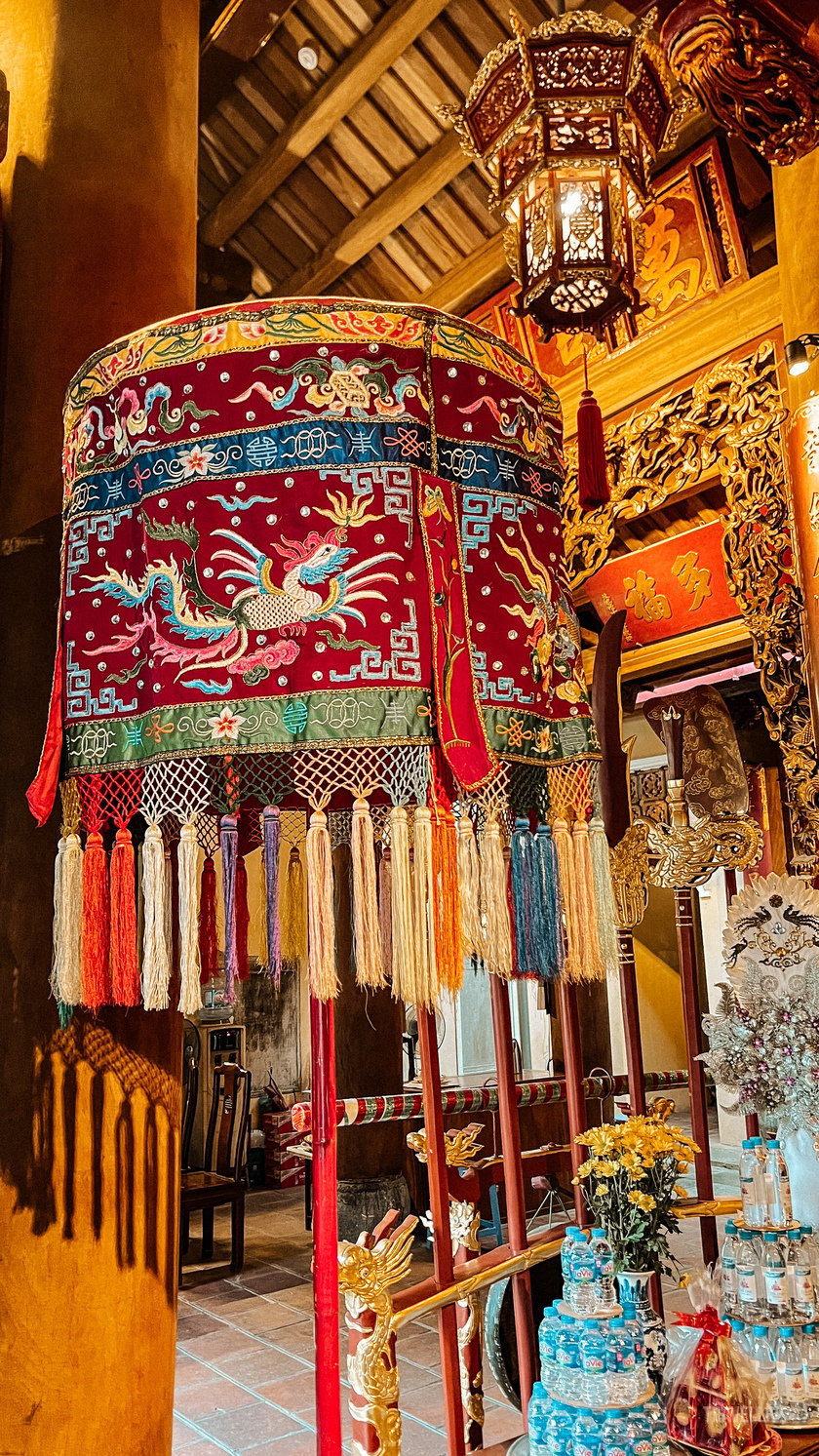
Today, Bach Ma Temple still preserves many valuable ancient artifacts.
Amidst the daily hustle and bustle of Hanoi, the sacred space of Bach Ma Temple seems to stand out as a unique beauty, highlighting the distinctive character found only in Hanoi's Old Quarter.
Nguyen Thi Dieu (from Quang Nam), a native of Central Vietnam experiencing Hanoi for the first time during the spring season, shared: “While strolling around the Old Quarter, I stumbled upon Bach Ma Temple and decided to visit and take photos. I was immediately impressed by its ancient beauty and felt the temple's solemnity. This will be one of the memories I cherish from my first time in Hanoi.”
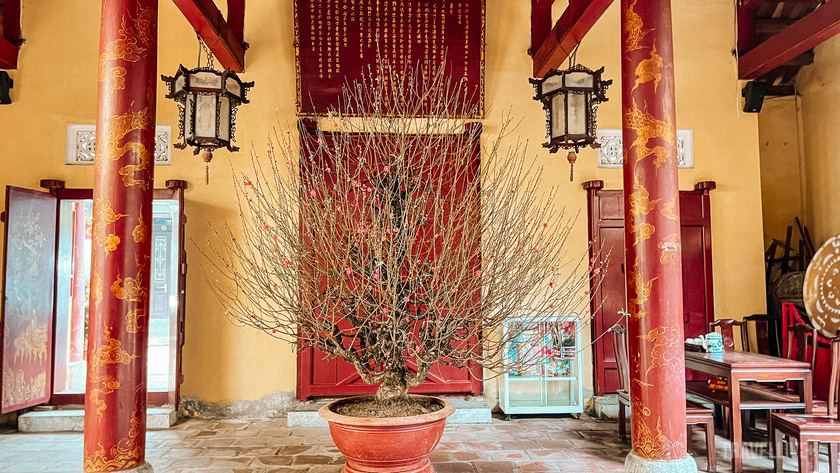
The colors of spring fill the Bach Ma Temple.
The history of the famous sacred temple in the capital.
In the 10th century, while on his way to war, Dinh Bo Linh visited the Bach Ma Temple located east of Dai La citadel to pray and promised to be granted divine status if his wish was granted.
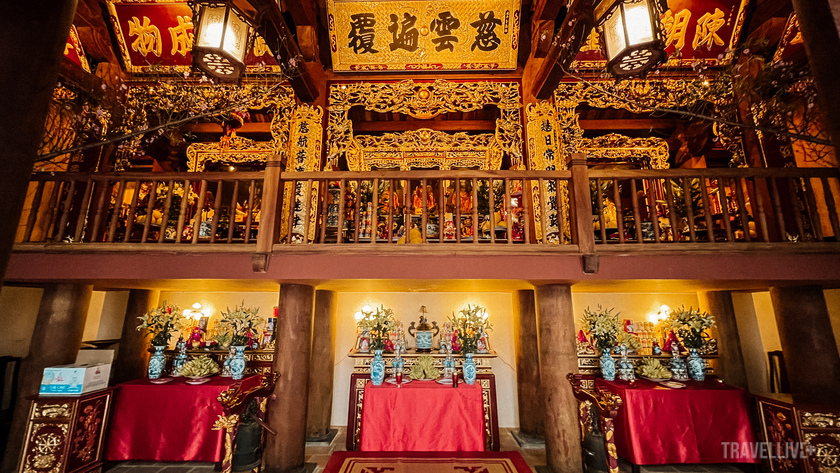
The shrine dedicated to the Mother Goddess at Bach Ma Temple.
After suppressing the enemy rebellion and unifying the country, King Dinh Tien Hoang dreamt of a deity who called himself the White Horse God and reminded him that he had not yet properly organized the rituals to honor the deity. Upon waking, the king immediately bestowed the title of "Guardian of the Nation, Guardian of the Realm, Divine and Benevolent God," upon the White Horse God, and ordered the construction of an additional temple dedicated to the White Horse God in the hometown of Queen Duong Thi Nguyet.
During the Nguyen Dynasty, Emperor Dong Khanh also bestowed the title of Ham Quang Thuong Dang Than (Upper-Class Deity) upon the White Horse deity.
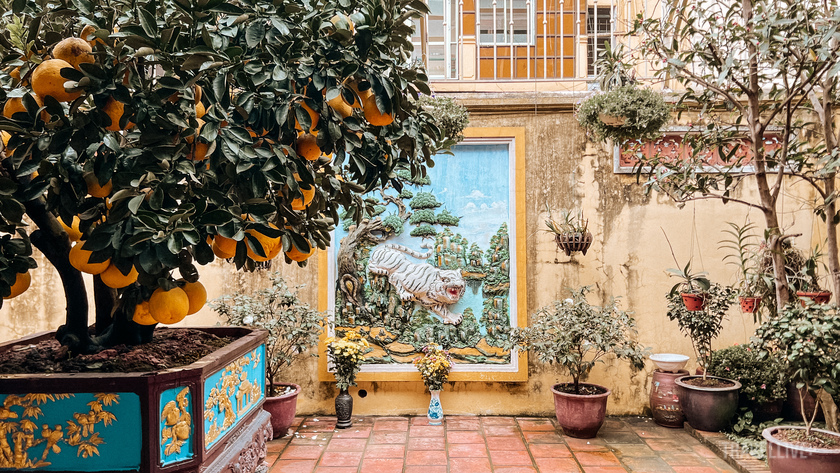
The sacred space of Bach Ma Temple seems to have become a unique beauty that characterizes the distinctive features found only in Hanoi's Old Quarter.
Legend has it that in 1010, when King Ly Thai To moved the capital to Thang Long, he ordered the construction of the citadel many times, but each time it collapsed. The king then sent people to the temple to pray for help. They saw a white horse emerge from the temple, leaving footprints wherever it went. Afterward, the horse returned to the temple and slowly disappeared. Seeing this, the king ordered the construction of the citadel and dikes following the footprints, and it was successful. From then on, the temple was named Bach Ma Temple (White Horse Temple) and the deity Long Do was worshipped as the tutelary god of Thang Long.
To date, the temple has undergone numerous renovations but still retains its majestic appearance and unique cultural and historical value. The two most significant restorations took place during the Chính Hòa era of Emperor Lê Hy Tông and the 20th year of Emperor Minh Mệnh's reign.
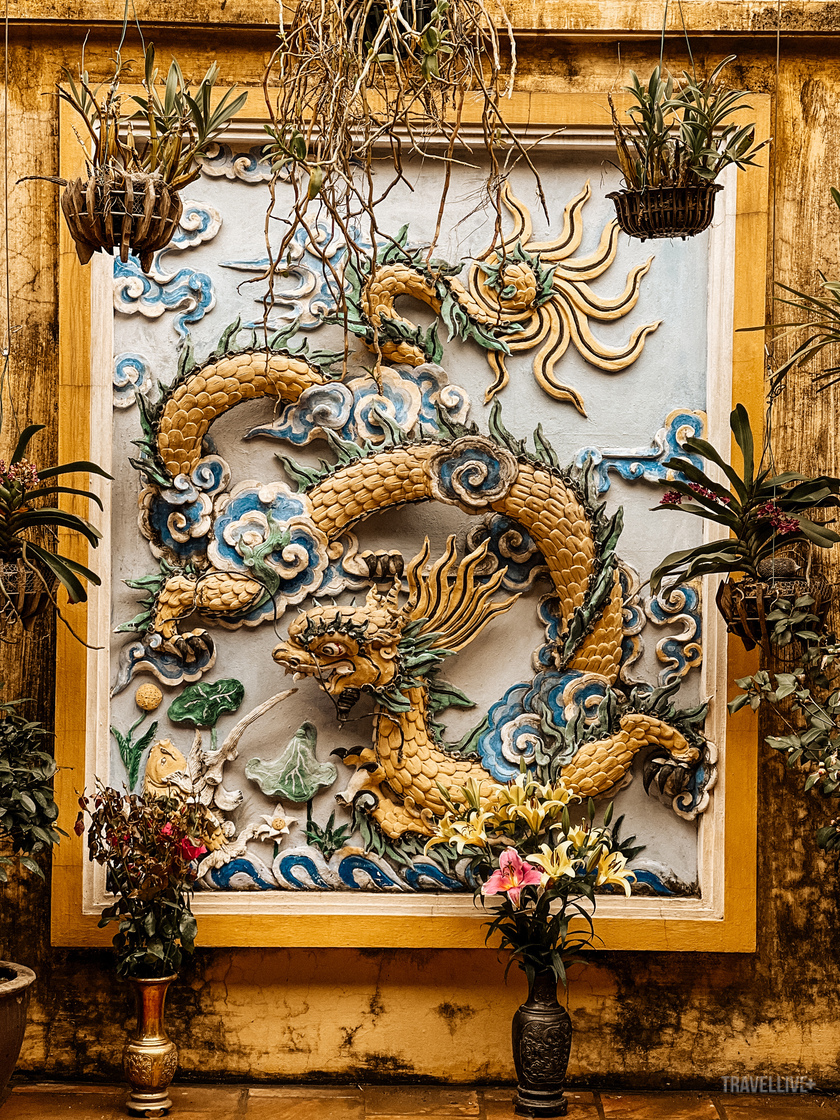
The Bach Ma Temple has been renovated many times but still retains its majestic appearance and unique cultural and historical values.