VI
VI


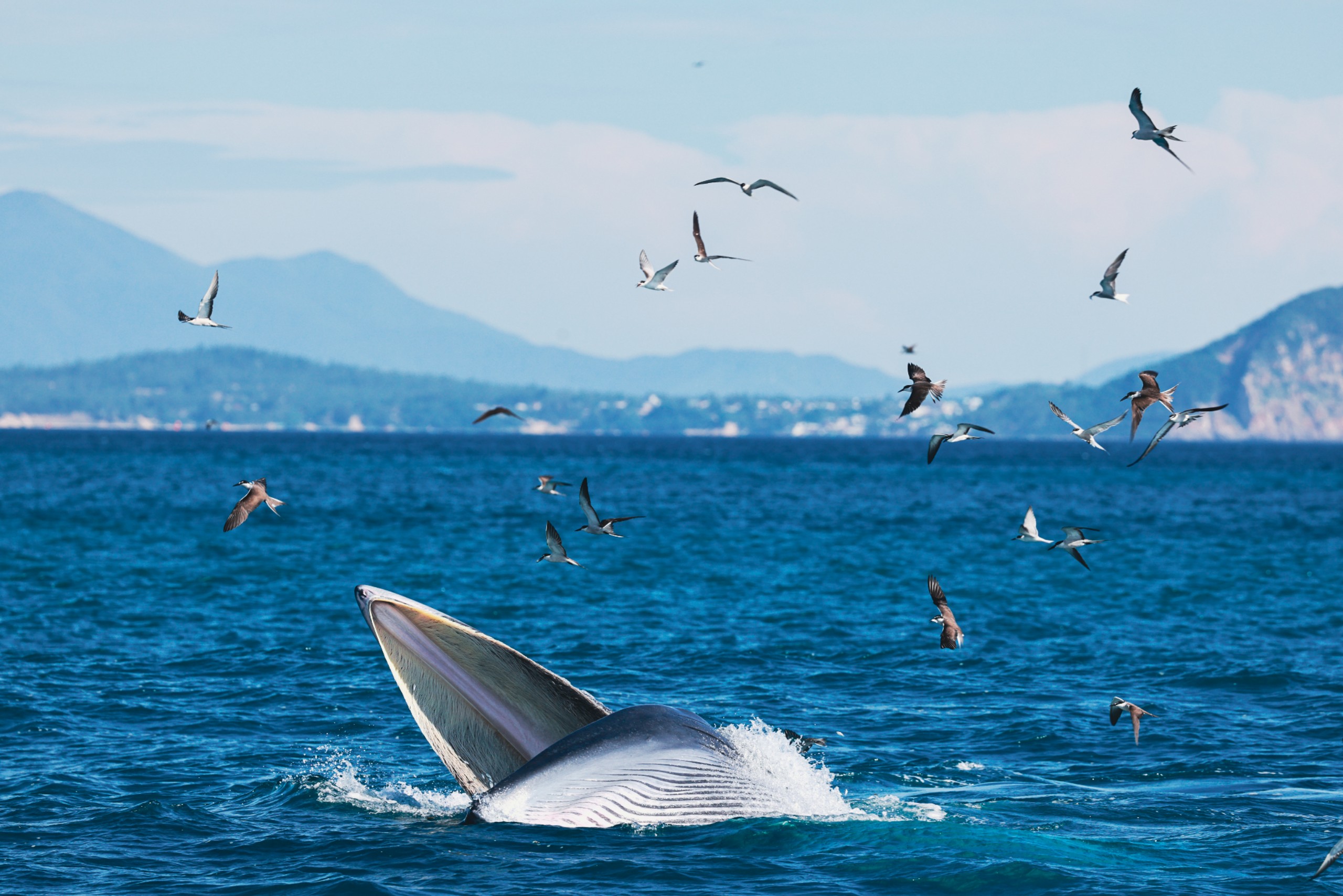
Returning from his whale-hunting trip, photographer Ngo Tran Hai An felt satisfied with the works he had put so much effort into capturing. He reportedly spent four days at sea off Vinh Loi, near the De Gi estuary, before finally spotting the whales. Sharing on his personal page, he said that the moment the mother and calf whales appeared, he was so excited that he was paralyzed, his fingers frantically pressing the shutter button.
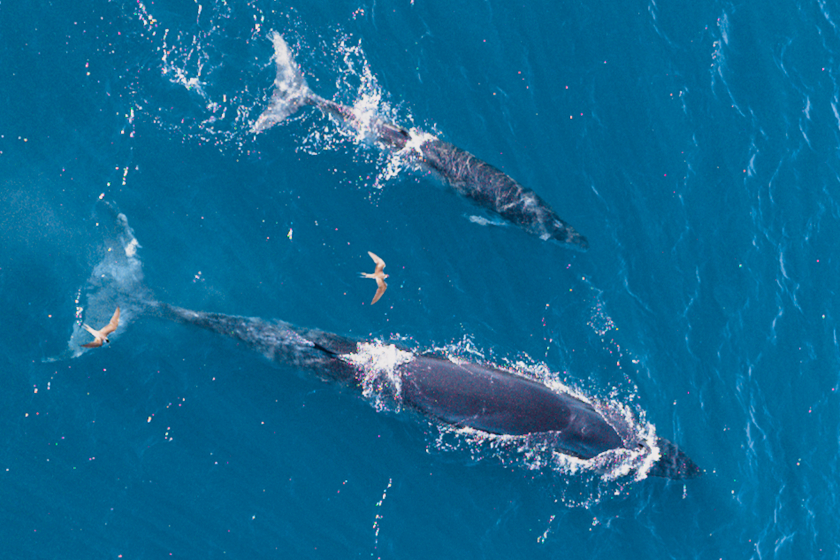
The image shows a mother whale and her calf hunting for prey.
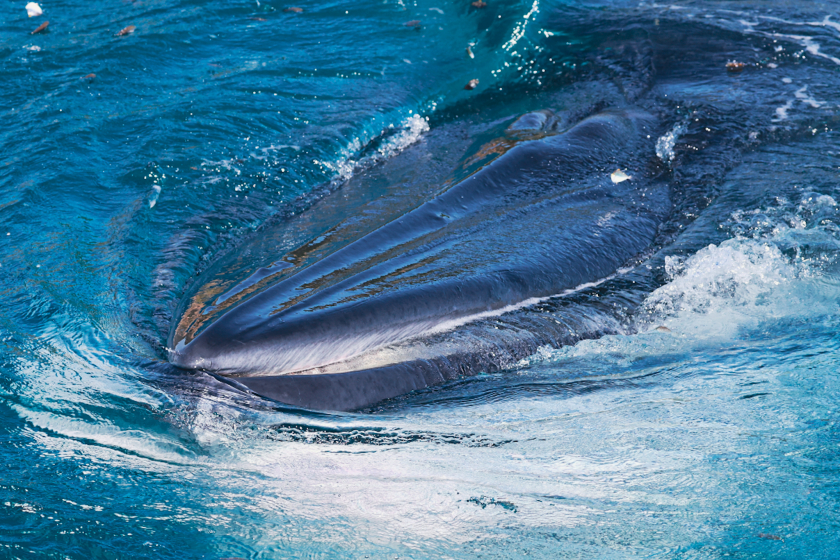
The whales surfaced, preparing to catch their prey.
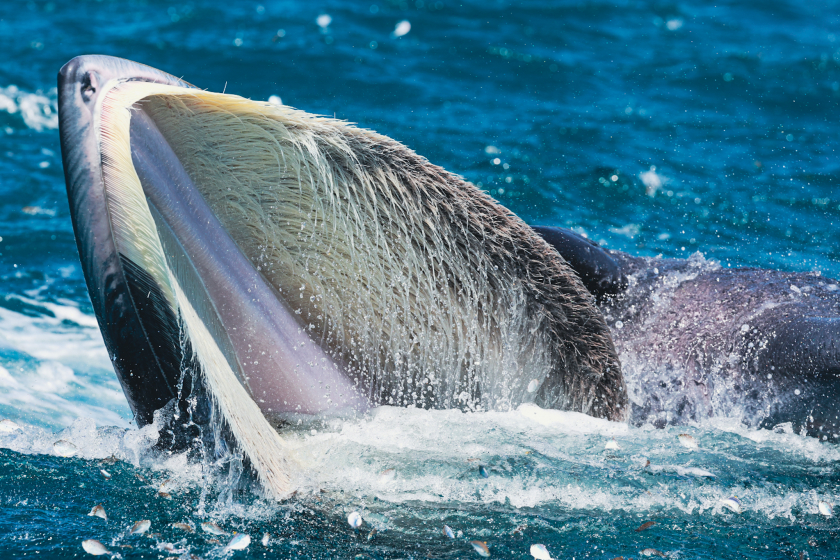
The sacs inside the whale's mouth push water out and trap the whale.
Speaking to Travellive, the photographer couldn't hide his joy at witnessing the appearance of a whale in the De Gi sea area of Vietnam. Previously, he had only seen whales on the internet or in other foreign seas. On this whale-hunting trip, Hai An had the opportunity to closely observe all the whale's activities twice, both through his camera lens and with his own eyes, right in his national waters. It was an indescribable feeling.
"I feel that the appearance of whales in De Gi sea is a sign of change in nature or in our country's tourism industry," said Ngo Tran Hai An.
According to Hai An, the photo he is most proud of in his collection of whale photographs is "The Eyes of the Ocean." He explains that capturing a close-up of a whale's eyes as it surfaces requires extreme patience and a steady hand. Furthermore, the surrounding environment plays a crucial role in highlighting the whale's gaze. Hai An confided that he was very fortunate that the lighting at that moment coincidentally matched the whale's action.
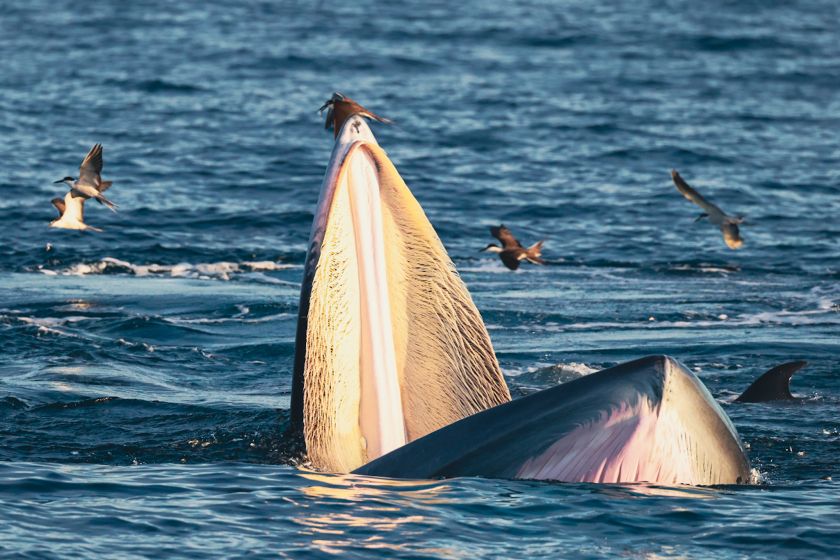
Wherever there are birds, there are whales.
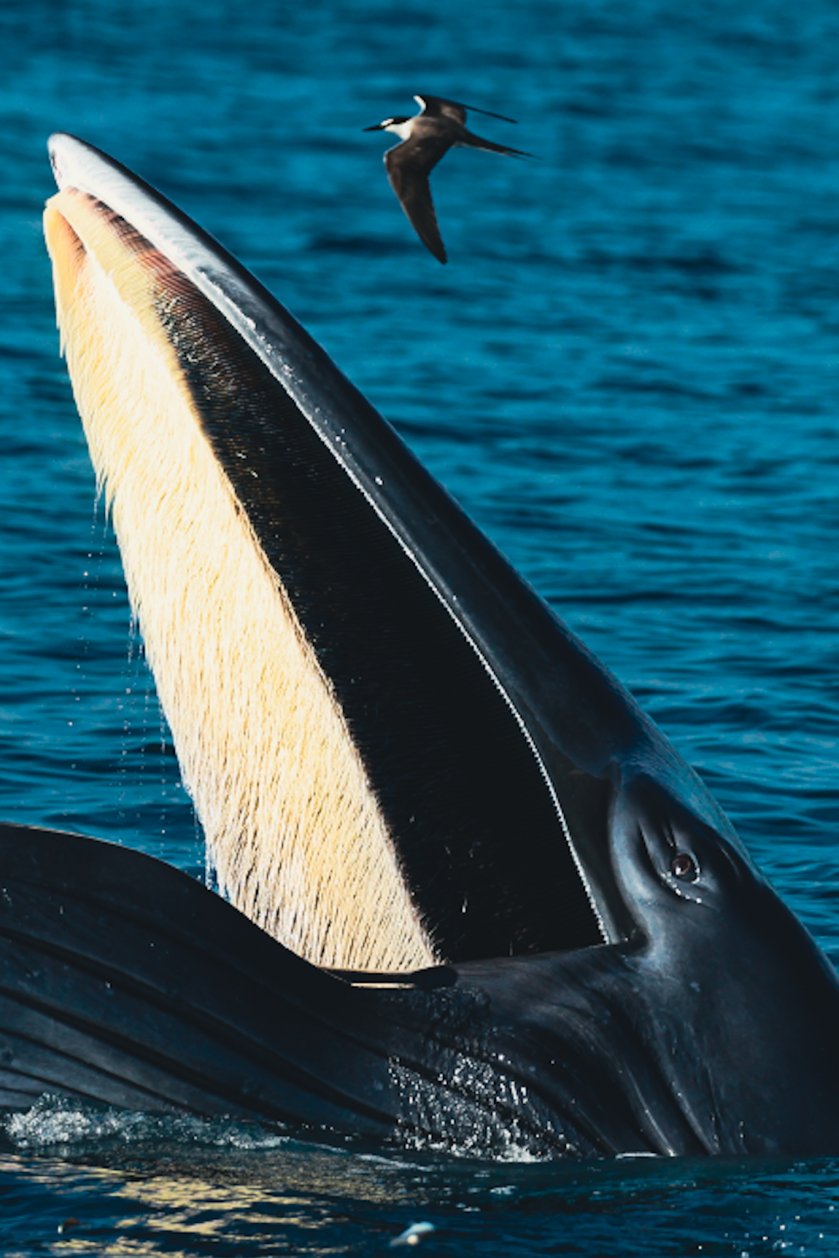
The photograph "Eyes of the Ocean".
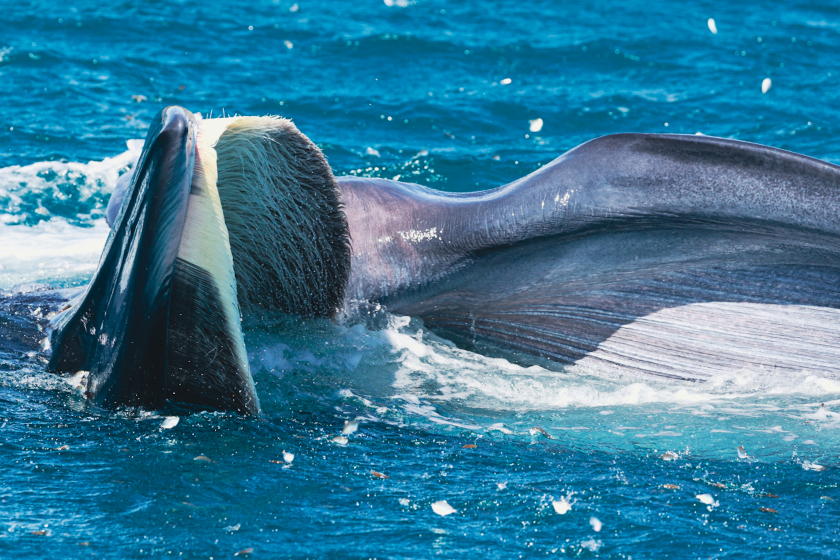
Whale sightings in Vietnamese waters is a rare phenomenon.
After spending four days adrift at sea in De Gi, Hai An eagerly awaited the day he could return home. He wanted to photograph more of the blue whales. Every day, he would call Tai, one of the first people to spot them, to ask for updates. Hai An asked Tai to keep him informed about the whales' condition, and he promised to return to De Gi to continue his pursuit when he had the time.

"Currently, I have an endless passion for photographing nature and the environment, especially rare animals," Hai An shared.
In the future, Quy Coc Tu plans to create more photo series about Vietnamese sea turtles, photograph langurs in Son Tra National Park, and birds in Tram Chim National Park and other national parks. He hopes to have the opportunity to capture images of Vietnam's nature and animals. The project helps him satisfy his passion for photography, and partly, Hai An wants to spread these images to raise awareness about the conservation of the country's natural environment.
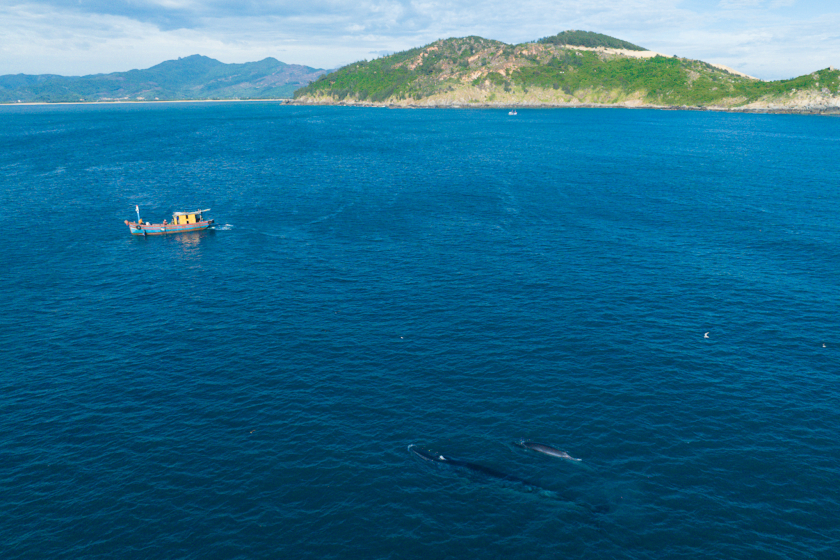
It took four days at sea to finally photograph the whale.
When asked about the unregulated whale-watching tours in De Gi, the photographer argued that government intervention is necessary. He explained that all tourism activities need to be effectively managed. Local authorities and conservationists are knowledgeable about the area, so they need to cooperate to conserve resources in a sustainable way.
"This is a completely new form of tourism. If we don't handle it carefully, it could lead to unpredictable damage," said Gui Guzi.
According to Hai An's personal experience, when observing whales, it's absolutely crucial not to approach too closely to avoid disturbing them. Boats should be anchored at a safe distance to allow the whales to move freely, avoiding startling them or causing collisions. According to the IUCN, tourist boats should not approach whales from the front or rear, but rather from the side.
For about a month now, whales have been continuously appearing near the De Gi estuary, Cat Khanh commune, Phu Cat district, and the Vung Boi and Vinh Loi areas of My Thanh commune, Phu My district (Binh Dinh province). The whale sightings have attracted tourists and many photographers.
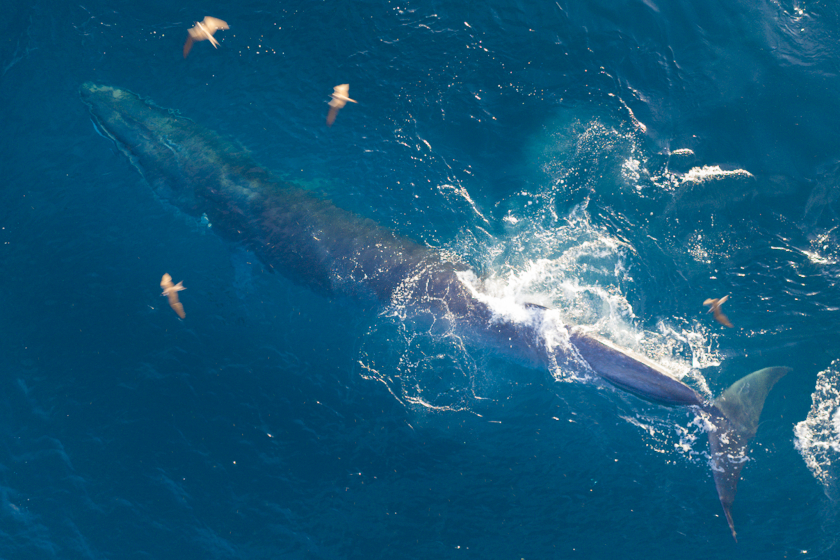
The whale hunting expedition is not an easy one.
The whale spotted in De Gi/Vinh Loi Sea, Phu My district, Binh Dinh province, is called a Bryde's whale. This is a species of gray whale listed in the IUCN Red List as endangered. According to local fishermen, the whales usually appear to hunt from 5:30 AM or late afternoon, around 4:30 PM. They typically hunt for an hour before leaving. However, this "schedule" can change unexpectedly, making whale hunting a challenging endeavor.
To photograph whales, from Phu Cat Airport, Hai An hired a taxi to De Gi Port in Vinh Loi, and from there rented a boat to go out to sea. Currently, the price for renting a boat to go out to sea is about 1.5 million VND, depending on the time. The boat trip from the shore to the whale-hunting area takes about 20-30 minutes. Typically, when seabirds gather and circle in a certain area, whales will surface in that same spot.