VI
VI


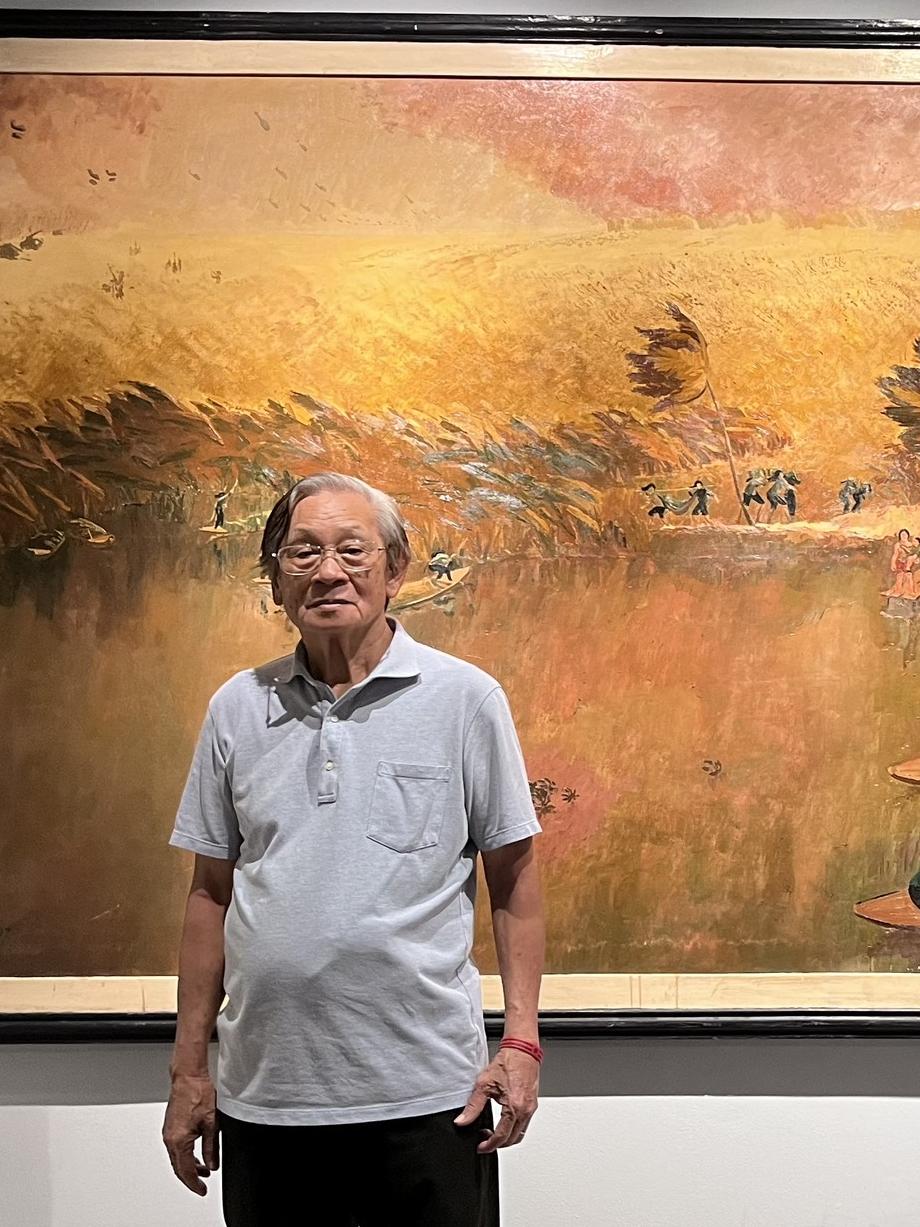

I was fortunate to meet and chat with artist Trang Phượng, the author of a series of works on the theme of the resistance war. He dedicated his youth to this pursuit, and even after retirement, he continued to create.
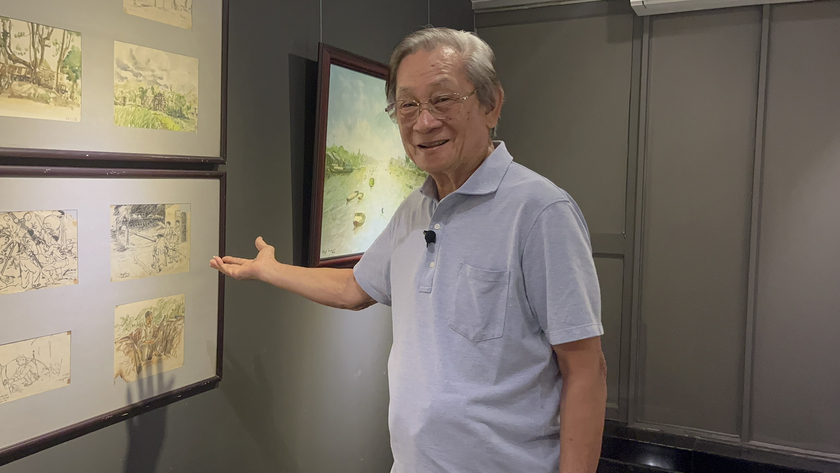
Artist Trang Phượng was formerly the Director of the Vietnam Institute of Fine Arts.
Even though he's over 80, he still remembers war stories vividly. Tears well up in the eyes of the veteran as he recalls his old comrades who remain on the battlefield, buried in the motherland to protect the country and preserve peace. Each fragment of memory unfolds in the paintings and stories, deeply moving those of us who come to see them.
He was always preoccupied with and pursued the theme of revolutionary paintings, believing that he was fortunate to have survived the war and therefore needed to work and create art in place of his fallen comrades. His works not only reflect the lives of soldiers during the war but also convey a strong aspiration for peace and national development.
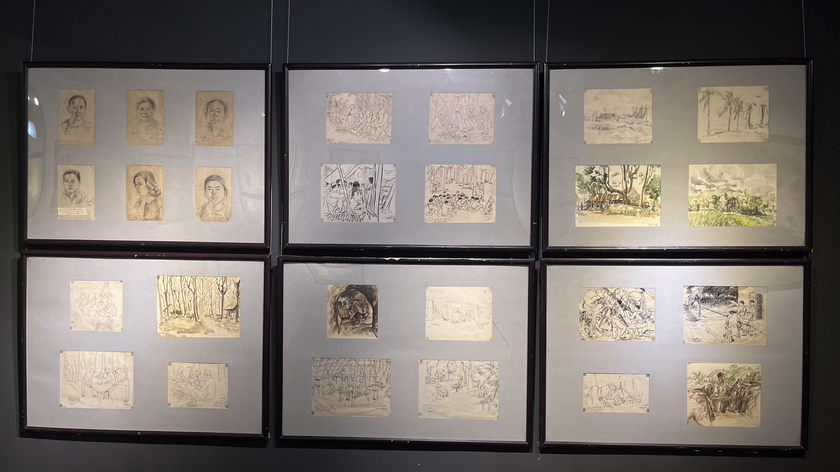
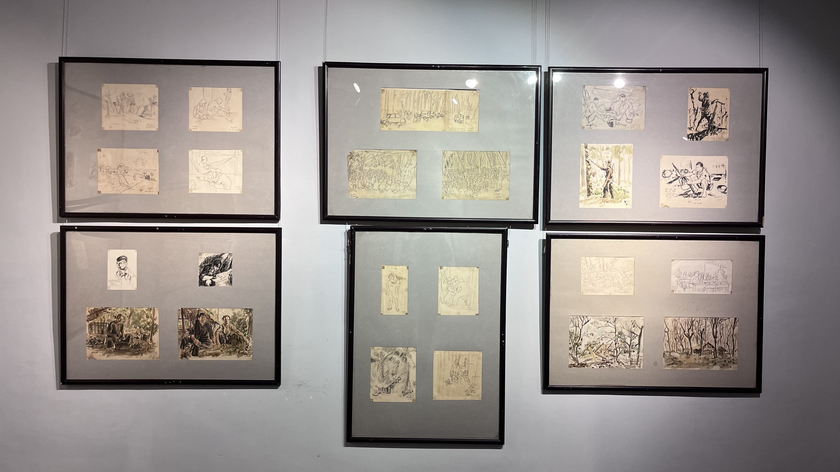
These remaining sketches are the blood, sweat, and tears of the artist, and also living evidence of the heroic war for national liberation.
Many sketches, oil paintings, and pastel works accompanied him from the battlefield, across the Truong Son Mountains to Hanoi for his studies, and later to Bulgaria as a postgraduate student. Thousands of sketches were destroyed by bombs and bullets in the fierce battles; the remaining works were preserved with sweat, tears, blood, and bones. "Keeping these intellectual creations by my side during wartime was sometimes more difficult than preserving my own life," artist Trang Phuong said with emotion.
HOLDING A GUN IN ONE HAND, A BRUSH IN THE OTHER; FIGHTING AND CREATING SIMULTANEOUSLY.
I followed the clear, vivid outlines of his memories as I relived the heroic moments of history, tracing the path of the veteran. From major battles like Phuoc Long, Dong Xoai, Bu Dop, Binh Duong, Cu Chi, Long An... to the Junction City operation in Tay Ninh with 45,000 American troops. The soldier's footsteps traversed countless fierce battlefields in Southern Vietnam, so each of his works is connected to a specific location and historical period in which he directly participated in the Southern Vietnamese army and people.

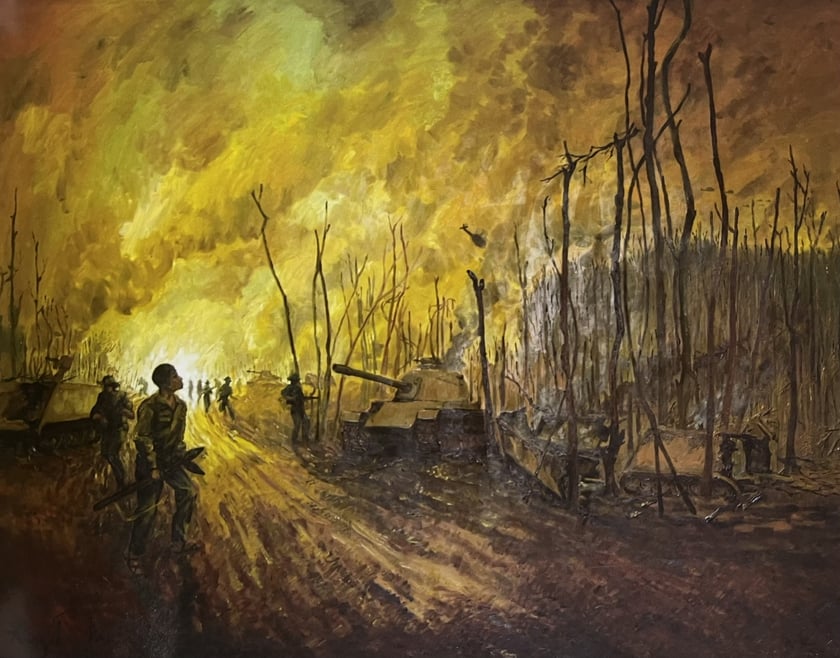
The artwork "Pursuit" (Anti-Sweep Junction City) is currently housed at the Ho Chi Minh City Museum of Fine Arts.

On the Thuận Lợi front (Đồng Xoài battle) (150x120 cm)
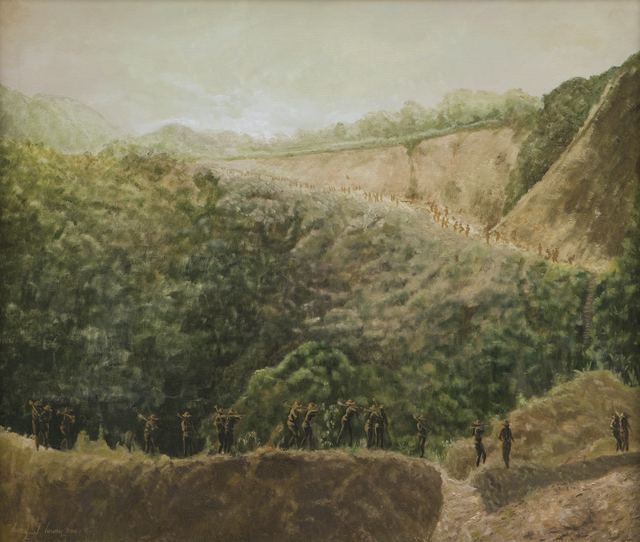
Opening the Ho Chi Minh Trail (140x120 cm)
"During the fierce resistance war, I befriended fellow liberation fighters. I instructed them to help me send all my sketches to a designated mailbox in my briefcase in case I was killed. Throughout my campaigns, if any of the people I entrusted my work to died, I would get to know them again and express my heartfelt wish to my new friends. I also sent nearly a hundred sketches to the North several times through couriers, hoping that if I were to die, my works would still be preserved," artist Trang Phượng confided.
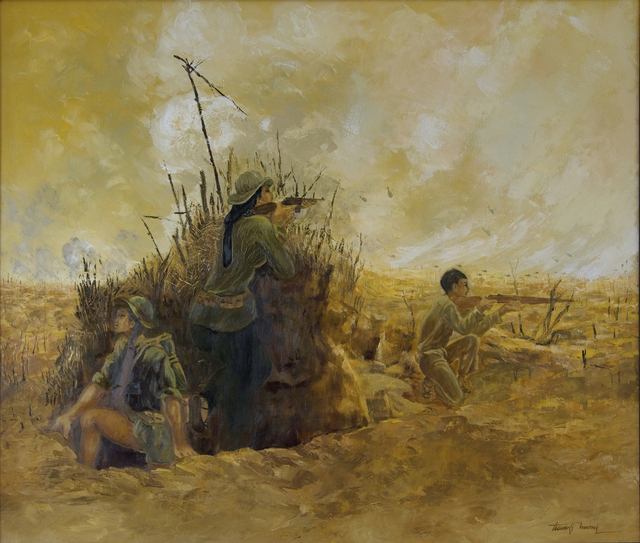
Cu Chi, the land of steel (130 x 110 cm).
These sketches accompanied him for decades on the resistance front, until he went to the North, studied abroad, and returned to Vietnam. Some sketches are stained with the marks of time, while others have been scorched in one corner by gunfire.
He took me to the most special painting – Saigon during the Tet Offensive of 1968. Looking at it, the soldier's eyes welled up with tears as he recounted the haunting story that had pursued him throughout his life.
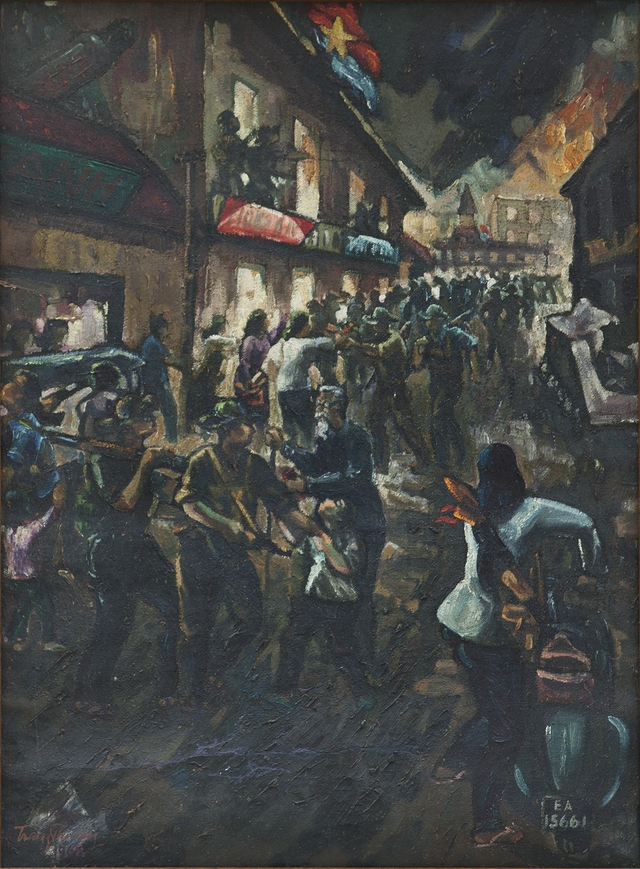
Every time the soldier hears the words "Tet Offensive," he can't help but feel emotional.
"I can never forget the afternoon we entered Saigon. Our unit marched across the Tan Buu fields, under the setting sun behind the coconut trees. Golden streaks of twilight still lingered in the sky. The liberation army rumbled into Saigon. On both banks, mothers stood watching with weary, aged eyes, waiting: 'Do you know A, B, my son? Will he come home?' I wondered, 'Perhaps somewhere in the army, my mother is also waiting for me,'" artist Trang Phuong said emotionally.
He continued: "During the Tet Offensive of 1968, when I saw our compatriots bringing out tables and chairs to pile up as barricades, I intended to take out paper and sketch. But then I saw an enemy jeep that had been shot down and abandoned, so I took a dagger, cut open the hood, and used a can of oil paints from a comrade to paint a picture: Saigon Uprising."
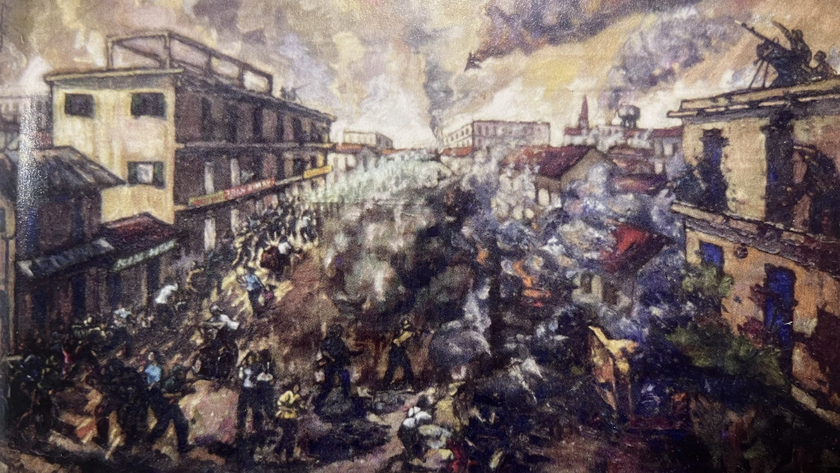
The artwork "Saigon Uprising" is currently housed at the Ho Chi Minh City Museum.
Painting and protecting paintings was no easy task. Because the paintings were made with oil paint, they didn't dry quickly. I took a risk and left the paintings I had already painted in people's homes and continued fighting. Over the next few days, I painted one or two more oil paintings on American sandbags (one of which was "Tet Offensive") and then returned to find the paintings I had left in people's homes. Because I painted directly without using primer, the paintings dried faster. As the battle intensified, protecting the paintings became even more difficult than protecting my own life."
The works in the exhibition are both realistic and romantically poetic, reflecting the positive outlook of a soldier through the brushstrokes, colors, and perspective of an artist, and recreating a part of our nation's glorious history in the resistance war against the US to save the country.
Fragments of memories from that era surged forth through the soldier's narrative. Groups of audience members followed his story, witnessing glimpses of the bomb-strewn scenes of wartime, while simultaneously admiring the beautiful natural landscapes of the nation... And so, old and young alike, one after another, sat engrossed in recounting and attentively listening to stories of a bygone era. They reflected, cherished, and appreciated the value of the word "peace."
Here are some images from the exhibition "When the Soldier is an Artist":
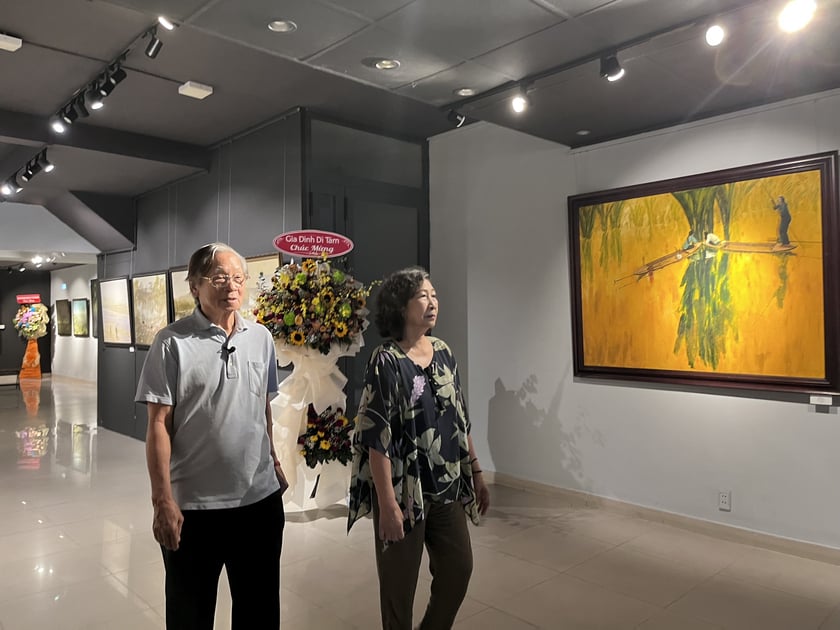
Artist Trang Phượng and his wife at the exhibition.
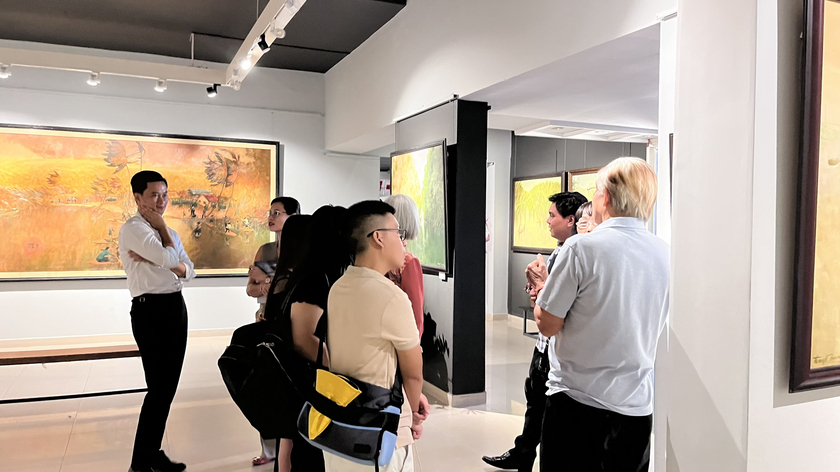
The young audience listened attentively to the story of the soldier-artist Trang Phượng.
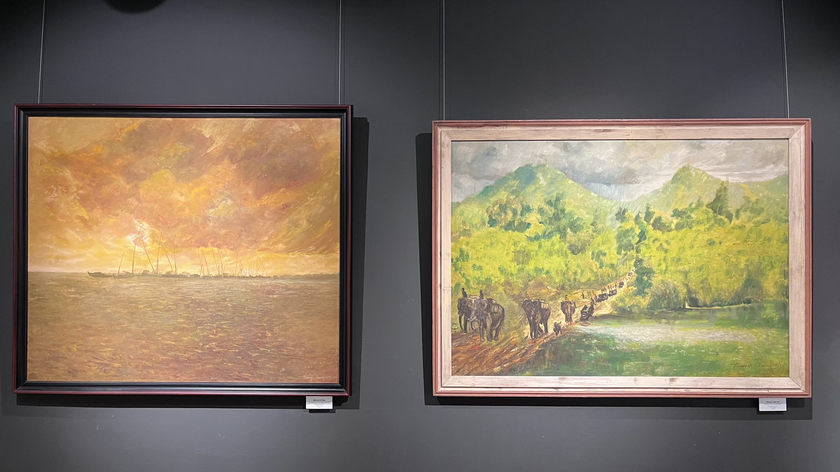
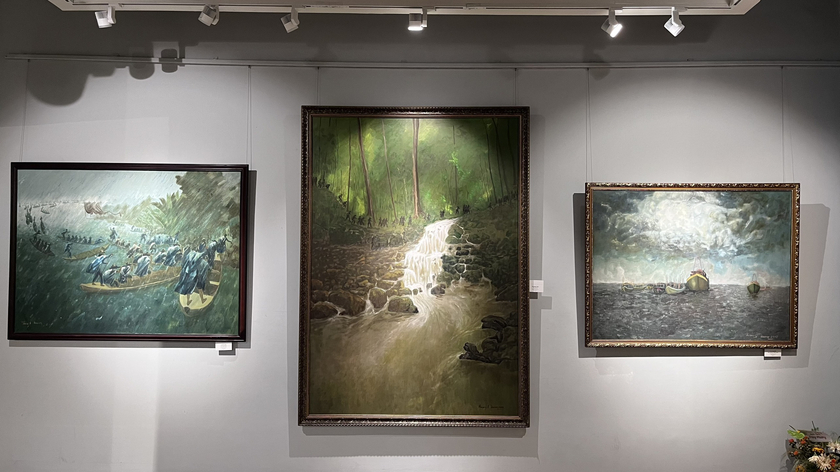
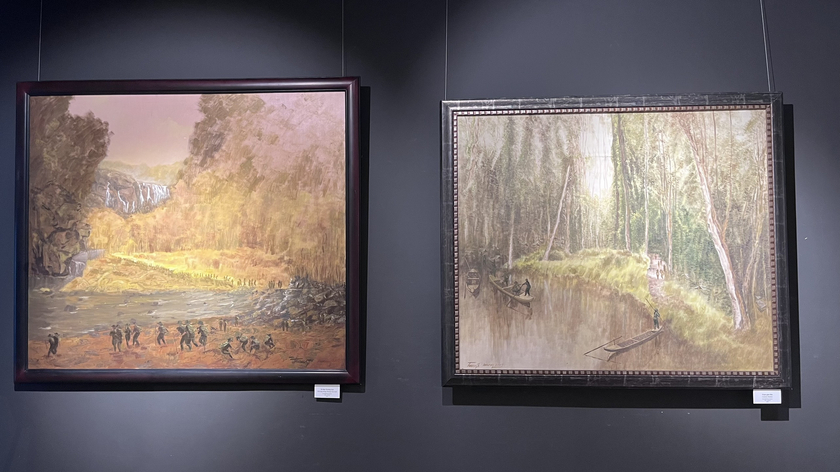
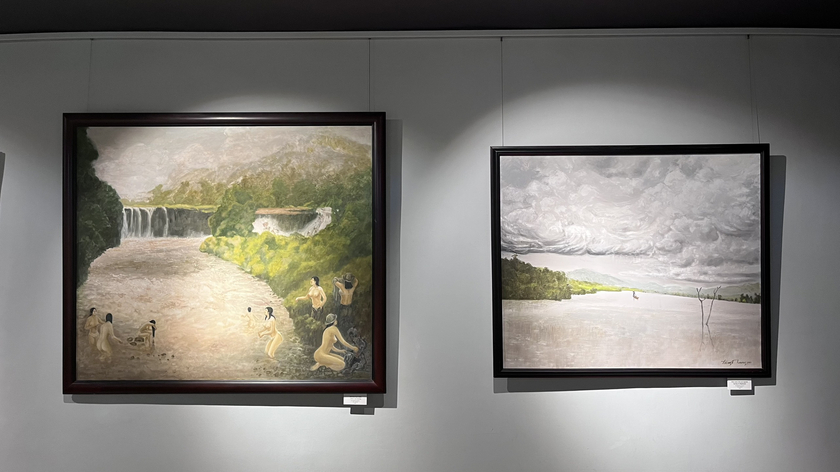
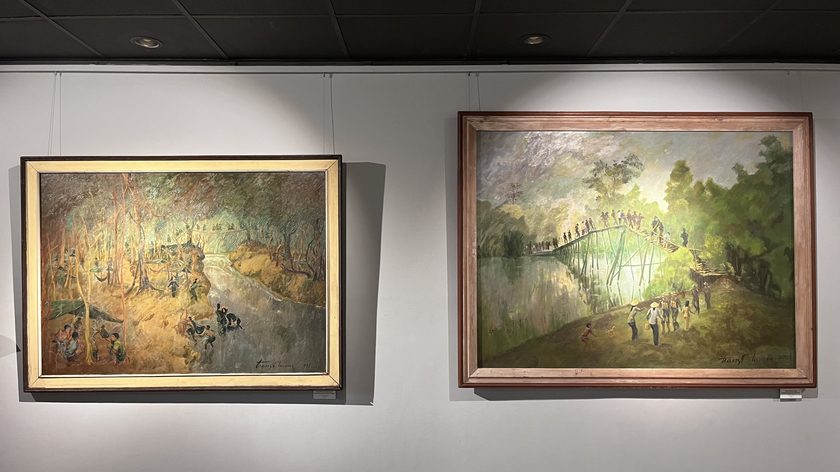
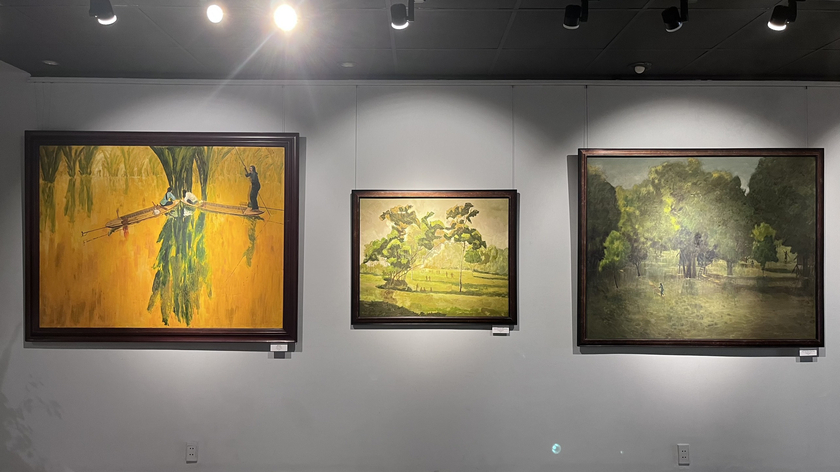
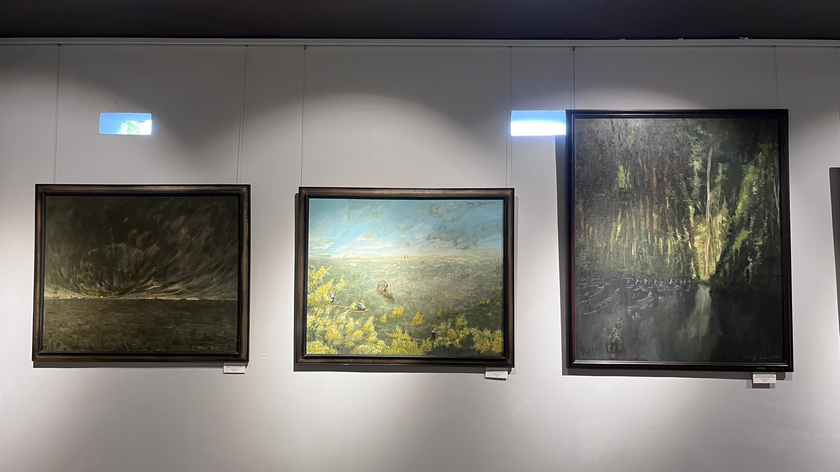
Some of the works included in the exhibition.
Artist and Doctor Trang Phuong was born in 1939 in Binh Duong. She graduated as valedictorian from the Binh Duong Vocational School of Fine Arts in 1959, graduated from the Hanoi University of Fine Arts in 1973, and defended her doctoral thesis in Fine Arts at the Bulgarian Academy of Fine Arts in 1979.
He has held many positions in the field of Fine Arts and Culture in Vietnam, including: Director of the Vietnam Fine Arts Institute, Deputy Secretary General of the Ho Chi Minh City Fine Arts Association, Deputy Head of the Ideology and Culture Department of the Ho Chi Minh City Party Committee, Vice President of the Union of Literature and Arts Associations of Ho Chi Minh City, and Secretary of the Party Committee of the Union of Literature and Arts Associations of Ho Chi Minh City. In early 2020, he published his first art book, "Painter-Soldier Trang Phuong," marking his artistic journey.