VI
VI


A THOROUGH UNDERSTANDING
"Since childhood, I've often pondered about material and spiritual life. As I grew older, I began to contemplate religion and spirituality. I realized that my greatest inner need was profound understanding (wisdom - intellect). And then I became involved with Buddhism, standing before the vast ocean of enlightenment. This series of paintings was created in the mindset of a novice beginning to learn Buddhism, but full of enthusiasm and faith; someone who loves themselves and cultivates compassion for all things...", artist Tran Nhat Thang confided.
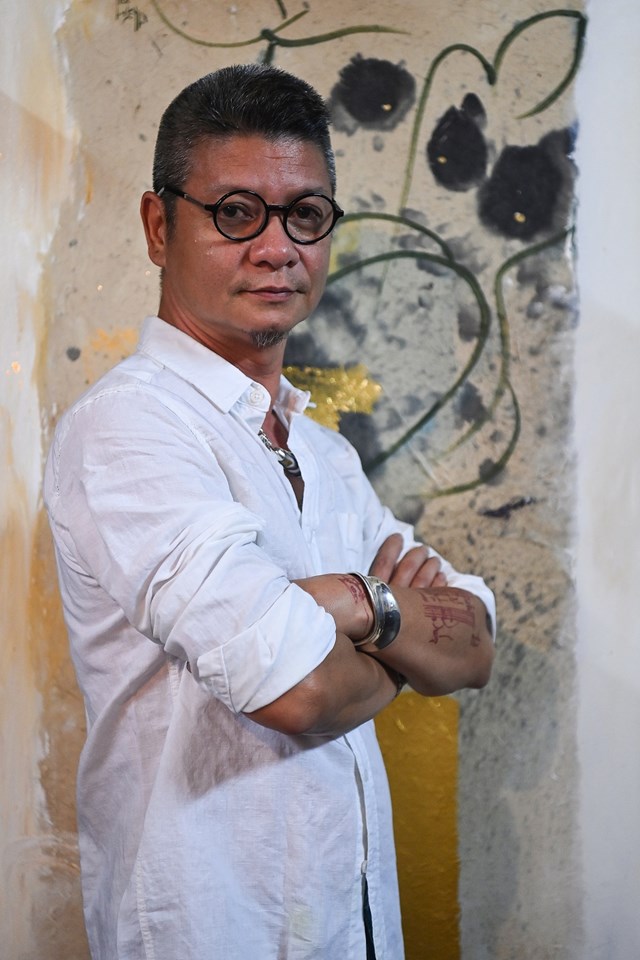
Portrait of artist Tran Nhat Thang.
In Buddhism, the concept of wisdom is understood as: what makes a person human, the present moment of a person. Wisdom is something within a person, accumulated, absorbed, and realized through many lifetimes. Wisdom is a state of consciousness.
Simply put, the series of paintings in the exhibition "In Nothingness There Is Nothing" is not only the result of fortunate circumstances in practicing and studying Buddhism, but also the journey of artist Tran Nhat Thang in his quest for truth over countless lifetimes. As curator Le Thiet Cuong said: "Sudden enlightenment is a blink of an eye, but the journey to that fateful moment is over countless lifetimes..."
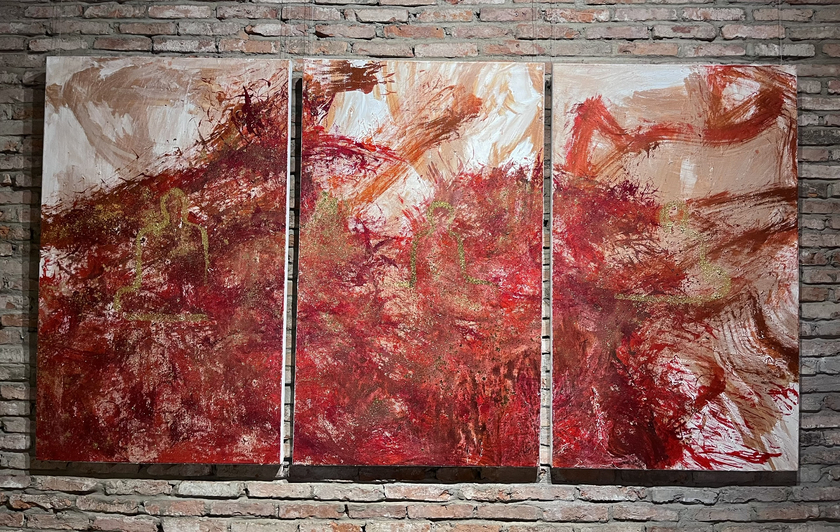
The appearance of real detail in the exhibition "In Nothingness There Is Nothing".
In "The Void" 2022, Tran Nhat Thang presents a series of abstract paintings, like in his previous exhibitions. The vast, abstract space that he has built over decades of painting practice serves as the foundation for placing realistic details in the works of the exhibition "In the Void, There Is Nothing." "Form is emptiness, emptiness is form," in the Void there is emptiness - existence, existence - non-existence.
SOUND IN MOTION
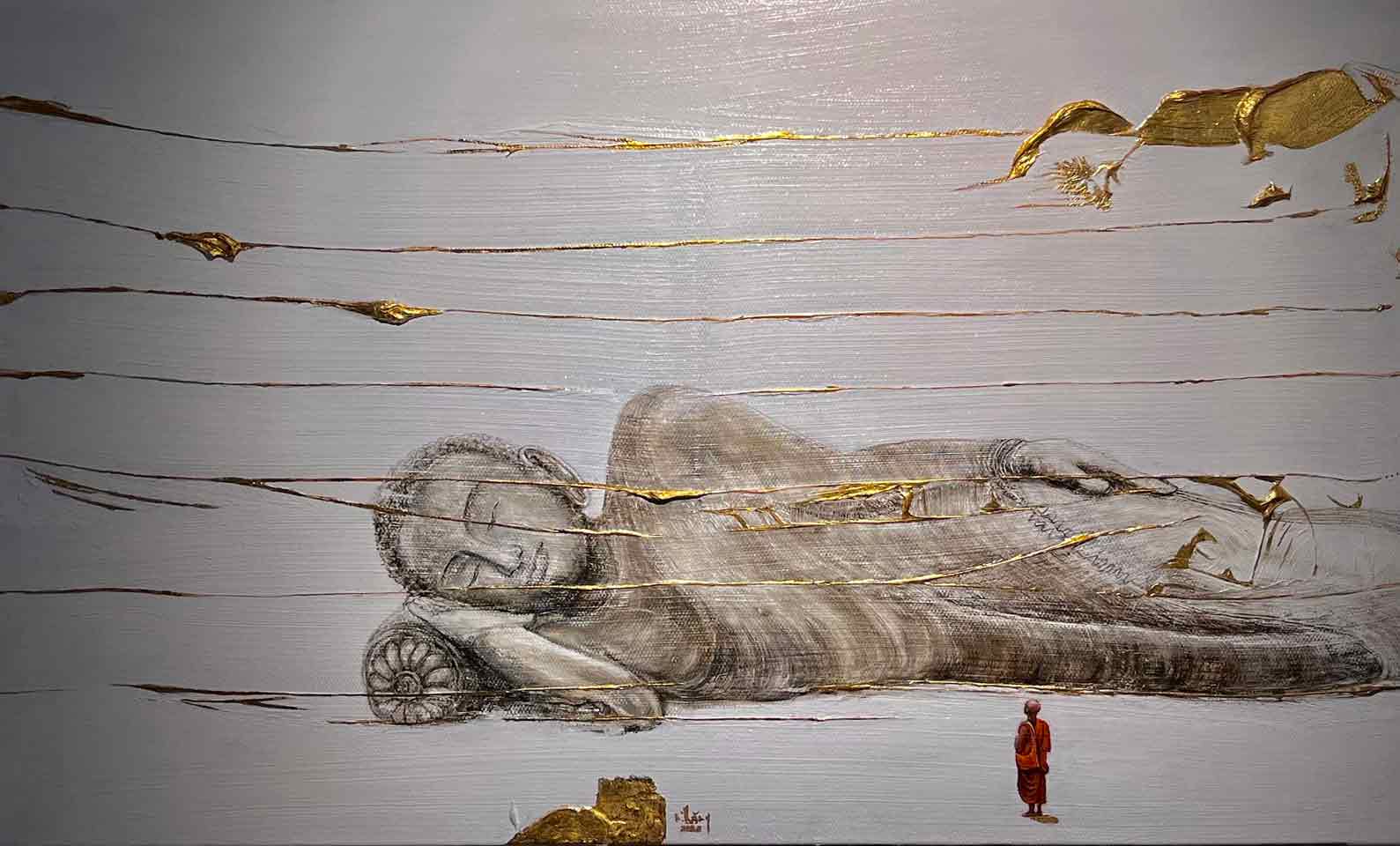
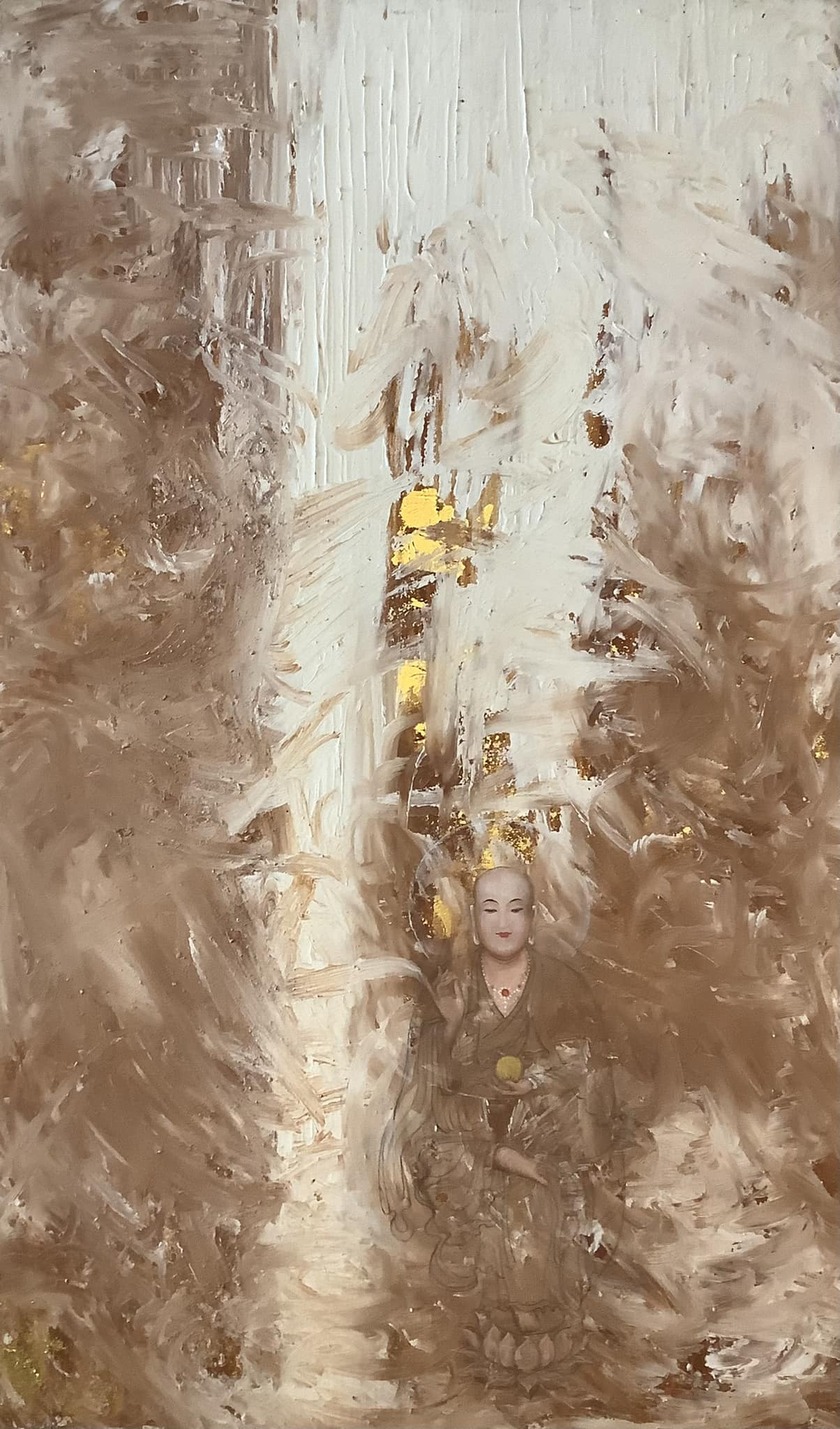
In this exhibition, Tran Nhat Thang presents many images that "activate" a sense of tranquility in many viewers, such as: the image of Avalokiteshvara Bodhisattva calmly listening to human suffering, the image of Buddha meditating under a Bodhi tree, the image of a group of monks meditating amidst turbulent storms... Despite the constant turmoil and change around them, tranquility still pervades the overall scene, representing serenity in the face of the continuous cycle of birth and death in the world.

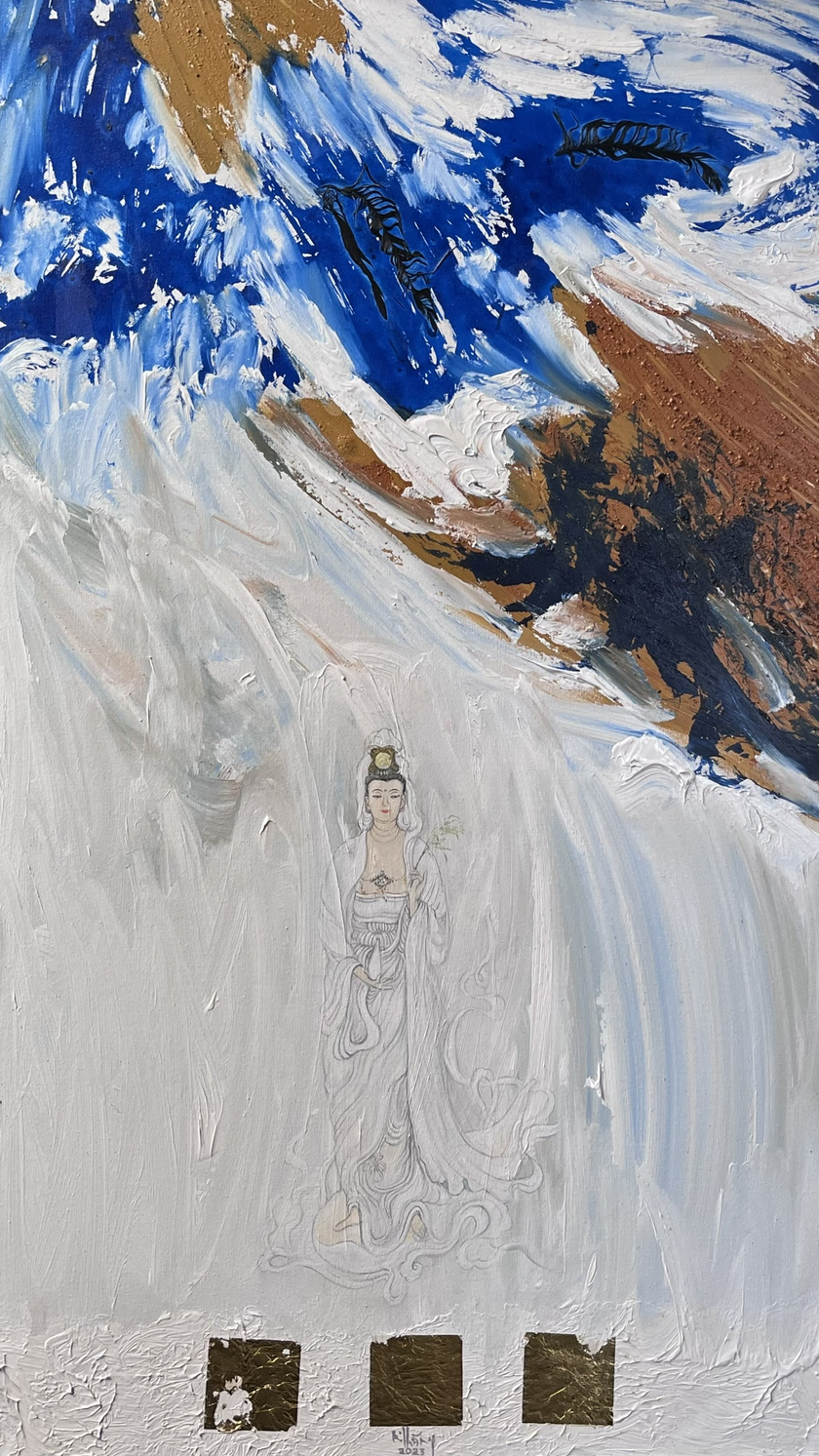
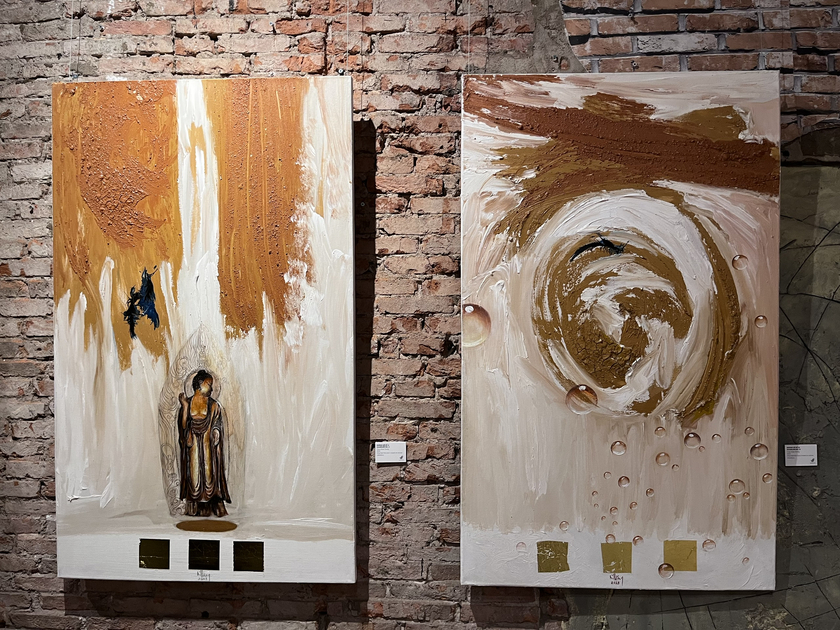
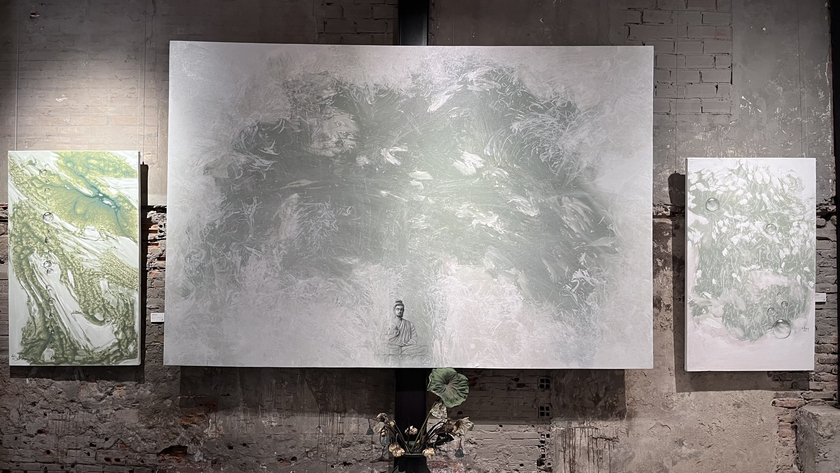
The paintings convey a sense of tranquility and serenity.
Viewers are immersed in the serene tranquility of Tran Nhat Thang's paintings. The vast expanse of the river, the majesty of a mountain, the boundless immensity of an undefined space... all evoke a sense of serenity that is difficult to express in words for those who come to admire them.
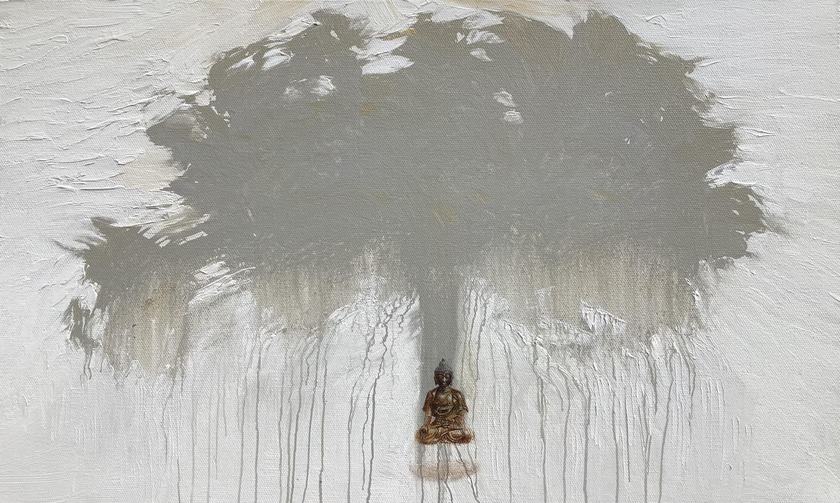
The Buddha sat in meditation under the Bodhi tree.
Perhaps the artist was truly serene as he moved each brushstroke, each stroke, fully focused on depicting the dimensions of space originating from his own consciousness. Transcending all notions of stillness and beauty, upon looking deeply into the series of paintings, one finds inner peace and tranquility.
REFLECTION IN SILENCE
"In Nothingness" marks a turning point in the art and a significant shift in the mindset of painter Tran Nhat Thang. The realistic details the artist incorporates into the work may stem from experiences and observations during his spiritual journey. It could also be a vision originating from Tran Nhat Thang's consciousness over countless lifetimes.
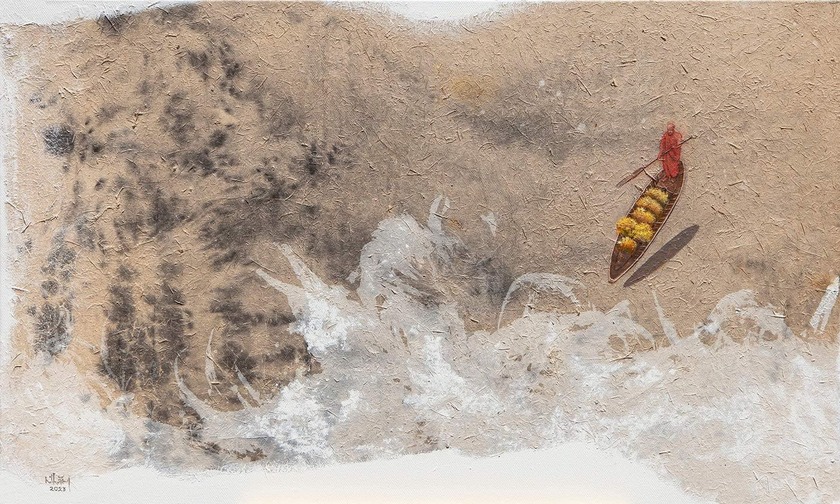
The monk calmly rowed the boat despite the storm raging ahead.
These ascetics appear in many different dimensions, seemingly playing in the vastness of life. Amidst the endless uncertainty, the ascetics continue their journey towards enlightenment, even though they cannot see the shore. It is arduous and challenging, as they must constantly grope their way through life's storms to find the truth.
Sometimes they appear in a state of bewilderment and confusion amidst a hazy, undefined space. At other times, these practitioners shine brightly in a subconscious forest of the artist. It is a place where life flourishes, the air is fresh and cool. The movement of each gentle breeze rustling the branches, creating a sound that makes the practitioner's steps seem more relaxed, at ease, and tranquil.
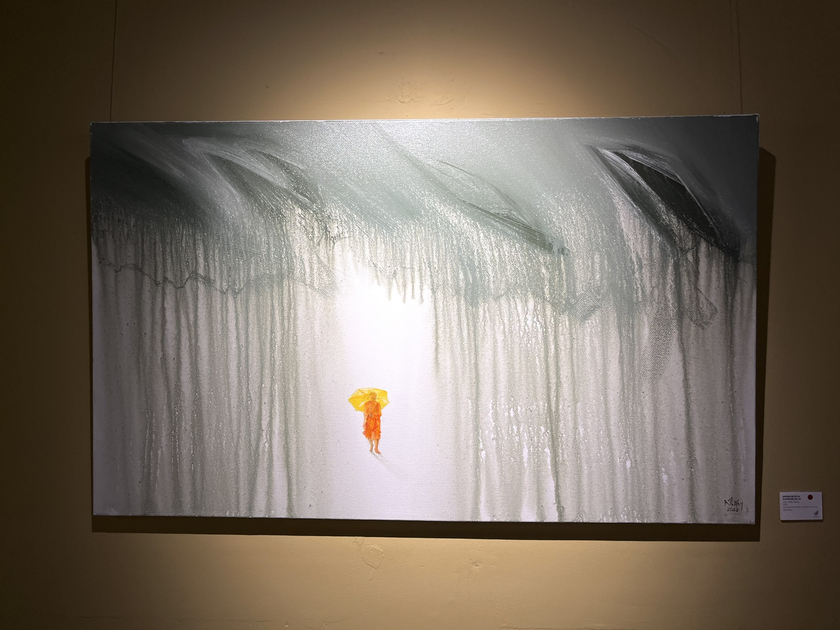
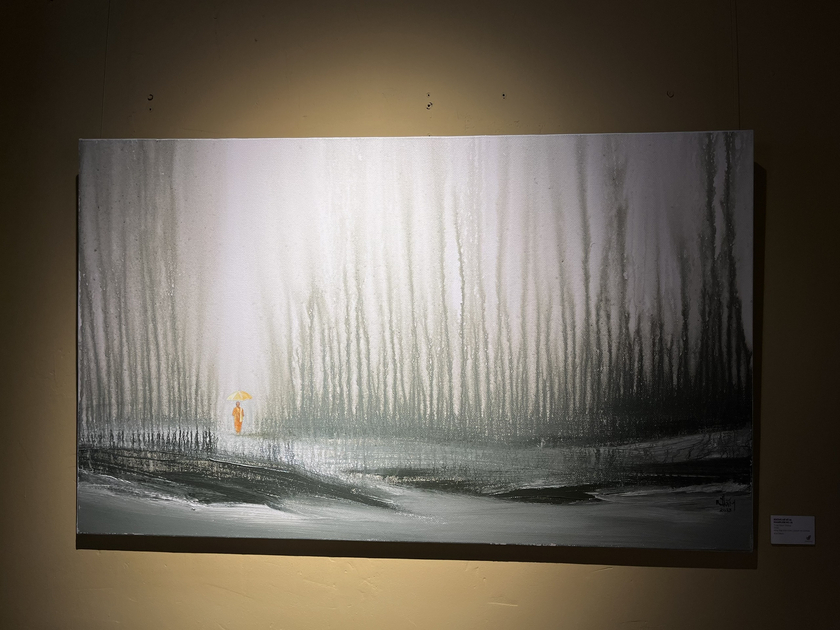
The journey to find the light of truth is fraught with countless difficulties.
Although the journey to truth is fraught with difficulties that cannot be fully expressed in words, through the language of art, viewers can sense the artist's spirit of "self-reflection"—self-examination and self-reflection. The profound stillness, conveyed through contemplation and self-reflection, is directly revealed in his series of paintings in this exhibition.
Tran Nhat Thang does not rely on color or painting techniques, but uses them as a language, a channel of communication to express his inner feelings and perceptions.
In reality, the challenge for a spiritual practitioner is always to find the light within themselves, so that it becomes the lamp guiding them towards goodness and the truth of life. Walking amidst the noise and chaos without wavering or fear, they remain calm and serene, walking with ease through life.
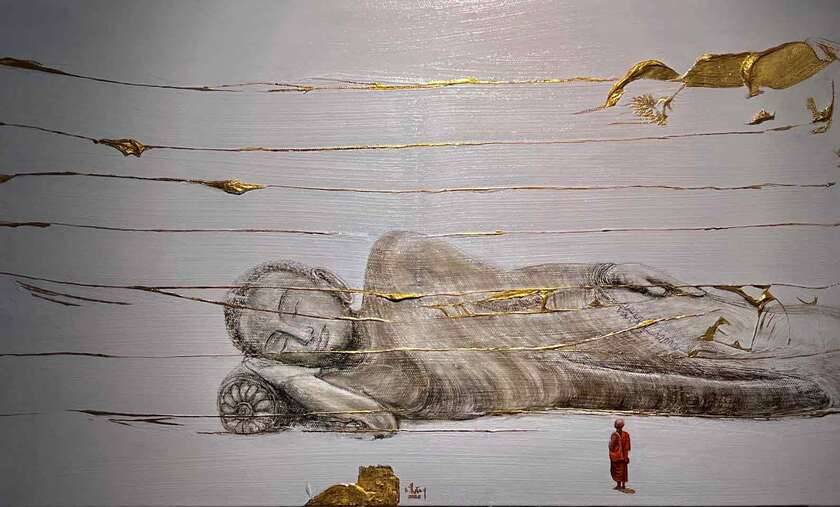
Despite the commotion and noise outside, the ascetic walks calmly in tranquility.