VI
VI


The Hon Khoi salt fields are located in a small, relatively undeveloped coastal area in Ninh Hai commune, Ninh Hoa district, Khanh Hoa province. Covering an area of approximately 400 hectares, the Hon Khoi salt fields are considered one of the largest salt fields in Vietnam.
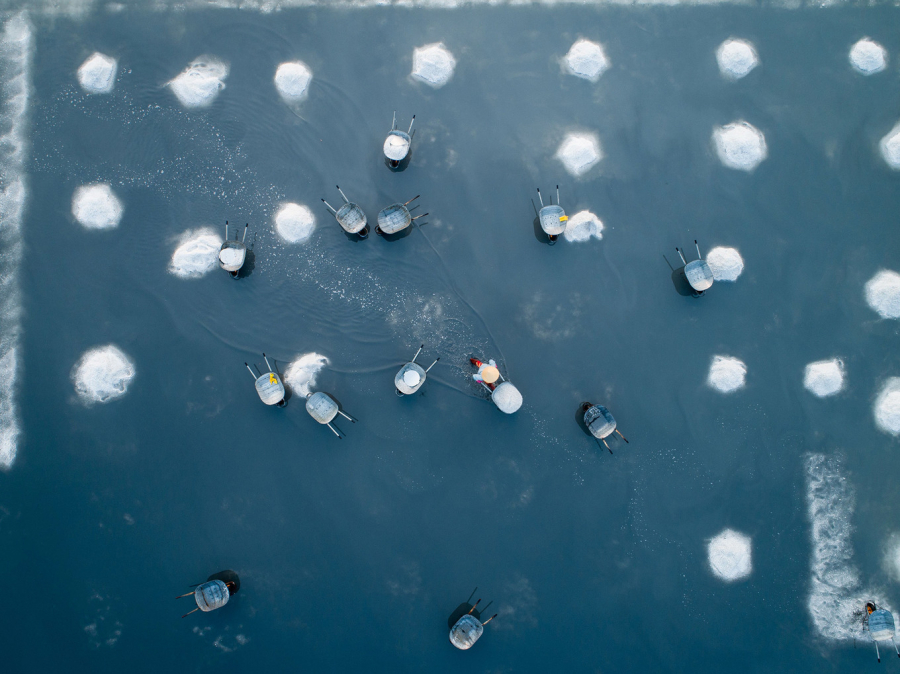
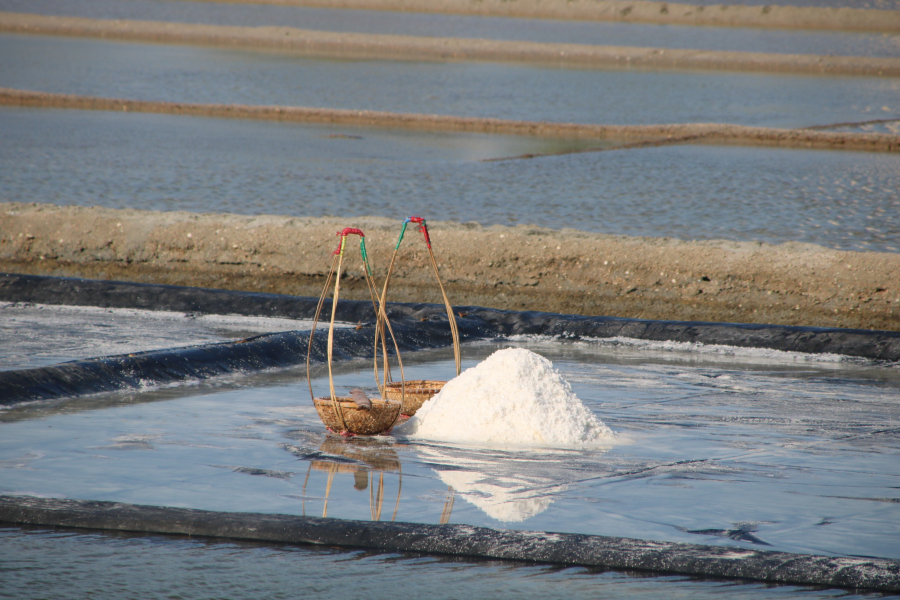
Upon arriving at Doc Let beach, near the salt village, visitors truly understand the beauty that nature has bestowed upon this place. The long stretches of fine white sand, the crystal-clear turquoise water, and most importantly, its unspoiled and peaceful atmosphere. Therefore, tourists come to Hon Khoi not for anything extravagant, but simply to witness firsthand the shimmering, moonlit salt fields stretching as far as the eye can see, and to observe the hard work and struggles of the "authentic" salt farmers here.
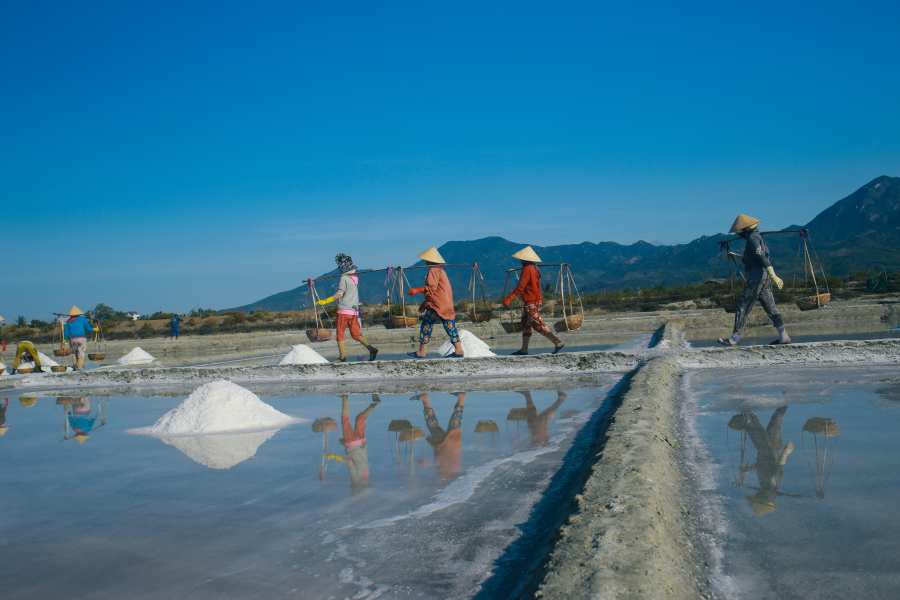
Salt production in Hon Khoi is considered a great gift from nature in the East Sea region. Many long-time salt farmers recount that in the past, this area was a reed-covered, salty land, making it impossible to grow anything, and there was nothing to do until salt production appeared. Through many ups and downs, today, more than 90% of the people here remain committed to salt production.
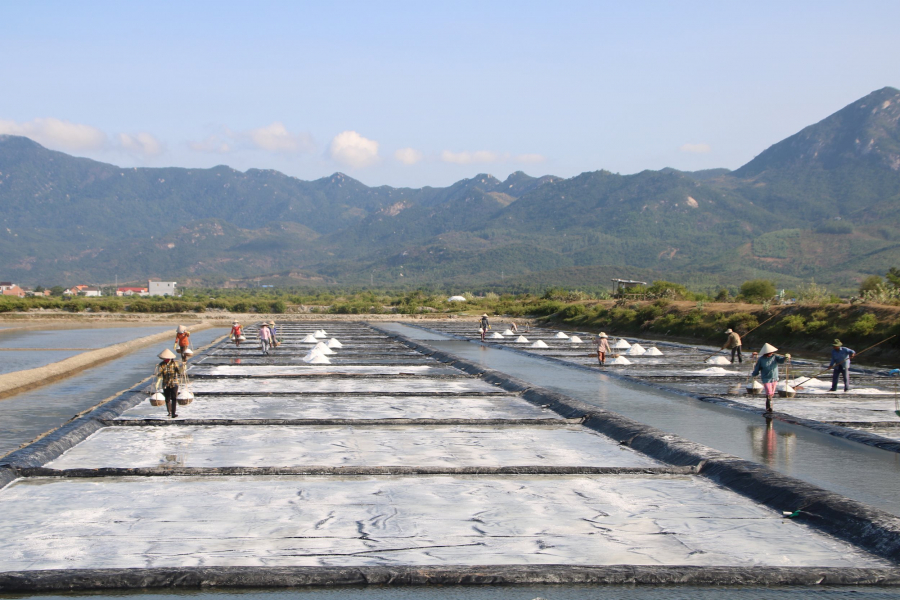
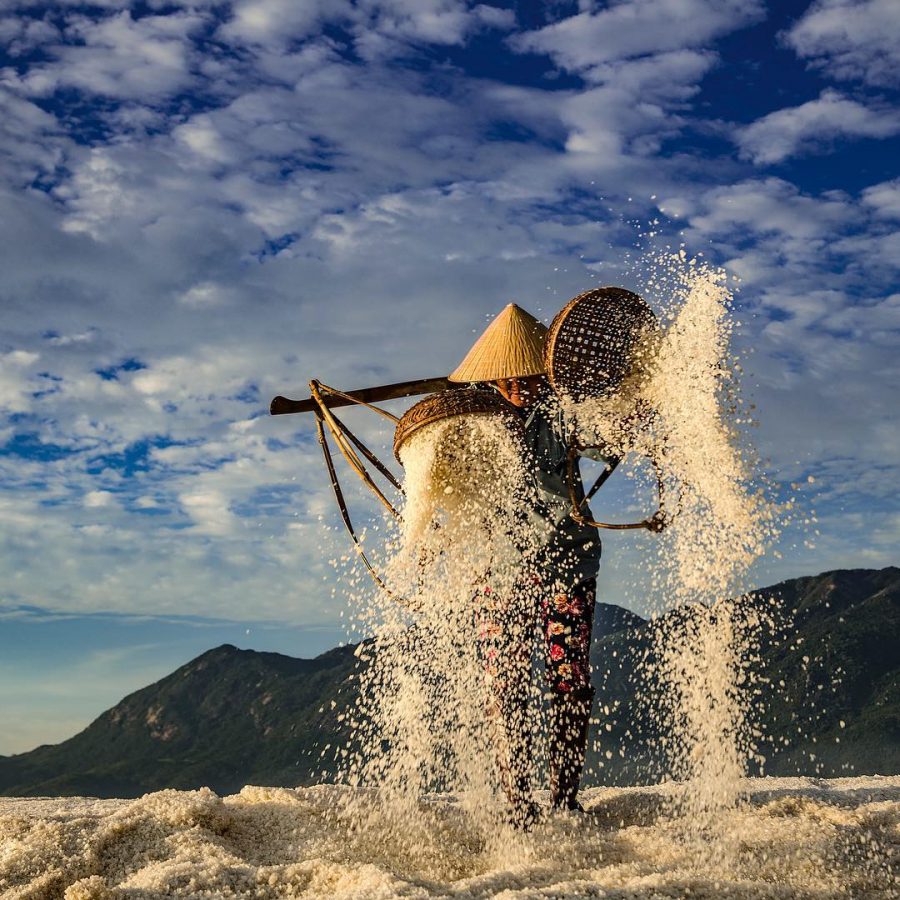
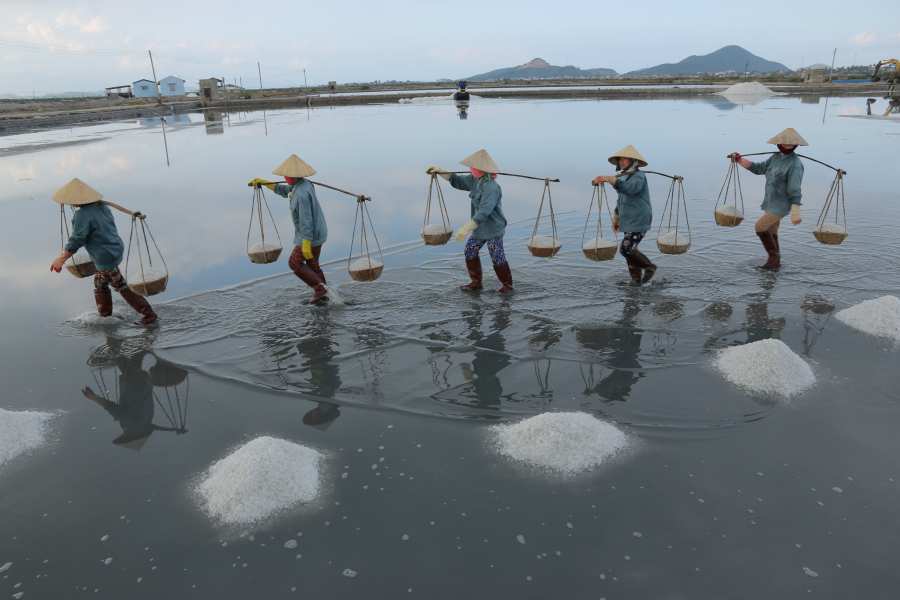
From the early morning hours, before the roosters crow, the people here have to go to the fields to begin their day's work on the salt paddies. From then on, the image of the hardworking salt farmers in the salt paddies at dawn has been captured by photographers and has become a masterpiece that leaves anyone who sees it in awe.
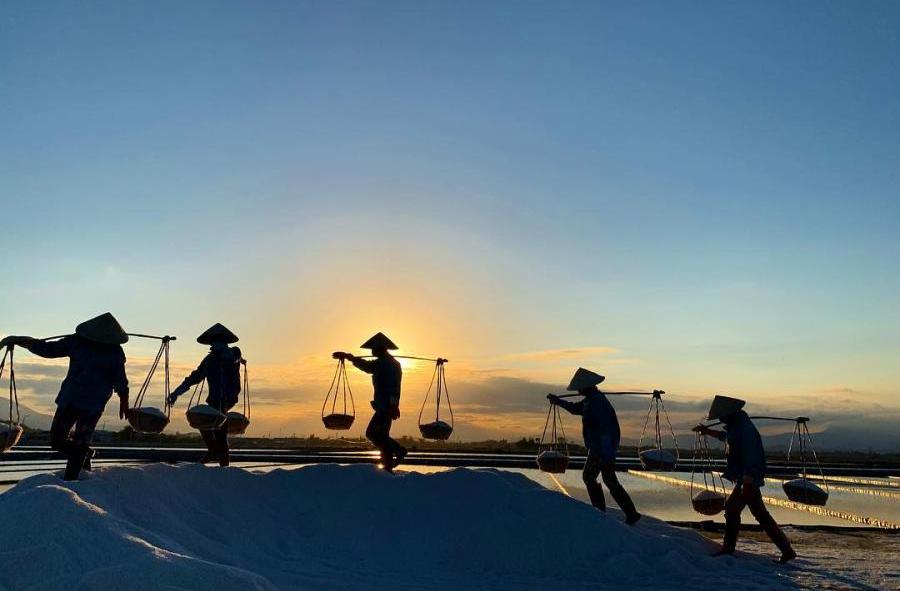
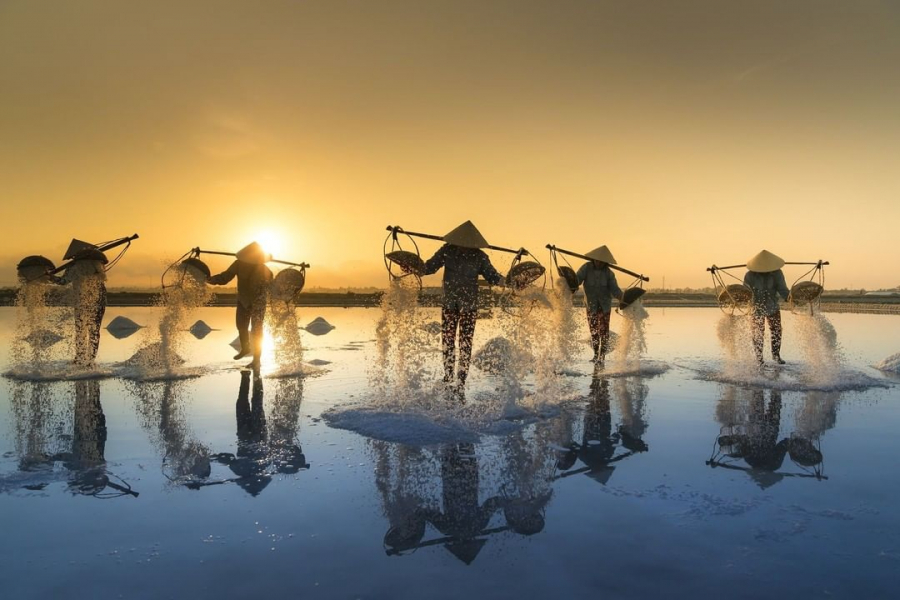
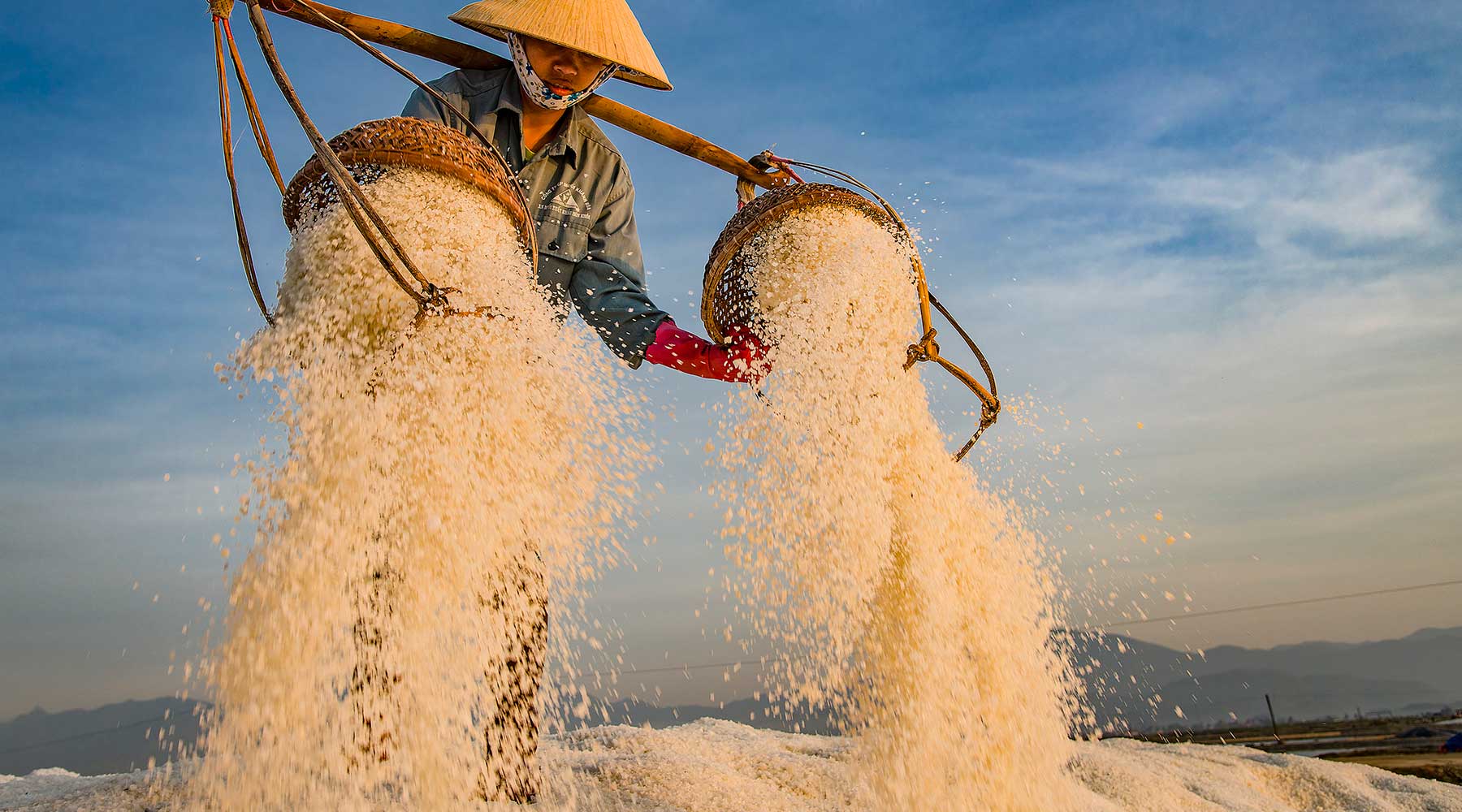
Starting with soaking the sand in seawater, leveling it, sprinkling starter salt… then waiting for the scorching sun to come out before digging, raking, piling, and carrying… As the salt mounds grow higher, so too does the sweat of the salt farmers.

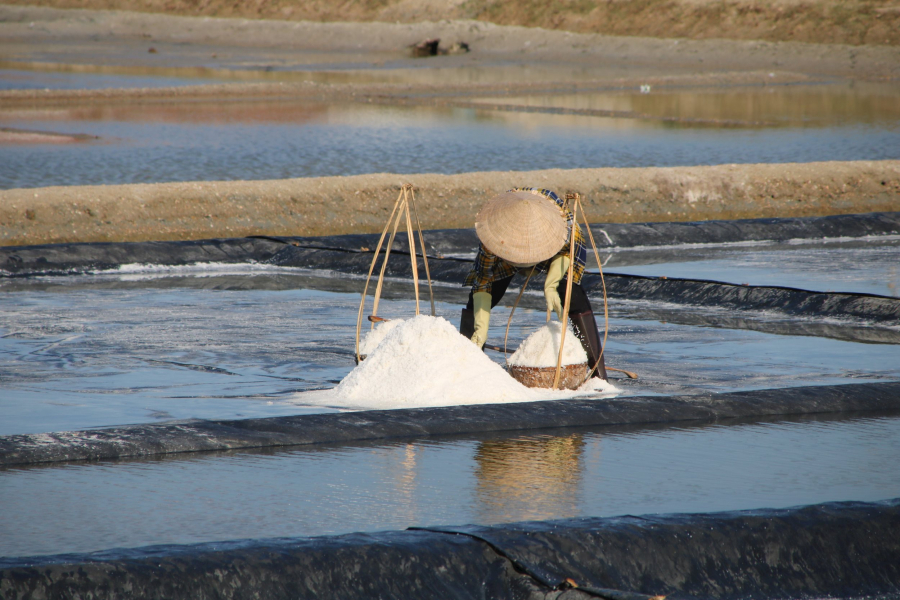
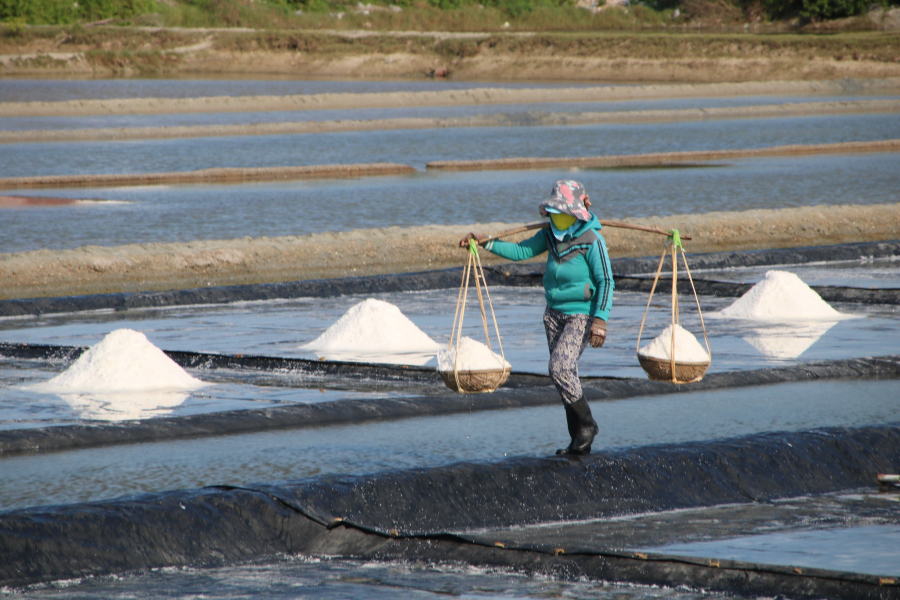
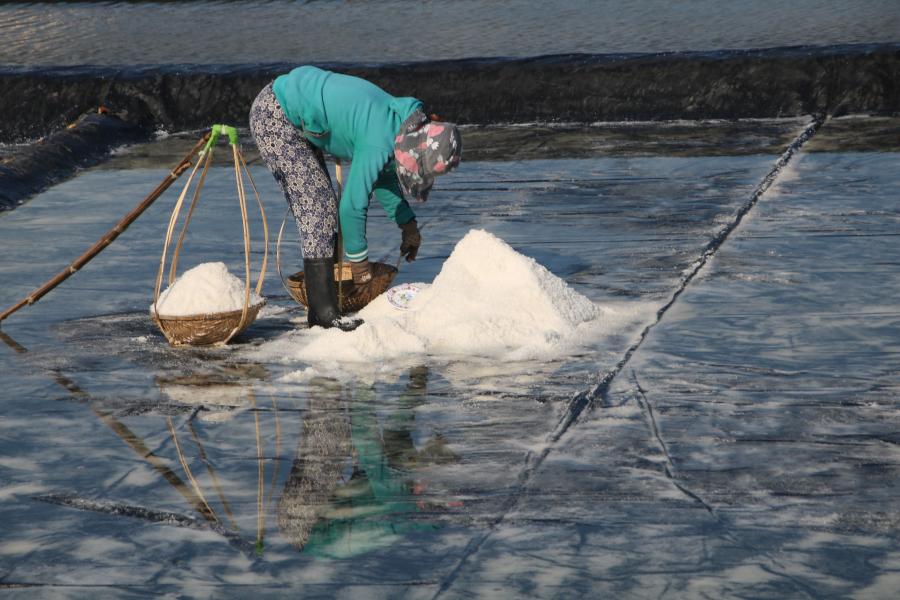
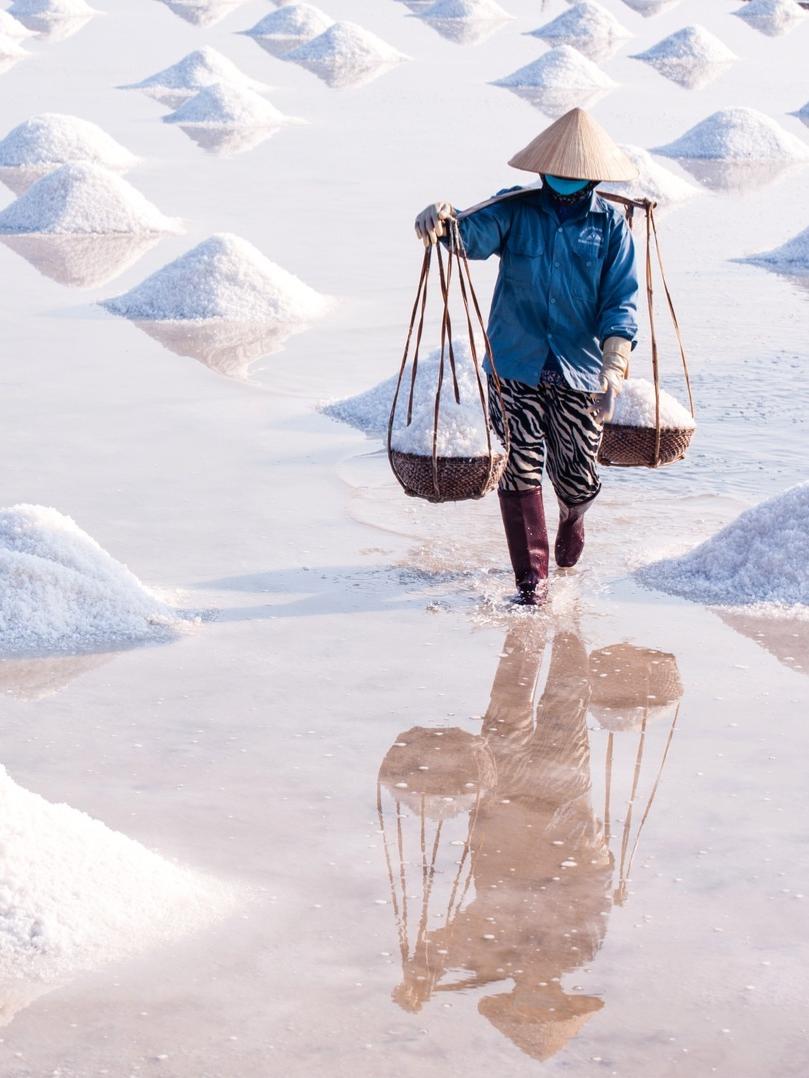
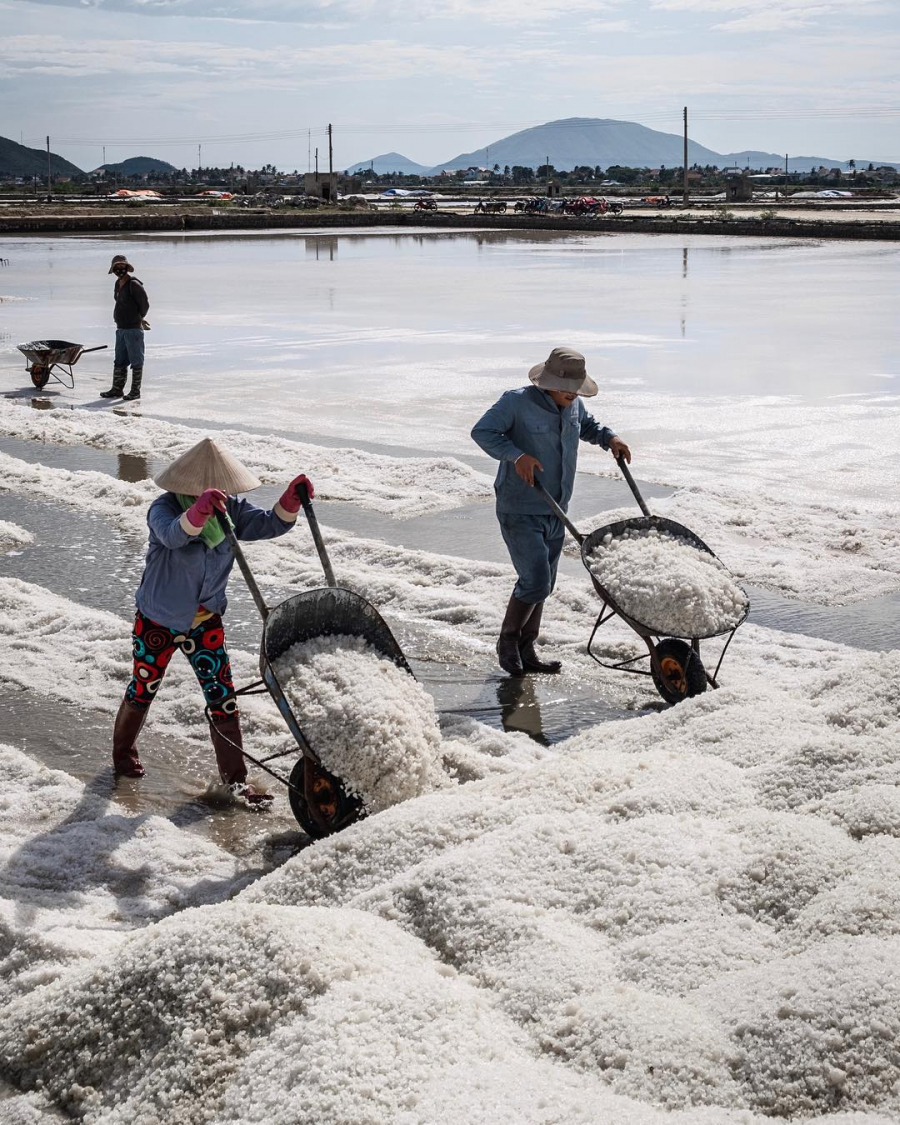
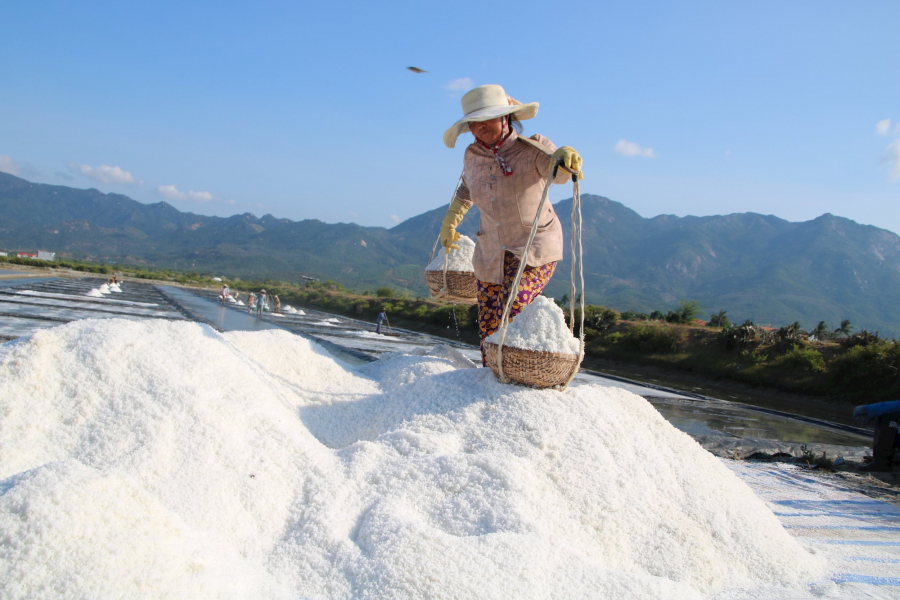
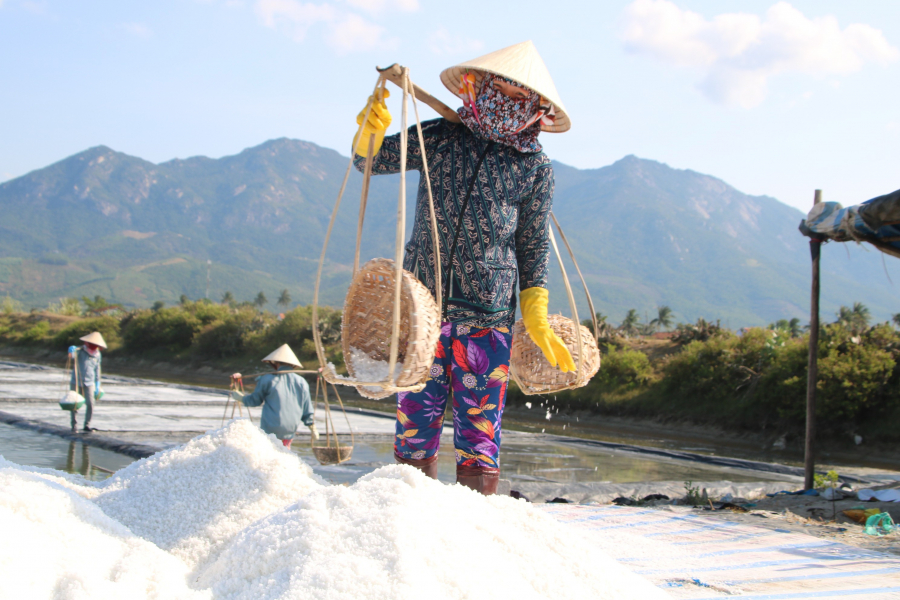
The majority of salt workers here are women, while the men are only responsible for scraping and plowing the salt blocks at the bottom of the fields, then raking and piling the salt into mounds. The image of women wearing conical hats, their shoulders bent with salt, walking gracefully, their reflections shimmering in the salt fields, has created a beautiful symbol of labor – a unique beauty of salt farmers.
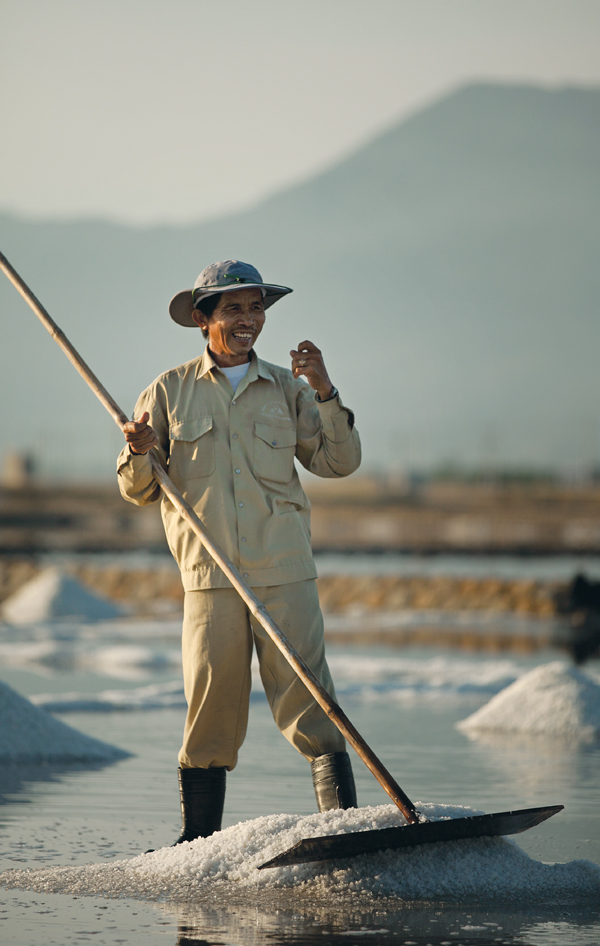
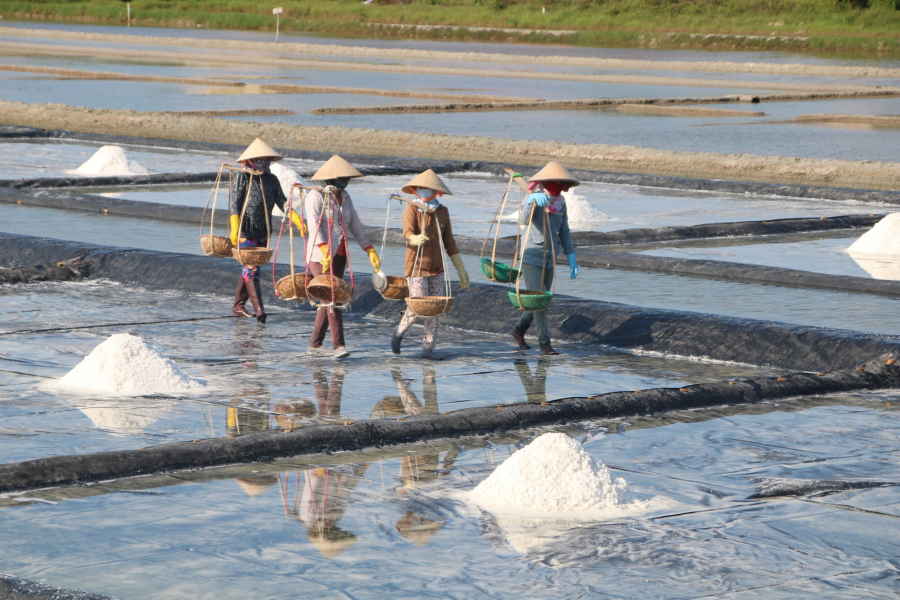
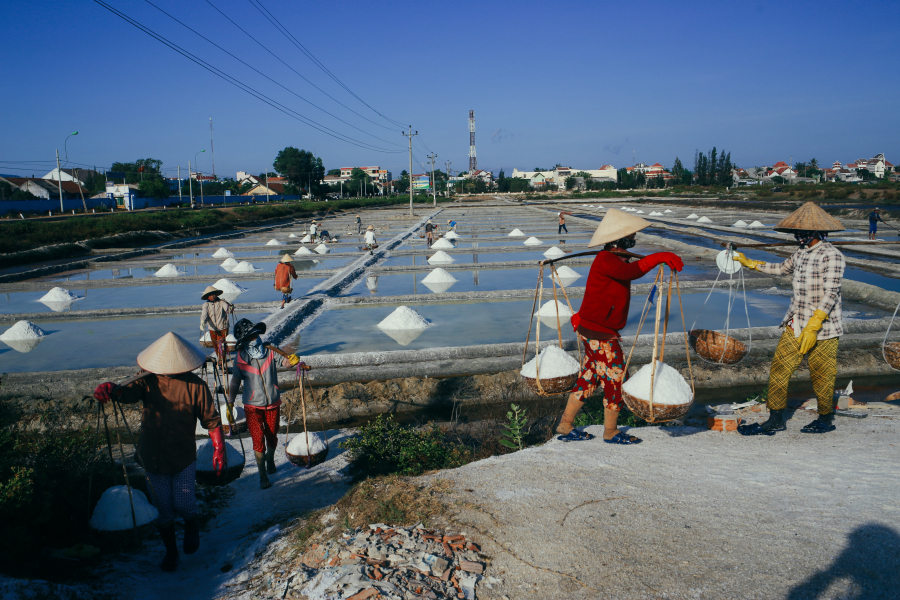
Harvest time is the happiest time in Hon Khoi, filled with the hustle and bustle of everyone. They work together to rake the salt and carry loads of pristine white salt to the collection point. Amidst the quiet atmosphere, occasional laughter and conversation mingle with the sounds of tired breathing. The scene is simple yet creates beautiful and meaningful images.
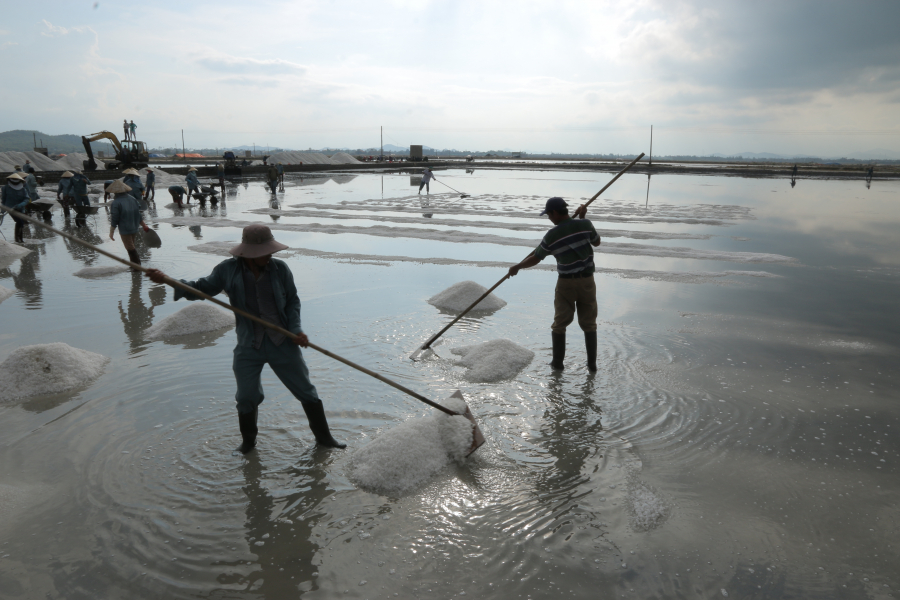
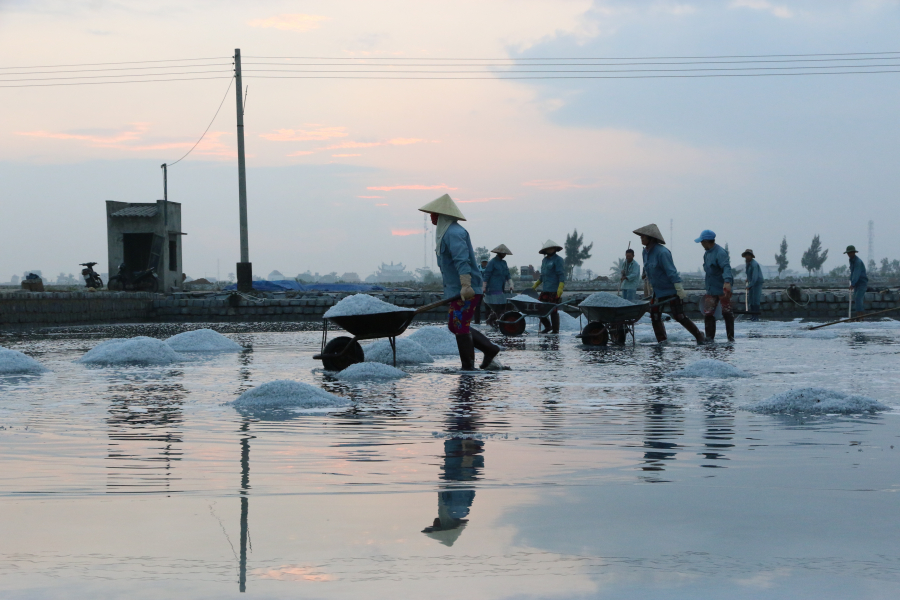
Besides producing salt from the ground, salt farmers here also produce two other types of salt: salt covered with tarpaulins and refined Japanese salt. Salt covered with tarpaulins is usually made from large salt fields, about 1 hectare in area, which are then covered with tarpaulins and left for about 5 months before harvesting.
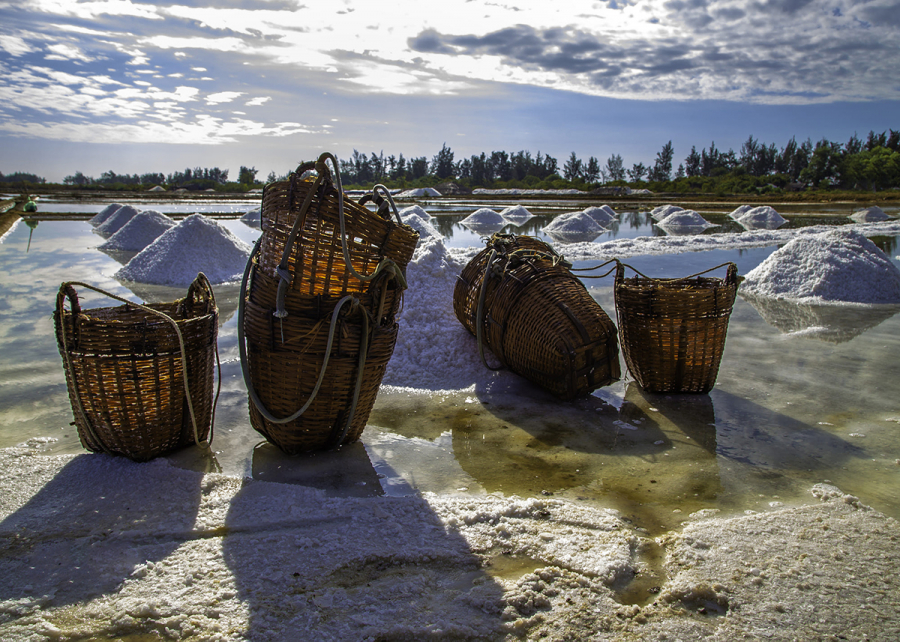
For refined Japanese salt, the production process is more elaborate: the salt fields must be paved with bricks, filled with seawater, and sun-dried for 7-8 days before harvesting. Afterward, the salt is finely ground and then sun-dried again to produce the final product. Annually, the Hon Khoi salt fields supply the market with approximately 30,000 tons of various types of salt.
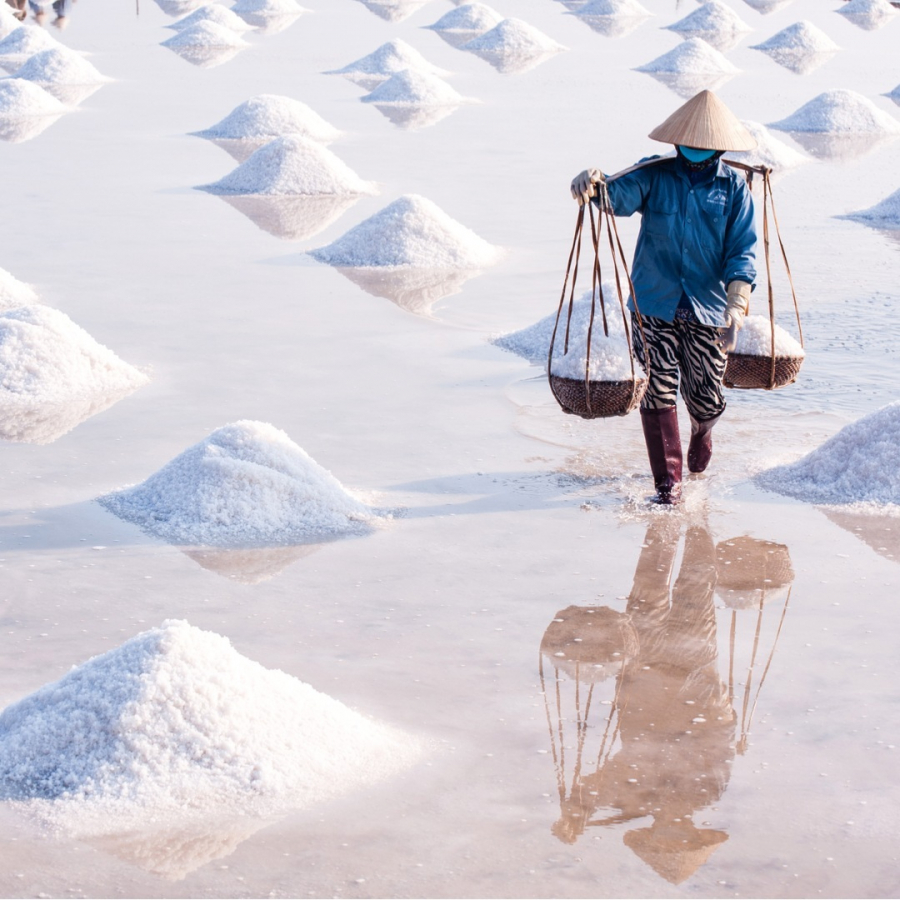
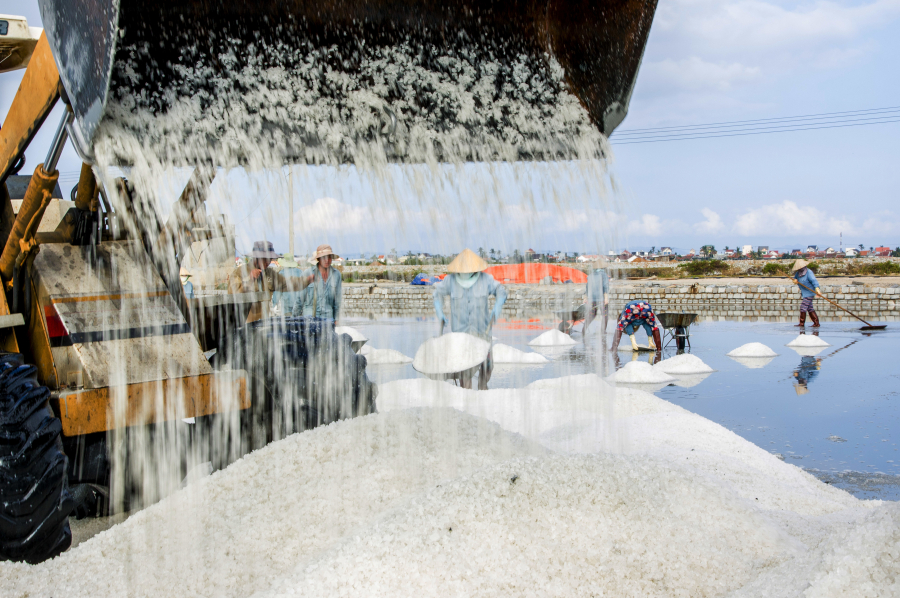
With the development of technology, salt production has become less arduous. While in the past salt-making involved raking and carrying salt on bare feet, now everyone wears boots and rubber gloves, making the work less corrosive to the skin and reducing hardship for salt farmers. Carrying baskets on shoulders is no longer the only method of transporting salt; now there are wheelbarrows, excavators, and conveyor belts to transfer the salt after it has been collected.
Salt production begins annually after the 23rd day of the 10th lunar month. According to oral tradition passed down through generations, "the gods may forgive, but the goddesses will not, causing the flood of the 23rd of October," meaning that every year on the 23rd of the 10th lunar month, a major flood marks the end of the rainy season. Therefore, salt producers must wait until after that date to clear their fields and continue working until the 15th day of the 7th lunar month of the following year. The salt season ends on this day because the rainy season officially begins. These mid-season downpours can sometimes significantly affect the year's salt production.
Therefore, the best time to visit the Hon Khoi salt fields in Nha Trang is from mid-March to the end of June. During this time, the weather is sunny and the temperature is quite high, so if you want to capture beautiful photos of the salt fields, you should go early in the morning at 5 am or in the afternoon at sunset from 5 pm to 6 pm.