VI
VI


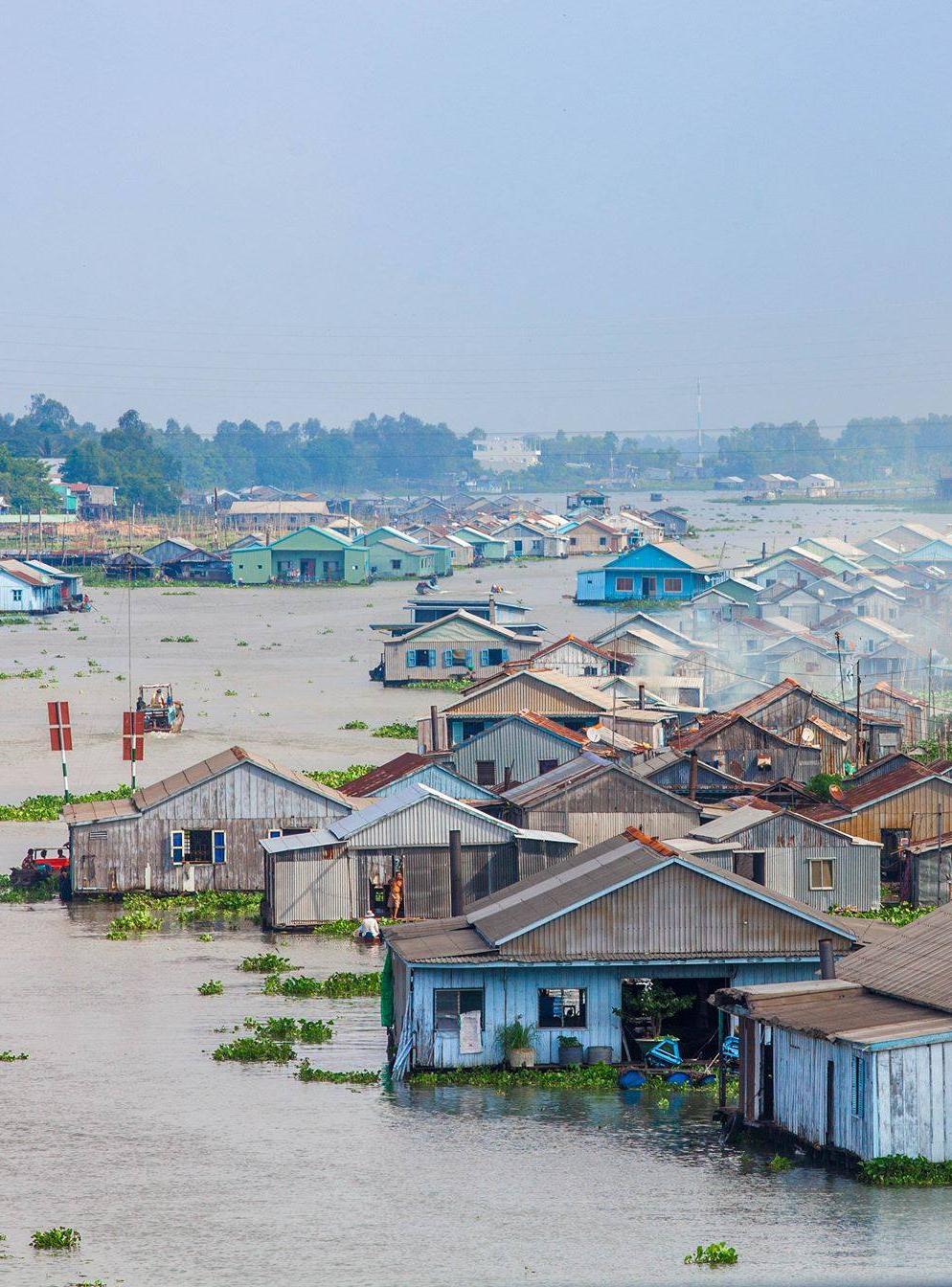
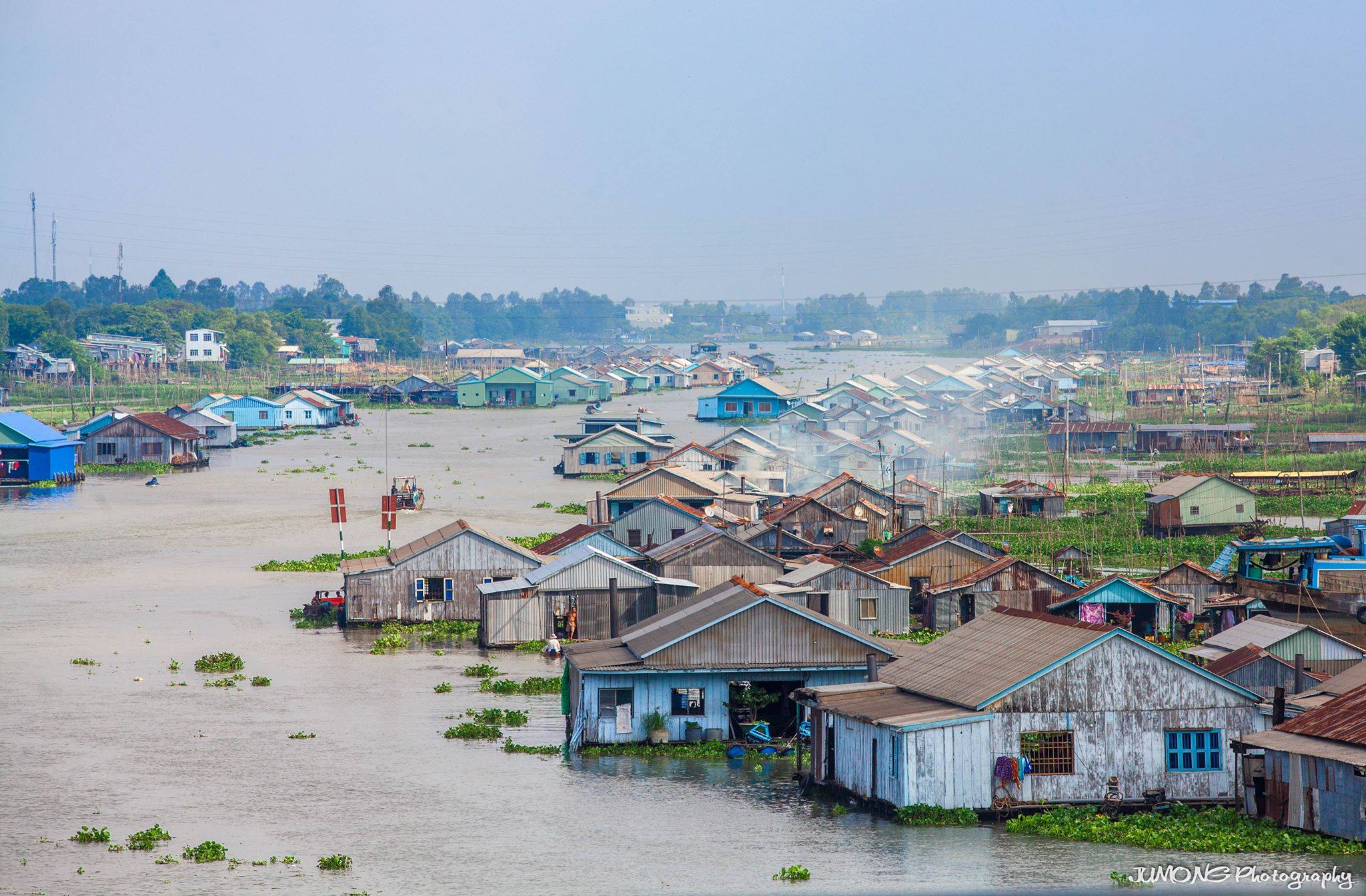
If you've fallen in love with the simple beauty of the Mekong Delta, you absolutely must visit Chau Doc floating village. This is a village specializing in raising fish in cages on the Hau River, located about 4 km west of the center of Chau Doc town.
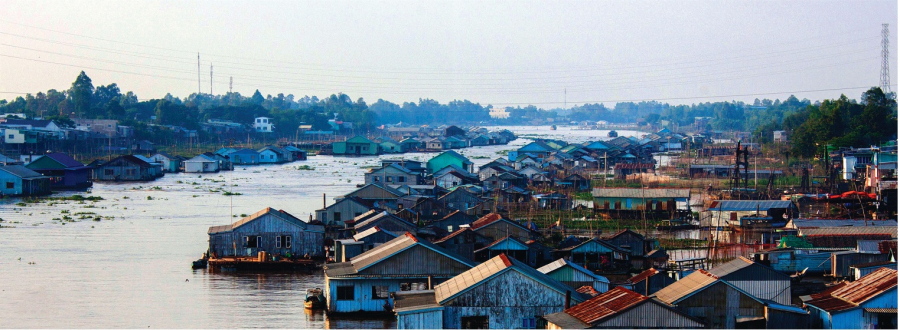
Each village across Vietnam possesses its own unique beauty that captivates the hearts of travelers. While the stone village in Cao Bang boasts centuries-old stone houses, and the ancient village of Loc Yen in Quang Nam is picturesque, the floating village of Chau Doc is known for its rustic and simple charm. It's called a floating village because the houses and fish farms are clustered together, forming a kind of "village." The most densely populated floating villages are found along the river in Tan Chau district, stretching for nearly 10 kilometers.
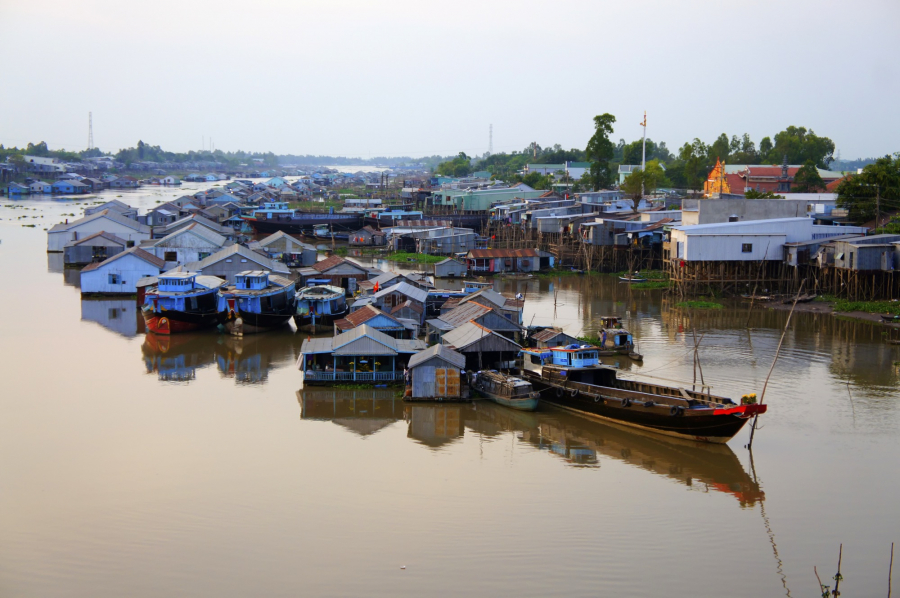
Chau Doc floating village is known for its rustic and simple beauty.
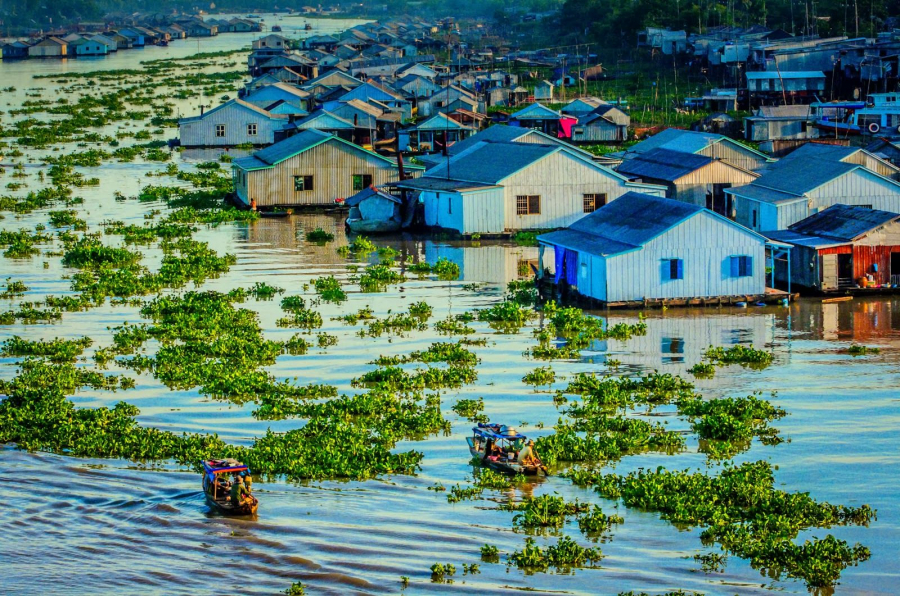
Compared to life on land, living on the river has quite a few inconveniences, but in return, people in floating villages don't have to spend money buying land, the cost of building wooden houses is low, and most importantly, they can live in harmony with nature while easily looking after the fish farms they raise.
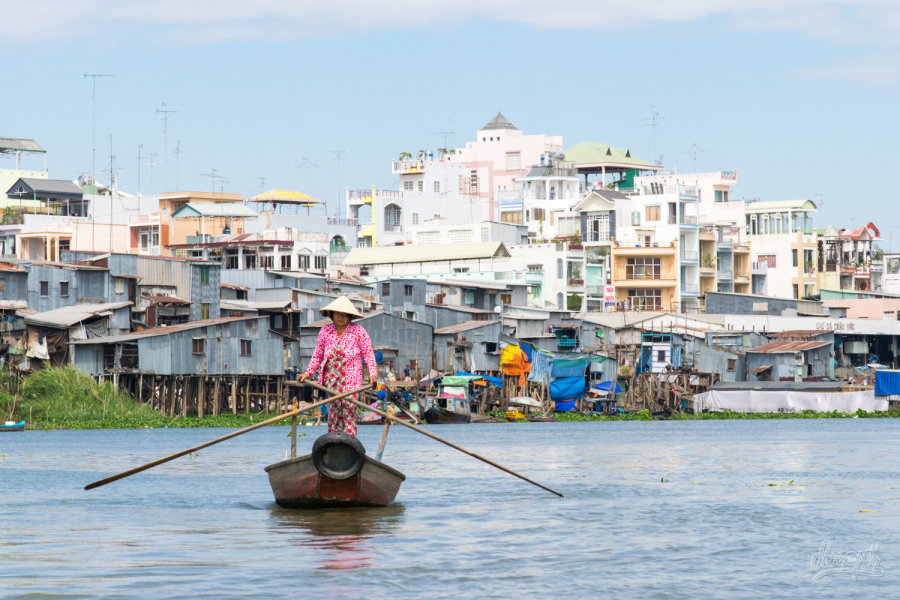
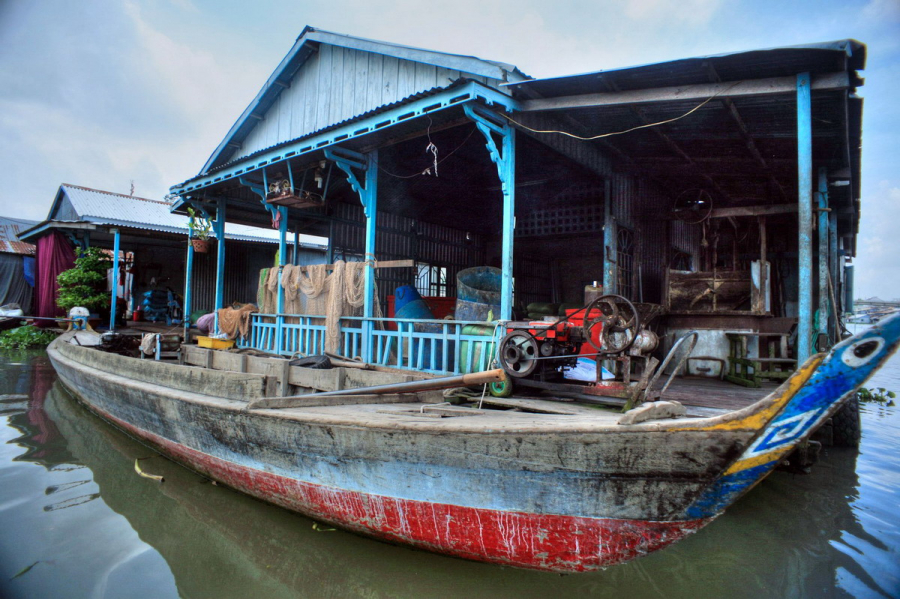
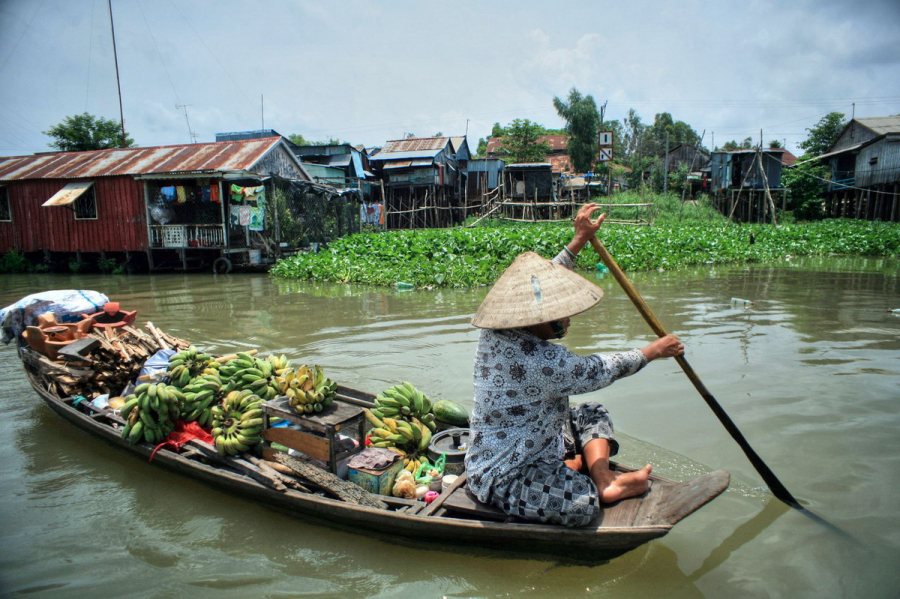
The floating village on the Chau Doc River is a freshwater fish farming village that was established in the 1960s. Initially, there were only a few floating rafts raising fish naturally, without the need for feeding due to the good water quality. However, from the 1970s onwards, due to the high economic benefits, the number of fish rafts increased significantly and gradually became a key economic hub of An Giang province.

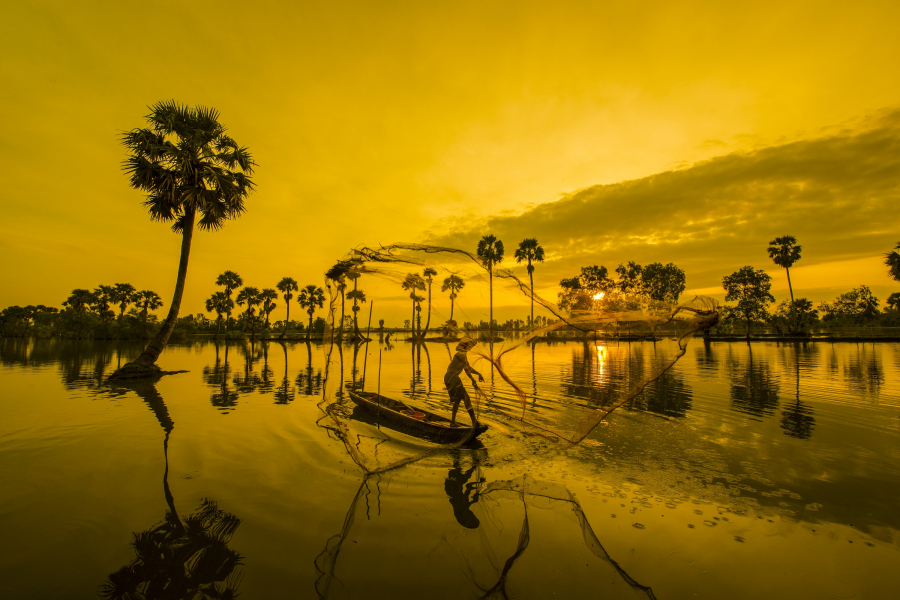
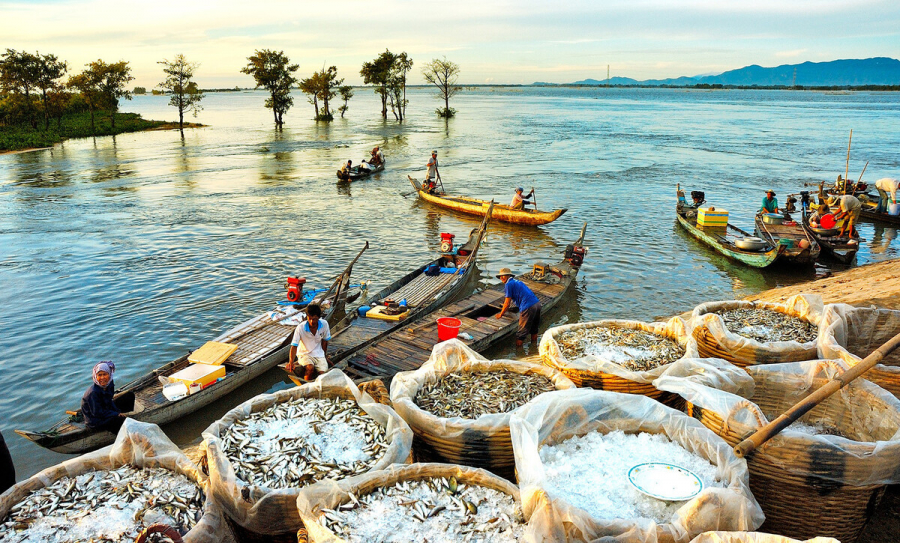
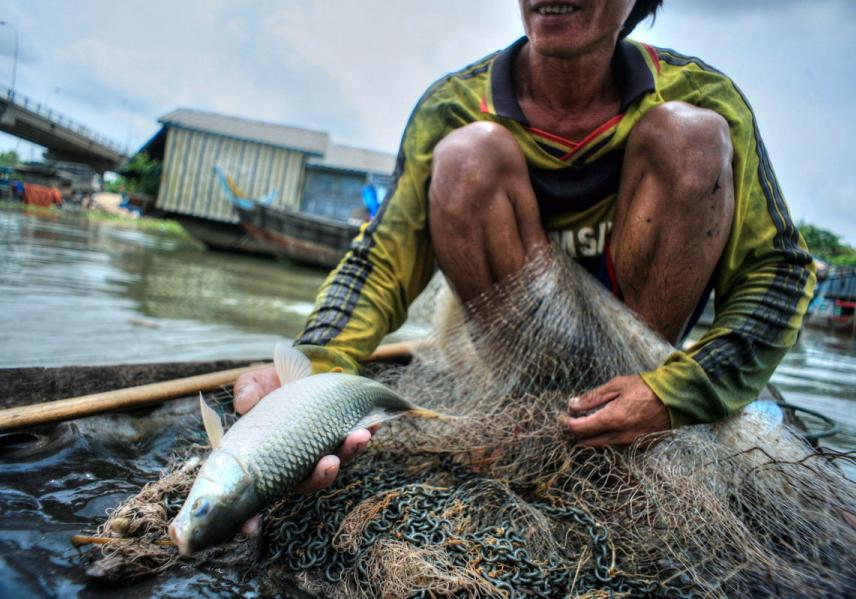
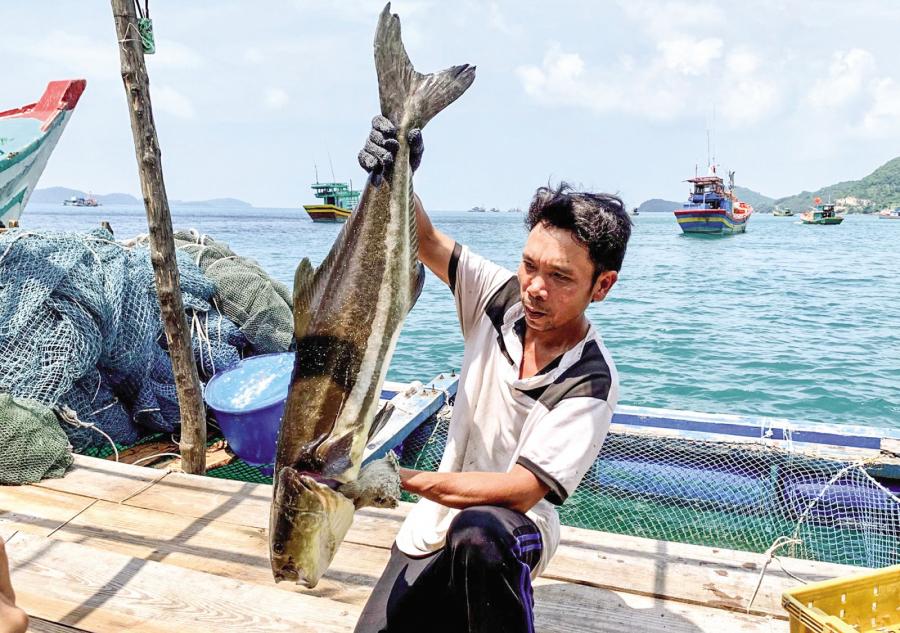
Notably, between 1990 and 2005, the Chau Phu, Phu Tan, Cho Moi, and Vinh Nguon areas had over 2,000 fish farms with an average annual harvest of over 20,000 tons. Most of the fish raised in these floating farms were catfish species such as pangasius and basa, primarily for export to Western Europe and North America.
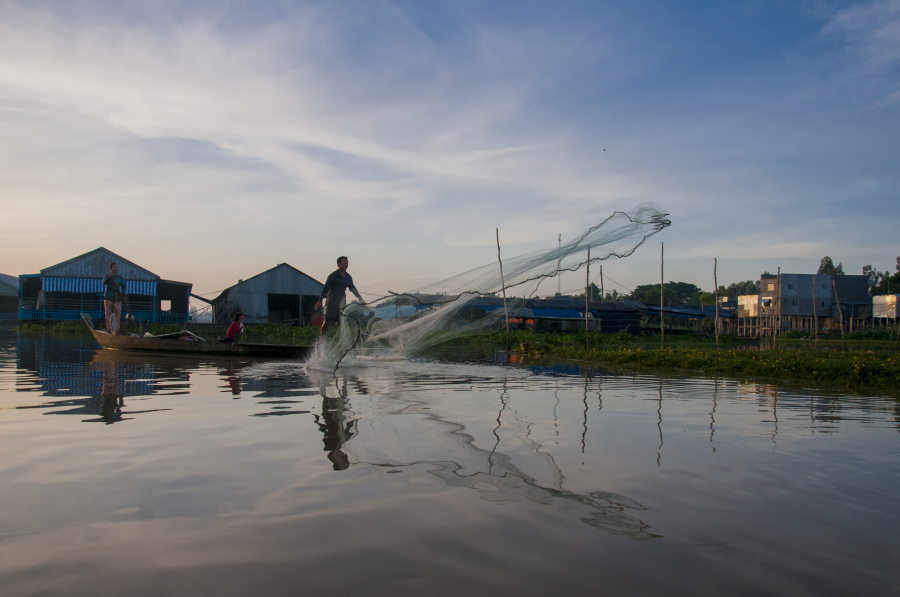
In recent years, as catfish and pangasius have become less popular in the market, people have switched to raising various types of fish such as snakehead, tilapia, carp, grouper, and snapper. Thanks to the rising prices of these fish, fish farmers in Chau Doc have prospered, bringing high economic efficiency and helping many families achieve a comfortable life.
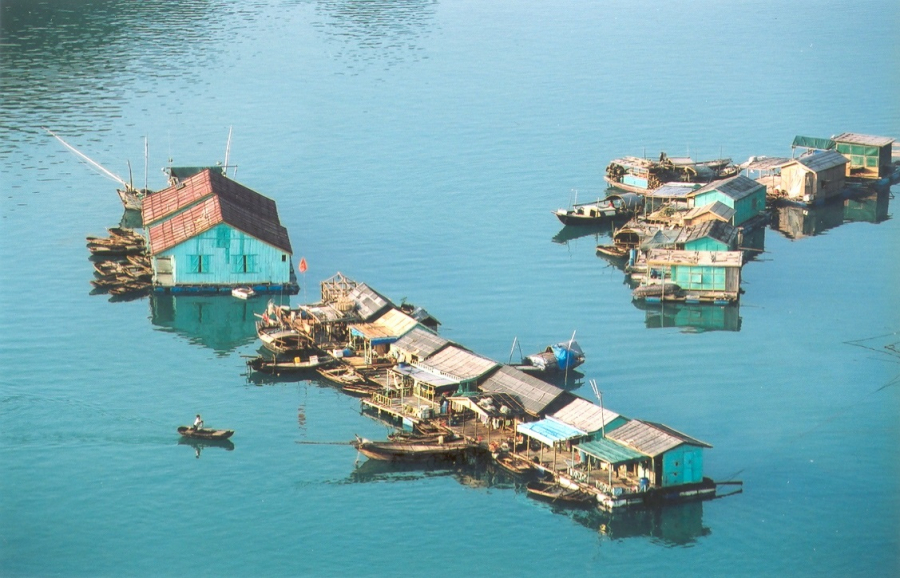
The floating village of Chau Doc may not possess a romantic or luxurious beauty, but it is precisely this simplicity that creates a unique picture of a riverside countryside. Here, you can immerse yourself in the atmosphere of floating houses swaying along the upper reaches of the Mekong Delta and the two branches of the Tien and Hau rivers.
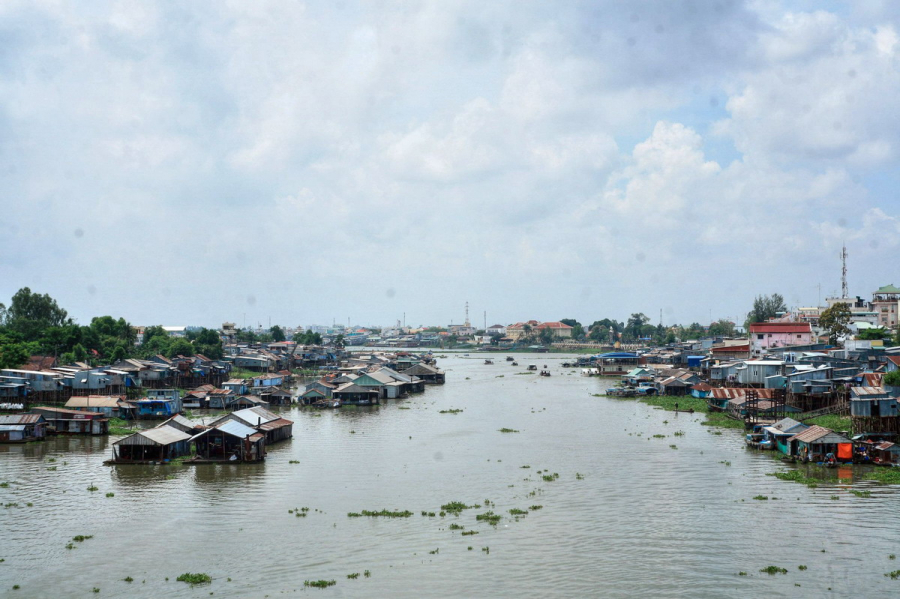
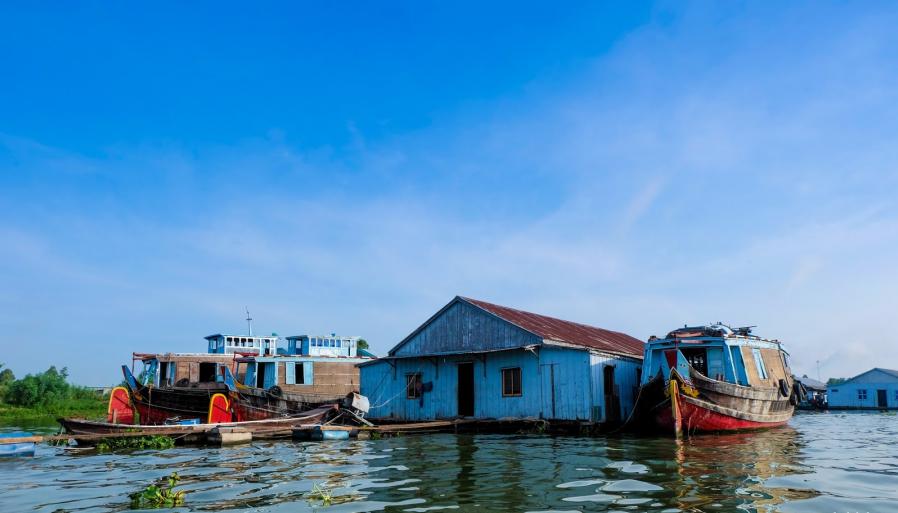
The architecture of the "houses" in the floating villages is also very unique. These houses on the river are usually made of painted wood, with tiled roofs, and a 5-meter deep base constructed of teak wood, surrounded by stainless steel mesh for raising fish. Despite being wooden houses floating on the waves, almost every family has all the necessary amenities. Some houses even have balconies with pretty flower pots and hammocks for relaxing in the cool summer afternoons. Life in the Mekong Delta, though not overly luxurious, has its own unique charm; they enjoy the simplest things in life.
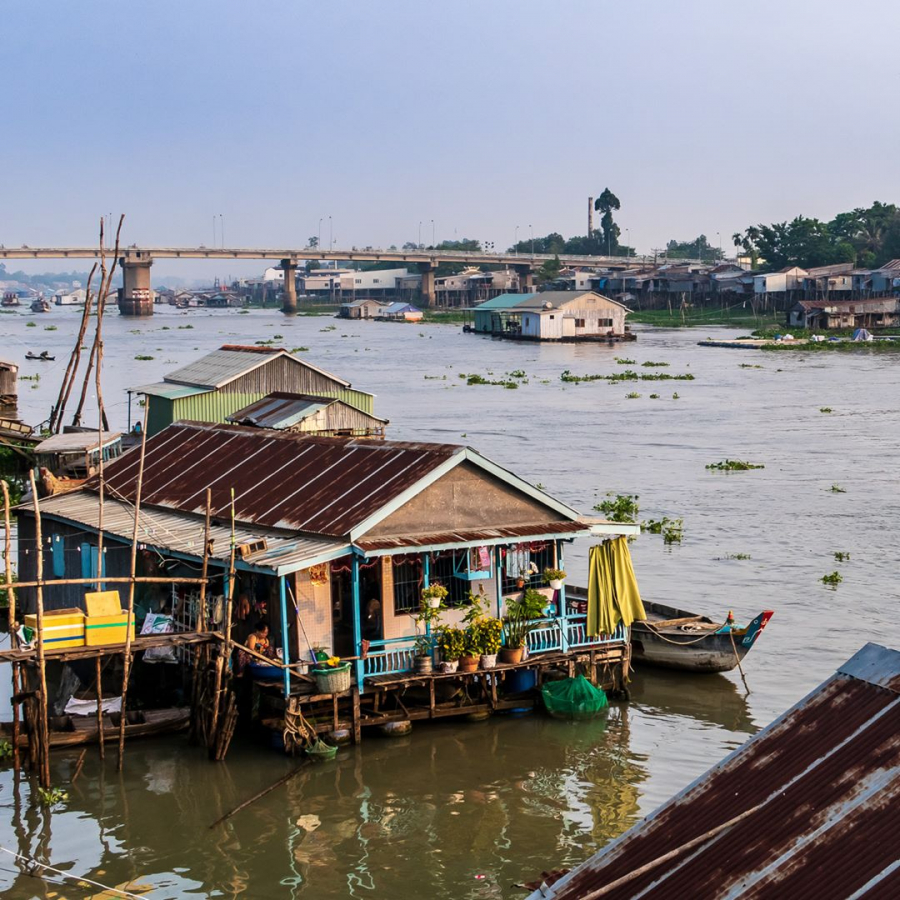
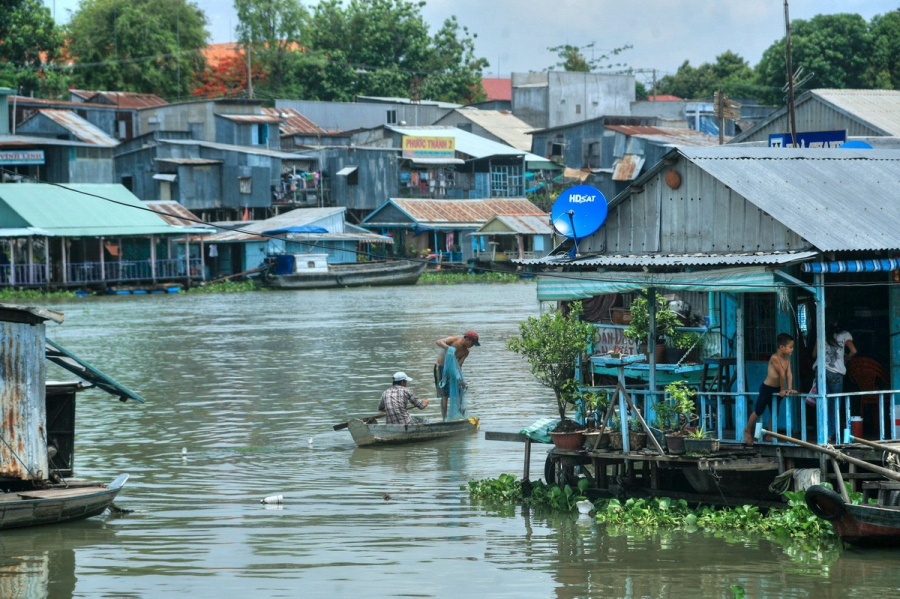
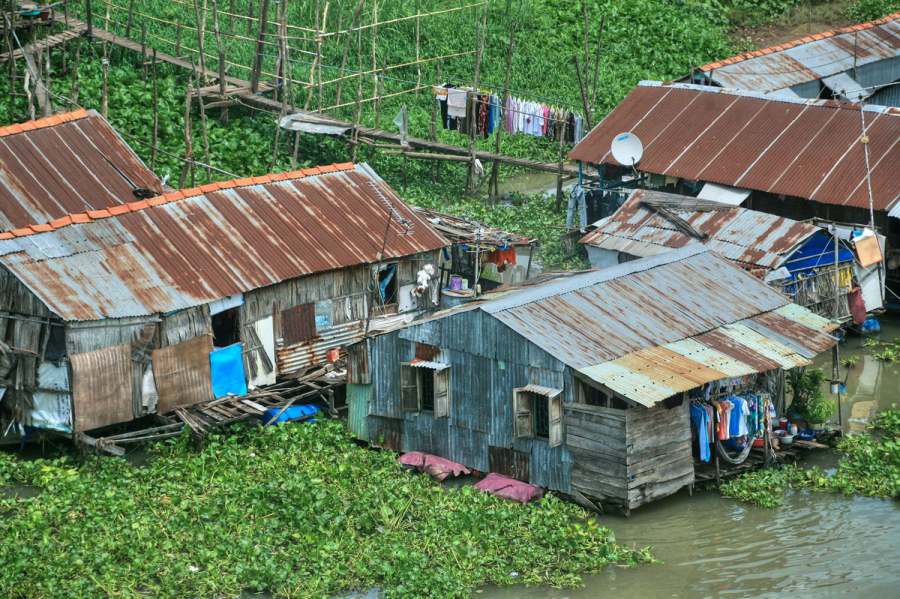
Sitting on a raft swaying with the current, watching the clusters of water hyacinths drift by, each visitor can feel the cool, moist breeze dispelling the stress and fatigue of daily life.
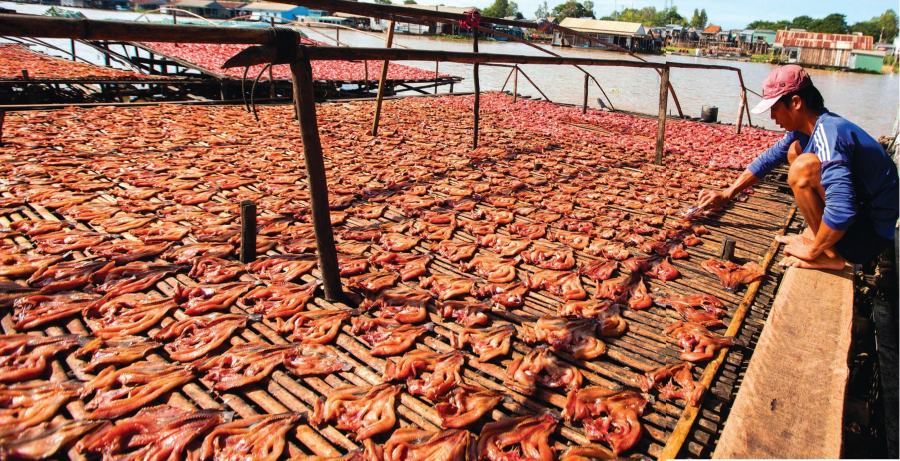
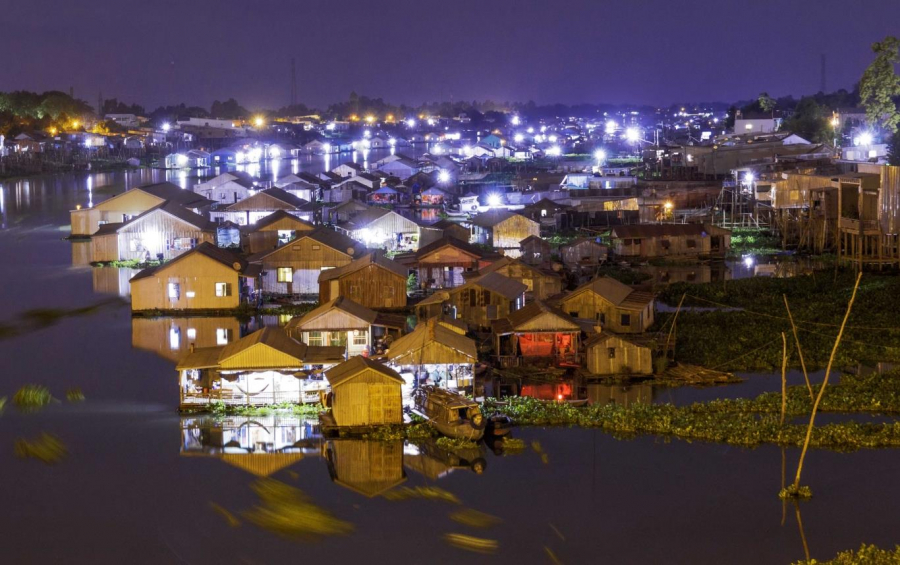
The scene on the river becomes more tranquil and poetic as dusk falls. At this time, the bustling trading activities on the floating village subside, and families gather together after a hard day's work. The floating village begins to light up. The lights from the houses reflect on the water, resembling a city at night floating on the river, creating a truly magical and enchanting scene.