VI
VI


1. Go to Bay Nui (Seven Mountains) to enjoy grasshoppers!
For the people of Bay Nui region in An Giang province, grasshoppers are considered a unique delicacy and have become a culinary inspiration for many eateries. Grasshoppers resemble dung beetles, about the size of a thumb, reddish-brown in color, with short bodies, wings, and very hard heads and legs, but soft, round bodies. These insects are now sold in markets such as Nha Bang, Van Giao, An Hao, Tinh Bien town, and mountainous markets in Tri Ton district.

When you first bring the grasshoppers home, the first step is to remove their hard wings. Then, remove the tails, gut them, and wash them thoroughly with diluted salt water. Next, let the grasshoppers drain, then fry or stir-fry them.
For a more elaborate dish, you can stuff them with minced pork belly or peanuts before deep-frying them until crispy. These crispy fried grasshoppers are served with fresh vegetables, sliced tomatoes, and lettuce, dipped in chili sauce or lime-chili salt – the taste is indescribable.
2. Beef ball noodle soup at Bay Nui
Beef ball noodle soup is one of the specialties of the mountainous region, a delicious combination of many elements. First and foremost is the special fragrant Neang Nhen rice, a specialty of the Bay Nui region, which is milled into flour to make the noodle soup using a traditional, handcrafted recipe.

Next comes the mixed broth, simmered from pork bones, chicken bones, dried shrimp, fish, and other ingredients, giving the broth a rich and nutritious flavor. But the best part is the beef meatballs. Bay Nui is known for its fattened cattle, and these beef meatballs have solidified their position as a delicious and flavorful local dish from the Bay Nui region.
The beef meatballs, cut in half, have a reddish-pink color, and are served alongside inviting slices of green onion. As you leisurely chew a piece of the meatball, you'll experience a delightful combination of crispy, chewy texture and rich, sweet flavor.
3. Cows climbing mountains
Many people think "mountain-climbing beef" refers to beef raised in mountainous regions, resulting in firm, lean meat. In reality, it's still beef sold in the market, but through the skillful hands of the chef, the dish becomes something unique. The plate of beef looks quite ordinary. The meat is cut thicker than in typical grilled beef dishes and marinated thoroughly. The grill is made of cast iron. A round, protruding shape in the center of the grill resembles a mountain, hence the name of the dish.


No matter how long the meat is cooked on the grill, it never becomes tough or chewy, but always remains tender and delicious. The grilled meat is wrapped in rice paper with fresh vegetables and unripe bananas, and dipped in fermented soybean paste or pro-hok fish sauce.
A single serving is enough for 3-4 people, a distinctive dish, and a reasonable price, so no tourist hesitates to choose this dish for lunch when visiting the Tan Chau border region. Clearly, this dish reflects the culinary cultural exchange between the Kinh and Khmer people.
4. Rice with chili and eggplant
This dish is an unusual yet harmonious combination of rice and curry, creating a traditional flavor of the local cuisine. The rice is skillfully cooked from high-quality rice, fragrant with the aroma of cloves, rich with the flavor of cashews and curry, and perfectly seasoned.

Cà púa is a dish made from beef by the Cham people. To make cà púa delicious, they remove the beef's odor by adding rice wine and ginger. Then, they choose a young coconut, grate it into fine strands, use half to make coconut milk, and roast the other half until golden brown.
Enjoying "com ni - ca pua" (rice with coconut milk and peanuts), you'll experience the sweet and creamy taste of coconut milk, the nutty flavor of peanuts, the sweetness of beef and raisins, and the spicy kick of chili peppers, creating a delicious and unique culinary experience. The combination of "com ni" and "ca pua" complements each other, creating a distinctive flavor profile in the sophisticated Cham cuisine of Chau Giang.
5. Bun Ken Chau Doc
Although also a type of fish noodle soup originating from Chau Doc, Bun Ken has a completely different preparation method. Bun Ken originated in Phnom Penh, and the recipe was brought back by Vietnamese people in the border region and adapted to suit Vietnamese tastes. This dish is truly a specialty of Chau Doc, but it is little known because it is not widely available, only found in Chau Doc town, An Giang province.

The broth for bun ken is made from coconut milk and fish broth. The flavor of bun ken is a blend of cloves, cinnamon, galangal, and lemongrass. To enhance the flavor without being overwhelming, dried shrimp are roasted and added to the broth. Bun ken is served with banana blossom, bean sprouts or cucumber, and mint.
6. Grilled catfish with salt and chili
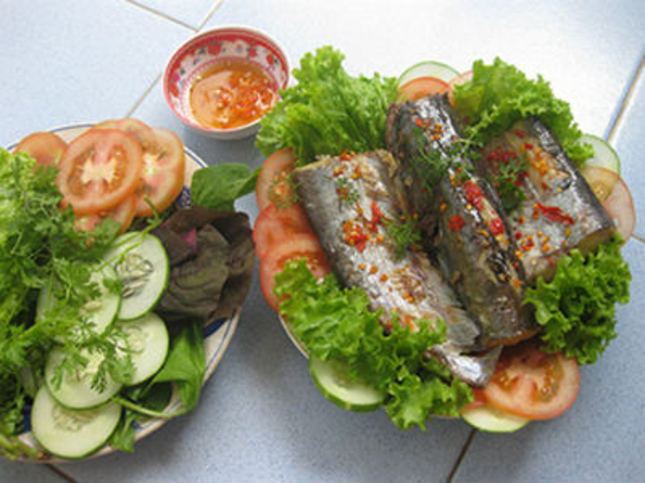
The climbing perch is a species of smooth-skinned, elongated fish similar to the snakehead but much larger, averaging 1-2 kg. One of the unique delicacies that restaurants in An Giang often prepare and serve to tourists today is grilled climbing perch with salt and chili.

The most suitable dipping sauce for grilled fish is a spicy and sour fish sauce or a mixture of salt, chili, and lime juice. This dish can be eaten with vermicelli noodles or wrapped in rice paper with various vegetables such as lettuce, cucumber, unripe banana, star fruit, etc. It can be considered a delicious specialty dish; the fish meat is healthy, nutritious, and not at all cloying, so everyone enjoys it.
7. Palm sugar dessert
Palm trees are widely grown in the Mekong Delta region of Vietnam. Palm sugar dessert, with its rich coconut milk, is also a specialty of the Mekong Delta. People in Chau Doc, An Giang often offer guests this refreshing palm sugar drink, made from this special "palm sugar pulp."

Palm sugar dessert is best enjoyed cold. The rich creaminess of the coconut milk blends perfectly with the chewy, soft palm fruit pulp, creating a delightful taste. The palm sugar used in this traditional dessert from the Mekong Delta further enhances its naturally refreshing flavor.
8. Siamese Sticky Rice
Xôi xiêm is made from Thai glutinous rice, wheat flour, duck eggs, and palm sugar (brown sugar). When eating xôi xiêm, people scoop the rice onto a plate and pour the sauce and coconut milk over it. Preparing xôi xiêm isn't complicated, but it requires experience and skill. The steamed rice must be cooked just right, soft and chewy, neither mushy nor hard, and the sauce should be sweet, rich but not greasy, and fragrant.

Sticky rice with Siamese sauce is sold at Chau Doc market at 7:30 AM every day and has become a familiar breakfast treat for the locals.