VI
VI


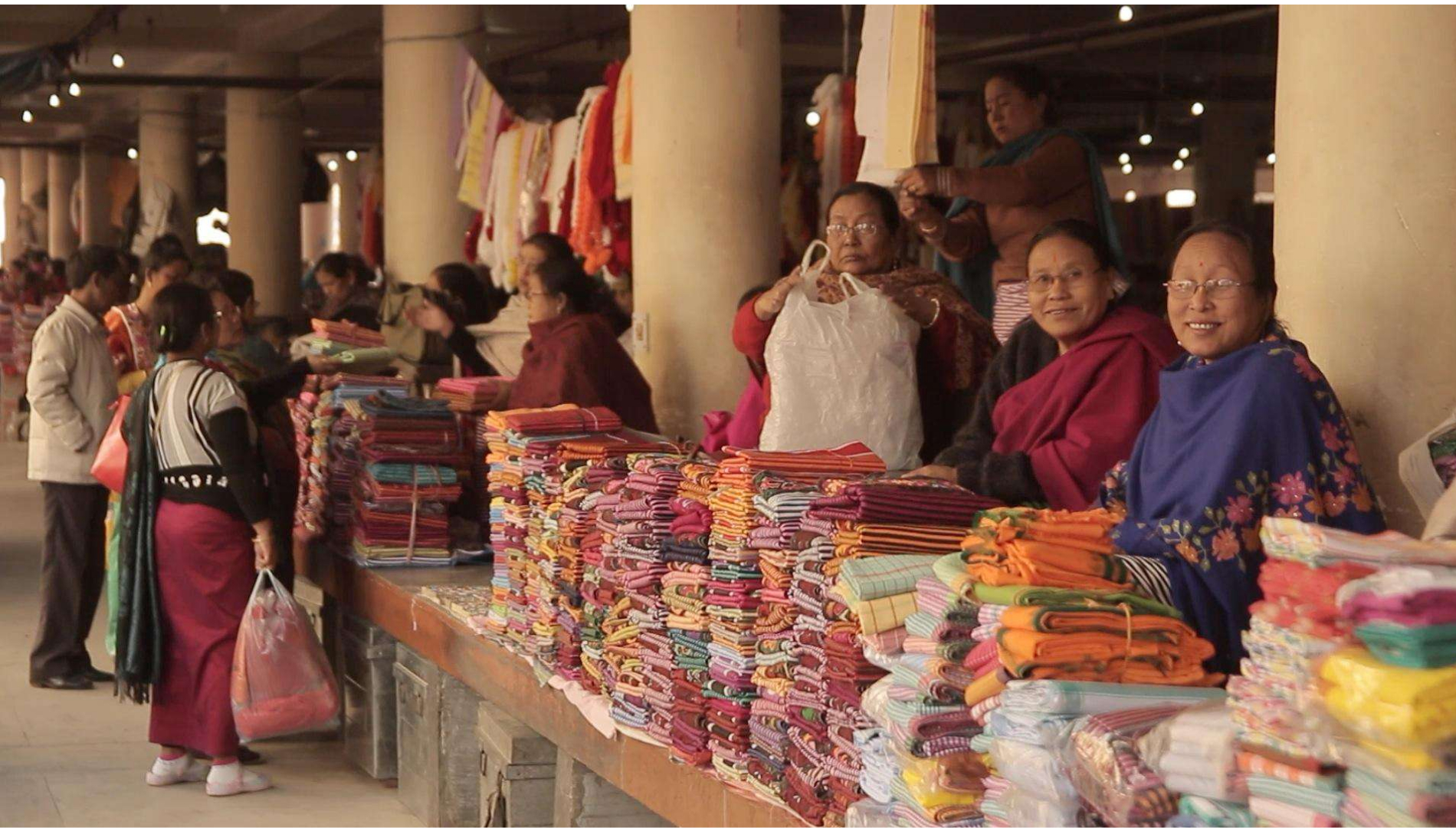
"Mother's Market"
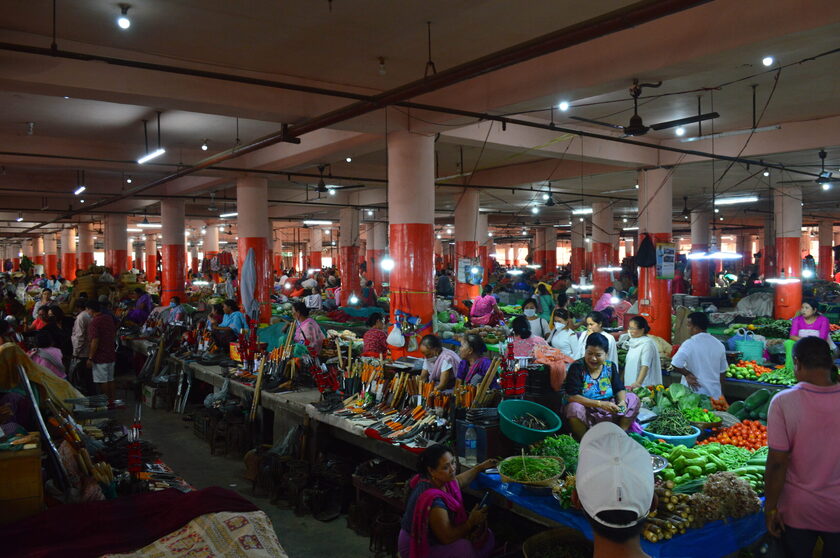
Ima Keithel, located in Imphal city, Manipur state, at first glance resembles any other local market, bustling with buyers and sellers offering a wide variety of goods from fresh fruit to food and fabrics. But as you stroll through the more than 5,000 stalls spread across three multi-story buildings and a sea of tents surrounding them, you'll realize that all the vendors here are women.

In the local language, Ima Keithel means "mother's market," and it's dubbed the world's largest women-only market, according to CNN. Men are allowed to enter, shop, carry goods, or work as security guards, but no one is allowed to sell goods at the stalls.
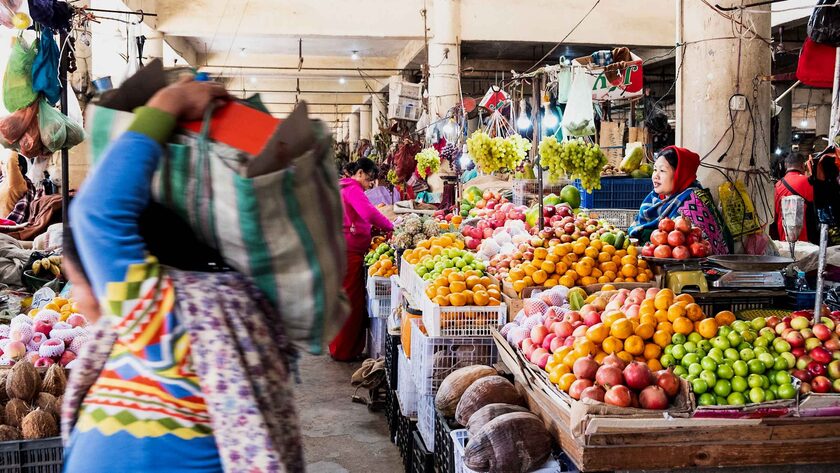
Street vendors sell their goods from dusk till dawn, offering everything from fresh fruit to fish and fabrics.
This is where women are in charge, making decisions and driving the economy of Manipur state. Only married women are allowed to sell goods at this market. To have an official stall at Ima Keithel, women must be nominated by retired vendors. This fosters a spirit of solidarity among the women at the market.
Early in the morning, the aroma of eromba (a local dish consisting of mashed potatoes, bamboo shoots, and chili paste with dried fish) wafted through the air. In one corner of the market, a group of vendors huddled together, complaining about delayed deliveries or unsatisfactory product quality.
Another group of women busily offered gifts at the shrine of Ima Imoinu – the patron goddess of business in the market. Along the walkways, goods were piled high, including fragrant pine wood, betel leaves, handcrafted pottery and children's baskets, soft silk blankets, and colorful carpets. Small traders stood interspersed among the stacks of goods, wearing pink, yellow, red, or green scarves. All the colors were vibrant. Others wore headscarves in the Islamic style.

The Ima Keithel Market opened in the 16th century when people needed a temporary place to shop for crops. Lokendra Arambam, an expert on the region's pre-colonial period at Manipur University, said the market began with women exchanging fish, vegetables, and other economic products.
A miniature model of an egalitarian society.
Ima Keithel is a microcosm of an egalitarian society. Manipur has the highest women literacy rate in India and is considered a leading state for gender equality nationwide.
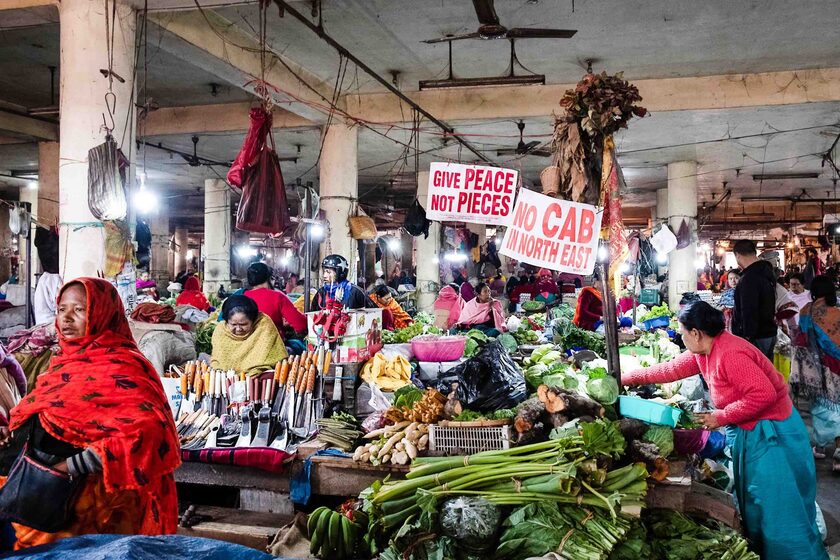
Every day, the women come to offer gifts at the shrine of Ima Imoinu, the goddess of wealth and business, and the main protector of the market.

An ancient custom called Lallup-Kaba (men aged 17-60 had to leave their families to serve the then-current state regime without pay) was strictly enforced in the Meitie community – the majority ethnic group in Manipur. Men were sent to work in remote areas or to fight in wars with neighboring kingdoms. To manage the household, women had to cultivate the land, weave cloth, make some goods to sell in the market, and take care of the children. This led to the creation of the Ima Keithel market.
Only married women were allowed to trade in the market, and the stalls were passed down from generation to generation. Typically, older women managed the stalls, while younger women in the same family sold and delivered goods. Each family brought their own special merchandise to the market. Women without stalls sold their wares door-to-door or spread out tarpaulins on the ground outside the market, displaying food, fruits, handicrafts, and other goods for sale.
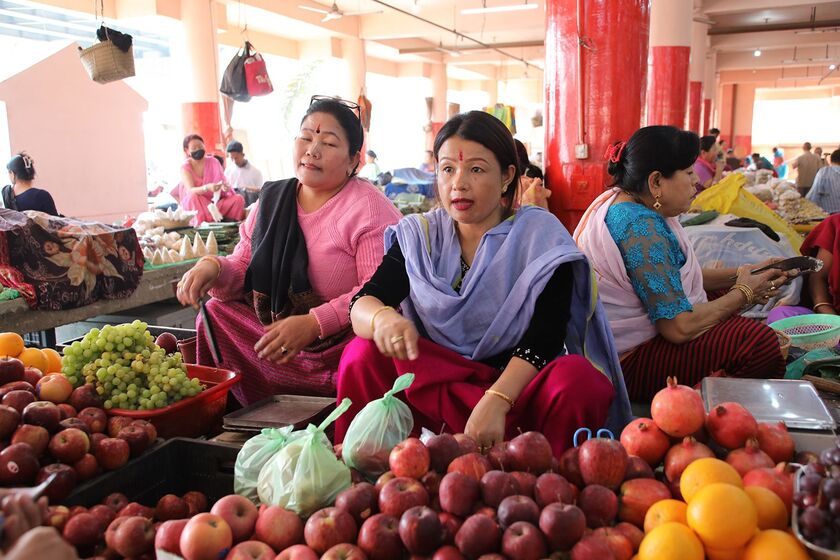
According to custom, only married women were officially allowed to trade in the market, and to secure a spot in the official area, one had to be certain to do so.
In particular, many women have used the opportunity to work at the market to break free from traditional social norms. Post-Covid-19, business has now returned to its vibrant state at the centuries-old market. Each day, the market is a captivating blend of colors, sounds, and smells – and the positive impact on women is invaluable.
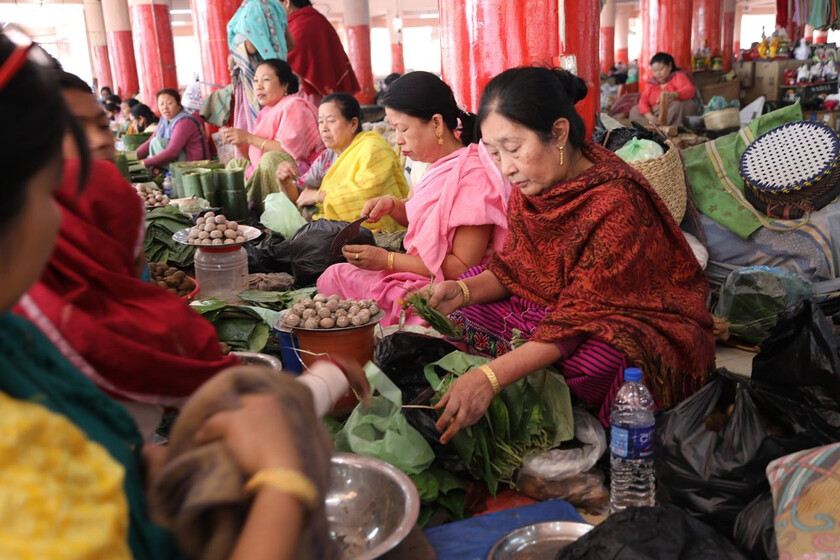
Thanks to its strategic location and easy accessibility, Imphal city in Manipur state has gradually developed into the economic center of the region.
At the market, some people have broken free from traditional social norms. Mrs. Nongmai Them Khumsonbi, 80 years old – a fabric seller – says that when she first got married, her husband didn't want her to become a market vendor because he believed women shouldn't work.
Thanks to Imphal's strategic and easily accessible location in the heart of Manipur, the city has gradually developed into the economic hub of the region, and the women of Ima Keithel have become increasingly influential.