King Khai Dinh, known more for his study and appreciation of art than for his economic and political strategies, once said: "The development of a country's civilization is reflected in its works of art." If so, aren't you curious about what form our country's civilization currently takes?
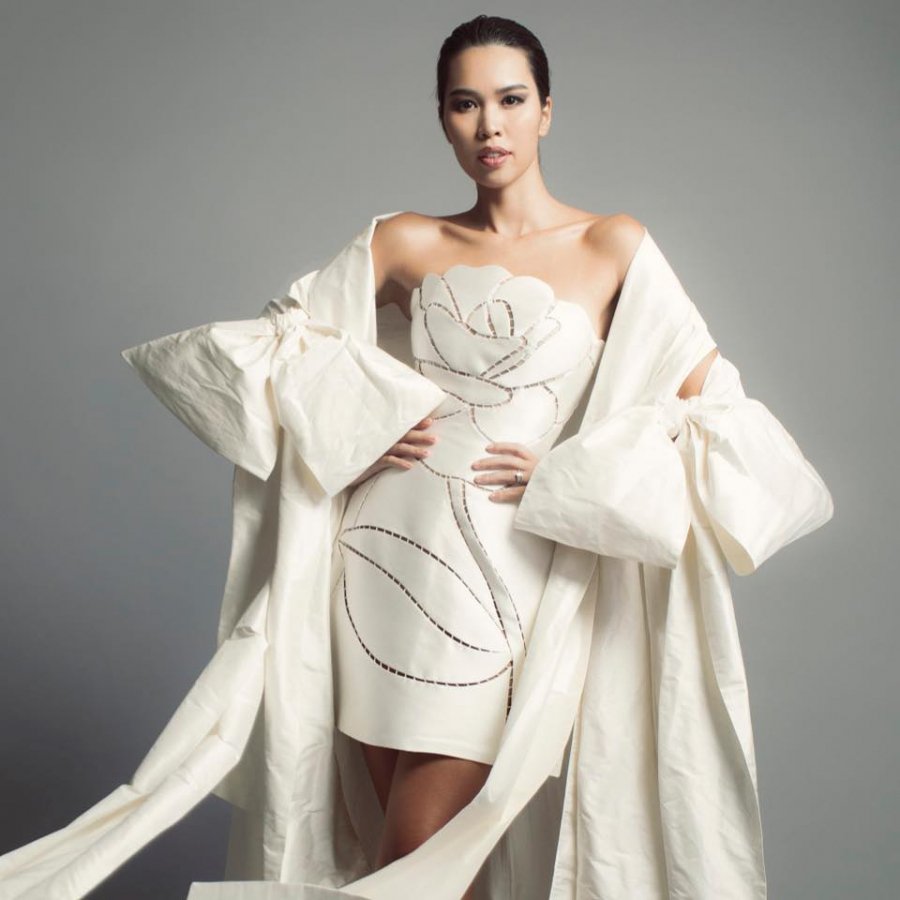
To answer the above question, we first need to discuss...artist- those who directly create works of art. According to supermodel Ha Anh, "Artists are people who work in creative arts (painting, music, film, fashion, etc.), they directly participate in performing or creating those art forms. And their task is to enrich the culture and spirit of people and life, making life more beautiful."
Ha Anh believes that the artist's task is "to bring valuable cultural elements to the public for everyone to enjoy."
But, given the overwhelming (and diverse) influx of artwork in Vietnam, encompassing every emotion—joy, anger, love, and sorrow—how can we assess the cultural value of each piece? And suppose an artist consistently delivers works of positive value to the public, but one day becomes embroiled in a scandalous personal affair—would they still be considered a true artist?
Come, join me on this quest for the concept.artist.
I. Workers...
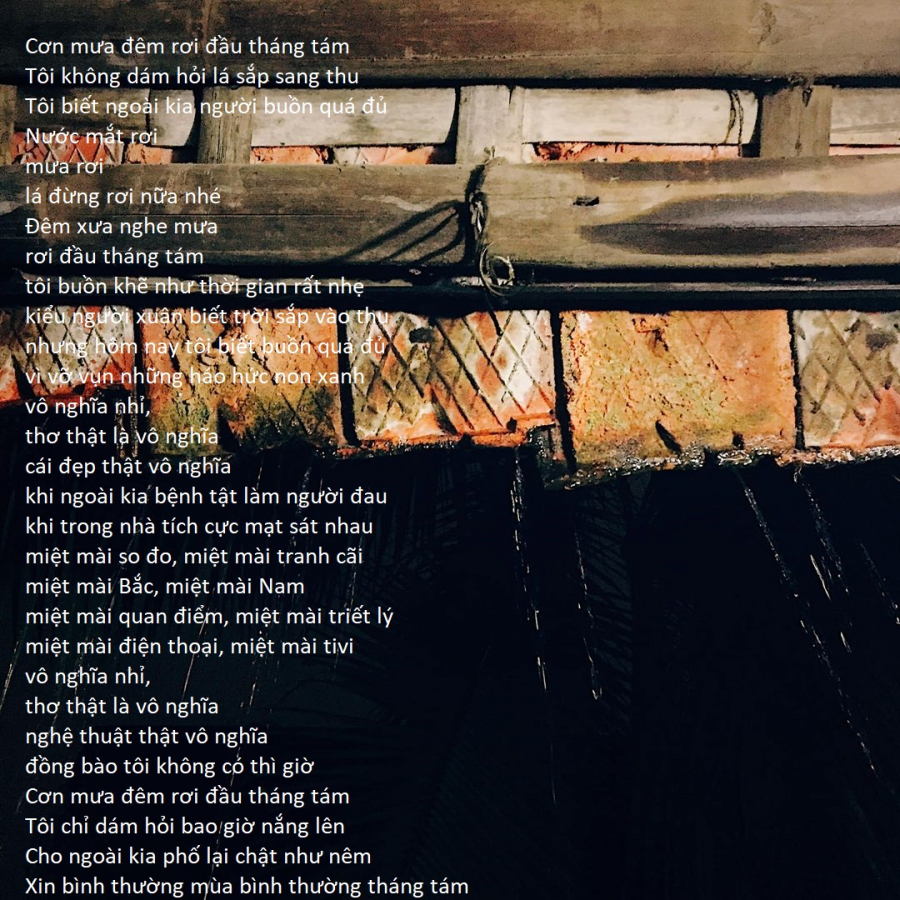
The first person I turned to wasNam Thi, the name behind quite a few music videos, commercials, lifestyle magazine publications, and most recently, a newly released collection of his own poems.
"Artists, like in any other profession, must work diligently in their field, and importantly, they must work with integrity," Thi remarked. "When they work diligently, they will create works of high aesthetic value, and these works will naturally radiate all other values such as education, morality, culture, and society."
"So what about those who create both works of art and... scandals?"
"Creating scandals and controversies is essentially a pragmatic approach to art, transforming it into a consumer-oriented tool to serve personal economic purposes, for example."
"Is there a fear that, in pursuit of personal gain, they will bring 'negative' value to Art?"
"They'll be eliminated soon enough; they can't last long. As we all know, society is developing, people are getting better education and have easier access to global civilization. No one wants to remain 'ignorant' forever, chasing meaningless things to benefit a stranger."
So, it seems that the most objective measure of a work of art is time. Let's not jump to conclusions about a work/artist yet.GoodgoodbadAfter just one encounter – give it more time, let it decide for itself. A day, a month, or even a decade. If it's a valuable work, the public will willingly accept it.hugGive it a place in life and in this era; if it were worthless, perhaps we wouldn't even remember its name now.
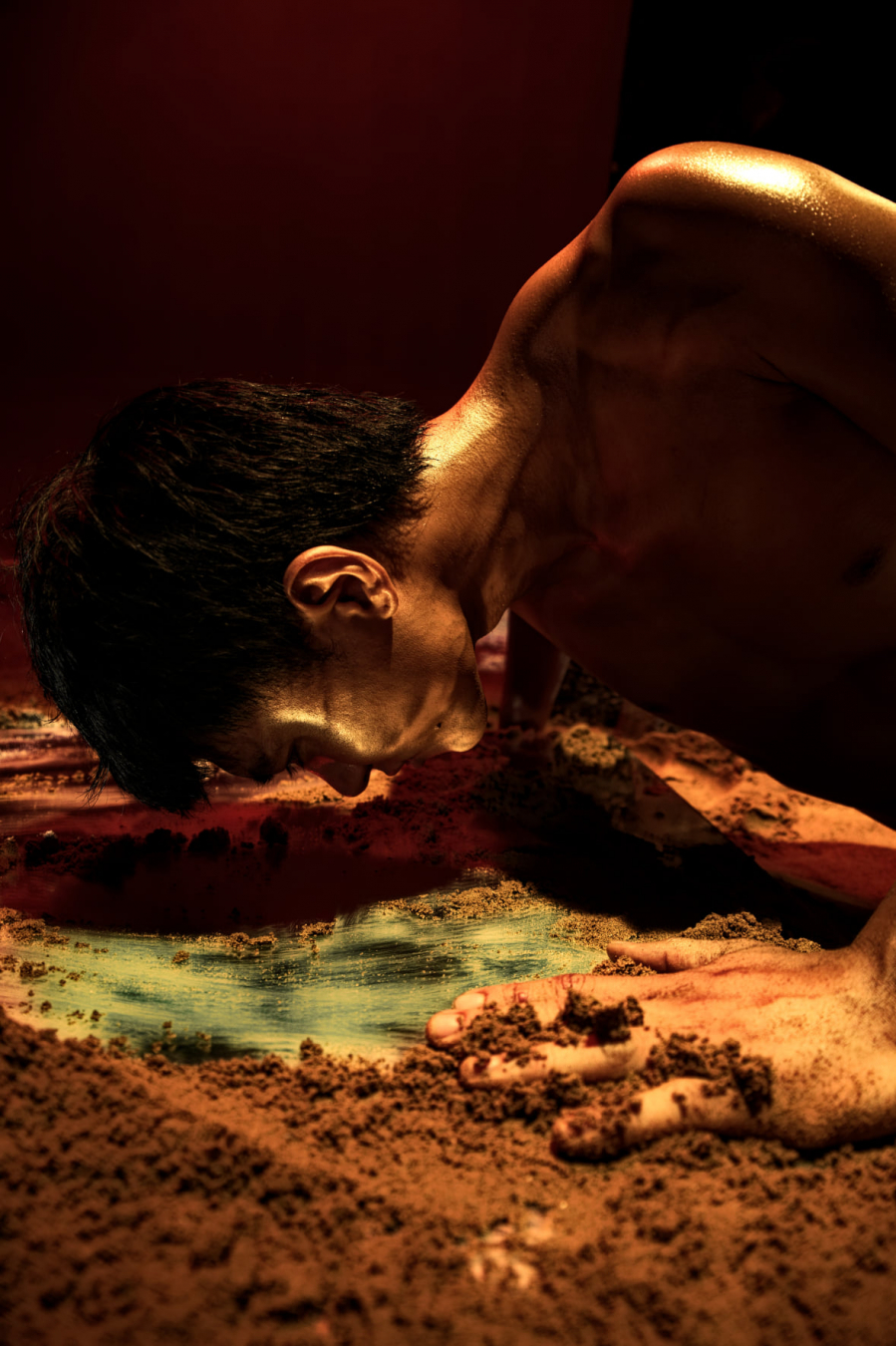
A poem and image created by Nam Thi.
II. The Hidden One
Don't be surprised, the second person on my search is… Huu Vi – a figure who years ago constantly caused a stir on social media and television. Whether the programs he participated in, the music videos he appeared in, and the few youthful films in which he played the lead role were "good" or "bad" is hard to say, but the public's attention surrounding him was undeniable.
After more than two years away from the media spotlight, in 2020, Huu Vi officially returned to the arts by participating in new film projects. This time, there was no more fanfare; he became a pure artistic worker (and despite public comments that his new image was "less impressive" compared to his former talent and good looks).
"Artists are people who don't care about their own decline," Huu Vi said. "They care about only one thing: the flow of art within their bodies."
Where does that flow go?
- They go straight to the audience, through their eyes, ears, etc. They convey messages from worlds that few people know about.
Huu Vi loves fantasy films because, according to him, they are where filmmakers "convey" to the audience about "worlds that few people know about, but could be real."
"The artist himself is like a… gateway," he continued. "Through it, the artist's thoughts and soul are the path."
If the audience refuses to accept the work - the messages that come fromgateWhat are you doing?
- The audience's rejection of a work of art is not the problem to be solved. Refusal to accept it means the existence of a shield; when that shield turns against them, it is equivalent to absorption into them.
- That means just let the artwork be.reflectiveWhen interacting with the audience, what does the artist need to do?
The question should be whether the artist wants to break down a person's shield. As for shields, of course they always exist, and in fact, many exist.
- Returning to the concept of the artist, if, as you said, the artist is the gateway through which the flow of art passes to the public, then what is within that flow?IIs it by the artist?
- Don't depend on me, find the answer yourself.
III. The "Outsiders"
In front of me is Huy (ChQcQ), training a staff member at the newly opened ViinRiic "fragrance" store in Hanoi. It's worth adding that...ViinRiicAs the exclusive distributor of over 18 renowned international niche fragrance houses in Vietnam, such as Roja Parfums, Clive Christian, Amouage, etc., it was here that Huy introduced me to a peculiar Italian fragrance brand.Mendittorosa.
Huy calls the woman behind this perfume brand, Stefania Squeglia, a true artist: she doesn't interact with the media, doesn't reveal herself to the press, and has no intention of "showing off" to promote her products. Suddenly...blossomI immediately dragged Huy into my unfinished search.
"Guess what? How can fragrance enthusiasts understand their 'idol' Stefania when she's always so quiet in front of the media?" Huy asked me in return.
- Shall we take a look at… the products you make?
- Exactly! "If you want to know, find out about me through the products I make" - that's Stefania's motto, and it's also a common motto among others.A self-respecting artist.Take Vietnam as an example. We're used to the idea that if a film is criticized in theaters, the film crew rushes to the press to recount their successes and hardships, then "begs" the audience to support and sympathize with their work. In my opinion, that's not the mark of self-respecting artists. If they had self-respect, artists would create products that are polished and resilient enough to withstand criticism upon release, without fear of being overthrown.
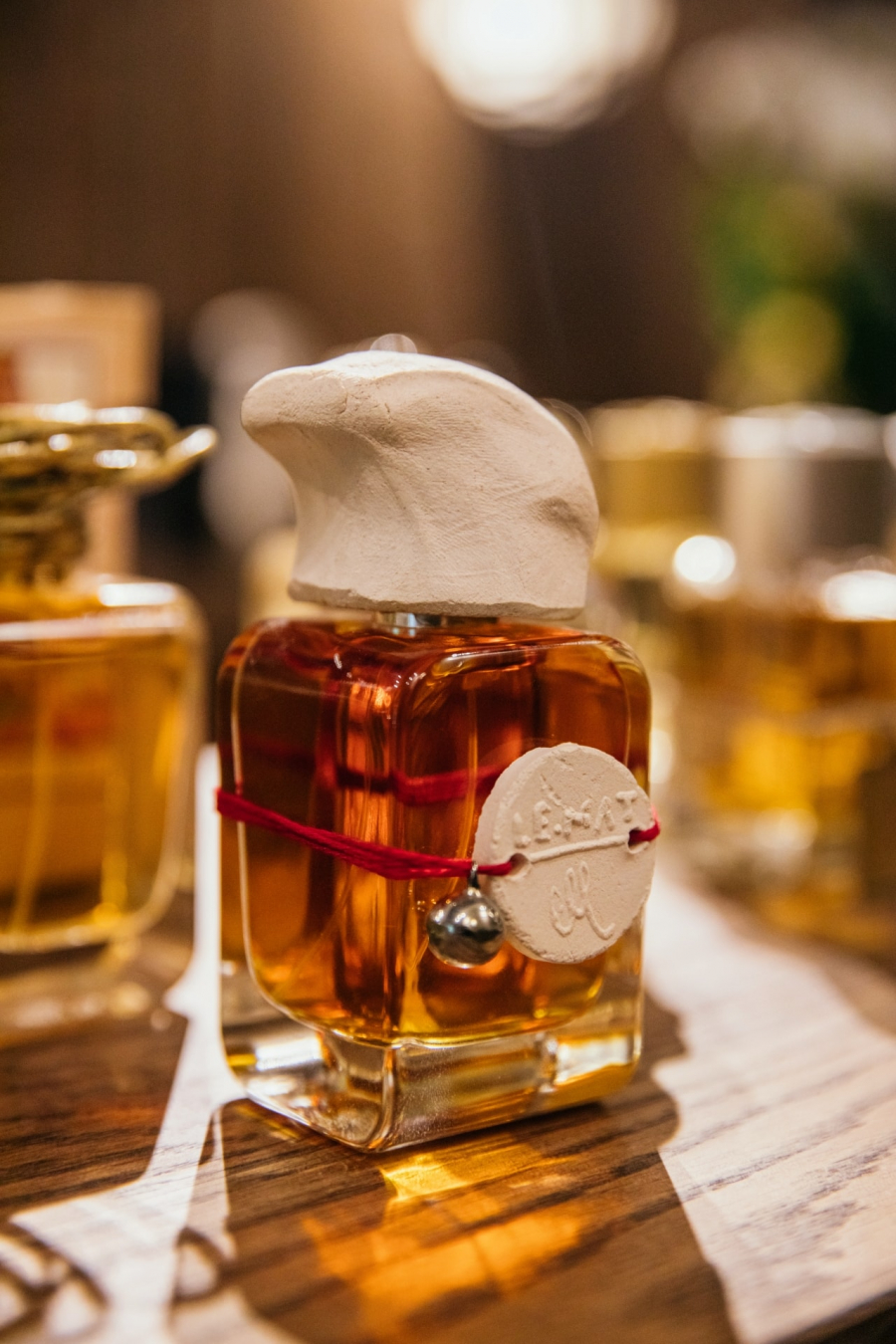
The conversation paused as I focused my attention on the unusual perfume bottle caps from Mendittorosa. All the caps were handmade by Stefania, each one a unique shape—some resembling an eagle's head, others... a dog's head.
It's worth noting that Stefania loves animals, from dogs and cats to wild animals.
"If creating a bottle of perfume requires this much meticulous attention to detail, perhaps Stefania doesn't make them in large quantities?" I asked, pointing to a bottle cap.
- That's exactly right. Stefania doesn't chase fleeting trends; each of her few works is a masterpiece.narrativeof her, a compromise betweenIand theusThe artist's narrative is also the collective narrative—of people who share a yearning for the values of truth, goodness, and beauty, values that can rebuild a better world.
- Are all 18 incense makers selected by ViinRiic for display truly artists like that?
- There's a saying I really like: "A long journey reveals a good horse." If you're an artist, you can't just have one masterpiece and then stop. The common point among these 18 people is that, during their lives, they have all created many fragrances – works of enduring beauty and value. Some created famous fragrances at a very young age, 25-26 years old, and now, after more than 20 years, they still maintain their quality and are still loved. A true artist doesn't lose their passion easily; they don't easily fall into a rut.
- In contrast to the 18 incense housesnicheThere are countless brands here.designerWith fragrances catering to mainstream trends, can they be considered artists, or simply businesspeople?
"Is there anyone who lives without doing business?" - at this point, Huy burst out laughing - "They are artists! If those perfumes have the 'purpose' of making someone happier, it means they are still bringing value to life, so why shouldn't they deserve to be honored?"
I unconsciously smiled along, feeling there was nothing more to ask. Huy also fell silent for a while, then suddenly continued: "Actually, I think artists themselves don't care about elevating their own value or their title; they're too busy focusing on creating their work."
IV. The artist goes in search
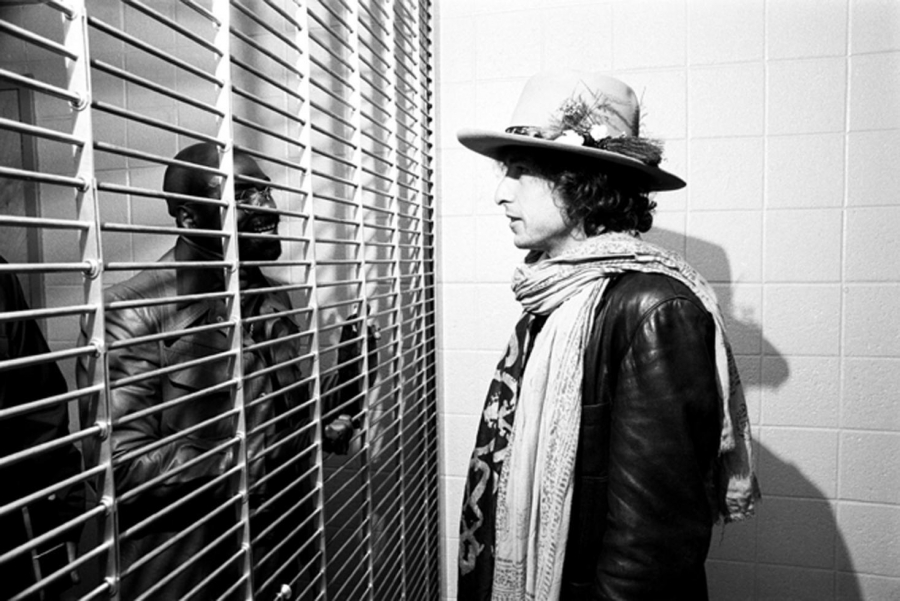
In 1975, a meeting took place behind bars between artist Bob Dylan and the famous boxer known as "Hurricane." Rubin Hurricane Carter, a victim of severe racial segregation in the United States at the time, was imprisoned for the attempted murder of a white man – while he maintained that he had absolutely no involvement in the murder.
Amidst waves of outrage from the Black community and urging from friends and fans alike—who hoped Bob Dylan would write a song demanding justice for Hurricane—Bob Dylan delayed, saying, "I never met Hurricane, I'm not sure about this story."
Ultimately, in pursuit of a "humanistic" work of art, the then 34-year-old artist went to prison, face-to-face with Hurricane.
“Other people who came to me would immediately ask if I was actually guilty. But Dylan didn’t ask that at all,” Hurricane recounted about his encounter with the artist. “It was like he was looking for something else. Like, he just wanted to know who I was, if I was the person he saw me to be.”
Rahway State Prison, New Jersey, 1975
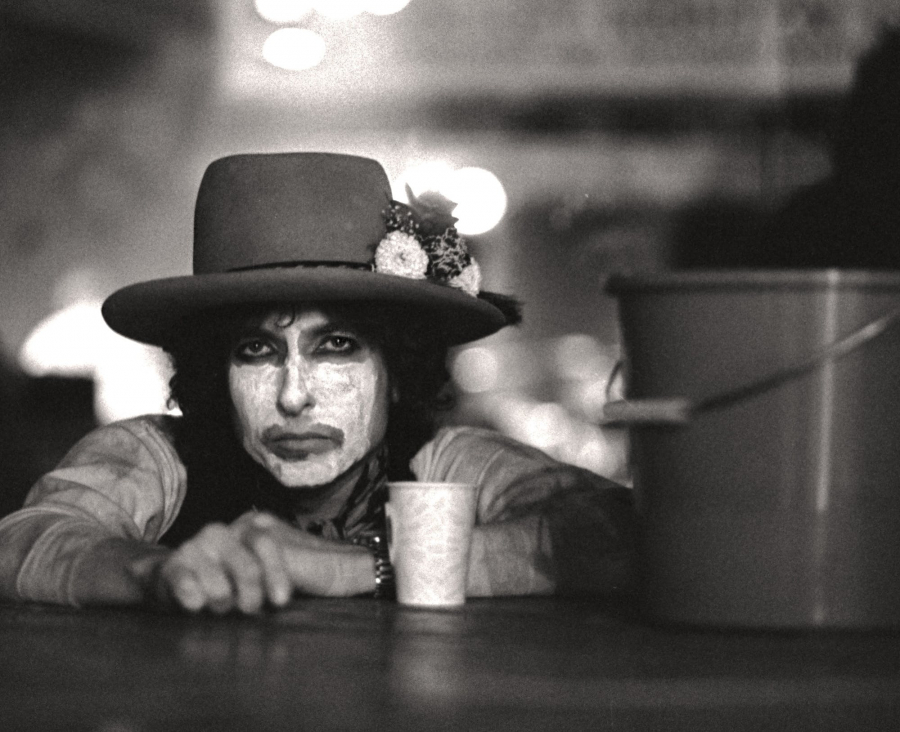
Shortly after, a song over seven minutes long, titled "Hurricane," was born, performed by Bob Dylan and his band during his Rolling Thunder Revue tour. The artist sang the story of "Hurricane" repeatedly, everywhere, to all kinds of audiences, so that no one could ignore the cry of someone still suffering injustice in prison.
“Bob was always searching,” Hurricane said in an interview years after his exoneration and release. “We didn’t see each other often, but every time we did, I’d ask Bob, ‘Have you found it yet?’ and Bob’d reply, ‘Yes, I’ve found it,’ but I knew he hadn’t. Because he was a searcher, and he would always be searching.”
“Every time we met, Hurricane would ask what I was looking for that day,” Bob, now 80, recalled. “I would just tell him I was looking for…the Holy Grail.”
"Yes, I will continue searching, searching until I find my Holy Grail, just like the knight Galahad."
Rolling Thunder Revue
The Holy Grail, according to legend, is a cup/dish/chalice that Jesus used during the Last Supper. Throughout its two thousand years of being "lost," the Holy Grail (for Christians) has become a symbol of absolute power, talent, and virtue, and only those worthy can find it.
Galahad the Knight is a figure in King Arthur's Round Table, renowned for his bravery and pure character, and was once believed to be the one who could find the Holy Grail.

 VI
VI