VI
VI


Join photographer Tam Bui in swimming with whale sharks in Cebu (Philippines).
Having previously caused a stir online with his three photo series, "Rooster," "Hen," and "Daydreamers," Tam Bui is no longer an unfamiliar name when it comes to documenting his travels with impressive images and videos.
For adventure travel enthusiasts, photographer Tam Bui's suggestion is an experience everyone dreams of trying at least once in their lifetime. Oslob is one of the few places in the world where locals can use food to attract whale sharks to shore. The whale shark sighting rate here is also very high. Thanks to this, Oslob, once a little-known area, has become one of the most popular tourist destinations in the Philippines.
It would not be an exaggeration to say that whale sharks have put Oslob Cebu in the Philippines on the world tourism map. The best time to visit is from March to May, when the weather is cool and ideal for scuba diving.

Photographer Tam Bui swims with whale sharks.
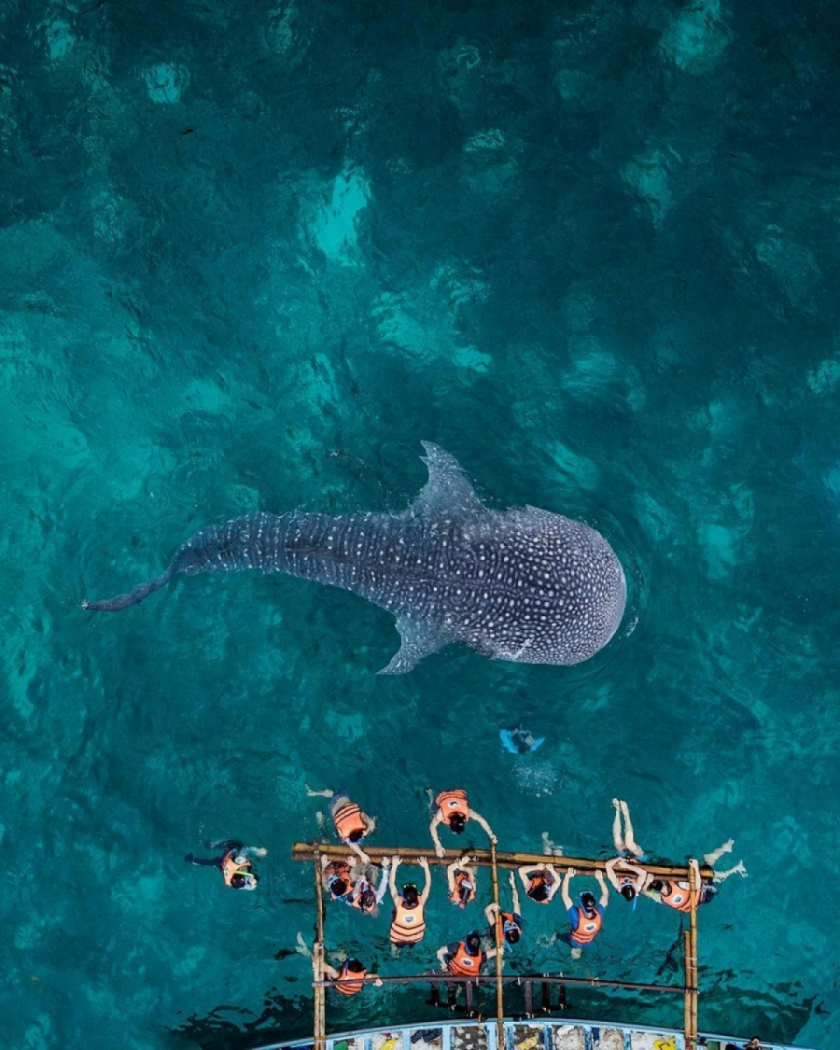
Oslob has become a top tourist destination in the Philippines thanks to its whale sharks.
The services here are diverse, allowing visitors to choose according to their needs. The ticket price for those who only want to watch sharks from the boat is 500 Peso per person (approximately 230,000 VND). For those who use snorkeling services with life vests and snorkels, the price is 1,000 Peso per person (approximately 460,000 VND). Additionally, if you use scuba diving with fins and a scuba tank, the price is 1,500 Peso per person (approximately 700,000 VND).
When using the whale shark swimming service here, each visitor will have a guide accompanying them to ensure safety. In addition, to protect the whale sharks from human impact, visitors are not allowed to use sunscreen while snorkeling. Despite their large size, these whale sharks are very gentle and occasionally appear on the surface to perform their unique dances.
Join Quang Vinh on a trip to South Korea, inspired by... Korean dramas.
Singer Quang Vinh is no stranger to travel enthusiasts and is affectionately called the "Travel Prince" by his fans after he released a series of travel videos called Quang Vinh Passport.

Film-setting travel – visiting famous movie locations – is not a new travel trend, but it's making a comeback recently. In November 2022, singer Quang Vinh took a trip to visit the locations of many famous movies such as "Goblin," "Mine," and the "BTS bus station," which drew much admiration from netizens.
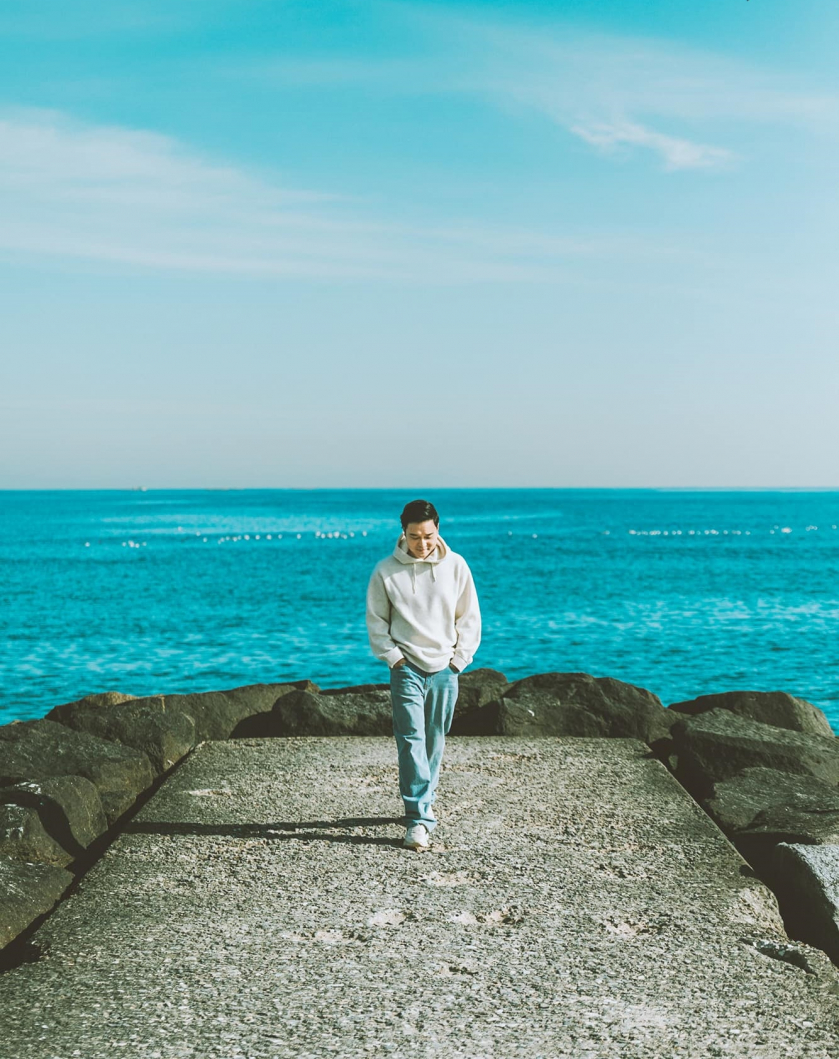
As the popularity of the drama Goblin extended beyond the screen, the beach in Jumunjin, a town northeast of Gangneung, became a famous tourist spot. In the summer, it's packed with visitors who come to admire the sea, take photos, and enjoy coffee. Locals even created a photo service where people recreate iconic scenes from the drama using buckwheat flower bouquets, red scarves, and umbrellas. The cost for a photo is 1,000 won (approximately 19,000 VND) – a very reasonable price.
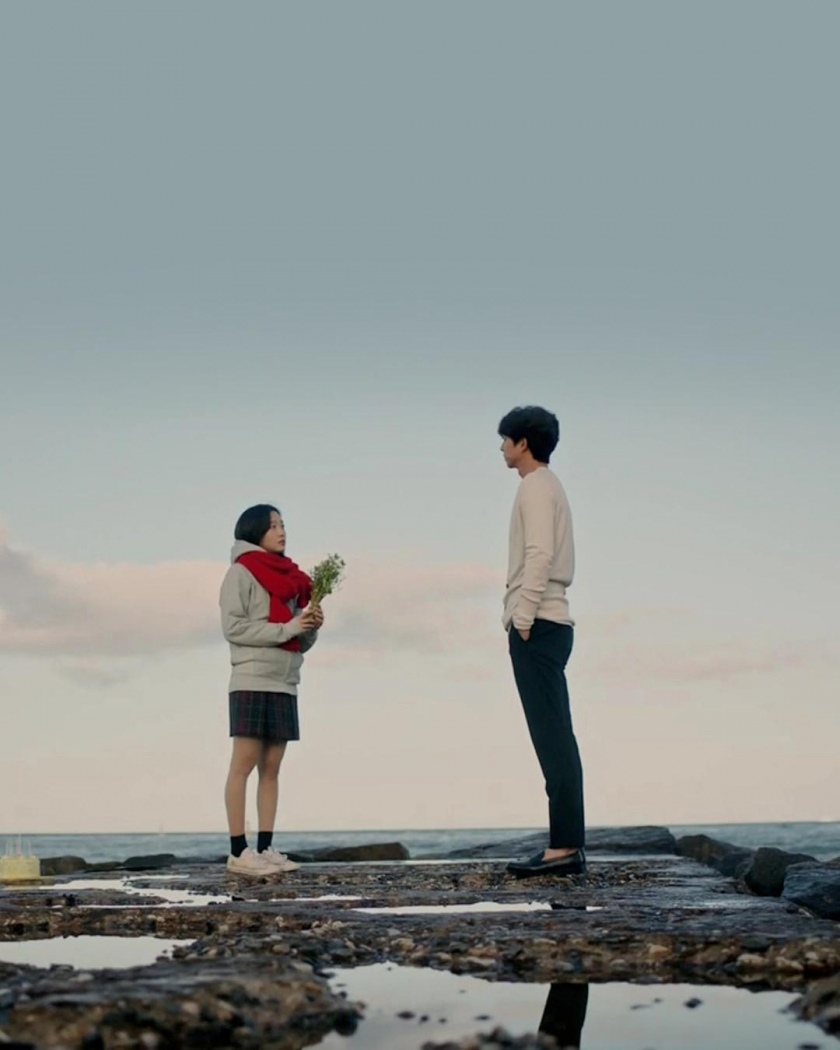
Besides that, Hagwon Farm is a must-visit destination when you come to Korea, with its pristine white buckwheat flower fields. In addition, this place also boasts many beautiful seasonal flowers such as sunflowers in summer and chrysanthemums in autumn. Thanks to the romantic scene in the drama Goblin where the two main characters stand together amidst the tiny white flowers under falling snow, Hagwon Farm quickly became a hot spot attracting many tourists.
Additionally, Samcheongdong Doldamgil, the location of the two main characters' first meeting, is another place tourists would want to visit. This street is near Pungmoon High School and boasts the architecture of old Korea. After the drama aired, people spread the word that visiting this place could lead to meeting the love of one's life.
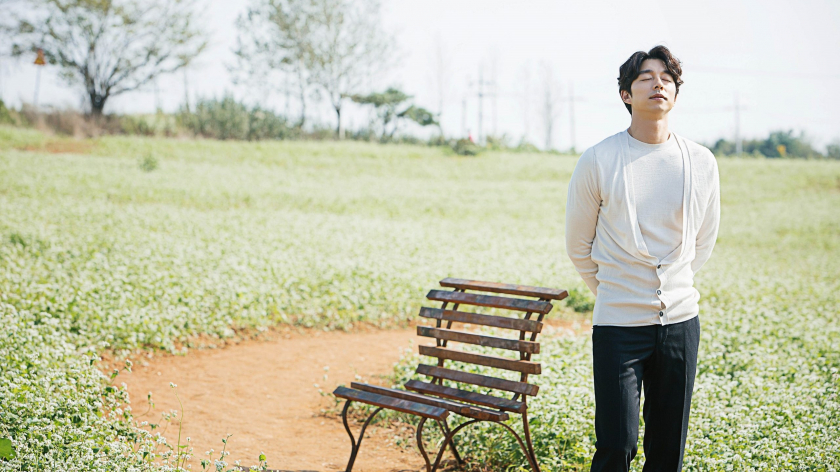
Appearing in the drama Goblin, Hagwon Farm quickly became a hot destination attracting many tourists.

Samcheongdong Doldamgil Road, where the two main characters first met, is also a place that tourists will want to visit.
Traveling to Japan to participate in the festival with travel blogger Nhi Dang.
Not only a travel blogger, Nhi Dang is also known as a popular videographer with impressive travel videos. She recently returned from a trip to Japan, a country suitable for travel at any time of year.
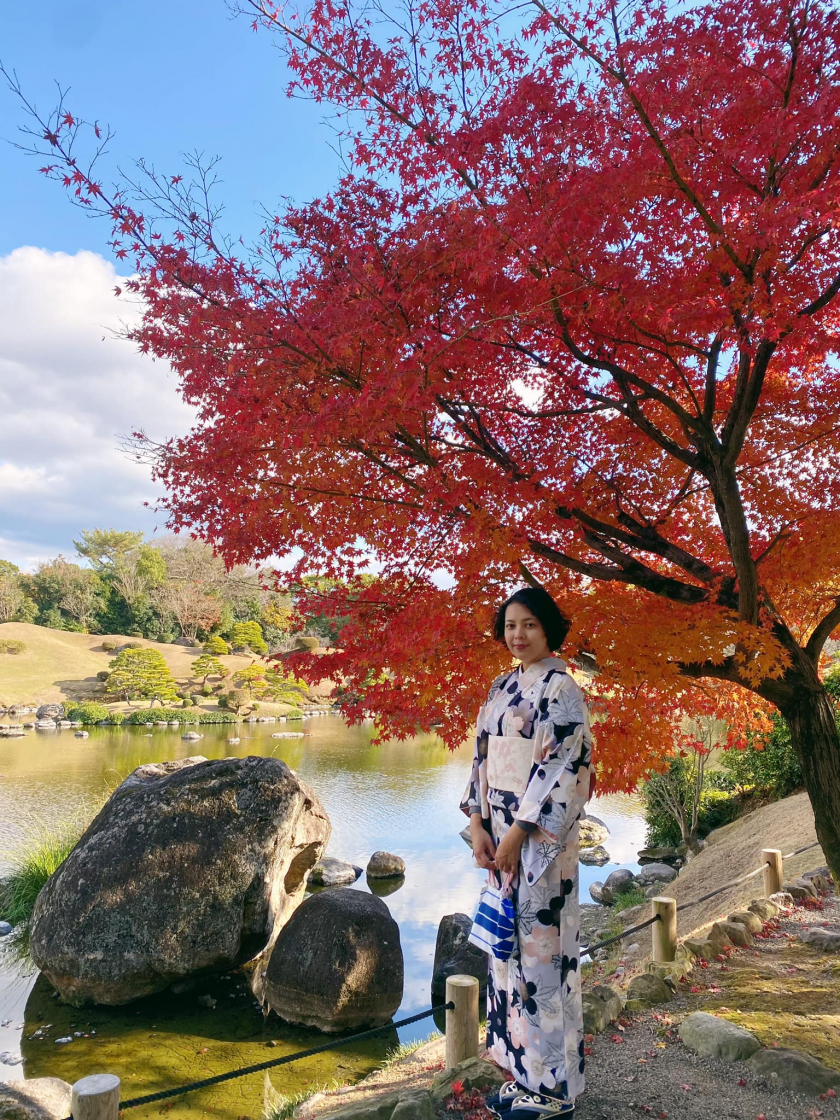
Travel blogger Nhi Dang in a traditional Japanese kimono.
The Land of the Rising Sun is known as the nation of festivals, where you can find vibrant cultural celebrations held throughout the country at any time of year. From March to May, when cherry blossoms begin to bloom across Japan, the Japanese eagerly await the Hanami cherry blossom festival as a beautiful gift of spring.
The traditional Obon Lantern Festival, held in July, is considered a major festival honoring ancestors, as it's an occasion for children to express their filial piety and gratitude to their grandparents and parents. During the first few days of the festival, people hang lanterns in front of their homes so that their ancestors can visit and tend to their graves. On the last day of the Obon festival, lanterns are released into rivers, lakes, and coastal areas, as a way of sending the souls of the deceased back to their own world.
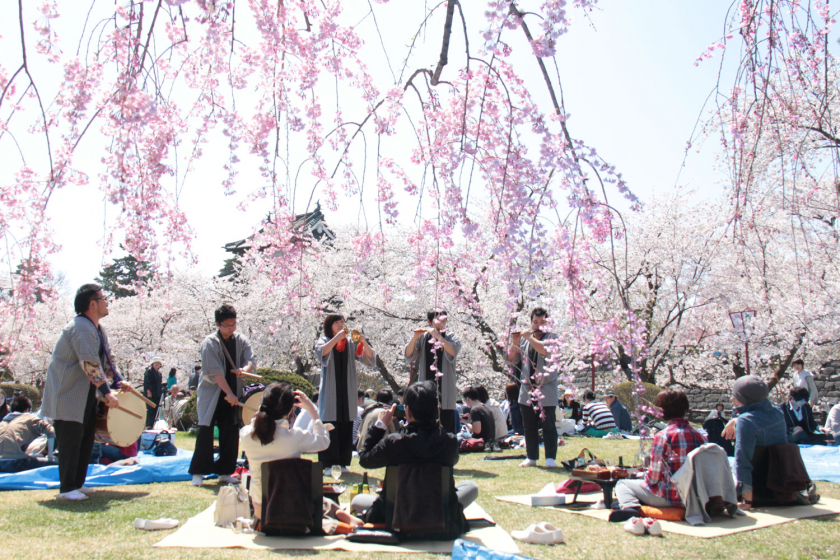
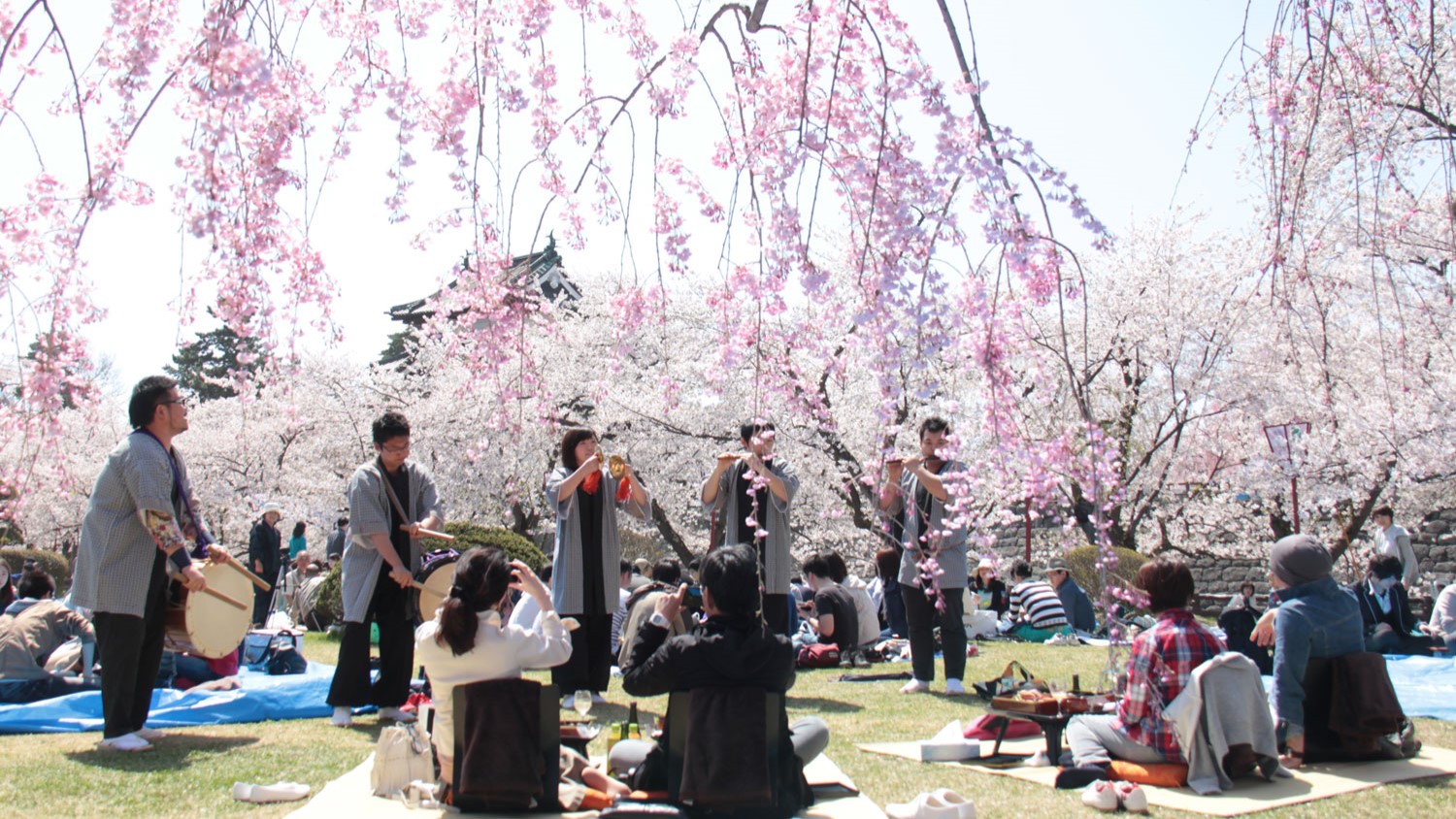
When the cherry blossoms begin to bloom, the Japanese eagerly anticipate the Hanami cherry blossom festival.
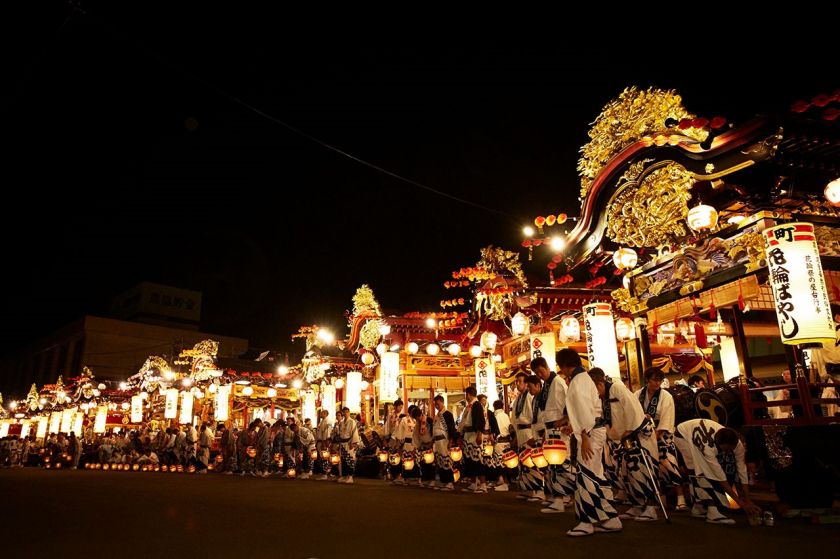
The traditional Obon Lantern Festival, held in July, is considered the Great Vu Lan Festival, a celebration of filial piety.
During this time, the Gion Festival, one of Japan's largest festivals, is held at Yasaka Shrine every July. With the aim of praying for health and warding off disease, people hold ceremonies to help them overcome sadness and fear, and maintain a peaceful and serene spirit. One of the most unique activities of the festival is the Yamaboko Yunko parade on July 17th through the bustling streets of Tokyo. Besides the parade, Gion also has many other preparations, festivities, and gatherings, such as the Mikoshi purification ritual, the Hoko float erection ceremony, and the Kama ceremony.
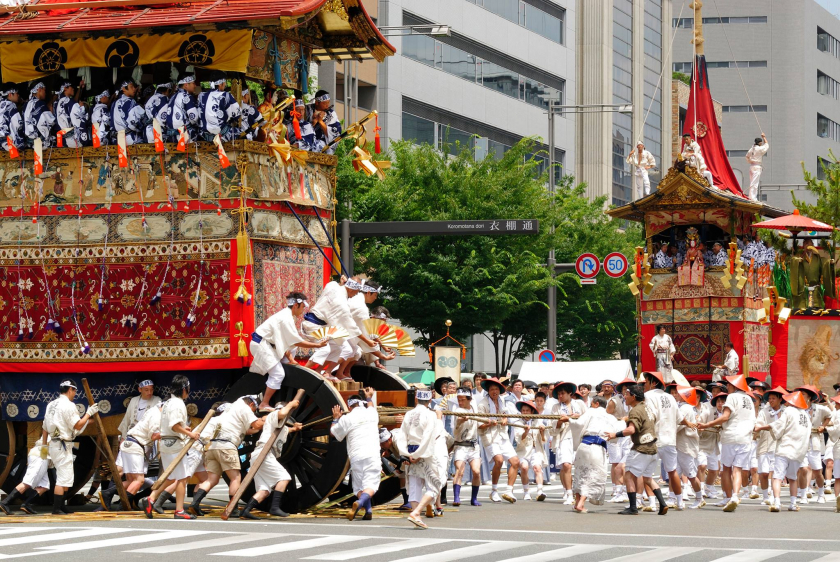
The Gion Festival is one of Japan's largest festivals, held at Yasaka Shrine every July.
Follow travel blogger Hoang Le Giang on her pilgrimage to India.
According to travel blogger Hoang Le Giang, if you wish to take a Buddhist pilgrimage in India, you should head to Bodh Gaya, a coveted destination for many Buddhists. Bodh Gaya is located in Bihar, the thirteenth largest and third most populous state in India, situated north of Nepal. Unlike Mumbai, there are no skyscrapers, grand buildings, or expensive cars. The peaceful scenery, with rice paddies, embankments, and the surrounding Niranjana River, resembles the fertile countryside of Vietnam.
Bodh Gaya is not only home to the Bodhi tree under which the Buddha meditated to attain enlightenment, but also to the famous Mahabodhi statue, located within the Mahabodhi Temple (also known as the Great Enlightenment Temple). The spacious grounds are lush and green, with fresh air. The temple is a gathering place for monks and Buddhist practitioners from all over the world to practice mindfulness. The expansive grounds are divided into seven main sections, symbolizing the seven weeks the Buddha sat in meditation during his enlightenment. Each area has its own unique colors, structures, and spiritual atmosphere. Visitors are required to leave electronic devices and shoes outside to maintain the tranquility and solemnity of this Buddhist sanctuary.
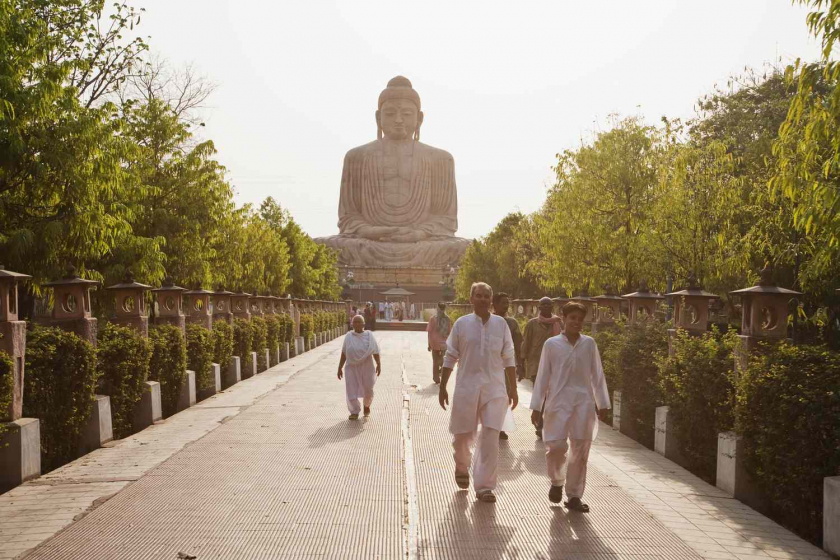
Bodh Gaya not only has the Bodhi tree under which the Buddha meditated to attain enlightenment, but also the famous Mahabodhi statue.
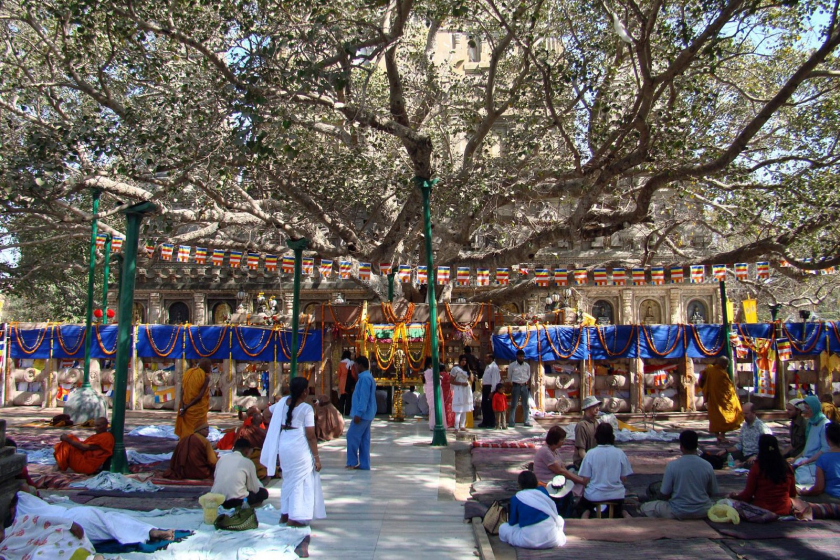
The temple is home to many monks and Buddhist practitioners from all over the world who gather there to practice mindfulness.
One place frequently visited by Buddhists is Daijokyo Temple, with its Japanese style. It's famous for its majestic 25-meter-tall Buddha statue, considered the second most important symbol of Bodh Gaya. Additionally, there's the Thai temple with its two Naga serpents and distinctive Thai architecture, or the Vietnam Buddhist Temple, about a 10-minute drive from Bodh Gaya, featuring a lotus pond, bamboo forest, temple roof, Vietnamese couplets, and gourd trellises... reminiscent of a garden in one's homeland.