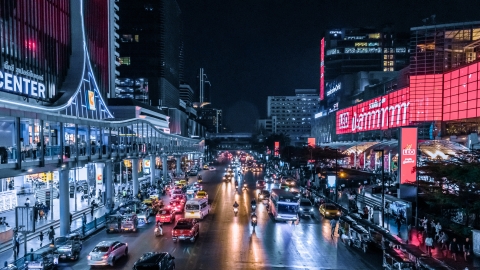
VI
VI



The policy, effective October 1st, aims to attract more Chinese tourists, who make up a large proportion of visitors to Thailand. Despite the lifting of most Covid-19 restrictions, Chinese tourist numbers have not yet fully recovered in this Southeast Asian destination.
The Association of Travel Agents of Thailand previously stated that many Chinese people are reluctant to travel abroad due to economic pressure and the weak yuan.
Furthermore, negative images of Thailand are circulating on Chinese social media, particularly regarding safety issues, making tourists hesitant to travel there.

Thailand has lowered its target for attracting Chinese tourists from 7 million to 5 million in 2023.
Specifically, a recent Chinese film about a scam network and claiming Thailand is a transit hub for human trafficking is affecting tourists' confidence.
The Chinese thriller No More Bets depicts numerous people being tricked into working with a scam network in Southeast Asia. The film grossed $505 million in its first five weeks and topped the Chinese box office in August.
Surawat Akaraworamat, Vice President of the Tourism Council of Thailand, said the film had given Chinese people a negative view of Southeast Asian tourism, which had already weakened since March following an incident in which Chinese tourists visiting Thailand were abducted and taken to a neighboring country.

Concerns have been growing in recent months as many online content creators in China have chosen this topic and fueled rumors that traveling to Thailand is unsafe.
Thailand's visa-free plan is facing mixed reactions. Some tourism-related businesses are concerned that easier entry will lead to an influx of Chinese criminals.
The IB director said this Monday that visa waivers could create a loophole allowing operators of scam call groups, illegal businesses, and other transnational criminals to enter Thailand.
There are also concerns that the policy will exacerbate congestion at immigration counters. The IB will need to alleviate overcrowding at the airport due to the anticipated surge in Chinese visitors. For example, all immigration counters should be fully open during peak hours.
IB is seeking dedicated entry lanes for Chinese passport holders and has been unsuccessful in requesting Thai airports to create more space for immigration control stations at international airports.
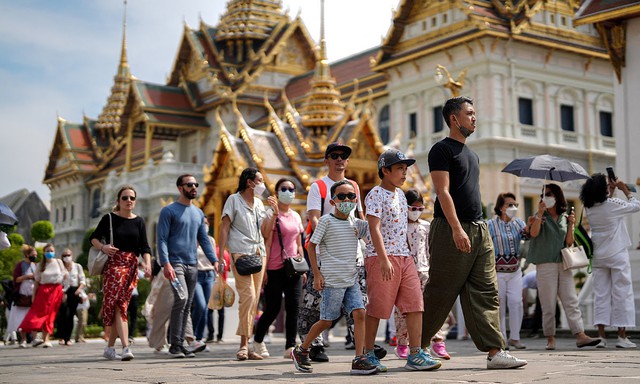
Foreign tourists visit the Grand Palace in Bangkok.
The Tourism Authority of Thailand (TAT) estimates that the government's visa waiver plan for Chinese tourists will add 700,000 visitors during the peak season. In the first eight months of this year, 2.1 million Chinese tourists visited Thailand.
TAT believes that the visa waiver plan of the new Prime Minister Srettha Thavisin will attract more tourists in the fourth quarter, as TAT prepares to support additional flights between the two countries.
However, Surawat Akaraworamat noted that a visa waiver policy without other measures might not stimulate the market because other countries are preparing to offer similar privileges to attract Chinese tourists. South Korea also announced plans to waive visas for Chinese tourists this week.
Furthermore, the visa waiver program may not yield maximum benefits if negative perceptions of Thailand persist in China. He suggested that the Thai government should issue a statement to reassure Chinese tourists about safety in order to regain their trust.