VI
VI


Just a few days ago, I reopened my notebook, refilled my pen, and sat in front of the TV like a researcher to watch Ghibli's *The Tales of Princess Kaguya* (2013)—a film about a princess from the Moon, quite different from anything that magical studio had ever made. The moment the film ended, a flood of emotions rushed over me, but I simply couldn't write it down. Like Kaguya, I grew up in a rural suburb and only moved to the city when I reached school age. Like Kaguya, I spent most of my childhood running around the world where I was welcomed. Behind the wall of my uncle's house was a small alley, interspersed with hedges of bushes. Perhaps not quite as vibrant as Kaguya's childhood, but there, until the summer moonlight brought us children home, I always felt strangely cared for. And then, just like that innocent princess, my life in the city afterward, though comfortable in many ways, was also strange, because there were days when I felt home was no longer truly home.
Childhood may be the time when the connection between emotions and places is strongest. As we grow up, so many things distract us and obscure the simple natural scenes we once experienced. The older we get, the more we chase after what the world claims we need, leaving our childhood world empty. Therefore, the mixed feelings of joy and sadness when facing Kaguya—a metaphor for the Moon—perhaps stem in part from realizing how we have become increasingly disconnected from nature, forgetting the splendor in each blade of grass, the glory in each flower, and how the moonlight has become more of an image we see on the internet than the companion we once shared on Mid-Autumn Festival nights.
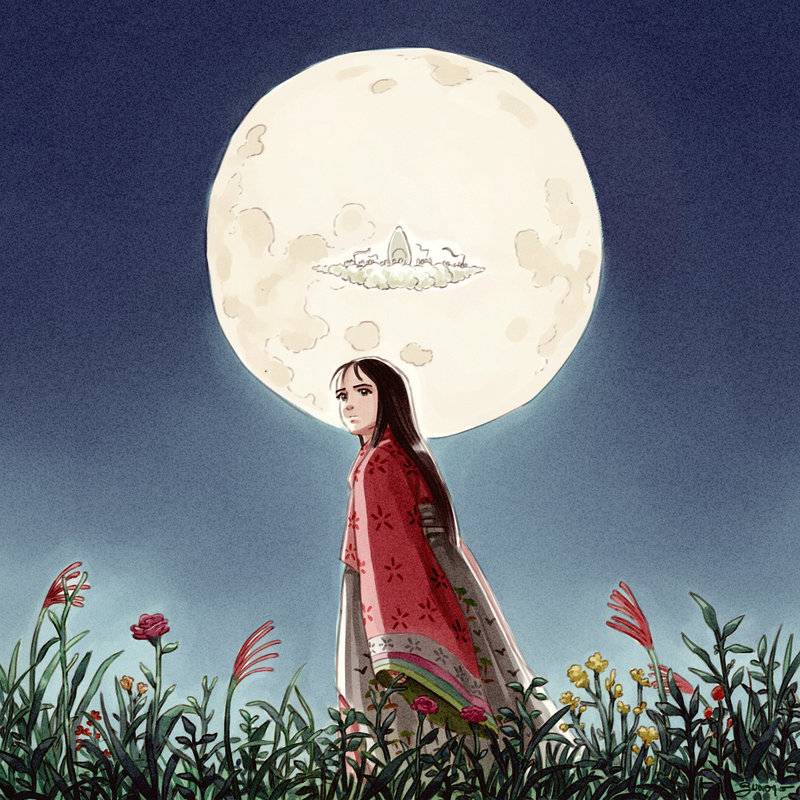
In a world of streetlights, neon signs, and a thousand other glittering lights, we—at least, I—have almost completely lost our connection with the Moon. Sometimes, we don't even remember it's there: the Moon sometimes surprises me by appearing from behind a tree, other times, its gentle light like a shock waking me from a dream. Yet, the Moon is always present in our stories, whether children's tales or classic works of literature. The world can provide any individual with a rich archive of art depicting the human-place relationship, or a series of serious academic investigations into the psychology of this relationship and how it can change throughout life. But absolutely none of us know how to balance the adrift state created by "nostalgia" or "remembering a few years ago." Therefore, the psychological elements associated with childhood memories—nostalgia, a sense of longing, and the excitement of running home under the moonlight—all combine to transform these stories into a powerful balm for the soul, like a simple yet essential source of joy amidst the hustle and bustle of life.
Even a seemingly ordinary holiday like the Mid-Autumn Festival possesses its own unique soul – expressed through the strong and intimate connections we form as children, not only with familiar toys or friends who played with us on those autumn nights, but also with places and the moonlight – places that served as our cradle, our guide, and our companion in the small joys of later life. Spending more time appreciating the scenery and emotions can sometimes be the most effective way to resolve issues in our relationship with real life.
The sunset sky can save anyone from a tiring day, or the image of the full moon on the Mid-Autumn Festival can become an encouragement for those who haven't achieved what they desire… Sometimes, scenery is more comforting and soothing than we think, because after all, nature has been with us since the day we were born. Sadly, the connection with nature that many people nurture in their memories is difficult to maintain in adulthood. That's why, when faced with the moonlight, many of us suddenly remember that we grow up and we change, as do the landscapes and our relationships.
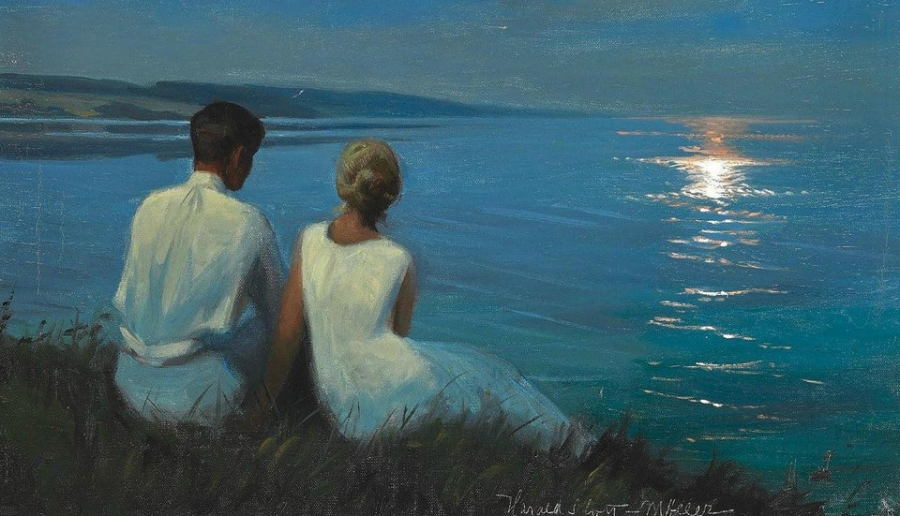
But what exactly does that mean? To begin with, we could look at the world through our own eyes, but from a more youthful and innocent perspective, instead of the current one filled with worries. Or, like Kaguya—a princess from the Moon—we could try walking or jogging, observing and listening more each day to the scenery around us to regain a sense of closeness to this place, to Earth, and to where we live. It sounds dreamy and far-fetched, but a Vietnamese poet once did just that, only to realize his own neglect of a close friend he had forgotten. In "Moonlight," Nguyen Duy describes a feeling of shyness, astonishment, and "startle" when confronted with the moonlight from the high floor of a building. From Nguyen Duy's own experience, we see that scenery and moonlight create a powerful impression in the emotional narrative of each person's life, in many different ways. The important thing is: how can we ensure that as time passes, the scenery changes, and our lives become different, we still feel at home?
The answer probably lies largely in memory – something that sustains a person's perpetual continuity in life and assures them that their earthly existence is not interrupted by daily worries. Confronting the "moonlight" can therefore become a comforting balm for anyone, reminding them that their life remains one with the child within them – the child who once innocently and joyfully immersed themselves in the Mid-Autumn Festival celebrations of their childhood. The memory of the moonlight then acts as a form of autobiography, and like all autobiographical works, it tells the subject much about both the time of writing and their past life, thereby creating the realization that we are not what we experience, but what we are.Remember thatWe've all been through it. So, if today's moonlight reminds you of a Mid-Autumn Festival of the past, why not try doing the things you used to do as a child, so that at the end of the day, the moon has a chance to accompany you home like it did when you were little?
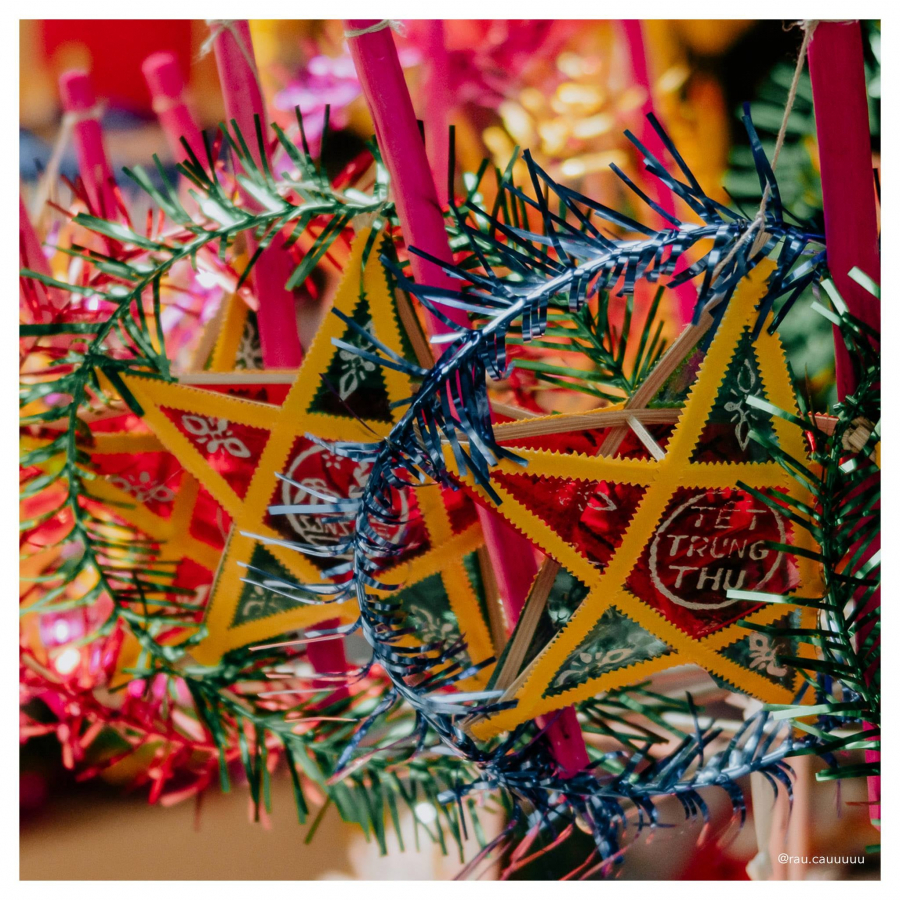
I lived with the countryside when I was a child.
with the river and then with the sea
during the war in the jungle
The moon became my confidant.

Naked with nature
innocent like grass
I thought I would never forget
the moon of love and loyalty
Since returning to the city
familiar with electric lights and glass doors
The moon passes by the alley.
like strangers passing by
Suddenly the lights went out.
The building's rooms were pitch dark.
He quickly threw open the window.
suddenly a full moon
Look up at the face.
There's something that makes me tear up.
like copper is a pool
like rivers and forests
The moon remains perfectly round.
Never mind the heartless one.
The moonlight was utterly silent.
enough to startle us
- Moonlight, Nguyen Duy, 1978