VI
VI


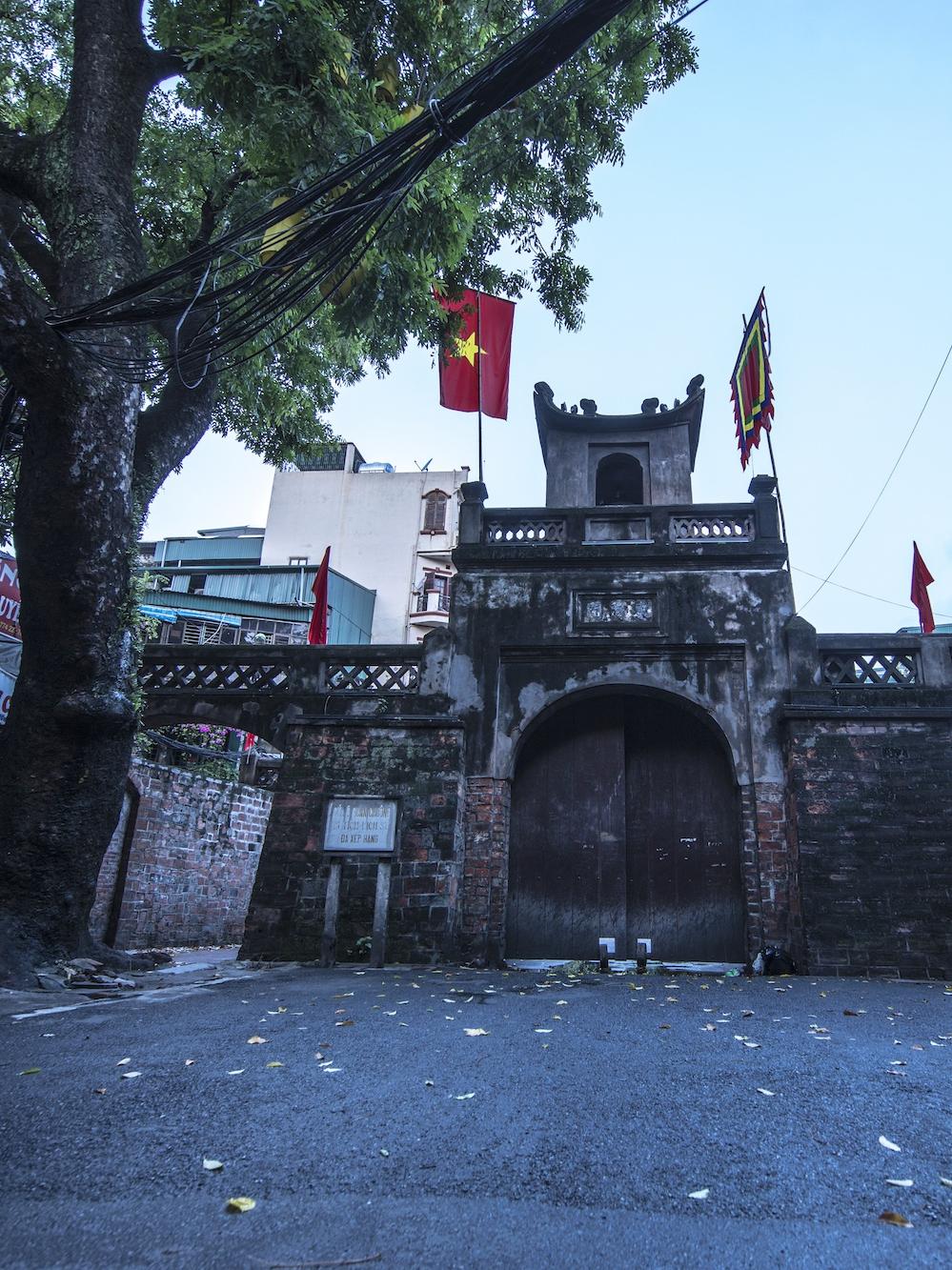
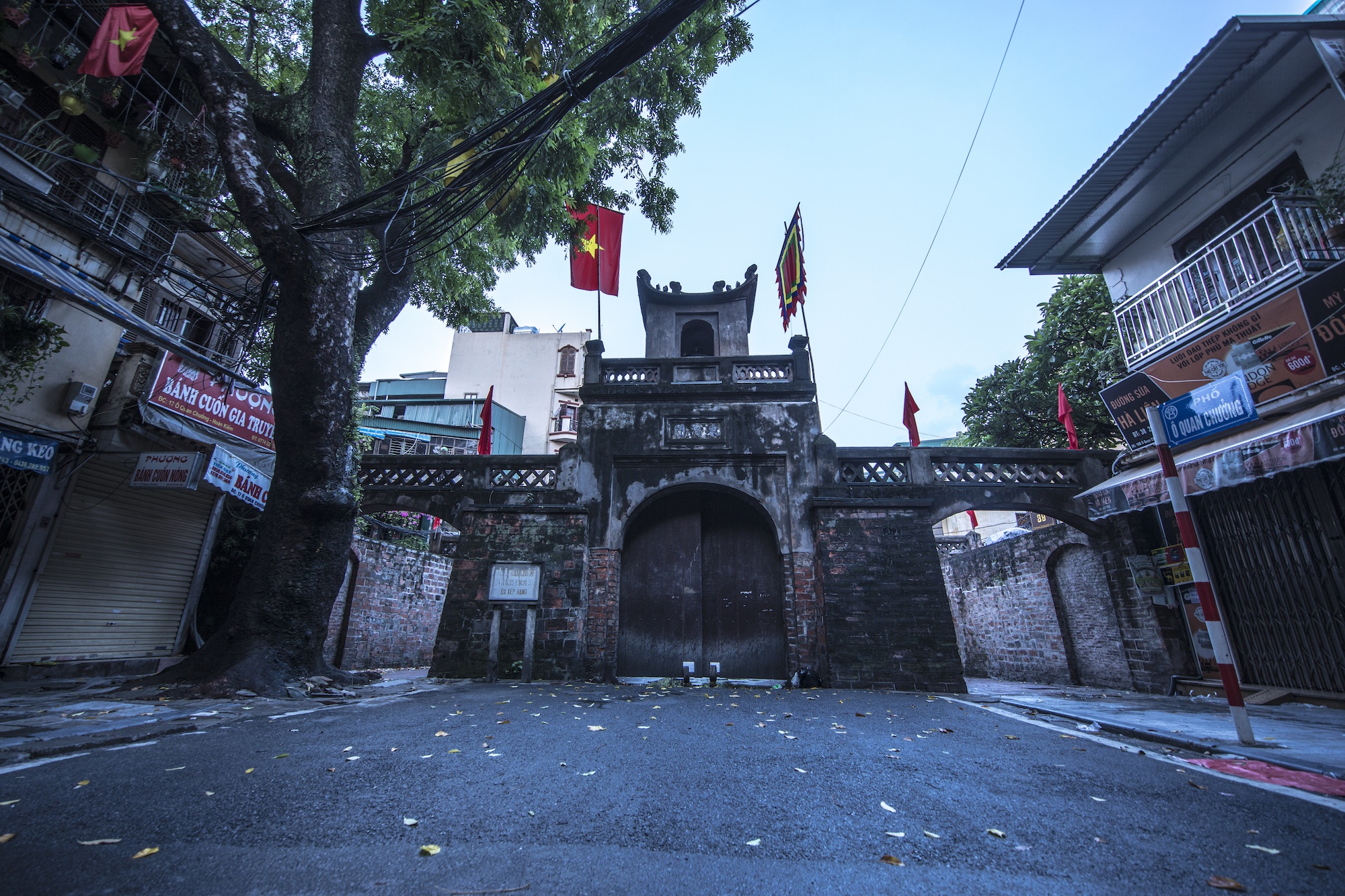
Going back in time, O Quan Chuong, also known as O Dong Ha, was located in Thanh Ha village, Dong Xuan district, by the mouth of the old To Lich River. The embankment above the gate still bears the three characters "Dong Ha Mon," and the French also called it by a similar name, Porte de Dong-Ha (a document of which is still preserved inside the Quan De Temple - Hang Buom).
The name Quan Chưởng (Commander of the Army) has yet to be accurately explained by any historical records, only oral traditions about a Commander who fiercely led our troops in resistance against the French invasion.(1)This was the main route for officials from the north bank of the Red River when entering the capital city of Dong Kinh.(2)...
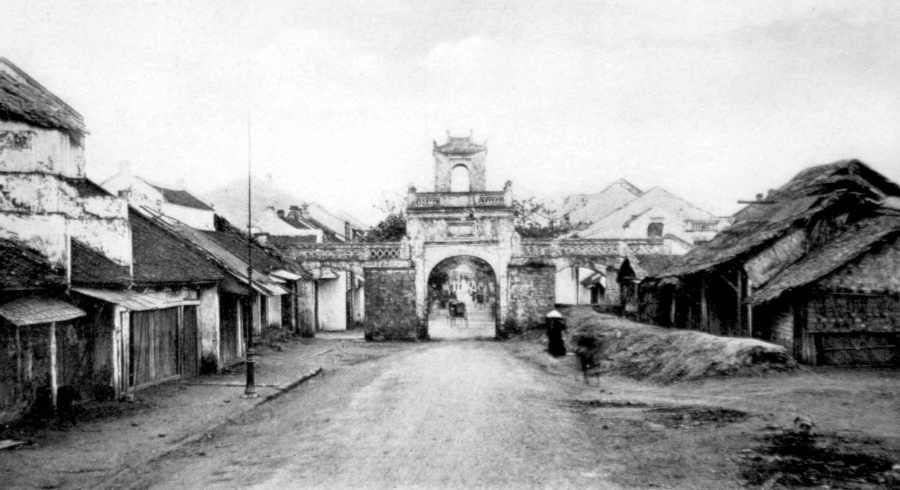
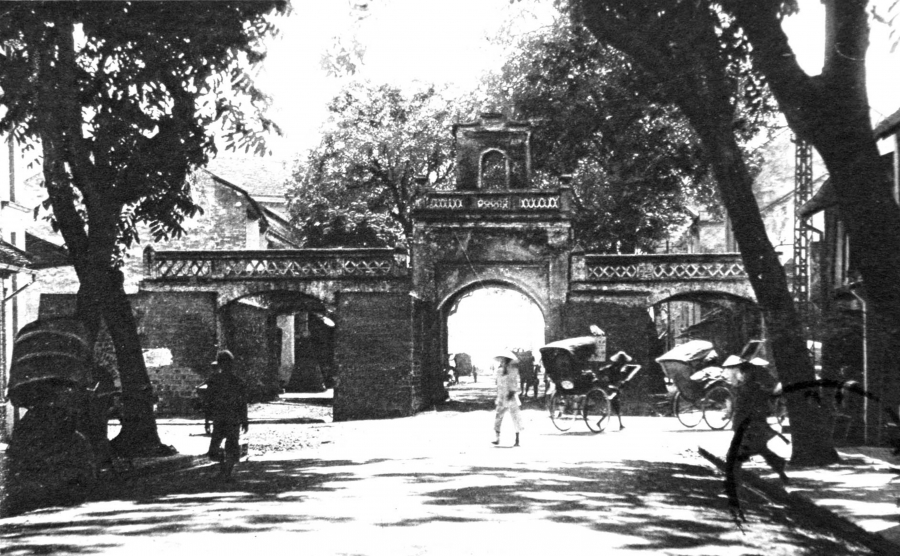
Photo: Internet
In the past, the heavily guarded entrances and exits of the city gates ensured security for the inner trading area, separating the inhabitants from the outside—that is, the people of Kẻ Mơ, Kẻ Lủ, Kẻ Mọc, and Kẻ Noi from the people of "Kẻ Chợ" in the 36 streets area. Therefore, movement was not easy. Hanoi had many city gates, but not all were as important as Ô Quan Chưởng, because besides being the main route for officials as mentioned above, foreign envoys and representatives of various ethnic groups who temporarily stayed in Gia Lâm also entered the city via this route.
But above all, having gone through many ups and downs, from its construction in the 10th year of Canh Hung (1749) along with 21 other city gates, and then its renovation in the 1817th year of Gia Long (1817) along with 16 city gates that the Nguyen dynasty restored, Quan Chuong Gate has been chosen by history as a symbol of Hanoi's gateway as it is the only city gate that still exists today.
Time has passed, bringing with it countless events connected to the Vietnamese nation in general and Thang Long - Hanoi in particular, and O Quan Chuong has become a testament to this. Many years have passed since peace was restored, and the gate has remained open, standing there as a symbol of the beauty of the past. Today, when the wooden gate closes each night, it surprises many (some who have lived their whole lives right next to it but have never witnessed it) and sparks quiet reflection.

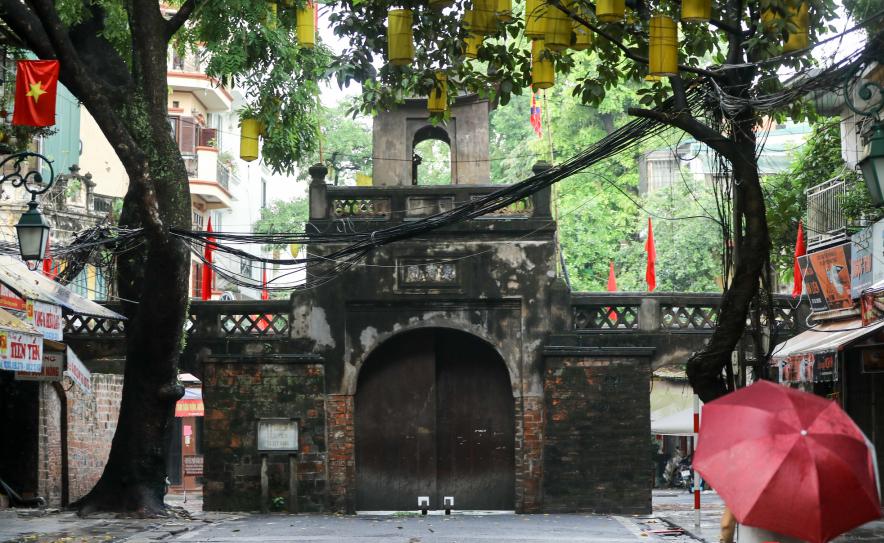
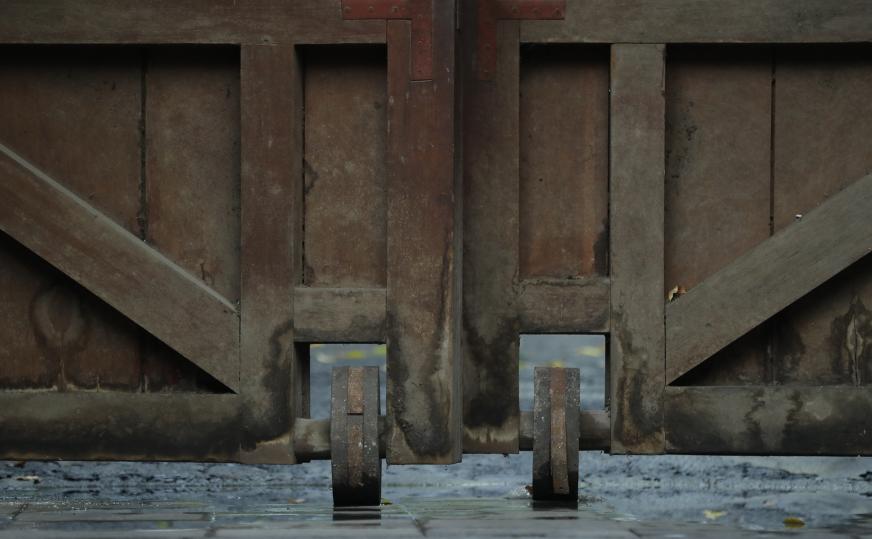
Photo: To Quoc Newspaper
The author writes these few words, also flowing with the personal emotions of a Hanoi resident as they watch the wooden gate close at the beginning of autumn 2021. Perhaps it is also a special moment, to leave a few lines so that future generations may know the context of today.
Although the authorities have asserted that the closure of O Quan Chuong Gate does not equate to the closure of Hanoi city—and in reality, that is true, as that function only existed in the past and no longer does—on the other hand, we see a symbolic significance.contemporarybuilding up a symboltime.
It needs to be clarified that a symbol is a form of perception higher than sensation, preserving in our minds the image of an object from which it takes value as a means of conveying meaning through words or a special type of artistic imagery capable of powerful emotional impact. O Quan Chuong Gate, originally a landmark marking a territory, has, to this day, become the gateway to a large home for all the people of Hanoi. The closing of O Quan Chuong Gate is a collective event, spreading to the very individual closing doors of each family, "staying where they are." This is the continuous accumulation of symbolic value.
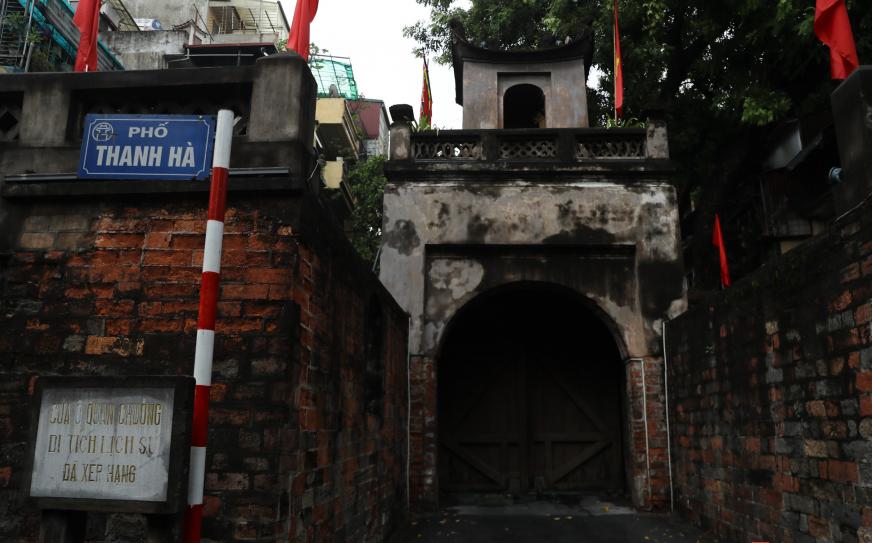
Photo: To Quoc Newspaper
"The pandemic has saddened the streets," that's the only thought that comes to mind when I look at Hanoi's streets today. Hanoi is going through difficult times; the city needs rest. For those with artistic souls and a deep love for this thousand-year-old land, surely everyone wishes for the city to rest completely in peace so that it can quickly recover. And that's the sentiment I want to express when I look at the image of the O Quan Chuong gate, its wooden doors bolted shut.
One early autumn day, Hanoi's weather remained beautiful even as all the doors were closed. Ultimately, the tendency to romanticize what is happening before our eyes has become ingrained in the nature of the people of Hanoi. Only in this way can any struggle, whether against an enemy or a pandemic, inevitably lead to success. And O Quan Chuong will continue to witness and record this. Before concluding these rambling thoughts, I would like to quote a very familiar line of poetry:
Thang Long takes care of the sun and rain.
The Quan Chuong Gate still stands today.
Reference
(1) Hanoi Past and Present - Hanoi Department of Culture and Information (published 1994)
(2) Old Hanoi Streets - Hoang Dao Thuy