VI
VI


The Bat Xat National Park Management Board has officially established a system of signage and technical fences to prevent illegal entry. All ecotourism and adventure tourism activities are currently in the survey phase and are not yet officially open to independent visitors.
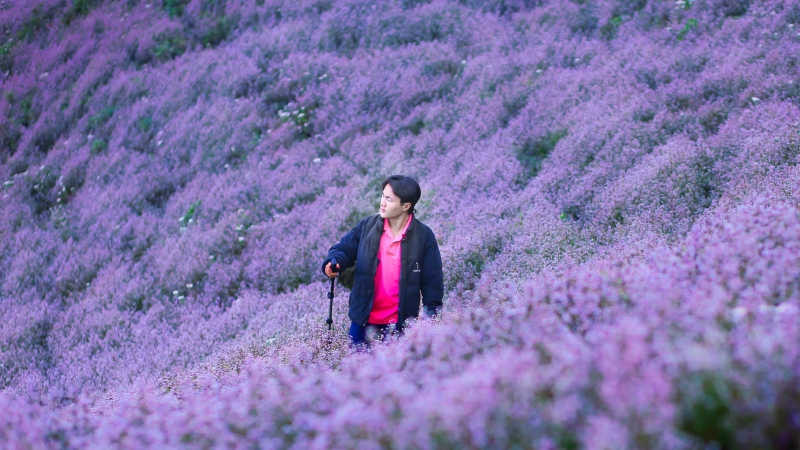
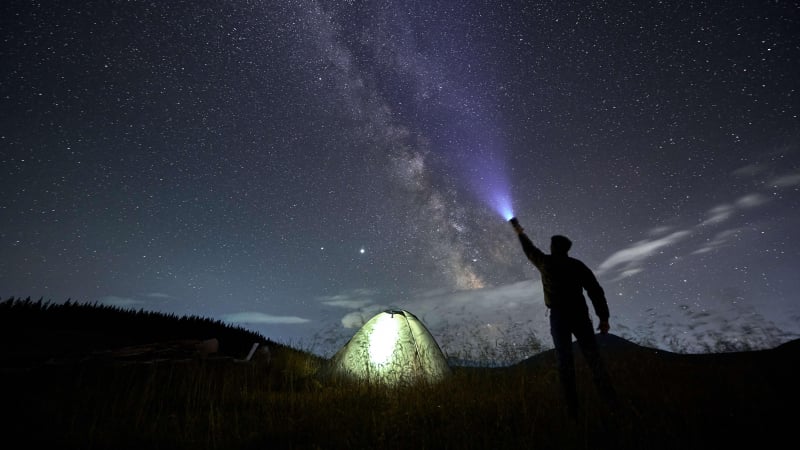
The ban is strictly enforced on routes leading to the high mountain peaks within the park's management area, including Lao Than, Ky Quan San, Cu Nhu San, Nhiu Co San, Putaleng (Pu Ta Leng), and Van Sam.
Visiting or touring without the forest owner's permission will be fined 4-6 million VND, while camping, recreational activities, or organizing entertainment within strictly protected zones will incur fines of 6-10 million VND.

Fishing Rock is located on Lao Than Mountain, one of the areas where trekking and independent hiking are prohibited.
The Management Board also requires travel agencies and tourists wishing to access the managed park area to fully declare their information to local forest rangers. Homestay owners, travel companies, and porters will be held jointly liable if they organize illegal entry of tourists into the forest.
The application of these strict sanctions is considered to be more preventative and standardizing than an extreme form of prohibition.

The recent influx of unregulated tourists has not only put pressure on biodiversity but also increased the risk of wildfires, especially with wildfire warnings frequently reaching level V (extremely dangerous). The clearest evidence of this is the period from April 14th to April 20th, 2026, when all tourism activities were suspended due to a level V wildfire warning, in order to ensure the absolute safety of tourists and forest resources.
Bat Xat National Park is not only a tourist destination but also plays a crucial role in maintaining water stability and providing forest environmental services to the entire upstream area. Management along designated routes helps minimize waste and negative impacts on rare genetic resources.
The temporary suspension of spontaneous activities also serves as a necessary "break" for businesses and porter teams to review procedures, participate in training courses on first aid skills and guidance techniques according to international standards.

After being upgraded from a nature reserve to a national park, Bat Xat became Vietnam's 36th national park, holding a strategically important position bordering Lai Chau province and China, contributing to national defense, security, and transboundary biodiversity conservation goals.
Bat Xat National Park covers a total area of 18,510 hectares, of which the strictly protected zone covers 14,686 hectares, with absolute priority given to preserving its pristine state. The park possesses a cold, high-altitude temperate forest ecosystem – one of the most important ecosystems in Vietnam – with 940 plant species (notably the rare Fir tree population), and 157 species of terrestrial vertebrates, including 22 species listed in the World Red List and 58 species in the Vietnam Red Book.
Bat Xat National Park is also home to narrow-range bird species such as the Black-faced Thrush, Striped Thrush, Red-winged Thrush, Striped-throated Snipe, Yellow-breasted Snipe, White-browed Snipe, Red-sided Small Woodpecker, Red-breasted Small Woodpecker, Green-headed Flycatcher, and Large-billed Bulbul.

Bat Xat National Park possesses one of the most important ecosystems in Vietnam.
The tightening of regulations on spontaneous trekking and hiking activities in Bat Xat is also part of a general trend. Previously, Chu Yang Sin National Park (Dak Lak) issued strict warnings for routes that had not yet officially opened. Tam Dao National Park temporarily suspended mountain climbing on the Tam Dao North route and banned spontaneous activities such as swimming in streams in the Vinh Ninh area (Dao Tru commune, Phu Tho) after a male student went missing for 36 hours.
These management measures are not obstacles to tourism development, but rather a commitment to protecting the sustainable livelihoods of local communities. A professional trekking model, supervised by authorities, will ensure that the pristine beauty of the National Parks is preserved for future generations.
For tourists, complying with reporting regulations and only participating in licensed tours and excursions is not only an act of upholding the law but also a demonstration of the class of a true nature lover: exploring without leaving footprints, conquering without harming heritage.