VI
VI


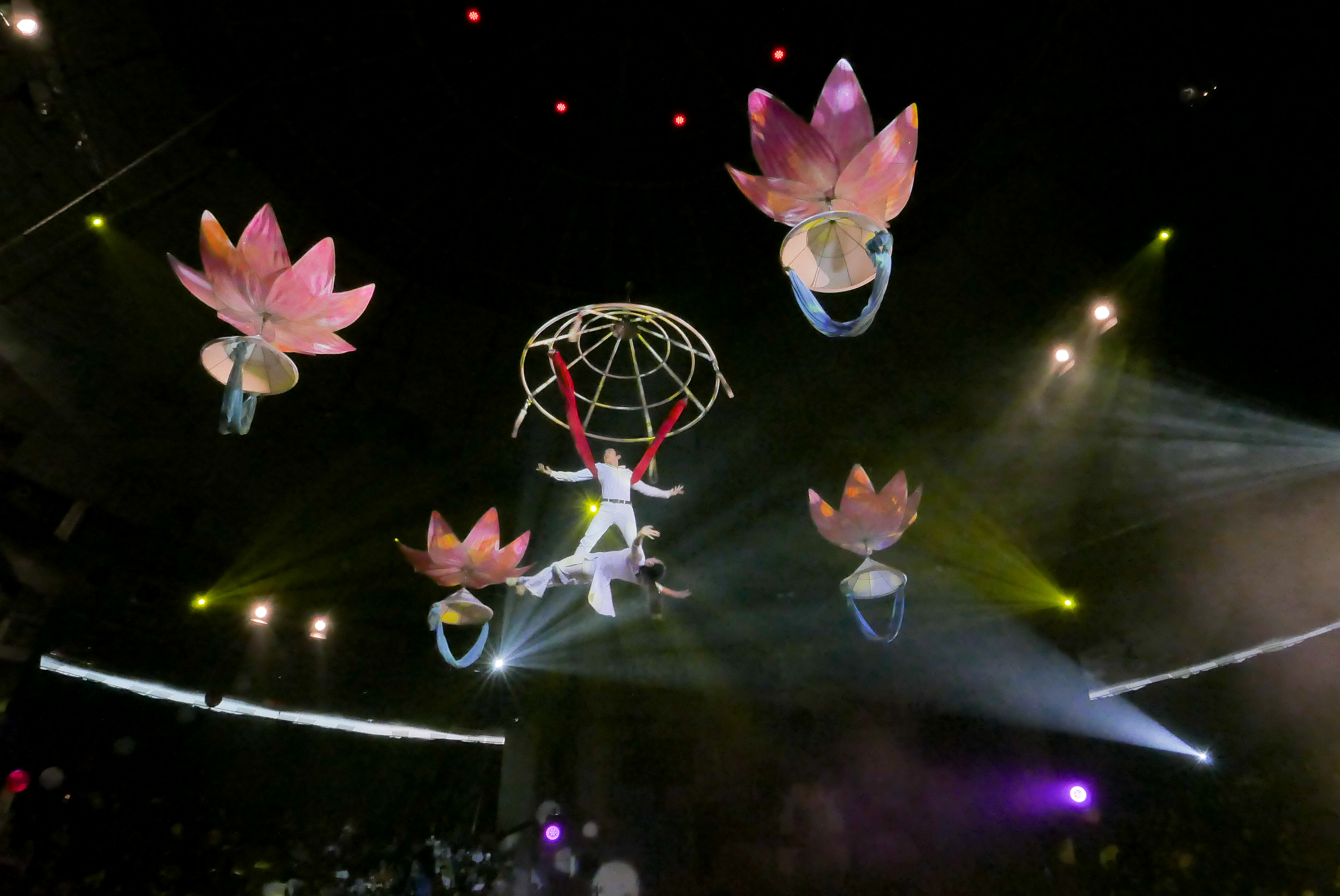
A circus performance is a feast of visual and musical elements.
Everyone has, at some point in their lives, grown up surrounded by monkeys in costumes performing, by cats frolicking on two legs, and by the ups and downs of a flying clown circling the stage. Everyone has their own special fondness for the circus, or for all the extraordinary things in the world.


Humans, after a childhood, gradually learn to be adults, navigating the ups and downs of life, only to suddenly realize that their fairytale dreams have been somewhat buried by the unpleasant realities of everyday life. They wearily realize they have lost a part of their soul, or perhaps they have simply forgotten to nurture the inner child within themselves.
Everyone was once a child, and everyone once had their own fantastical vision of a world filled with laughter and wonder. Words and lullabies may struggle to capture such an elaborate world. But circuses, having endured the growth and changes of generations, have never lost their appeal, simply because they have brought all things magical to life in this world.
Circuses, having endured the growth and changes of generations, have never lost their appeal.
Unlike fairy tales or folk stories, which are structured by words and a spiritual thread, circus is a comprehensive art form. The language of circus is artistic imagery, molded into form and shape from real life, manifested vividly through folk games, traditional festivals, religious rituals, and activities related to production, survival, and community culture… gradually developing into circus art.
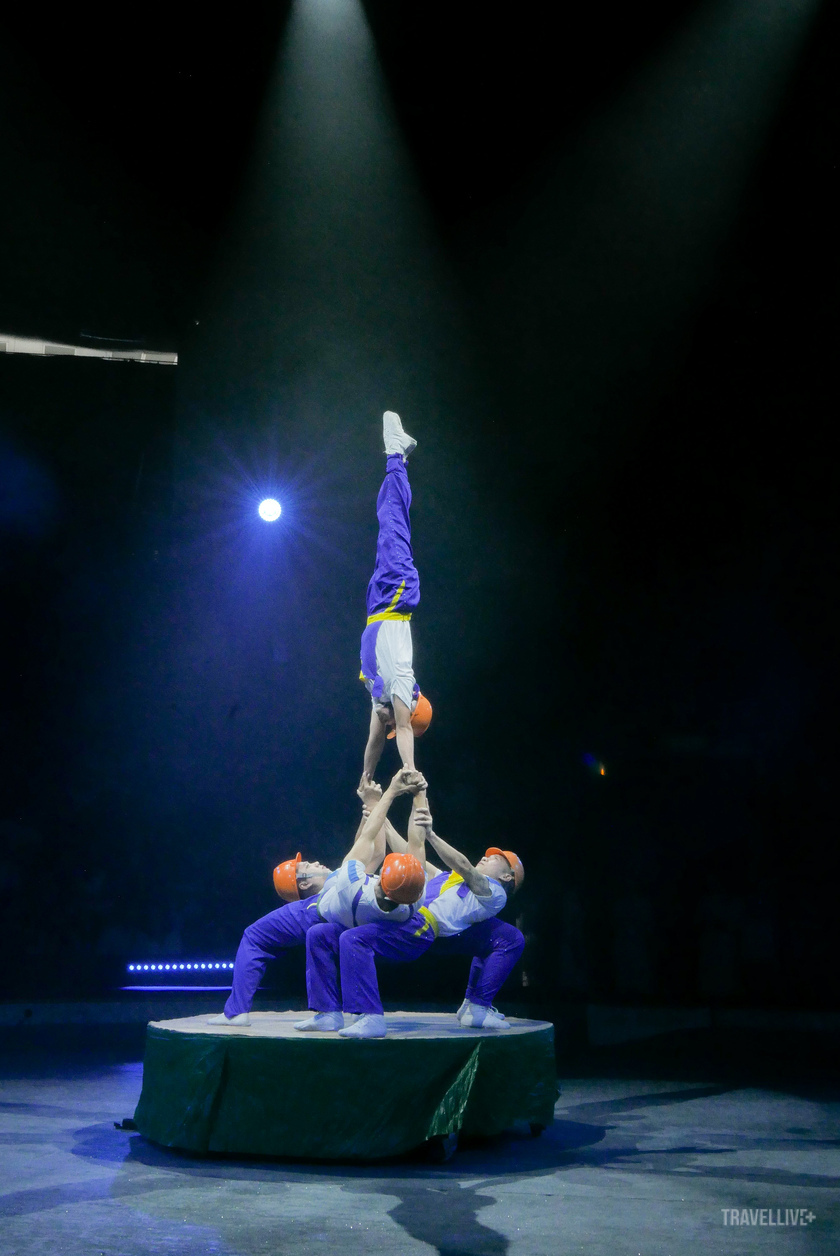
More broadly speaking, circus acts draw upon everyday structures to depict the extraordinary capabilities of human beings. Circus performances are performed using skillful movements, with the full utilization of courage and strength; therefore, the magic is produced from the extremes of physical and mental prowess.

Circuses and fairy tales share a certain commonality: they are both performed by adults, but are essentially created for children.
A circus is no longer simply about clowns acrobatics, tightrope walking animals, or female assistants performing split acts; the circus has transformed, because if the spectacle becomes predictable, no one will bother paying attention anymore. Circus artists, in the past, only knew how to perform and had little skill in promoting or engaging with the audience, easily becoming "forced" to show what they had to offer. But now, each weekend's box-office hit, in addition to its special effects, is also a testament to the effort put into stage design.
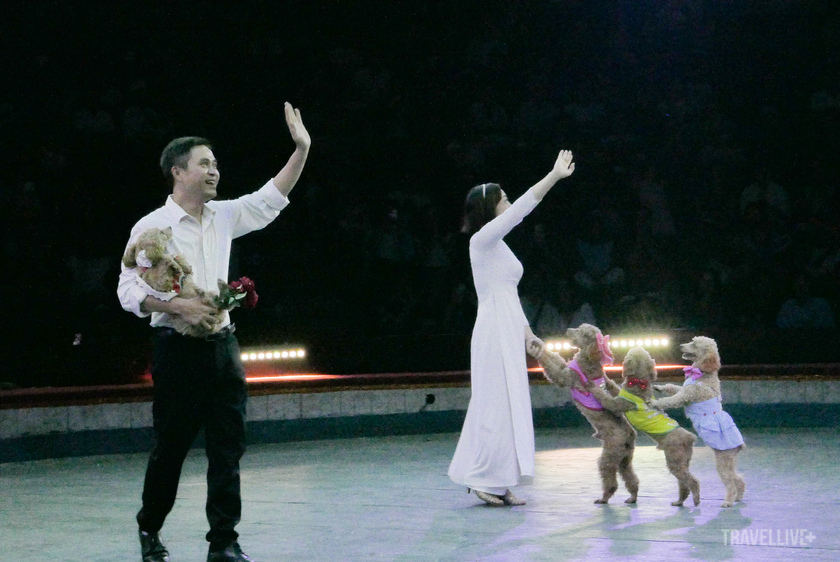
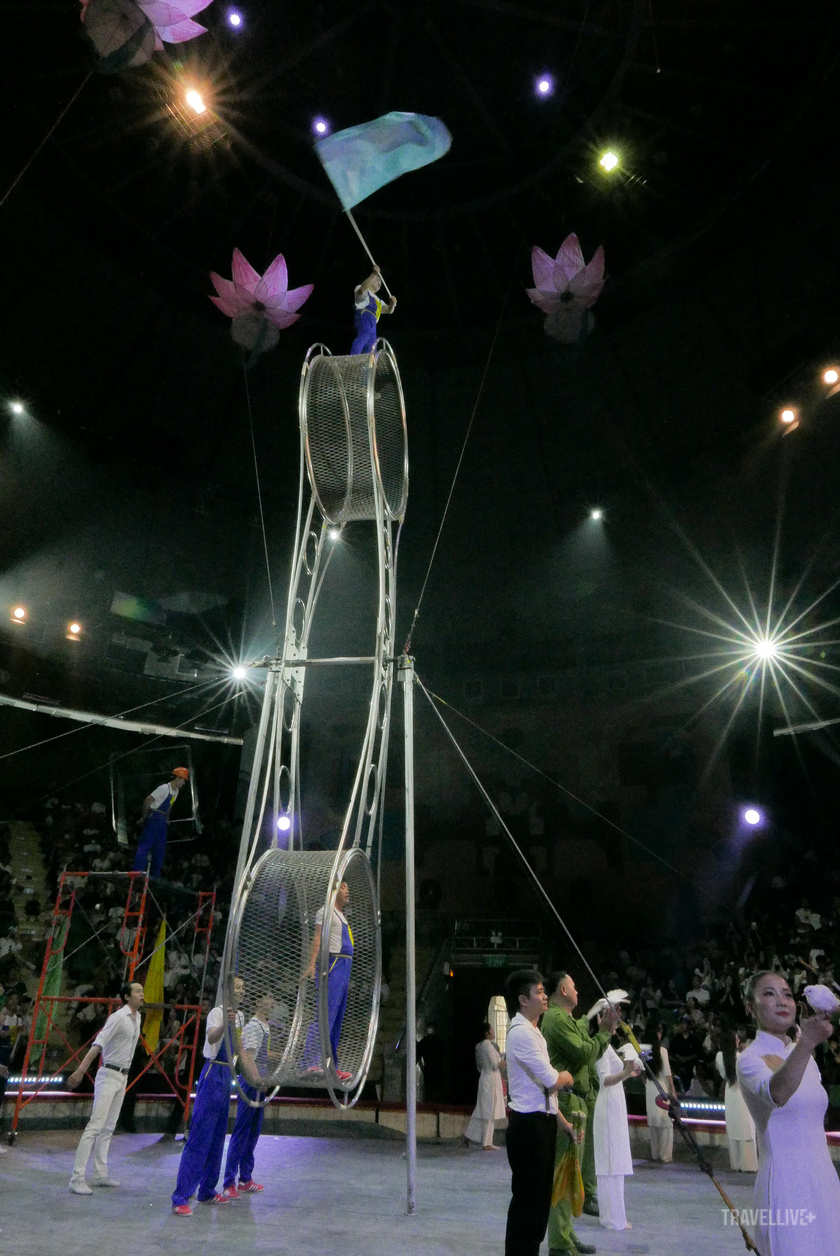
The language of the circus is artistic imagery, molded and shaped from real life into forms and shapes.
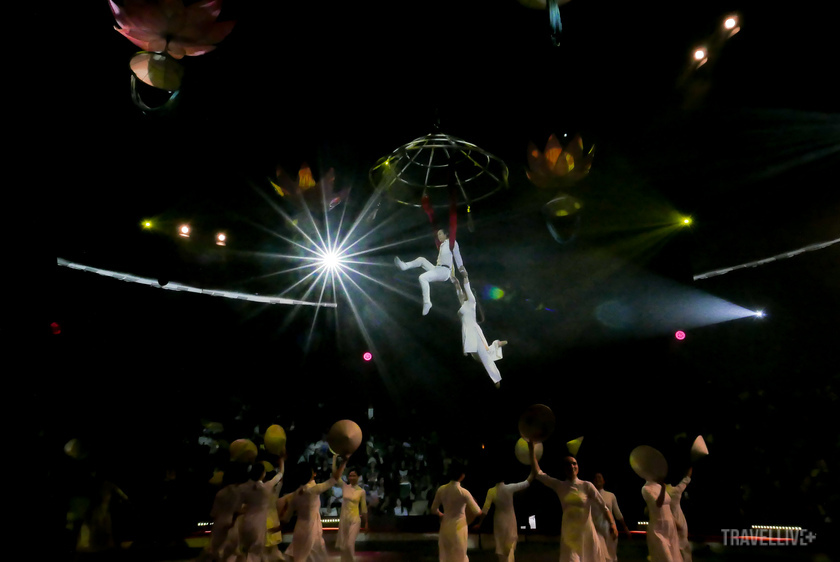
Moreover, it's not just about the interaction between the audience and the circus artists, but also an opportunity to revisit old stories that have gradually faded from the hearts of each audience member. The circular stage becomes a place to recreate a series of scenes from true stories, cleverly incorporating the gray and white hues of war and peace through the concept commemorating the 70th anniversary of the liberation of Hanoi. It also brings back to the audience vivid footage of the day Hanoi regained its autonomy, evoking nostalgic moments as memories slowly return for previous generations, and a source of pride that needs to be preserved for future generations.
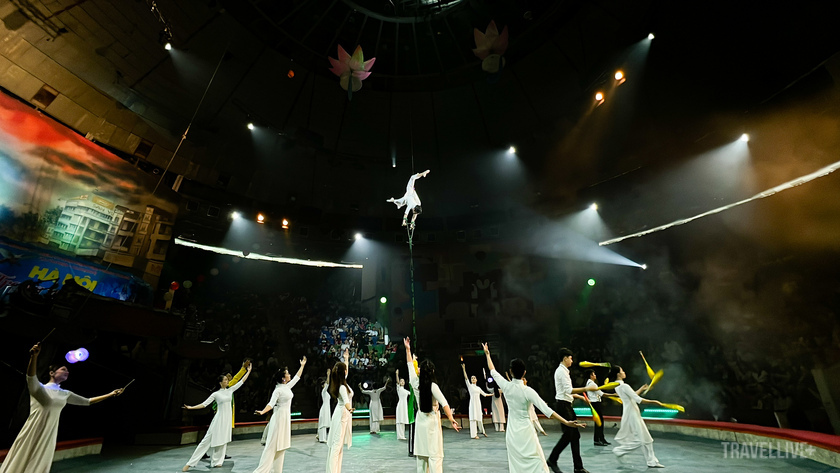
The circus skillfully incorporated the gray and white hues of war and peace through its concept commemorating the 70th anniversary of the liberation of Hanoi.
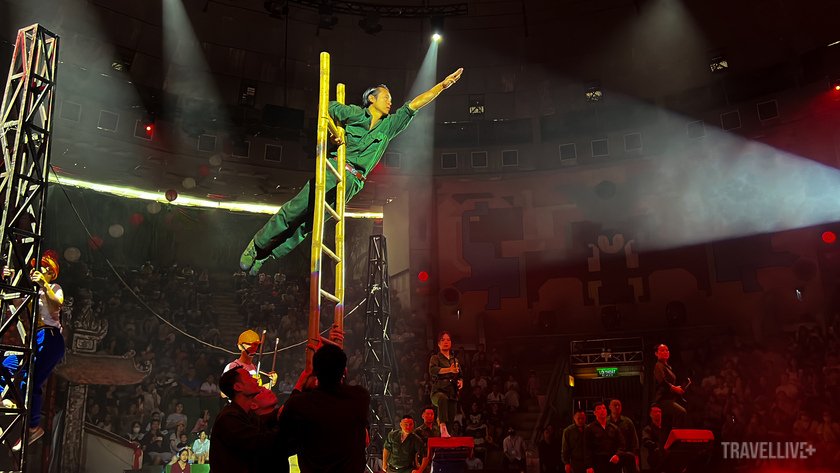
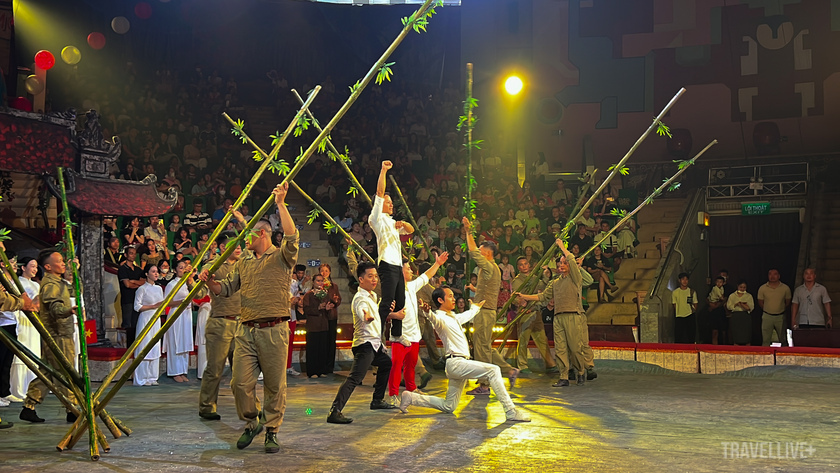
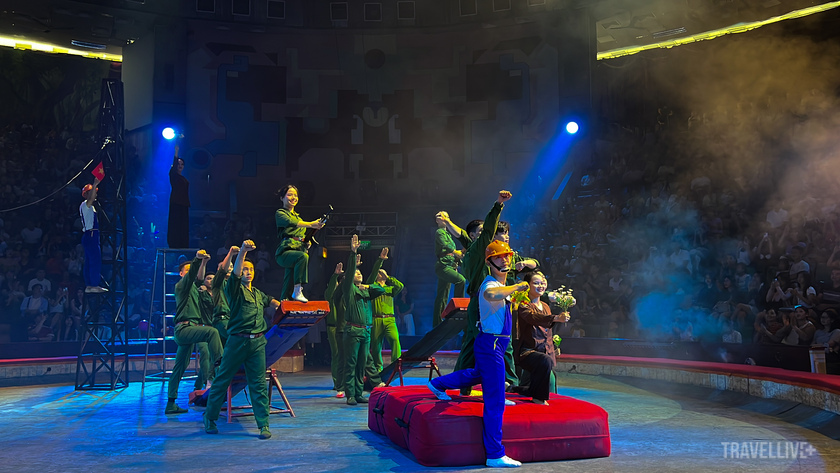
Besides historical epics, the circus also offers concepts specifically for younger audiences, painting a picture of magical wonder with performances like "Tam Cam - Bong Bong Bang Bang" and "The Little Mermaid"... Circus is characterized by its versatility in its ability to "pair" with many other art forms. A circus performance is a feast of visuals, human elements, surprises, and extraordinary experiences. Behind the curtain leading to the stage, a truly magical world is hidden, full of diverse colors and emotions.
Much has been said about the anticipation and excitement children feel when going to the circus, but has anyone ever wondered why adults, who were once children and are now adults or parents, seek out the circus? They wouldn't simply go because their children want them to, and then end the show with the same expression on their face. Surely, deep within the hearts of those growing up, there remains a lingering yearning for those comforting moments that soothed their souls amidst the countless hardships of growing up.
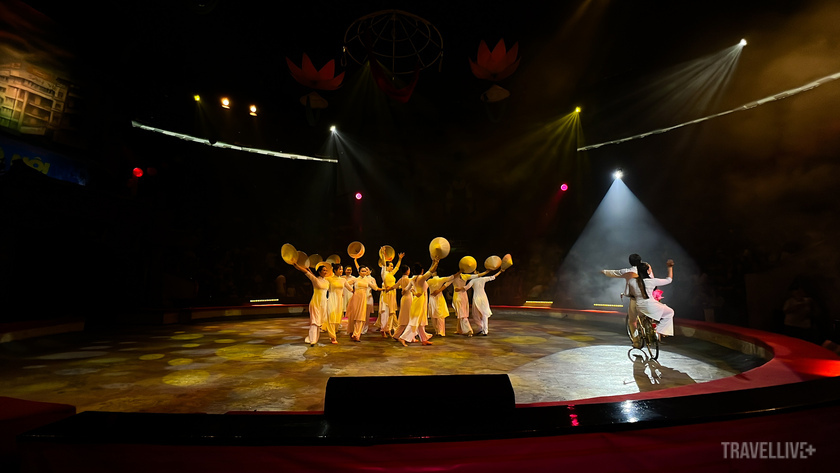
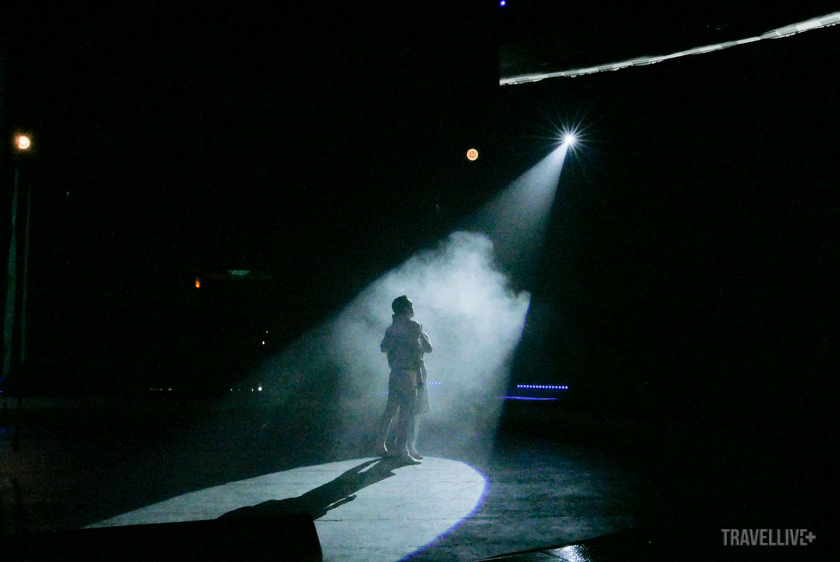
A circus is a feast of colors, people, surprises, and even extraordinary ingredients.
The story here still speaks of the childhoods of countless generations, who once lived with fairytale aspirations, only to gradually grow up and find that fairytales are no longer simply about benevolent spirits and good triumphing over evil. Now, their perspective and feelings towards these magical things have gradually changed through the layers of lessons learned throughout their upbringing.
Andersen didn't write fairy tales when he was a child; we carry those stories with us as we grow up, only to realize with shock that, with our childlike minds, we always look at the final outcome, at "happy ever after." But as we reach a more mature stage of reflection, every stage of the journey becomes understood and appreciated, so that each life is viewed with greater compassion. That is the foundation of the soul that fairy tales build, so that we never once lose sight of our own kind and benevolent selves.
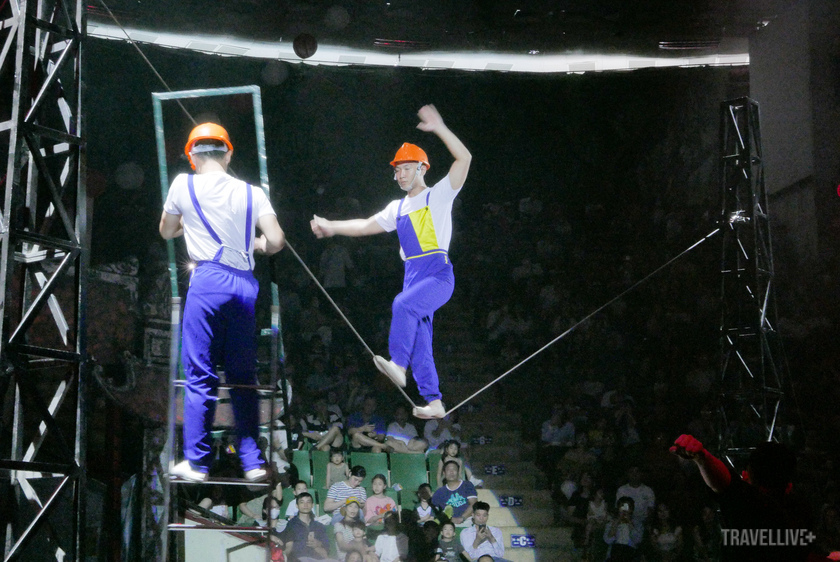
Each weekend's box-office hit, in addition to its spectacular special effects, is also the result of meticulous stage design and production.
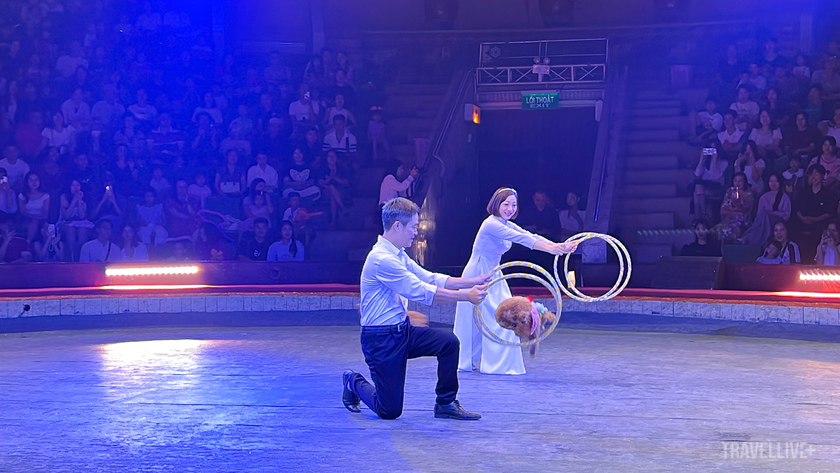
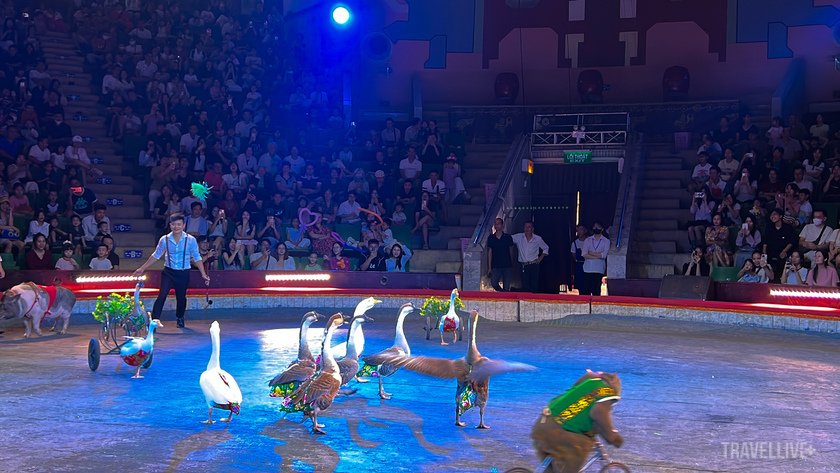
Modern art in the contemporary era
The same is true for the circus; it has recently made a comeback to young people after a long period of being forgotten in the spotlight. It was a small experiment in reaching a younger audience that is more inclined towards more modern art forms, but it ultimately proved to be a resounding success.
It's not hard to see why circuses have been appearing more frequently on social media platforms lately, with young people praising them and making circus visits a must-do every weekend. One might suspect that circuses are just for image, but if you personally hunt for tickets on fan pages, quickly search for the few remaining seats, and spend the entire 90 minutes at the theater, you'll truly understand that circuses aren't just quick to capitalize on trends.
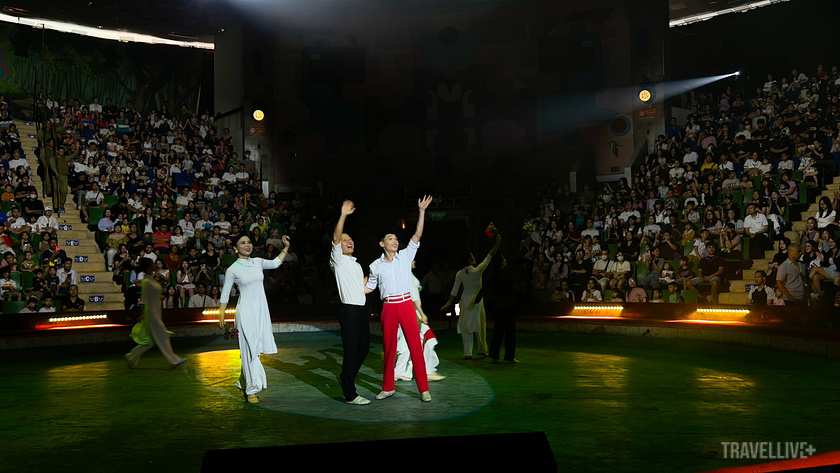
It's not surprising that recently, circus performances have been appearing more frequently on social media platforms, with young people praising them.
Every performance is about familiar things, and circuses win people's hearts because they perfectly recreate childhood emotions. Circuses take adult audiences back to their childhood memories, allowing them to relive the joys of their youth with the promise of a weekend outing, and to relive the spirit and entertainment after the hustle and bustle of city life. And now, they not only marvel at the spectacular results of a performance but also gradually understand the difficulties involved in the entire production process.
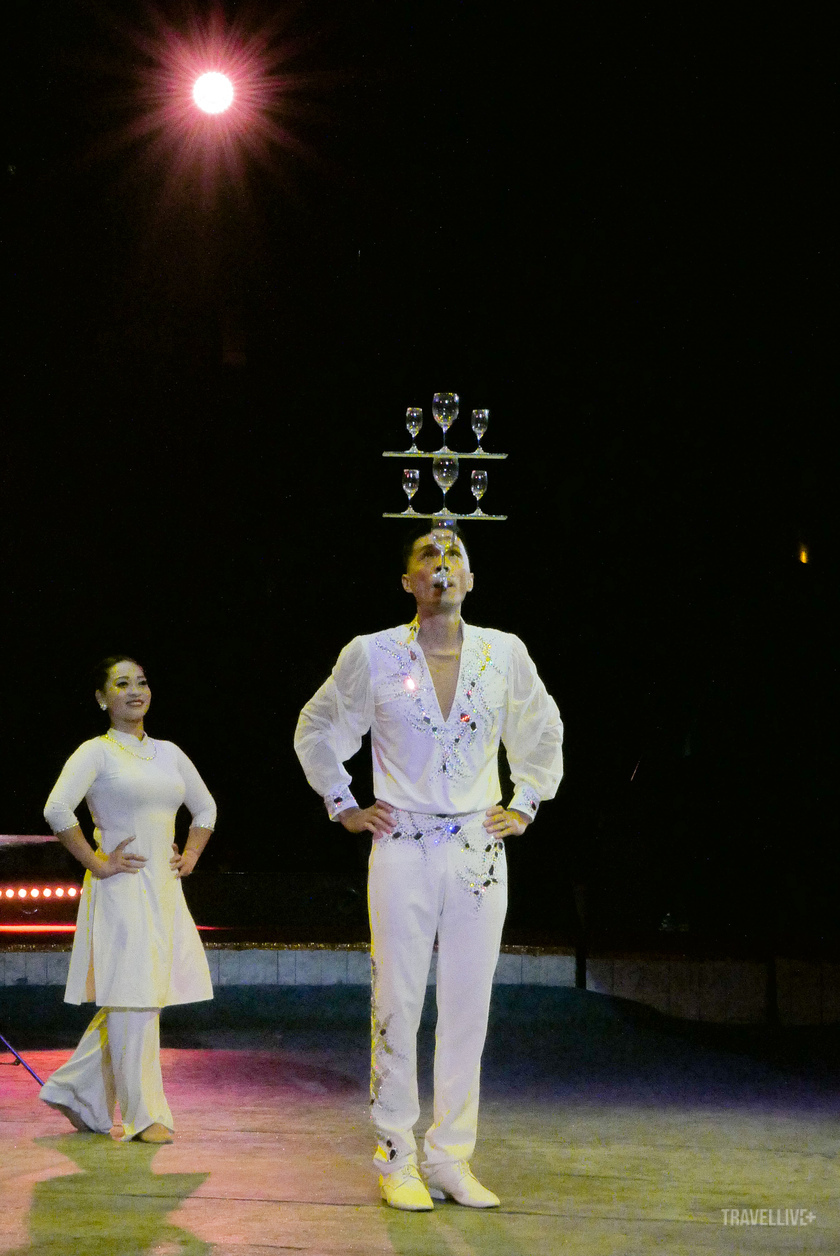
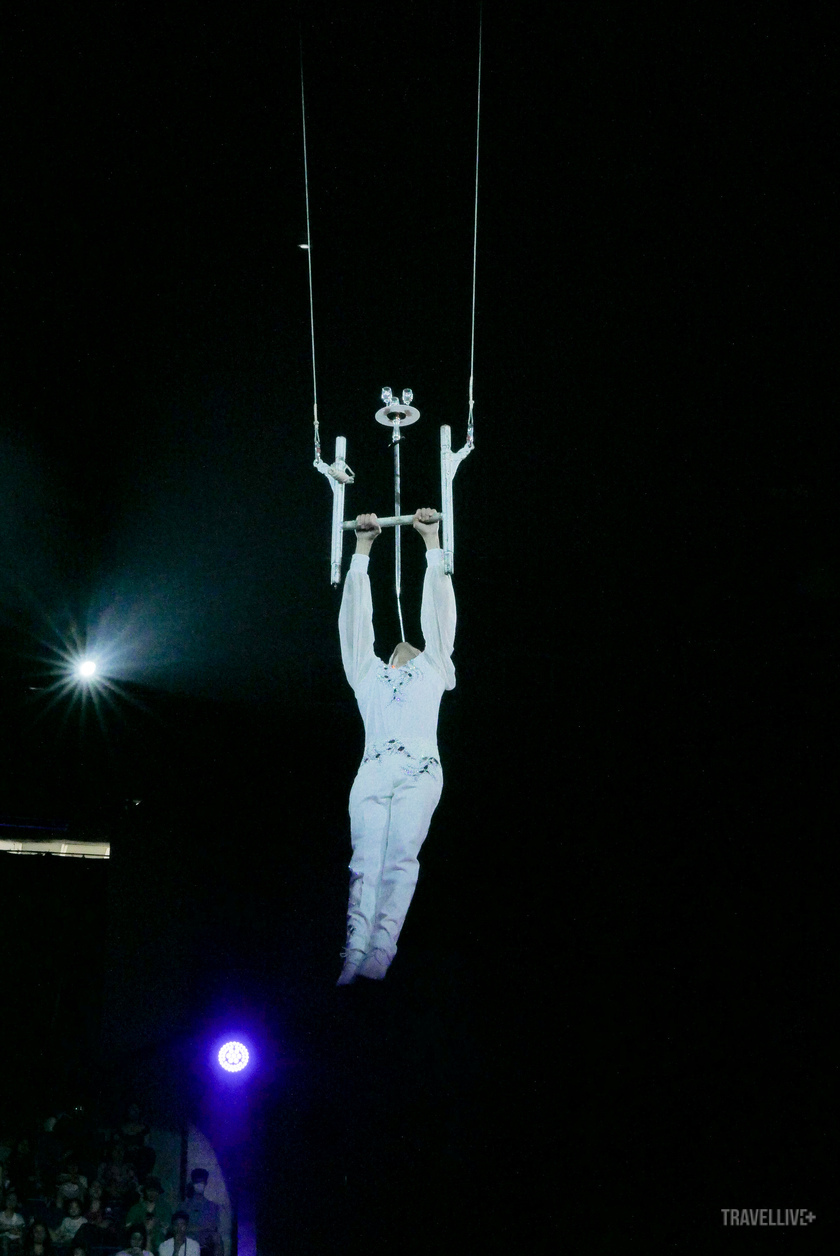
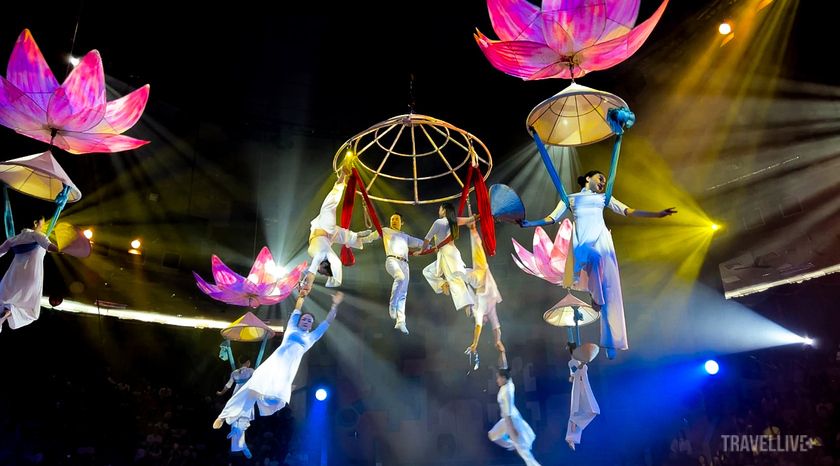
All the performances are familiar, and the circus earns the love of the audience because it perfectly recreates childhood emotions.
Circus, in relation to life, isn't about agonizing over the outcome, but about knowing how to love and enjoy each stage of the journey. Circus takes the audience back to childhood dreams, then gently embraces them when they return to reality.
A circus ticket, unexpectedly, brings to mind a heavenly circus, a place where all the spotlights converge, nurturing dreams and illuminating magical wonders. Age may wrinkle the skin, but giving up on dreams wrinkles the soul. That everyone out there has a dream growing within them, and everyone has the right to see the world not as it is, but as it could be, if we believe in courage, kindness, and sometimes a little bit of magic.
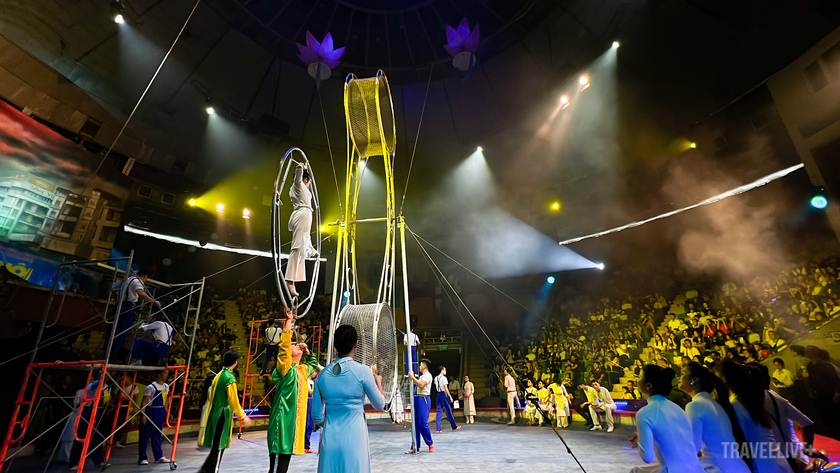
The circus ticket, involuntarily, brings to mind the heavenly circus, a place where all the spotlights converge.