VI
VI


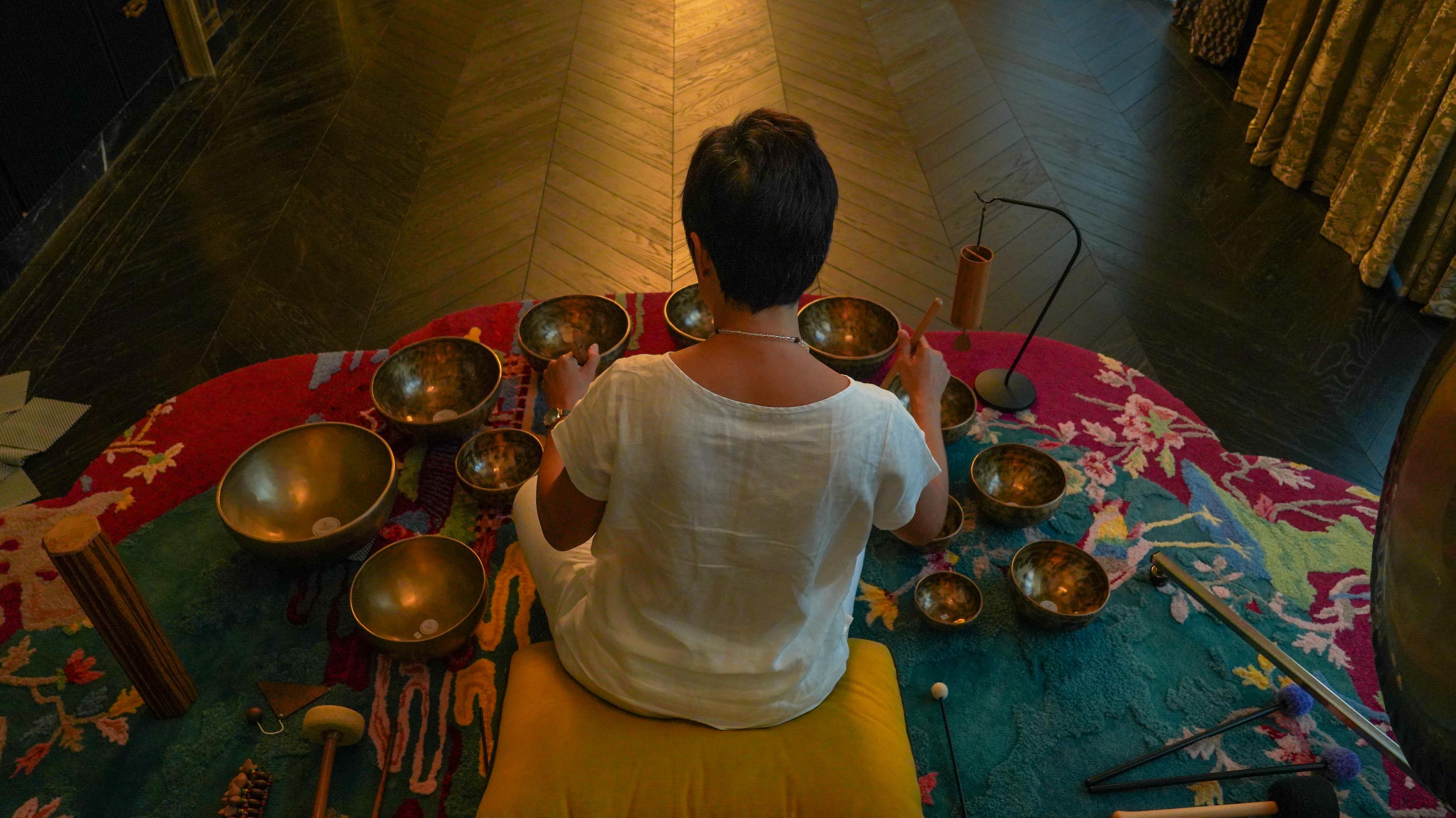
Ashley Tan is an award-winning sound healing expert and instructor. She shares sound as a natural therapy and believes that sounds of the same frequency have the power to heal. Ashley has studied techniques from both Eastern and Western traditions, with a strong foundation in physics, mathematics, and their connection to musical intervals. This fusion of art and science, of ancient wisdom and modern science, has helped her create a transformative healing journey.
As an instructor, Ashley focuses on using sound effectively and scientifically, avoiding unfounded beliefs. She collaborated with Capella Group to develop a therapy combining sound and massage and won the “Best Holistic Wellness Experience” award at the annual ICON2024 spa awards in Singapore.
A short segment from Ashley Tan's healing session:
As part of the Senses of Capella 2024 event series, Travellive had the opportunity to meet Ashley and listen to her share her journey on the path to healing through sound.
Reporter: Could you share more about yourself and how your journey with sound healing began?
Ashley Tan:Of course! I was a business executive for 25 years. During that time, I decided to take a year off and travel. Initially, my goal was to spend six months in India attending a yoga teacher training course. However, I stumbled upon a small flyer advertising "sound healing" therapy, and that's how I started this journey. I had a powerful personal experience with it, and after that, I began to delve deeper into the frequency and vibration of sound and how it works.
Upon returning to my home country, I worked and researched sound healing simultaneously. When the Covid-19 pandemic struck, I decided to quit my business management job entirely to focus full-time on that therapy.
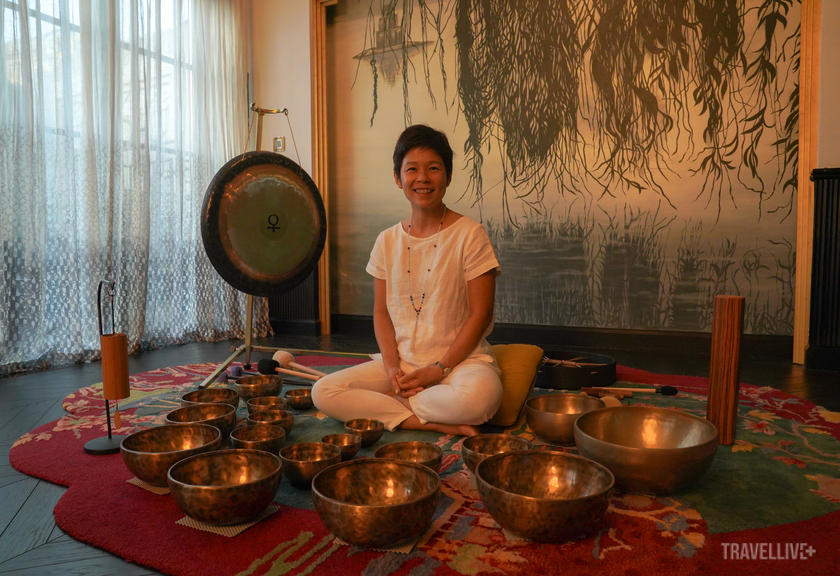
Ashley Tan, one of the pioneering experts in bringing sound healing to the international community.
PV: What is the origin of sound-healing musical instruments?

Ashley Tan:The history of sound and vibration is intertwined with many different cultures. For example, in ancient Egypt, flutes were used as healing instruments. In Australia, indigenous peoples used the pipe organ (diggeridoo). Meanwhile, in Africa, Shaman drums were commonly used in rituals. Furthermore, a favorite story is about Pythagoras, the ancient Greek philosopher and mathematician, who discovered that certain musical intervals could bring profound relaxation to the listener.
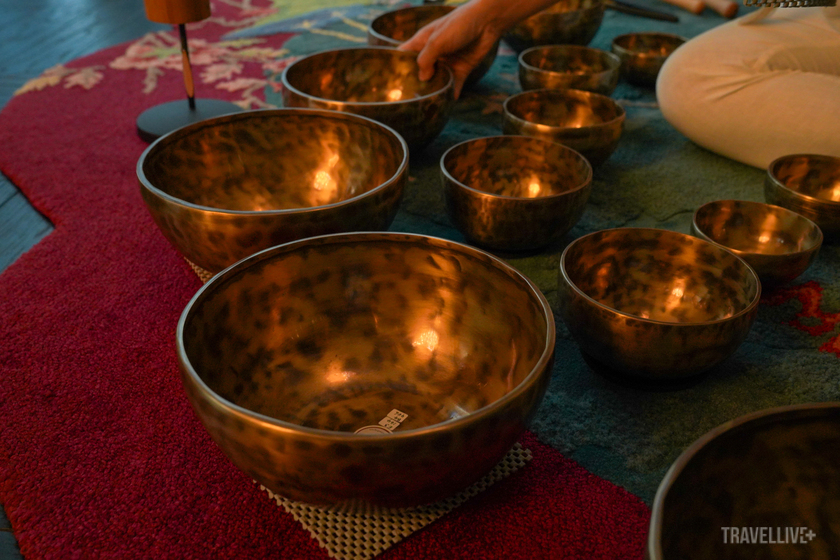
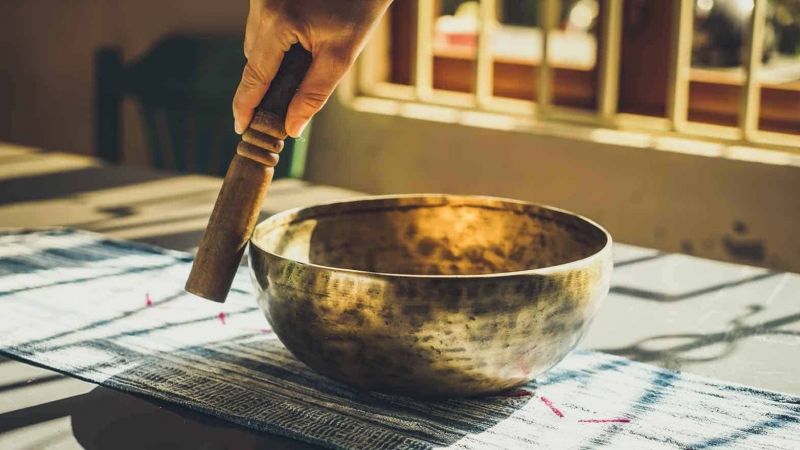
Singing bowls, commonly found in sound healing sessions.
PV: From what we've learned, singing bowls are the most commonly used item in sound healing sessions. So, how do singing bowls affect the human body?
Ashley Tan:The size and metal ratio of the singing bowl affect the timbre, vibration, and sound quality. These sounds can impact five brainwave frequencies: Beta, Alpha, Theta, Delta, and Gamma. Beta waves are associated with alertness and logical thinking, while Alpha waves appear when the brain is at rest, often during meditation. Theta waves enhance creativity, and Delta waves aid in healing during deep sleep. Gamma waves are the frequency of individuals with exceptional thinking abilities.
In each healing session, not only do our ears hear the sounds, but the skin – the largest organ of the body – also absorbs these vibrations. The goal of healing sessions is to calm brainwave frequencies, helping participants achieve a state of deep relaxation. The sound from the singing bowl directs the brain to the three healing frequencies: Alpha, Delta, and Theta. Therefore, striking the bowl creates a feeling of relaxation and mental comfort, supporting meditation, yoga, and improving sleep. Singing bowls are also widely used in psychophysical therapy. Mentally, they help reduce stress, soothe psychological trauma, and improve concentration. Physically, they help regenerate muscles, reduce pain, and improve circulation. Spiritually, they help balance energy, bring harmony, and purify the chakras.
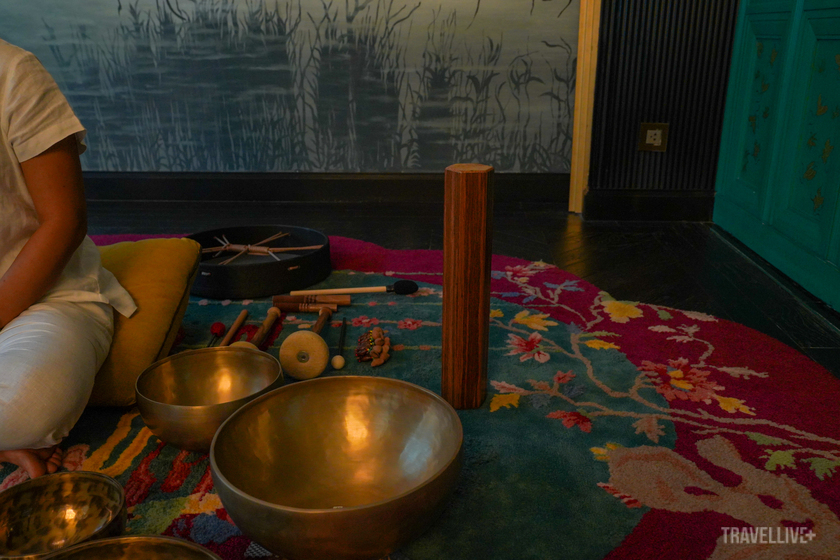
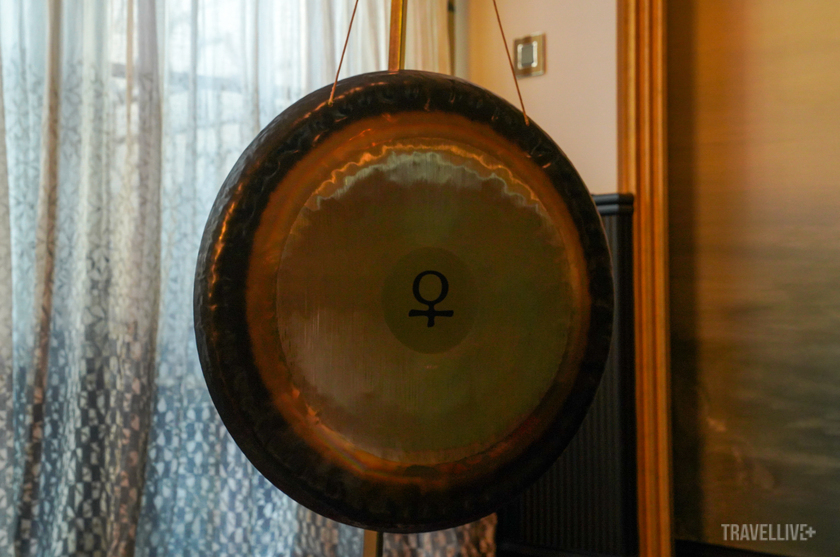
Gongs are one of the other musical instruments used.
PV: So, is it possible to use other musical instruments, such as traditional Vietnamese instruments, in the sound healing process?
Ashley Tan:Absolutely! However, there is a difference between tuned and untuned instruments. Tuned instruments produce specific frequencies, and the instructor needs a thorough understanding of music theory to ensure the sound produced is harmonious and relaxing, not stressful.
PV: How does sound healing differ from other relaxation methods like meditation or yoga?
Ashley Tan:Sound healing is actually a powerful complementary method to traditional practices like yoga and meditation. What makes this therapy special is its ability to directly impact brainwave frequencies and the nervous system. The entire universe, including our bodies, vibrates and produces certain frequencies.
When we experience stress or pressure, the body often enters a "fight or flight" state, and sound helps bring the body back to a state of recovery. This is something many people struggle with when relying solely on meditation. Sound has the ability to regulate and activate this natural recovery process, helping the nervous system and brain return to balance. This is something that meditation sometimes cannot achieve immediately for beginners or those who have difficulty relaxing.
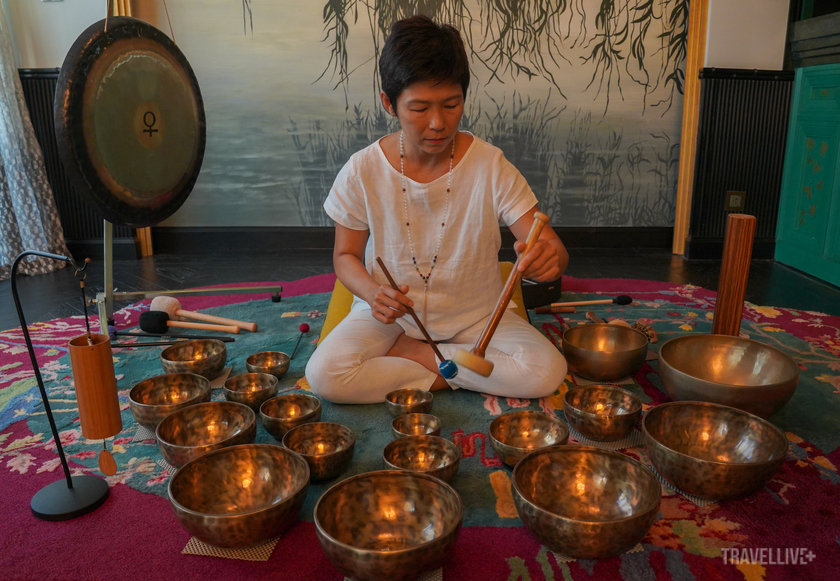
Ashley's sound therapies are widely used in meditation, yoga, and psychotherapy.
PV: What message do you want to spread through this sound healing journey?
Ashley Tan:My ultimate goal is to help people connect with their inner consciousness and stillness. When we can connect with the deepest part of ourselves, we can experience life peacefully, no longer overly controlled by emotions or external situations. This stillness enables us to face life's vicissitudes without wavering or stress. This not only improves mental health but also creates a profound state of balance, helping people live a more fulfilling life and in harmony with their surroundings.
PV: As a sound healer, do you heal yourself?
Ashley Tan:That's a really interesting question! When I lead a healing session, I also experience certain states. For example, during the guidance process, I'm often in the Theta state, where the body and mind are deeply relaxed. However, I still have to maintain awareness in the Beta state to be able to effectively guide the participants. This means I'm participating in the healing process with everyone, but I still have to maintain control to ensure everything runs smoothly. Additionally, in daily life, I apply other techniques to cope with stress. For instance, simply taking deep breaths for a few seconds can help slow the heart rate, bringing immediate calm.
Not only that, I also have experience working with many patients, including cancer patients. These cases sometimes yield unexpected results as they recover or feel relief after sound healing sessions. I feel that sound has a truly powerful ability to promote healing, not only on a mental but also physical level.
PV: If someone wants to learn sound healing, where can they learn?
Ashley Tan:I currently offer both in-person and online training courses via Zoom, which is very convenient for students who live far away. Online classes allow students to access in-depth knowledge about sound healing from anywhere in the world. Whether near or far, everyone can participate and learn, as long as they have the passion and desire to explore the power of sound in healing body and soul. My courses not only provide technical knowledge but also guide students on how to feel and deeply understand the energy that sound brings.
Thank you so much, Ashley Tan!