VI
VI


The couple Nhật Đinh and Mia Phạm recently spent 10 days in Italy, and 3 days exploring countless architectural wonders from ancient Rome in the eternal city. Visiting Rome means stepping into legendary ancient cities, places shrouded in mystery, steeped in religion, institutions, and one of the cradles of human civilization: Roman civilization.
During their exploration trip, Nhat Dinh and his wife had the opportunity to discover many destinations in Rome such as: Trevi Fountain, Vatican City, Vatican Museum, Pantheon, Trastevere, St. Angelo's Palace, Colosseum and Roman Forum.
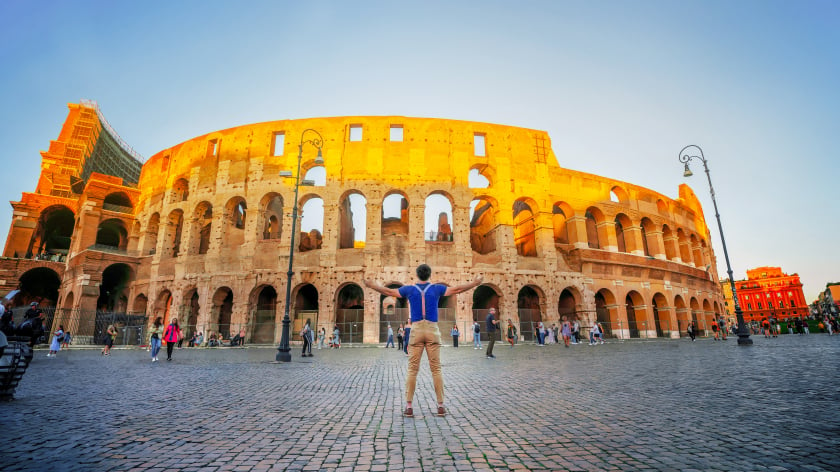
Nhat Dinh spent three days thoroughly exploring Rome – a city with countless architectural wonders from ancient Roman times.
Trevi Fountain
The Trevi Fountain, whose name means "three roads," is simply located at the intersection of three roads. This fountain dates back to ancient Rome, specifically 19 BC, as part of a system of aqueducts that supplied clean water to Rome at the time. However, its striking appearance today was only begun in 1732, a process that took 30 years, and the Trevi Fountain was inaugurated in 1762, standing 26 meters high and 49 meters wide.
What makes Trevi famous is the tradition of tossing coins. Originating from ancient times, people would toss a coin into the water before each journey, hoping for protection from the water god and a safe return to Rome. This tradition continued into modern times and gained international popularity in 1954 thanks to the film "La Dolce Vita," which was set there.
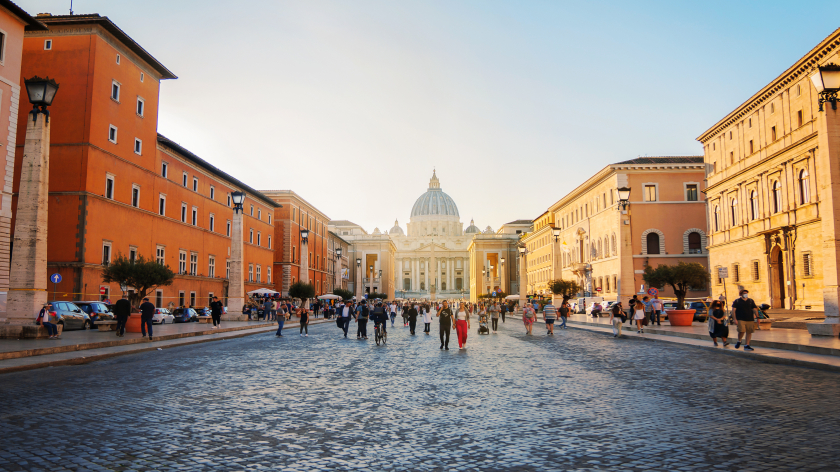
Rome is known as the eternal city and is the capital of Italy.
“They say that those who throw one coin will return to Rome someday, those who throw two will return to Rome and find a lover, and those who throw three will return to Rome and get married. Anyone intending to throw money should consider the amount depending on their circumstances. According to statistics, about €3000 is thrown here every day, but rest assured, that money is used entirely for charity, so feel free to throw generously,” Nhật Đinh excitedly recounted.
Vatican
Vatican City, known as the world's smallest independent state, nestled within Rome, covers an area of only 44 hectares and has a population of approximately 1,000 people. It was founded in 1929. For nearly 60 years, the Vatican opposed Italian rule. It wasn't until 1929 that the Lateran Treaty was signed, recognizing the Vatican City State and the important role of Catholicism in Italy.
Vatican Museum
Founded in 1506, the same year the foundation stone of St. Peter's Basilica was laid, the Vatican Museums house a vast collection of church and papal artifacts spanning centuries, estimated at around 70,000 works, but only 20,000 are on display to the public.
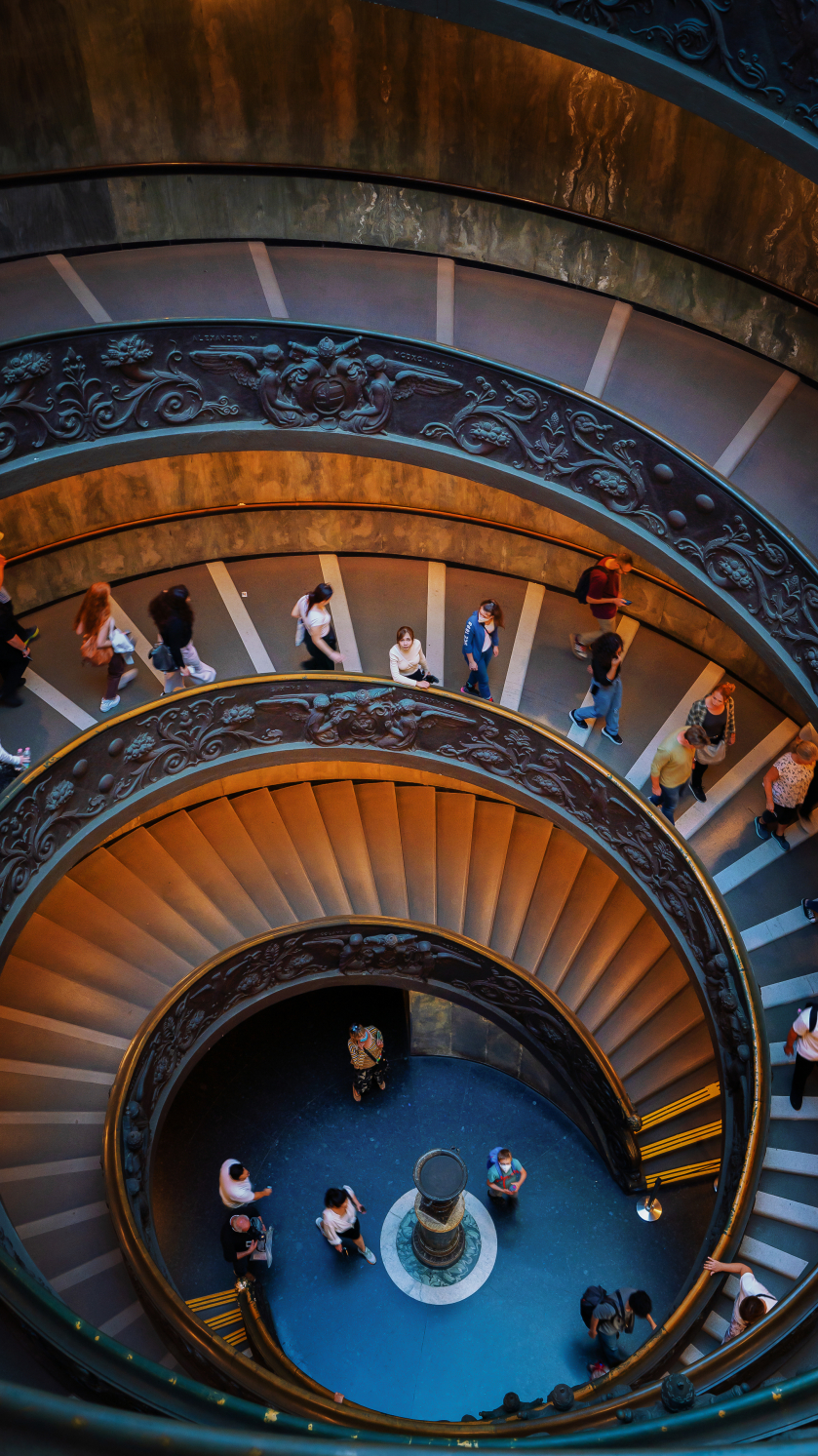
Inside the Vatican Museum
The museum has 12 exhibition halls with a diverse and rich collection of artifacts, from Renaissance sculptures to mummies originating from Roman, Greek, and Egyptian civilizations, offering visitors ample opportunity to explore. Particularly noteworthy is the ethnographic museum area, showcasing artwork from remote tribes and ethnic groups, aiming to educate visitors about their history and promote the protection of human rights for all individuals, regardless of origin or race.
The Sistine Chapel inside the museum is the holiest and most important place in the Catholic faith.

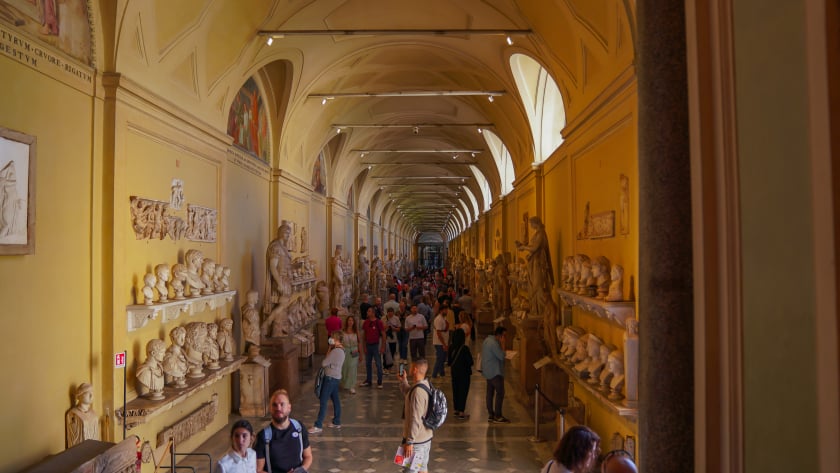
The Vatican Museums display a vast array of artifacts, from Renaissance sculptures to mummified relics originating from Roman, Greek, and Egyptian civilizations, offering visitors plenty to explore.
Pantheon
The Pantheon, known as the Temple of All Gods, was built between 118 and 126 AD. Its scale surpassed all other temples of its time, earning it recognition as a masterpiece of antiquity. Its walls, over 6 meters thick, supported a dome with a diameter of 43.3 meters, holding the title of the largest dome for 13 centuries. To this day, the Pantheon is nearly 2,000 years old and is the best-preserved monument, a symbol of the power of the once-glorious Roman Empire.
Trastevere
Trastevere is one of Rome's oldest residential areas, originally a working-class neighborhood, embodying the characteristics of ancient Italy with its narrow alleys, cobblestone streets, old houses, and unhurried people.
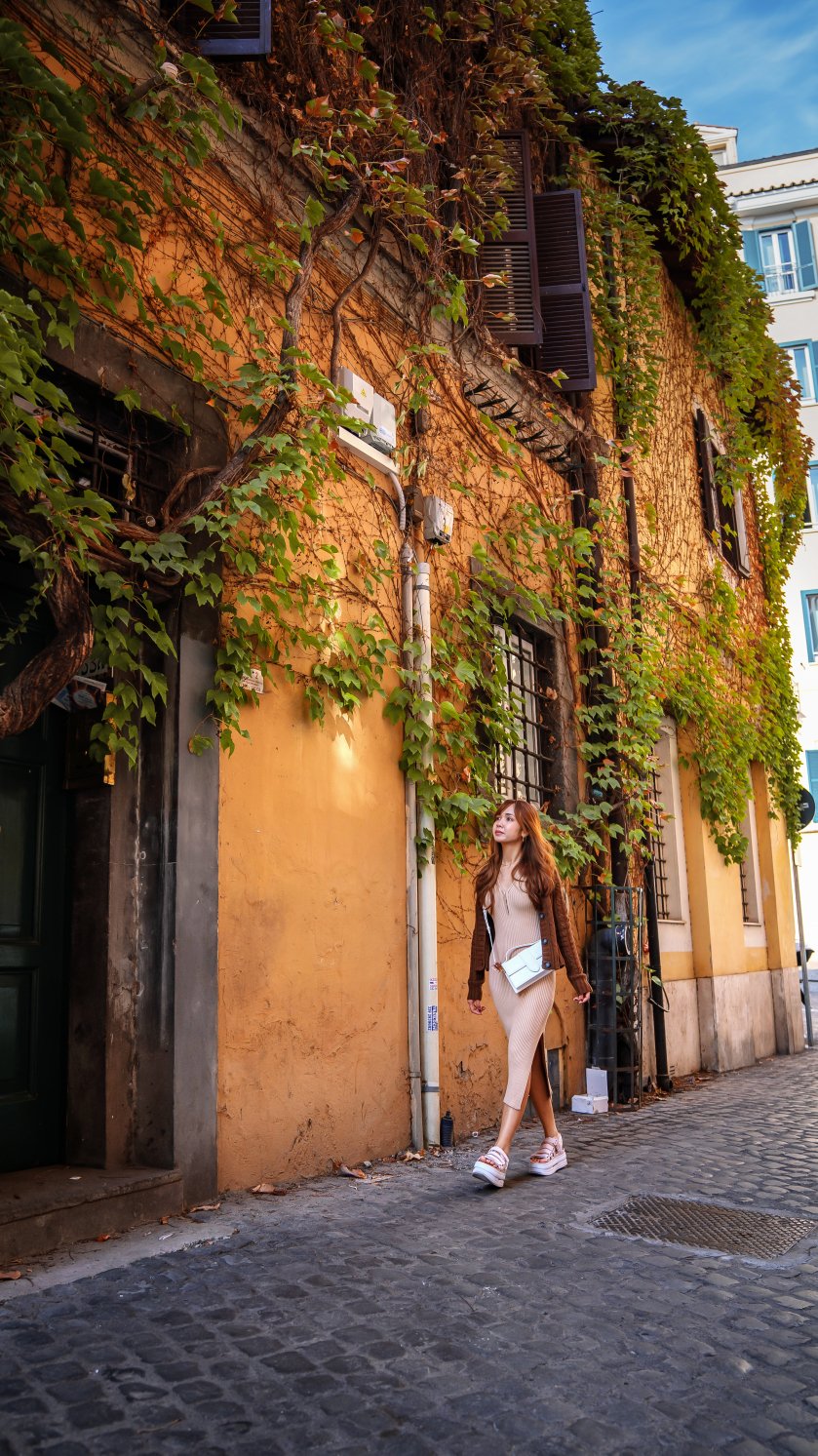
Mia Pham visits Trastevere - one of the oldest residential areas in Rome.
Being a suburban area, this old town was largely untouched by tourists for a long time, carefully concealing its time-worn beauty. But this hidden gem was eventually discovered, and Trastevere is now increasingly chosen as a destination, becoming a vibrant neighborhood, especially in the evenings.
Saint Angelo Castle
Sant Angelo was originally built as a mausoleum for the emperor, later converted into a fortress, then used as a castle, a prison, and today it is a museum.
Colosseum
The Colosseum was built between 70 and 72 AD, completed in 80 AD, using tens of thousands of slave laborers and funds from the spoils of war in the Roman-Jewish War. The Colosseum is oval-shaped, 48 meters high, 189 meters long, and 156 meters wide, with a capacity of 50,000 people.
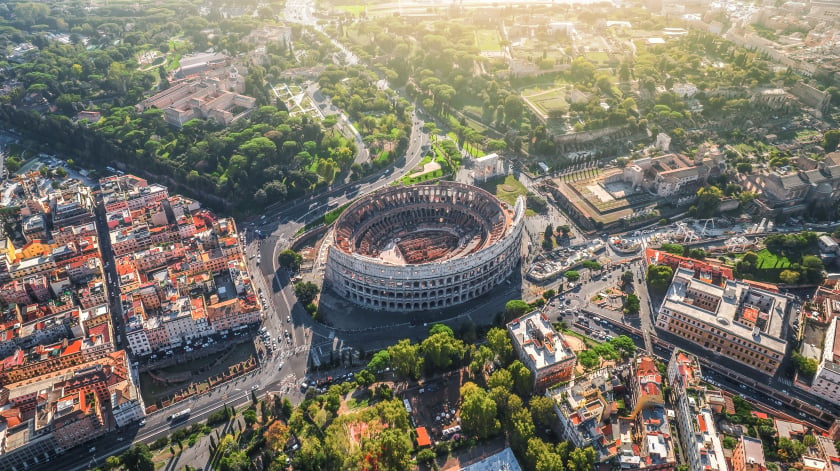
The Colosseum viewed from above.
The Colosseum was the largest amphitheater in Roman history. It was the site of deadly gladiatorial combats between gladiators, mostly slaves, prisoners of war, and criminals. It is estimated that up to 500,000 people and 1 million animals were killed there during its four centuries of operation.
After the fall of the Roman Empire, the Colosseum was abandoned for a time, later used for civil purposes, markets, and worship. In the 1990s, it was restored and became a tourist attraction in Rome. Having endured thousands of years of upheaval, erosion by time, wars, earthquakes, and stone theft, only about a third of its original structure remains, but even that is enough to demonstrate the remarkable design and construction skills of the ancient Romans.
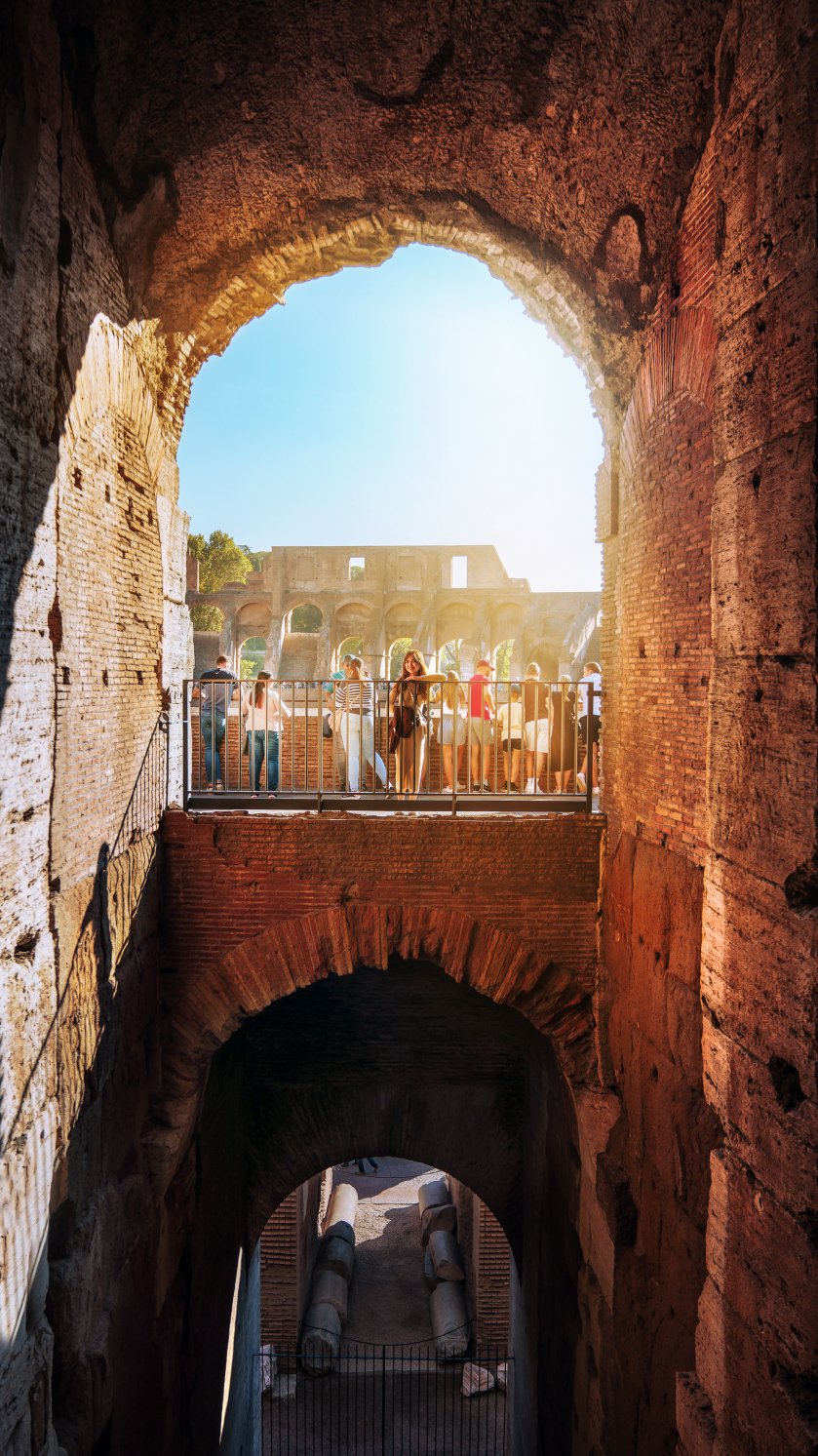
The Colosseum was built between 70 and 72 AD, completed in 80 AD, using tens of thousands of slave laborers and funding from spoils of war in the Roman-Jewish War.
Roman Forum
The Roman Forum is considered the heart of the Roman Republic, used for a wide range of purposes from marketplaces and trade to speeches, elections, trials, and even gladiatorial combats before the Colosseum was built. Today, many remnants of monumental structures of immense historical value remain.
For Nhat Dinh, the most impressive part of his trip to Rome was the Colosseum, a nearly 2,000-year-old ruin that, although only a third of its original structure remains, is still magnificent, showcasing the remarkable construction skills of the ancients.
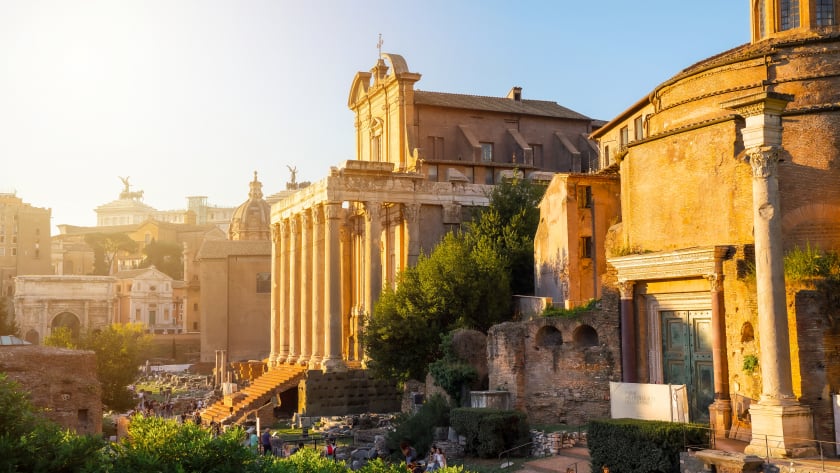
The Roman Forum is considered the heart of the Roman Republic.
"We were also impressed with the city as a whole because, although it was built extensively to serve the living needs of the people, there was clearly good planning aimed at preserving as many remaining historical relics as possible," Nhat Dinh said.
According to Nhat Dinh, the only difficulty for tourists visiting Rome is probably the sheer number of people, especially in the Vatican Museum area, which is very crowded.
He further emphasized: "Rome is not a vibrant city of parties and experiences, but rather one that offers spiritual value. It's an experience that almost transcends time, taking you back centuries. Therefore, when visiting Rome, I personally recommend exploring museums, buildings, and historical sites (a guided tour is even better) to gain a clearer understanding of what was once the greatest republic in human history."
Rome Discovery Guide
For first-time visitors to Rome, especially Vietnamese tourists, Nhat Dinh also offers some tips and a guide for exploring the city.
First, regarding traffic and transportation in Rome. Renting a car is not recommended due to congested roads and limited parking; the best way to get around is by renting a motorbike, which is convenient for navigating through traffic and easy to find parking. Note that if driving a car, you are not allowed on roads marked ZTL – these roads are only for residents. Two-wheeled vehicles are allowed on ZTL (except for ZTL A1). Buses and taxis have their own lanes and are not permitted on ZTL.
Rome also has many one-way streets, so be careful. The Vatican Museums are very crowded during the day; if you want a full experience, take an evening tour after closing time. Similarly, the Colosseum tour is cooler and less crowded in the evening.
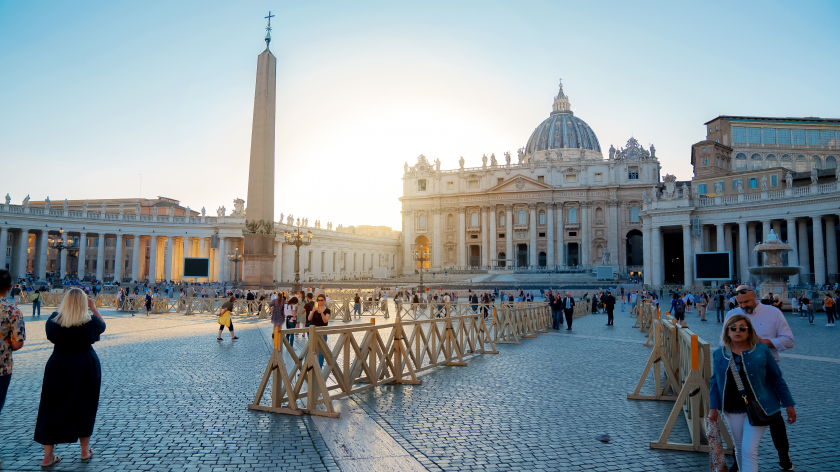
Rome isn't a city of vibrant parties and experiences; it offers spiritual value.
When you eat at a restaurant, there will be an item on the bill called Coperto. This is a mandatory fee originating from a long-standing tradition where people only wanted to use the restaurant's space to eat their own food, not order from the restaurant. They would pay for the use of tables, chairs, plates, spoons, etc. This fee is called Coperto, and the practice of paying Coperto continues to this day. So don't be surprised or think you're being ripped off if you see a restaurant charging an extra 2-5€ per person.
Additionally, when taking a taxi from the airport to the city center, you should ask for the price to avoid being overcharged; the price should be around 50-60€. Many cash exchange booths charge very high fees, including a total tax of 35%, so find and carefully read the exchange fee section as it's only written in very small print. It's best to exchange money at a bank.