VI
VI


The document from the Vietnam Civil Aviation Authority emphasizes improving the quality of customer service and proactively assisting passengers in incident scenarios such as flight delays, cancellations, sudden schedule changes, or issues related to lost, misplaced, or delayed baggage.


To achieve this goal, airlines must conduct a comprehensive review and improve their internal procedures to ensure the legitimate rights and interests of air passengers are protected.
All response and compensation mechanisms must not only comply with Vietnamese law but also conform to international air transport practices and regulations. This decision is expected to put an end to the shirking of responsibility or delays in handling service crises that have caused public outrage for some time now.
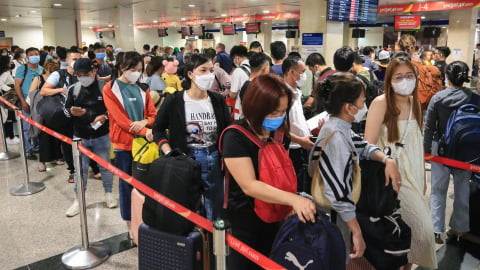
The Airports Corporation of Vietnam (ACV), along with the Management Boards of Phu Quoc and Van Don International Airports, have also received instructions to closely coordinate with airlines, aviation service providers, and ground handling units to improve the quality of direct service and ensure maximum benefits for passengers even under the most unfavorable conditions, such as airport congestion, overcrowding, or when the frequency of delays and cancellations increases.
This integration helps to create a seamless service supply chain from the ground to the air, preventing passengers from being left stranded at the station without timely assistance.

Alongside administrative measures, a new legal framework for compensation in the event of flight delays or cancellations is being developed to increase deterrence and provide more substantial consumer protection.

According to the draft Circular on air transport regulations currently under review, existing forms of compensation, including cash, bank transfers, free tickets, or reimbursement documents for continued use of the service, will retain their legal validity.
However, a notable new development is that the drafting body is considering adding two more flexible payment options: vouchers and direct airline reward points, creating more choices to suit the diverse needs of passengers.
The draft also specifies detailed timeframes for ticket refunds to protect consumers' money from travel agencies and airlines. Specifically, the refund period for vouchers is limited to a maximum of 7 days from the date of the request. For cash or direct bank transfer payments, the deadline is 21 days, while refunds via credit card are extended to a maximum of 45 days.
For transactions made and refunded through official airline ticket agents, the maximum processing time is set at 60 days.

The Civil Aviation Authority requires airlines to enhance their responsibility in protecting the legitimate rights of consumers.
The key point that has attracted particular attention from the public and consumers in the new draft is the proposal to significantly increase the amount of non-refundable advance compensation for canceled or significantly delayed flights, with an expected increase of up to 25%.
For domestic flights under 500 km, the advance compensation amount will increase from 200,000 VND to 250,000 VND per passenger. For routes between 500 km and under 1,000 km, the expected compensation will increase by an additional 75,000 VND, bringing the total amount passengers will receive to 375,000 VND.
Specifically, for busy flight routes over 1,000 km long, such as the Hanoi - Ho Chi Minh City route, the compensation amount will be adjusted upwards by 100,000 VND, reaching 500,000 VND for each affected passenger.
Compensation regulations for international flights have also seen significant upward adjustments to align with the standards of developed countries. The minimum compensation for international routes under 1,000 km is expected to increase from $25 to $30. Meanwhile, for long-haul intercontinental routes of 5,000 km or more, the maximum compensation will be raised from $150 to $180.
This increased financial regulation is considered a powerful economic lever, forcing airlines to optimize their operational capacity, minimize subjective errors leading to flight delays, and demonstrate utmost respect for passengers' time and legitimate rights.